
Revelation 12:10-12 "Then I heard a loud voice in heaven, saying, 'Now the salvation, and the power, and the kingdom of our God and the authority of His Christ have come, for the accuser of our brethren has been thrown down, he who accuses them before our God day and night. 11 And they overcame him because of the blood of the Lamb and because of the word of their testimony, and they did not love their life even when faced with death. 12 For this reason, rejoice, O heavens and you who dwell in them. Woe to the earth and the sea, because the devil has come down to you, having great wrath, knowing that he has only a short time.”'
Introduction to Revelation 12-14:
In our study of Revelation in times past, we have understood how the Book was written by John under Divine inspiration in a seven-fold pattern or sequence of visions.1
Thus far we have considered Revelation 1-3 and 4-11 under the following headings:
1. How Jesus relates to His church (1-3)
2. How Jesus will conquer the world (4-11)
As we come to this third major visionary sequence of the book (12-14), the main theme could very well be: How Jesus will destroy Satan's plots. Revelation 12 functions as the headline chapter for the section, with chapters 13-14 serving as the outcomes of the activities in Revelation 12. Undoubtedly there are key characters discussed in Revelation 12, as well as four major diabolical plots that will be soundly defeated by Jesus Christ at the tail end of the tribulation period when He returns.
First of all we can note six key figures or groups introduced in Revelation 12: The Great Woman (12:1-2); The Dragon or Satan (12:3-4, 7-9, 12-13, 16-17); The Son (12:5,10-11); God (12:5-6, 17) and Michael the Archangel (12:7). Then secondly we can take note of the four diabolical plots that will be defeated by Jesus Christ: Aggression against Israel (12); Anti-Christ (13:1-10); Arch false prophet 13:11-19 & Armies raised up to fight Jesus (14:17-20; also 16:16 and 19:11,21)
Certainly our study of Revelation 12-14 will add further detail to what has been seen already in Revelation 6-11, being that both sections focus primarily on the same period of time, the future tribulation period (or even more specifically, the final 3 1/2 years of that period).
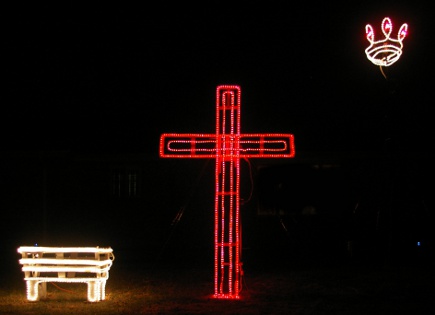
Zeroing in specifically on Revelation 12 - The King's Cradle, Cross & Crown
As we think on the above sketch of Revelation 12-14, I would like us to take that theme of Jesus' destruction of Satan's plots as a way of considering what he had come to do in His first advent or coming. In today's post we will focus specifically on Revelation 12 in how it relates what Jesus did in His first coming to what He will do in His second coming. We will use the following three-fold outline to navigate our way through Revelation 12 as we prepare our hearts to enter into this Christmas season, focusing on the King of Kings in the Book of Revelation:
1. The King's Cradle. Revelation 12:1-4
2. The King's Cross. Revelation 12:5
3. The King's Crown. Revelation 12:6-17
How the King's Cradle, Cross & Crown relate in Revelation 12.
How God used Israel through the Old Testament to lead up to the King's Cradle
Revelation 12 details the history and career of Israel, Satan and the Lord Jesus Christ.
The History and Career of Old Testament Israel
Israel was used by God to bring about the point in history where the Savior would be born (i.e the cradle), as well as having to endure the persecution of the Evil One throughout the Old Testament. As Galatians 4:4 reminds us: "But when the fullness of the time came, God sent forth His Son, born of a woman, born under the Law." Thus Revelation 12:1-2 gives us a summary of Israel's part in God's plan to bring about the King's cradle.2
So what does John first see? He sees a woman clothed in the sun. The woman in question represents Israel from the days of her beginnings in Abraham, Isaac and Jacob all the way up to the days of Jesus' birth. Steve Gregg in his commentary notes: The support for this identification of the woman is found in the description of her as being clothed with the sun, with the moon under her feet, and on her head a garland of twelve stars (v. 1). This has obvious reference back to Joseph's dream in Genesis 37:9, in which the sun and moon and twelve stars (eleven plus Joseph) represented the family of Jacob, the people of Israel."3 So the career of Israel throughout the Old Testament is presented in Revelation 12:1-2.
The History and Career of Satan in the Old Testament However John sees another sign appear, and the same general period of Old Testament history is presented yet again, only this time with reference to a second major character - Satan, in Revelation 12:3-4. Satan's career began in heaven when he was initially cast out for leading a rebellion against God, as alluded to in passages such as Ezekiel 28:11-19. Throughout his Old Testament career, Satan had waged war, beginning with Adam and Eve (Genesis 3), as well as Israel in her wanderings, believers like Job (Job 1-2) and David (1 Chronicles 21:1) and even launching accusations against priests (Zechariah 3:1-5). His dragon like character here in Revelation 12:3-4 is extensively documented in the Bible in passages such as Isaiah 27:1; Ezekiel 29:3; Revelation 13:2, 16:13, 20:1.4
How Old Testament History led up to the incarnation of the SonThus far John has been shown two key figures that we meet in Revelation 12: the woman (Israel) and the dragon (Satan). Now John sees a third key figure in Revelation 12:4b-5a ...."And the dragon stood before the woman who was about to give birth, so that when she gave birth he might devour her child.
5 And she gave birth to a son, a male child...". Who is this male child? It seems pretty clear that Old Testament history, with its conflict between Israel and Satan led up to the incarnation and virgin birth of Jesus Christ. As the New Geneva Study Bible notes: The Old Testament saints are in view. Mary the mother of Jesus is included in this group, but only as an outstanding member of the whole."5
Truly this sweeping portrayal of Old Testament history serves to lead the reader up to the first major Divinely ordained event of the King's cradle.6 We have thus beheld the King's Cradle, however the cradle was ordained by God to lead to a second major ordained event alluded to in Revelation 12:5...
The King's Cross
The cradle of the Son served to point to the chief purpose of His first coming - the cross, whereby He would destroy the works of the Devil (1 John 3:8), rise from the dead and be caught up into heaven as stated in Revelation 12:5. Now why are we calling this section of the post "the King's cross' when the cross is not explicitly mentioned in Revelation 12:5? Undoubtedly the passage is connecting Christ's first coming (his birth to ascension) to what He will do in His second coming (rule the nations).
Often when the New Testament authors are summing up a portion of Jesus' life, they may very well focus on one or two main points without mentioning all the details. (compare 1 Timothy 3:15-16 and Titus 2:11-15) It must be understood that without the cross, the purpose of Christ's incarnation and birth would not be understood, nor would He have the grounds for returning back to earth for a second time. When one reads back to Revelation 5:9, the link between the cross and second coming is established: "And they sang a new song, saying, “Worthy are You to take the book and to break its seals; for You were slain, and purchased for God with Your blood men from every tribe and tongue and people and nation."
It must be recalled that in the accounts of Jesus birth and childhood, the shadow of the cross so-to-speak was ever present. Simeon, upon seeing the Christ-child said to Mary in Luke 2:35 "and a sword will pierce even your own soul—to the end that thoughts from many hearts may be revealed." That prediction of course came true when she stood at the cross and experienced the sorrow of seeing Jesus crucified and hearing him say "woman, behold your son" and to John "behold your mother!" (John 19:26-27) John depicts Jesus Christ ascended in heaven, awaiting to return to earth in Revelation 12:5. Truly the cradle in history had to precede the cross, which in turn meant that the cross was necessary for their to be a crown.
The King's Crown
Then of course the remainder of Revelation 12:6-17 thrusts the reader forward into the future latter-half of the tribulation period wherein Satan is waging war against Israel and ultimately Jesus Christ. Dr. John Walvoord, quoting C.A Coates, gives this insightful observation about Satan's activity beginning here in Revelation 12 and extending into Revelation 13-14: "Coates observes that Satan is seen in three characterizations in opposition to Christ. As accuser of the brethren, he is in opposition to Christ as priest; as the one who brings forth the first beast, he is in opposition to Christ as King; as bringing forth the second beast, the false prophet. he is opposed to Christ as prophet."7
The war that Satan will wage in the latter half of the tribulation period will begin with Satan attempting a final coup in heaven, only to be thwarted by Michael the Archangel. (Revelation 12:7-9) This failed effort will lead to Satan's permanent and final expulsion from heaven. This expulsion will correspond to the middle of the tribulation period and will set up the efforts of Satan to push his man the anti-Christ into the full limelight of his diabolical schemes later on in Revelation 13.
The statement of the loud voice in 12:10-12 about the kingdom and authority of Jesus Christ makes what Christ will do in defeating the Anti-Christ and Satan's forces at His second coming a forgone conclusion. The crown of the King is within view, with only 3 1/2 years remaining of the tribulation period until the King comes from heaven to earth.
The final section of Revelation 12:13-17 serves to explain the anger Satan will have in his aggression against Israel. His diabolical plot to destroy Israel in history and Jesus in His incarnation/virgin birth failed (12:1-5), and so will his plot to try to destroy Israel in the future tribulation period. (12:6-17) It is that sequence of attacks and failed plots, as well as his final expulsion from heaven that will set off a chain of events lasting through Revelation 13-14. The cradle led to the cross, which in turn led to the crown. The prediction of King Jesus' defeat of Satan and his plots serve to proving yet again that Jesus Christ is King of Kings. (especially note Revelation 19)
Endnotes:
1. http://pastormahlon.blogspot.com/2013/11/a-seven-fold-outline-of-book-of.html
2. John of course is very fond of the word "sign" in Revelation 12-19, using the word to mark off portions of the various visions being shown to him. (Revelation 12:1,3; 13:13,14; 15:1; 16:14; 19:20)
3. Steve Gregg. Revelation Four Views - A Parallel Commentary. Nelson. 1997. Page 254.
4. In Jewish thought that was popular in the time between the Old and New Testament, God was believed to had set a time in which He would end history with an epic battle against Leviathan, a battle which of course God will decisively win.
5. The New Geneva Study Bible. Note on Revelation 12:1. Thomas Nelson. 1995.
6. The passages we use in the Christmas season to understand the event of Christ's birth and incarnation (Matthew 1:20-23; Luke 2:8-50; Philippians 2:5-11) & His Kingship even as a toddler who was worshipped by the wisemen two years following His birth (Matthew 2:1-12) are certainly appropriate cross references for shedding light on the significance of what John is seeing in Revelation 12:1-4.
7. John Walvoord. The Revelation of Jesus Christ - A Commentary. Moody. 1966. Page 191
Thus far we have considered Revelation 1-3 and 4-11 under the following headings:
1. How Jesus relates to His church (1-3)
2. How Jesus will conquer the world (4-11)
As we come to this third major visionary sequence of the book (12-14), the main theme could very well be: How Jesus will destroy Satan's plots. Revelation 12 functions as the headline chapter for the section, with chapters 13-14 serving as the outcomes of the activities in Revelation 12. Undoubtedly there are key characters discussed in Revelation 12, as well as four major diabolical plots that will be soundly defeated by Jesus Christ at the tail end of the tribulation period when He returns.
First of all we can note six key figures or groups introduced in Revelation 12: The Great Woman (12:1-2); The Dragon or Satan (12:3-4, 7-9, 12-13, 16-17); The Son (12:5,10-11); God (12:5-6, 17) and Michael the Archangel (12:7). Then secondly we can take note of the four diabolical plots that will be defeated by Jesus Christ: Aggression against Israel (12); Anti-Christ (13:1-10); Arch false prophet 13:11-19 & Armies raised up to fight Jesus (14:17-20; also 16:16 and 19:11,21)
Certainly our study of Revelation 12-14 will add further detail to what has been seen already in Revelation 6-11, being that both sections focus primarily on the same period of time, the future tribulation period (or even more specifically, the final 3 1/2 years of that period).
Zeroing in specifically on Revelation 12 - The King's Cradle, Cross & Crown
As we think on the above sketch of Revelation 12-14, I would like us to take that theme of Jesus' destruction of Satan's plots as a way of considering what he had come to do in His first advent or coming. In today's post we will focus specifically on Revelation 12 in how it relates what Jesus did in His first coming to what He will do in His second coming. We will use the following three-fold outline to navigate our way through Revelation 12 as we prepare our hearts to enter into this Christmas season, focusing on the King of Kings in the Book of Revelation:
1. The King's Cradle. Revelation 12:1-4
2. The King's Cross. Revelation 12:5
3. The King's Crown. Revelation 12:6-17
How the King's Cradle, Cross & Crown relate in Revelation 12.
How God used Israel through the Old Testament to lead up to the King's Cradle
Revelation 12 details the history and career of Israel, Satan and the Lord Jesus Christ.
The History and Career of Old Testament Israel
Israel was used by God to bring about the point in history where the Savior would be born (i.e the cradle), as well as having to endure the persecution of the Evil One throughout the Old Testament. As Galatians 4:4 reminds us: "But when the fullness of the time came, God sent forth His Son, born of a woman, born under the Law." Thus Revelation 12:1-2 gives us a summary of Israel's part in God's plan to bring about the King's cradle.2
So what does John first see? He sees a woman clothed in the sun. The woman in question represents Israel from the days of her beginnings in Abraham, Isaac and Jacob all the way up to the days of Jesus' birth. Steve Gregg in his commentary notes: The support for this identification of the woman is found in the description of her as being clothed with the sun, with the moon under her feet, and on her head a garland of twelve stars (v. 1). This has obvious reference back to Joseph's dream in Genesis 37:9, in which the sun and moon and twelve stars (eleven plus Joseph) represented the family of Jacob, the people of Israel."3 So the career of Israel throughout the Old Testament is presented in Revelation 12:1-2.
The History and Career of Satan in the Old Testament However John sees another sign appear, and the same general period of Old Testament history is presented yet again, only this time with reference to a second major character - Satan, in Revelation 12:3-4. Satan's career began in heaven when he was initially cast out for leading a rebellion against God, as alluded to in passages such as Ezekiel 28:11-19. Throughout his Old Testament career, Satan had waged war, beginning with Adam and Eve (Genesis 3), as well as Israel in her wanderings, believers like Job (Job 1-2) and David (1 Chronicles 21:1) and even launching accusations against priests (Zechariah 3:1-5). His dragon like character here in Revelation 12:3-4 is extensively documented in the Bible in passages such as Isaiah 27:1; Ezekiel 29:3; Revelation 13:2, 16:13, 20:1.4
How Old Testament History led up to the incarnation of the SonThus far John has been shown two key figures that we meet in Revelation 12: the woman (Israel) and the dragon (Satan). Now John sees a third key figure in Revelation 12:4b-5a ...."And the dragon stood before the woman who was about to give birth, so that when she gave birth he might devour her child.
5 And she gave birth to a son, a male child...". Who is this male child? It seems pretty clear that Old Testament history, with its conflict between Israel and Satan led up to the incarnation and virgin birth of Jesus Christ. As the New Geneva Study Bible notes: The Old Testament saints are in view. Mary the mother of Jesus is included in this group, but only as an outstanding member of the whole."5
Truly this sweeping portrayal of Old Testament history serves to lead the reader up to the first major Divinely ordained event of the King's cradle.6 We have thus beheld the King's Cradle, however the cradle was ordained by God to lead to a second major ordained event alluded to in Revelation 12:5...
The King's Cross
The cradle of the Son served to point to the chief purpose of His first coming - the cross, whereby He would destroy the works of the Devil (1 John 3:8), rise from the dead and be caught up into heaven as stated in Revelation 12:5. Now why are we calling this section of the post "the King's cross' when the cross is not explicitly mentioned in Revelation 12:5? Undoubtedly the passage is connecting Christ's first coming (his birth to ascension) to what He will do in His second coming (rule the nations).
Often when the New Testament authors are summing up a portion of Jesus' life, they may very well focus on one or two main points without mentioning all the details. (compare 1 Timothy 3:15-16 and Titus 2:11-15) It must be understood that without the cross, the purpose of Christ's incarnation and birth would not be understood, nor would He have the grounds for returning back to earth for a second time. When one reads back to Revelation 5:9, the link between the cross and second coming is established: "And they sang a new song, saying, “Worthy are You to take the book and to break its seals; for You were slain, and purchased for God with Your blood men from every tribe and tongue and people and nation."
It must be recalled that in the accounts of Jesus birth and childhood, the shadow of the cross so-to-speak was ever present. Simeon, upon seeing the Christ-child said to Mary in Luke 2:35 "and a sword will pierce even your own soul—to the end that thoughts from many hearts may be revealed." That prediction of course came true when she stood at the cross and experienced the sorrow of seeing Jesus crucified and hearing him say "woman, behold your son" and to John "behold your mother!" (John 19:26-27) John depicts Jesus Christ ascended in heaven, awaiting to return to earth in Revelation 12:5. Truly the cradle in history had to precede the cross, which in turn meant that the cross was necessary for their to be a crown.
The King's Crown
Then of course the remainder of Revelation 12:6-17 thrusts the reader forward into the future latter-half of the tribulation period wherein Satan is waging war against Israel and ultimately Jesus Christ. Dr. John Walvoord, quoting C.A Coates, gives this insightful observation about Satan's activity beginning here in Revelation 12 and extending into Revelation 13-14: "Coates observes that Satan is seen in three characterizations in opposition to Christ. As accuser of the brethren, he is in opposition to Christ as priest; as the one who brings forth the first beast, he is in opposition to Christ as King; as bringing forth the second beast, the false prophet. he is opposed to Christ as prophet."7
The war that Satan will wage in the latter half of the tribulation period will begin with Satan attempting a final coup in heaven, only to be thwarted by Michael the Archangel. (Revelation 12:7-9) This failed effort will lead to Satan's permanent and final expulsion from heaven. This expulsion will correspond to the middle of the tribulation period and will set up the efforts of Satan to push his man the anti-Christ into the full limelight of his diabolical schemes later on in Revelation 13.
The statement of the loud voice in 12:10-12 about the kingdom and authority of Jesus Christ makes what Christ will do in defeating the Anti-Christ and Satan's forces at His second coming a forgone conclusion. The crown of the King is within view, with only 3 1/2 years remaining of the tribulation period until the King comes from heaven to earth.
The final section of Revelation 12:13-17 serves to explain the anger Satan will have in his aggression against Israel. His diabolical plot to destroy Israel in history and Jesus in His incarnation/virgin birth failed (12:1-5), and so will his plot to try to destroy Israel in the future tribulation period. (12:6-17) It is that sequence of attacks and failed plots, as well as his final expulsion from heaven that will set off a chain of events lasting through Revelation 13-14. The cradle led to the cross, which in turn led to the crown. The prediction of King Jesus' defeat of Satan and his plots serve to proving yet again that Jesus Christ is King of Kings. (especially note Revelation 19)
Endnotes:
1. http://pastormahlon.blogspot.com/2013/11/a-seven-fold-outline-of-book-of.html
2. John of course is very fond of the word "sign" in Revelation 12-19, using the word to mark off portions of the various visions being shown to him. (Revelation 12:1,3; 13:13,14; 15:1; 16:14; 19:20)
3. Steve Gregg. Revelation Four Views - A Parallel Commentary. Nelson. 1997. Page 254.
4. In Jewish thought that was popular in the time between the Old and New Testament, God was believed to had set a time in which He would end history with an epic battle against Leviathan, a battle which of course God will decisively win.
5. The New Geneva Study Bible. Note on Revelation 12:1. Thomas Nelson. 1995.
6. The passages we use in the Christmas season to understand the event of Christ's birth and incarnation (Matthew 1:20-23; Luke 2:8-50; Philippians 2:5-11) & His Kingship even as a toddler who was worshipped by the wisemen two years following His birth (Matthew 2:1-12) are certainly appropriate cross references for shedding light on the significance of what John is seeing in Revelation 12:1-4.
7. John Walvoord. The Revelation of Jesus Christ - A Commentary. Moody. 1966. Page 191


