 Luke 16:19-23 19“Now there was a rich man, and he habitually dressed in purple and fine linen, joyously living in splendor every day. 20“And a poor man named Lazarus was laid at his gate, covered with sores, 21and longing to be fed with the crumbs which were falling from the rich man’s table; besides, even the dogs were coming and licking his sores. 22“Now the poor man died and was carried away by the angels to Abraham’s bosom; and the rich man also died and was buried. 23“In Hades he lifted up his eyes, being in torment, and saw Abraham far away and Lazarus in his bosom.
Introduction:
Luke 16:19-23 19“Now there was a rich man, and he habitually dressed in purple and fine linen, joyously living in splendor every day. 20“And a poor man named Lazarus was laid at his gate, covered with sores, 21and longing to be fed with the crumbs which were falling from the rich man’s table; besides, even the dogs were coming and licking his sores. 22“Now the poor man died and was carried away by the angels to Abraham’s bosom; and the rich man also died and was buried. 23“In Hades he lifted up his eyes, being in torment, and saw Abraham far away and Lazarus in his bosom.
Introduction:
Today we meet a man who is simply called by Jesus "a rich man" who is described being in hell. Before we come to his story, let us first consider the New Testament teaching on Hell.
Jesus' Teaching on HellAccording to Dr. John MacArthur, Jesus teaches more on the subject of hell than the prophets, apostles and evangelists of scripture put together. (Ashamed of the Gospel, page 64). In my own study of Jesus' teachings on various subjects, it is surprising to see how often he mentions "Hell" in comparison to other topics:
1. Heaven = 34 times
2. Salvation = 21 times
3. Hell = 17 times
4. Love = 17 times
5. Money = 12 times
6. Prediction of his crucifixion = around 10 times
7. Not judging people = 3 times
Further study reveals Jesus' description of hell, which matches the Old Testament understanding but with far more detail:
1. Unquenchable Fire Mark 9:43 compare Num 16:25; Ps106:17,18
2. Everlasting Fire Matthew 18:18
3. Outer Darkness Matthew 25:46
4. Gates of Hell Matthew 16:18 compare Ps 9:13; Is 38:10
5. Place of conscious existence. Luke 16:25-28
6. Place of wailing, weeping and gnashing of teeth. Mt 8:12; 13:42, 50; 22:13; 24:51; 25:30; Luke 13:28
7. Place of constant burning and stench. Matt 5:22, 29-30; 10:28; Matt 18:9; 23:15,33; Mark 9:43,45,47; Luke 12:5
The Rich man in hell
With the full background of Jesus' teaching on Hell, we now come to Luke 16, which represents the fullest treatment on the physical sights and sounds of "hades", "sheol" or as the KJV renders "hell".
In the Jewish culture, particularly the Pharisees to whom Jesus' was speaking, wealth was taken to be a sign that someone was right with God. In fact, Luke 16:14 tells us that the Pharisees loved money, since it not only fit their desires but also was a big part of their theology of works righteousness. To have a rich person in hell would had been offensive to the listener of Jesus' day. We reading the text may not be as surprised, since the Rich Man is described as living for himself and his pleasures, not evidencing any sign of ever having repented or believed on the Lord for His salvation. Nonetheless, if we would had been listening to Jesus, knowing what we know of that culture, we would not had expected it as much. It goes to show that only by grace through faith in Christ is a person saved from wrath, rather than one's social standing or supposed reputation among men.
Notice now the following traits of this rich man in hell, and how he sadly, but truly, represents all those who die in their sins.
1. The rich man was unrepentant. Luke 16:24, 30
This rich man was in agony in the flames of hell. He wanted comfort. Just as he had lived his entire life in "joyous splendor everyday" (16:19). He was chiefly concerned about escaping the pain. Contrary to what many may think, hell is not a place full of people regetting their rebellion against God.
In Revelation 16:9,11 and 21 we see God pouring out final wrath upon this earth, a "literal hell on earth" prior to Christ's return. Unbelievers left on this planet actually curse God all the more, giving us insight into the fact that whatever the condition of unbelief in this life, it is only magnified in hell.
2. The rich man was un-forgetful. Luke 16:25,28
Father Abraham reminds the rich man: "remember during your life". The rich man begs Abraham to send Lazarus to "his father's house, for he has five brothers". The rich man's perpective on Lazarus as the "begger at his gate" had not changed. In hell, the person refuses to change. Ironically, the rich man is now the beggar and Lazarus is in comfort. (Luke 16:25)
3. The rich man is unconvinced about God's Word. Luke 16:30
As the rich man and Abraham continue to exchange words "across the gulf" fixed between them, the rich man begs Abraham to send warning to his brothers about the awfulness of hell. Abraham states in Luke 16:29 “But Abraham said, ‘They have Moses and the Prophets; let them hear them.’ What does the rich man say? Luke 16:30 tells us -“But he said, ‘No, father Abraham, but if someone goes to them from the dead, they will repent!’" Notice how the rich man still believes his way to be better than God's Word. Furthermore, someone else needs to repent, however the rich man never expresses remorse over his unrepentance. Sad indeed!
Why the doctrine of Hell is crucial for the Christian
As you read on into Luke 17, Jesus gives further warnings about being on our guard in our faithwalk and not stumbling. In Luke 17:5 we read - "The apostles said to the Lord, “Increase our faith!”
Hell is admittedly a disturbing doctrine, however for the Christian the doctrine of Hell is beneficial in the following ways:
1. Eternal perspective. It puts into sharp focus eternity and the need to trust in Christ. It should raise the burden to get the gospel to as many people as possible.
2. Emphasizes the need for Grace. For the Christian, the doctrine of Hell has the positive benefit of helping us praise God for His grace and to rely ever more on such grace. His grace is what calls us to Himself in salvation, is what keeps us persevering in sanctification and guarantees the believer's eternity with Jesus in glorification.
3. Emphasizes Christ's righteousness, not my own. I'm sure when the disciples heard this teaching they lost confidence in their own self-righteousness and leaned more on Christ their righteousness. Only through Christ can I have confidence before the Just and Holy God.
4. Emboldens perseverance. Only in Christ can I have the increased faith needed to overcome adversity and fear. 1 John 4:17 states - "By this, love is perfected with us, so that we may have confidence in the day of judgment; because as He is, so also are we in this world."
 Jonah 1:9 "He said to them, “I am a Hebrew, and I fear the Lord God of heaven who made the sea and the dry land.”
Introduction: What Christians can learn from a reluctant prophet regarding the subject of origins and creation
In reading through the opening chapters of the Book of Jonah, one discovers a statement made by the reluctant prophet Jonah in the middle of a great storm. The text sets the scene of a ship full of men on a storm tossed monstrosity of water. God is the one orchestrating the Providential scene to get Jonah's attention, but instead the pagan sailors are quaking in their shoes. After crying out helplessly to their mythological deities, the men arouse a sleeping Jonah to divulge to them the cause of the storm. Lots had been cast and the sailors discovered that Jonah had been fleeing from God. The first words recorded to have come from Jonah's lips was an affirmation of God's Sovereignty and creation of the dry sea and land in Jonah 1:9.
What would you had told those sailors in the heat of such a moment? They all worshipped various deities whom they believed could be manipulated or who had jurisdiction over local areas. They had denied what the creation around them had told them of the Sovereign and creative power of God in exchange for deities of their own manufacture. (compare Romans 1:18-25) Jonah's affirmation came deep from a heart that though in rebellion at the time, still affirmed by faith what he knew to be the case. Jonah 1 reminds us that the God who created all things on both the dry land and sea is God of Heaven and earth. Such an affirmation is crucial to communicating to people the fact that He is the One to whom all creatures are accountable.
Furthermore, the fact that Jonah proclaims the name of "LORD" or "Yahweh" reminds us that this One God is the Only Savior. He is God of creation and the Lord of redemption. Following the men's casting of Jonah in to the angry waves, we discover that the storm ceases and Jonah ends up spending three-days and nights in the belly of the great fish in Jonah 1:17. Such an event truly took place due to the fact that Jesus uses it to point to what would be the event of His death, burial and resurrection in Matthew 12:40 & 16:4. In reflecting on this first chapter of the Book of Jonah, I believe we can come away with the following principles to guide us in knowing what to affirm about creation and origins of the universe, life and humanity:
1. Affirm your Christian identity.
In Jonah 1:9 we read Jonah saying: "He said to them, “I am a Hebrew....". Jonah was affirming his identity as a covenant believer in the God of Israel, which includes affirmation in the revelation of the scriptures, God's salvation promises and exclusivity of hope in God and God alone. As Christians, we must not apologize for who we are. We affirm and adhere not merely to a set of worldview commitments, but commitment to the One who frames our worldview - Jesus Christ, and the book that is Divinely inspired and discloses the truth about Him - the Bible.
2. Affirm the Divine origin of the universe, the earth and life
As we move on in Jonah 1:9 we see Jonah stating "I fear the Lord God of heaven....". Theologian and author R.C Sproul has summed up quite nicely that there are only three options when it comes to the subject of origins: either the universe is eternal, the universe created itself or God created the heavens and the earth. Amazingly when one surveys the current catalogue of secular and religious viewpoints on origins today, all positions fall under one of those three categories. A Biblical view of origins must affirm without question the Divine origin of the universe, earth and life. Furthermore, the particular God we claim to be behind all things is a specific God that has a unique identity. To affirm anything less is to swear allegiance to something else other than Biblical view of origins. So we need to affirm our Christian identity and the Divine origin of all things, but notice the third major principle we learn from Jonah and the scriptures about what we should affirm in the origins discussion....
3. Affirm the historicity of God's creation of all things
This last point comes from how Jesus Himself came to treat the book of Jonah and the event of Jonah being swallowed by the great fish. If Jonah's circumstances were nothing more than a myth or moral tale meant to impart some well-meaning lessons, then we must conclude that Jesus' own mission and identity fits in the same category. However when you consider Jesus referring to His impending death, burial and resurrection as the "sign of Jonah" in Matthew 16:4, we see that everything that occurs in Jonah's record must be regarded as historical fact.
Do we include such theological statements as Jonah's affirmation of Biblical creationism? Absolutely! Why? Because Jonah's subsequent actions and the calming of the sea are framed within the context of that affirmation. God's creation of the heavens and the earth and continuing providential maintenance of all things is a pivotal part of the account. Unless God is the Creator, he cannot be the One who is also the Source of salvation, as states later in Jonah 2:9-10.
This affirmation of the historicity of the creation event includes taking at face value the six-day creation week spelled out in Genesis 1 and the other details surrounding what God did in that week found throughout the dozens of other scriptures in both the Old and New Testaments.
To deny the historicity of the creation of the universe, the earth and life is to affirm less than what the scripture clearly reveals. Only a consistent historical belief in a literal creation can be the proper foundation for affirming belief in a literal and historical salvation once and for all accomplished by God in human flesh - Jesus Christ. As Jonah 2:9 states - But I will sacrifice to You with the voice of thanksgiving. That which I have vowed I will pay. Salvation is from the Lord.”
Luke 11:19-21 "And if I by Beelzebul cast out demons, by whom do your sons cast them out? So they will be your judges. 20 But if I cast out demons by the finger of God, then the kingdom of God has come upon you. 21 When a strong man, fully armed, guards his own house, his possessions are undisturbed."
Acts 10:38 "You know of Jesus of Nazareth, how God anointed Him with the Holy Spirit and with power, and how He went about doing good and healing all who were oppressed by the devil, for God was with Him."
Introduction:
We find in the Gospel records nearly ten episodes recorded of Jesus performing exorcisms on various people. Clearly such activity was a crucial part of Jesus' ministry. The question is: "Why?" Today's post will attempt to explore the texts in the Gospel records that record the instances of Jesus performing exorcisms and offer reasons behind why He did them:
1. Demonstration of His Authority
2. Delegation of His Authority
3. Deliverance from bondage
So why are the exorcisms recorded in the Gospel records so vital to understanding the ministry of Jesus Christ? Notice first of all that they....
Demonstrated His authority
Jesus Himself states in Luke 11:19 "But if I cast out demons by the finger of God, then the kingdom of God has come upon you." That phrase "finger of God" is found throughout the Old Testament and refers to the authority or judgment of God, Yahweh Himself. In Exodus 8:19 the Egyptian magicians told Pharoah that the severity of the plagues was due to the "finger of God". In Exodus 31:19 and Deuteronomy 9:10 we see Yahweh inscribing upon the tablets of stone with His own finger - i.e the "finger of God". Clearly Jesus' statement in Luke is Him making a reference to His Divine authority. Mind you Jesus is not merely saying He casts out demons with delegated authority as an emissary of Yahweh, rather He is asserting that He Himself does so as God in human flesh!
The reader must take note that until Jesus walked this earth, no recorded incident of exorcism had ever taken place. Not even in the Old Testament do we see such a demonstration of power. Clearly the Son's incarnation into time and human flesh signified an alteration in both history and the cosmic realms. He evidenced Supreme authority in both the human and angelic realms - an authority that only God Himself can claim.
It is no wonder that in Matthew 4:24 that we see news spreading quickly about His authority over such beings. Matthew 8:16 tells us He cast out demons with just a word. In Matthew 8:29 and Mark 1:23-24 the demons thought it was the final judgment due to the fact that God in human flesh was taking authority over them as an act of judgment. We could cite several other scriptures but the point is made: Jesus cast out demons to demonstrate His authority. But notice secondly, Jesus cast out demons to delegate authority.
Delegation of authority
When Jesus called his disciples, one of His main goals was to train them and delegate to them the authority they would need to preach and lead the early church. Matthew 10:1 plainly says: "Jesus summoned His twelve disciples and gave them authority over unclean spirits, to cast them out, and to heal every kind of disease and every kind of sickness." As the disciples gained ministry experience, it was clear that at times they were unsuccessful and required further instruction by Jesus. (Mark 9:38) According to Luke 10:17 Jesus had also delegated authority to 70 others.
Such patterns of delegated authority were going to be vital once Jesus ascended unto heaven and the Apostles took up the reigns of leadership in the early church. To act in Jesus' name meant they were doing His bidding with the same Holy Spirit with which He did. (Luke 4:18) Without delegated authority, the apostles and the church could not be the continuation and extension of Jesus ministry. (Acts 16:18) And so Jesus performed exorcisms to demonstrate His authority, as well as to delegate it, but notice thirdly....
Deliverance from bondage
It was quite obvious that Jesus' exorcisms served to deliver people from bondage and tyranny of affliction. In Mark 9:17ff we see a lad afflicted with a spirit that needed casted out. Only Jesus direct intervention could remedy the young man's plight. According to Mark 16:9 "Now after He had risen early on the first day of the week, He first appeared to Mary Magdalene, from whom He had cast out seven demons." Peter states in Acts 10:38 "You know of Jesus of Nazareth, how God anointed Him with the Holy Spirit and with power, and how He went about doing good and healing all who were oppressed by the devil, for God was with Him."
This point is important in understanding part of why the Son became incarnate. Hebrews 2:14 and 1 John 3:8 both remind us that He came to destroy the Devil's works and to set people free from bondage to fear. According to Colossians 2:14-15, such activity by Jesus in His earthly ministry set a pattern for what He would accomplish on the cross by triumphing over the demonic realm. Jesus victory over the cosmic powers was part of the multifaceted reasons behind the meaning of His atoning work. The work of delivering people from bondage was necessary, being that Satan and his forces are ever at work blinding people to the truth. Only Christ through the power of the Gospel can break people free of physical, chemical, relational and any other sort of bondage that is influenced by the Kingdom of darkness. (Acts 26:18)
Conclusion:
Today we explored why Jesus did exorcisms. Such acts were a major part of His overall ministry. We identified three primary reasons: demonstration of His authority, delegation of His authority and deliverance of people from bondage.
 Revelation 14:13 And I heard a voice from heaven, saying, “Write, ‘Blessed are the dead who die in the Lord from now on!’” “Yes,” says the Spirit, “so that they may rest from their labors, for their deeds follow with them.”
Revelation 19:7-8 "Let us rejoice and be glad and give the glory to Him, for the marriage of the Lamb has come and His bride has made herself ready.” 8 It was given to her to clothe herself in fine linen, bright and clean; for the fine linen is the righteous acts of the saints.
9 Then he *said to me, “Write, ‘Blessed are those who are invited to the marriage supper of the Lamb.’” And he said to me, “These are true words of God.”
Introduction:
What are the next big things that you and I can expect both now and in the future? Below is a summary list of major future events that will impact every human being living on this planet. In future posts this blogger plans on touching upon each one in greater detail. Today I will simply list six of them with some commentary on each one. If for any other reason, the hope is that such a list will cause the reader to think more closely about where they stand in relationship to the Lord in matters pertaining to life and eternity.
1. Realities of Hell, Heaven & You
The Bible clearly states that it is appointed unto man "once to die" (Hebrews 9:27). Contrary to what some may teach, there are two destinations that are reached as a result of two different types of birth. All people born into this world are deemed by scripture to be "children of wrath" (Ephesians 2:1-2). However only those who are "born-again" by the Spirit of God to saving faith can be assured of the second destination following physical death - namely heaven.
The time frame that exists between physical death and resurrection is what is called "the intermediate state". Many great Christian thinkers have pointed out that all people, whether saved or unsaved, will experience three "states": a current physical state, an intermediate state and a final eternal state. The end point of the intermediate state is of course resurrection.
The Prophet Daniel, Jesus Who is God in human flesh and the Apostle John point out that there will be a resurrection of the righteous and then a second resurrection of the wicked that will occur at the end of Christ's Millennial reign on this earth.
2. Rapture & Reward
The Bible reveals that for Christians at least, there will be two methods of exit from this world: either by physical death or rapture. What is meant by the term "rapture?" In passages such as John 14:1-3; 1 Corinthians 15:50-58 and 1 Thessalonians 4:13-17 we see clear teaching on what will be Christ's "catching away" of all born-again Christians from the earth when He appears in the clouds prior to or right at the beginning of the future tribulation period.
In short the rapture will entail four main points. First Jesus will appear in the clouds at the beginning or right before the beginning of the tribulation. Second those who have died in Jesus will be resurrected into physically transformed glorified bodies. Thirdly those Christians who are living currently will experience the same immediate transformation in their physical body as well. Then lastly, all said believers are "caught away" or "raptured".1
3. Resurrection & Christ's Return
It must be understood that in connection with Christ's resurrection as the "first-fruits" (1 Corinthians 15:23), those raised at the rapture of the church (1 Thess. 4:16), the tribulation martyrs (Revelation 20:4) and Jewish martyrs of the tribulation at Christ's second coming (Revelation 20:6) all constitute under what the Bible calls "The First Resurrection" (Revelation 20:6), or "The resurrection of the righteous" (Daniel 12:2; Luke 14:14; John 5:29).
4. Reign & Kingdom age
It is in the train of the resurrection of the righteous that the Bible presents the next "big event", namely Christ's reign and His Kingdom here on earth. I won't take time to trace out every passage of scripture that refers to Christ reigning on this earth following His second coming, but it seems undoubtedly clear that such a reign will entail and earthly reign in Jerusalem (Zechariah 12-14) lasting 1,000 years (Revelation 20:1-10).
5. Final Judgment
It is in this particular event we find reference to the "second resurrection" or "resurrection of the unrighteous at the end of Christ's Millennial reign in Revelation 20:11-14.
6. The Age to Come
This finale of the Bible is found in Revelation 21-22 wherein we see eternity, the New Heavens and new Earth and the Lake of Fire. Those who by God's calling and purposes of grace who believed on Jesus Christ in this current age will enjoy eternity with the Lord. Those who by their own choice rejected the Gospel and die in their sins await judgment now in Hell and will spend eternity in the Lake of Fire.
Conclusion:
The point of today's post was to introduce the reader to the idea of what the Bible outlines to be the next major events for life and prophetic expectation. May these six next big things provide opportunities for the reader to reflect and seek the Lord in assurance that they are ready for what lies ahead.
Endnotes:
1. The word "rapture" is a carry-over from the Older Latin translations "rapturo" which in turn had translated from the original Greek "harpago", which means "to catch away, to snatch up").
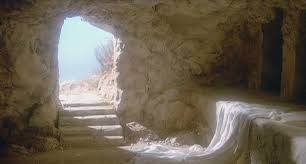 John 5:25-28 "Truly, truly, I say to you, an hour is coming and now is, when the dead will hear the voice of the Son of God, and those who hear will live. 26 For just as the Father has life in Himself, even so He gave to the Son also to have life in Himself; 27 and He gave Him authority to execute judgment, because He is the Son of Man. 28 Do not marvel at this; for an hour is coming, in which all who are in the tombs will hear His voice, 29 and will come forth; those who did the good deeds to a resurrection of life, those who committed the evil deeds to a resurrection of judgment."
Introduction:
In today's post we want to uncover the basic ordering of present and future events as they are communicated by Jesus in His conversation in John 5:25-29. I view the post below as a thumbnail sketch to get our thoughts in order about what Jesus and the remainder of the New Testament lays out with regards to major events. Let the reader understand that as the progress of God's revelation in scripture unfolds, further and further detail is added. Much like a sunrise on a given morning, the fingers of sunlight that reach their way across every valley, tree and home slowly but surely unfolds one detail after another. Undoubtedly Jesus Christ the Son is presenting what will be the standard general order of present and future events that are explained in further detail in later portions of the New Testament.
1. Spiritual resurrection from spiritual death now and physical resurrection later. John 5:25
Jesus states "an hour is now coming and now is". Jesus first of all speaks about what will be the believer's future resurrection at His return (and quite possibly those saints raised when Christ raised from the dead) in the statement "the hour is now coming". In seamless transition Jesus then chooses to use the language of death and resurrection ("now is") to describe the born-again experience of regeneration unto saving faith in the life of believers right now.
John Phillips on page 108 of his commentary on John notes: "The Lord's words, however, are not to be restricted to the coming literal resurrection of dead people from their graves at the sound of his voice-in itself a comprehensive claim to Deity-but they include the giving of the life of God to people, spiritually dead, who likewise hear his voice."
We can think of Jesus' opening statement as referring to the beginning point and culminating point for the Christian. The beginning point refers to the new birth or spiritual resurrection, whereby the sinner is saved in their human spirit by the Spirit's work of regeneration in saving faith. The culminating point is of course the believer's physical resurrection that will occur at Christ's coming for them in the rapture to raise those who died in Jesus out of the ground. Those saints who are living at that point will have their bodies transformed into a resurrection body. Posts in the future will speak more thoroughly on this point.
2. Jesus Christ's resurrection from the dead as proof of His Deity. John 5:26
Jesus is alluding to what will be His own resurrection from the dead. His Pre-existent Divine life is viewed here too. The fact is that He is capable of overcoming death speaks of Him as God, with His ability to experience death referring to His full humanity. Thus as God He has life in and of Himself and as man He will be crucified but raise bodily from the dead.
3. Jesus' 2nd coming as the Judge. John 5:27
Now we see Jesus referring to the events surrounding His second coming. Clearly the believer's regeneration or spiritual resurrection in saving faith is connected to Christ's resurrection, since that same power that raises Him from the dead is identical to what brings sinners to saving faith - namely the Holy Spirit. (1 Peter 1:3-4).
4. The resurrection of the righteous and the wicked. John 4:28-29
As the passage closes, we see perfect symmetry between the beginning and end. The believer is viewed as experiencing a spiritual resurrection, which is tied to Christ's resurrection and thus includes a future physical resurrection for them by Christ at His second coming. (John 5:24, 28) Again let the reader be reminded by what was noted at the beginning of this post, namely that Jesus is laying out a general order of events and is not going into exquisite detail like what is stated later on in the New Testament.
From what we can tell in John 5:29, the wicked unbeliever who dies in his sins will also be resurrected as well, but not in the resurrection of the righteous. Rather there will be a second, later resurrection. Daniel 12:2 describes the difference: "Many of those who sleep in the dust of the ground will awake, these to everlasting life, but the others to disgrace and everlasting contempt." According to John 5:29, this second resurrection will be one unto judgment.
 Acts 1:1-2 "The first account I composed, Theophilus, about all that Jesus began to do and teach, 2 until the day when He was taken up to heaven, after He had by the Holy Spirit given orders to the apostles whom He had chosen."
Whenever one travels through the book of Acts, reference is made to the Person and work of the Holy Spirit roughly 40 times. Out of those instances, one of the main ministries we find ascribed to the Holy Spirit is the ministry He has in leading the church and Christians. In today's post we want to consider what the Book of Acts has to teach us about the leading of the Holy Spirit.
Harbor lights and the Holy Spirit
Years ago I heard a wonderful preacher relate how harbor lights enable us to picture the various ways and methods the Holy Spirit uses in leading the Christian. In the picture above you see a modern day example of this notion of "harbor lights". The idea is a fairly simple one: To guide a ship safely into a harbor or up alongside a pier, a series of lights will line the length of the dock or pier. If the approaching captain sees more than one "harbor light", they know they are heading straight into the pier. However if they are aligned in the same direction as the pier or harbor, they will look at the row of lights head-on and see what appears to be one light, rather than a set of lights. In dark or foggy nights, such a system along with a light house can be useful in guiding small and large sailing vessels to their intended destination. In the Book of Acts we can discern the following "harbor lights" used by the Holy Spirit in leading and guiding individual Christians and the church as a whole.
1. Passages of scripture.
The whole book of Acts is one of the 65 other books of scripture inspired by the Holy Spirit to instruct and equip the church. If we were to liken the scripture to the lighthouse in the above illustration, we could say the scripture is the chief way in which the Holy Spirit speaks and guides His people. Jesus said the Spirit would bring back to remembrance to the Apostles all the things He had taught them. (John 16:12-13) Certainly Luke's composition of the Book of Acts under the inspiration of the Holy Ghost is proof positive of this truth. In Acts 15:28 we see the Jerusalem Council laying down instructions that were tantamount to scripture, being that they made it into the Book of Acts itself and constituted what was to be universally used in all the Gentile churches. Without the scriptures, no one could hear what the Spirit is saying at all to the churches. It is the believer's lamp unto their feet and light unto their path. (Psalm 119:105)
2. Promptings. Acts 8:29
In Acts 8:29 we see the Holy Spirit's work of prompting: "Then the Spirit said to Philip, “Go up and join this chariot.” This harbor light is the Spirit's activity within the Christian. As the Christian takes in the scriptures and heeds them, they begin to cultivate the ability to discern and understand those promptings of the Spirit.
The Holy Spirit certainly can guide us when and where to go. For example consider Acts 8:29 "Then the Spirit said to Philip, “Go up and join this chariot.” There will be of course those promptings whereby the Spirit hinders or says "wait". Consider please Acts 16:7 "and after they came to Mysia, they were trying to go into Bithynia, and the Spirit of Jesus did not permit them." Why would the Spirit hinder the Apostle from making headway into a region that needed to hear the Gospel? As Luke writes on, we see the Spirit first had Paul to go into the regions of Macedonia in Acts 16 and 17. In Acts 18:19 the Spirit evidently opens the door for Paul and his companions to enter into the regions of Asia Minor, as seen by their presence in Ephesus. Such promptings are designed by the Holy Spirit to strategically place His people at various points and places so as to effect His Sovereign purposes in and through them.
Such promptings by the Holy Spirit enables the Christian to think more clearly on a matter. For example, in the wake of Paul's following the Spirit's leading, he realizes that the goal of His missionary strategy is to press into the western most boundaries of the Roman empire where the Gospel had not yet been preached. (Acts 19:21) Certainly the apostles would always check such promptings within the context of the study, preaching or hearing of God's word, as evidenced by the nearly twenty messages we find strung throughout the book of Acts. So with passages of scripture, the Spirit leads with inner promptings, but notice also how He leads through...
3. People
Acts 20:22-23 states: "And now, behold, bound by the Spirit, I am on my way to Jerusalem, not knowing what will happen to me there, 23 except that the Holy Spirit solemnly testifies to me in every city, saying that bonds and afflictions await me." Clearly the Spirit was warning Paul of what laid ahead. How is it that the Holy Spirit was "testifying to Paul" in every city? Consider Acts 21:4 "After looking up the disciples, we stayed there seven days; and they kept telling Paul through the Spirit not to set foot in Jerusalem."
Why would the Spirit seem to be on the one hand leading Paul eventually to Jerusalem (as He does so in Acts 21-23) and yet be speaking through people to seemingly dissuade Paul from entering into Jerusalem? The Spirit's purposes are to test Paul and to verify through people the calling of Paul. Clearly the Spirit's ultimate purpose was to get Paul to Jerusalem so that he would eventually end up testifying about Jesus in Rome. (Acts 23:11) The Spirit always affirms His will through passages of scriptures and confirms His will through promptings, people and one more area....
4. Personal situations.
As you come to the end of the Book of Acts, Paul is clearly recognizing by now that he is where he needs to be. Under house arrest in Rome, Paul takes the cue from his situation that the Spirit has brought him to Rome to preach the Gospel unhindered. (Acts 28:31) Oftentimes the Spirit will lead you and I through something that is far from comfortable and oftentimes painful. However the Spirit's dealings with us is with the view of us as having completed the task. The whole process by which the Spirit was taking Paul was from the vantage point of Acts 28. Every trial, imprisonment, beating, hardship, storm, all of it, was engineered by the Sovereign Lord to guide Paul strategically through and to lead Him to the place He had known from the beginning Paul would be.
Conclusion:
As always, the Spirit's promptings, people and particular situations, when lined up perfectly with passages of scriptures, provide an effective way for the Christian and the church to follow.


