Translate

Thursday, October 2, 2014

The Church in this world


Acts 28:21-22 They said to him, “We have neither received letters from Judea concerning you, nor have any of the brethren come here and reported or spoken anything bad about you. 22 But we desire to hear from you what your views are; for concerning this sect, it is known to us that it is spoken against everywhere.”

Introduction:
I recall not to long ago somebody walking up to me and asking: "So how is the world treating you?" The only response I could think of was: "The world is treating me terribly, it hates me. However, Jesus is treating me wonderfully, He loves me." That response reflects the true reality of the relationship of the Christian to this world. The Book of Acts tells the history of the Holy Spirit's working in and through the church. Acts 1-2 details the commissioning by Jesus of His disciples to go and wait upon the Holy Spirit, Who then comes to birth and empower Christ's church. As the Book of Acts comes to a conclusion, the Apostle Paul is seen under House arrest in Rome, proclaiming the Gospel to whomever will give him an audience. Today's post is all about understanding the Church in this world.

Point of Application
The church in this world can expect discouragement, different responses and definite victory. Lets briefly consider these three parts of this main point.

The Church in this world can expect discouragement. Acts 28:21-22
Notice what the Jews say to Paul in Acts 28:22 "But we desire to hear from you what your views are; for concerning this sect, it is known to us that it is spoken against everywhere.” The underlined word "sect" in this verses comes from a Greek word from whence we get our English word "Heresy". The idea is that the early church was viewed as a variant, a differing opinion with Judaism and in the final analysis - a movement that ran counter to the Jewish traditionalism of the day. As the early Christians pushed the frontiers of the mission field, opposition increased. Jesus told His disciples that they would experience discouragement and opposition in this world. Matthew 10:22a reminds us: "You will be hated by all because of my name." Matthew 24:9 paints an even worse picture: “Then they will deliver you to tribulation, and will kill you, and you will be hated by all nations because of My name." Thankfully Jesus tells His disciples (and us really) these words in John 16:33 "These things I have spoken to you, so that in Me you may have peace. In the world you have tribulation, but take courage; I have overcome the world.” So though Christians in this world can expect discouragement, we know that Jesus' peace and presence is ever with us. So the church in this world can expect discouragement and then a second thing....

The church in this world can expect different responses. Acts 28:23-24
Acts 28:23-24 relays to us how Paul spent countless hours communicating Jesus Christ from the scriptures. He would had done so mainly from the Old Testament prophets. When Paul got finished, we read in Acts 28:24Some were being persuaded by the things spoken, but others would not believe. We must expect different responses from people. There will be doubt, unbelief and apathy. Sometimes anger or offense. However there will be moments where the Spirit of God moves upon someone to elicit a response of faith. Jesus had this in John 12:42 "Nevertheless many even of the rulers believed in Him, but because of the Pharisees they were not confessing Him, for fear that they would be put out of the synagogue." We must ever remember that the differing responses to our presentation of God's Word is more often and not due to the failure in the hearer, rather than us. Thankfully God's Word is never the reason as to why people don't believe. So the church in this world can expect discouragement and different responses. But notice the last and positive truth in all of this...

The church in this world can expect definite victory. Acts 28:25-31
Notice Acts 28:30-31 "And he stayed two full years in his own rented quarters and was welcoming all who came to him, 31 preaching the kingdom of God and teaching concerning the Lord Jesus Christ with all openness, unhindered." Paul had finished the closing remarks of his address to his hostile audience. He quoted Isaiah 6:9-10 as evidence against his opponents. Much like Isaiah the prophet who was sent on a mission to a hard people, the church has been sent on a mission to a hostile world. We may experience discouragement and different responses as the church in this world, however no matter what, the mission will succeed. God's Word achieves whatever purpose God sends it to accomplish. For some that may mean conviction and for others convincing. 

I close today's post with this quotation from Isaiah 6:6-11 as a reminder of what definite success looks like for the church in this world: "Seek the Lord while He may be found;Call upon Him while He is near. 7 Let the wicked forsake his way And the unrighteous man his thoughts; And let him return to the Lord, And He will have compassion on him, And to our God, For He will abundantly pardon. 8 “For My thoughts are not your thoughts, Nor are your ways My ways,” declares the Lord.
9 “For as the heavens are higher than the earth, So are My ways higher than your ways And My thoughts than your thoughts. 10 “For as the rain and the snow come down from heaven, And do not return there without watering the earth and making it bear and sprout,
And furnishing seed to the sower and bread to the eater; 11 So will My word be which goes forth from My mouth;
It will not return to Me empty, without accomplishing what I desire, and without succeeding in the matter for which I sent it."

Wednesday, October 1, 2014

What Southern Baptists teach about the Lord's Table


1 Corinthians 11:23-26 "For I received from the Lord that which I also delivered to you, that the Lord Jesus in the night in which He was betrayed took bread; 24 and when He had given thanks, He broke it and said, “This is My body, which is for you; do this in remembrance of Me.” 25 In the same way He took the cup also after supper, saying, “This cup is the new covenant in My blood; do this, as often as you drink it, in remembrance of Me.” 26 For as often as you eat this bread and drink the cup, you proclaim the Lord’s death until He comes."

Introduction:
Today's post is about laying out in brief what Southern Baptists teach about the Lord's Supper. To discover the official teachings of the Southern Baptist Convention, one only needs to look at the SBC's webpage and click on the link to the Baptist Faith and Message 2000 at http://www.sbc.net/bfm2000/bfm2000.asp

The Baptist Faith and Message 2000 article on the Lord's Supper
Of the 18 articles or subjects covered in the Baptist Faith and Message 2000 (from hereon we willl call it BFM 2000), the issue of the Lord's Supper is covered in a short paragraph near the end of the 7th article. Here is the statement regarding the Lord's Supper:

"The Lord's Supper is a symbolic act of obedience whereby members of the church, through partaking of the bread and the fruit of the vine, memorialize the death of the Redeemer and anticipate His second coming."

When we consider this brief statement, we can break it down into three brief headings that aid in fleshing out the SBC's official position on the Lord's Supper.

1. "The Lord's Supper is a symbolic act of obedience...."
In the book "Baptist Faith and Message 2000 - Critical Issues in America's Largest Denomination", edited by Douglas Blount and Joseph D. Wooddell, the following explanation is given:

"(I)f baptism may be compared to a wedding ceremony, the Lord's supper may be compared to an anniversary celebration in which the vows taken at the wedding are renewed. Renewal takes place in the supper on a number of levels. First, the remembrance of our Lord's death should lead to a renewal of our repentance, because we remember that His body was broken to free us from sin. How can we live in sin when His body was broken to liberate us? Second, the supper should be an occasion to renew our faith. In partaking of it, we 'proclaim the Lord's death' (1 Cor 11:26). We remember that death is our only hope, and we renew our commitment to trust in Christ alone. That faith focuses on His death, the body broken and the blood shed, but it also emphasizes His resurrection, victory over death and promised return. As this document puts it, in the Supper we 'anticipate His second coming.' Finally, the Lord's Supper is also an occasion for renewing our commitment to the church. 1 Corinthians 11:18 see the Lord's Supper as a time when the church 'comes together.'"

I really like how the authors track out the idea of the Lord's supper being a repeated act of renewal. Whenever we see the phrase "symbolic act", we must not view the Lord's supper as an empty symbol or church ritual. Far from it. Partaking of the Lord's Supper is how the Lord Jesus Christ through the Person of the indwelling Spirit in each Christian reminds them of who they are and Whose they are. Jesus is especially present in and through His people when they do so, as He promised He would be with His church in passages such as Matthew 28:18-20. The "symbolic" nature of the supper is really a "sign" pointing to an abiding reality, that wherever the church is gathered, Jesus by His Spirit is present in them and through them.  

2. "....whereby members of the church, through partaking of the bread and the fruit of the vine..."
It has been always the case in Southern Baptist life that in order for someone to partake of the Lord's supper, they must necessarily: a). Be born again, regenerate, saved by grace alone through faith alone in Christ alone; b). The true believer must had been Biblically baptized by immersion, with a prior salvation experience. This strikes at the issue of "who then are members of the church"? As Blount and Wooddell in the book cited above note on page 78: "(I)t is a logical outgrowth of the Baptist view of the church and the Lord's Supper as an ordinance for the church." 

They then offer the following set of logical statements:
1. If the Lord's supper is for the church
2. And the church is composed of properly baptized believers
3. then the Lord's Supper is for properly baptized believers.

The Baptist Faith and Message itself say the following about believer's baptism:  "Being a church ordinance, it is prerequisite to the privileges of church membership and to the Lord's Supper."

Does the logic of baptized church members being the those properly admitted to the Lord's table square with scripture? With regards to the ordering of salvation, baptism and church membership in the early church, the evidence is quite clear. In Acts 2:38 the people were told to "believe and repent" of their sins. The baptism that they were told to do in the same passage was something they were to do following their salvation. Acts 2:41a demonstrates this by their response: "So then, those who had received his word were baptized....". So notice the progression: saving faith, believer's baptism. 

Then we discover the next detail in Acts 2:41b "and that day there were added about three thousand souls." The tabulation of an official record was taken with regards to all who got saved and baptized on the day of Pentecost. This is the earliest indication we have of church membership! Whenever you read Acts 2:42, the picture is made complete: "They were continually devoting themselves to the apostles’ teaching and to fellowship, to the breaking of bread and to prayer." The phrase "breaking of bread" was a common first century phrase for either eating a meal or celebrating the Lord's supper. At least in Acts 2:42, the meaning is plain: these baptized believers were celebrating the Lord's supper. Paul's ordered mentioning of believer's baptism in 1 Corinthians 1 and the Lord's supper in 1 Corinthians 11 tells us that these two ordinances are given by Christ for each local church, with believers, properly baptized being the proper recipients. 

3. ...."memorialize the death of the Redeemer and anticipate His second coming."
In this final part of the BFM 2000 statement on the Lord's Supper, we focus upon the meaning of "memoralizing". In the commentary and study guide on the BFM 2000, edited by Charles S. Kelly Jr., Richard Land and R. Albert Mohler Jr., page 98, we read the following explanation:

"The Lord's supper is not merely a memorial to be received by Christians. it is a congregational act in which the covenant community, in obedience to God's command and united in one faith, one Lord and one Baptism (Eph 4:5), obeys Christ by memorializing His sacrifice (see Luke 22:19). The Lord's supper is not simply a reenactment of the Last Supper. It is a postresurrection celebration and commemoration of the completed work of Christ."

In-as-much as the Lord's supper focuses our attention upon the cross and Christ's achievement in His first coming, the meal points us ahead to what Jesus will do in His second coming. The church is after all a people of the two comings. 

Closing thoughts:
The goal today was to layout in brief the SBC's teaching about the Lord's table. We saw from two official SBC publications the meanings about the Lord Supper's symbolism, participants and meaning regarding its memorialism of Christ's first coming and anticipation for His second coming. This author subscribes to the BFM 2000 and commends it to reader who may be interested in discovering what it has to say about the Lord's Supper and other issues. As a reminder, no doctrinal statement is infallible, including the BFM 2000. For this author, the BFM 2000 functions as a commentary that aids in more clearly understanding what the Bible teaches - which alone is the final, inerrant rule of every standard of faith, practice and life.  

Tuesday, September 30, 2014

P2 The full story of man: spirit, soul and body


1 Thessalonians 5:23 "Now may the God of peace Himself sanctify you entirely; and may your spirit and soul and body be preserved complete, without blame at the coming of our Lord
Jesus Christ."

Today's post will conclude the complete saga of man we began to tell yesterday in terms of how man is a soul with a spirit clothed in a body.  We are doing this short series through five main points covered in scripture: creation, fall, redemption, death and resurrection. In yesterday's post we discovered:

1. Man as a soul, with a spirit clothed in a body at creation.

2. Man as a living soul, clothed in a body, died in his spirit at the fall

3. Saved man is a soul who has a resurrected spirit and lives in a body

Today's post will cover this idea of man's three-fold nature as viewed through the final two points of death and resurrection.

Saved people are souls, with living spirits who die and leave behind a dead human body and go to heaven.  Unsaved people are souls, with dead spirits who leave behind a dead human body and go to hell to await judgment
So what occurs at death?  For the Christian, the Bible states in 2 Corinthians 5:6 "Therefore, being always of good courage, and knowing that while we are at home in the body we are absent from the Lord"  The Christian as a soul with a spirit goes immediately into the hands of the Lord in Heaven, where he is welcomed with a glorious entrance. (2 Peter 1:11-12)  The body, called by Paul (2 Corinthians 5:1-5) and Peter (2 Peter 1:14) a tent, refers to the frail and temporary nature of our current physical body that eventually returns to the dust from whence it came.  Unbelievers, when they die, are souls with dead human spirits who immediately go to a place called Sheol, Hades or hell, as exampled by the Rich Man in Luke 16:29-31.  

Contrary to pop culture today, when a person dies, it is a one way trip to the immediate presence of God for believers and Hell for sinners.  With those sober realities outlined, we must understand that scripture reveals one more point in its saga of believers/unbelievers in the body, souls and spirits....

There is to be a resurrection for the righteous and a resurrection of the unrighteous
Though a Christian in their souls and spirit go immediately into the presence of the Lord, the totality of His salvation for them is not yet complete.  Yes they are free from the penalty of sin in their spirit - thus in that respect they are instantly saved.  Concerning their souls, they are progressively saved by the Spirit's sanctifying work, making them more and more like Jesus while they excercise their mind, emotions and will in His Word - hence the removal of sin's power.  

And even when they get to Heaven, believers certainly enjoy a dimension of existence whereby they are set free from the presence of sin - i.e glorification.  However the Christian in that state is looking forward to the day they get a resurrected body like their Lord.  At His return, Christ will resurrect every believer, Old and New Testament, transforming their bones and decay into a glorified resurrected body - setting the body free from the putrification of sin. (Daniel 12:1-3; 1 Corinthians 15:51-57; 1 John 3:1-3)  The ressurrection represents the goal of redemption, a hope that was first revealed to men such as Job (Job 14:14; 19:25-28) and Abraham (Hebrews 11:19)

Sadly for unbelievers, they await the final judgment which will occur a thousand years after the resurrection of the righteous.  Though not spelled out in near the detail as that of believers, unbelievers evidently will have a resurrected body capable of withstanding eternal judgment. Daniel 12:2b tells us that the resurrection of the wicked will receive a body that is "disgraceful, existing in everlasting contempt".  Christ at that final judgment will cast them into the Lake of Fire, along with the Devil and his fallen angels. (Matthew 25:31-46; Revelation 20:11-15)

Conclusion: 
The past two posts attempted to tell the complete saga of man, a soul with a spirit clothed in a body, through five main points covered in scripture: creation, fall, redemption, death and resurrection.  My prayer is that this will aid you in your study of the scripture and perhaps shed light on both your own life and your dealings with others.  Remember, what is done on this earth will pass, what is done for Christ will last. 

Monday, September 29, 2014

P1 The full story of man: spirit, soul and body


1 Thessalonians 5:23 "Now may the God of peace Himself sanctify you entirely; and may your spirit and soul and body be preserved complete, without blame at the coming of our Lord
Jesus Christ."

Today and tomorrow's posts will attempt to tell the complete saga of man: a soul with a spirit clothed in a body.  We will do this through five main points covered in scripture: creation, fall, redemption, death and resurrection. Today's blog will focus on the first three of those areas.

Man as a soul, with a spirit clothed in a body at creation.
Man is a three-fold being who was created to know God and exercise authority in this world. Some Bible teachers advocate that man is essentially a two-fold being (also called di-chotomy): body and soul or body and spirit.  

It is the contention of this writer that tri-chotomy overall represents the Bible's testimony about man. With that said, we do not entirely dismiss that view out of hand.  Why?  The reason being is because from Genesis 1:26-27 and Genesis 2:7 we see God revealing the creation of man from two angles: a spiritual being in a physical body who was to walk with God and a soul clothed in a body who was to take dominion over his surroundings and be self-aware. 

In short, here is what we learn of mankind as originally created:

1. Humanity's body was perfect, capable of interracting and working the physical environment.  Being that the body of man was made from the earth, God endued the body with five senses and the capability to be aware of the world.

2. Humanity's soul is the life of the man.  The soul was breathed from the Spirit of God, resulting in physical life in the man.  Man was uniquely created with the ability to think, feel, choose and have conivictions or a conscience.  The soul is the man himself. We could say, with older Bible teachers of the past, that the soul is simply man's self awareness and the body is his center of world awareness.

3. Humanity's spirit was to be the aspect of man wherein he communed with God.  Being made in the image of God meant among other things that man alone could communicate and be communicated to by God in his spirit. 


Man as a living soul, clothed in a body, died in his spirit at the fall
When Adam and Eve heeded the voice of the serpent tempting them in the garden to partake of the tree, the scripture says that for Eve, the tree was pleasant to the eyes and desirable to eat.  She had already began to alter God's word in her mind and by her will she chose to abandon the grace of God on her life in preference to her soulish desires.  Adam willfully chose his wife over God and the two of them fell from the Grace that has been clothing their mortal bodies.  As souls they continued to live, however the curse of death through sin reaped its fruits. The result? Adam and his wife died in their spirit, affecting their soul totally to the point of where they could only live by their own desires.  

The bodies of the man and the woman would be subject to mortality or physical death.  The totality of how sin would affect the entirety of man's being is what Bible teachers call total depravity. Total depravity does not mean man is as bad as he could be. We see examples of unbelievers doing good things. Rather total depravity addresses the extent to which the fall affected Adam and his descendants - through and through and throughout their spirit, into their soul and upon their body. 

All of this of course ended up affecting every single person born into this world, with the sin and guilt of Adam passed down through the bloodline of the father's side. (1 Peter 1:17-18) In short:

1. Man died in his spirit
2. Is corrupted in his thinking, feeling and choosing in his soul.  Nothing he can do, apart from grace and saving faith can please God.
3. All people will die in their bodies, awaiting resurrection (believers in the resurrection of the righteous, unbelievers unto the resurrection of the wicked)

Saved man is a soul who has a resurrected spirit and lives in a body
When a man is born again by the Spirit of God and believes on Jesus Christ for the forgivness of sins, the Bible is clear on what takes place.  First, the Holy Spirit at saving faith has penetrated past my mind, emotions, will of my soul and through God Word, pierces the dividing wall between soul and spirit. (Hebrews 4:12) 

Then as He shows me the awfulness of my sin and the awesomeness of Jesus Christ, by the new birth I believe and am saved, born again, justified or declared righteous and adopted into God's family. (John 1:12-13; James 1:18; 1 Peter 1:3; Romans 8:16-17)  At salvation I am instantly saved in my spirit or "inner man" by the New Birth or regeneration. As I grow in grace through the process of sanctification, I am being saved in my soul as I conform my mind, emotions and will to God's Word.  Though sin indwells my soul, my new nature in my spirit is the working of the Spirit who desires to affect me in my soul.  The body of course is still decaying.  In short:

1. My spirit or inner man is made alive by the New Birth
2. My soul is being saved and I through Christ am urged daily by the Spirit in my human spirit to go to the scriptures and be led by Him
3. My body is still decaying.  I realize now as a Christian I am to look forward to resurrection. 

Sadly not everyone will by grace through faith believe on Jesus Christ.  It is God's grace, His Spirit and His word which prevail upon people to choose and believe on the Lord Jesus Christ.  It is man who choosing to reject Christ apart from grace deems himself unworthy of eternal life. (Acts 13:46) 

Unless the Spirit of God moves, and unless a person believes and repents of his sins, they will still be a soul with a dead human spirit living in a decaying body.  An unbeliever functions in their body, soul and dead spirit much like those who evidence never having been truly saved as seen in 1 Timothy 5:6 "she who gives herself to wanton pleasure is dead even while she lives."

More tomorrow...

Sunday, September 28, 2014

P2 The Gospel in Stereo - Believer's Baptism


1 Peter 3:21 "Corresponding to that, baptism now saves you—not the removal of dirt from the flesh, but an appeal to God for a good conscience—through the resurrection of Jesus Christ".

Introduction:
I will never forget as a younger man the fascination I had with stereo equipment - the bigger the speaker and the louder the stereo, the bigger the smile. Whenver it became possible to attach a good stereo to a big t.v screen, what was a smile became a shout of jubilation! Why? Because watching t.v went from a passive activity to a full-fledged experience and event. Supreme audio and video to this day still gives me goose bumps whenever we are getting ready to watch a movie and that bass-rumbling "THX" monicker pops up on the screen.

Whenever God ordained the proclamation of salvation in the Old Testament, He did so through the audio of the preaching of His word and the visual of feasts and ceremonial ordinances. It was the scriptures that converted the human soul (Psalm 19:7) and it was the feasts and ceremonies that pictured for the people God's saga of redemption. 

When Jesus came and the New Testament era began following the Day of Pentecost, one of the Old Testament feasts - Passover, was succeeded by Jesus' institution of His Covenant meal, called by many Christian groups today "The Lord's Table". Likewise the Old Testament rite of circumcision which was a sign of the Abrahamic Covenant came to be replaced by the New Covenant rite of believer's baptism. The Gospel message in terms of its contents and method of converting people never changed. However the way God ordained the Gospel to be visualized did change. We looked yesterday at the Lord's table. Today we consider the second visualized portrayal of the Gospel - Baptism.

Principle motivations for baptism 
1 Peter 3:21 represents the final mention of baptism in the New Testament.  As one studies the nearly 100 passages on the subject of baptism, three motivations for getting baptized emerge:

1. Jesus mandated it, by modeling it at the beginning of his ministry (Mt 3:1-6; Mk 1:2-6; Lk 3:3-6; Jn 1:19-28) and commanding it (Matthew 28:18-20)

2. Its method is that of faith in Christ first, followed by baptism of the believer throughout the Gospels, Acts 2:38-42 and 16:31-33 and then the Epistles .

3. Its mode is meaningful, conveying the primary meaning of "immerse, dip".  This pictures the saint publically proclaiming their identity in Christ's death, burial and resurrection, something of which they would had done in a prior commitment of faith and repentance. 

So once we understand the mandate, the method of order and then the mode of baptism, we can grasp why the New Testament motivates believers to get baptized. With the primary motivations of baptism understood, we can now focus on the purposes.

Purposes of believer's baptism
The following purposes attached to believer's baptism enables us to see why God ordained it to visualized the Gospel and how along with its stereo partner, the Lord's supper, portrays the Gospel message. 

1. Public Profession of Faith. 
Jesus states in Luke 9:26 that if anyone is ashamed to mention Him before men, He will be ashamed to mention Him before His Father in Heaven.  As we already saw in 1 Peter 3:21, baptism enables the believer to "pledge a good conscience" before God or "unto God". 

2. Points to a prior response to Christ
Baptism is often like a mile marker in a Christian's life.  Just like Jacob, who took a stone and anointed it with oil to remind him of God's first encounter with Him, baptism functions as a "stone of remembrance for the believer. (Genesis 28:18) 

To illustrate further, God reveals that He gave Abraham the Covenant sign of circumcision to remind Abraham of the covenant he had been given by God. (Genesis 12:1-3;15; 17)  Certainly passages such as Colossians 2:12-13 draw such a parallel between baptism functioning as such a sign to the believer, signifying the prior work God had done in circumcising their hearts, and transforming their lives by grace through faith alone.  Just as circumcision was given to Abraham to point to a prior work done in His life, baptism has been given to the church to testify of the work of grace done and receive by faith prior to the baptism. 

1 Corinthians 10:2-4 reads - "and all were baptized into Moses in the cloud and in the sea; 3and all ate the same spiritual food; 4and all drank the same spiritual drink, for they were drinking from a spiritual rock which followed them; and the rock was Christ."  Baptism in this text speaks of "in connection with or association with" a covenant head.  For the Jews in the Old Testament, they were connected with the covenant head of the Old Covenant - Moses; whereas the New Testament Christian is connected by faith to their head - Christ.  Sadly those Old Testament saints who crossed the Red Sea did not have saving faith accompanying journey.  If they would had, they would had seen the one to whom they needed to be ultimately connected to.  Even though Christ accompanied them by means of the rock, yet Christ was not truly "in them". 

1 Corinthians 12:12 reads - "For by one Spirit we were all baptized into one body, whether Jews or Greeks, whether slaves or free, and we were all made to drink of one Spirit."  To be baptized here speaks of the Spirit's work of uniting the formerly lost sinner to Christ through saving faith in conversion.  This work is the "Spirit baptism" is where the new converted Christian is tied into the wider body of truly converted saints.  This is an invisible work of grace at salvation.  Spirit baptism is made "visible, illustrated, pictured" by subsequent water baptism.  The two are distinguished in terms of their sequence (Spirit baptism at salvation, water salvation following salvation), however their meaning is the same (Spirit baptism speaks of the reality of our salvation, water baptism pictures the reality). They are not two baptisms, but rather Spirit baptism and its corresponding sign water baptism are parts one and two of one baptism. (Ephesians 4:5) 

To state plainly, so as to ensure that what I am saying is clear to the reader: The Spirit's baptism in saving faith is another term for the believer's salvation, whereas water baptism is the believer re-enacting for physical eyes the prior work done in the heart at saving faith. 

Baptism's purposes include public profession of faith and pointing to a prior response of faith, and all that accompanies that saving event. Now notice the third purpose associated with baptism:

3. Baptism promotes the Gospel
Baptism goes hand and hand with the preaching of the gospel.  The preaching of God's word presents the word which alone can convert and save sinners. (Romans 10:9-15)  It is through the scriptures that the Holy Spirit penetrates the human heart, whereas in baptism we see pictured what takes place in the human heart.  Baptism on its own does not produce saving faith, rather it pictures it. So baptism has to to with one's public profession of faith, pointing to a prior response to Jesus Christ and promoting the Gospel. Now notice the fourth purpose... 

4. Baptism prioritizes illuminated obedience 
When a Christian convert goes into those baptismal waters, they are picturing a fully obedient Christian.  In the presence of the reading of or preaching of the scriptures, the Holy Spirit can take such a picture and press it before the child of God.  The picture points to the reality, the master, to whom all Christians owe their allegiance.  We are reminded too that love for Christ is chiefly expressed by obedience to Christ. (John 14:15,21,23).  This is why Christ has ordained the church to be the administrator of believer's baptism, since loving submission to Christ the Bridegroom demonstrates most effectively a people transformed by the Gospel of Jesus Christ. (Ephesians 5:25-26; 1 Peter 1:15-16)

When we are walking in the known will of God, we are walking as it were under an open heaven of clarity. When Jesus was baptized by John the Baptist, He was publically declaring His willingness to obey the Father. The scripture then says the Spirit of God came upon Christ and lighted upon Him. (Matthew 3:16-17) Baptism is the Christian's first major step of obedience. The Holy Spirit comes to indwell the Christian at saving faith. (1 Corinthians 3:16) We know also too that in obedience there is given extra light and illumination. (1 John 1:5-7) Hence when it comes to baptism, nothing resides within the waters of saving quality. When a new convert enters those baptismal waters and comes out, they have set the tone for their Christian walk of getting in order with God. Being that obedience and Divine illumination from the already indwelling Holy Spirit go hand-in-hand, we can say that Baptism reminds us of illuminating obedience. 

Closing thoughts
We have focused these past two posts on the Gospel in stereo. We observed both the Lord's Supper and Baptism. With baptism we considered the motivations for doing it and the purposes communicated by it. Both of these ordinances are ordained by Christ to communicate the Gospel visually, bringing into the visible realm what otherwise invisibile realities that accompany genuine salvation and the Christian life. 

Saturday, September 27, 2014

P1 - The Gospel in Stereo: The Lord's Table


1 Corinthians 11:28 "But a man must examine himself, and in so doing he is to eat of the bread and drink of the cup."

Introduction:
I will never forget as a youngster the fascination I had with stereo equipment. The bigger the speaker and the louder the stereo yielded a bigger smile. Whenver it became possible to attach a good stereo to a big t.v screen, what was a smile became a shout of jubilation! Why? Because watching t.v went from a passive activity to a full-fledged experience and event. Supreme audio and video to this day still gives me goose bumps whenever we are getting ready to watch a movie and that bass-rumbling "THX" monicker pops up on the screen.

Whenever God ordained the proclamation of salvation, He did so through the audio of the preaching of His word and the visual aids of feasts and ceremonial ordinances in the Old Testament. It was the scriptures that converted the human soul (Psalm 19:7) and it was the feasts and ceremonies that pictured for the people God's saga of redemption. 

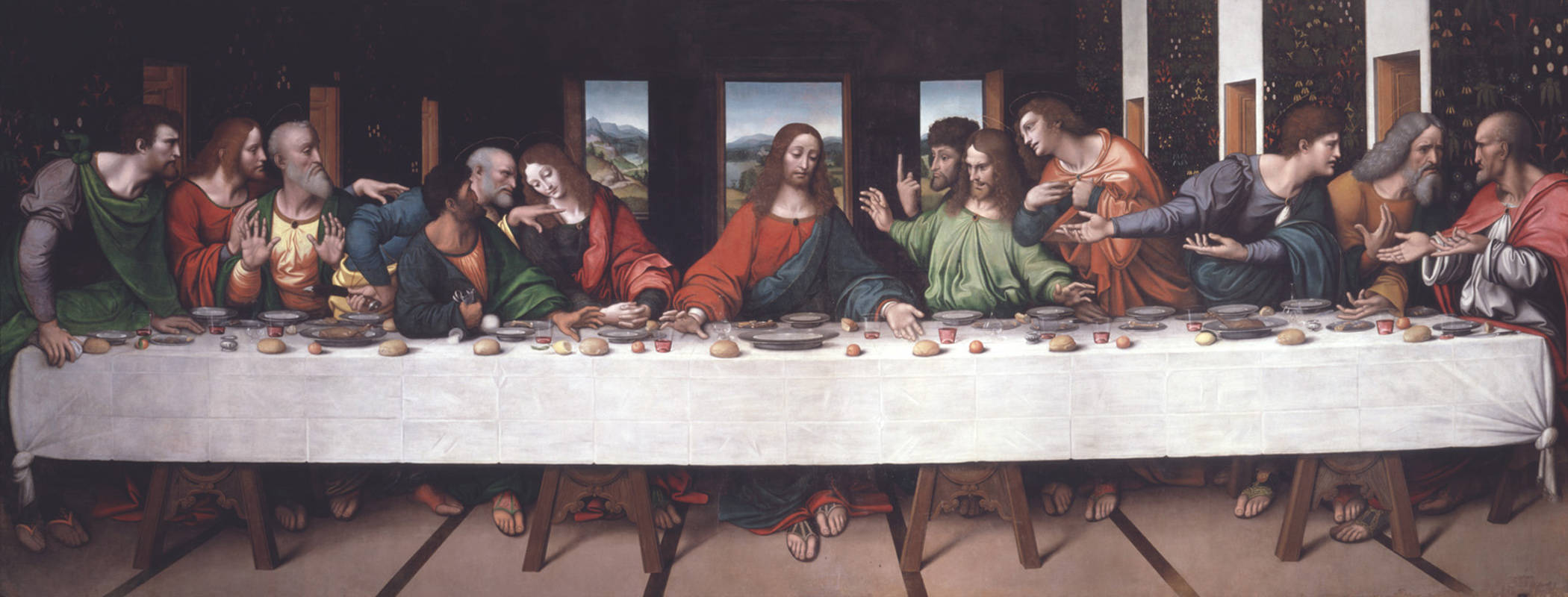
When Jesus came and the New Testament era began following the Day of Pentecost, one of the Old Testament feasts - Passover, was succeeded by Jesus' institution of His Covenant meal, called by many Christian groups today "The Lord's Table". Likewise the Old Testament rite of circumcision which was a sign of the Abrahamic Covenant came to be replaced by the New Covenant rite of believer's baptism. The Gospel message in terms of its contents and method of converting people never changed. However the way God ordained the Gospel to be visualized did change. Today's post and the next will feature the two visual means ordained by God to visualize the Gospel to both His church and to a watching world. For today we will deal with that first means - the Lord's Supper. Tomorrow's post will feature the second visualized portrayal of the Gospel - Baptism.

The Purposes for the Lord's Table and main point of application
In today's blog we want to understand the purposes for which the Lord's Supper was prescribed by the Lord Jesus Christ to His church.  Regular observance of this "meal" by the local church enables the body of Christ to maintain its corporate identity and grow closer together.  (1 Corinthians 10:16-17)  The point of application for today's post will be: The Lord's Supper's purposes enables Christians to visualize why they need Christ, the Gospel and One another. Below are four reasons why celebrating the Lord's supper is vital to Christians both individually and as members of the local church. Our key text will derive from 1 Corinthians 11:17-34. The reader is encouraged to read the text and use the headings and explanation below to work through the text.

1. The Lord's Supper is used by Christ to repair divisions. 1 Corinthians 11:17-22
The letter of 1 Corinthians was written to a church that was fractured in its fellowship.  Out of the 10 churches that the Apostle Paul wrote to in his 13 New Testament Epistles, the church at Corinth was the most heartbreaking.  Jesus had prayed in John 17:21 that His church as a whole would be one as He and the Father are one.  Clearly the church at Corinth was going in the opposite direction - which is why the Holy Ghost inserted instructions about the Lord's Supper.  The Lord's supper gives the church the opportunity to seek forgiveness, heal division and fix fellowship issues that may have arisen since the last Lord's supper. (1 Corinthians 11:28-34)

2. The Lord's Supper rejoices in the cross. 1 Cor 11:23-25
The cross in the scriptures was the event that the Holy Spirit used to point me to the source of my salvation.  Additionally, the cross is the place the Holy Spirit uses to cleanse me in my post-conversion sanctification.  The cross must never be forgotten. (1 Corinthians 2:2)  The Lord's table intentionally focuses the entire church on all the signifcance and daily need for the cross.  (1 Corinthians 10:16-17)

3.  The Lord's Supper repeats the Gospel. 1 Corinthians 11:26
The Gospel of Jesus Christ focuses upon what Jesus came to do in His first coming - accomplish salvation.  The Gospel also tells us how we can be saved from the reality of God's wrath that is coming upon this world in Christ's second coming. (Romans 5:9-10; 1 Thessalonians 1:10) As an ordinance, like Baptism, the Lord's table conveys the Gospel in picture rather than words.  By the Holy Spirit, Jesus Christ communicates and reinforces these truths to the hearts of His church through their observance of His ordinance (1 Corinthians 10:16-17; 11:26)  This is why the Lord's table is celebrated in conjunction with the communication of the scriptures.

4. The Lord's Supper urges re-examination of the Christian walk. 1 Corinthians 11:27-34
We are told in 2 Corinthians 13:5 to "examine ourselves to see whether or not we are in the faith".  What kinds of questions are good to ask myself when getting ready to receive the Lord's Supper (or communion, as it is sometimes called)?  What if any unconfessed sin has crept into my life since I last partook of the Lord's supper?  Do I have any resentment towards anyone?  Have I grown cold in my love for Jesus, His Word or prayer?  How am I doing in the areas of supporting the local church of which I am a member through my giving of tithes and offerings? Am I mad at God? Have I done anything to grieve His Spirit?  Have I seen growth and change in my life for the glory of God?  What has God shown me about Himself since the last time I partook of His meal?

Questions like the ones above remind the Christian of the need for daily examination.  There is no cruise control on the steering column of the Christian life.  We don't coast, we aim to strive for all we can in Christ, since it is He who is working in us His perfect and pleasing will. (Philippians 3:12-13) 

This is the Gospel in stereo: the audio coming from the scripture, and the video (visual) coming from the Lord's supper. Tomorrow we will consider the second part of the Gospel in stereo when we examine believer's baptism. 

Friday, September 26, 2014

How we know God is for the Christian


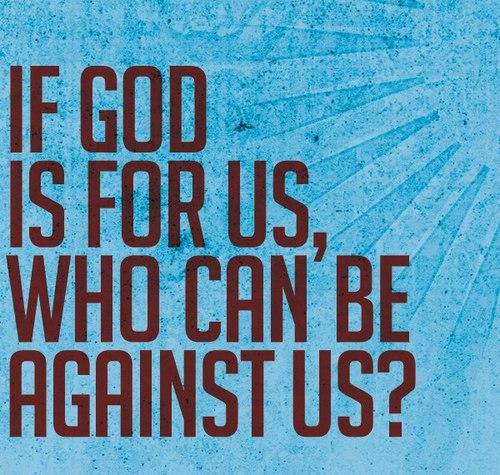
Romans 8:31 What then shall we say to these things? If God is for us, who is against us?

Introduction:
It is no secret that we are living in a cynical age. The Christian can very quickly adopt such a suspicious attitude toward God if they're not careful. Let's be honest, if you are a Christian reading this post today, I'm certain you have asked from time to time: "Is God really there for me?" or "How do I know that God still cares"? The mistake you and I make too often is to guage God's love for us by the kinds of circumstances going on in our lives. Life and its events are not reliable indicators for determining how much God is for the believer. Certainly a person can be in the will of God and yet still experience cancer, loss or dissapointment, as well as times of abundance and ease. What specifically does Romans 8:31 mean when it mentions "these things" demonstrating the fact that God is for the Christian? As we fan out from Romans 8:31, I believe we can find three demonstrations of the fact that God is indeed for the Christian in Romans 8:28-32: 

1. The purpose of God for the Christian. Romans 8:28

2. The plan of God for the Christian. Romans 8:29-31

3. The promise of God for the Christian. Romans 8:32

So let's briefly look at each of these three things that demonstrate that God is truly for the believer in Jesus Christ.

1. The purpose of God demonstrates God is for the Christian.
Romans 8:28 is perhaps one of the most beloved passages in scripture. Notice what Romans 8:28 states: "And we know that God causes all things to work together for good to those who love God, to those who are called according to His purpose." Notice how Paul emphasizes God's Sovereignty operating in the believer's life. God "causes" all things. God is the Orchestrator of human affairs. Even when mankind sins, God can still use the foolish decisions of sinful men to achieve His ultimate purpose. Were it not for the Ultimate purpose of God at the end of this verse, the entirety of life and salvation as we know it would fall to the ground. God is for you dear Christian because of the purpose He has for your life. This speaks of the goal God has established for you dear Christian to glorify Him and enjoy Him forever. The end has been set by God, and whatever God begin He finishes, guaranteed. (Philippians 1:6) However, how does one know God's purposes are sure? This is where the purpose of God in Romans 8:28 is connected to the plan of God in Romans 8:29-31.

2. The plan of God demonstrates God is for the Christian. Romans 8:29-31
For years Bible teachers have referred to these verses as the unbreakable golden chain of salvation. The point of Romans 8:29-31 is to unfold what is meant by God's purpose in Romans 8:28. Sadly so many Christians skip over Romans 8:29-31 to hasten to Romans 8:32. However unless we grasp God's grand plan and design of Christian salvation from beginning to end, we will have no basis for assurance. 

Romans 8:29 introduces us to the anchors of God's plan: foreknowledge and predestination. These words are not revealed in scripture to scare us, but rather to comfort us. Foreknowledge could just as easily be rendered "foreloving" or "foreseeing". He knows where you're at before you ever arrive at where you're at.  Predestination has to do with God "marking out" the boundaries of each and every individual Christian's life before they were born. 

Foreknowledge speaks of God's loving intent for each believer before they were born and predestination can be likened unto a set of blue prints. 

In roughly 100 places in the Bible we find the truth of God's elective purpose of grace, whereby He chose every Christian based not upon anything they had done but soley upon His choice for them based upon His love for them in eternity. (Ephesians 1:4-5; 2 Peter 1:1-2) Why would God begin planning each believer's salvation in eternity? Paul tells us the point of plan: "to become conformed to the image of His Son". 
The Baptist Faith & Message 2000 explains for us God's elective purpose: "Election is the gracious purpose of God, according to which He regenerates, justifies, sanctifies, and glorifies sinners. It is consistent with the free agency of man, and comprehends all the means in connection with the end. It is the glorious display of God's sovereign goodness, and is infinitely wise, holy, and unchangeable. It excludes boasting and promotes humility."

In Romans 8:30 we then see the so-called "golden chain" of salvation laid out in full length. We've already mentioned foreknowledge and predestination. The third link of the chain is God's calling. The Holy Spirit comes to people in their sins and calls them to leave their love affair with unbelief and trust in Jesus Christ for their salvation. 

The fourth link, justification, has to do with God's judicial declaration over the sinner at saving faith: not guilty. Let the reader be reminded that justification can only occur when the sinner believes. Salvation is taught consistently in scripture as including both God's Sovereignty (election, foreknowledge, predestination, calling) and human responsibility (justified). No man can be saved lest God draws them and yet, at the same time, no man can be saved until He repents and believes on the Lord Jesus Christ. 

Then the final link of God's plan of salvation is what Romans 8:30 calls "glorification". This speaks of the believer's completion in Heaven, from the removal of their sin once they leave this world in death to when their perfected soul and spirit is united with a glorified resurrected body at Christ's return. Those saints dying presently have just begun their glorification by having their soul/spirit purged of the presence of sin. When the rapture or catching away of the church takes place, those who died will raise from the dead first, followed by the living saints of God having their current bodies transformed. (see 1 Thessalonians 4:13-18) 

Why labor these verses? Because God's plan for every Christian stretches literally from eternity past to eternity future. We know God is for the Christian because of His purpose and plan but also notice lastly....

3. God's promises demonstrate that He is for the Christian. Romans 8:31-32
Romans 8:31-32 state - "What then shall we say to these things? If God is for us, who is against us? 32 He who did not spare His own Son, but delivered Him over for us all, how will He not also with Him freely give us all things?" How do we truly know whether or not God is for us? Read again that above underlined portion of Romans 8:32 - how will He not also with Him freely give us all things?" How much does God truly love His people? He loves them so much that He gave His only Begotten Son (John 3:16). God's promises are yes and amen in Jesus. (2 Corinthians 1:20-22) Why is it that we doubt God so often? Because we get our eyes off the cross. God's purpose and plan is tied to all that was achieved at the cross and empty tomb. Whenever we doubt Jesus' love for us: look to the cross and empty tomb, look to the scriptures. Emotions are o.k, but not infallible. The Bible alone is inerrant and infallible and the cross and empty tomb are the only proofs that everything that pertains to our salvation is true. As you read down to the end of Romans 8:33-39, you discover that everything Paul wrote about in Romans 8:28-32 is the guaranteed foundation of Romans 8:33-39. 

Closing thoughts:
In closing, remember that we know God is for the Christian based upon His purpose, plan and promises for each child of God. May we go and tell every person that they too can have the same opportunity as we if they will but respond to the Gospel of Jesus Christ and know that in Christ, God will always be there for them.