Translate

Monday, October 20, 2014

Discerning God's truth from religious counterfeits


Isaiah 41:21-23 “Present your case,” the Lord says.“Bring forward your strong arguments,” The King of Jacob says. 22 Let them bring forth and declare to us what is going to take place; As for the former events, declare what they were, That we may consider them and know their outcome. Or announce to us what is coming; 23 Declare the things that are going to come afterward, That we may know that you are gods; Indeed, do good or evil, that we may anxiously look about us and fear together."

Introduction
So then how do we know that Jesus Christ and the Bible are not merely superior to all other would-be contenders, but alone consistutes the truth of God's revelation of Himself with regards to salvation and eternity? The passage above lays out a two fold test, with Isaiah 42:1 mentioning a third test for discerning what is ultimate, eternally saving truth. Isaiah 42:1 states: “Behold, My Servant, whom I uphold;My chosen one in whom My soul delights. I have put My Spirit upon Him;
He will bring forth justice to the nations." We know from other scriptures that Isaiah is referring to the Messiah Jesus Christ. From these passages we can discern the following three-fold test you can use in evaluating and critiquing other worldviews and religions outside of Christianity that claim to be eternal, saving truth. The below three-fold test is but a bare outline of this test and is not meant to be exhaustive. 

1. Test of historical reliability. Isaiah 41:21-22
Does the proposed religion or worldview accurately describe history? Historical reliability in a given relgious document is a bare-minimum requirement, but an important one. If the so-called holy book does not give an accurate account of the past, then how can I trust it to tell me accurate information about my present life?

2. Test of fulfilled prophecy. Isaiah 41:23
When a said document, worldview or religion claims to be divinely inspired, the number one way to test that claim is if it accurately predicts future events, and has examples of fullfilled prophecy verified outside of the document. 

3. Test of leading a person to salvation. Isaiah 42:1
Does the given document lead me to a right relationship with the true and living God? In as much as we have labored the past several posts in identifying the true and living God as revealed by and in the risen Son, the only true salvation can result in being reconciled to the Father. 

To be counted as God's truth, all three of the above tests must be passed. If any one of the above tests fail, then that worldview, religion or alleged holy book is shown to not be God's truth revealed - i.e His Word. Only one book as ever passed all three tests - the Bible. Furthermore, only One person in history has passed all three tests - Jesus Christ. All other religions, worldviews or so-called holy books are counterfeits and incapable of qualifying as God's authoritative truth for life and eternity. 

Sunday, October 19, 2014

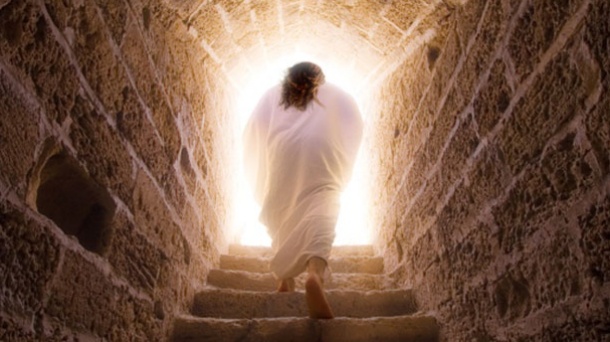
The importance of Christ's resurrection in Christian apologetics


Matthew 28:6 "He is not here, for He has risen, just as He said. Come, see the place where He was lying. 7 Go quickly and tell His disciples that He has risen from the dead; and behold, He is going ahead of you into Galilee, there you will see Him; behold, I have told you.”

Introduction:
The past several days was dedicated to seeing how we observe eternity in this life. We noted that eternity is declared in creation, discerned in humanity, defined in the Bible and demonstrated in Jesus Christ. No other event or Christian doctrine is more proclaimed, more attacked and more crucial than Christ's resurrection from the dead.  To get our footing on how Jesus' resurrection is communicated and how it is typically defended against critics, I will note four key areas of consideration that must be considered when talking about Jesus' resurrection from the dead:
1. His burial
2. The empty tomb
3. Post resurrection appearances to His followers
4. Changed lives

What top Christian apologists or defenders of the Christian faith say about Jesus' resurrection from the dead
Three of the top Christian Apologists today list the above four areas in their short list of what consistitutes the essence of the Biblical narrative of Christ's resurrection from the dead.  I want the reader to note the last element in each of their listings, since the importance of Jesus' post-resurrected appearances will be discussed toward the end of this post.

First Josh McDowell in his book: "Evidence that Demands a Verdict" lists the following elements of what he calls "the resurrection scene":1

1. Jesus was dead
2. The tomb
3. The burial
4. The stone
5. The seal
6. The guard
7. The disciples
8. The post-resurrection appearances 

The second Christian apologist, Liberty University Professor Gary Habermas, lists out a very similar short list in the argument he gives for the Resurrection that he calls the "minimal facts argument":2

1. The burial
2. The empty tomb
3. Post resurrection appearances
4. Changed lives (especially of the Apostle Paul).

Dr. Habermas' argument leans heavily on Paul's statements in 1 Corinthians 15:1-10, noting that the material represents early information that takes the reader back to within a year after the crucifixion and resurrection of Jesus.  

The third Christian Apologist who argues for the historicity and reliability of the resurrection accounts of Jesus Christ is Dr. William Lane Craig, a world renowned expert and debater who frequently debates critics attacking the Bible.  In his presentations, I have heard Dr. Craig list in a similar fashion the following essential elements to the account of Jesus' resurrection from the dead:

1. The burial
2. The empty tomb
3. The post resurrection appearances
4. The changed lives of the disciples
5. The conversion of the Apostle Paul

The reader can check out Dr. Craig's material at www.reasonablefaith.com.

The one area among these elements that merits further focus and explanation
In past posts over the years we have explored the great resurrection chapter of 1 Corinthians 15 and have aimed to unpack and proclaim all that Paul has to say in his masterful explanation and defense of the resurrection.  Certainly the Gospel accounts have also been the focus of past blogs on this subject, wherein we have talked about the crucifixion, burial and empty tomb.  

In listening to such fine articulators of the Christian faith above like McDowell, Habermas and Craig, as well as reading wonderful books and articles written by able Bible teachers, it has come to my attention that the way in which Jesus' post-resurrection appearances changed lives is worthy of consideration. Exploring how the post resurrected Jesus radically changed the lives of his disciples in the wake of His resurrection, as well as how He is still changing lives today lends immense credibility to the truth of the resurrection narratives. 

What we observe in the post-resurrection appearances of Jesus
Whenever we consider the four Gospel records, the Book of Acts and 1 Corinthians 15, we find exactly one dozen episodes featuring Christ's post resurrection appearances.  Furthermore, we find three common themes among them all:

1. Desperate condition of the people before His appearances
2. Direct encounter with the Risen Christ appearances themselves
3. Dramatic change that resulted from the appearances

Eight individuals or groups stand out in these post-resurrection appearance narratives, what we could call "post-resurrection profiles". 

1. Mary Magdelene
2. Peter
3. Emmaus Road Disciples
4. Thomas
5. The Disciples in general
6. Group of 500 people
7. James, the half brother of Jesus 
8. Paul

In scanning over these eight people or groups, we discover that in each case, their lives before, during and after each post-resurrection appearance leads to the conclusion that Christ indeed not only raised from the dead, but is alive and operating among His people.  Such post-resurrection power is the basis for the salvation and Christian growth of every Christian living today.  

Closing thought
The importance of Jesus' post-resurrection appearances cannot be over-estimated.  Not only is such a truth a vital component in communicating and defending the truth of Jesus' resurrection from the dead, but also is vital in explaining how Jesus is able to change lives today. In closing, this is why we come across such statements as 1 Peter 1:3 "Blessed be the God and Father of our Lord Jesus Christ, who according to His great mercy has caused us to be born again to a living hope through the resurrection of Jesus Christ from the dead." May we think on such truths and live our lives for the living, risen and exalted Jesus Christ!


Endnotes:
1. Josh McDowell. Evidence that Demands a Verdict - Volume 1. Here's Life Publishers. Page 189.

2. Dr. Habermas' minimal facts presentation can be found at the following link at: https://www.youtube.com/watch?v=ay_Db4RwZ_M

Saturday, October 18, 2014

Eternity is demonstrated by Jesus Christ


Acts 17:31 "because He has fixed a day in which He will judge the world in righteousness through a Man whom He has appointed, having furnished proof to all men by raising Him from the dead.”

Introduction and review
These last several days have been dedicated to exploring the evidence we see for eternity in this world. We have been exploring Paul's sermon that he preached before a crowd of skeptical Athenian philosophers at Mars Hill in Acts 17. This particular sermon of Paul's is important due to the fact he deals with the subject of seeing God's eternal nature and Person demonstrated in this world. Thus far we have considered the following main points:

1). Eternity is declared in creation. Acts 17:22-25

2). Eternity is discerned in humanity. Acts 17:26-29

3). Eternity is defined in the Bible. Acts 17:30

The audience to which Paul preached was moreso about finding fulfillment in this life and doing it all by themselves. Both the Epicureans and Stoics had worldviews that would correspond today to the atheism and agnositicism we see so prevalent in movies, books and culture. 

Main point of application: As we again about the subject of eternity, I point the reader it to a simple diagram featuring the name of God and two arrows doing out in either direction:
<--------------GOD--------------->
Why did Paul focus on this theme of eternity in his message? The point of application for this post, and really this blog series is: It is important how you respond to eternity in this life. Today we want to consider how Jesus Christ demonstrates the reality of eternity as seen already thus far in the course of this series. 

Eternity is demonstrated by Jesus Christ
Acts 17:31
Paul writes in Acts 17:31 "because He has fixed a day in which He will judge the world in righteousness through a Man whom He has appointed, having furnished proof to all men by raising Him from the dead.” The Biblical presentation of Jesus Christ is that He was One Person who being fully Divine from all eternity came to take upon Himself a fully human nature. (Philippians 2:5-11; 1 Timothy 3:16; Hebrews 10:4-5). Paul's emphasis here in Acts 17:31 underscores several undeniable truths that rise or fall together:

1. The reality of God (which we have established in the first three blogs of this series).

2. The reality of Jesus Christ (the focus of today's post)

3. The reality of Jesus' resurrection from the dead (which ties together the first two realities).

First, as Paul is winding down his address to these skeptical philosophers at Mars Hill, what began as an establishment of specific truth claims about God's eternal existence as demonstrated in creation, discerned in humanity and declared by the Bible becomes now an assumed given. Paul plainly states in Acts 17:31a "because He has fixed a day in which He will judge the world in righteousness...". This profound point not only tells us that this God is the beginner of all things, but also the completer of them. 

Next Paul asserts the historical reality of Jesus the man. Why underscore Jesus' humanity? Remember the audience to whom Paul spoke. The Epicurians believed that any truth worth knowing had to had verified direct evidence by experience through the senses. Stoics prized reason and the ability to arrive of conclusions on one's own as the best approach. Certainly the people of Paul's day had such direct evidence: eyewitness testimony of Jesus' life and the undebatable truth of Jesus' crucifixion. 

This naturally and seamlessly leads to the third reality of Jesus' resurrection from the dead. Paul states in Acts 17:31b "through a Man whom He has appointed, having furnished proof to all men by raising Him from the dead.”  The post-resurrection appearances and the dramatic growth of the early Christian movement would had been used by the early Christians, including Paul, to bolster the claims of Jesus Christ as being God in human flesh and thus the reality of eternity as demonstrated by Him. Such lines of argumentation are still used today in establishing the importance of Jesus' historical existence and the reality of His resurrection from the dead. 

Christian Apologist Dr. William Lane Craig lays out the following powerful argument that ties together proof for God's existence and the reality of Jesus' resurrection from the dead in his address "The Evidence for God" see link: http://www.reasonablefaith.org/media/the-evidence-for-god-imperial-college-london

1. There are three established facts regarding Jesus' resurrection from the dead: the discovery of the empty tomb, His post-mortem appearances and the disciples' faith in His resurrection from the dead.

2. The proposed idea or hypothesis of God raising Jesus from the dead is the best explanation of these facts

3. God's raising Jesus from the dead entails that the God raising Jesus from the dead exists

4. Therefore the God revealed by Jesus of Nazareth does exist.

Why is the Apostle's Paul's concluding point of his sermon on the resurrection of Jesus Christ and the final judgment such an appropriate landing place for seeing the evidence of eternity in this world? Because in the Person of Jesus Christ both the Eternal nature of God and the physical nature of humanity  
meet. Moreover, with the historical existence and resurrection of Jesus being firmly established events, this brings the issue of eternity from the realm of the abstract to the necessity of every reader to respond appropriately to the mounting evidence of God's Eternal Presence and their need for salvation in Jesus Christ.

Closing thoughts
We have spent these past several posts considering how it is we see evidence for eternity in this life. As we considered Paul's sermon to the philosophers of Mars Hill in Acts 17, we noted the following four headings:
1). Creation declares eternity Acts 17:22-25

2). Mankind discern eternity Acts 17:26-29

3). Bible defines eternity Acts 17:30

4). Jesus demonstrates eternity Acts 17:31

Paul closes out his sermon and the response from his audience is anything but neutral. Acts 17:32-34 states - "Now when they heard of the resurrection of the dead, somebegan to sneer, but others said, “We shall hear you again concerning this.” 33 So Paul went out of their midst. 34 But some men joined him and believed, among whom also were Dionysius the Areopagite and a woman named Damaris and others with them."


Friday, October 17, 2014

Eternity is defined by the Bible


Acts 17:30-31  "Therefore having overlooked the times of ignorance, God is now declaring to men that all people everywhere should repent, 


Introduction and review
We have been exploring Paul's sermon that he preached before a crowd of skeptical Athenian philosophers at Mars Hill in Acts 17. This particular sermon of Paul's is important due to the fact he deals with the subject of seeing God's eternal nature and Person demonstrated in this world. 

Paul had his hands full by the time he arrived at Mars Hill. He faced a crowd of skeptics, cynics and thinkers who treated His message as nothing more than another intellectual oddity of first century life. The audience to which Paul preached was moreso about finding fulfillment in this life and doing it all by themselves. Both the Epicureans and Stoics had worldviews that would correspond today to the atheism and agnosticism we see so prevalent in movies, books and culture. 

Main point of application: As we think about the subject of eternity, I point the reader it to a simple diagram featuring the name of God and two arrows doing out in either direction:
<--------------GOD--------------->
Why did Paul focus on this theme of eternity in his message? The point of application for this post, and really this blog series is: It is important how you respond to eternity in this life. We have seen thus far in the previous two posts that eternity is declared in creation and discerned in the heart of man. We will continue further by seeing evidence for God's existence as the Eternal, Personal Creator and Redeemer by noting how eternity is declared in the Bible. 

Eternity is defined by the Bible
Notice what Luke writes about Paul's next statement in Acts 17:30 "Therefore having overlooked the times of ignorance, God is now declaring to men that all people everywhere should repent". Notice the phrase: "God is now declaring". Presupposed in Paul's statement is the notion that the very God Whom He has been laboring to show as existing and personal in Eternity has the capability to speak and reveal His will to human beings. Furthermore, God is not only a talking God Who reveals His Deity in creation and in the human heart, but He is a God Who reveals Himself in written words. 

Now at this point some readers may question the validity of what I just wrote. It is pretty clear that as a Christian I will claim that the Bible alone is worthy of the title: "Word of God". Many people today question this claim due to the fact that the Bible is not the only book that claims itself to be God's word or "Divinely inspired". It is only fair to ask: "how do you know that the Bible is God's Word, when other books make such a claim"?

Three simple tests can demonstrate whether or not a given document is divinely inspired: Accuracy in regards to history (Isaiah 41:21-22); Accuracy in regards to prophecy (Isaiah 41:23) and Ability to lead someone to salvation in Jesus Christ (Deut 13:12-15; Romans 10:1-8).

First, if a document claims Divine inspiration, then at bare minimum it ought to be reliable in regards to how it records history. The Book of Mormon for instance claims that Jesus made various appearances in America to specific tribes of Indians who were supposedly descended from Abraham and the Jews. However, there is not one shred of evidence historically, genetically or archaeologically to support the Book of Mormon's historical record. On the other hand the Bible's recording of historical events has been verified by dozens of archaeological and ancient manuscript excavations. 

What about a document's ability to predict the future accurately? In having read through all of the major religious documents of major world religions, one can certainly find each of them claiming some level of divine inspiration. However when it comes to predictive fulfilled prophecy, the Bible alone evidences not just one or two examples, but dozens and hundreds. The Islamic holy book called the Quran has not one example off fulfilled prophecy, neither does the Book of Mormon, the Hindu Vedas, the writings of Buddha nor any other so-called relgious document. On the other hand we see Jesus for example predicting in detail in Matthew 24 the destruction of the city of Jerusalem and its temple. That prediction came true some 40 years after the fact and is verified in the writings of Jewish Historian Flavius Josephus. 


Then of course the third mark of divine inspiration would be that the given document is used by God to bring about the salvation of someone hearing it or reading it. Now think about what we have discussed in this blog series thus far: Eternity is declared in creation and discerned in humanity. With God's existence being firmly established in what we see in the general revelation of creation and the human heart, we then saw that this God is a God Who communicates. With the Bible alone demonstrating its Divine authority as historical reliable and prophetically accurate, then there can be no plausible reason to deny its authority on matters pertaining to salvation.

As the apostle Paul states in Acts 17:30 - "God is now declaring to men that all people everywhere should repent", that message has been repeated by God throughout the Old Testament and is now being amplified in the writings of the New Testament and specified by the coming of Jesus Christ. To repent of something means I change my mind on how I view my sin and Jesus Christ. With the Bible being established to be uniquely qualified as the sole word of God in this world, then it stands to reason that if one believes eternity to be declared in the Bible, the matter of salvation must then be responded to, rendering such a person accountible to its message. As we have been saying this whole time in our series: "It is important how you respond to eternity in this life."

More tomorrow...

Thursday, October 16, 2014

Eternity discerned in humanity


Acts 17:26-29 "and He made from one man every nation of mankind to live on all the face of the earth, having determined their appointed times and the boundaries of their habitation, 27 that they would seek God, if perhaps they might grope for Him and find Him, though He is not far from each one of us; 28 for in Him we live and move and exist, as even some of your own poets have said, ‘For we also are His children.’ 29 Being then the children of God, we ought not to think that the Divine Nature is like gold or silver or stone, an image formed by the art and thought of man."

Introduction and review Paul had his hands full by the time he arrived at Mars Hill. He faced a crowd of skeptics, cynics and thinkers who treated His message as nothing more than another intellectual oddity of first century life. The audience to which Paul preached was more so about finding fulfillment in this life and doing it all by themselves. Both the Epicureans and Stoics had worldviews that would correspond today to the atheism and agnosticism we see so prevalent in movies, books and culture. As Paul cleared  his throat and began to preach, what came forth was a message that would express the Biblical message of God's eternal plan of salvation and glory. Eternity was brought forth front in center in Paul sermon. 

Main point of application: As we think about the subject of eternity, I liken it to a simple  diagram featuring the name of God and two arrows doing out in either direction:
<--------------GOD--------------->
Why did Paul focus on this theme of eternity in his message. The point of application for this post, and really this blog series is: It is important how you respond to eternity in this life. We saw in yesterday's post how creation declares the reality of eternity and the God Who is eternal and Who made this world. Today's post continues on by considering how eternity is discerned in humanity.

Eternity is discerned in humanity
Human beings owe their allegiance and existence to God. Passages such as Psalm 24:1 and 50:12 affirm the truth of such an obligation. God's Eternal power and presence is declared in creation, but we must also realize that it is discerned in the heart of human beings. Perhaps the clearest text in all of the Bible that speaks on this point is Ecclesiastes 3:10-11  "I have seen the task which God has given the sons of men with which to occupy themselves. 11 He has made everything appropriate in its time. He has also set eternity in their heart, yet so that man will not find out the work which God has done from the beginning even to the end." Why is it that human beings innately ask the big questions such as: "why is there something rather than nothing" and why is it that man by his very nature is a religious being? Because mankind is made in God's image. By being made in God's image, man has been designed to have fellowship and communion with God in his innermost being - the human spirit.

When Adam and Eve rebelled in the garden of Eden, they along with their posterity died spiritually and thus though having the capability of communing with God, mankind, apart from grace, has no ability, morally or otherwise, to personally relate to God. Mankind of course intuitively knows there is a God and thus knows "about God" (Romans 1:18-31). However in terms of "knowing God" on a personal level, such a relationship is impossible apart from salvation in Jesus Christ. The Bible's message is not just another religious book about another religious idea for a people in search of religion, rather it is God's revelation of Himself to a world that Has rejected Him and to His people saved by grace through faith in the revelation of Himself in Jesus Christ. 

Mankind has been affected by sin, through and through, and can only be redeemed when the Holy Spirit through the Gospel brings Jesus to them to respond to His call to faith and repentance. (Romans 3:10-23; 4:3; 10:8-10) 

As of this writing there are over 10,000 religions in this world that demonstrate the fact that mankind has interacted with God's general revelation of Himself in creation (recall what we discussed yesterday). Sadly what man does is take that knowledge (which is non-saving revelation) and twist it to his own liking. (Romans 1:18-31) All human beings innately know of two truths: there is a God and that I am a sinner. Religions have in common mankind's quest to somehow alleviate the guilt he feels every time he sins. The end result will be either the diminishing of God into some type of multiple god system or even no god at all, or the diminishing of sin as to being nothing more than a mistake or even an illusion. 

Only the Gospel fills in the necessary third piece and only solution to mankind's plight - the cross and resurrection of Jesus Christ. This is why Paul states in Acts 17:26-29 "and He made from one man every nation of mankind to live on all the face of the earth, having determined their appointed times and the boundaries of their habitation, 27 that they would seek God, if perhaps they might grope for Him and find Him, though He is not far from each one of us; 28 for in Him we live and move and exist, as even some of your own poets have said, ‘For we also are His children.’ 29 Being then the children of God, we ought not to think that the Divine Nature is like gold or silver or stone, an image formed by the art and thought of man."

Unlike all other religions, philosophies and attempts to reach up to God, the Gospel alone tells us that God reaches down to man through the incarnation of Jesus Christ. By the objective accomplishment of the event of salvation: the cross and empty tomb, sinners can be made right with God in saving faith. (Ephesians 2:8-9) The pining for eternity that echoes in the empty heart of fallen man is brought home to roost as the Holy Spirit comes to indwell at saving faith. (Romans 8:16; 1 Cor 3:16) As one person as noted: salvation is where the very life of God comes to penetrate the human soul. Hence the eternity that is discerned by the fallen human heart to be real is brought down to man as a reality in salvation. It is important how you respond to eternity in this life.

More tomorrow.

Wednesday, October 15, 2014

Eternity declared in creation


Acts 17:22-25 So Paul stood in the midst of the Areopagus and said, “Men of Athens, I observe that you are very religious in all respects.23 For while I was passing through and examining the objects of your worship, I also found an altar with this inscription, ‘TO AN UNKNOWN GOD.’ Therefore what you worship in ignorance, this I proclaim to you. 24 The God who made the world and all things in it, since He is Lord of heaven and earth, does not dwell in temples made with hands; 25 nor is He served by human hands,as though He needed anything, since He Himself gives to all people life and breath and all things"

Introduction:
Today's post begins a series of posts featuring the idea of "eternity". As the Apostle Paul was in the cultural epicenter of the Greek and Roman world, Athens, the scripture states in Acts 17:16 "Now while Paul was waiting for them at Athens, his spirit was being provoked within him as he was observing the city full of idols." Paul was in the course of his second missionary journey and was getting ready to engage in dialogue with those who had been listening to his preaching. Acts 17:17-21 records four groups of people that Paul would end up engaging before it was all said and done:

1). God-fearers - Gentiles who had converted to Judaism and who most likely were converting to Christ under Paul's preaching

2). Jews of the Synagogue - These may had been Jews who had converted to Christ or who were still as yet unconvinced. Nonetheless they were Jews who were members of the local Jewish center in Athens.

These first two groups occupied Paul's time until he was engaged by two other groups who composed the august assembly at Mars Hill, the scene of Paul's epic sermon.

3). Epicurians - These philosophers would correspond to those who wanted to live life to its fullest based upon their desires. Escape of pain and finding of pleasure was the backbone of Epicurean thought. 

4). Stoics - Perhaps you have heard the word "stoic" used to describe someone who is detatched from their emotions and are all about the facts and reason. Stocism as a philosophy emphasized self-sufficiency and the abilities of the mind to arrive at practical solutions to finding life's happiness.

Paul had his hands full by the time he arrived at Mars Hill. He faced a crowd of skeptics, cynics and thinkers who treated His message as nothing more than another intellectual oddity of first century life. The audience to which Paul preached was moreso about finding fulfillment in this life and doing it all by themselves. As Paul cleared  his throat and began to preach, what came forth was a message that would express the Biblical message of God's eternal plan of salvation and glory. Eternity was brough forth front in center in Paul sermon. 

Main point of application: As we think about the subject of eternity, I liken it to a simple  diagram featuring the name of God and two arrows doing out in either direction:
<--------------GOD--------------->
Why did Paul focus on this theme of eternity in his message. The point of application for this post, and really this blog series will be: It is important how you respond to eternity in this life. The whole point of Paul's sermon is to unfold how it is we see The Eternal God's reality shown forth in this life. Notice firstly...

Creation declares eternity. Acts 17:22-25
As we already observed in the opening verses of today's post, God made the world and everything in it and is the source of life as we know it. By rights all things and all people owe their existence to God. Scripture uniformly teaches that creation declares the glory and eternal nature of God. Psalm 19:1 states - "The heavens are telling of the glory of God;And their expanse is declaring the work of His hands." Romans 1:20 tells us - "For since the creation of the world His invisible attributes, His eternal power and divine nature, have been clearly seen, being understood through what has been made, so that they are without excuse."

The largeness of the universe, the smallness of the atom and the mystery of human life are three examples that come to mind when thinking about how creation points to something and really Someone beyond itself. 

First, consider a specific example of the universe's large-scale pattern. The universe's distribution of galaxies in concentric circles or shells of specific distances has been observed by various astronomers over the past few decades (for those interested see: https://legacy-cdn-assets.answersingenesis.org/assets/pdf/tj/v17n2_cosmology.pdf and https://answersingenesis.org/big-bang/one-issue/ ). This pattern of galaxies stretching hundreds of billions of light years across the universe suggests not only a definite beginning to our universe, but an intelligent One that lies outside the universe. 


We also see creation declaring eternity in the world of the very small, the atom. When we look at the complexity of the atom, specific numbers and electrical charges are necessary for its most basic constituient sub-particles to exist (i.e protons, neutrons and over a dozen other sub-atomic particles). Particle physicists have demonstrated that the variables necessary for atoms to exists have been constant since the beginning of the universe. If one were to run a clock backwards to where current science believes the universe began, those laws governing atoms break down, meaning that they suddenly are non-existent. Again this lends further support to the fact that a non-natural, albeit a Supernatural cause was responsible for the beginning of all things. 

Then thirdly, we consider the riddle of humanity itself. How is it that mankind, being physical in nature, yet has an immaterial mind, and consciousness? Models outside of a Supernatural origin of all things have been unsuccessful in fully explaining humanity's ability to think, reason and to express itself artisitically on the basis of base natural laws. Science can indeed explain how things happen and what happens, yet the "why" questions that must be answered cannot be answered by science alone. 

All of creation, from the smallest atoms, to mid-sized creations such as ourselves, to the largest structures of the universe all scream that there is Someone responsible for why it is there is something rather than nothing. Psalm 90:2 tells us: "Before the mountains were bornOr You gave birth to the earth and the world, Even from everlasting to everlasting, You are God." Romans 11:36 says - "For from Him and through Him and to Him are all things. To Him be the glory forever. Amen." 

Why is it that so many people today deny the fact that eternity is declared in creation? Whenever you read Romans 1:18-20 or Psalm 19 or any other scripture that speaks about God's Eternal presence and power clearly demonstrated in creation, there is always a spiritual and moral objection to such evidence. Why was Paul's audience, as a majority, resistent to his message in Acts 17? Unbelieving man, untouched by God's grace, will bristle at the suggestion that an all-powerful, all knowing God has authority over their lives. Epicureans prided themselves on governing their lives by their physcial drives and Stoics strove to be self-sufficient people. Though the philosophies may have had different names, the underlying thoughts are still alive and well in contemporary thought. 

Our world will gladly ignore the evidence of the eternal to avoid moral and spiritual accountibility. This is why it is important to understand how you will respond to the eternal so clearly declared in creation.

More tommorrow.....

Tuesday, October 14, 2014

Using an apple to prove the existence of God


Acts 17:24 “The God who made the world and all things in it, since He is Lord of heaven and earth, does not dwell in temples made with hands.”
Note to reader: For a more in-depth version of this post, check it out at the other blogsite: http://biblicalexegete.wordpress.com/2014/10/14/how-an-apple-can-prove-the-existence-of-god/
Introduction:
I recently came across a conference message delivered by Christian apologist Ravi Zacharias that was entitled: “The Existence of God” (here is the link):http://www.ligonier.org/learn/conferences/orlando_2007_national_conference/the-existence-of-god-3949/. Mr. Zacharias began his talk by outlining the three major catastrophic consequences that result when we deny the existence of God:
1. Loss of morality or a foundation for morality                                                                                 2. Loss of meaning                                                                                                                                   3. Loss of hope
Following on the heels of that introduction, Mr. Zacharias then began to trace a three stage argument for the existence of God. What he outlined in the first stage is what I would like to explore in today’s post. We will summarize what he said and then track out some additional implications.
Proving God’s existence with a simple apple
As Ravi Zacharias began to present the first stage of his argument for the existence of God, he used a simple apple and then made reference to the imagery of falling dominoes. Imagine an apple. Now the apple, or any other object in the universe, whether the smallest sub-atomic particle or the largest galaxy, all have one thing in common: they by themselves cannot account for their own existence. As you hold an apple in your hand, ask yourself: “Whence came this apple”? Of course the answer would be: “an apple tree”. The next question would follow: “When then the tree?” The answer of course would be an apple seed”. The next logical question of course would be: “whence then the seed?” The only answer of course would be an apple.
As Ravi Zacharias presented this basic demonstration of the chain of cause and effect, he then noted how it would be impossible for this chain to be indefinite in length. Think about it, if there would had been an infinite amount of apples, seeds and trees going all the way back to eternity, then there would be no way we could be holding an apple currently in our hand.
In similar form, imagine a domino called “x”. We find that domino “x” had been knocked over by a previous domino, and that previous domino knocked over by a prior one, and so on. Just like the tree, apple, seed chain of cause and effect, there would be no way one could have an infinite series of dominoes in an infinite chain of cause and effect, otherwise we would had never observed the falling of domino “x”.
What is the point Ravi Zacharias is making? That everything in the universe has to have had a cause, being that everything, from sub-atomic particles, to dominoes, to apples to galaxies had a beginning. Everything in the universe ultimately had a beginning; and in turn, everything that had a beginning has a cause. Furthermore, being that everything in the universe is composed of matter and energy that is on every level incapable of giving an account for its own existence, then it follows that the Cause for all things lies outside of the universe. According to Ravi Zacharias, that Cause can only be One – God.

To that presentation I can only offer this response: amen!