Translate

Wednesday, December 31, 2014

Envisioning a More Awesome Church - The Great Commission


Acts 2:46-47 "Day by day continuing with one mind in the temple, and breaking bread from house to house, they were taking their meals together with gladness and sincerity of heart, 47 praising God and having favor with all the people. And the Lord was adding to their number day by day those who were being saved."

Introduction and review
These last several posts have been dedicated to unfolding and envisioning a more awesome church. Whenever we look at the pages of the New Testament with regards to the effectiveness of the local church, we find churches that achieved more for God than the sum of their people or resources. The churches of the New Testament are characterized as "more awesome" because they consistently practiced intercessions, powerful word ministry and Godly, Spirit united fellowship with one another. These were the type of churches people would had wanted to be a part of because the risen Christ were the main draw. The Holy Spirit's liberty to express Himself through the gifts He gave His people was at a premium in those churches. Today's post deals with yet another crucial mark of "more awesome" church life - namely an emphasis on the great commission.

What happens when churches are reaching others for Jesus' sake by way of the Great Commission
Jesus told his disciples in Matthew 28:18-20 "And Jesus came up and spoke to them, saying, “All authority has been given to Me in heaven and on earth. 19 Go therefore and make disciples of all the nations, baptizing them in the name of the Father and the Son and the Holy Spirit, 20 teaching them to observe all that I commanded you; and lo, I am with you always, even to the end of the age.” Acts 1:8 has Jesus echoing similar sentiments to his disciples about the then soon coming of the Holy Spirit at Pentecost: "but you will receive power when the Holy Spirit has come upon you; and you shall be My witnesses both in Jerusalem, and in all Judea and Samaria, and even to the remotest part of the earth.”

Notice what makes the great commission so "great": we as the church proceed on the basis of Christ's Sovereign authority and the Spirit's power. Whenever the church is consistently practicing the Great commission, she will be marked by God's favor which is a composed of both Christ's Sovereign authority exercised among God's people through the Spirit's power. This is why in Acts 2:47 we read about how the church enjoyed "favor" with all people. A church that is practicing the Great commission will have God's favor in ever increasing measure. 

A church that is serious about the Great commission must be in tune with these twin realities of Christ's supremacy and the Spirit's empowerment. Think about the spread of Christianity across the entire Roman Empire in the first 30 years of its existence in the Book of Acts. The persecutors of the early church said in Acts 17:6  "When they did not find them, they began dragging Jason and some brethren before the city authorities, shouting, “These men who have upset the world have come here also."  In practicing the Great Commission, we must be in tune with the greatness behind the great commission - the glory of God revealed in Jesus Christ by the Holy Spirit.

John Piper writes in his ground-breaking work on missions "Let the Nations be Glad! The Supremacy of God in Missions": "If the pursuit of God's glory is not ordered above the pursuit of man's good in the affections of the heart and the priorities of the church, man will not be well served and God will not be duly honored. I am not pleading for a diminishing of missions but for a magnifying of God. When the flame of worship burns with the heat of God's true worth, the light of missions will shine to the most remote peoples on earth. And I long for that day to come! Where passion for God is weak, zeal for missions will be weak. Churches that are not centered on the exaltation and majesty and beauty of God will scarcely kindle a fervent desire to "declare his glory among the nations" (Psalm 96:3). Even outsiders feel the disparity between the boldness of our claim upon the nations and the blandness of our engagement with God."

Piper's comments certainly sting but they also hit the nail on the head when it comes to the anemic approach so many American churches have towards missions. 

Why being on co-mission with God must be the necessary outlet for intercession, the Word and fellowship
At some point the life of the local church must spill out into the community and the world. These past several days have been dedicated to envisioning a more awesome church. What happens if a church begins to get gripped by God so much that intercession ripples across that fellowship, preaching and teaching become paramount, fellowship becomes sweet and profound and yet no efforts in great commission work are done? stagnancy, complacency and a short-circuit of God's purposes. 

When I read of the Great Revivals that swept across our globe in the past two millennia, I see all of them yield forth fruits of countless souls won to Christ. Without a doubt God's movement among His people is for His people to once again rekindle the flame that was but a flicker. However unless that fervency is matched by missionary endeavor, the revival will be short-sighted and short-lived. If we only aim to draw closer to God without aiming to urge others to do the same, our remoteness of God's conscious presence will only grow. 

I'm reminded of the little pond that was close by my child-hood home. The little pond was home to many fish and sustained wildlife of all kinds. The only outlet for that little pond was a pipe that drained off the water and fed a small creek that ran parallel to our property. My sister and I would frequent that pond to skip stones and view the dragon flies meandering their way among the cat-o-nine tails. Whenever we would walk up to that pond, we at times had to unclog that drain pipe that fed the creek from the pond. In the summer times the pond would begin to get clogged up with green algae and moss. If the pipe got clogged, the smell of stagnancy would set in and soon the stench of death could be smelled. 

A church that ever expects to be vibrant must have an outlet. Church's by their very nature are inward focused and if the Great commission is not being regularly practiced, soon the church becomes more like an overweight cruise ship than an outfitted battleship with Christ at the helm. For the church to be "more awesome", she must be about the co-mission assigned to her by her Lord.  

Tuesday, December 30, 2014

Envisioning a More Awesome Church - True fellowship


Acts 2:42 "They were continually devoting themselves to the apostles’ teaching and to fellowship, to the breaking of bread and to prayer."

In the last few posts we have been considering what it means to envision a more awesome church. Thus far we have looked at envisioning a more awesome church that takes to heart intercessory prayer as not only a personal practice by a church-wide characteristic marking that church. We also saw the equally important emphasis of centering all preaching and teaching on the unfolding, expositional, verse by verse application of God's Word in worship and life application. These tenets may sound basic, however few churches practice them consistently. American pulpits today are not as concerned about explaining God's Word as they are in entertaining an already over entertained audience. Likewise, programs and planning are put ahead of prayer. To plan and program before prayer is putting the cart before the horse. In-as-much as we need to put feet to our prayers, there does need to be prayers first, otherwise our feet and hands will falter. 

Whenever we consider the New testament church as depicted in Acts and described in the New Testament letters, there is no question that intercessory prayer and emphasis on God's Word marked the reasons behind its effectiveness. Today we add a third vital element - the relational element of Biblical fellowship.

The outcomes of true fellowship as intended by God in His Word
One of the clearest descriptions one can find of what true fellowship looks like, talks like and acts like is found in Acts 2:44-46 "And all those who had believed were together and had all things in common; 45 and they began selling their property and possessions and were sharing them with all, as anyone might have need.46 Day by day continuing with one mind in the temple, and breaking bread from house to house, they were taking their meals together with gladness and sincerity of heart." Does this sound like a church you would like to be a part of? Does this description sound like your church or mine? What about other places in the New Testament that describe what fellowship was like in the early church? What happens when a more awesome church is exercising true Biblical fellowship?

1. Cause for celebration 
Colossians 1:3-6  "We give thanks to God, the Father of our Lord Jesus Christ, praying always for you, 4 since we heard of your faith in Christ Jesus and the love which you have for all the saints; 5 because of the hope laid up for you in heaven, of which you previously heard in the word of truth, the gospel 6 which has come to you, just as in all the world also it is constantly bearing fruit and increasing, even as it has been doing in you also since the day you heard of it and understood the grace of God in truth." The church at Colossae had biblical, Spirit-filled fellowship happening and it was cause for celebration. 

2. Clear example to other churches and the community
1 Thessalonians 1:2-8 "We give thanks to God always for all of you, making mention of you in our prayers; 3 constantly bearing in mind your work of faith and labor of love and steadfastness of hope in our Lord Jesus Christ in the presence of our God and Father, 4 knowing, brethren beloved by God, His choice of you; 5 for our gospel did not come to you in word only, but also in power and in the Holy Spirit and with full conviction; just as you know what kind of men we proved to be among you for your sake. 6 You also became imitators of us and of the Lord, having received the word in much tribulation with the joy of the Holy Spirit, 7 so that you became an example to all the believers in Macedonia and in Achaia. 8 For the word of the Lord has sounded forth from you, not only in Macedonia and Achaia, but also in every place your faith toward God has gone forth, so that we have no need to say anything."

3. Christ's favor and blessing
Revelation 3:8-10 ‘I know your deeds. Behold, I have put before you an open door which no one can shut, because you have a little power, and have kept My word, and have not denied My name. 9 Behold, I will cause those of the synagogue of Satan, who say that they are Jews and are not, but lie—I will make them come and bow down at your feet, and make them know that I have loved you. 10 Because you have kept the word of My perseverance, I also will keep you from the hour of testing, that hour which is about to come upon the whole world, to test those who dwell on the earth."

The three churches above demonstrate the outcome of what takes place when true Biblical fellowship is occurring. The blessing is not only experienced within the church but more so outside by others. 

8 relational ingredients for building true biblical fellowship
The key to true fellowship in the local church where Christians come together and enjoy the supernatural unity and "God-kind" of love for one another is discovered in the reciprocal or "one another" commands. For every command God gives in His Word there is always at least one provision of grace attending it. The following 8 reciprocal commands must be practiced by churches today to experience and express true Godly fellowship that marks that church as a "more awesome church". 

1. Love one another. John 13:34,35; Gal 5:14; 1 Thess 3:11-12; 1 Pet 1:22

2. Receive One another. Rom 15:7

3. Greet One another. Romans 16:16; 1 Cor 16:20; 2 Cor 13:12; 1 Pet 5:14

4. Have the same care for one another 1 Cor 12:24-25

5. Submit to one another. Eph 5:18-21

6. Forbear one another. Eph 4:1-3; Col 3:12-14

7. Confess your faults to one another. James 5:16

8. Forgive one another Eph 4:31-32; Col 3:12-13

Closing thoughts
Imagine what would happen if every church practiced those eight reciprocal commands? Imagine if even half of those were followed how much different our churches would be? A more-awesome church life is around the corner when God's people take to heart the true meaning of Biblical fellowship. I close today from a wonderful description of Biblical fellowship by author Edmund P. Clowney in his book, "Living in Christ's Church": "The communion of the Spirit joins us both to God and to men. The participation of the church in the presence and blessings of the Spirit is a sharing of a common life, not in the sense of shared experiences primarily but of a shared nature: the nature of new creatures in Christ Jesus. Those who share this Spirit are bound together in the same mind, of one accord, united in the love of Christ (Phil. 2:1,2). Those who share a common life will also be ready to share daily bread or clothing."1

Endnotes:
1. Edmund P. Clowney. Living in Christ's Church. Great Commission Publications. 1986. page 98

Monday, December 29, 2014

Envisioning an awesome church: The Word (with a powerful video)


Acts 2:42-43 "They were continually devoting themselves to the apostles’ teaching and to fellowship, to the breaking of bread and to prayer. 43 Everyone kept feeling a sense of awe; and manywonders and signs were taking place through the apostles."

Introduction and Review:
For the past couple of days we have been trying to envision a more awesome church. I began this blog series by noting what God began to lay on my heart with regards to the necessary ingredients for having a more awesome church. We considered the first of those: intercession. When a church body regularly makes intercessory prayer a priority, the power of God will flow more freely, sermons will become true messages and the gifts of the Spirit will begin to be unlocked. Today we want to consider the second necessary ingredient for having a more awesome church - the Word.

First a powerful video about people who love the scriptures
I will never forget how powerfully I was gripped by a video I saw of Chinese underground church Christians receiving their first Bibles. The excitement and thrill of being able to have their own copy of God's Word challenged and convicted me and made me wonder what is wrong with me in that I as a preacher am not more thrilled? This video is a minute long and I invite the reader to click on the following link before proceeding ahead in this post: https://www.youtube.com/watch?v=HvgfCNIKp0A

How much the early church was saturated by the scriptures
When I watch the above video, it demonstrates what it may had been like in the early church. It must be noted that in the first century of the church, early Christians did not own their own complete copy of the Bible. As a matter of fact unless one had been a member of a Jewish synagogue prior to conversion, the likelihood of ever hearing the scriptures read would had been pretty slim. Even for those who were exposed to the scriptures would had only know the Old Testament. In Acts 2 there would had been no book of the New Testament composed, since the church was just starting. 

To see the early Christians so enthused over the Old Testament is magnified even more as one begins to see the New Testament books being composed. We today take for granted the availability of the Bible in our own language and the fact we have a full and complete canon of scripture. It strikes me as odd to hear churches trimming back on immersing their people in the scriptures through sermons, Sunday School classes and Samll group studies. Whenever we look into the pages of the Book of Acts and the New Testament letters, we do not find less emphasis on the scriptures, but rather more emphasis. 

Now before we go any further, it must be established that when I say that "more awesome" church life is to be saturated in the scriptures, I'm not talking about only acquiring head knowledge (even though intellectually knowing more of the Bible is part of it of course). People who are taught to think Biblically will demonstrate they have gotten it by how they act, talk and influence others.

With that said, those same people will be so saturated with scripture that they will not only know the books of the Bible but be in their Bibles daily. If a lack of prayer characterizes much of the modern day church, Biblical illiteracy is an equally growing epidemic. My fear is that the modern day church in America is quickly running into a 21st century version of the Dark Ages. The level of Christianity needed to take on the level of wickedness in our world will not be achieved at the current apathy displayed in our churches. The rally cry of every revival in the past two millennia has been, without exception, a return back to the Book and the Christ of the book. 

The early church was known to be a church that gathered together to hear the scriptures. In the book of Acts alone we see roughly 20 sermons presented. The Apostles made preaching and teaching their first priority, since the exposition of the scriptures was and is the means by which people are converted and Christians are changed. Acts 2:42 states: "They were continually devoting themselves to the apostles’ teaching and to fellowship, to the breaking of bread and to prayer." 

As one gets into the New Testament letters it is very obvious that preaching and teaching of the scriptures are to be priority and central to the life of the church. Romans 1:16 states that Paul is not ashamed of the Gospel of Jesus Christ since it is the power of God unto salvation. As Paul then aims to unfold the Gospel in its entirety, he uses numerous Old Testament references to unpack the Gospel message. Galatians 1 opens with a rebuke to the Galatians for exchanging the truth of the Gospel for a counterfeit version. 1 Corinthians 1:17-23 explains the purpose and significance of preaching. On and on the Epistles go in highlighting the centrality of the preaching and teaching of the scriptures. We are reminded in 1 Timothy 4:13-16 that at the reading, teaching and exhortation of ther scriptures that listeners are preserved and saved in their faith. The entire Book of Hebrews is believed to be a sermon based off of Psalm 110. All seven of the churches in Revelation 2-3 have some sort of exhortation of Jesus to them, with warnings and urgings to get right or stay right with Him through the scriptures.

Closing thoughts
We need to hitch together this emphasis on the Word of God with the emphasis we noted yesterday on intercessory prayer. Prayer movements without the scriptures lead to unbridled fanaticism and expressions of the flesh. Likewise Word-centered movements without intercessory prayer are efforts that drift quickly into legalism and dead dry formalism. The Spirit in prayer and Christ in the Word must be equally expressed and interconnected to ensure a sustained and vibrant awesome church life.

More tomorrow.... 


Sunday, December 28, 2014

Envisioning a more awesome church: Intercession


Acts 2:41-43 "So then, those who had received his word were baptized; and that day there were added about three thousand souls.42 They were continually devoting themselves to the apostles’ teaching and to fellowship, to the breaking of bread and to prayer.
43 Everyone kept feeling a sense of awe; and many wonders and signs were taking place through the apostles."


Introduction and review
When I think of objects that fit in the category of "awesome", few are more "awesome" than a top fuel "funny car". Such machines can blister a quarter mile in under 4 seconds. The powerplant underneath the body of such a vehicle is truly mind blowing. Each engine produces roughly 8,000 horse power and costs in excess of $70,000 dollars. By the time the four second race is finished, the motor will had spent over 22 gallons of highly flammable nitro-methane and alcohol fuel. When it comes to getting such a high performace work of art down the track, no money is spared in squeezing every bit of horsepower out of the 500 plus cubic inch motor. The car pictured above is but an example of how beauty, technology and power can work together.

Yesterday I began sharing with readers where God has been dealing with me lately on the subject of envisioning an awesome church. Four terms were used yesterday to summarize what is meant when I say - "envision an awesome church": intercession; word; fellowship & co-mission. Whatever vision God has for each local church must include these four necessary elements. All four work together in harmony and not one of them must ever be excluded. 

Much like the drag car illustration, a church can many times be chocked full of beautiful people and have the latest and most sophisticated programs. However without the power of prayer, the church will not be able to get down the track pre-ordained for it by God. The vision for drag racing is simple: get to the finish line in the shortest amount of time. The vision for any local church is to glorify God by having fellowship around the Word, making disciples and doing the great commission. Such a general vision requires interecessory prayer. 

When it comes to the area of intercessory prayer or prioritizing prayer, churches do not consistently practice this vital effort. It is for this reason that I want to focus on this first element in envisioning an awesome church. Without intercession and without regularly dedicating our efforts at word ministry, fellowshipping and co-missioning to reach all peoples for Jesus, our churches will be at best religious and moral institutions that though beautiful and efficient in their programming, yet will have no power and no impact. 

Intercessory Prayer as a vital first step in envisioning an awesome church
In the Book of Acts and the Epistles, it is very obvious how important of a role prayer played in the life of the early Christans. In Acts 2:42 we read: "They were continually devoting themselves to the apostles’ teaching and to fellowship, to the breaking of bread and to prayer."
The word translated "prayer" speaks of praying with a purpose. This word is many times used as an umbrella term that covers other sorts of praying. 

The early church was "devoted continuously" to prayer, and the results show. In Acts 4:31 we read the results of a powerful prayer meeting conducted in the church at Jerusalem: "And when they had prayed, the place where they had gathered together was shaken, and they were all filled with the Holy Spirit and began to speak the word of God with boldness." The actual prayer itself is recorded in Acts 4:26-30, and its very contents demonstrate how seriously the people took the word of God, how much in fellowship they were with one another and how serious they were about the great commission. 

When the early Christians had to make any major decision, whether it was for additional leadership or seeking clarity for ministry, they always prefaced what they did with prayer. (Acts 1:14,24; 3:1; 6:4,6; 13:3; 14:23) Whenever the early church was going through a difficult season of persecution or strife, they interceded and sought the face of God. (Acts 12:12; 16:25; 20:36; 21:5)
This is why the early church could be described in the fashion we see back in Acts 2:42 as being a place were folks "feeling a sense of awe". 

Now did this first major step of intercession only exist in the Book of Acts. Certainly not! When we comb through the New Testament letters (epistles) and Revelation, we see the Apostles urging the churches to pray. I will only mention the references and then expound briefly on one of them as we close out today. Here are the references we see the Apostles teaching and urging the churches to engage in prayer. (Romans 8:26-27; 1 Cor 14:15; 2 Cor 1:11; Ephesians 1:18; Phil 4:6-7; Col 4:2; 1 Thess 5:17; 2 Thess 3:1; 1 Tim 2:1; 2 Tim 1:3; Philemon 1:6; Hebrews 13:18; James 5:13-15; 1 Peter 4:7; 1 John 5:14-15; 3 John 2; Revelation 5:8)

Now in one of these passages we see this simple and plain command in 1 Timothy 2:1 "First of all, then, I urge that entreaties and prayers, petitions and thanksgivings, be made on behalf of all men". Later on in the same chapter we then read these words in 1 Timothy 2:8 "Therefore I want the men in every place to pray, lifting up holy hands, without wrath and dissension." Think about how awesome a church can be when these commands are heeded consistently and persistently. The favor of God will be released to move in the church and go ahead of the church. God's favor, or His grace and power in action on behalf of His people, is free to move to allign the things of a given community with His heavenly purposes. Think about what happens when we pray for one another? The well-worn facts of churches experiencing infighting and hard feelings can be changed. Prayer is afterall part of the arsenal in the Christian's spiritual armor. (Ephesians 6:18-20)

Intercession must be consistently practiced and applied to stave off the attacks of the enemy, the temptation of the world and the tendencies to want to operate in the flesh. Busyness is perhaps one of the most common excuses as to why individual Christians and churches in general do not have a serious effort towards intercessory prayer. 

Practically speaking, whenever the church has a dedicated prayer meeting, the church membership ought to do all they can to be a part. Any meeting that is conducted in a church ought to not just have a token opening prayer, but include intercession over whatever is being discussed and if possible, intercession for those involved in the meeting. Praying for unsaved people should occupy a large percentage of our intercessory efforts. When we pray for the unsaved, we will approach reaching them with the heart of God Himself. 

Closing thoughts
As we close out this post regarding what it means to envision an awesome church, the first necessary ingredient is intercessory prayer. Author Gregory Frizell in his book "The Power of Prayer and Fasting", page 3, Broadman & Holman Publisher, notes: "While we continue on our frantic search for the next promise of power, personal fulfillment, and self-gratification, God stands at our side, patiently waiting and holding a connection that will give us one of the greatest sources of power we will ever know. It's a source of power still unknown, underused, misunderstood, and even fear evoking in the minds of some people. Pure and simple, it is the power of God that manifests itself through prayer and fasting." 

Can you and I imagine such an awesome church? If all we do is invest sweat and gritting of teeth alone, then the fruit of the best intentions of the flesh is all we will get. If all I do in preaching is just read the commentaries and jot down a few point without intercession, the sermons will amount to religious "talks" and nothing more. However whenever prayer is coupled with programs, planning and preaching, the outcomes will far exceed the efforts of men. When Jesus says in Matthew 17:20-21 that we can move mountains by prayer, this assumes we have aligned ourselves to God's will through prayer. A mountain cannot be moved by men, but only by God. An awesome church must begin with a serious concerted effort towards mutual and individual intercession.

Saturday, December 27, 2014

How to begin envisioning a more awesome church


Acts 2:43 "Everyone kept feeling a sense of awe; and many wonders and signs were taking place through the apostles."

Introduction:
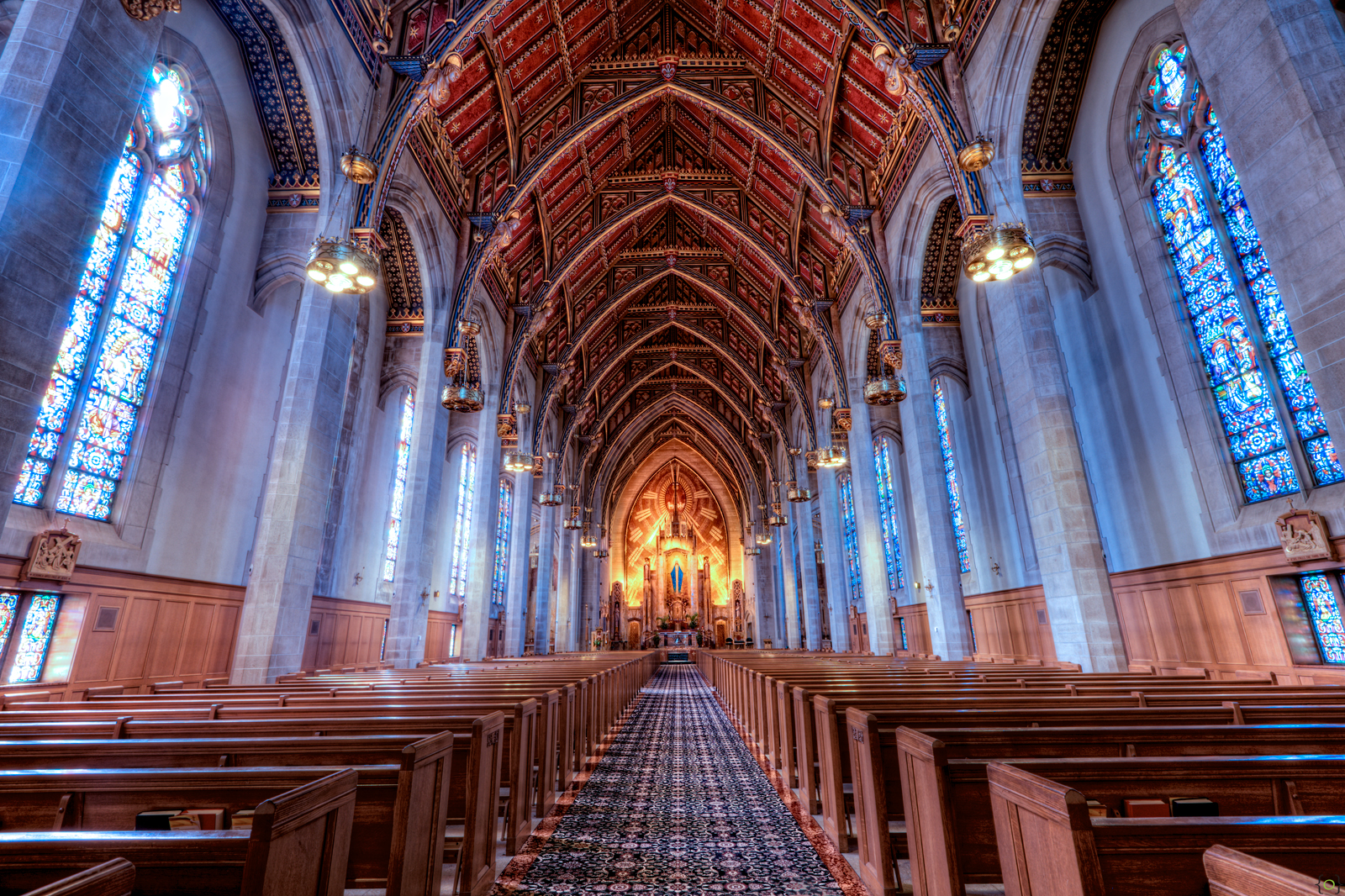
My attention right now is arrested by the Lord! Why? It is due to the underlined statement in the opening verse above: "Everyone kept feeling a sense of awe". As I stare at that text, I ask myself this question: "Isn't church supposed to be the most awesome place on earth"? Unlike the beautiful photograph above, when I think of the term "awesome church", I am not thinking of buildings. An awesome church can be any size, shape or "look". Whenever there is a genuine awe and fear of God resonating through the people - awesome is right around the corner! 

The word translated "awe" can just as easily be rendered "fear, trepidation, nervous wonder, anticipation". What was it that made the first century church an awesome church? There must had been a pattern, a set of practices or ingredients in which the leadership (back then the Apostles) and the membership were all committed. As I read this text and its wider verses, I simply ask God to enable me and hopefully you dear reader to envision a more awesome church. 

Let me tell you the story that led to this post
As I have met time and time again with people, have read books, consulted other pastors and listened to many hours of messages and prayed, the Lord has begun the process of pouring into me an awakening to lead our people through this process. 

About two weeks ago prior to this post, I was in my study preparing a message when suddenly I felt the urge to stop what I was doing and get up, take a marker and begin writing. At least in my own personal Christian walk, when that sense of "arrest" has gripped my mind and heart, I know then that the Holy Spirit is leading me in a particular direction. As I prayed and meditated on scripture, I ended up dividing the white board into four equal sections, with each of those sections containing one word. In the middle of that simple diagram I sketch out little symbols that represented each term (in a moment I will divulge to the reader what those four words are.)

Let me give a couple of admissions. First, I'll admit that when it was done, I knew that the Lord from His word had illuminated my understanding as to what was necessary to envision His vision for an awesome church. Then second, I'll admit that I am as excited as I am nervous. 

Anytime a pastor or leader is preparing to lead their people through a season of discovering, implementing and committing themselves to His will, the process can be as daunting as it is exciting. There is always that question as to what people will say or how they will respond. Moreover, as a pastor myself, I wonder what areas God will stretch me in as I grow in the upcoming year and become more the man of God that is needed to lead His people in achieving Kingdom things? 

I am also equally convinced that if we or any pastor and church will but give themselves to God's Word in the manner prescribed by Paul in Philippians 2:1-11, namely in the manner of Christ-like humility, God will begin to move mountains. (Matthew 17:20-21) Consequently, in due season God will promote the humble believer and submissive church in the things of God's kingdom. (James 4:10; 1 Peter 5:6)

4 necessary ingredients to envisioning an awesome church
This post today is admittedly more personal than normal, but perhaps God is stirring readers out there who are aiming to influence others around them for Jesus. You don't have to be a pastor to glean from this post. Anyone who believes the local church is God's primary vehicle for transforming lives and communities can glean something. Undoubtedly the Book of Acts and the New Testament Epistles provide the necessary blueprints for understanding what it takes to do church biblically. One must not take that last statement to mean that church is to be a "business-as-usual" type of activity. Far from it! In studying the scriptural teaching on God's design for His church, it ought to be on both its inside and outside an awesome force for Kingdom change in the world! What four ingredients must be in place in order for God to illuminate his people to discovering His specific vision for a specific church? Today I will list the words I was alluding to above and then take the next several days to unpack each one from the scripture.

1. Intercession. Unless leadership and the people in the pew give themselves to prayer for one another, for the lost and praise to Jesus, the church will be no better off than an unplugged lamp. Prayer is how we plug into God's power.

2. Word. Read the accounts of the early church in the Book of Acts and read the New Testament epistles. You will quickly discover how saturated the people were in the scriptures. There was preaching, teaching, scripture memory, praying through the scriptures, evangelization of the scriptures and quotations of scripture. The Word of God literally dominated the landscape of church life. If we are ever to have a church that is awesome in America, we must go deeper, not shallower into the Word. In-so-far as we go into the Word will the Word then go into and out of us.

3. Fellowship. The one sense I gain from reading about the early church in Acts and the Epistles is how much people enjoyed being around one another. Nothing was staged. They ate together, prayed together, heard God's Word together, told others about Jesus together. Their fellowship was the most effective tool used by God in winning a pagan world to Christ. The ratio of Christians to the Graeco/Roman culture of that day may had been around 1:1000. Yet look how God worked through them. What was it that they had that so many of churches in America lack? True fellowship.

4. Co-mission. Finally, the early church in the Acts and Epistles took serious Jesus' great commission to go into all the world and make disciples. (Matthew 28:18-20) Missions was not something the church did, it was who they were. Missions was not only discussed at periodic missions offerings or in a couple of evangelistic meetings, missions was a way of life. Because the early church had the other above three core ingredients, missions was a supernatural outcome of the supernatural power at work in and through the church.

More tomorrow.....

Friday, December 26, 2014

Faithfulness to God


Hebrews 3:1-2 "Therefore, holy brethren, partakers of a heavenly calling, consider Jesus, the Apostle and High Priest of our confession;2 He was faithful to Him who appointed Him, as Moses also was in all His house."

What it means to be faithful?
What does it mean to be faithful? Several times in Hebrews 3 we see reference to this word. I am convinced that this is the chief mark of success in God's sight. The English word translated "faithful" derives from two Greek words that could be rendered "being in a state of firm persuasion or trust". Sometimes when explaining this word to people I tell them that faithfulness is established by the case by case opportunities we have to trust God or doubt God. The more consistent I get at demonstrating myself to trust God than doubt God, the more it can be said that I am faithful. Moreover, with faith being the root, obedience follows as the necessary fruit. Hence it can be equally said that the more consistent I get at obeying God than disobeying God in a case by case fashion, I demonstrate myself to be faithful. The remainder of today's post aims to understand what it means to be faithful to God.

What it means to be faithful to God from Hebrews 3:1-14

1. Consistently obeys God. Hebrews 3:1-4
Hebrews 3:2 states - "He was faithful to Him who appointed Him, as Moses also was in all His house." As a general pattern Moses did as the Lord told him. In a comprehensive and perfect manner Jesus carried out in His full humanity and undiminished Deity the will of the Father. Can a Christian be consistently faithful? Moses was considered as such and we know there were times in his life where he got angry, frustrated and tired. Yet the pattern of his life was growing faithfulness. Moses' faithfulness and really every believer's faithfulness borrows capital from the perfect faithfulness of Jesus Christ. By the Person of the Holy Spirit we are granted access to "partake" or "share" in the power and Person of Christ's achievements in his perfect humanity. In Christ it can be said we are consistently faithful while we are growing in faithfulness.

2. Carefully serves God's purposes. Hebrews 3:5-6
Hebrews 3:5 states that Moses was a faithful "servant" in God's house. The word translated "servant" is from the Greek word "therapaya" from whence we derive our English word "therapist". A therapist in the modern day sense is one who aids people in thinking more clearly or in achieving goals in their psychological life. A therapist was a servant who gave aid and made things easier for the master's purposes to be communicated and achieved. Typically these servants had specialized training in the medical field. Thus when we speak of something today as being "therapeutic", we are referring to its benefit to the one whom we are administering the service. 


Encouraging people or providing practical ministry can be "therapeutic" and requires a willingness to help out that person. When Jesus came He performed 35 miracles, with many of them having to do with healing. When God's people are faithful, the purposes of God are set free to do their work through us to that other person. Such purposes can prove to be "therapeutic" to people as a result of the faithful efforts of the child of God.

3. Keeps the heart sensitive to God. Hebrews 3:7-11
Hebrews 3:7-8 warns - "Therefore, just as the Holy Spirit says, “Today if you hear His voice, 8 Do not harden your hearts as when they provoked Me." A true child of God will make keeping their heart sensitive to God a major priority. How is it we hear God? Chiefly we hear God through the scriptures. (Romans 10:17) In secondary ways we hear God by way of other people's counsel (Proverbs 11:14; 24:6); the course of circumstances and of course prayer. Loving the Lord with all our heart is considered the Greatest of the commandments and the core of true Biblical spirituality. (Deuteronomy 6:4-5; Matt 22:37-39)

4. Cherishes God's people. Hebrews 3:12-14
Faithfulness to God is never to be done in isolation. We only deepen our faithfulness to God to the degree we are in fellowship with the people of God. Hebrews 3:12-13 states - "Take care, brethren, that there not be in any one of you an evil, unbelieving heartthat falls away from the living God. 13 But encourage one another day after day, as long as it is still called “Today,” so that none of you will be hardened by the deceitfulness of sin." Individual faith and obedience can never be any greater than the corporate faith and obedience of the Body of Christ at large. Truly the Lord ministers to His people in a far more profound and richer way corporately. The local church is the primary way in which the individual Christian can find all they need to be equipped to mature and excel in the faith. (Ephesians 4:11-12)

Closing thoughts
We have considered in short order today what it means to be faithful to God from Hebrews 3:12-13. We discovered the following traits of Biblical faithfulness:

1. Consistently obeys God. Hebrews 3:1-4

2. Carefully serves God's purposes. Hebrews 3:5-6

3. Keeps the heart sensitive to God. Hebrews 3:7-11

4. Cherishes God's people. Hebrews 3:12-14


Thursday, December 25, 2014

Perfect Timing - A Christmas Mediation


Galatians 4:4 when the fullness of the time came, God sent forth His Son, born of a woman, born under the Law,

God's big plans for Jesus' first advent included all of history
Is it not amazing how much time and effort is put into planning for Christmas day. My wife for example will begin shopping piece by piece as early as June. Such a head start may seem extreme, however she has learned that it is far better to stretch out the shopping over a long period of time than trying to come up with it the week before. 

When it came to God planning to send His Eternal Son into the world, how long had the plan been in place? Scripture indicates that Jesus' first advent was in the works from all eternity and would incorporate all of Old Testament history. (Ephesians 1:11; 2 Timothy 1:9; Titus 1:2; Hebrews 1:1-4) How big was the scope of God's timing in the bringing about of the Son of God into this world?  When we consider the whole of history from Genesis up to the time of Jesus' birth, it is amazing to think about everything God orchestrated to make the entry of the Son of God into the world a possibility:

1. 3600 years from Genesis to Malachi.  From Adam to Noah = 1656 years.  From Noah to Abraham = another 350 to 400 years.  From Abraham to the end of Genesis = around 250 or so years.  From Moses' day in Exodus to David's time in 1 Samuel is around 400 years.  From David to Malachi's day is another 600 or so years.  God orchestrated the rise and fall of at least four world empires, countless wars and 109 prophecies in preparation for when He would come.

2. The silent years between Malachi and Matthew.  From Malachi to Matthew we see the word of God not being spoken.  Just because God hid His face did not mean His hand was not at work behind the scenes.  In this period of time, three world empires rose and fell.  At the end of the Old Testament, Babylon was in power.  In 539 b.c Babylon fell to the Medo-Persia Empire.  This empire, predicted and spoken of in Daniel 2 and 7, was the first to begin the practice of crucifixion. 

Next came the Greeks, under Alexander the Great in 333 b.c.  After conquering Persia, Alexander began his program of making the whole world like the Greeks.  Everyone under his domain would speak Greek.  This language would be the language of the New Testament.  The Jews also made the world's first Bible translation - the Septuagint, in 275 b.c.

Greece gave away to Rome and the Roman empire devised the 50,000 mile roadway system throughout the Medditeranean world called "The Roman Road". It would be quite useful, especially when the early church would come to spread the goodnews of Jesus Christ. 

Rome by Jesus' day was experiencing political unreast in the Holy land.  Power had changed hands, and populations of people were being redistributed.  This is what prompted Caesar Augustus to issue the decree for everyone to return to their hometown to be counted.  Because of that decree, Jesus would be born in Bethlehem, as predicted in the book of Micah.

3. The prophecies of the Old Testament. When you count up all of the prophecies that predict the first coming of Jesus Christ, the grand total comes to 109!  Some of these are so extraordinary, they are worthy of mention.  Genesis 49:10 tells us what tribe in Israel the Messiah would derive - from Judah.  Isaiah 7:14 tells us He would be virgin born, with Isaiah 9:6-7 revealing Him as both human and Divine.  Isaiah 53 reveals He would suffer and die, with Zechariah 12:10 using the term "pierced" to describe the marks on his hands and feet.  Psalm 22 unfolds the words He would speak on the cross and Micah 5:2-4 uncovers the place of His birth. 

All in all, God alone can cover the scope of the timing of events, peoples and places - for He alone is Big enough, Powerful enough and knowing enough to accomplish it.  As the Angel said to Mary in Luke 1:37, following the birth announcements of John the Baptist and the Savior: "For nothing is impossible with God!" The timing of Christmas shows us that salvation is of the Lord! The timing of Christmas was perfect timing, because by it the Eternal Son came to be perfect God in perfect human flesh.