Translate

Sunday, July 5, 2015

Stabilized by God's word in times of testing yields a powerful testimony

2 Corinthians 1:3-4 "Blessed be the God and Father of our Lord Jesus Christ, the Father of mercies and God of all comfort, 4 whocomforts us in all our affliction so that we will be able to comfort those who are in any affliction with the comfort with which we ourselves are comforted by God."


What brings stability in an unstable world 
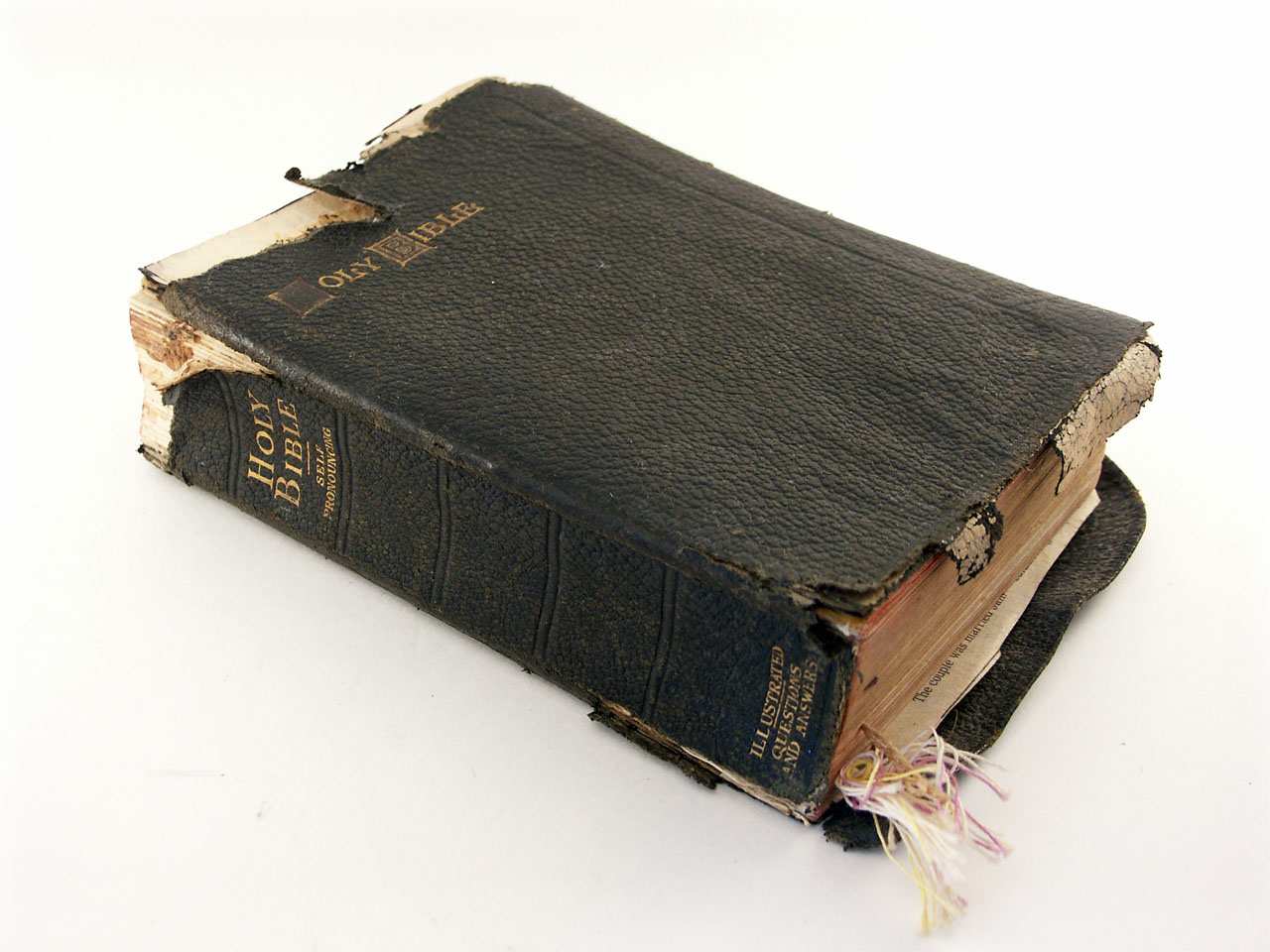
Years ago I heard it said that when your Bible is worn out, and falling apart, it is testimony to a faith that is enduring and holding firmly together. This world and all that is in it holds nothing in store for the amount of hope and strength needed to get through it. Unless the Risen exalted Christ, crucified, dead, buried, raised and ascended is embraced by faith, and is focused upon in growing faith - all is lost. Nothing is stable. These sentiments are not expressed in melodrama by me - they are fact.  It is from the grounded powders of broken hearts and ashes of burnt down hopes of this life that desparation for God is often scene in stark contrast. Craving God's Word and hanging on every Word of the Risen Christ becomes the sole focus. How else can God's people be effective in ministering God's love to a broken world lest they be broken? Powerful testimonies always result from the brokeness of the human will yielded to the will of God. 
Three chapters in God's Word help us to see how God's Word in times of testing yields a powerful testimony.

Proverbs 15-16 on the stabilizing influence of God's Word 
Proverbs 15 shows us how the Word of God functions to bring stability to the human soul composed of mind, emotions, will and conscience. Different issues are presented in the chapter that are then to be addressed by interaction with the scriptures. Proverbs 15 breaks down as follows: 

A. 15:1-7 deals with issues of speech; B. 15:8-15 deals with matters of the heart; 
C. 15:16-21 is concerned about the emotional life; 
D. 15:22-25 focuses upon the thought life 
E. 15:26-33 majors on matters of the human will. 

Proverbs 16 reveals how all of these various areas of the human soul work in concert with God's Sovereignty. Whenever His Word is applied to various areas of my human personality or soul, my mind will deem His will to be most excellent. My heart will then follow suit, concluding that His will is the best course of action. Such a process, Divinely worked out by the Holy Spirit through His Word, results in my human will aligning with His own. God's Sovereignty and human responsibility are complementary truths and Proverbs 16 presents both in the same chapter. 

2 Corinthians 1 and the makings of a powerful testimony
The book of 2 Corinthians begins with Paul explaining the important truth of a Godly testimony. A good testimony always has, like the word itself, a "test". Paul explains what is involved in a good testimony in 2 Corinthians 1: 

A. Convictions came to be more prized than comfort (1:1-7); 
B. A choice to go forward or hang back (1:8-11); 
C. Confidence for faith gained because of the trial (1:12-18) 
D. Consideration of God's glory and attributes. (1:19-24) 

Both Proverbs and 2 Corinthians give us the recipe needed to be stabilized in times of testing. Rigorous and repeated giving of ourselves to God in His Word and trials yields a powerful testimony. Such truths may sound contradictory, yet they are true nonetheless. To conceive of a Christianity that is pain free and that can be lived apart from the scripture is the stuff of pipe dreams. The likelihood of owning beachfront property in Colorado is greater than a Christian who has a powerful testimony with no testings and no time in the Word. May you and I today go forth being stabilized by God's Word and aiming to have a great testimony for the glory of Jesus Christ.

Saturday, July 4, 2015

The Christian's declaration of dependence and true freedom

AMERICAN-FLAG-facebook.jpg
Romans 8:1-2 "Therefore there is now no condemnation for those who are in Christ Jesus. 2 For the law of the Spirit of life in Christ Jesus has set you free from the law of sin and of death."

Introduction: Comparing National Freedom and Spiritual Freedom
When we talk about freedom, what comes to mind? Undoubtedly this 4th of July weekend celebrates the freedom we have as Americans. American freedom is marked by "independence". The opening paragraph of the Declaration of Independence, states: "When in the Course of human events, it becomes necessary for one people to dissolve the political bands which have connected them with another, and to assume among the powers of the earth, the separate and equal station to which the Laws of Nature and of Nature's God entitle them, a decent respect to the opinions of mankind requires that they should declare the causes which impel them to the separation."

The July 4, 1776 Declaration of Independence represents the quintessential statement of freedom that birthed forth our nation. Inasmuch as "independence" often marks freedom in respect to men, the opposite is the case in matters relating to the Christian life. Sin at its very core attempts to envision life independent from God. Whenever a Christian tries to live apart from submission to the Lordship of Jesus Christ, the Christian life becomes locked down. Today's post is about explaining Romans 8:1-11 in what we could call: "the declaration of dependence". We will propose that true spiritual freedom is dependence by faith in the Lord Jesus Christ. 

The natural human realm generally shows that life independent from God leads to tyranny
The founding fathers of this nation understood as a general principle that living apart from God and His word will only lead to further human tyranny. Unless many of them had been Christians, such an insight might not have been gained. Tyranny is the inevitable outcome whenever a nation or a people attempt to cut its moorings from God. Charles Carroll, one of the signers of the "Declaration of Independence", notes: "Without morals a republic cannot subsist any length of time; they therefore who are decrying the Christian religion, whose morality is so sublime and pure...are undermining the solid foundation of morals, the best security for the duration of free governments." Carroll's statement shows that with respect to God in general, what marks true freedom (even more so than national freedom) is not independence, but dependence. The specific revelation of this point in scripture itself reinforces the argument in texts such as Proverbs 14:34 and Jeremiah 18:7-10. 

Spiritual freedom is dependence upon God
Only when one has become born-again by grace through faith in Jesus Christ, the greatest and most purest freedom is experienced. Spiritual freedom is dependence upon the Lord Jesus Christ. Jesus Himself states in John 8:34-36 "Jesus answered them, “Truly, truly, I say to you, everyone who commits sin is the slave of sin. 35 The slave does not remain in the house forever; the son does remain forever. 36 So if the Son makes you free, you will be free indeed." 

Spiritual freedom's core trait of dependence upon the Lord Jesus Christ is total opposite to how we may typically think of freedom in the natural realm. Galatians 5:1 states - "It was for freedom that Christ set us free; therefore keep standing firm and do not be subject again to a yoke of slavery." The yoke of slavery made us dead in sins and trespasses and separated from God, without hope in this world. (Ephesians 2:12) Jesus Himself states in Matthew 11:28  “Come to Me, all who are weary and heavy-laden, and I will give you rest.29 Take My yoke upon you and learn from Me, for I am gentle and humble in heart, and you will find rest for your souls." True freedom is experienced as a result of submission under the Lordship of Jesus Christ. (Luke 9:23-24) Freedom is dependence on God in Jesus Christ.

For people who find themselves enslaved to their past, the chief mark of life is (perceived) independence from God. Paul reminds the Thessalonians of the change that took place in them in 1 Thessalonians 1:9-10 - "For they themselves report about us what kind of a reception we had with you, and how you turned to God from idols to serve a living and true God, 10 and to wait for His Son from heaven, whom He raised from the dead, that is Jesus, who rescues us from the wrath to come." Unlike our civil freedom in which we broke ties with a human Sovereign, the Gospel declares that true freedom is only found when we are reconciled to the Divine Sovereign. Spiritual freedom is dependence upon God.

Getting real specific about spiritual freedom in the Gospel - The believer's declaration of dependence - Romans 8:1-11
In general the scriptures assert this underlying premise that true spiritual freedom results from dependence, rather than independence from God. In Romans 8:1-11 Paul spells out what is entailed in the wonder of spiritual freedom that the Christian enjoys as a result of the Gospel. Spiritual freedom in Christ means we have been freed "from" things and are free "to" things. 

1. Freedom from condemnation. 8:1-2
2. Freedom to desire God.   8:5-8
3. Freedom to live for God.   8:3-4,9-11

When we are set free by Jesus Christ in saving faith, we find that we are free to do what we ought to do. You and I cannot get "out" of condemnation unless we are "in" Christ. Romans 8:2 describes how this occurs: namely by the Spirit of Life and His guiding influence or what Paul terms "law". On February 20, 1962, decorated WWII and Korean War veteran John Glenn circumnavigated our globe three times in a span of just under 5 hours. Reaching speeds of over 17,000 m.p.h, Glenn achieved a feat that no one had ever accomplished. How did he do it? He did this otherwise impossible feat by climbing into the Mercury program space capsule known as "Friendship 7". Moreover, the laws of lift and science of Rocketry were necessary to overcome the other leading influence - gravity. Glenn's inaugural journey was one of the quintessential moments that launched the modern space race. You and I dear friend need to be "in Christ" if we are to declare dependence on God and be set free from condemnation.

Closing thoughts & applications
By being set free from condemnation and set free to desire God, the sinner is transformed into a saint who now can live for God. True freedom depends on God through faith in Jesus Christ, both in the beginning and ongoing realities of Christian salvation. This is what makes Romans 8:1-11 so wonderful, in that it is the believer's “declaration of dependence”. The irony of the Gospel is that one is never more free than when their bound to Jesus Christ. True freedom as spelled out in Romans 8:1-11 means:
1). Freed from condemnation as a result of depending on His righteousness (Romans 8:1-2).

2). Free to desire God as a result of dying to my own selfish desires (Romans 8:5-8).

3). Free to live for God as a result of dying to self (Romans 8:3-4, 9-11) Jesus taught that such freedom is at the heart of what it means to be a follower of Him (Luke 9:23-24; 14:26-33; Romans 6:19-20).

So as we practically live out our freedom in Jesus Christ, how ought it to be? First, we of course must begin by getting into Christ by faith. (Romans 8:1-2) Secondly, following conversion, we re-order our minds around the scripture. (Romans 8:3-8) Then finally, we rely upon the indwelling Holy Spirit. (Romans 8:9-11)

Friday, July 3, 2015

The pain of suffering and the power of the Kingdom

Matthew 20:20-23 "Then the mother of the sons of Zebedee came to Jesus with her sons, bowing down and making a request of Him. 21 And He said to her, “What do you wish?” She said to Him, “Command that in Your kingdom these two sons of mine may sit one on Your right and one on Your left.” 22 But Jesus answered, “You do not know what you are asking. Are you able to drink the cup that I am about to drink?” They said to Him, “We are able.” 23 He said to them, “My cup you shall drink; but to sit on My right and on My left, this is not Mine to give, but it is for those for whom it has been prepared by My Father.”

The naivete of thinking that Kingdom power is experienced without suffering
When I was a younger Christian, I thought the purpose of the Christian life centered around my comfort in getting to know Jesus Christ. As I sensed the call of God on my life as a seventeen year old young man, that underlying assumption about the Christian life in general also undergirded my perception of ministry in particular. Serving the Lord and living for Him meant not having troubles. Many readers of this post may find that hard to believe - and rightly so. Nevertheless I believed that with all my heart. 

The clear relationship between suffering and the power of the Kingdom
Admittedly when I read passages such as Jesus' conversation with the sons of Zebedee and their mother, much of what Jesus said was lost on me. As a young man growing up, I had enjoyed a childhood of relative comfort, with moments of pain and loss. It was not until I began experiencing pain and disappointment in my adult life that I quickly realized the naivete of my view of the Christian life. Moreover, as I read more and more of the Bible, it became clear that suffering was not a rare experience among God's people, but was a cruel friend used by the Providence of God to motivate the saints of God to crave for Him.

I am certain James and John's mother had noble intentions when inquiring about the positions her sons would occupy in Jesus' Kingdom. Her problem was that she misunderstood the nature of God's Kingdom. The Kingdom of God is the domain of His reign in the hearts of men, the realm of creation and His redemptive purposes in Jesus Christ. In one respect the Kingdom of God has manifested in an inaugurate fashion in Jesus' first coming (Luke 4:18). The Kingdom of God is on the one hand an "already" reality, functioning as a seed in the church composed of all born-again believers. However, the Kingdom of God in another respect is a "not yet" reality, meaning that it is yet to come and won't be fully revealed until Jesus' second coming (see Matthew 24-25). 

Jesus made known to James and John's mother that indeed they would partake of "the cup" of which she thought was one of pain free honor. However, the cup of which Jesus spoke about in Matthew 20:22 was a cup that neither the disciples nor oftentimes we ever fully understand. The road to glory in God's kingdom is not paved with ease and comfort, but rather with suffering. 
(James 1:3-4; 1 Peter 1:6-8)

How James and John demonstrated the relationship between suffering and the Kingdom
Before it was to be all said and done, 10 of the 12 disciples would die as martyrs. Jesus' words to them about "drinking the cup" would be fulfilled in their dying for the faith. James and John, the featured disciples in Matthew 20, would each undergo much suffering for His sake and yet bear forth fruit that lent to experiencing the power of the Kingdom.

The disciple James for example would end up dying a martyr's death in Acts 12:1-2 "Now about that time Herod the king laid hands on some who belonged to the church in order to mistreat them. 2 And he had James the brother of John put to death with a sword." The other disciple and James' brother, John, was of course the Beloved disciple who authored the Gospel of John, 1,2,3 John and the book of Revelation. This John was exiled on the Isle of Patmos, left to die. Though the Apostle John would be the only one of the original 12 who did not die a martyr's death, he nonetheless still tasted the bitter cup of suffering for the Kingdom. 

Both mens' sufferings and death resulted in the unleashing of Kingdom power. With respect to James' death, God set in motion a series of other events that resulted in God's Word multiplying in the early church and poising her to go from being a regional movement confined to Jerusalem, Judea and Samaria in Acts 12 to going global in Acts 13-28. As the ancient late second century Christian leader Tertullian wrote in his treatise "The Apology", chapter 50 - "The oftener we are mown down by you, the more in number we grow; the blood of Christians is seed." As we mentioned already, John suffered exiles and threats upon his life. His sixty plus years of service to Jesus resulted in churches planted throughout Asia minor and the composition of five Divinely inspired books in the New Testament. Both men demonstrate the reality of the fact that the pain of suffering for Jesus' sake is necessarily related to the manifestation of the power of the Kingdom.  

Final thoughts: the pain of suffering and the power of the Kingdom
Today's post was meant to initiate us to the relationship between suffering for Jesus' sake and the manifestation of the power of His Kingdom. Experience has taught me the painful but necessary reality of this otherwise seemingly contradictory reality. Scripture asserts what experience testifies: namely that the ability to see God's kingdom power is directly proportional to how well I see Him in times of trouble. Such sentiments fly in the face of 21st century American Christianity which operates with a certain naivete of its own. Only when we grasp by faith what the Bible teaches about the relationship between the pain of suffering and the power of the Kingdom will we then grasp what Jesus meant in Matthew 20. I close with these words from the Apostle Paul in Philippians 3:10 - "that I may know Him and the power of His resurrection and the fellowship of His sufferings, being conformed to His death."

Thursday, July 2, 2015

P2 Declaration of Dependance - Romans 8:1-11

Romans 8:1-2 "Therefore there is now no condemnation for those who are in Christ Jesus. 2 For the law of the Spirit of life in Christ Jesus has set you free from the law of sin and of death."

Introuduction and review
We ended yesterday's post by noting how true spiritual freedom means dependance upon God through faith in Jesus Christ. By being set free from condemnation and set free to desire God, the sinner is transformed into a saint who now can live for God. True freedom depends on God. This is what makes Romans 8:1-11 such a maginificent stretch of verses, in that it is the believer's declaration of dependence. The irony of the Gospel is that one is never more free than when their bound to Jesus Christ. Freed from condemnation as a result of depending on His righteousness. (Romans 8:1-2) Free to desire God as a result of dying to my own selfish desires. (Romans 8 Free to live for God as a result of dying to self. (Luke 9:23-24; 14:26-33; Romans 6:19-20)

Today we once more turn our attention to what I am calling the believer's "declaration of dependance" in Romans 8:1-11. This idea is influenced by the founding document of our nation - the "Declaration of Independence". Independence is a fine definition of freedom when we are dealing in the realm of men. However to assert the same definition of freedom in the spiritual realm is to miss the intent of the Gospel. Having spelled out yesterday "what" spiritual freedom is: namely depending on God in Jesus Christ, we now turn to the "how" of this reality. This is to say, how does it look and how do we live out our spiritual freedom in Jesus Christ as those dependant upon God?

1. Get in Christ by faith.
Romans 8:1 states - "Therefore there is now no condemnation for those who are in Christ Jesus." You and I cannot get "out" of condemnation unless we are "in" Christ. Romans 8:2 describes how this occurs: namely by the Spirit of Life and His guiding influence or what Paul terms "law". On February 20, 1962, decorated WWII and Korean War veteran John Glenn circumnavigated our globe three times in a span of just under 5 hours. Reaching speeds of over 17,000 m.p.h, Glenn achieved a feat that no one had ever accomplished. How did he do it? He did this otherwise impossible feat by climbing into the Mercury program space capsule known as "Friendship 7". Moreover, the laws of lift and science of Rocketry were necessary to overcome the other leading infllence - gravity. Glenn's inaugural journey was one of the quintessential moments that launched the modern space race. You and I dear friend must needs by "in Christ" if we are to declare dependance on God and be set free from condemnation. The abundant Christian life of which Paul speaks is entered into by the New birth in saving faith. (John 1:12-13; 3:3, 16; James 1:18; 1 Peter 1:23). But there is more to this wonderful scenario, namely...

2. Live out your new found freedom by ordering your mind. Romans 8:3-8
The Christian has the capability of telling their mind how to think. Prior to salvation, we were bound over to sinning out of necessity and thinking around ourselves and to our ends. (Ephesians 2:1-4) However, God intervened in saving grace, broke the chains of sin and quite literally, the bound-over will was free to choose Christ by grace through faith. (Ephesians 2:6-9) The remainder of the Christian life is all about taking every thought in my mind that is not of Jesus and bring it under submission to His word. (1 Corinthians 2:10-13; 2 Corinthians 10:4-5) What happens as a we order our minds by the Word of God and the Lordship of Jesus Christ? Romans 8:6 explains -  "For the mind set on the flesh isdeath, but the mind set on the Spirit is life and peace."

When a Christian attempts to exercise their mindsets in the way they did before salvation, the result is disastrous. To think in the way of the world, the flesh and the Devil is contrary to the new nature. The Bible refers to the Christian attempting to be what he is not as being "carnal". (1 Corinthians 3:1-4) Sadly, carnal-minded Christians operate way-below their calling, Spirit-given potential and choose to settle. Though the Spirit still indwells such saints, the Spirit is grieved (Ephesians 4:32) and quenched (1 Thessalonians 5:19). 

Christians must continue to fight the good fight of faith (2 Timothy 4:6-8) and put on the full armor of God (Ephesians 6:11-18) to fend off the temptations and allurements of this world. (1 John 2:15-17) We must remember that true spiritual freedom is not marked by our "independence", "self-sufficiency" and "inward focused selves". Rather, true spiritual freedom is marked by dependence upon the One True and Living God Who is Father (James 4:6-8); Son (Matthew 11:28) and Holy Spirit. (Galatians 5:16)  

If I am going to heed the Father's will, Christ's Lordship and the Spirit's leading, I must get the Bible into me by memorizing and meditating (Joshua 1:8; Psalm 119:11). To depend on God and thus be truly free, instant obedience is the order of the day. (John 14:21-23; James 1:22-25)

So to practically live out the delcaration of dependence on God means starting of course by getting in Christ, followed by daily ordering our minds around the scriptures and training ourselves how to think Godly and thus do godly living. 

3. Rely on the indwelling Holy Spirit. Romans 8:9-11
The remarkable thing about spiritual freedom and all that is entailed in the Christian's declaration of dependance on God is the fact that He lives inside of me. God in the Person of the Holy Spirit indwells the Christian at salvation. (Romans 8:14-16; 1 Corinthians 3:16; 6:19-20; 12:1-3; 12-13; Galatians 4:6) This is truly profound. Why? Up until the Old Testament, God and His people related to one another by way of God coming "upon" and "over" the person. In a far lesser but still same sort of way, believers in the Old Testament we saved by grace operating in their hearts to believe on God's promise of salvation. (Genesis 15:6; Deuteronomy 10:16; Jeremiah 4:4) This Old Testament work of grace was deemed "circumcision of the heart". God revealed Himself to His people and occupied the tabernacle and temple. Even though the people of God lived for God by His Spirit, His work was mainly outside of them.

When Jesus came and especially when the Holy Spirit came on the Day of Pentecost in Acts 2 following His ascension, the way in which God was going to work was no longer just "on and upon" but now "in and through". Jesus Himself contrasts both of these distinction in John 14:17 - "that is the Spirit of truth, whom the world cannot receive, because it does not see Him or know Him, but you know Him because He abides with you and will be in you." Salvation was from Pentcost on going to be an "inside job". The very God calling believers unto Himself in the New Testament New birth was going to indwell them by the Holy Spirit. Thus to declare our dependance on God means following the Spirit's leading. We say "no" to the flesh (Galatians 5:16) and put on the Lord Jesus Christ by practically heeding the scriptures, coming to God in prayer and learning to discern His voice. (1 Cor 2:10-13; Jude 20-23; Hebrews 4:12-16). The Spirit's abiding work in believer's not only carries them through in this life (Romans 8:9-10) but also delivers them ultimately to the throne as resurrected saints upon the second coming of Jesus Christ (Romans 8:11). 

Closing thoughts
So as we practically live out our freedom in Jesus Christ, how ought it to be? We of course must begin by getting into Christ by faith. (Romans 8:1-2) Secondly, following conversion, we re-order our minds around the scripture. (Romans 8:3-8) Then finally, we rely upon the indwelling Holy Spirit (Romans 8:9-11). 


Wednesday, July 1, 2015

P1 The declaration of dependance - Romans 8:1-11

Romans 8:1-2 "Therefore there is now no condemnation for those who are in Christ Jesus. 2 For the law of the Spirit of life in Christ Jesus has set you free from the law of sin and of death."

Introduction: Comparing National Freedom and Spiritual Freedom
When we talk about freedom, what comes to mind? Undoubtedly the upcoming 4th of July weekend celebrates the freedom we have as Americans. Freedom as Americans is marked by "independence". The opening paragraph of the Declaration of Independence, which in effect declares the formation of the United States and independence from the King of Great Britain, begins as follows: "When in the Course of human events, it becomes necessary for one people to dissolve the political bands which have connected them with another, and to assume among the powers of the earth, the separate and equal station to which the Laws of Nature and of Nature's God entitle them, a decent respect to the opinions of mankind requires that they should declare the causes which impel them to the separation."

By then listing the greviances of the King of Great Britain and the motivations for severing ties with that monarch, the July 4, 1776 Declaration of Independence represents the quintessential statement of freedom that birthed forth our nation. Inasmuch as "independence" often marks what it means to be free in respect to men, the opposite is the case in matters relating to the Christian life. Sin at its very core attempts to envision life independent from God. Whenever a Christian tries to live apart from submission to the Lordship of Jesus Christ, the Christian life becomes locked down. Today's post is about explaining Romans 8:1-11 in what we will call: "the declaration of dependance". We will propose that true spiritual freedom is found when we depend on God by faith in Jesus Christ. 

The natural human realm generally shows that life independent from God leads to tyranny
The founding fathers of this nation understood as a general principle that living apart from God and His word will only lead to further human tyranny. Whenever a nation or a people attempt to cut the moorings of God's influence and morally revealed law, tyranny under others result. Charles Carroll, one of the signers of the "Declaration of Independence", notes: "Without morals a republic cannot subsist any length of time; they therefore who are decrying the Christian religion, whose morality is so sublime and pure...are undermining the solid foundation of morals, the best security for the duration of free governments." Carroll's statement shows that with respect to God in general, what marks freedom is not independence but dependence. The specific revelation of this point in scripture itself reinforces the argument in texts such as Proverbs 14:34 and Jeremiah 18:7-10. 

Spiritual freedom is dependence upon God
Only when one has become born-again by grace through faith in Jesus Christ, the greatest and most purest freedom is experienced. Spiritual freedom is dependence upon the Lord Jesus Christ. Jesus Himself states in John 8:34-36 "Jesus answered them, “Truly, truly, I say to you, everyone who commits sin is the slave of sin. 35 The slave does not remain in the house forever; the son does remain forever. 36 So if the Son makes you free, you will be free indeed." 

Spiritual freedom's core trait of dependence upon the Lord Jesus Christ is total opposite to how we may typically think of freedom in the natural realm. Galatians 5:1 states - "It was for freedom that Christ set us free; therefore keep standing firm and do not be subject again to a yoke of slavery." The yoke of slavery made us dead in sins and tresspasses and separated from God, without hope in this world. (Ephesians 2:12) Jesus Himself states in Matthew 11:28  “Come to Me, all who are weary and heavy-laden, and I will give you rest.29 Take My yoke upon you and learn from Me, for I am gentle and humble in heart, and you will find rest for your souls." True freedom is experienced as a result of submission under the Lordship of Jesus Christ. (Luke 9:23-24) Freedom is dependence on God in Jesus Christ.

For people who find themselves enslaved to their past, the chief mark of life is (perceived) independence from God. Paul reminds the Thessalonians of the change that took place in them in 1 Thessalonians 1:9-10 - "For they themselves report about us what kind of a reception we had with you, and how you turned to God from idols to serve a living and true God, 10 and to wait for His Son from heaven, whom He raised from the dead, that is Jesus, who rescues us from the wrath to come." Unlike our civil freedom in which we broke ties with a human Sovereign, the Gospel declares that true freedom is only found when we are reconciled to the Divine Sovereign. Spiritual freedom is dependance upon God.

Getting real specific about spiritual freedom in the Gospel - The believer's declaration of dependence - Romans 8:1-11
In general the scriptures assert this underlying premise that true spiritual freedom results from dependence, rather than independence from God. In Romans 8:1-11 Paul spells out what is entailed in the wonder of spiritual freedom that the Christian enjoys as a result of the Gospel. Spiritual freedom in Christ means we have been freed "from" things and are free "to" things. 

1. Freedom from condemnation. 8:1-2
2. Freedom to desire God.   8:5-8
3. Freedom to live for God.   8:3-4,9-11

When we are set free by Jesus Christ in saving faith, we find that we are free to do what we ought to do. All human beings are born with the natural ability to choose. With respect to ourselves, other people, and sin, the idea of "free will" is generally true. The freedom to do what one wants to do is what we call "natural ability". If human beings did not possess any ability to make choices, then the idea of moral and spiritual responsibility would be a moot point. Jonathan Edwards notes in his monumental classic - "Freedom of the Will", that since the mind can distinguish and judge between different alternatives presented to it, mankind is truly responsible to God. Proverbs 1:29-31 for instances spells out how human beings in general freely choose to sin as a result of having a sinful human nature.  

However, inasmuch as human beings do possess natural ability to choose, the moral ability to choose or moral freedom is greatly impaired and ultimately bound over in one direction - namely an inward, selfward direction. Unbelievers can exercise good moral choices, such as being good parents and good citizens. Such moral choices are as a result of God's common grace and their retaining the image of God. (Genesis 1:26-27; 1 Corinthians 11:7) However, unless the specific, saving grace of God in the Gospel is brought to bear on the heart of a man, no choice for Jesus Christ will be desired. At issue is not a matter of "can't" but moreso "won't". The fact that a man knows that he "ought" to believe, repent and be saved does not mean he will desire to do so apart from saving grace. To summarize this point, we turn once more to the great thinker and theologian Jonathan Edwards. He in effect says that though the will be morally bound over into the direction of not choosing God, the fact that our minds can weigh out the differences and see their intended end means we are still morally responsible. 

With the weight of eternal responsibility hanging over the head of the sinner, to find exemption from such a weight by the grace of God in saving faith is indeed most remarkable! The Gospel of Jesus Christ in conjunction with the saving call of the Spirit in the Gospel frees the sinner to freely respond to the call of Christ. (John 16:8-12; John 1:12-13)  True freedom is dependence on God in Jesus Christ.

Closing thoughts
By being set free from condemnation and set free to desire God, the sinner is transformed into a saint who now can live for God. True freedom depends on God. This is what makes Romans 8:1-11 such a magnificent stretch of verses, in that it is the believer's declaration of dependence. The irony of the Gospel is that one is never more free than when their bound to Jesus Christ. Freed from condemnation as a result of depending on His righteousness. (Romans 8:1-2) Free to desire God as a result of dying to my own selfish desires. (Romans 8 Free to live for God as a result of dying to self. (Luke 9:23-24; 14:26-33; Romans 6:19-20)


Tuesday, June 30, 2015

Foundations for Godly Living


Romans 16:25-27 "Now to Him who is able to establish you according to my gospel and the preaching of Jesus Christ, according to the revelation of the mystery which has been kept secret for long ages past, 26 but now is manifested, and by the Scriptures of the prophets, according to the commandment of the eternal God, has been made known to all the nations, leading to obedience of faith; 27 to the only wise God, through Jesus Christ, be the glory forever. Amen."

Introducing four foundations for Godly living
As you study Psalms 109-111 and Romans 16 together, you discover four foundations for Godly living: 
1. God's Sovereign Goodness
2. God's Inerrant Word
3. Blood Redemption 
4. The Spirit-led heart.  

Foundation #1 God's Sovereign Goodness
On the first read through of Psalm 109 and 110, it may appear that both are opposite, since the Psalmist is being oppressed by his enemies in 109 and seeing prophetic fulfillment in 110.  However, upon closer inspection, you discover God's Sovereign Goodness as preserving the writer in 109 and being the source of Psalm 110.  It is in Psalm 111 that you see such goodness praised, as well as see His Sovereign Goodness  closing out Romans 16.  

Foundation #2: God's Inerrant Word
By beginning with God's Sovereign Goodness as the first foundation for Godly living, we move onto the second: God's inerrant Word. The Baptist Faith and Message 2000 states - "The Holy Bible was written by men divinely inspired and is God's revelation of Himself to man. It is a perfect treasure of divine instruction. It has God for its author, salvation for its end, and truth, without any mixture of error, for its matter." Psalm 109-111 makes direct or indirect reference to God's covenant to David in 2 Samuel 7:8-16.  The Loving kindness of God shown in that passage sustains the Psalmist in 109, enables the Psalmist to the see Christ reigning in 110 and causes him to praise God in Psalm 111.  

God's inerrant Word is the source of the Gospel of salvation spoken of in Romans 16:25.  If the Bible were not the inerrant Word of God, we could not trust it to relay accurately the Sovereign goodness of God, His dealings with men like David nor trust that the Gospel woven throughout its pages was of saving value.  Christian growth requires an inerrant Bible revealed from the Sovereignly Good God revealed in its pages.  

Foundation #3 Blood Redemption
The third foundation, blood redemption, is looked forward to Psalms 109-111 and spoken of in Romans 16.  Psalm 111:8 for example reminds us of God sending His redemption and Romans 16:25-26 states that the Gospel would not be possible without God having sent His Son.  Hebrews 12:2-3 underscores the priority of Christ's accomplished work for the Godly life: "fixing our eyes on Jesus, the author and perfecter of faith, who for the joy set before Him endured the cross, despising the shame, and has sat down at the right hand of the throne of God. For consider Him who has endured such hostility by sinners against Himself, so that you will not grow weary and lose heart."  So in seeing those three foundations for Godly living: God's Sovereign goodness, Inerrant Bible and Blood redemption, lets look at the final foundation: Spirit-led heart.  

Foundation #4 Spirit-led heart
The Spirit-led or Spirit-filled life is what gives the basis for Christian experience following salvation.  The Holy Spirit is the One who led the Psalmist to write what He wrote under the unique grace of Divine inspiration.  The Holy Spirit enables the saints of God to have glowing testimonies like the ones mentioned in Romans 16.  You and I today enjoy the Spirit's ministry of illumination as He leads us into the scriptures and His ministry of sanctification that cleanses us to make us more like Jesus.  By the Spirit's leading we are becoming in experience whom God has declared us to be in position: children of God and co-heirs with Jesus Christ. (Romans 8:16-17)  These are the four foundations for Godly living. 

Monday, June 29, 2015

Pause and wait to hear God in the face of incomplete information

Genesis 37:5-8 Then Joseph had a dream, and when he told it to his brothers, they hated him even more. 6 He said to them, “Please listen to this dream which I have had; 7 for behold, we were binding sheaves in the field, and lo, my sheaf rose up and also stood erect; and behold, your sheaves gathered around and bowed down to my sheaf.”8 Then his brothers said to him, “Are you actually going to reign over us? Or are you really going to rule over us?” So they hated him even more for his dreams and for his words." 

Introduction:
A Divinely given dream in the Bible is God's Sovereignly laid-out plan for you in seed form. Joseph is the premier dreamer in the book of Genesis. Undeniably Jacob, his father, had experienced visions and dreams (Genesis 28). However, Joseph not only had far more dreams, but he also had been gifted by God to interpret them. We can observe Joseph's youthful ambition in relaying his dreams to his family as a show of pride or unthoughtfulness. The account of Joseph's life (Genesis 37-50) would entail God taking this "dreamer" and shaping him into a man of God who would rule over the souls of men and become one of the most humble men of integrity in the Bible. 


Life is full of incomplete information
The responses of the brothers and Jacob represent reactions in the face of incomplete information. Joseph relayed dreams that were God's declared future in seed form. They didn't have the complete picture, only a fleeting glimpse at best. Perhaps you have faced such a situation where you are presented with incomplete information. Think about the following examples that feature incomplete information. One of your parents tells you that a tumor has been found. The doctors do not know yet how big it is, what kind it is or whether it is malignant or benign. Another example: you're driving to the airport to pick up your mother, and the gps unit loses the signal. Hours from home, knowing that you must arrive at the airport on time, your heart rate quickens due to incomplete information. Or how about decisions needing to be made about your future? You have a situation wherein quick, big decisions have to be made and you have to solve problems that are impacting many people? In the face of incomplete information, what do you do? 

How we may typically respond in the face of incomplete information
As young Joseph re-told the tale of his dream, (which featured in symbolic language his family bowing to him), the response of his brothers is told in Genesis 37:8 "Then his brothers said to him, “Are you actually going to reign over us? Or are you really going to rule over us?” So they hated him even more for his dreams and for his words." When you read that verse, does it seem that the brother's reaction is overboard? You and I may be quick to look harshly at the brother's reaction until we realize in the larger context, Jacob had favored Joseph above them (Genesis 37:3); Joseph had developed into quite a vindictive tattle-tell (Genesis 37:2) and their hatred had been developing over time due to Jacob's preferential treatment of Joseph. (Genesis 37:4) 

When we arrive at the scene of Joseph's dreams and the brothers' reaction, we begin to understand. The reaction was knee-jerk and, in the brothers' estimation, more than deserved. What other choice was there than to hate Joseph? There was another choice that Jacob would make, which we will see in a little bit. 

Two choices in the face of incomplete information: push on or pause?
In all of these hypothetical scenarios, the pressure of needing 100% certainty in the face of less than 100% information brings about the need for "pause". Joseph's brothers did not choose to "pause". They chose to push on ahead and not wait to listen to God. However, Jacob's response was different, as seen in Genesis 37:10-11 "He related it to his father and to his brothers; and his father rebuked him and said to him, “What is this dream that you have had? Shall I and your mother and your brothers actually come to bow ourselves down before you to the ground?” 11 His brothers were jealous of him, but his father kept the saying in mind." 

At first, it appears Jacob is going to go the route of his other sons - that is to say - the natural, fleshly response. Jacob at first strongly rebuked Joseph. However, verse 11 then says: "but his father kept the saying in mind". Quite literally, Jacob chose to avoid reacting prematurely in the face of incomplete information. His questions about the dream's meaning and as to whether or not they would be bowing down to Joseph only highlight Jacob's desire to have certainty and answers. Despite his efforts, no quick answers were forthcoming. And so Jacob chose to "guard the matter in his heart."

Jacob chose to pause and hear God. The carnal flesh wants to react. Jacob in his spirit man or heart (the part of you that is transformed in saving faith) saw that what was not needed was an immediate response. We as 21st century people of God are too prone to reacting on impulse and not considering the need to pause to hear God. Isaiah 30:15 levels the following indictment against ancient Israel: "For thus the Lord God, the Holy One of Israel, has said, “In repentance and rest you will be saved, In quietness and trust is your strength.” But you were not willing." Philippians 4:6-7 tells us - "Be anxious for nothing, but in everything by prayer and supplication with thanksgiving let your requests be made known to God. 7 And the peace of God, which surpasses all comprehension, will guard your hearts and your minds in Christ Jesus." The flesh prefers to operate in self-sufficient certainty. We want to have all the answers now and if we don't have them, we then choose knee-jerk reactions. Certainly not having all the information we would desire can lead to panic. It is in those times we search desperately for something to grab hold of to steady our walk. 

Jesus exemplifies pausing, waiting to hear God in the face of incomplete information
When no answers are available, or when the picture of the future is incomplete, what do you do? Pause. Wait. Listen for God to speak to you in His Word. Jesus gives us the perfect example of pausing and waiting to hear His Father. Mark 1:35-37 states: "In the early morning, while it was still dark, Jesus got up, left the house, and went away to a secluded place, and was praying there. 36 Simon and his companions searched for Him; 37 they found Him, and said to Him, “Everyone is looking for You.” Jesus would often dissappear in the midst of "business". How could He? Yet, Jesus knew that the power to do the ministry and live His life in human flesh came from His intimate association with the Father. Jesus gave us an example to follow in this area of "pausing and waiting to hear God". Jesus in His humanity experienced incomplete information about the timing of His return. (Matt 24:36; Mark 13:32) Despite not knowing the "day nor the hour", Jesus never one time exhibited panic. Even during His crucifixion, Jesus knew all things were in the Father's hands. You and I can have perfect peace in knowing God has all things in His hand even if we don't fully understand all things. (compare Isaiah 26:3) In the face of incomplete information, Jesus had cultivated a heart that perfectly knew when to pause, wait and listen for God. Jacob did that, and you and I dear Christian need to do that as well in times where information and news is incomplete. 

Closing thoughts
Today we considered the importance of pausing and waiting to hear God in the face of incomplete information. Life is characterized by incompleteness. Planning is important. Intelligence about what the next step is prized as a precious commodity in uncertain situations. But what do you do when the answers you crave are not forthcoming? Do like Jacob and do like Jesus - pause and wait to hear God. Ponder. Meditate on the scriptures. Take a spiritual breather. Trust God in that He is the answer to all your questions.