Translate

Friday, October 23, 2015

Have you received the Eternal Christ by faith?

John 1:12-13 "But as many as received Him, to them He gave the right to become children of God, even to those who believe in His name, 13 who were born, not of blood nor of the will of the flesh nor of the will of man, but of God."

Introduction:
The past couple of posts have focused attention on the Eternal Christ that is revealed in John 1:1-18. So far we have considered the revelation of the eternal Christ and personal testimonies about Him. Today's post will once more appeal to John 1:1-18 and ask you the reader this question: have you received Him into your life by faith? 

The Apostle John writes what we writes not as a philosopher – though the truths of John 1:1-18 are indeed profound – but rather He appeals as an evangelist to the mind to get to the heart of the matter in regards to salvation. The Eternal Christ became man so that all by grace through faith could know Him and thus be connected to God. The Apostle John states in John 1:10-11 “He was in the world, and the world was made through Him, and the world did not know Him. 11 He came to His own, and those who were His own did not receive Him.” The Eternal Christ had come into the world of the Gentiles and was by and large rejected.

Likewise the Eternal Christ had come to His fellow Jews according to His humanity as their Messiah – and was rejected. I would suggest that John’s comments include the cameo appearances the Eternal Son made throughout the Old Testament in episodes and disguised personages – all of which witnessed Israel of old walking away from Him. The sad truth is that the response to Jesus Christ outside of saving grace is 100% rejection. Lest the Spirit is at work – no one will embrace Him – being that men love darkness more so than Him (John 3:17-19; Romans 3:10-13).

However it is John’s point to make the appeal to receive this Eternal Christ (John 1:12-13). The Baptist Faith and Message 2000 notes the following about God’s work of regeneration in salvation: “Regeneration, or the new birth, is a work of God's grace whereby believers become new creatures in Christ Jesus. It is a change of heart wrought by the Holy Spirit through conviction of sin, to which the sinner responds in repentance toward God and faith in the Lord Jesus Christ. Repentance and faith are inseparable experiences of grace.” 

Wherever there is a willing reception of faith, the scriptures and the regenerating work of God – there will be 100% chance of salvation. Notice how we see those three elements at work in John 1:12-13:

A. The Scriptures work in salvation – John 1:12a “But as many as received Him….”
How else can a person receive or see the need to make room for the Eternal Christ? Only one instrument is used by the Spirit in the conversion of the soul – the scriptures. A person cannot receive something lest it is first given. How else and where else is the Living Christ given? The scriptures (Romans 10:9-16). Romans 10:17 especially notes – “faith comes by hearing, and hearing by the Word of God.” So to receive the Lord Jesus Christ – the scripture must be present, but now notice secondly…

B. Reception by faith – John 1:12b “to them He gave the right to become children of God, even to those who believe in His name…”
Unless there is a willing heart ready to respond to God’s call through the scripture, there will be no salvation. Faith is a gift given by God (Ephesians 2:8-9). The divine gifting of faith is what transforms into a decision of the will. The mystery of human responsibility and God’s Sovereignty are never in conflict in the scriptures. The responsibility demanded in the Gospel in John 1:12 is set alongside the Sovereignty of God that makes such a response possible in John 1:13.  

C. Regenerating work of God  – John 1:13 “who were born, not of blood nor of the will of the flesh nor of the will of man, but of God.”
The new birth derives from God (James 1:18). The means of reception granted in salvation is faith (Romans 10:9-10). Such faith is given and leads to trust in Jesus Christ (Romans 10:8-10; Ephesians 2:8-9). Amazingly in this passage, we discover that the miracle birth of salvation in the believer’s life is set alongside the incarnation of Jesus Christ – which of course entailed the unique virgin birth/conception. In short – The Eternal Christ came to experience the miracle birth so that at the moment of saving faith, I too could experience a miracle birth (John 3:1-5). 

Closing thoughts:
Today’s message has been all about considering, heeding and receiving the Eternal Christ. My prayer has been that this message had been used by the Lord to show Jesus Christ in such a way as to either embrace Him by faith for the first time or to embrace Him all the more tightly as a Christian. Consider His revelation, heed the testimonies about Him and receive Him by faith – this is what it means to consider, heed and receive the eternal Christ.

Thursday, October 22, 2015

Considering testimonies about the eternal Christ - John 1:7-8; 1:15-17

John 1:7-8  "There came a man sent from God, whose name was John. 7 He came as a witness, to testify about the Light,so that all might believe through him. 8 He was not the Light, but he came to testify about the Light."

Introduction
Yesterday we considered the Eternal Christ that is One Person who is Truly God and Truly man. Today we will read some testimonies about Him. There is a major impact that results when the truths of scripture are wedded to human experience. John 1:1-18 delivers to us truth about Jesus Christ that is by all accounts other-worldly. However, the fact that John the Apostle – the author of the Gospel of John – walked and talked with incarnate Deity counts as a testimony that brings things down into our own lives. Elsewhere the apostle John writes in 1 John 1:1-3 “What was from the beginning, what we have heard, what we have seen with our eyes, what we have looked at and touched with our hands, concerning the Word of Life— and the life was manifested, and we have seen and testify and proclaim to you the eternal life, which was with the Father and was manifested to us— what we have seen and heard we proclaim to you also, so that you too may have fellowship with us; and indeed our fellowship is with the Father, and with His Son Jesus Christ.” Now the apostle John testifies as to how the Eternal Christ transforms and changes lives in John 1:10-13. We will take a closer look at what he says in those verses later on in this message. For now, just remember we have the words of an eyewitness of the Incarnate God – Jesus Christ – with Whom the apostle walked, talked, developed the closest of friendship and Whose mother according to the flesh he was charged to care for by Jesus at the cross (see John 19:26).

There is a second testimony from another John – namely John the Baptist – that is recorded twice in this stretch of John 1:1-18. The first segment of John the Baptist’s testimony is recorded in John 1:6-8. Then the Apostle John gives a second installment of John the Baptist’s testimony in John 1:15-17 “John *testified about Him and cried out, saying, “This was He of whom I said, ‘He who comes after me has a higher rank than I, for He existed before me.’” 16 For of His fullness we have all received, and grace upon grace. 17 For the Law was given through Moses; grace and truth were realized through Jesus Christ.”

Now these two testimonies are powerful in that the Apostle John would had known John the Baptist personally – being that he had been a disciple of John the Baptist and would had been present the day John the Baptist first met Jesus (see John 1:35-39). John the Baptist had occasion to baptize Jesus and witness the Spirit’s descent upon Him in the form of a dove (Matthew 3:13; Mark 1:10; Luke 3:22; John 1:32). Moreover, John the Baptist was related to Jesus in His humanity by virtue of the fact that both their mothers were related (Luke 1:36). The eyewitness stature of both Johns makes these testimonies ironclad in demonstrating the reality of the Eternal Christ revealed in John 1:1-18.

But now let’s expand the circle of testimonies to include the untold numbers of Christians that have been changed and transformed by this Eternal Christ. Each of the Disciples walked with Him and saw him in His post-resurrected appearances to them (see Matthew 28; Acts 1; 1 Corinthians 15:1-10). The Apostle Paul was encountered by the risen God/man in Acts 9 and testifies of such again and again in Acts 22; Acts 26 and Galatians 1.

Closing thoughts 

What about you reading this message today? Can you testify of having heard the voice of the risen and exalted God/man – the Eternal Christ of Whom we are emphasizing today? Many skeptics can deny the truth and contents of the Christian faith all they want – however they cannot dismiss out of hand the testimonies of countless millions who claim to have a personal relationship with Jesus Christ. Dr. William Lane Craig, a noted defender of the Christian faith says about the value of personal testimonies: “A good testimony gives glory to God and points the listener to Christ, whom it lifts up instead of self. I find that sharing my personal testimony of faith with others, along with sharing the message of the Gospel and evidence for its truth, is a powerful witness to Christ’s reality and makes the Gospel very attractive for people who are searching today.” Read more: http://www.reasonablefaith.org/personal-testimony-of-faith#ixzz3pDFmFQdy


Wednesday, October 21, 2015

Considering the eternal Christ

John 1:1-3 In the beginning was the Word, and the Word waswith God, and the Word was God. 2 He was in the beginning with God. 3 All things came into being through Him, and apart from Him nothing came into being that has come into being.

John 1:14 And the Word became flesh, and dwelt among us, and we saw His glory, glory as of the only begotten from the Father, full of grace and truth.

John 1:18 No one has seen God at any time; the only begotten God who is in the bosom of the Father, He has explained Him.


Introduction
Today's post features a few observations from that glorious prologue of the Gospel of John. The aim for today is to simply consider the eternal Christ that John writes about in this passage. So much could be spoken of in regards to the depth and height of this revelation. Nonetheless for brevity's sake I give the reader three words or phrases upon which we can summarize the Eternal Christ spoken of here in these verses, namely: Truly God, Person and truly man. 

1. The Eternal Christ is truly God.
The opening verses of John 1:1-2 describe the Eternal Christ as "The Word". That designation speaks of Christ as the ordering, rational endpoint of all creation. The grammar of John 1:1-2 emphasizes the fact that "The Word" is equal to God and is in fact God. Then John 1:3 states this same truth in the negative by stating what would not had occurred without the eternal Christ - namely creation itself. The pre-existence and power of the Eternal Christ is emphasized. In John 1:18 we are reminded further of how this Eternal Christ is truly God. Echoing no doubt passages in the Old Testament that spoke of no man or creature being able to behold the face of God - John 1:18 tells us that only One has done that - namely the only begotten One, the Son, the Word. The Word, the Son has for all eternity beheld the Father "face-to-face". Together with the Holy Spirit - the entire essence of the One eternal God fully and truly lives and exists equally and fully in the Father and in the Son. John's point is to show that this Eternal Son, having pre-existed from all eternity, is no less than truly God. But notice secondly...

2. The Eternal Christ is a Person
We have already alluded to this truth - but it bears repeating that the "Word" is not some abstraction, or mere creative principle, but is a Person. In stating the equality of the Word with God and the Word being God - we discover this second important truth in John 1:2 - namely that the Word is a "He". Throughout John 1:2-18 we find reference to this "Word" as being "He" and "Him" and "the only-begotten God". The Greek mind conceived of the word "word" (i.e "logos") as a creative principle or purpose that held all of reality together. Despite the centuries of Greek philosophical speculation as to what ultimately defined the essence and purpose of the universe - no great minds would had arrived at the point we see here in John. 

The Jews as well had come to develop traditions based off of their reflections on the scriptures regarding how One God was able to reason within Himself to create the world. The Old Testament certainly hints and suggests another Personality within the One God. John here expressly spells out to the reader that this Word, this only-begotten God, is indeed a true Person. The Person of the Word has pre-existed with the Father from all eternity. He expresses Himself as truly God. However, there is a third idea that John brings out in explaining this glorious Eternal Christ, notice...

3. The Eternal Christ is truly God, in the Person of the Son, that became truly man.
There is the third idea - namely that the eternal Christ became truly man. Notice John 1:14 - "And the Word became flesh, and dwelt among us, and we saw His glory, glory as of the only begotten from the Father, full of grace and truth." The Jews who read these words would had been blown away. The knew of the glorious visions and theophanies beheld by their forefathers. Moses saw Yahweh in the bush and on the mountain. Isaiah saw the heavenly vision of the true King in Isaiah 6. John states that the glory of God - so sought after by Moses and the saints of old, so feared and revered - appeared to him and the disciples. But how? In what manner? The glory of the Word appeared in human flesh. The Son of God did not come merely to be like a man, or appear to be so. He became a literal man by nature while ever retaining His truly Divine nature with which He co-shared with the Father and the Spirit. He came in the virgin's womb. By the miracle of the Holy Spirit's intervention - God in the Person of the Son was manifested in the flesh (1 Timothy 3:16). The fulness of Deity in the Son now resided in the frail humanity of Jesus of Nazareth (Matthew 1:21; Colossians 2:9). He who was the infant in the manger was ever still "Immanuel" - "God-with-us" (Matthew 1:23). The Person of the Son was united to a second way of expressing His existence - a second nature - namely human flesh. Older Christians refer to this as the "enmanning" of the Son or perhaps more familiar to us today - the "incarnation". 

Truly God and never ceasing to be so - the Person of the Son became truly man. As the pure energy of electricity becomes expressed and united to a thin filament of tungsten in a light bulb - so did the Person of the Son become united to the frail filament of humanity. The uncreated light of Deity shone through the filament of humanity and the frail filament of humanity truly expressed the glory of it's bearer. 

The Son, the Living Word of eternity past in John 1:1-3 and the One who has from all eternity dwelt face-to-face with the Father - chose to express His eternal existence in true, genuine humanity. This is the apex of John's prologue. The Eternal Son, Word - without beginning in regards to His true Deity - chose to experience what it was like to begin life touching his now assumed true humanity. Forever will the Son be known as the incarnate God. This is the One we worship and adore. Beginningless in Deity and yet with beginning in humanity. Uncreated in regards to His Divine nature and yet experiencing what life is like as a creature in true humanity. The Person of the Savior is indeed, truly, fully, completely God - forever and ever partaking of the Divine essence with the Father and Holy Spirit. At the same time - the Savior has chosen to also partake of humanity with his people, experience their sorrows, griefs, die for them, raise for them, ascend for them and come again for them.  Would it be that we consider more and more the Eternal Christ who is truly God, the Person whom we adore that is also truly man.  

Tuesday, October 20, 2015

Why John 1:1-18 is such a radical revelation of Jesus Christ


John 1:1-2 "In the beginning was the Word, and the Word was with God, and the Word was God2 He was in the beginning with God."

Introduction:
In reflecting upon the first eighteen verses of John's Gospel, what is deemed by many "The Prologue of John", it struck me just how unique these eighteen verses are in comparison to all other statements from other sources outside the Bible. The marvel of John's prologue is not only in the choice of wording, but also in how the wording could affirm the true identity of God incarnate while dismantling competing worldviews.

Today's post is more of a thumbnail sketch of thoughts regarding how a traditional Jewish mind may had reacted to what John especially wrote in John 1:1-3 and John 1:14. My hope is that these thoughts will serve to highlight how amazing the opening verses of John's Gospel really are, and why it is they are truly unique in comparison to all other would be contenders.

A quick note on what I mean "traditional Jewish thought"
I underscore "traditional Judaism" in distinction to the Jewish Old Covenant scriptures divinely inspired by God and fulifilled by the Lord Jesus Christ in His first advent. When I say "traditional Judaism", I am speaking of the centuries of commentaries and traditional Jewish thinking that developed between the Old and New Testament and became authoritative among the various Jewish groups existing in Jesus' day. The Jewish people developed a method of studying the scripture called "Midrash", which very loosely understood refers to a sort of commentary on the Old Testament, particularly the Torah or first five books of the Bible. The Apostle John of course wrote his prologue (John 1:1-18) with knowledge of what would had been some of the prevailing opinion among Jewish scholars and the priestly interpreters of his day. As John wrote under the inspiration of the Holy Ghost, his word choice would had been intentional. 

Undoubtedly, John's prologue would had upset the proverbial "apple cart" of Traditional Judaism's intepretation of God and His creative activities. The Orthodox Jews to this day still appeal to the centuries of commentary and traditional interpretation of the Old Testament scriptures. As will be seen below, the quotes from traditional Jewish thinking vs what John wrote will bear out how profound and unique Jesus Christ truly is as the Unique incarnation of God in human flesh.

The significance of Jesus Christ as "the Word"
When you consider the meaning of the word "word" in the Jewish mind, and compare it to what John wrote, you discover that John was asserting no less than the Full and uncontested Deity of Jesus Christ. For the Jew looking at passages like Genesis 1 through the lens of Jewish tradition, God's creative activity entailed Him "speaking" things into existence. The Hebrew word for the first five books of the Bible is "Torah", and the word itself comes from a Hebrew verb which means "to instruct, to guide". As you read on further, the idea of "Torah" and the term "word" go hand-in-hand, both referring what God did in creating the heavens and the earth (speaking = word) and how He did so (Torah). 

Rightly so Christians confess that the Torah (another name for the first five books of the Old Testament) were verbally and Divinely inspired by God to Moses. Without a doubt the God of Biblical revelation is, in the words of Christian scholar "Francis Shaeffer, "the talking God". In the Jewish mind, to study the "Torah" meant to consult the very book which would in reality instruct and guide the believer to know the mind of God and really God Himself. 

As one looks a little bit into the Jewish commentaries on the Torah (called Midrash, meaning "interpretation"), for the Jewish tradition and the Jewish Rabbis (or teachers), the Torah was not just merely referring to the first five books of the Bible, but something far more. For them, Torah had always existed with God from eternity. 

Jacob Neusner, a Judaic scholar, notes the following on Genesis 1:1 in his book on traditional Jewish commentary on the Torah "Invitation to Midrash": "We read the intersecting verse as if the Torah were speaking. Hence the Torah was beside God like a little child." As Neusner examines one of the Jewish commentaries (or Midrash) on Genesis 1:1, we see this curious statement from one of those Jewish commentaries (called the Genesis Rabbah): "Thus the Holy One, blessed be he, consulted the Torah when He created the world." 

What is the big deal about these insights? Simply put: the Jewish mind would had seen God's creative activity as involving Him consulting what was the contents of His own mind (the Torah) and thus the "Word" being the very embodiment of the Torah. 

For traditional Jewish thinking, God was consulting His mind and what He saw within Himself, resulting in those thoughts (Torah) manifesting in a verbal activity (Word) and thus: the creation. For traditional Judaism, what God did was speak (Word) as a result of the consultations He made in His own mind with regards to the Torah that had always been on His mind. 

What is remarkable about John's opening statement about Jesus as the Word in John 1:1-3 is the fact that "The Word" is not merely viewed as a symbolic Person in the form of God's mind who co-existed with God from the beginning (the traditional Jewish view), rather "The Word" was indeed a Real, true Person co-existing with and sharing in the Divine nature with God from all eternity! 

Plainly put: the "power" and "principle" that is the "Word" in traditional Jewish Thought is shown by Divine revelation to be a genuine Person. This Person was "in the beginning", like we see God in the beginning in Genesis 1:1. Furthermore, this Person, "The Word", was "with God". In the original language of John 1:1, we could say "The Word" was "face to face" with God, indicating a co-equal, intimacy that is unshared by any creature. Then to push the envelope all the way, John then says "The Word was God" and then in verse 2 "and He was with God". To say "The Word" was a "He" brings in the element of True personality. 

The Uniqueness of "The Word made flesh"
To ascribe personality, equality to God and distinct existence to "The Word" would had been mind-blowing enough to the traditional Jewish mindset in Jesus' day. However what John would say in John 1:14 would had demonstrated the uniqueness of what John was saying: "And the Word became flesh, and dwelt among us, and we saw His glory, glory as of the only begotten from the Father, full of grace and truth." When we truly think about the concept of what the term "incarnation" means, it is radical and unique to the Biblical revelation. In traditional Judaism, God and His creative activity was something that "happened up there" and "in eternity". 

For God to reveal His words and thoughts in a book was indicator of His role as the revealing God. However, in John's teaching about the incarnation, the revelatory activity of God reaches its fullest point in the humanity of Jesus Christ. Thus the Old Testament scriptures were revealed to anticipate and prepare the Jewish nation and ultimately the world for the coming of the Son in human flesh. How do we know this? The 27 New Testament books were Divinely inspired by God to explain and unfold all that Jesus did and achieved in His incarnation, life, death, burial, resurrection and ascension! Furthermore, the New Testament in concert with the Old Testament prophecies predict the second coming of Jesus - God in human flesh - to conquer the kingdoms of this world and to bring about the completion of the Father's purposes for His people and the created order. (see 1 Corinthians 15:23-28) In short - the Bible is all about Jesus - The Unique Incarnation of God!

Jesus Christ did not merely come "appearing to be like a man", nor did He appear to temporarily take on the form of a human being and then shed such a form once He ascended back into Heaven. John is saying that the One being very God with Elohim (name of God in Genesis 1:1) chose to come and take unto Himself a second way of expressing (i.e a nature) the full revelation of His person - namely humanity. Jesus Christ, in the words of famed Baptist preacher Adrian Rogers: "Was so much man as if he were not God, and yet so much God as if he were not man." This same Jesus of course since His incarnation has been and forever will be fully and completely God and fully and completely man.

The glory of the incarnation
The Jews conceived of God's glory as that manifestation of His presence and power that appeared in the tabernacle and temple of Solomon or on top of Mount Sinai in the book of Exodus. However to conceive of God's glory being manifested in the lowliness of human flesh would had been so contrary to what was expected. 

Certainly the Old Testament prophecies (Isaiah 7:14; 9:6-7; Micah 5:1-3) predicted God the Redeemer somehow coming to redeem His people and being with them, however the full reality of that would not be revealed nor expected until the night Jesus came. John's prologue of John 1:1-18 served to fully express to the Jewish mind the meaning of this signficant event - that Jesus Christ is the Unique incarnation of God!

Closing thoughts:
My goal in today's post was to underscore the uniqueness of Jesus Christ as the Unique Incarnation of God. By peering somewhat into the traditional Jewish take on passages such as Genesis 1:1, there is no way that the Apostle John, as a Jew, could had simply "made up" or "adapted contemporary" Jewish thinking to compose the opening verses of His Gospel. Such Jewish thinking can frame why we see various truths expressed like they are in God's Word, being that part of John's readership would had been of a Jewish background, with John himself being of Jewish descent. However the contents and full meaning of Jesus Christ as the sole and unique revelation of God in history has no parallel.  

Truly the only explanation we can give is that the reality of Jesus' incarnation was a Divine revelation from God through the pen of the Apostle John. Let's praise God today that He in the Person of the Son chose to come and take upon Himself human flesh and achieve the once-and-for all salvation for His people. 

Monday, October 19, 2015

The massive significance of Jesus' resurrection from the dead

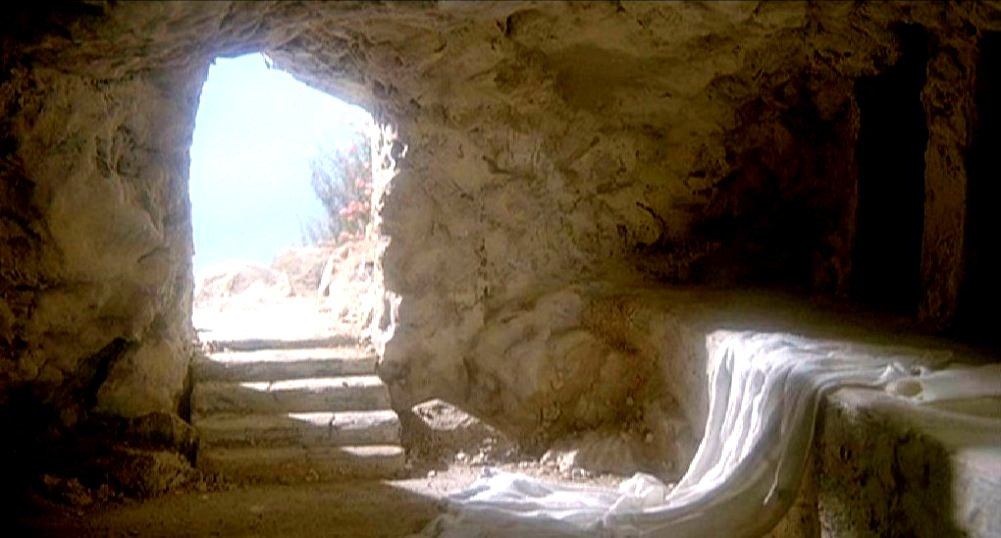
The Empty Tomb | Already Not Yet
1 Corinthians 15:19-20 "If we have hoped in Christ in this life only, we are of all men most to be pitied. 20 But now Christ has been raised from the dead, the first fruits of those who are asleep."

Introduction:
Today's post represents some reflections on the significance of the Resurrection of Jesus Christ from the dead. The aim is simply to give the reader a sampling of the massive significance of this truth.

To begin, the clearest statement found in the Bible on the significance of Christ’s resurrection from the dead is found in 1 Corinthians 15:19-20a “If we have hoped in Christ in this life only, we are of all men most pitied. (20) But now Christ has been raised from the dead…” All Christianity, and life and the entirety of existence rises or falls with this doctrinal and historical reality. 


Christ’s empty tomb, post-mortem appearances, the sudden switch of the disciples’ skepticism to robust faith and the early church can only be explained by the historical, physical, supernatural resurrection of Jesus from the dead. 

Christian doctrine would be jeopardized (1 Corinthians 15:1-11) as well as Christian preaching and the church itself if Christ had not risen from the dead (1 Corinthians 15:12-19). Moreover, any ability to derive hope in this present life must be abandoned if Jesus Christ had never risen from the dead (1 Corinthians 15:20-28). For finding the purpose of existence and hope for the future, such quests must be abandoned if indeed Jesus Christ’s resurrection never took place (1 Corinthians 15:29-58). 

But praise be to God – Jesus has risen – and thus we serve a risen, exalted Savior! The existence, reality and identity of the true and living God of the Bible is verified chiefly by the fact that He is credited with raising Jesus from the dead (Romans 6:4-11; Romans 8:11; 1 Peter 1:3). Jesus’ own Deity and true humanity are both verified by this event (John 10:17;Romans 1:1-3; Romans 9:5). Christ’s resurrection from the dead –deemed “firstfruits” in 1 Corinthians 15:20b, guarantees the Christian’s future glorified transformed resurrection body at His return (1 Thessalonians 4:13-16; 1 Corinthians 15:42-58). 

Christ’s resurrection also has set in stone all of the prophecies and predictions pertaining to the rest of the Old Testament saints in the resurrection of the righteous, of which we will be a part (Job 14:14; Daniel 12). The Kingdom of darkness and Satan himself stand condemned and defeated as a result of Jesus’ resurrection from the dead (Colossians 2:11-12; Hebrews 2:11-14; 1 Peter 3:18-20). To summarize – Jesus’ resurrection stands as the epicenter of Christian experience, doctrine, history, the present and future hope for all who believe.

Sunday, October 18, 2015

Reflections on Jesus Christ as Very God and Very man

2 Peter 3:18 "but grow in the grace and knowledge of our Lord and Savior Jesus Christ. To Him be the glory, both now and to the day of eternity. Amen."

Introduction:
Today's post aims to offer some reflections from scripture on what is meant when we say that Jesus Christ is very God and very man. As can be seen in the opening verse, we are commanded to grow in the grace and knowledge of our Lord Jesus Christ. No one can ever exhaust the Person of Jesus Christ. He is all-together lovely. May the following reflections serve not only to only expand the reader's mind about Jesus, but to also deepen the heart in Him. 


The Person of the Son Pre-existed and co-existed in a shared Eternal, undivided Divine nature with the Father and the Holy Spirit before the beginning of time (Psalm 2; Psalm 110; Proverbs 30:4; John 1:1; John 17:3-5; Colossians 1:13-16) . When I speak of nature, I refer to the way in which a being expresses its own existence. Hence in talking about the Lord Jesus Christ, it is vital to speak of Him in regards to first His Person and then secondly and thirdly the two natures which He now possesses. We will then wrap up the post with some final reflections.

First, as indicated, the Person of the Son has possessed the Divine nature with which He has enjoyed with the Father and Spirit from all eternity. As “True God”, the Son is the visible expression of the invisible Father, which no man has seen nor can see (Hebrews 1:1-2; Jude 1:25). In the language of the older Christians, there has never been a time that the Son was not, or stated positively – the Son has always been, is and is to come (Revelation 1:8). 

Secondly, the Son as “True God” touching His Divine nature possesses all of the Divine essential attributes, such as omnipresence (John 3:13); omnipotence (Colossians 1:16-17) and immutability (Hebrews 13:8). The Son and the Father in eternity agreed upon the Son’s incarnation and self-imposed humiliation to the cross (Philippians 2:5-11; Titus 1:2). This is practically important to the Christian for the sake of recalling that Jesus is more than able to take care of us in this life, salvation life and the life to come. 

Then thirdly, as the Son ever retained His Divine nature, He did enter into history and humanity by taking upon Himself a second way of expressing His existence, a second nature – albeit a human nature. Thus the Son, also designated the Eternal Word, co-equal with the Father (John 1:1) became flesh (John 1:14). The titles revealed in the New Testament indicate to us the Son’s Eternal Divine and in-time-assumed human natures. Matthew 1:21 for example states He was to be named “Jesus” during the announcement of His pending birth while still be referred to as “Immanuel” or “God with us” in Matthew 1:23. Conversely, John 1:14 clearly emphasizes that the Eternal Son, being God, is the “Word made flesh” (John 1:14) while at the same time being the fullness of Deity in His humanity (Colossians 2:9).

In putting together what we have discussed thus far in terms of Jesus' Person and two natures, the union of true humanity and true Deity in the Person of the Son, Jesus, was a true hypostatic union that did not co-mingle, confuse, harmonize nor distort His Deity nor humanity. This miracle was achieved by the Holy Spirit hovering over in the mysterious but nonetheless true and historical miracle of the virgin conception (Isaiah 7:14; Luke 1:35). Touching Christ’s Deity – He ever partakes of Deity with the Father; and touching His assumed humanity – the Son chose to partake of humanity by way of the virgin’s womb (Matthew 1:21-23). 

As very man, the Son chose to experience life in the self-imposed constraints that come with being a man: including hunger, fatigue, temptation and pain (Matthew 4:1-13; 27; also the parallel accounts of the crucifixion in the other four gospels). He sweated (Luke 23:34); grieved (John 11) as a man – because as very man – he was truly a man. Jesus experienced the full range of human emotions and life without ever sinning once in thought, word or deed (Hebrews 5:14; 1 Peter 2:22). As “truly man”, Jesus had the ability to die (1 Peter 3:18). As “truly God” or “very God” – His atoning work and resurrection verified both His true and undiminished Deity and His perfect and full humanity.

Closing thoughts
As we close up these reflections today, I want us to prayerfully consider the above reflections. To think about Jesus Christ in His Person, we can only speak of Him now as being “The God-man”, meaning that He as One Person has a true Divine nature and true human nature that is resurrected. In His ascension, the Son as the Incarnate God was exalted by the Father (Acts 1:11; Philippians 2:5-11). The Son is seated at the Father’s right hand and makes intercession for His people as a man for them to God and as God representing God to His people (Hebrews 1:1-2). The Person of the Son will forever retain His glorified, physical humanity while ever remaining a partaker of infinite Deity with the Father and Holy Spirit. He now and forever will be the Prophet (Hebrews 1:1-2); High Priest (Hebrews 8) and King of Kings (Revelation 19:1-10). He is going to return at the end of the age as the God man in a physical, glorified, resurrected, ascended body just as He promised (Acts 1:11; 1 Corinthians 15:23-28; Revelation 19). 

Saturday, October 17, 2015

How One God exists eternally in Three Persons


Matthew 28:18-20  "Go therefore and make disciples of all the nations,baptizing them in the name of the Father and the Son and the Holy Spirit."

Introduction:
When it comes to understanding God as being “one God that exists eternally in three persons”, I’m reminded of a statement I heard years ago by a Bible teacher, namely that God is “One what” and “Three Who’s”. The doctrine of the Trinity as so expressed in this statement can be described as a compound doctrine composed of four fundamental truths about God in the scripture: Monotheism, Christ’s Deity, The Holy Spirit’s Personality and God as a Personal God.

First, monotheism (“mono” = “one” and “theos” = “God”) or the reality of God being One God in regards to His Divine essence or nature (Deuteronomy 6:4-5; Matthew 22:37). God’s oneness of being is without dispute in both Old and New Testaments (Genesis 1:1; 1 Corinthians 8:6). The “Oneness” of God in the Bible is not just a bare oneness, but evidently is hinted at in the Old Testament as God being One God that has the capacity to relate within Himself as a “compound unity” (see Genesis 1:26 i.e “make man in “our image”). This One God revealed Himself not only as the Creator (Genesis 1:1; John 1:1) but also Personally in regards to His redemptive dealings as the Father (Deuteronomy 32:8; Hosea 11:1; John 17:5).

The second fundamental truth revealed about God in the Bible has to do with the Deity of the Son – the Lord Jesus Christ. As we noted earlier, the Old Testament hints that God is a compound unity”. He is identified as “Father” nearly ten times in the Old Testament Who has with Him a Second Personage – the Son (Psalm 2; Proverbs 30:4). The New Testament fully reveals this Personage to be none other than “The Son” who came as the fullness of God in human flesh (John 1:14; Colossians 2:9). Jesus Christ repeatedly asserts His Deity (John 8:58); eternal pre-existence (John 17:4-5) and other Divine qualities (Matthew 28:18) that He retained but chose to not access for the sake of His assumption of true humanity (Philippians 2:5-11) in His sojourn on this earth. The New Testament equally asserts both Old Testament Monotheism and Christ’s Deity as comprising the singular identity of the One God (1 Corinthians 8:6-7).

Then the third fundamental truth that describes this idea of God being “one God that exists eternally in three persons” is that truth of the Personality of the Holy Spirit. In so far as Jesus Christ is equal in all respects to the Father in their sharing of full Deity, the Holy Spirit is described by Jesus as being another Person of like kind to Himself and the Father (John 14:16; 15:26; 16:8-15). 


The New Testament bears witness to the Holy Spirit’s Deity (Acts 5:4-5) and to His sharing in the One, undivided Divine essence with the Father and the Son (Matthew 28:19; 2 Corinthians 13:14). The Three Persons of the God are not mere manifestations or modes of being. All three Persons equally and mutually indwell the other to such a degree that to speak of the Divine essence is to refer to the Father, Son and Spirit. Each Person in turn contains the totality of the Eternal, Divine essence that the other two equally share in like manner. In ways that we cannot fully comprehend - the Persons of the Godhead retain their distinct identities while equally and eternally sharing in and expressing the fullness of what it means to be the One True and living God.

By understanding God as monotheistic in regards to His essence, the Deity of the Son in His relationship to the Father and the Personality of the Spirit in His relationship to the Father and Son, we then come lastly to the fourth truth comprising the doctrine of the Trinity– God as a Personal God. Over time many people have sought illustrations from the physical world to illustrate this profound truth of God being “One” and yet “Three” at the same time. All analogies eventually break down despite their initial aid in helping people to approach this truth. 

I have found relational language to be the most effective – since Jesus Himself employed such language (see John 14:23). Many Bible teachers have found relational language as the closest way possible in describing this otherwise incomprehensible truth of God. The Father for example is the Eternal great Lover and thus Source of relationship between the Persons. Such eternal love expressed by the Father would be impossible without an Eternal Beloved – the Son. As both the Father and Son have always loved One another from all eternity – hence the Holy Spirit is that Person Who expresses this love between the Father and the Son – all three Persons of course being One God that exists eternally in three Persons. These four fundamental truths of monotheism; Christ’s Deity; the Holy Spirit’s Personality and God being Personal rounds out attempting to explain the statement: "one God existing eternally in three persons”.