Translate

Monday, May 9, 2016

New Hope in Jesus Christ - Proclamation of the Word


Ephesians 4:11-13 "And He gave some as apostles, and some as prophets, and some as evangelists, and some as pastors and teachers, 12 for the equipping of the saints for the work of service, to the building up of the body of Christ; 13 until we all attain to the unity of the faith, and of the knowledge of the Son of God, to a mature man, to the measure of the stature which belongs to the fullness of Christ."

1 Timothy 4:6 "In pointing out these things to the brethren, you will be a good servant of Christ Jesus, constantly nourished on the words of the faith and of the sound doctrine which you have been following."

Introduction:
Christian leader Joseph Stowell made the following observation about the great Renaissance artist Michelangelo in his devotional book: "Day by Day with Jesus - Strength for the Journey": "Michelangelo is said to have often painted with a brush in one hand and a shielded candle in another to prevent his shadow from covering the masterpiece he was creating. As God works through us to craft His glory and gain, we must be careful that our shadows are not cast across the canvas of His work."

Why is proclamation of God's Word so vital for living out the hope we have in Jesus Christ? Yesterday we had considered the importance of discipleship and evangelism. The clearest definition we find for "discipleship" is where Jesus expresses in Luke 9:23-24 "And He was saying to them all, “If anyone wishes to come after Me, he must deny himself, and take up his cross daily and follow Me. 24 For whoever wishes to save his life will lose it, but whoever loses his life for My sake, he is the one who will save it." 

To be a disciple means to follow Jesus in attitude, in mind and in heart for the goal of becoming like Him. As a pastor, I am convinced that the hindrances to our Christian growth stems from us doing what Michelangelo in the quote above tried to avoid: namely casting our own shadows on God's continuing work of making us more and more like Jesus. 

We often will cite Ephesians 2:8-9 as one of the clearest Biblical definitions of salvation - and rightly so. In that text we see defined salvation by grace alone through faith alone in Christ alone. However very few people go onto Ephesians 2:10, which deals with why the Lord calls and saves sinners: "For we are His workmanship, created in Christ Jesus for good works, which God prepared beforehand so that we would walk in them." 

Healthy Christian growth is not optional for the Christian
Oddly enough, many Christians today seem satisfied with little or no progress in their Christian walk. God chose, called and convicted sinners by His Spirit to believe on Christ apart from good works for the purpose of growing up in a salvation that is to abound in good works. The overall pattern and design of the Christian life is to grow onward and upward in the Lord. Such growth may experience seasonal declines, however the vast majority of the Christian life ought to witness advances and an overall pattern of change. 

Passages such as 2 Peter 3:18 explicitly command us to grow up in our walk with Christ: "but grow in the grace and knowledge of our Lord and Savior Jesus Christ. To Him be the glory, both now and to the day of eternity. Amen." Peter also writes in 1 Peter 2:2 "like newborn babies, long for the pure milk of the word, so that by it you may grow in respect to salvation." Like the Apostle Peter, the Apostle Paul also explains the need of healthy Christian growth. Romans 12:2 is but one example - "And do not be conformed to this world, but be transformed by the renewing of your mind, so that you may prove what the will of God is, that which is good and acceptable and perfect." All of these passages urges Christians to pursue healthy Christian discipleship.

The urgency for healthy Christian growth is not up for debate in the scriptures. The question is: what and how do Christians grow in their Christian lives?  God has prescribed three main ministries in the local church to ensure the spiritual healthy of Christians. Solomon writes in Ecclesiastes 4:12  "And if one can overpower him who is alone, two can resist him. A cord of three strands is not quickly torn apart." We will be exploring two chapters (Ephesians 4 and 1 Timothy 4) to discover what I am calling "the 3-braided rope" of healthy Christian growth in Christians and the church, which includes the following:

1. Pastoral ministry (1 Timothy 4; Ephesians 4:11-12)

2. Church-body life (Ephesians 4:13-24)

3. Small-groups (Ephesians 4:25-29)

So let us look first of all at how God has prescribed pastoral ministry for the healthy Christian growth of the Christian and the local church.

God has ordained pastoral ministry to be one of the three resources for healthy Christian growth
It is appropriate to be drawing these posts from Ephesians 4 and 1 Timothy 4, since both letters were written to the same church. Paul's letter to the Ephesian church was written in 60 A.D to the Ephesian congregation, urging them to be enriched in every spiritual blessing in Christ. Paul's letter to Timothy was composed 2 years later, urging him as a pastor to grow spiritually (1 Timothy 4:16) and to lead the Ephesians in ongoing spiritual growth and conduct (1 Timothy 3:15). 

When we come first of all to 1 Timothy 4, we see in general outline form the importance of pastoral ministry in the life of the Christian and the local church. Paul's point of the importance of pastoral ministry in 1 Timothy 4 can be summarized under four headings that spell out why Christians and churches need pastoral ministry for their Christian growth. We will consider these in alphabetical form:

1. Anchoring of people in God's truth. 1 Timothy 4:1-6
Christians and churches need men who will courageously and compassionately preach the truth in love. Moreover, pastors need to love their people by being present and interactive in their lives. A good pastor can provide an anchoring point for a church or a Christian who is experiencing seismic shifts. The pastor's ability to do so stems not from himself, but rather Christ working in and through him (see Colossians 1:27). 

2. Building godliness into people's lives. 1 Timothy 4:7-8
Jesus desires not only a loving church, but a loving church that loves His holiness and expresses holy love. As we saw a couple of days of ago, expressing the newness of hope in Jesus includes aiming to lovingly know God and other people. Pastors need to regularly urge their congregations onto holy lives that bear witness of God's love and transforming power (1 Peter 2:9-12; Hebrews 3:12-13; Hebrews 10:24-25; 1 Peter 5)

3. Communicating the Gospel. 1 Timothy 4:9-10
Five times in Paul's pastoral letters (1 Timothy, 2 Timothy and Titus) we find reference to these "statements worthy of all acceptance". In 1 Timothy 4:9-10 we find one of the clearest statements summarizing the Person and work of Jesus Christ as communicated in the Gospel. A pastor not only needs to feed His flock but also evangelize sinners both inside and outside the church. His purpose is undoubtedly to equip the saints to be witnesses of Christ wherever they live and work. Yet too, the pastor himself ought to be about looking for opportunities to share Jesus in personal daily interactions with people. Such practices enable the pastor to urge his people to communicate the Gospel.

So thus far we have seen how God uses pastoral ministry to encourage healthy Christian growth: anchoring people in the truth, building godliness into people's lives and communicating the Gospel. Now lets consider one final element as to why pastoral ministry is necessary for healthy Christian growth, namely....

4. Demonstrating healthy Christianity. 1 Timothy 4:11-16
If a pastor is to be effective in urging his congregation to healthy Christian growth in discipleship, he himself must live it! Paul writes in 1 Timothy 4:15-16 "Take pains with these things; be absorbed in them, so that your progress will be evident to all.16 Pay close attention to yourself and to your teaching; persevere in these things, for as you do this you will ensure salvation both for yourself and for those who hear you."

As we think about proclaiming God's Word, the pulpit is what we typically think about - and rightly so. However, other ways of proclaiming God's Word and practicing some of the above principles can include conferences, encouraging and training more people to teach in Sunday School, small-groups and church events. 

As we are living in a 21st century world, other secondary means can be used to facilitate proclamation of the Word, namely: podcasts, You Tube, i-Tunes, Facebook and other venues.

Linking arms with other churches to increase efforts for proclaiming the Word can generate even more volumes of newness of hope across the Christian community. Such efforts could result in such things as community prayer times/revivals to reaching the secular and unchurched community.

Closing thoughts
As we have seen today, pastoral ministry and proclamation of the Word are necessary for Christian growth in discipleship. Pastors have been called by God to anchor people in His truth (1 Timothy 4:1-6); build godliness into people's lives (1 Timothy 4:7-8); communicate the gospel (1 Timothy 4:9-10) and demonstrate healthy Christianity (1 Timothy 4:11-16). Every member of the congregation to one degree or another has a share in this vital ministry of getting the Word out to people. Though this post did focus mainly on preaching, we musn't exclude proclamation to the preaching task. God has gifted many people in His church to creatively communicate His truth in various ways and venues to supplement the primary work He does through the preaching of God's Word. In turning quickly to Ephesians 4:11-12, we find an inspired summary of why pastor ministry is among the three God-ordained methods for healthy Christian growth in Christians and the local church: "And He gave some as apostles, and some as prophets, and some as evangelists, and some as pastors and teachers, 12 for the equipping of the saints for the work of service, to the building up of the body of Christ."

Sunday, May 8, 2016

New Hope in Jesus Christ - Ongoing Discipleship / Evangelism


Matthew 28:18-20 "And Jesus came up and spoke to them, saying, “All authority has been given to Me in heaven and on earth. 19 Go therefore and make disciples of all the nations, baptizing them in the name of the Father and the Son and the Holy Spirit, 20 teaching them to observe all that I commanded you; and lo, I am with you always, even to the end of the age.”

Luke 5:27-28 And after these things he went forth, and saw a publican, named Levi, sitting at the receipt of custom: and he said unto him, Follow me. 28 And he left all, rose up, and followed him.

Introduction:
The above picture takes me back to my Bible College days when we learned about the Christian life. The professor was with the Navigators - a discipleship ministry that stressed Bible verse memorization, spiritual disciplines and evangelism. Such instruction was life- changing. We considered yesterday what is entailed in our new found hope in Jesus Christ. We considered ramifications of this "new hope" as revealed in Romans 5:1-5. We explored how hungering to love God and people is essential to growing in this hope. Loving God includes and assumes knowing God. 

We could say that loving God means lovingly knowing God. As we lovingly know God, we will in turn want to lovingly know other people. We finally proposed a glimpse of what hungering for God looked like in the individual Christian life and the corporate church life. 

Today's post once again considers this theme of new hope in Jesus Christ. By considering this word "hope" as an acrostic for exploring this theme, we saw already the need to hunger to love God and people. Today we want to see the importance of ongoing discipleship and evangelism as the means for reinforcing our hope.

What is discipleship?
What is a suggested definition of discipleship? Discipleship, by definition, refers to the process by which a person by grace through faith believes on Christ as Savior and Lord while forsaking himself to become like the Master.  Such a process begins as a point of entry at conversion or the New Birth and continues on as a process in the post-conversion Christian life or what is also called sanctification. Jesus brings forth the nuts and bolts of what it means to be a disciple throughout the Gospel accounts.  

Discipleship begins with the Call of Christ
Luke records the conversion of one of the twelve original disciples - Levi (or more commonly known as Matthew).  Matthew (Levi) would 30 years after this event write the first Gospel in our New Testament - the Gospel of Matthew.  But before Matthew became "Saint Matthew", he was sinner Matthew.  He took advantage, extorted and did whatever it took to make that next dollar.  As a tax-collector for Rome, he not only made it his business to get the necessary taxes from his fellow Jews, he also charged "hidden" fees over and above the tax to line his own pockets.  Jews hated tax-collectors - and tax collectors loved money.  The last thing that Matthew was thinking of doing was turning His entire life over to Christ to follow Him. 

The Call of Discipleship identifies the claim of Christ on your life
Matthew was into his career, his life.  He was making money.  Then came that voice - that voice which cut through the air and into his heart.  Suddenly the clinking of coinage and the rustling of bills were over-powered by the voice of the One who was now laying claim on Matthew.  

This was a voice that was unlike any voice he had ever heard.  Two words: "Follow Me".  What follows is as shocking as it is unexpected.  Matthew, the man of means, the man of money, was touched by Divine Grace.  The same voice which created all life and through whom came the entire universe was now through human vocal cords penetrating the dark heart of Matthew.  

The Call of Discipleship makes following Christ a foregone conclusion 

Grace made following Jesus a foregone conclusion.  He left all, rose up and followed Him. This is how life with Jesus Christ begins: with a call issued forth from Him, through His word, into your heart.  To be a disciple means to forsake all that you used to define yourself in favor of following the One who is unlike yourself.  By faith, as you follow the One calling your name, you will grow in your desire to be so much like Him that you too we see that what Matthew did was the only thing that makes sense - Go and Follow the Master. 

Discipleship leads to multiplication
In the Great Commission passage of Matthew 28:18-20, we find the disciples being commanded to go into all the world and make other disciples. It has always puzzled me why churches separate discipleship and evangelism. The two are two sides of the same coin. One cannot complete the discipleship process without multiplying themselves, and yet whenever we consider that less than 10% of local church membership actively shares the Gospel may indicate lack of understanding about discipleship. 

Whenever churches desire to get their members involved in missions and evangelism, they will coerce, bring in a revivalist or tell them to simply do it. Undoubtedly, such measures are good, but no adequate. I truly wonder what would happen if local churches had a well-defined method of discipleship making? Books such as "The Simple Church" and "The Gospel According to Jesus" have emphasized how much we need to re-connect evangelism to discipleship and thus to the mission of the local church. In a recent book by Rice Broocks entitled: "Man, Myth, Messiah", Brooks closes out his apologetic book with two chapters devoted to tying together evangelism, apologetics and discipleship.  

It would seem that whenever Christians are actively involved in an ongoing process of discipleship/evangelism, new hope is rekindled in Jesus Christ. Certainly we could expand further on these thoughts. But for now, we will let these ideas simmer in our hearts, pray and then ask God to prompt us to action. May we kindle the flame of new hope in Jesus Christ by way of ongoing discipleship that leads to evangelism.

Saturday, May 7, 2016

New Hope in Jesus Christ - Hungering to love God and love people

Romans 5:1-5 "Therefore, having been justified by faith, we have peace with God through our Lord Jesus Christ, 2 through whom also we have obtained our introduction by faith into this grace in which we stand; and we exult in hope of the glory of God. 3 And not only this, but we also exult in our tribulations, knowing that tribulation brings about perseverance; 4 and perseverance, proven character; and proven character, hope; 5 and hope does not disappoint, because the love of God has been poured out within our hearts through the Holy Spirit who was given to us."

Introduction
As I was driving down the road the other day, I was reflecting on the name of the church God has called me to shepherd: "New Hope Baptist Church". Whenever my wife and I first heard of New Hope, the name caught our attention. 

Two words capture the eye whenever they are seen: "new" and "hope". Everyone loves "new things". Whenever a package claims to be "new and improved", we instinctively find ourselves wanting to get it, to have it and partake of it. The second word, "hope" - brings courage, confidence, light and joy to those who have not had it or had little supply of it. These two little words, when combined together, capture the essence of what occurs at the beginning of the Christian life and throughout its days. 

The Apostle Paul begins Romans 5 by connecting the position Christians have before God (justified or legally declared righteous by God with the credited righteousness of Jesus Christ) with the power of Christian living expressed in the experience of hope - from beginning to end. What does new found hope in Jesus Christ bring to the sinner who responds to the Spirit's call at saving faith? Certainly a change in position before God (from that of enmity to innocence). But with the positional righteousness of Jesus Christ credited at saving faith comes the ever-increasing experience of living in Him and He in us. Such a reality is the essence of New Hope in Jesus Christ. 

Since Paul mentions the word "hope" three times in this text, I thought it would be interesting to consider this word as an acrostic for describing what the Christian-life and the local church ought to be like. In other words: Hunger to love God and love people; Ongoing discipleship/evangelism; Proclamation of the Word of God and Exaltation of Jesus. When people meet Christ-followers, they ought to discern such "hope". 1 Peter 3:15 states - "but sanctify Christ as Lord in your hearts, always being ready to make a defense to everyone who asks you to give an account for the hope that is in you, yet with gentleness and reverence." 

So what is there about new "h.o.p.e" in Jesus Christ that sets apart the Christian and what should be the spiritual vitality of the local church? For brevity's sake, let's consider the letter "H" for today.

Hunger to love God and people
Jesus was asked what the greatest commandment was in Matthew 22. His response is found in Matthew 22:37-39 And He said to him, “‘You shall love the Lord your God with all your heart, and with all your soul, and with all your mind.’38 This is the great and foremost commandment. 39 The second is like it, ‘You shall love your neighbor as yourself." The aim of the Christian life is to know God and love God. In so far as we love God through the Lord Jesus Christ, such love will compel us to love others. In like manner, how we love those who treat us well or who treat us terribly will measure how much God's love is flowing through us. 

Hunger for God is proportional to love for Him. Hunger for God is indicated in the way I love others. 1 John 4:7-10 states - "Beloved, let us love one another, for love is from God; and everyone who loves is born of God and knows God. 8 The one who does not love does not know God, for God is love. 9 By this the love of God was manifested in us, that God has sent His only begotten Son into the world so that we might live through Him. 10 In this is love, not that we loved God, but that He loved us and sent His Son to be the propitiation for our sins. 11 Beloved, if God so loved us, we also ought to love one another." Implied in our loving of God is knowing God. One cannot love another person without knowing them. Hence when I say "loving God", it is short-hand for expressing the essentials of relating to God (knowing, praying, listening, obeying, believing and so on).

The love for God and love for others increases our hunger for Him. Like an electrical circuit, whereby one end of a wire is connected to a positive battery terminal and the other to a negative terminal, both terminals are needed to complete the circuit. The positive part of the circuit is where the flow begins - namely God's love. The other terminal represents the pouring out of His love into others. 

So what can this look like in individual Christians or the local church? Hungering to love God and others can entail such realities as:

-A God-enriched environment where people are encouraged and convinced to dig into the scriptures and apply it to their lives. Experiencing the Lord Jesus Christ in prayer, scripture reading, fasting, fellowship with other Christians in church services or home-based Bible study groups ought to be the norm, not the exception. Acts 4:13 describes the early public opinion of the early Christians - ....."they were amazed, and began to recognize them as having been with Jesus." 

-There ought to be expressions of extravagant love and concern for one another. Jesus states in John 13:34 "A new commandment I give to you, that you love one another, even as I have loved you, that you also love one another. 35 By this all men will know that you are My disciples, if you have love for one another.” Whenever those who are not Christians see people not only helping others with no prospect of anything in return, the mark of extravagant, Godly love will include the compulsion to not merely know about God, but to know Him in Jesus. 

Such an impulse arises not from the natural human heart, but rather the supernatural work of the Holy Spirit working on the heart. This kind of hunger is urged upon us in Hebrews 10:24 "and let us consider how to stimulate one another to love and good deeds". Or again in 1 Peter 2:12 "Keep your behavior excellent among the Gentiles, so that in the thing in which they slander you as evildoers, they may because of your good deeds, as they observe them, glorify God in the day of visitation."

Such thoughts are but the beginnings of reflecting on what it means to hunger in our love for God and others. Whenever we crave to love God and others, the hope of the Christian life will increase itself in ever increasing measure. The hope of salvation expressed in justification is not only a personal reality, but a corporate-church reality that, when taken to heart - results in a Kingdom reality. Hope flows as a river through the Christian's soul. Hungering for God turns this flow of hope from a trickle to a torrent. We stand amazed in His presence and hunger to love Him. We pray and stand in such amazing hope, all the while desiring to love others for the sake that they too can enjoy the new hope in Jesus Christ. 

Friday, May 6, 2016

The Coming King through a mother's eyes

Acts 1:12-14 "Then they returned to Jerusalem from the mount called Olivet, which is near Jerusalem, a Sabbath day’s journey away. 13 When they had entered the city, they went up to the upper room where they were staying; that is, Peter and John and James and Andrew, Philip and Thomas, Bartholomew and Matthew, James the son of Alphaeus, and Simon the Zealot, and Judas the son of James. 14 These all with one mind were continually devoting themselves to prayer, along with the women, and Mary the mother of Jesus, and with His brothers."

Introduction:
The last couple of posts have been devoted to viewing key episodes of Jesus' life and ministry through the eyes of Mary. The particular focus has been upon He as King of Kings and Lord of Lords in His incarnation and crucifixion. We noted how she experienced Him as King through His incarnation and crucifixion. Today we take one final look at Mary. Acts 1:12-14 represents the final time we see Mary in the Bible. The simple report of her gathered in the upper room with the other disciples communicates her profound and yet minimal role in the sweeping redemptive drama of Jesus' life and achievements.

When we say Mary's role was profound, we speak of her part in being the vessel of Christ's humanity. In His hypostatic union, whereby the humanity of Mary's DNA was conjoined to His Person as the truly Divine Son, we find the miracle of the virgin birth/conception (Matthew 1:21-23; Luke 1:35; Galatians 4:4). When we say at the same time that Mary's role was minimal, we mean that it was Christ alone who did the miracles and bore the wrath of God on the cross apart from her. Mary's role is to point to Christ. Thus we can use her view of Him to guide our thoughts to His actions on our behalf. 

In today's post we find Mary gathered in the upper room with the disciples. Why? The risen Christ had told His disciples that they were to tarry and wait until the promised Holy Spirit would come (Acts 1:8). Jesus had taught prior to His crucifixion that He would send another comforter (John 14:17, 26-27; 15:26; 16:8-12). His repeating of this promise in His post-resurrection appearances signified how He would tangibly prove that His ascension into heaven was completed. Thus, the events of Pentecost in Acts 2 confirmed that Jesus had indeed begun His inaugural reign upon His throne over His church, a point spelled out by the Apostle Peter in Acts 2:32-36. 

Now why labor over these details? Because what Mary was doing in her actions was identifying the fact that the One whom she experience in her womb as an incarnate infant and whom she saw crucified was no less than the King of Kings and Lord of Lords. His ascension into heaven began a sequence of events that would lead her to complete the full circuit of her faith to see Him as the coming King by faith. 

Now we know that Jesus, Who is ascended and exalted at the Father's right hand (Philippians 2:5-11) will return to this world. His role as King of Kings and Lord of Lords will be revealed fully when He returns. Revelation 19:11-16 states: "And I saw heaven opened, and behold, a white horse, and He who sat on it is called Faithful and True, and in righteousness He judges and wages war. 12 His eyes are a flame of fire, and on His head are many diadems; and He has a name written on Him which no one knows except Himself. 13 He is clothed with a robe dipped in blood, and His name is called The Word of God. 14 And the armies which are in heaven, clothed in fine linen, white and clean, were following Him on white horses. 15 From His mouth comes a sharp sword, so that with it He may strike down the nations, and He will rule them with a rod of iron; and He treads the wine press of the fierce wrath of God, the Almighty. 16 And on His robe and on His thigh He has a name written, “KING OF KINGS, AND LORD OF LORDS.”

What Mary's actions model for us is the importance of watching and waiting. We watch for the King to act. We wait. She was awaiting the coming Holy Spirit. He came. We Christians, having the promised Holy Spirit, wait for Jesus to return. He will come to take us up to be with Him (rapture of the church, 1 Thessalonians 4:13-16). Then, (seven years after His taking us up), He will descend fully and complete to this earth to begin the physical manifestation of His earthly reign. It is exciting to think about that like Mary, we behold our King through eyes of faith. What is now faith will be made sight. Would it be that we watch and wait. The King of Kings, and Lord of Lords is coming soon!

Thursday, May 5, 2016

The Crucified King Through a Mother's Eyes


John 19:25-27 Therefore the soldiers did these things. But standing by the cross of Jesus were His mother, and His mother’s sister, Mary the wife of Clopas, and Mary Magdalene. 26 When Jesus then saw His mother, and the disciple whom He loved standing nearby, He said to His mother, “Woman, behold, your son!” 27 Then He said to the disciple, “Behold, your mother!” From that hour the disciple took her into his own household."

Introduction:
Mary's role in the Bible has been treated in one of two ways throughout church history. One group exalts her to the level of co-redemptrix with Christ, whereas another group says little to nothing. Such extremes do nothing to reflect the Bible's presentation of her. Mary's place in the Gospel records is both substantial and minimal. Such an observation must be kept in mind when we consider how God used her in His plan of bringing the Son into the world.

How Mary's life became intertwined with Jesus' journey to the cross
Mary had been prophetically warned by Simeon that a time would arrive when events connected with the infant Christ would pierce her soul. Luke 2:33-35 records Simeon's words: "And His father and mother were amazed at the things which were being said about Him. 34 And Simeon blessed them and said to Mary His mother, “Behold, this Child is appointed for the fall and rise of many in Israel, and for a sign to be opposed— 35 and a sword will pierce even your own soul—to the end that thoughts from many hearts may be revealed.” 

What was spoken in the infancy of our Lord's humanity was fulfilled at Calvary. Mary, the virgin bearer of our Lord (Luke 1:43), beheld her King on the cross. The large sword would pierce her soul, severing the relationship of mother from child and leaving in its wake a worshiper gazing upon her Lord's bruised and bloody face.

Mary would witness the Incarnate God, her King, crucified
When we think of the sayings uttered by Jesus from the cross (such as the one quoted at the beginning of this post), we can see how the scene leads us to the moment when Mary would gaze upon her crucified King. The first cry was the cry of redemption: "Father forgive them, for they know no what they do" (Luke 23:34). The second cry was a cry of affirmation: "Today you will be with me in Paradise" (Luke 23:42-43). This third statement by Jesus to Mary and John, we could say, was the cry of separation: "Mother, behold your son, son, behold your mother" (John 19:25-26). None could bear the cross by He. Jesus bore it all alone.

It is then when we arrive at that middle cry: "My God, my God, why have you forsaken me" - the cry of isolation (Matthew 27:46). He had severed ties with the only woman who could comfort, and He felt the pain of separation as His view of the Father's face was obscured by the fierceness of wrath. 

It must be noted here that no separation ever occurred in the Divine nature - since the Son, the Father and Spirit are inseparably One God. The Son took into His Person through His experience as man the experience and pain of bearing the sins of the world. As truly Divine, the Son's view of His Father was that of the wrathful judge delivering the just demands for sin's penalty. 1

The value of seeing the cross through a mother's eyes
Mary's sword was thrust cleanly through her soul. She undoubtedly trembled when the sun's light was obscured, and the winds picked up. The darkness of humanity's frail plight settled in and only her King stood between the tsunami of just wrath that was poured out on Him. 

The remaining three sayings of Jesus would had been heard by Mary in that horrific scene. When Jesus cried "I thirst" in John 19:28; "It is finished" in John 19:30 and the final cry of "Father, into your hands I commit my spirit" (Luke 23:46), he cried forth respectively cries of desperation, proclamation and resignation. Mary heard them all, witnessed them all and quite likely cried at them all. As those sayings brought into sharp relief the identity of the King of Kings, the cross went from horror to honor. The King of Kings crowned with thorns would be seen by faith as the King who would be crowned. 

To see this dramatic scene through a mother's eyes is to experience the sharp edges of that sword. The cross ought never be treated as a sterile, stoic event of history. It was real. Cosmic and earthly. For a woman with a mother's heart, the knees which bowed in anguish would become the knees of a worshiper. From this moment onward the son she lost that day turned out to had been the One who viewed her as an adopted daughter in the plan of redemption. 

Closing thoughts
We have taken the time to reflect on the crucified King through the experience of Mary. What she must had seen, heard and felt intensifies the reality of Christ's crucifixion. What can we gain from these reflections:

1. The cross is where we bring our pain
2. The cross is where we lay down our identity
3. The cross is where He takes up our pain
4. The cross is where our identity is transformed

Endnote
1. The Lutheran Formula Concord makes this illuminating observation concerning the crucifixion of Jesus: "
likewise 
in 
death,
when
 He
 died
 not 
simply 
as 
any other 
man,
but 
in
 and
 with
 His 
death
 conquered
 sin,
death,
devil,
 hell,
and
 eternal 
damnation; which
 the 
human
 nature 
alone 
would 
not 
have 
been
 able
 to 
do if 
it 
had
 not 
been
 thus
personally united
 and 
had 
not 
had 
communion
 with 
the 
divine
 nature." The SBC Baptist Faith and Message 2000 nicely pulls together our particular point of Mary's witnessing of the crucifixion of her Divine Savior and King: "Christ is the eternal Son of God. In His incarnation as Jesus Christ He was conceived of the Holy Spirit and born of the virgin Mary. Jesus perfectly revealed and did the will of God, taking upon Himself human nature with its demands and necessities and identifying Himself completely with mankind yet without sin. He honored the divine law by His personal obedience, and in His substitutionary death on the cross He made provision for the redemption of men from sin." 

Wednesday, May 4, 2016

The Incarnate King through a Mother's Eyes


Luke 2:16-19 "So they came in a hurry and found their way to Mary and Joseph, and the baby as He lay in the manger. 17 When they had seen this, they made known the statement which had been told them about this Child.18 And all who heard it wondered at the things which were told them by the shepherds. 19 But Mary treasured all these things, pondering them in her heart."

Introduction:
In the history of Christian thought, Mary has been treated in two extreme ways. Either she has been venerated to the point of near devotion to that of Christ Himself, or she has been utterly ignored. Both treatments mishandle the Biblical portrayal of her. I find it an interesting exercise to consider the Person of Jesus through her eyes. What did she experience? How did she perceive His life, death and resurrection? In today's post we want to consider how Mary saw Jesus as the Incarnate King.

Veiled in flesh, the Godhead see, Hail the Incarnate Deity
The prolific commentator Herbert Lockyer writes these words about Mary's experience of the incarnate King: "When Mary willingly yielded her body to the Lord saying: 'Behold the handmaid of the Lord, be it unto me according to thy word,' The Holy Spirit, by His gentle operation, took Deity and humanity and fused them together and formed the love knot between our Lord's two natures within Mary's being."

Sometimes a familiar song can shed light. I'm sure we are all familiar with the Christmas carol: "Hark the Herald Angels Sing". The above heading to this paragraph is derived from that beloved carol. When coupled with the the opening verses in today's post, we are astonishing in what is recorded, and what seems to be absent. We see recorded the haste of the Shepherds. In Matthew's version (Matthew 2:1ff), we find the Christ-child a young toddler (since it would had taken the wise men two years to make the 800 mile or more journey from Babylonia to Jerusalem). The wise men bow down and worship the little one. The reverence and adoration is recorded in both scenes. However, the stark simplicity and absence of ornateness befitting for the Eternal King in human flesh is more prominent.

Mary's response in Luke's Gospel of treasuring all the things she experience in her heart gives us a glimpse through her eyes. A mother's love is the most powerful and intense expression of parental love that can be found outside of God's love. As she received the news of the miracle that would occur in her womb concerning the Spirit's joining of the Eternal Son to her human DNA, Mary simply said in response to the angel in Luke 1:37-38 "For nothing will be impossible with God.” 38 And Mary said, “Behold, the bondslave of the Lord; may it be done to me according to your word.” And the angel departed from her." 

We see in these touching scenes a mother's response to the Incarnate King. By divine miracle, the forging of true humanity to the Person of the Eternal Son resulted in full humanity and undiminished Deity operating in concert in the Person of the Son. Such reflections as those above serve to aid us in considering the Incarnate King through a mother's eyes.

Closing thoughts for practical consideration
As we close today, notice a few points concerning Mary's regard of the Incarnate King that serve to instruct us as to how the Christ-follower ought to consider Jesus Christ:

1. She treasured the Incarnate King
2. She trusted the Incarnate King
3. She talked about the Incarnate King

That final thought especially is seen in her song that is called in the Latin Bible: "The Magnificant" in Luke 1:46-55 And Mary said:

“My soul exalts the Lord,
47 And my spirit has rejoiced in God my Savior. 48 “For He has had regard for the humble state of His bondslave;
For behold, from this time on all generations will count me blessed.
49 “For the Mighty One has done great things for me; And holy is His name.
50 “And His mercy is upon generation after generation toward those who fear Him. 51 “He has done mighty deeds with His arm; He has scattered those who were proud in the thoughts of their heart. 52 “He has brought down rulers from their thrones, And has exalted those who were humble. 53 “He has filled the hungry with good things;
And sent away the rich empty-handed.
54 “He has given help to Israel His servant, In remembrance of His mercy,
55 As He spoke to our fathers,
To Abraham and his descendants forever.”

May we today do like Mary did and treasure, trust and talk about the incarnate King - Jesus Christ. 

Tuesday, May 3, 2016

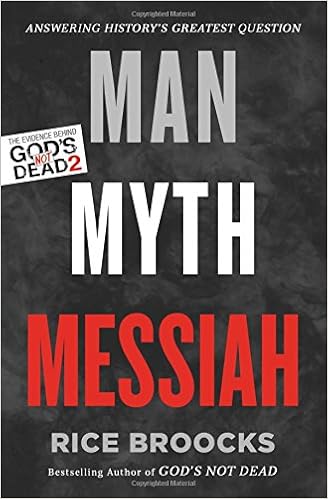
A review of Rice Broocks’ book: Man, Myth, Messiah: The Evidence Behind God’s Not Dead 2


Book Review - Rice Broocks – Man, Myth, Messiah: The Evidence Behind God is not Dead 2. Thomas Nelson. 2016.


Note: For interested readers, this book is $9.99 on Amazon.com
Introduction:
Let me begin this review by inviting people to go see or download the movie: “God’s Not Dead 2”. Why? It presents compelling reasons as to why Jesus is not a myth, nor just a man but truly the Messiah who raised from the dead. In the movie, one of the characters is seen reading the book “Man, Myth, Messiah” authored by Rice Broocks. Dr. Broocks is a substantial author, senior minister of Bethel World Outreach Church in Nashville and scholar in his own right (research PhD from Fuller Seminary, with the focus on defining the office of the evangelist). The foreword of the book was written by world-renowned Christian apologist and Liberty University Professor Gary Habermas, who is among the world’s foremost experts and defenders of Jesus’ resurrection. For anyone concerned about the validity of this book as a sound resource: such fears can be laid to rest. Now to the book.

As Dr. Broocks unfolds his case over ten chapters, his arguments are accessible and well-researched. Chapter One deals with what he calls “The Great Question”, based upon Jesus’ question: “who do men say that I am” in Matthew 16. In chapter two, we find what is called the “Minimal Facts Approach” (“minimal facts” being those details of the Easter accounts agreed upon by skeptical and believing New Testament scholars and which are unmistakably demonstrated). 

Dr. Broocks’ central idea in these first two chapters is to show that Jesus was indeed a real, historical person who lived, died and resurrected from the dead. In chapters 3,4 and 5, we find sound arguments and evidence for the reliability of the Gospels, the crucifixion and resurrection.

It is from the credibility of Jesus’ existence and the resurrection accounts that Dr. Broocks unravels skeptical notions of Jesus’ resurrection mimicking pagan myths. This idea is actually turned on its head, since Christianity was situated in the soil of 1st century Judaism, rather than Greek Mythology. In many cases, either the myths turn out not to teach what skeptics claim or appear to actually borrow from Christianity itself! In chapter 8, Dr. Broocks addresses the so-called “problem of miracles”, wherein he writes on page 175: “In other words, in order to believe no miracles ever happened, one must begin by assuming that no miracles can happen. This logic is circular reasoning and therefore self-defeating from the onset.” I found this chapter to be particularly strong, since he appeals not only to logically sound arguments, but also to valid contemporary examples and further resources on miracles.

Undoubtedly Dr. Rice Broocks’ well-reasoned and very readable style makes a strong case for Jesus Christ being the Messiah who raised from the dead. However, the last two-chapters were perhaps the most helpful parts of the whole book with respect to the local church. In chapter nine, Dr. Broocks outlines a four step process for discipleship or following Jesus: engage unbelievers, establish foundations of faith, equip Christians to share their faith and empower them to do the ministry. Such a process is what he uses in the church he pastors and the ministries God has used him to plant. His definition of discipleship is right-in-line with Jesus’ teaching on the subject: deny yourself, take up your cross and follow Him.

Chapter ten then links together the tasks of Christian apologetics (articulating and defending the faith) and evangelism. Dr. Broocks’ discussion includes a four-step strategy for beginning evangelistic conversations through what he calls S.A.L.T: Start a conversation, Ask questions, Listen and Tell the story. To facilitate this method, Dr. Broocks mentions an app and a tool called “The God Test”. The tool has a series of questions that are designed for either those who believe in God or for those who claim they don’t. 

As a communicator, pastor and evangelist, Dr. Broocks’ process for sharing the Gospel and defending it also entails an acrostic that he calls “G.R.E.A.T” – Gospel, Reasons, Empathy, Approach and Tools. By combining his “S.A.L.T” into his overall approach to sharing the gospel, the author concludes by appealing to great figures of the past who as skeptics or hostile unbelievers were transformed by the Gospel. I commend this book to Christians who want to be equipped to handle contemporary objections to the Christian faith and be more adept to sharing their faith with friends and loved ones. As a final note: grab some popcorn and see the movie “God is Not Dead 2”! – reviewed by Mahlon Smith