Translate

Thursday, July 7, 2016

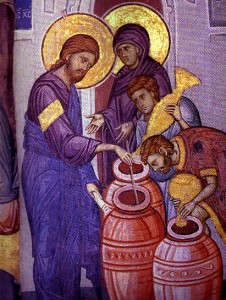
P1 Understanding Jesus' miracle of turning water into wine - John 2:1-11


John 2:11 "This beginning of His signs Jesus did in Cana of Galilee, and manifested His glory, and His disciples believed in Him."

Introduction
When we study God's word, one of the principles for Bible study is what is called: "the principle of first mention". In John's Gospel, we find what is Jesus' first miracle or what he deems "sign": namely the turning of water into wine. Why this miracle? What is its significance? Such questions and their answers yield to us essential clues to identifying the Person and work of Jesus - the Son of God. 

The significance of miracles in pointing us to Jesus' identity
We can define a miracle as follows: "An irregular event that is done by God that includes visible signs, which done in a religiously significant context, serves to attest the message, the messenger and meaning of God's work." Unlike the typical definition one hears about miracles as being so-called "violations of the laws of nature", a miracle is simply the involvement God undertakes in, with and through the laws of nature. 

The idea of a natural law defines how physical laws typically operate in the context of causes and their effects apart from the intervention of an intelligent agent. The law of gravity describes what occurs when we, say, drop an object from a given height. The object that is dropped from a given height will fall at a certain rate of speed that is measured in feet per second per second. But now, if we include someone in the experiment and they catch the object, has the law of gravity been violated or repealed? No. With the inclusion of an intelligent agent, we find the course of the object altered and yet the laws of gravity still remain intact. So it is with God's Divine intervention by way of miracles in our world. 

Jesus indicates on several occasions that the miraculous served to validate His claims and identity:

John 10:25 "Jesus answered them, “I told you, and you do not believe; the works that I do in My Father’s name, these testify of Me."

or again, John 14:10 "Believe Me that I am in the Father and the Father is in Me; otherwise believe because of the works themselves." 

In Matthew 11:2, the miracles of Jesus were part of the testimony used to bolster the sagging faith of a disillusioned John the Baptist. Then of course we cannot forget the most important miracle of all - Jesus' resurrection from the dead - that lies central to the Christian Gospel. Truly we can say that Christianity is a movement built upon the miraculous in orbit around the Person and work of Jesus Christ. 

So why would turning water into wine be Jesus' first miracle?
As one turns to John 2:1-11, a couple points need to be made in thinking upon Jesus first miracle. First, this miracle signifies the beginning of the New Covenant age as predicted in the Old Testament. Hence,  Jeremiah 31:11-12 For the Lord has ransomed Jacob And redeemed him from the hand of him who was stronger than he. 12 “They will come and shout for joy on the height of Zion, And they will be radiant over the bounty of the Lord
Over the grain and the new wine and the oil, And over the young of the flock and the herd; And their life will be like a watered garden, And they will never languish again.” 

Or again, Joel 2:23-24 “So rejoice, O sons of Zion, And be glad in the Lord your God; For He has given you the early rain for your vindication.
And He has poured down for you the rain, The early and latter rain as before. 24 The threshing floors will be full of grain, And the vats will overflow with the new wine and oil.”

Secondly, the New Testament indicates that this imagery of New Wine was indicative of the inauguration of the New Covenant age. Hence, Mark 2:19-22 “And Jesus said to them, “While the bridegroom is with them, the attendants of the bridegroom cannot fast, can they? So long as they have the bridegroom with them, they cannot fast. 20 But the days will come when the bridegroom is taken away from them, and then they will fast in that day. 21 “No one sews a patch of unshrunk cloth on an old garment; otherwise the patch pulls away from it, the new from the old, and a worse tear results. 22 No one puts new wine into old wineskins; otherwise the wine will burst the skins, and the wine is lost and the skins as well; but one puts new wine into fresh wineskins.”
Simply put, the old wine skins represented the Old Covenant fabric of Israel, incapable of handling the “new wine” of the New Covenant revelation that would be mediated by the Lord Jesus. The Apostle Peter would come to cite Joel 2 in his explanation of the miracle of Pentecost. In responding to the charge that the early followers of Jesus were full of wine, Peter notes that they were not drunk, but rather were receiving the promised Holy Spirit, the manifestation of the outpouring of the “heavenly new wine” as it were of the New Covenant age.

Jesus Christ, the Son of God, is Mediator of the New Covenant 
As the transforming of water into wine signified the in-breaking of the New Covenant age, it only stands to reason that the Lord Jesus be none other than the Mediator of the New Covenant. Just as Moses mediated the Old Covenant and had been first attested by the miracle of turning water into wine (Exodus 7:14); so it would seem only appropriate that Jesus, the “New Moses”, would turn water into another substance – wine.


As Mediator of the New Covenant, Jesus wanted to communicate how, unlike the Old Covenant, which commanded change from the outside in and yet couldn’t deliver such, the New Covenant could deliver spiritual change from the inside out. Just as wine by nature is the by-product of the transformation of grapes and their juice into something else, the New Covenant promises enacted by Jesus would make available supernatural change of heart (2 Corinthians 5:17). 

The conversations that sometime occur as to whether the miracle of Cana was Jesus’ endorsement of public drinking and even drunkenness on the one hand, or making plain grape juice on the other threaten to obscure the main purpose of this miracle. Whatever we can say about the miracle and the wine Jesus produced, it was unlike any wine. It was “new wine”. The Greek word used for “wine” could cover a whole host of grape-based beverages. To conceive of Jesus endorsing a situation that would result in the shameful behavior of people at the wedding of Cana would run counter to what He was communicating. As with any text of scripture, in as much as contemporary discussions must be in conversation with the text, such conversations must yield to the main point of the text at hand, especially if the main point of the passage is not made clearer by current events. We find that other scriptures which speak on a given subject may be better suited to addressing the specific concerns raised by contemporary readers of God's Word. 

If anything, the sign of the turning water into wine must be connected to the Old Testament predictions and New Testament explanations of the in-breaking New Covenant age. After all, Jesus so emphasized this dawning of the New Covenant age in and through Himself that He made it the center piece of His first miracle and the Lord’s Supper meal (Luke 22:20). 

More tomorrow.....

Wednesday, July 6, 2016

P2 How forgiveness is the key to accessing God's power for daily living


Philemon 1:25 "The grace of the Lord Jesus Christ be with your spirit."

Introduction:
Yesterday we began considering how forgiveness functions as a key for the Christian gaining access to daily empowerment for godly living. We noted yesterday how God's grace is like a door through which one enters to gain access to all of God's power and presence. For the Christian, nearly every day is filled with opportunities to choose forgiveness or the taking up of offense. Each time we turn the key of forgiveness, we walk through the grace God grants to walk in the power of the Holy Spirit. The Holy Spirit indwells the Christian in their human spirit. Not only does He so desire the Christian to walk in His power and presence, but He so desires to walk forth in the Christian. Paul reference to Philemon's spirit indicates the arena in which he expected God's grace and power to operate once Philemon forgave Onesimus. Today we continue on looking at the relationship between forgiveness and the experience of God's power for daily living. 

How forgiveness is closely connected to texts that teach on God's power in the Christian life
When forgiveness is regularly practiced by the Christian, the doorway of the grace of the Spirit-filled life is immediately accessed. I find it interesting that in key New Testament passages where the Spirit-empowered, Spirit-filled life is mentioned, forgiveness is close by. For example, Romans 15:7 states: "Therefore, accept one another, just as Christ also accepted us to the glory of God." This verse is another way of expressing what we find in forgiveness passages such as Colossians 3:13 and Ephesians 4:32, wherein we read in both those texts: "forgive as the Lord forgave you". It is not even several verses later that we find Paul mentioning in Romans 15:13 "Now may the God of hope fill you with all joy and peace in believing, so that you will abound in hope by the power of the Holy Spirit." Within the human spirit of the Christian the Holy Spirit indwells. The Holy Spirit so desires to work forth His power in my life. However, when faced with the prospect of holding onto bitterness or exercising forgiveness - which will I choose? By accepting one another or forgiving one another as God in Christ accepted and forgave us in salvation, we gain access to His power.

We could go on noting how other key passages connect this key of forgiveness to the graceful doorway of God's power. Galatians 5:13-15 is warning people to not operate in unforgiveness, since the urgency of the Spirit's leading is commanded in Galatians 5:16. Ephesians 4:32 urges forgiveness and in the same context, we find the command given in Ephesians 5:18 to be "filled with the Holy Spirit". Or consider Colossians 3:13, wherefore the Christian is to "forgive as the Lord forgave", and then find the principle of the Spirit-filled life spelled out in Colossians 3:16-17. The Apostle Peter includes within his teaching on the Spirit-empowered life in 2 Peter 1:4-11 the practice of "exercising brotherly-kindness" in 2 Peter 1:7. Again, the key of forgiveness is needed to access the doorway of grace placed before the Christian, behind which lies the treasures of living and walking in the power of the Holy Spirit. 

Why forgiveness was necessary for Philemon and why it is necessary for the Christian to regularly access the power of the Holy Spirit for daily living
As we return back to Philemon 1:25, we can see why Paul closed out his short letter to Philemon the way he did. Paul was not only eager to see Philemon walk in the power of the Spirit, he was confident that Philemon would follow through in forgiving Onesimus (compare Philemon 1:21). For Philemon to enjoy the grace or power of God working forth in his human spirit, he needed to forgive. In what we have noted in other New Testament passages, Christians today need to regularly practice forgiveness if they expect to walk forth in the power of the Holy Spirit. Too often, we as Christian walk in defeat or live mediocre Christian lives due to the fact of retaining bitterness for the offenses we take up in the course of life. If we will but take God at His word and forgive as He forgave us, the doorway of grace He places before us to walk in and commune with the Holy Spirit residing in our human spirit will be readily accessible. Forgiveness is the key we need to turn to access His power for daily living.  

Tuesday, July 5, 2016

P1 How forgiveness is the key to accessing God's power for daily living


Philemon 1:25  "The grace of the Lord Jesus Christ be with your spirit."

Introduction:
Today's post is going to deal with how the Christian can access God's power in daily living through forgiveness. The opening verse above closes out Paul's short letter to Philemon. In that letter we find the overarching theme of "forgiveness". One could refer to this book of the Bible as "The Book of Forgiveness". As Paul made his appeal to Philemon to forgive a former runaway slave Onesimus, he noted in his closing remarks his desire to see God's grace operating within Philemon's spirit. 

"Grace" is God doing for us what we could never do for ourselves. Grace is the sum total of God's power toward us. When reference is made to "spirit", it is Paul referring to the "human spirit" within Philemon. Passages such as Hebrews 4:12 and 1 Thessalonians 5:23 speak of human beings as three-part beings: namely, we are a living soul, containing a spirit and all housed within a body. The "spirit" of a man is that person's innermost being. The human spirit is one's center of "God-awareness". In non-Christian people, the human spirit is vacant, devoid of the operations of God. Passages such as Ephesians 2:1-2 refer to unbelievers as "spiritually dead". However, at salvation, the Divine Person of the Holy Spirit "moves into" the person's human spirit. Faith springs forth to receive the work of redemption paid for by Jesus Christ, and thus the Holy Spirit resides within the spirit of a man or woman surrendered in saving faith (see Romans 8:14-16; 1 Corinthians 2:10-13; 3:16; 6:19-20). Wherever the Spirit of the Lord is, there is freedom and power to operate and live out the will of God (Romans 8:1-5). 

These introductory remarks lead us to consider how forgiveness gains access to living forth in the power of God. Grace, as we mentioned, is the sum total of God's power as brought to us by the Person and work of the Holy Spirit. Forgiveness is the key and the human spirit is the arena of the Holy Spirit's activity. Why would Paul close out his letter indicating his desire to see God's grace operating in full measure in Philemon's spirit? It all has to do with forgiveness being that crucial key to accessing the power of the Holy Spirit. 

Illustrating how forgiveness is the key to unlocking the power of the Holy Spirit.
At our home we have an interior door that we deadbolt and lock at night that functions as our main entryway into our kitchen and our home. Once that door is unlocked, one can enter into the kitchen and really the entire home. When we consider God's grace, God's grace is the door that is placed before us to enter into all the riches of His power and presence. At salvation, God's grace is placed before the sinner, with the faith being the key to access and enter through that door (Ephesians 2:8-9). The power of God is presented and access at saving faith through the gospel (Romans 1:16). 

In the post-conversion Christian life, we still find God's grace in the filling ministry of the Holy Spirit placed before the Christian (Ephesians 5:18). When we talk of the Holy Spirit's filling ministry, we are referring to the guiding ministry of the Spirit that leads to greater obedience, Christ-likeness and empowerment for Godly living (Romans 8:1-5; Galatians 5:16-25; Ephesians 5:18; Colossians 3:16). How is it that the Christian enjoys the power of God in daily living as expressed in the Spirit-filled life? Certainly the key of faith, but there is a second key - obedience (Acts 4:32). Whenever the Christian consistently aims to do the known will of God and to walk out the measure of grace given to them, the power of the Holy Spirit in guidance and leading is granted (Galatians 5:16, 21-25). 

So now when we see God's doorway of grace placed before Philemon in Philemon 1:25, the question is: how is Philemon urged to access God's power? We know Paul is desiring to see God's power (i.e God's grace) operating in greater measure in Philemon's life. There are the keys of faith and obedience which Philemon has in his possession, as spelled out by the description Paul gives of Philemon's robust Christian testimony in Philemon 1:4-7. Yet, there is a third key that not only Philemon needs to access this particular door of grace, but really every Christian must have to unleash God's power in their lives: namely the key of forgiveness. 

More tomorrow........


Monday, July 4, 2016

Some thoughts concerning the essence of true freedom


Romans 8:1-2 "Therefore there is now no condemnation for those who are in Christ Jesus. 2 For the law of the Spirit of life in Christ Jesus has set you free from the law of sin and of death."

Introduction: Comparing National Freedom and Spiritual Freedom
When we talk about freedom, what comes to mind? Undoubtedly the 4th of July celebrates the freedom we have as Americans. American freedom is marked by "independence". The opening paragraph of the Declaration of Independence, states: "When in the Course of human events, it becomes necessary for one people to dissolve the political bands which have connected them with another, and to assume among the powers of the earth, the separate and equal station to which the Laws of Nature and of Nature's God entitle them, a decent respect to the opinions of mankind requires that they should declare the causes which impel them to the separation."

The July 4, 1776 Declaration of Independence represents the quintessential statement of freedom that birthed forth our nation. Inasmuch as "independence" often marks freedom in respect to men, the opposite is the case in matters relating to the Christian life. 

Sin at its very core attempts to envision life independent from God. Whenever a Christian tries to live apart from submission to the Lordship of Jesus Christ, the Christian life becomes locked down. Today's post is about explaining Romans 8:1-11 in what we could call: "the declaration of dependence". We will propose that true spiritual freedom is dependence by faith in the Lord Jesus Christ. 

The natural human realm generally shows that life independent from God leads to tyranny
The founding fathers of this nation understood as a general principle that living apart from God and His word will only lead to further human tyranny. Unless many of them had either been Christians or at least had been exposed to the Gospel, such an insight might not have been gained. Tyranny is the inevitable outcome whenever a nation or a people attempt to cut its moorings from God. 

Charles Carroll, one of the signers of the "Declaration of Independence", notes: "Without morals a republic cannot subsist any length of time; they therefore who are decrying the Christian religion, whose morality is so sublime and pure...are undermining the solid foundation of morals, the best security for the duration of free governments." Carroll's statement shows that with respect to God in general, what marks true freedom (even more so than national freedom) is not independence, but dependence. The specific revelation of this point in scripture itself reinforces the argument in texts such as Proverbs 14:34 and Jeremiah 18:7-10. 

Spiritual freedom is dependence upon God
Only when one has become born-again by grace through faith in Jesus Christ, the greatest and most purest freedom is experienced. Spiritual freedom is dependence upon the Lord Jesus Christ. Jesus Himself states in John 8:34-36 "Jesus answered them, “Truly, truly, I say to you, everyone who commits sin is the slave of sin. 35 The slave does not remain in the house forever; the son does remain forever. 36 So if the Son makes you free, you will be free indeed." 

Spiritual freedom's core trait of dependence upon the Lord Jesus Christ is total opposite to how we may typically think of freedom in the natural realm. Galatians 5:1 states - "It was for freedom that Christ set us free; therefore keep standing firm and do not be subject again to a yoke of slavery." The yoke of slavery made us dead in sins and trespasses and separated from God, without hope in this world. (Ephesians 2:12) Jesus Himself states in Matthew 11:28  “Come to Me, all who are weary and heavy-laden, and I will give you rest.29 Take My yoke upon you and learn from Me, for I am gentle and humble in heart, and you will find rest for your souls." True freedom is experienced as a result of submission under the Lordship of Jesus Christ. (Luke 9:23-24) Freedom is dependence on God in Jesus Christ.

For people who find themselves enslaved to their past, the chief mark of life is (perceived) independence from God. Paul reminds the Thessalonians of the change that took place in them in 1 Thessalonians 1:9-10 - "For they themselves report about us what kind of a reception we had with you, and how you turned to God from idols to serve a living and true God, 10 and to wait for His Son from heaven, whom He raised from the dead, that is Jesus, who rescues us from the wrath to come." 

What about present circumstances? Reliance upon God entails exercising forgiveness towards those who have wronged us. Whenever we forgive, we are laying aside our so-called "rights" of gaining vengeance and instead depending upon what Jesus did on the cross as our paradigm for spiritual freedom (Ephesians 4:32; Colossians 3:13). There is never any greater freedom found than when we forgive. In Jesus Christ, our past and our present find freedom. 

Unlike our civil freedom in which we broke ties with a human Sovereign, the Gospel declares that true freedom is only found when we are reconciled to the Divine Sovereign. Spiritual freedom is dependence upon God.

Getting real specific about spiritual freedom in the Gospel - The believer's declaration of dependence - Romans 8:1-11
In general the scriptures assert this underlying premise that true spiritual freedom results from dependence, rather than independence from God. In Romans 8:1-11 Paul spells out what is entailed in the wonder of spiritual freedom that the Christian enjoys as a result of the Gospel. Spiritual freedom in Christ means we have been freed "from" things and are free "to" things. 

1. Freedom from condemnation. 8:1-2
2. Freedom to desire God.   8:5-8
3. Freedom to live for God.   8:3-4,9-11

When we are set free by Jesus Christ in saving faith, we find that we are free to do what we ought to do. You and I cannot get "out" of condemnation unless we are "in" Christ. Romans 8:2 describes how this occurs: namely by the Spirit of Life and His guiding influence or what Paul terms "law". 

On February 20, 1962, decorated WWII and Korean War veteran John Glenn circumnavigated our globe three times in a span of just under 5 hours. Reaching speeds of over 17,000 m.p.h, Glenn achieved a feat that no one had ever accomplished. How did he do it? He did this otherwise impossible feat by climbing into the Mercury program space capsule known as "Friendship 7". Moreover, the laws of lift and science of rocketry were necessary to overcome the other leading influence - gravity. Glenn's inaugural journey was one of the quintessential moments that launched the modern space race. You and I dear friend need to be "in Christ" if we are to declare dependence on God and be set free from condemnation.


Closing thoughts & applications
By being set free from condemnation and set free to desire God, the sinner is transformed into a saint who now can live for God. True freedom depends on God through faith in Jesus Christ, both in the beginning and ongoing realities of Christian salvation. This is what makes Romans 8:1-11 so wonderful, in that it is the believer's “declaration of dependence”. The irony of the Gospel is that one is never more free than when their bound to Jesus Christ. True freedom as spelled out in Romans 8:1-11 means:

1). Freed from condemnation as a result of depending on His righteousness (Romans 8:1-2).

2). Free to desire God as a result of dying to my own selfish desires (Romans 8:5-8).

3). Free to live for God as a result of dying to self (Romans 8:3-4, 9-11) Jesus taught that such freedom is at the heart of what it means to be a follower of Him (Luke 9:23-24; 14:26-33; Romans 6:19-20).


Sunday, July 3, 2016

Life-practical applications of the Gospel's core truth: Justification by Faith Alone


Romans 1:17 "For in it the righteousness of God is revealed from faith to faith; as it is written, “But the righteous man shall live by faith.”

Introduction
Today's post aims to discuss, illustrate and demonstrate the life-practical applications of the Gospel's central doctrine of justification by faith alone.

Illustrating Justification by Faith - The Calvary Express Card
I can recall one-time being behind a person at a checkout line who was purchasing a large number of items. When the clerk brought up their total, the person began thumbing through their cards. They put part of the purchase on one card and then put the remainder of the purchase on another. The total amount was placed on the credit cards and thus, the register showed nothing was owed. Perhaps you have witnesses that too, or, perhaps you and I have been in that predicament. We all know that at the end of the month, we will get a bill listing our charges. Credit indicates that another party is paying what I owe, with the idea that I am the one being credited with the purchase, even though everyone knows that it is not "me" but ultimately someone else's money. There will be interest charges to pay on such funds - and thus that is how it works in the realm of human credit.


When it comes to Divine credit, we come to God with our sins, our life and our moral debts. All of our attempts to pay the bill are futile. We are maxed out. However, God alerts us to a line of credit paid in full by Jesus Christ and presents to us what we could call "The Calvary Express Card". If we will but surrender ourselves in trust to Him, God will credit our account and wipe the debt clean. He will "impute" or "credit" Jesus' perfect life of obedience and perfect death for the penalty of our sins to our account. Why? Because on the cross, our sinful disobedient lives and rightful deserving of judgment was credited to Jesus (see Romans 3:21-25; 2 Corinthians 5:21). This act of God at saving faith is what the Bible calls "justification by faith", and represents the core of the Gospel.  

How the Old Testament teaches Justification by Faith
Romans 4:3 gives us a profound statement on how one man, Abraham, was deemed acceptable, pure and innocent in the sight of God: “For what does the Scripture say? “Abraham believed God, and it was credited to him as righteousness.” The Apostle Paul of course is getting into the heart of the Gospel by unfolding to us the doctrine of justification by faith. Contrary to what some may teach, the Old Testament does not teach one way of salvation and the New Testament another. 

Paul’s whole point in explaining how the righteousness of God is brought down to the sinner at saving faith is to show how such truth was communicated in the Old Testament, beginning with the Book of Genesis. In Genesis 15:6, we read the same identical words: “Then he believed in the Lord; and He reckoned it to him as righteousness.” Whenever we survey the Old and New Testaments, we find this central theme of the Gospel of “credited righteousness” or what is also called “Justification by faith”. (Psalm 32:1-2; Habakkuk 2:4)

Defining righteousness and its relationship to Jesus Christ and justification
What is righteousness? we can define it as: “a life and conduct that is perfectly pleasing before God.” Jesus is the only One who has fulfilled such a standard. As God - He is the basis of righteousness. As man, He fulfilled all that was required by God with respect to a human being having the capability of having a relationship with Him. 


So then, how does Christ's righteousness become my own? For we know from scripture that self-righteousness or any attempt to gain salvation by our own efforts falls far short of the purity, innocence and perfection that God and Christ have. Romans 3:20 states – “because by the works of the Law no flesh will be justified in His sight; for through the Law comes the knowledge of sin.” Galatians 3:11 echoes similarly – “Now that no one is justified by the Law before God is evident; for, “The righteous man shall live by faith.”

Notice how often we see the terms “justified” or “credited” or “reckoned”. These terms explain how the righteousness achieved by Jesus Christ in both His life, death and resurrection are transferred to the sinner’s account. 


To use another illustration, think of what occurs when we write a check. Whenever a person writes a check and gives it to another as a gift, what happens is that the monetary amount written on that check is coming out of someone’s account. It was earned by labor or some other way. Whenever they give that check as a gift, the recipient must receive it in order to place it in their account. Once the person brings the check to the bank, the bank teller looks at the check and looks at the person who signed the check on the back and applies it to the recipient’s account. What has happened? the bank has regarded that money as the recipient’s own, even though the check clearly came from another person from the outside.  This illustration serves to aid in understanding how the righteousness of God and Christ is applied to sinner’s life at salvation. 

Why faith alone is necessary and sufficient to receive justification from God
Faith alone is both necessary and sufficient. Faith is the means by which the righteous merit of Christ’s life, death and resurrection is applied and received. The cross of Christ is the grounds and the choice and calling of God to that sinner is the beginning point of such salvation. The righteousness demanded by the law and yet unattainable is the same righteousness promised by the Gospel that is received by faith and credited to the sinner. 

Such “credited” righteousness is sometimes described by term “imputed righteousness”, meaning that the work of another outside of myself is credited to me as if I had accomplished it. David in the Old Testament states in Psalm 32:1-2 “How blessed is he whose transgression is forgiven,
Whose sin is covered!2 How blessed is the man to whom the Lord does not impute iniquity, And in whose spirit there is no deceit!” Though Christ had not yet come into the world, nonetheless what He would achieve was of such great value that it not only reaches forward into time today but was also the same righteousness credited to Old Testament believers who looked to the promises of God by faith. 2 Corinthians 5:21 summarizes this “credited righteousness” or “imputed righteousness” (both meaning the same thing) – “He made Him who knew no sin to be sin on our behalf, so that we might become the righteousness of God in Him.”


Practical ramifications of justification by faith
The whole point of today's post was to talk about the importance of justification by faith alone. Such a doctrinal truth has real-world implications:

1. My sense of confidence is grounded in justification by faith.

For starters, to realize that the grounds for pleasing God is founded in Jesus Christ and not myself enables me to lean on Jesus Christ. I look to Him as my righteousness (1 Cor 1:30)

2. All preaching and teaching of God's Word must find its anchoring point in justification.

The anchoring point for preaching and teaching in the church ought to be this doctrine of justification by faith alone. Two ditches tend to occur in the preaching and teaching of God's word: legalism and license. As a preacher, I can be tempted to either proclaim moralism or "try harder, do better theology". That first ditch is the "legalism" ditch. The second ditch can be "don't worry about getting bogged down in what you do, since God has already forgiven you", or license. Justification by faith alone avoids these two ditches by having us lean on Christ while being compelled to want to live for Him. Our practical righteousness or "sanctification" flows from justification, or "credited righteousness".

3. Assurance of salvation is found in justification.

The great Baptist preacher Charles Spurgeon writes concerning our assurance of salvation relative to justification by faith in Jesus Christ: "Remember, therefore, it is not thy hold of Christ that saves thee - it is Christ; it is not thy joy in Christ that saves thee - it is Christ; it is not even faith in Christ, though that be the instrument - it is Christ's blood and merits; therefore, look not so much to thy hand with which thou art grasping Christ, as to Christ; look not to thy hope, but to Jesus, the source of thy hope; look not to thy faith, but to Jesus, the author and finisher of thy faith."

Friday, July 1, 2016

Amazing Testimonies about the titles of Jesus - The Son of God: John 1:19-51

John 1:19 "This is the testimony of John, when the Jews sent to him priests and Levites from Jerusalem to ask him, “Who are you?”

John 1:32-34 "John testified saying, “I have seen the Spirit descending as a dove out of heaven, and He remained upon Him. 33 I did not recognize Him, but He who sent me to baptize in water said to me, ‘He upon whom you see the Spirit descending and remaining upon Him, this is the One who baptizes in the Holy Spirit.’ 34 I myself have seen, and have testified that this is the Son of God.”

John 1:49-50 "Nathanael answered Him, “Rabbi, You are the Son of God; You are the King of Israel.” 50 Jesus answered and said to him, “Because I said to you that I saw you under the fig tree, do you believe? You will see greater things than these.”

Introduction:
John 1:19-51 represents the beginnings of a series of testimonies concerning Jesus Christ as "The Son of God". In John's prologue of John 1:1-18 and in his key verse of John 20:31, we find that this title: "Son of God" refers to the way in which Jesus is the revelation of God the Son in human flesh. To say He is the "Son of God" is theological short-hand for "The Son as-He-is-in-His-sharing-of-the-Divine-essence-with-the-Father-Who is-God. In other words, the title: "Son of God" speaks of the Deity of Jesus Christ. In John's prologue, we find the Son of God to be God in eternity (John 1:1-3), appearing throughout history, particularly in the Old Testament (John 1:4-9) and finally in the true humanity as Jesus of Nazareth (John 1:10-18). 

What the Apostle John aims to do is to unfold the identity of the Son of God through the testimonies of key individuals. Four titles for Jesus Christ are found in John 1:19-51 that serve to tell us something about Jesus Christ as the "Son of God". Peoplle such as John the Baptist, the disciples and Jesus Himself all testify about what is exactly meant and implied about this title: "Son of God". Simply reflecting on the titles that are expounded below serves as anchor points in one's own personal pilgrimage in knowing Jesus better. I will list each title, give a brief purpose for it and follow up with the appropriate scripture references. 

1. The title "Lamb of God" speaks of the mission of the Son of God. John 1:19-36
After John the Baptist asserts Jesus Christ as the "Son of God", he then declares Him to be "the Lamb of God" in John 1:34-35. This title hearkens back to the Old Testament pictures of the Passover Lamb of Exodus 12 and the prophetic Lamb of Isaiah 53. Jesus Christ fulfilled those types and shadows as the final lamb of God who would willing lay down His life for the sheep.  

2. The title "Christ" speaks of the ministry of the Son of God. John 1:37-42
Jesus came not only to die on the cross and raise from the dead, but to also minister life and light to those who were in spiritual and physical bondages. Passages such as Luke 4:18 and Isaiah 61:1-2 expound upon the earthly ministry of Jesus. Jesus Himself took these passages about the Messiah to be with reference to Himself. As "Christ" or "Messiah", Jesus was the Divine agent of God and, as it would turn out, was no less than God Himself in human flesh. In as much as Jesus paid for the righteousness of salvation by His substitutionary death, it is in His active obedience and all He achieved in His life, teachings and miracles that Jesus acted out the perfect righteousness required by the law of God. 

3. The title "King of Israel" speaks of the majesty of the Son of God John 1:43-49
As Nathaneal confesses Jesus to be the Son of God, he then asserts an additional title, namely "The King of Israel". It is striking that such a majestic title would be used of the Son of God to describe His Heavenly origin and His cross. Above his head, on the cross, would read the superscription: "Jesus of Nazareth, King of the Jews" (Matthew 27:37). Following His resurrection from the dead, Jesus made approximately ten post-mortem appearances. In His final instructions to His disciples in Matthew 28:18, Jesus indicates that "all power had been given to Him in heaven and on earth". Undoubtedly, Nathaneal's confession of Jesus Christ as "The King of Israel" bespeaks of His majesty. 

4. The title "Son of Man" points to Him as Mediator. 1:50-51
We've seen the following thus far:

a. "Lamb of God" indicates the mission of the Son of God

b. "Christ" indicates the ministry of the Son of God

c. "King of Israel" indicates the majesty of the Son of God

With this final title revealed in John 1:19-51, we find Jesus Himself testifying of His Divine identity as the God-man. This title "Son of Man" is used more by Jesus than any other. The beauty of this title is that it can be equally used to refer to Him as perfect man as well as truly God. Daniel 7 uses this title with respect to a mysterious Divine Personage who active with the "Ancient of Days" in the dispensing of Divine rulership. By asserting himself to be the "Son of Man" and the revelation of God seen by Jacob in Genesis 28, Jesus is reminding Nathaneal that He is the Mediator between The Father and believers (see also John 14:6; 1 Timothy 2:5; 1 John 2:1-2). 

Thursday, June 30, 2016

P3 - How Every Christian is Retaught the Revelation of the Father

Ephesians 1:1-2 "Paul, an apostle of Christ Jesus by the will of God, To the saints who are at Ephesus and who are faithful in Christ Jesus:2 Grace to you and peace from God our Father and the Lord Jesus Christ."

Introduction:
Over the past two days we have been considering how God progressively re-wires the Christian's understanding of "father". We've noted that Satan has conspired to distort and destroy this concept among the human race. All of us have or had experienced fathers: whether good ones, bad ones, absentee ones or fathers who have passed away. Fathers function as an illustration and image of God to their children (see Luke 11:13). This function of being a "God-image" of sorts was unfortunately marred by the fall of man into sin. Many relational, social and psychological dysfunctions stem somehow from a mis-represented concept of "fatherhood".

In salvation, God's goal is to transform Christians not only in their spirit and heart, but also in their minds and understanding (Romans 12:1-2). The Divine design of Christian discipleship entails bringing to the Christian this revelation of God the Father from the scriptures. The Person of the Son, Jesus Christ, brings to us the presence of the Father (see John 14:8-10; Hebrews 1:1-2). The Person of the Holy Spirit brings to the Christian the Person of the Father by way of His progressive sanctification of the Christian (see John 16:8-12; Ephesians 1:17-20). Today we want to consider how the Scriptures bring to the Christian the paternal power of the Father. 

The Bible brings to us the Paternal power of the Father
When we think about how God, in the Person of the Son and in the Person of the Holy Spirit brings to us the Person and Presence of the Heavenly Father, we discover that this truth is done so in connection with the scriptures. We find the full-orbed revelation of God in the Person of the Father unfolded in nearly 10 places in The Old Testament and over 140 places in the New Testament. To know the Father's Person and Presence entails experiencing His Paternal power through the scriptures. 

Prior to salvation, man knows about God - but does not know Him. At salvation, God makes Himself known to the sinner by means of the scripture through the agency of the Holy Spirit. The "Himself" is with reference to "The Father". James tells us that the Father begets sinners in the new birth through the scriptures (James 1:17-18). The Apostle Peter likewise indicates that the Person of the Father uses scripture as a means of bringing about the New birth to sinners who, in turn, respond freely in saving faith (1 Peter 1:3-5, 23). The Baptist Faith & Message 2000 summarizes this point in its article on "The Father": "God as Father reigns with providential care over His universe, His creatures, and the flow of the stream of human history according to the purposes of His grace. He is all powerful, all knowing, all loving, and all wise. God is Father in truth to those who become children of God through faith in Jesus Christ. He is fatherly in His attitude toward all men."

Bringing together the importance of God the Father to the Christian life
Knowing the Person of the Father by the Spirit's working, the presence of the Father by the Son's revelation and the Paternal power of the Father through the scriptures, we find an accurate picture of the Father. Outside the work of the Spirit, the revelation of the Son and the words of scripture, the face of the Father is hidden. As we close out this study, let me offer three applications for Christian living that correspond to the three points brought out in the last few days:

1. Having the presence of the Father ensures that I never am alone, orphaned or without assurance. Only the Lord Jesus Christ, in His finished work at Calvary and His continuing mediation for the Christian in heaven can minister this profound reality.

2. Having the Person of the Father available to me as a Christian means I can enjoy all the benefits of adoption in sonship. The Holy Spirit ever reminds the Christian that they are a child of God through adoption (see Romans 8:14-16). My own sense of identity in a world where my earthly father no longer resides is securely anchored in the Person of God the Father by the Person and work of the Holy Spirit.

3. Having the Paternal power of the Father through the Bible gives me strength for daily living. The desire to pray and talk to my heavenly Father is fed by the scriptures. When I find myself under His Fatherly discipline, I'm reminded of His unfailing love (see Hebrews 12:4-5).