Translate

Sunday, October 2, 2016

A quick summary of the Book of Leviticus

Image result for Book of Leviticus
Leviticus 11:44 "For I am the Lord your God. Consecrate yourselves therefore, and be holy, for I am holy. And you shall not make yourselves unclean with any of the swarming things that swarm on the earth."

Introduction:
Over the last two days we have been summarizing the first two books of the Bible. Moses wrote Genesis and Exodus under the inspiration of the Holy Spirit (Exodus 24:4). His purpose was to rehearse the origins of the Hebrew people delivered out of Egypt. Genesis is all about beginnings and Exodus is all about redemption. Today's summary continues on from where Exodus ended. 

If anyone reading this post today is a Christian, I'm sure you can recall what it was like in the early days following your conversion. Everything was new. For the Jewish people who were redeemed out of Egypt, their old way of life was still fresh on their minds. They needed to be instructed on their new identity in the Lord. It is likely that the timing of the writing of Leviticus occurs from one month to one year following the Exodus out of Egypt. 

Major Theme of Leviticus: Sonship
The major theme of Leviticus is that of sonship. Some 32 times we find Yahweh referring to the people as His "sons". Thus, Leviticus will aim to establish for these former slaves their new identity in God.

Leviticus is the sequel to Exodus
The setting of Leviticus takes place at the base of Mount Sinai - where Yahweh revealed Himself in thick cloud and delivered unto the people the Law of God (Exodus 19-20). The Law God God was never meant to provide salvation, but rather point to the need for it. Moreover, God prescribed the conditions in which His redeemed people would operate in their journeys with Him, and He with them. The revelation of the Tabernacle in both Exodus 24-40 and here in Leviticus is what we look to when searching for a proper illustration of sanctification or one's progressive growth in fellowship with God following salvation. If we consider Genesis as the "prequel" to Exodus - with Exodus functioning as the main event with respect to Yahweh's redemption of the Jewish people - then Leviticus operates as the sequel to Exodus.

Outline of Leviticus: Principles for godly living in sonship and fellowship with God
We will now offer a brief outline of Leviticus. Oftentimes when Christian people think of Leviticus, they shy away from it, thinking it to be nothing more than a laundry list of dry rituals, sacrifices and random laws. This caricature misses out on how Leviticus pictures for us the relationship between God and His people who are to grow in fellowship with Him. More importantly, the rich types and symbols found in the revelations of the priesthood, sacrifices and feasts give incredible insights into the Person and work of the Lord Jesus Christ. 2 Timothy 3:15-16 testify that "all scripture is profitable". It is suggested to the reader to have Hebrews 9 open when working through the Book of Leviticus. The writer of Hebrews explicitly connects the dots of Leviticus to show the reader how Jesus is foreshadowed by the book. We will now offer a brief outline and conclude with some final thoughts and applications for today.

1. Complete work of redemption. Leviticus 1-7

The major sacrifices revealed in these seven chapters illustrate aspects of the post-conversion walk with God following salvation. Leviticus was not intended for sinners before salvation, but for believers following salvation. Key themes in the sacrifices are: reconciliation (Leviticus 1); right relationship with God as adopted sons (Leviticus 2); right relationship with God in justification (Leviticus 3) and right living for God in confession and restoration (Leviticus 4-7). 

2. Keys to effective ministry. Leviticus 8-10

The keys to effective ministry in these three chapters weave their way like a three-braided rope: founded on the blood, focus on the Word and the fire of the Spirit. The priesthood is ordained and established in these chapters. Just as Aaron and his sons could not properly begin to minister lest the altar be lit by the fire of God, so too no Christian today can serve God effectively lest they be illuminated and led by the Holy Spirit. The priests were to then continuous tend to the fire and perform their ministry. In as much as Christians are empowered by the Holy Spirit, there must needs be constant attendance to the Word and other spiritual disciplines to tend the fires of commitment to God. 

3. Avoid strange fire. Leviticus 11-12

Nadab and Abihu offered "strange fire", meaning they had accessed fire from another place outside the altar that had been initially lit by the celestial fire from God's holy presence. Christians today are warned to not conform to this world (Romans 12:2; 1 John 2:15-17). The true light of the Gospel is that given by God to us. To attempt to derive the light of truth from other "false gospels" is committing the same error we find in Leviticus 11-12. 

4. Sin is the leprosy of the soul. Leviticus 13-15

Years ago I had worked for a mold remediation specialist whose purpose was to remove mold from houses and commercial businesses. Mold thrives in dark, moist places and disperses spores that can cause respiratory conditions that can make people very sick. Amazingly, much of the instructions provided in these chapters are principles found in the mold-removal industry. Such a disgusting and disturbing phenomena as mold is used to illustrate the dangers of lurking, unconfessed sin. The Hebrew word used in these chapters to describe the mold and mildew is the word we find in the Old Testament for leprosy, a debilitating diseases that eats away at the fingers and limbs. Sin is leprosy to the soul. 

For brevity's sake, we will simply list the final main sections of Leviticus by only noting the headings. 

5. The centrality of the shedding of innocent blood in redemption. Leviticus 16-17

6. Practical holiness matters in one's relationship with God. Leviticus 18-22

7. Spiritual nourishment in one's walk with God. Leviticus 23-25

Final thoughts and applications
It is so hard to choose which details to include and exclude in short summaries such as this post. It is hoped that the reader can see how valuable the Book of Leviticus can be in understanding one's walk with God. Two quick examples show how important Leviticus can be to Christian identity: loving one's neighbor (Leviticus 19:18 cf Matthew 22:39 ) and being holy as God is holy (Leviticus 11:44 cf 1 Peter 1:16).

Without a doubt the Person and work of the Lord Jesus Christ is foreshadowed in its pages. The priesthood of Aaron and his sons would provide the framework and contrast to the superior Priesthood of Jesus Christ we find in the book of Hebrews. Leviticus 16-17 underscores the necessity of blood-bought redemption, the dominate theme in Christ's work on the cross (for instance, see Ephesians 1:7; Hebrews 8-10 and 1 Peter 3:18). As we noted yesterday, the ministry of the Tabernacle provides ample illustrations for all aspects of Christ's Person and work (see the illustration below, taken from pintrest.com):
Image result for tabernacle furniture layout

Again, one cannot dismiss such observations as coincidence. Only when we begin to read the Old Testament in light of the Christ event can such applications be made possible. May this quick summary whet the appetite of the reader in digging further into God's Word. 

Saturday, October 1, 2016

A quick summary of the Book of Exodus

Image result for book of Exodus
Exodus 3:11-12 "But Moses said to God, “Who am I, that I should go to Pharaoh, and that I should bring the sons of Israel out of Egypt?” 12 And He said, “Certainly I will be with you, and this shall be the sign to you that it is I who have sent you: when you have brought the people out of Egypt, you shall worship God at this mountain.”

Introduction:
Yesterday's post considered a quick summary of the book of Genesis. Genesis ends with the death of Joseph. Whenever we fast-forward hundreds of years later, we arrive at the days of Moses and the book of Exodus. Whenever we consider most of the books of the Hebrew Old Testament, many of their Hebrew titles correspond to the first word in their text. For the book of Exodus, the Hebrew title is "we-ay-lay she-moath" (וְאֵ֗לֶּה שְׁמוֹת֙ ), which translated means "these are the names".  So which names is Moses referring to in his introduction to Exodus? No doubt, the initial first sentence reveals the identity of those "named": specifically, all those who had went down with Jacob in the days of Joseph. Exodus' purpose is to function as a sequel to the end of the book of Genesis. Just like many movies today that have sequels telling the story of certain characters and their lives many years later, the book of Exodus continues on the story of those "sons of Israel" who had traveled with Jacob down to Egypt back in the days of Joseph. 

So we could say that the book of Exodus, at least from its Hebrew name, is going to detail the lives of those descendants of Jacob and his relatives recorded in Genesis. But Exodus is so much more than a sequel and is not focused just primarily on the Hebrew people. The title "Exodus" which appears in our English Bibles derives from the title given to the book as seen in the Greek translation of the Old Testament - the Septuagint. This title conveys the Divine focus of the book in how God was going to deliver His people out of Egypt to go and worship Him in the desert in and around Mount Sinai (Exodus 3:11-12). God's preservation of the Hebrew peoples from the days of Jacob was evidence of what He had promised to Jacob's father Isaac and grandfather Abraham. 

With respect to the main character in the book of Exodus: God is center-stage. In Genesis we find God revealed as "Elohim". In Exodus, especially in His encounter with Moses in the burning bush in Exodus 3:14, we find God revealing His Personal, covenant name: "Yahweh". Yahweh in the Hebrew language is a variation from a verb "to be". Quite literally, not only does it mean "I am who I am" but it could just easily be translated "I am the One who is, am and ever will be". This Yahweh, Jehovah God is not only the Creator of the Heavens in earth in Genesis 1-11, He is the Author who brought forth the Hebrew people through Abraham, Isaac and Jacob in Genesis 12-50. Exodus was written to the descendants of Abraham, Isaac and Jacob to remind them of who they are and whose they are.

Yahweh of course will be the One who will call Moses to lead the people out of Egypt, across the Red Sea, to Mount Sinai and to build the Tabernacle - the worship center of Yahweh amidst the people. Without going into the technical details, we can date the Exodus event itself to 1446 b.c chronological information offered in 1 Kings 6:1; 2 Chronicles 3:1-2; Acts 7:6 and Galatians 3:17.

So much more could be said about Exodus. Since the purpose of this post is to summarize the book, I will simply offer a brief outline below. We will then conclude with a few observations concerning how the book of Exodus points the way to Jesus Christ.  

A summary outline of the Book of Exodus. 

Prologue: Exodus 1

Calling of Moses: Exodus 2-6

The Exodus: Exodus 7-15

Journey to Mount Sinai: Exodus 16-18

God's Covenant to Sinai: Exodus 20-23

The Tabernacle is revealed: Exodus 24-31

The Treachery of the Golden Calf: Exodus 32-33

The Tabernacle is completed: Exodus 34-40

Closing thoughts and applications
As Jesus Himself noted in Luke 24:44, all the Old Testament scriptures point to Him. The book of Exodus is no different. In Exodus, we see Moses the lawgiver and mediator of the Old Covenant, praying for the people and sent by God to lead the people out of bondage. This of course reminds us of Jesus, a new Moses of sorts, Who was sent by God to be the Mediator of the New Covenant (Hebrews 8-9) and lead those whom He calls and who respond in faith out of darkness and into the light of salvation (John 5:24-25; 2 Corinthians 4:1-6). 

A second picture of Christ we find in Exodus pertains to the Levitical Priesthood. Aaron was Israel's first High Priest, serving as Intercessor for the people. Jesus is designated the Christian's High Priest, serving in the order of Melchizedek (Hebrews 7) and ever praying on behalf of His people (Hebrews 4:14-16).

A third picture of Jesus from Exodus is that of the tabernacle. Entire books and studies have been written over the years detailing how the tabernacle in Exodus illustrates Jesus and the relationship He has with His people. The arrangement of the seven main pieces of furniture, for example, are in the shape of a cross. I don't find this arrangement to be a coincidence. It is by Divine Design. New Testament passages such as John 1:14; 1 Corinthians 10 and Hebrews 7-10 indicate that the Tabernacle in some way foreshadowed what would be the ultimate Tabernacle of flesh and bone, God in human flesh - Jesus Christ.   

These are but a sample of the ways we see the Lord Jesus Christ in Exodus. Exodus portrays the central principle of salvation in the Bible: salvation is of the Lord. So much richness resides in the Book of Exodus. The Lord Jesus saw fit to formulate His institution of His own Lord's table (Mark 14:12-31; 1 Corinthians 11:23-27) from the Passover over ritual initiated in Exodus 12-14. On and on we could go, but the reader ought to see why the Book of Exodus merits our study, meditation and application. To God be the glory!  

Friday, September 30, 2016

A quick summary of the Book of Genesis

Image result for galaxies
Genesis 1:1 In the beginning God created the heavens and the earth.

Introduction:
How does the Bible begin? Interestingly enough the first book of the Bible has for its title a word that means "beginning": namely, "Genesis". The name "Genesis" derives from the Greek translation of the book, wherein it was given this title. The original language of the Old Testament was mainly Hebrew. So, when Genesis was composed in Hebrew, it was given the title "Beroshith", which, when translated, means "In the beginning" and which also corresponds to the first word of the book in the Hebrew text. Either way, we are dealing with the introduction to the greatest book in the world: the Bible. 

In all, the 39 books of the Old Testament consist of 419,687 words in the Hebrew and Aramaic texts behind our English translations and 138,162 words in the Greek text of of the New Testament. Such an enormous set of books comprise the "Book of Books" - the Bible. The very first book, Genesis, heads what will follow. In Genesis we find the seed bed of God's revelation which will yield full-grown truths, row by row, through God's progressive and unfolding revelation. Since Genesis is by its very own name about "beginnings", it is important to note briefly its contents:

Genesis 1-11 is about the beginning of history, or, historical narratives

a. Beginning of creation. Genesis 1-2

b. Beginning of the fall & redemption.         Genesis 3

c. Beginning of death.    Genesis 4-5

d. The flood.                 Genesis 6-9

e. Beginnings of civilization  Gen. 10-11

These various episodes in the opening chapters detail the failure of man, the judgment of God and the redemptive purposes wrought by God through His promises. God had given a covenant to Adam and Eve, a covenant of works, wherein they had a probationary period given to them that would result in perpetual bliss if they followed through the handful of commands God gave them. They failed and sinned. God then chose to give them a second covenant, a gracious covenant, that would be enacted by the shedding of innocent blood and be received by faith - all evidenced in His clothing of them with the skins of innocent animals at the end of Genesis 3. 

It is remarkable how throughout Genesis we see this contrast between man's failure to appropriate God's overtures of grace and trying to substitute iss own plan, with God ever extending His covenant of salvation through shed blood and reception of faith. Cain and Abel demonstrate this pattern, as well as Noah and the people of his day and the bloodline that would follow from his son Shem and the remainder of humanity. The drama of man's failure versus the top-down reach of God to man in extending grace that saves through faith grounded in the shedding of innocent blood replays repeatedly throughout the Old Testament. Such a pattern served to point the way to what would be the work of Christ on the cross, shedding His blood, and thus grounding salvation that is received by grace through faith.These types of patterns set the stage for what God aimed to do in the choosing of one man and one nation in the second part of the book of Genesis. In short, all of the events of Genesis 1-2 and 3-11 lead up to one family and one man - Abraham.

Genesis 12-50 is about the beginning of heavenly promises, or, the patriarchal narratives consisting of God's dealings with Abraham, Isaac, Jacob and Joseph. 

Now these two general divisions of the Book of Genesis are both historical and deal with God's heavenly promises and dealings with His people. The former division of course weighs more heavily on the side of historical summary and the latter more on the side of heavenly promise. As we mentioned a moment ago, Genesis 1-11 funnels to one man, Abraham. The narratives that follow in Genesis 12-50 telescope back out from Abraham down through his descendants.

a. Narratives about Abraham. 
    Gen. 12-23

b. Narratives about Isaac. Gen. 24-26

c. Narratives about Jacob. Gen. 27-36

d. Narratives about Joseph. Gen. 37-50

In these four narratives we find focus upon four key men: Abraham, Isaac, Jacob and Joseph. Abraham is the one given the promise of God with regards to His redemptive purposes He will achieve through Abraham's seed or bloodline. This "seed" promise is a repetition of what God had spoken to Eve in Genesis 3:15 and Noah in Genesis 9. In addition to promising to use Abraham's bloodline to bring about His redemptive purposes, we find additional promises concerning a land, a special relationship and untold blessing upon Abraham and his descendants. 

Ultimately, the covenant God made with Abraham would find its ultimate expression and fulfillment in Jesus Christ (Galatians 3-4) and will be finally completed by Him when He returns to restore Israel as a nation at His second coming (Romans 11:25). 

Isaac and Jacob stood as the heirs of this promise and Joseph typifies in his life and trials what would be a son, rejected by his brothers for the sake of being a savior of his people. Joseph, interestingly enough, foreshadows Jesus with respect to how Christ would be rejected by His people to be the Savior of His people. The book of Genesis is a marvelous book of the Bible and an awesome beginning to grasping all that God planned to do in unfolding His purposes of creation and redemption through the rest of scripture. Such a volume informs us as to what God wants to do in our lives and what He has achieved through Jesus Christ. 


Thursday, September 29, 2016

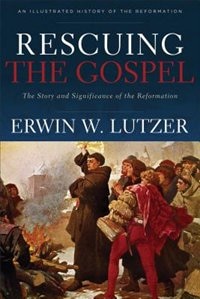
Book Review of Erwin R. Lutzer's Book: Rescuing the Gospel

Image result for lutzer rescuing the gospel
Galatians 1:11-12 "For I would have you know, brethren, that the gospel which was preached by me is not according to man. 12 For I neither received it from man, nor was I taught it, but I received it through a revelation of Jesus Christ."

Introduction:
Today's post is a brief review of a new book authored by the Pastor Emeritus of Moody Church in Chicago, Ill, Dr. Erwin W. Lutzer entitled: "Rescuing the Gospel: The Story and Significance of the Reformation" (Baker Books, 2016). 

Dr. Lutzer's book comes at a very timely season, since October 17th, 2016 will mark the 499th anniversary of the watershed event sparking the Protestant Reformation (Martin Luther's nailing of the 95 Theses on the Wittenburg Door, stating his opposition to the Roman Catholic Church's selling of indulgences). I will first summarize the contents of the book and then conclude with some personal takeaways in the overall value of the book. 

Summarizing "Rescuing the Gospel: The Story and Significance of the Reformation", by Dr. Erwin W. Lutzer

1. Laying the playing field for the book in the introduction and chapter one

In the introduction on page xv. of Dr. Lutzer's book: "Rescuing the Gospel", we find the following statement:

"Nearly all the conflicts of the Reformation are still ongoing today, albeit with different players and in a different context." 

By presenting his case as to why he wrote the book, he then begins chapter one by noting the "Power, Scandals and Corruption". Dr. Lutzer states on page one: 

"It's our nature to reject the gospel's verdict on us and resist the profound simplicity of it's transforming message of grace. The gospel must always be defended, and sometimes it must be rescued."

What Dr. Lutzer then does throughout the rest of chapter one is to lay the groundwork with his refreshing summary of the historic Protestant Reformation that shook the 16th century and which still has ripple effects today. 

2. What paved the way for the Protestant Reformation: chapters two and three

As the reader proceeds into chapters two and three of the book, one finds that there were two men who were used by God to call for reform in the Medieval Roman Catholic Church prior to the 16th century: John Huss and John Wycliffe. Both men lost their lives for their efforts in proclaiming the Gospel. Huss and Wycliffe's efforts provided a preview and foreshadowing of what would be a call for reform by Martin Luther. As Dr. Lutzer notes on page 7:

These prereformers tried to reform the church before the period we commonly refer to as the Reformation, but their success was limited and generally confined to local areas or a few specific issues. And yet their attempts weakened the stranglehold that the church had on the masses and paved the way for Luther.

3. The identity and significance of Martin Luther and his amazing life in chapters 4-12

As Dr. Lutzer introduces the reader to Martin Luther, the bulk of his book (chapters 4-12) presents a balance of Luther's beginnings; actions that triggered the reformation in Germany (such as his nailing of the 95 theses on the Door of the church at Wittenberg); his private life and struggles; his public debates with Catholic leaders and authorities; and then a final section on his family life. 

As a monk of the Augustinian Order of the Roman Catholic church, Luther began studying closely the New testament books of Romans and Galatians. Luther concluded that the church's view on how people were to be reconciled with God was at odds with the scriptures. Martin Luther's main contention with the Medieval Roman Catholic Church began with the issue of its sale of supposed extra-merits of grace to the masses which were termed "indulgences". 

The efforts of the Roman Catholic church to sell people on having less time in purgatory were aimed at funding the completion of St. Peter's Basilica Church in Rome. Luther found this practice to be offensive and posted 95 reasons why he opposed it and other practices of the church. This matter led to even bigger differences with which Luther had issue with the Pope and the church: namely how a person is made right before God (i.e justification by faith plus the Church's rituals or justification by faith alone) and the authority from whence we understand salvation, God and life in this world (The church or scripture alone).

The autobiographical style with which Dr. Lutzer presents Martin Luther in each of these chapters provides both spiritual lessons for believers today and valuable information concerning Luther and the beginnings of the Protestant Reformation. So much could be noted about the various trials, debates and adventures Luther ended up having as a result of his reform efforts. However, for sake of brevity, we will consider the following from page 141 of his book regarding Luther and his wife:

"Martin and Katie taught us not only how to live and love but also how to die. In the end, both humbly bowed to accept God's will in all things, including the inevitability of death. Even today their example of love and hard-won partnership is an inspiration to us all."

4. Three other major reformed movements that were contemporary with Luther's reforms - chapters 13-16

Dr. Lutzer then takes the reader to three other major movements which comprise the Reformation throughout Europe. Undoubtedly, Luther's reformed efforts in Germany lit a fuse that spread throughout Europe. 

In chapter 13, Dr. Lutzer summarizes the Swiss Reformation led by Huldrych Zwingli. Zwingli was a contemporary of Luther who at points took his efforts one step further. Luther attempted to reform the Roman Catholic church by never intending to break away from it (even though he eventually did). Zwingli on the other hand saw that if he were going to begin his reform efforts, a total break would be required. Both men would end up disagreeing with one another over the exact interpretation of the Lord's supper and how far to take the reforms. Zwingli's influence and reformation efforts would have its affects on another movement detailed by Dr. Lutzer called "The Anabaptists". 

In chapter 14, the reader is introduced to Anabaptists. This group of people represent what Lutzer calls "the radical reformation". The Anabaptists saw the need to not only break-away from the Roman Catholic Church, but even from the other Reformers' (i.e Luther, Zwingli and Calvin) view on the church as being more regional and the practice of infant baptism. Since the Anabaptists could not find infant baptism in the New Testament, Dr. Lutzer notes on page 154: 

"The men had been baptized as infants, but now they were baptized as adults on the profession of their faith in Christ." 

Since this group baptized anyone coming from the Roman Catholic Church into their fellowship, their enemies deemed them "ana-baptists", since they were accused of "baptizing again". As Dr. Lutzer details the life of this reformed movement, the reader finds how persecuted they were for their beliefs by both Roman Catholics and other Protestant groups. From the anabaptists would spawn such groups as the Mennonites, the Hutterites and the Amish. 

In chapter 15, the third movement we find in Dr. Lutzer's book is that led by John Calvin in the city of Geneva. Dr. Lutzer details Calvin's reforming of Geneva and lasting influence into today in chapter 16. Calvin's theology and view on church government influenced Christian leaders in places such as Scotland (led by John Knox), England (embodied by the efforts of the Puritans) and the Dutch Reformed church in Holland.  

5. The final chapter: Is the Reformation Over? 

The final chapter of Dr. Lutzer's book is perhaps the most significant chapter in the book, since he attempts to answer whether or not the reformation is still relevant for today. So the question is: "is the Reformation Over?" As mentioned earlier, 2016 stands as the 499th anniversary of the beginnings of the Protestant Reformation.  People may wonder whether Protestants ought to make peace with the Roman Catholic Church and vice-versa, since the lines drawn between them in the 16th century are surely no longer relevant for today. 

Per Dr. Lutzer's overall presentation, the call reformation must continue, since the Roman Catholic Church has retained tenets that are incompatible with the Evangelical Gospel of justification by faith alone. He lists reasons why the Reformation must continue and why the contemporary Romans Catholic Church will not and indeed cannot endorse an evangelical view of salvation on pages:

A. There can be no unity on the gospel of salvation without discussing indulgences, prayers to Mary, purgatory and the like.

B. Contemporary teachings which include Mary as being Queen of heaven and co-redeemer with Jesus.

C. The Roman Catholic teaching on transubstantiation 

D. The fact that the Roman Catholic Church still advocates indulgences or extra amounts of grace available through extra good works.

E. Other teachings that promote superstitions like weeping statues and its process of declaring departed Catholics to be "saints". 

Dr. Lutzer notes on page 199:

"The fact that there are some born-again believers in the Catholic churches is good news, but it doesn't affect the character of the church as a whole. No doubt there are many unnecessary divisions with the church today, but some are necessary when the doctrine of salvation is at issue. Yes, we must strive toward unity, but unity should not cause us to compromise the central doctrine of the scriptures. As the old saying goes, 'It is more important to be divided by truth than it is to be united by error."

As Dr. Lutzer closes out his book, he quotes Acts 20:28-32. In that Biblical passage, one finds Paul's final words to the church at Ephesus regarding warnings of false teachers infiltrating their ranks. The elders to whom Paul spoke to were ensure that the truth of the Gospel be preserved and protected - since the salvation of the souls of the congregation depended on it. The need for the Reformation and the thoughts of Acts 20:28-32 leads Dr. Lutzer to pen the following closing sentence: "This is our task in every age."

Final takeaways and Personal Assessment of the book 

This blogger found Dr. Lutzer's book to be accessible, informative, spiritually uplifting and compelling. If one possible criticism (and I use that term very lightly) could be raised, it would be that more material could had been devoted to the Anabaptists, Zwingli and Calvin to equal out the amount of material devoted to Martin Luther. Still, the conclusions Dr. Lutzer drew regarding the relevance and importance of the Reformation for today requires one to understand why Luther began the movement in the first place. If for anything else, the main value of "Rescuing the Gospel: The Story and Significance of the Reformation" is this: the battle for clarifying, communicating and applying the gospel is never done. Each generation has the responsibility to attend to the task of proclaim this message until Jesus returns (Matthew 24:14).

Wednesday, September 28, 2016

The fruit of goodness: what good is goodness in Christian salvation?

Image result for sunrises
Galatians 5:22-23 "But the fruit of the Spirit is love, joy, peace, patience, kindness, goodness, faithfulness, 23 gentleness, self-control; against such things there is no law."

Introduction
Today's post considers the Holy Spirit-wrought virtue of goodness. The word translated "goodness" speaks of bearing the property or quality of goodness throughout one's actions. As I was thinking on this particular fruit of the Spirit, I pondered on what exactly the relationship is between our Christian faith and good works. 

Much discussion has ensued for centuries among Christians on the relationship between faith and works. Some suggest that one needs not to have any good works following their salvation for them to know the assurance of their salvation. Other groups have made works such a necessity as to make it a matter of priority prior to salvation. Since so much confusion persists even to our day as to whether we ought to practice liberty or legalism (which was part of the big issues dealt with by Paul at Galatia), I thought about what scripture and Christians of the past have said on this subject. Below are three headings which I hope will aid us in thinking about the priority God places on good works in salvation, and why this fruit of goodness is so important.

1. Good works cannot save the soul
Since Paul is speaking of the status of Christians post-salvation with respect to the fruits of the Spirit, we will return to the place of works post-conversion in a bit. The above first-heading is perhaps the least controversial point in these thoughts. Ephesians 2:8-9 for example notes: "For by grace you have been saved through faith; and that not of yourselves, it is the gift of God; 9 not as a result of works, so that no one may boast." Other New Testament texts such as Romans 3:20 and Titus 3:4-5 uniformly declare that there are no amount of good works that we can do to contribute to our salvation. The Baptist Confession of 1689, Chapter 16, in its discussion on good works states:

"We cannot by our best works merit pardon of sin or eternal life at the hand of God, by reason of the great disproportion that is between them and the glory to come, and the infinite distance that is between us and God, whom by them we can neither profit nor satisfy for the debt of our former sins."

All who hold to the Biblical Gospel would find no conflict nor controversy here. 

2. A specific good work saves the soul
This second heading may, on the surface, raise an eyebrow, since it sounds in conflict with the first heading. I had just labored to articulate how no one can be saved by good works, and yet now, it seems, I'm saying the opposite. However, notice the language of this second heading: "a specific good work". The specific good work is none other than that accomplished by Jesus Christ. Ephesians 2:5-9 highlights how we are saved by grace through faith in what Christ has accomplished on the cross, from His resurrection and as a result of His ascension. Moreover, not only are we saved by the work Christ did on the cross, but also by the "works" He accomplished in His human life from birth up until that point (2 Corinthians 5:21; 1 Peter 2:21). Theologians will sometimes refer to Christ's life and ministry as His "active obedience" and His work on the cross as His "passive obedience". Both categories of Jesus' activities comprise the perfect righteousness He worked on behalf of believers.  The Baptist Faith and Message 2000 notes:

"He honored the divine law by His personal obedience, and in His substitutionary death on the cross He made provision for the redemption of men from sin." 

The Baptist Confession of 1689 is very instructive on this point regarding how Christians' good works are rooted in Christ's works:

"Yet notwithstanding the persons of believers being accepted through Christ, their good works also are accepted in him; not as thought they were in this life wholly unblamable and unreprovable in God’s sight, but that he, looking upon them in his Son, is pleased to accept and reward that which is sincere, although accompanied with many weaknesses and imperfection."

So when it comes to the fruit of goodness worked forth by the Holy Spirit, we understand Paul to be referring to those post-conversion good works that proceed forth from saving faith. Moreover, we understand such good works to only be valuable in so far as they are related to what Jesus achieved. We've seen thus far that good works cannot save the soul and that only a specific good work (namely Jesus' achievement) can redeem those who respond in saving faith. Now lets consider one last heading....

3. Souls are saved to do good works. 
Galatians 5:22 spells out the particular virtues worked forth by the Holy Spirit that evidence His empowerment in the Christian life. The fruit of goodness is so important, since it expresses the life-practical purpose for which sinners are saved in the first place. Ephesians 2:10 is often unquoted when compared to its far more famous forgoing passages of Ephesians 2:8-9. Notice what we read in Ephesians 2:10 - "For we are His workmanship, created in Christ Jesus for good works, which God prepared beforehand so that we would walk in them."

When I think of the relationship between faith and good works I often think of the relationship between a mother and her small children. Watch What happens when a mother is walking with small children. Wherever she goes the little children will follow fast on her heels. Good works in the Christian Life follow true saving faith. The purpose of the Holy Spirit's working forth goodness is to enable us to achieve the practical end of our salvation. James in James 2 reminds us that just as the body without the spirit is dead, so faith without works is dead (James 2:16-17). As the Baptist Confession of 1689 notes: 

"Yet notwithstanding the persons of believers being accepted through Christ, their good works also are accepted in him."

Closing thoughts:
We looked today at how the fruit of goodness enables us to think of the relationship between faith and good works. We saw that no one is saved by good works. We then saw that only one specific set of works can save, namely the works of Christ. Then finally, we saw that we are saved to do good works.

Tuesday, September 27, 2016

What are the distinctions between creeds, confessions and doctrinal statements?

Image result for creeds
1 Corinthians 8:6-7 "yet for us there is but one God, the Father, from whom are all things and we exist for Him; and one Lord, Jesus Christ, by whom are all things, and we exist through Him. 7 However not all men have this knowledge; but some, being accustomed to the idol until now, eat food as if it were sacrificed to an idol; and their conscience being weak is defiled."

Introduction: Creeds, Confessions and Doctrinal Statements
Today's post aims to offer an introductory discussion on the distinctions between creeds, confessions and doctrinal statements. The point: to better understand why some Christian church bodies use these similarly related terms. Undoubtedly, there may be some who would desire further improvement upon whatever explanation is offered below. With that said, the following thoughts aim to convey a possible starting point for considerations of how Christians through the millennia has expressed the faith once and for all delivered to the saints (see Jude 1:3).

To begin, when Christian refer to "creeds", "confessions" and "doctrinal statements", what exactly is being discussed? Although all three terms sound similar, there are distinctions. For sure, all three terms have great overlap and are often interchanged with one another. Still, there can be some distinctions drawn that can be instructive in understanding what Christians believe and how they communicate such. 

Creeds The term "creed" comes from the Latin credo meaning one's statement about what they believe. When we refer to "the creeds", most mean the three main historic creeds of the 4th, 5th and into the 6th centuries (Apostles' creed, Nicene creed and Chaledonian creed). In many churches throughout the world today, such creeds are recited by Christian to convey what they "believe" upon the basis of scripture. Such creeds providing a historical framework by which Christian confess the faith "once for all delivered to the saints". Below is what is called "The Apostles' Creed": 


I believe in God, the Father Almighty,
    the Maker of heaven and earth,
    and in Jesus Christ, His only Son, our Lord:

Who was conceived by the Holy Ghost,
    born of the virgin Mary,
    suffered under Pontius Pilate,
    was crucified, dead, and buried;

He descended into hell. 

The third day He arose again from the dead;

He ascended into heaven,
    and sitteth on the right hand of God the Father Almighty;
    from thence he shall come to judge the quick and the dead.

I believe in the Holy Ghost;
    the holy catholic (or universal) church;
    the communion of saints;
    the forgiveness of sins;
    the resurrection of the body;
    and the life everlasting.

Amen.

Confessions
The second term, "confession", is like a creed, only with additional explanatory material including proof texts. Confessions are used more in teaching or doctrinal instruction settings to bolster the faith of new converts and the faith of congregants so as to supplement Biblical instruction that derives primarily from the exposition of God's Word. 

Sometimes, possible questions and answers (also called "catechisms") may be connected to such confessions. Catechisms serve to instruct new converts (called in the ancient church "catechumens"). Churches such as various Reformed churches (deriving their history from the Protestant Reformation of the 16th century), some earlier Baptist bodies and Lutheran churches (historically traceable to Martin Luther, the great protestant reformer and claiming of course earlier roots back to the early church fathers) have confessions. Examples of confessions would include the Westminster Confession of Faith, the Lutheran Formula of Concord and the Baptist Confession of 1689.

Doctrinal Statements With creeds used by some congregations to recite what they believe in worship services and confessions of faith functioning to impart doctrinal instruction in one form or another, what about that third category: doctrinal statements? Doctrinal statements aim to not only instruct people who are already Christians, but serve as written summaries of what Christian bodies teach for all to read. Doctrinal statements, like creeds and confessions, derive their material from the Bible, but their particular subjects or headings are attempting to communication Christian doctrine to the culture. 

Hence, in the Baptist Faith and Message 2000, we find articles such as Article 18 entitled "The Family" to summarize the Biblical teaching on marriage and the family in light of what has been the seismic shift in culture concerning the family. Typically, doctrinal statements (or what are sometimes called 'statements of faith') will not be as exhaustive as confessions, since doctrinal statements tend to be somewhat evangelistic as well as summaries of Christian teaching for instruction in churches. 

Closing thoughts
It is important to understand Church history and how Christian people of every generation have developed their understanding of God's Word in interactions with one another and culture. Discerning the distinctions between creeds, confessions and doctrinal statements can aid Christians in perhaps understanding other believers that derive from various denominations and which use slightly different terms. This post aimed to hopefully shed some light, recognizing that what was written only provides a very general thumbnail sketch. May God be glorified as Christians everywhere continue to confess the living Faith handed down by the Prophets, Christ and the Apostles through the inerrant Old and New Testaments. 

Saturday, September 24, 2016

Truths that save the soul - One Lord Jesus Christ, Equal with the Father

John 5:18  "For this reason therefore the Jews were seeking all the more to kill Him, because He not only was breaking the Sabbath, but also was calling God His own Father, making Himself equal with God."

Introduction:
We noted in yesterday's post Jesus' unfolding of His true identity in John 5:21-26. His astonishing statements regarding His own deity served to present eternal truths that save the soul - the first of which being: "One Sovereign God, Who is Father". This first major truth provides the bedrock for what will be Jesus' revelation concerning His own equality with the Father and thus - His claim to Deity. Such truths are vital for Christians to understand. There are those truths that constitute "truths that save the soul" - with the truth about God being "One Sovereign God, Who is Father" fitting in such a category. Today's post turns to Jesus' words in John 5:16-46 once again to consider a second truth that saves the soul: namely, "One Lord Jesus, Equal to the Father."

Second Truth that saves the soul: "One Lord Jesus, Equal to the Father"
When we consider the characteristics of God the Father enumerated by Jesus in John 5:21-26, we find the following five main descriptions by which Jesus' teaching aligns with the revelation fo the Old Testament:

a. John 5:21a The Father raises the dead.  
-Dt 6:4-5 We are reminded here that God is One God
-Deut 32:6 “Do you thus repay the Lord, O foolish and unwise people? Is not He your Father who has bought you? He has made you and established you.  
-Dt 32:39 See now that I, I am He,
And there is no god besides Me; It is I who put to death and give life. I have wounded and it is I who heal,
And there is no one who can deliver from My hand. 
b. John 5:22 The Father is the Final Judge. 
-Genesis 18:25b “Shall not the Judge of all the earth deal justly?” 
-Daniel 12:2 “Many of those who sleep in the dust of the ground will awake, these to everlasting life, but the others to disgrace and everlasting contempt.”

c. John 5:23 The Father is Worthy of worship.  
-1 Chronicles 16:29 "Give to the Lord the glory due His name; Bring an offering, and come before Him. Oh, worship the Lord in the beauty of holiness!"

d. John 5:24 The Father is Savior Alone. 
-Isaiah 43:11 “I, even I, am the Lord, And there is no savior besides Me.”


e. John 5:26 The Father is Self-sufficient. 
-Psalm 90:2 “Before the mountains were born Or You gave birth to the earth and the world, Even from everlasting to everlasting, You are God.”

These five main qualities are important in how the New Testament develops in its understanding of the identity of Jesus Christ. The assertion of God being One God Who is Father was not disputed among the Jews. Theologians across the years have sometimes used a convenient way of describing God and everything else by way of categorizing God in one category and creation in another category. We call such a summary "Creator vs Creation dividing line", as seen in the visual chart below:

God, the Creator      The Creation
One God, Who is        Angels
The Father                 Humans
                                Universe

Certainly, one could put other things in the second column: your dog, cat, car or whatever. God alone is in His own category. The Person of the Father bears the properties of Deity enumerated above in Jesus' description of Him. 

So is Jesus equal to the Father?
As Jesus carries on his response to the Jewish officials, He then intersperses His description of the Father with a description of His relationship to the Father. Prior to Jesus' ministry, no Jew conceived of the Father on personal terms. As we noted yesterday, Jesus' reference to Yahweh of Israel as His own Father was shocking to Jewish sentiment. So with respect to both the five main qualities of Deity outlined by Jesus about the Father, what did He say about Himself. Again, we turn to John 5 for the answers:

a. John 5:21b, 5:25 Jesus, the Son, raises the dead.

b. John 5:22, 30 Jesus, the Son, is the final Judge.

c. John 5:23 Jesus, the Son, is Worthy of worship.

d. John 5:26b Jesus, the Son, is       Self-sufficient


e. John John 5:39-40 Jesus, the Son, is Savior Alone.

This presents an amazing truth concerning the Person of Jesus Christ. The first eternal truth regarding God being One God Who is Father is not denied. Nonetheless, the equality of the Son with the Father is affirmed. So, how is it that both are true. From Jesus' teaching elsewhere (example: John 17:22-23), we find that He as the Son, and the Father as the Father, are two Persons sharing in the One nature of Deity. Concerning the little chart we noted earlier, where would this place Jesus in the Creator/Creation divide?

God, the Creator      The Creation
One God, Who is        Angels
The Father and          Humans
Who is the Son          Universe

With respect to Jesus' Divine nature, He is equal with the Father. But now, what about the fact that He is also man? Does this mean He ceased being equal with the Father? Remember, since Jesus' incarnation, He as One Person forever will expresses His existence in two ways: as truly God and truly man. If we were to appeal once more to our chart, it would fill out in the following way:

God, the Creator      The Creation
One God, Who is        Angels
The Father and          Humans
Who is the Son--------Jesus the man
                               Universe

Touching His human nature, Jesus operates on the creation side of the divide. Touching His Deity, He ever remains and operates on the Creator-side of the Divide with the Father. As Jesus walked this earth as a full-blooded man, He ever-retained His equality of nature and glory with the Father in the heavenly realms. His prayer in John 17:5 reminds us of His Pre-eternal. Such glory was retained by Christ and at His ascension was declared and reaffirmed in His exaltation. Amazingly, Jesus now retains the full-humanity He began partaking of from Mary's virgin womb - a reality which will forever cleave unto His Person. In short, Jesus Christ as God in human flesh is equal to the Father (and the Person of the Holy Spirit) with which He shares the One, eternal, Divine being as God. 

Closing thoughts
If Jesus Christ was not equal to the Father, then there would be no way He could provide salvation - since salvation is of the LORD (Isaiah 43:10-11; Jonah 2:9; Acts 4:11-12). As equal sharer in the One Divine nature with the Father, the Son of God came to our world to become an equal sharer with us in a truly human nature. If Jesus were not truly man, then He would be unable to be our Savior, since without the shedding of blood there is no forgiveness of sin (Leviticus 17:10-11; Ephesians 1:7; Hebrews 9:27-28). As we have seen today, this is yet another truth that saves the soul.