Translate

Monday, October 24, 2016

The fruit of self-control

Image result for runners
Galatians 5:22-23 "But the fruit of the Spirit is love, joy, peace, patience, kindness, goodness, faith, 23 gentleness, self-control. Against such things there is no law."

Introduction:
Whenever it comes to spiritual matters pertaining to the Christian life, we need to have minds open to God and the ability to know when to sometimes keep our mouths shut. There are those other occasions of course when we need to reign in our fear of rejection and tell others about what Jesus has done for us and what He can do for them. Self-control is a virtue that is absent in our culture and sadly, sometimes among Christian people. Whenever we speak of what it means to be a follower of Jesus Christ, the term "discipleship" is used by the New Testament (see Luke 9:23-24; 14:27-33). 

Contained within that word "discipleship" is the idea of "discipline". Jesus taught His disciples the need to "deny oneself daily" and "to take up one's cross daily" as requisite to following Him. Whenever we consider the ninth virtue mention by Paul concerning the so-called "fruit of the Spirit" in Galatians 5:22-23, we discover the ultimate goal of His instruction: to communicate discipleship or followership of Jesus Christ in the power of the Spirit. Elsewhere in the New Testament we find this quality of self-control being extolled as central to what it means to be a Christian. Today we want to understand two reasons why self-control is a needed virtue in today's Christian.

1. Necessary for a solid testimony of the Christian life. 
In Acts 24:22-27, we pick up an episode where the Apostle Paul began sharing His Christian faith with a secular public official by the name of Felix. Their conversations would last over a period of two years. What is interesting is what Paul emphasizes in his opening address to Felix:

"Since Felix was accurately informed about the Way, he adjourned the hearing, saying, “When Lysias the commander comes down, I will decide your case.” 23 He ordered that the centurion keep Paul under guard, though he could have some freedom, and that he should not prevent any of his friends from serving him.
24 After some days, when Felix came with his wife Drusilla, who was Jewish, he sent for Paul and listened to him on the subject of faith in Christ Jesus. 25 Now as he spoke about righteousness, self-control, and the judgment to come, Felix became afraid and replied, “Leave for now, but when I find time I’ll call for you.” 26 At the same time he was also hoping that money would be given to him by Paul. For this reason he sent for him quite often and conversed with him.

27 After two years had passed, Felix received a successor, Porcius Festus, and because he wished to do a favor for the Jews, Felix left Paul in prison."

If the reader will take note of the words I underlined in verse 25, they have to do with the beginning, middle and end of the Christian life here and into eternity. One begins in righteousness, which is to say, the righteousness of Jesus Christ credited to that person at saving faith and they in turn living out the Christian life in practical righteousness. The end of course is referred to by Paul with the term "judgment". Thankfully, in that resurrection, the Christian has no fear of condemnation. But as one can see, the middle word that Paul uses to summarizes the entirety of Christian living here and now is the word "self-control". Being able to fight the world, the flesh and the devil is the fight of faith prescribed for all Christians. Such "self-control" is necessary for a solid Christian testimony of the Christian life. But notice what else self-control is important for...

2. Necessary for spiritual growth in the Christian life.
The Apostle Peter writes in 2 Peter 1:5-8 "For this very reason, make every effort to supplement your faith with goodness, goodness with knowledge, 6 knowledge with self-control, self-control with endurance, endurance with godliness, 7 godliness with brotherly affection, and brotherly affection with love. 8 For if these qualities are yours and are increasing, they will keep you from being useless or unfruitful in the knowledge of our Lord Jesus Christ." 

The Apostle Peter lays out what we could say is his version of the fruits of the Spirit here in 2 Peter 1. Eight virtues are listed in all, with self-control being among them. Notice the benefit that comes in excelling in these virtues in verse 8: "For if these qualities are yours and are increasing, they will keep you from being useless or unfruitful in the knowledge of our Lord Jesus Christ." We are commanded to grow deeper and higher in our Christian walk (Romans 12:1-2; Hebrews 12:1-3; 2 Peter 3:18). Such a virtue as self-control enables us to "fight the good fight of faith" and to not give-in to every whim and wave of doctrine (see 2 Romans 13:14; Timothy 4:7-8; James 1:3-7). 

Illustrating how both of these thoughts can go together
Perhaps as a way of tying both of these thoughts together: namely, solid testimony of the Christian life and spiritual growth within such, we only need to turn to Paul's analogy if the athlete in 1 Corinthians 9:26-27 "Therefore I do not run like one who runs aimlessly or box like one beating the air. 27 Instead, I discipline my body and bring it under strict control, so that after preaching to others, I myself will not be disqualified."  Just as a runner or any athlete practices self-control to ensure a solid life in athletics as well as to increase one's progress in their athletic ability, Christians need this Spirit-wrought virtue of self-control to run the race of faith for Jesus (see Hebrews 12:1-3).  

Closing thoughts
So in today's post we looked at why the fruit of self-control is necessary for the Christian in today's world. We noted to necessary reasons:

1. Self-control is necessary for a solid testimony of the Christian life

2. Self-control is necessary for spiritual growth in the Christian life

Friday, October 21, 2016

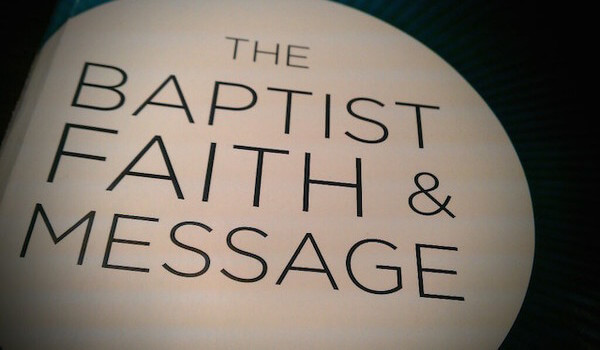
Summarizing the eternal, embodied, exalted and experienced Christ in the Baptist Faith & Message 2000

Image result for baptist faith and message 2000
Acts 10:38-42 "how God anointed Jesus of Nazareth with the Holy Spirit and with power, and how He went about doing good and healing all who were under the tyranny of the Devil, because God was with Him. 39 We ourselves are witnesses of everything He did in both the Judean country and in Jerusalem, yet they killed Him by hanging Him on a tree. 40 God raised up this man on the third day and permitted Him to be seen, 41 not by all the people, but by us, witnesses appointed beforehand by God, who ate and drank with Him after He rose from the dead. 42 He commanded us to preach to the people and to solemnly testify that He is the One appointed by God to be the Judge of the living and the dead."

Introduction:
Today's post aims to summarize the Baptist Faith and Message's statement concerning the Person and work of the Lord Jesus Christ. As the opening text for today's post demonstrates, the Apostles in the early church were already proclaiming and summarizing the life, death, burial, resurrection, ascension and second coming of Jesus. Such summaries derived from a combination of their reflections on an already complete Old Testament and the remarkable life of Jesus Christ. By seeing how Jesus fulfilled Old Testament expectation, the Apostles preached Him throughout the Mediterranean world. 

As the Gospel spread, the demands of such a ministry demanded additional scripture, which is why the New Testament Gospels, Acts, the Epistles and Revelation would be eventually composed. In Peter's summary above, we find a skeletal outline for what would become the Gospel of Mark years later. In seed form at least, the Holy Spirit was working forth through Peter what would be the composition of Mark's Gospel. Early church history records how Peter preached Christ years later in 62 A.D from the Gospel of Matthew and a then newly completed manuscript of the Gospel of Luke. His protege, Mark, copied down Peter's sermons under the inspiration of the Holy Spirit - resulting in Mark. 

What we want to do today is understand the "high-points" of Jesus' life and ministry both then and now. The Baptist Faith and Message 2000 has a marvelous summary that lays out the key "high-points" we find in the authoritative sacred and inerrant text of the Old and New Testaments. Below we will simply offer some headings along with statements from the BFM 2000. 

1. The eternal Christ
"Christ is the eternal Son of God. 

2. The embodied Christ
In His incarnation as Jesus Christ He was conceived of the Holy Spirit and born of the virgin Mary. Jesus perfectly revealed and did the will of God, taking upon Himself human nature with its demands and necessities and identifying Himself completely with mankind yet without sin. He honored the divine law by His personal obedience, and in His substitutionary death on the cross He made provision for the redemption of men from sin. 

3. The exalted Christ
He was raised from the dead with a glorified body and appeared to His disciples as the person who was with them before His crucifixion. He ascended into heaven and is now exalted at the right hand of God where He is the One Mediator, fully God, fully man, in whose Person is effected the reconciliation between God and man. He will return in power and glory to judge the world and to consummate His redemptive mission. 

4. The experienced Christ
He now dwells in all believers as the living and ever present Lord."


Thursday, October 20, 2016

The embodied Christ working through the Christian

Image result for threading a needle
Philippians 2:1-5 "Therefore if there is any encouragement in Christ, if there is any consolation of love, if there is any fellowship of the Spirit, if any affection and compassion, 2 make my joy complete by being of the same mind, maintaining the same love, united in spirit, intent on one purpose. 3 Do nothing from selfishness or empty conceit, but with humility of mind regard one another as more important than yourselves; 4 do not merely look out for your own personal interests, but also for the interests of others. 5 Have this attitude in yourselves which was also in Christ Jesus."

Introduction:
Have you ever tried to thread a needle? Such an effort requires patience and good eyesight. Once the needle is threaded, clothes can be sewn or repaired. The eternal Son of God came as the needle of Deity, thrusting His way into time and history through the needle of the virgin's Mary's womb. His aim was to take unto His Person the slender thread of true, sinless humanity. Having achieved that work by the agency of the Holy Spirit, the Son became incarnated or embodied as the man, Jesus of Nazareth. He as the Divine needle would from then on include the slender thread of humanity. Jesus Christ, as the embodied Christ, is the only One who can repair and replace the dead spiritual hearts of sinners. Those sinners that respond through the Spirit's working in saving faith have their humanity joined to His and get to enjoy His Divine presence in their lives. 

The embodied Christ provides the grounds for the believer's sanctification Not only did the eternal Son become embodied to provide the grounds for salvation, but also for the ongoing work of the post-conversion Christian-life - i.e sanctification. Truly the eternality, embodying, exaltation and experience of Jesus Christ comprises the way in which any Christian or church can carry out what is urged in this text. Today we want to conclude what we began focusing upon yesterday, namely how the eternality and embodiment of the Son in true humanity (i.e the incarnation) has practical, real-world significance for readers. 

The embodied Christ and the Christian
When the Son would come to be embodied as Jesus of Nazareth, He would remain truly God, while voluntarily choosing not to exercise the privileges that come with being God. The Baptist Faith and Message notes: 

"In His incarnation as Jesus Christ He was conceived of the Holy Spirit and born of the virgin Mary. Jesus perfectly revealed and did the will of God, taking upon Himself human nature with its demands and necessities and identifying Himself completely with mankind yet without sin."

In His human life as Jesus of Nazareth, the Son chose to experience and express His existence through the "demands and necessities" of frail humanity in preference to the full and complete benefits that are and always will be His by virtue of being truly God. 
By being truly God and truly man, Jesus Christ connects all redeemed people in saving faith to His humanity and Deity (see 2 Peter 1:4; Hebrews 2:12-17).

When the Son came to be embodied as Jesus of Nazareth, the humanity He assumed unto His Person would ever remain His even following His resurrection and ascension. This is important, since this means that as a Christian, one has in heaven the Perfect Mediator Who represents human interests to the Father and Who also reveals Divine life to those human persons who are His in faith. Philippians 2:7-10 summarizes the journey of descent and ascent of the Son from eternity, into His incarnation, to the cross, from the empty tomb and back up to the right hand of power at the Father's throne:

Philippians 2:7 Humiliation/incarnation, beginning with virgin birth

Philippians 2:8 Earthly life and crucifixion


Philippians 2:9 Exaltation due to resurrection and ascension


Philippians 2:10-11 Ascension/enthronement/2nd coming as God and man.

Application: The eternal, embodied Christ desires to embody in you His eternal power and purposes
So why is Paul laboring to connect the moral and spiritual life of the Christian to that of the incarnation of the Son of God - Jesus Christ? Remarkably, the eternal embodied Christ, ever remaining God and man, aims to embody His eternal power by the Person and power of the Holy Spirit. Paul notes on the heels of this incredible revelation of Christ's incarnation in Philippians 2:12-13 "So then, my beloved, just as you have always obeyed, not as in my presence only, but now much more in my absence, work out your salvation with fear and trembling; 13 for it is God who is at work in you, both to will and to work for His good pleasure." 

As the Baptist Faith and Message 2000 notes: 

"He ascended into heaven and is now exalted at the right hand of God where He is the One Mediator, fully God, fully man, in whose Person is effected the reconciliation between God and man."

As the eternal, embodied Christ is now the exalted Christ, He desires for His people to enjoy their experience of Him that begins at saving faith. Jesus Christ occupies three offices at this time: prophet, priest and king. As prophet, He reveals God to us by His Word, giving us the responsibility to make known His Person and work from His word. As High priest, He has made Christians His kingdom of priests to represent Him in this world and pray on behalf of others (see 1 Peter 2:9-12). As King He exercises Sovereign rule over His church and spiritually has inaugurated His reign over our world, indicating that the Christian is redeemed royalty, seated with him in the heavenly places (Ephesians 2:6-9). Today we will close out with a verse that clearly describes how Jesus Christ as embodied Deity desires to embody His power and purposes in and though us. Note 1 John 4:17 "By this, love is perfected with us, so that we may have confidence in the day of judgment; because as He is, so also are we in this world."

Wednesday, October 19, 2016

The eternal Christ and the Christian

Image result for old t.v's
Philippians 2:1-5 "Therefore if there is any encouragement in Christ, if there is any consolation of love, if there is any fellowship of the Spirit, if any affection and compassion, 2 make my joy complete by being of the same mind, maintaining the same love, united in spirit, intent on one purpose. 3 Do nothing from selfishness or empty conceit, but with humility of mind regard one another as more important than yourselves; 4 do not merely look out for your own personal interests, but also for the interests of others. 5 Have this attitude in yourselves which was also in Christ Jesus."

Introduction:
On January 26, 1926, John Baird was regarded as the first man to publicly demonstrate a machine he had designed to transmit a motion picture via the air-waves. This device was the precursor to what we know today as "television". Today nearly 80% of households in the world have televisions. People marvel still at how these familiar devices bring in picture and sound. Even more remarkably, mediums such as "face-time" and "Skype" enable people to keep in touch with friends or relatives via video and sound. Whenever we speak of what happens in the Christian at salvation, we can liken it somewhat to this modern marvel. The Holy Spirit transmits the Person and work of Jesus Christ into our spirit. At saving faith, we "tune-in" and are able to hold conversation with and fellowship with the Lord Jesus Christ by the Spirit and the scriptures. Indeed, the eternal Christ became embodied in true humanity so that He could die and rise from the dead. 40 days following His resurrection, Jesus ascended or "went up" beyond the sight of his disciples to be exalted and seated at the right hand of the Father. This exaltation of Jesus Christ resulted in the sending of the Holy Spirit, Whose task is to bring Jesus to sinners, to call them forth from spiritual death and to "broadcast" Jesus Christ in "live-stream" to such souls that embrace Him by faith. Today we want to begin considering how the eternal Christ relates to the moral and spiritual responsibility of living the Christian life.  

Considering the urgency to live the Christian life
Paul's words in the opening verses of Philippians 2 urge his readers to be some things and not to be other things. As a church family, the Philippians are to be in Philippians 2:1-2 and 4: of the same mind, love, spirit, intent on one purpose, have humility and regard one another above themselves. In contrast, the Philippians are "not to be" in Philippians 2:3-4: selfish and conceited. These opening commands and prohibitions are tall orders for any Christian or for any church. Thankfully, Paul hitches these series of commands to extraordinary theological statements about the Person and work of Jesus Christ. 

Truly the eternality, embodying, exaltation and experience of Jesus Christ comprises the way in which any Christian or church can carry out what is urged in this text. Today we want to begin focusing upon how the eternality and embodiment of the Son in true humanity (i.e the incarnation) has practical, real-world significance for readers. 

The eternal Christ is the power source of the Christian life
Philippians 2:6 opens up Paul's grand theological tour de force about the Lord Jesus Christ. We read in Philippians 2:6 "who, although He existed in the form of God, did not regard equality with God a thing to be grasped". This statement begins with the Son as He was in eternity prior to His incarnation. The phrase "form of God" pertains to the Son possessing the very properties of Deity (omniscience, omnipresence, omnipotence, eternality, immateriality, necessity, aseity and so forth). 

Whenever we see the Son by Himself described as "God" in the New Testament, we often find the word "God" as a predicate or word equating the Son as possessing all the qualities and properties that involve being God. In other places, whenever we see "God" described as doing something to or with the Son (as in Philippians 2:9, where, "God highly exalted Him"), the name "God" implies the Father, with both the Father and the Son sharing this same Divine nature. Bible scholar John S. Feinberg notes on page 459 of his book: "No one like Him": 

"The NT clearly teaches that Jesus Christ is God. In various, NT writers show that He is as fully God as the Father." 

When we talk about Jesus Christ as He is presented in Philippians 2:6, we see Him as the eternal Christ, existing in eternity with the Father and prior to His incarnation. The Baptist Faith & Message 2000 begins its article on "The Son" with these words: "Christ is the eternal Son of God." The 6th century writer Boethius gives the following definition of eternity: "eternity, then, is the whole, simultaneous and perfect possession of boundless life." The Son, on Boethius definition of eternity, could be easily described as possessing this quality of simulataneous and perfect, boundless life. Hebrews 1:8 sheds much light on what we've noted thus far: "But of the Son He says, “Your throne, O God, is forever and ever, And the righteous scepter is the scepter of His kingdom."

The Son's desire to be hitched to true humanity, and to your humanity
So, the Person of the Son in Philippians 2:6 has possessed all the properties that one associates with the Biblical concept of "God". But then Paul makes an interesting statement at the end of the verse: "did not regard equality with God a thing to be grasped". Other English translations render this phrase accordingly:

NKJV: "did not consider it robbery to be equal with God"

NIV & HCSB: "did not consider equality with God something to be used to his own advantage"

NASB & ESV: "did not regard equality with God a thing to be grasped".

As the Son has always been in eternity with the Father, the sense of the verse here indicates that His own equality with the Father as God is being viewed in terms of all the benefits, privileges and unimaginable experience of being unending Deity. 

This first insight brought out in Philippians 2:6 hitches the commands given in Philippians 2:1-5 to what the Person of the Son has always been in Philippians 2:6 - namely the eternal Christ. The humility of the Son possessed in eternity is and will be shown to be accessible to the Christian who attempts to exercise the humility commended in Philippians 2:1-5. 

The Son's humility, union with the Father and moral perfections are to be reflected in a creaturely way by the very ones who claim Him as their Savior and Lord. The Son did not begin being humble at His incarnation. Instead, humility occupies the multitude of moral attributes that one associates with the Divine nature. The Father demonstrated such when He chose to reveal His glory in His creation - in effect stooping to make Himself known in the heavens. Further reflection shows the Son possessing this same quality as the Father - with God's actions of humility referred to as being likened unto a parent lisping softly to their child. As we will see next time, the Son's incarnation as Jesus of Nazareth would provide the proper human expression of Divine humility, an expression which is the basis for Christian life and living. The eternal Christ came to be the embodied Jesus of Nazareth, thus hitching humanity to His Person so that in His humanity, He could hitch people to Himself who receive Him in saving faith. 

More next time....  

Tuesday, October 18, 2016

Four more practical reasons for the doctrine of the Trinity


Image result for Trinity in stained glass windows chartres cathedral

2 Corinthians 13:14 "The grace of the Lord Jesus Christ, and the love of God, and the fellowship of the Holy Spirit, be with you all."

Introduction:
Yesterday's post considered four reasons why the reality of the Trinity is life-practical for the 21st century. In today's post we will consider four more reasons why the doctrine of the Trinity is highly practical for daily living.

1. The truth of people needing God
Was God lonely before He created anything? Did God create out of a need for having a creation and human beings? What makes God, well, God versus creation? God is complete and sufficient in and of Himself, with or without creation. When God created the universe, nothing was added nor subtracted from His being. Such a property of God's being is what theologians call "Divine aseity", referring to God's self-sufficiency. Creation, on the other hand, is incomplete without God. God's creation of all things was a choice, rooted in God's desire to share the overflow of love and trust shared between the Father, Son and Holy Spirit. Without the Trinitarian revelation of God, we couldn't make sense as to why God is complete in-and-of-Himself and more to the point: why we need Him.

2. The truth of salvation. 
John 3:16 is perhaps the most familiar verse in the Bible on the subject of salvation. Without the doctrine of the Trinity, we would not be able to make sense of John 3:16. The first phrase: "For God so loved the world" seems clear enough. But, the next phrase then states: "that He gave His One and only Son". This most familiar of all passages would not work without the reality of the Triune God. God the Father sent the Son. The Son, being God, provides salvation that is sufficient to redeem sinners. This same Son came to partake in true humanity, thus making Him capable of accomplishing the purchase of salvation through the shedding of His innocent blood. The verse then close out, reminding us of the only way anyone can receive what Christ achieved as God and man: "whosoever believes in Him will not perish, but have everlasting life.

3. The truth about the Bible
The Bible is a product of the Holy Spirit, is focused upon the Person of the Lord Jesus Christ and is intended to point the way to the glory of the Father. This Trinitarian understanding of the plot-line of the 66 books of the Bible is what makes the Bible so unique. Whether we speak of the Father, Son or Holy Spirit, we are speaking about God. Each of God's two main names: "Yahweh" and "Elohim" are each found thousands times in the scriptures. These two names indirectly point to the two primary truths about God: Yahweh is a singular term, emphasizing that God and God alone is the "I AM"; whereas "Elohim" is a plural noun, underscoring how God is a plurality of Persons, strong and mighty as the Creator and Redeemer. There is scarcely a verse of scripture that is not somehow impacted by the truth of the Trinity.

4. The truth about the church
We could go on with so many more "truths" which only make sense in light of the fact that God is the Triune God. Undoubtedly we could comment on how true worship, true prayer, true evangelism, truths related to suffering and other "rubber-meets-the-road" issues are made more understandable in light of the Triune existence of God. We will however close out with how this crucial doctrine sheds light on the church. When we come to the New Testament teaching of the church, we often will find the imagery of "the body" being used with reference to Jesus' humanity and in analogy to the human body as being "one body, composed of many members" (see Romans 12; 1 Corinthians 12-14). 

However, in thinking about what we saw earlier regarding the "truth about love", 1 Corinthians 13 unfolds in the greatest detail the nature of Divine love expressed through the church body. God's love is a self-giving love, dispensed for the sake of another's enjoyment. Unless God is Triune, with each Person of the Trinity giving of their love and reciprocating such to one another, we really don't have an adequate way of describing what church-life ought to be. Church members ought to show love to one another (see John 13:34-35). When the church operates in a comparative manner of love and self-sacrificial giving to one another and those around them like God does within Himself, the world will see tangible evidence of God's activity in and among the church.

Monday, October 17, 2016

Four reasons why the Trinity is such a practical doctrine for today

Image result for Trinity in stained glass windows chartres cathedral
Genesis 1:1-2  "In the beginning God created the heavens and the earth. 2 The earth was formless and void, and darkness was over the surface of the deep, and the Spirit of God was moving over the surface of the waters."

Introduction:
Today's post is going to list four practical reasons why the Trinity is important to the Christian and to the understanding of life, God and the Bible. In brief, when Christians say God is a Trinity or Triune, what is meant is: God is One God, existing as Three Persons, with each Person identified as truly and fully God. The doctrine itself is composed of three essential doctrines taught in the Bible: God as one God; Deity of Jesus Christ and the Personality of the Holy Spirit. Passages such as Matthew 28:18-19 and 2 Corinthians 13:14 clearly state that God is one God, existing as three Persons with each Person being truly and fully God. 

The Baptist Faith and Message 2000 defines the Trinity as follows: "The eternal triune God reveals Himself to us as Father, Son, and Holy Spirit, with distinct personal attributes, but without division of nature, essence, or being." 
The Biblical doctrine of the trinity is not only profound, but practical. The way we will explore these life-practical reasons is by noting particular truths that can only make sense in light of the Trinity.

1. Truth about God's identity. 
In Genesis 1:1-2 we already find reference to at least one of the Persons of the Trinity - the Holy Spirit. We find Him "hovering" above the waters. In John 1:1, we find reference to the other two Persons, namely the Father, called by the title "God", and the Son, referred to as "the Word" in the same verse. This is God's identity. He is one God in being and three in identity. 

2. Truth about humanity. 
What does it mean to be human? In Genesis 1:26 we understand that God made man in "His image" and "in His likeness", meaning that unlike the rest of the animal kingdom, mankind was endowed with reason, the ability to have relationship with God and with each other and delegated authority dominion over the created realm. Interestingly Genesis 1:26 records God saying: "let us make man in 'our' image and in 'our likeness'". Notice the plural pronoun "our" with reference to God. God is indeed "One" God, and yet we find in Genesis a plurality within God. This plurality, as later Biblical texts will reveal, has to do with God being three in Person. God relates within Himself and thus has created human beings with the capacity to relate. 

3. The truth about the family. 
As the doctrine of the Trinity helps us to understand the relational uniqueness of human beings, we find the truth of the family made more clear. In Genesis 2:22-25 we see the husband and wife relationship being described in terms of the man and wife being "one flesh". How can two distinct individuals be plural in one way and one in another? As God made humanity in His image to be a relational reflection of Himself, we find the marriage relationship to be patterned somewhat off of what is true about God. God is a plurality in unity, and thus marriage is designed to reflect this feature. Any departure from this Divine design of one man, one woman in covenantal union for life erases the Divine intention for marriage.

4. The truth about love.
A fifth century theologian by the name of Augustine would often highlight how God is a God of love. Since love by its nature requires three elements: a lover, a beloved and the love shared between the two, this quality about love is due to what we find to be the case within God. God is the Father (the Lover within the Trinity); the Son (the beloved in the Trinity) and the Holy Spirit (the love shared between the Father and the Son). This thought is helpful in understanding the concept of love, especially in its self-giving nature, its desire to please the one it is given to and the beauty thereof. 1 John 4:8 plainly states: "God is love".

More next time..... 

Saturday, October 15, 2016

How to get free from taking up offense - forgiveness

Image result for balloons released
Luke 17:1-4 "He said to His disciples, “It is inevitable that stumbling blocks come, but woe to him through whom they come! 2 It would be better for him if a millstone were hung around his neck and he were thrown into the sea, than that he would cause one of these little ones to stumble. 3 Be on your guard! If your brother sins, rebuke him; and if he repents, forgive him. 4 And if he sins against you seven times a day, and returns to you seven times, saying, ‘I repent,’ forgive him.”

The pain of tripping over lego blocks at night
Over the years my children have enjoyed playing with little Lego blocks. I can even recall as a child getting a big pail full of Lego blocks at my grandmother's home and building houses, forts and all sorts of structures. Lego's can be a wonderful experience, that is, until you step on them at night. I'm sure you know of what I speak. You're walking through your house in the middle of the night to get a sip of water when, OUCH! Yep. Someone left their Lego's out in the middle of the living room. There have been occasions where I have almost fallen or tripped because of the pain of those sharp little edges. 

Jesus uses an interesting term here in Luke 17 to describe what it means to "take up offense" - namely, "stumbling blocks". We looked yesterday at what it means to take up offense and how it both harms and hampers the Christian. In Luke 17, this same idea is communicated by Jesus as a warning to His disciples. The word translated "stumbling block" comes from a Greek word from whence we derive our English word "scandal". Scandals in our day and age can cause onlookers to either wag their heads or, in some cases, tempt others to think of doing the same thing. Stumbling blocks or offense never benefits. 

How does one get free from offense? Perhaps from the last post, some were under the impression that one cannot escape this spiritual and emotional malady called "offense". As we explore God's Word, there is only one effective way to not only escape offense, but to avoid it all together - forgiveness. Jesus lays out in three parts the remedy of forgiveness as He warns about how to avoid and escape offense. Notice...

1. Heed the call to let go of the offense. Luke 17:1-2
Jesus starts out in Luke 17:1-2 with these words - "He said to His disciples, “It is inevitable that stumbling blocks come, but woe to him through whom they come! 2“It would be better for him if a millstone were hung around his neck and he were thrown into the sea, than that he would cause one of these little ones to stumble." So, its not a matter of "if offenses will come". Instead, it is more a matter of "when they will come". You and I cannot control what people will say or what events will come into our lives. We also are not living in a fair world, since our world is a fallen one. Older Bible teachers often refer to what are called "the noetic effects of sin", meaning the collateral damage caused by our sin, including broken relationships, mis-understandings, damaged emotions and other various spiritual, psychological and physical maladies that affect the human race.  

You and I must come to terms with the fact that we cannot control our environment nor the way people will treat us. The only thing we can control is our response. The question is: will you be bitter, or better? Will you retain a grudge, or forgive as the Lord forgave you (Colossians 3:13)? Unless the cross is in our center-line of vision, the vulnerability to taking up offenses will be pretty high. 

So to get free or remain free from offense, we've got to learn to "let go". This is at the heart of the meaning of forgiveness. But now notice what else Jesus' says...

2. Heed the call to loosen from blame. Luke 17:3-4
Jesus continues on His warning in Luke 17:3-4 3“Be on your guard! If your brother sins, rebuke him; and if he repents, forgive him. 4“And if he sins against you seven times a day, and returns to you seven times, saying, ‘I repent,’ forgive him.” So in this world of ours, and even in the church, the likelihood of someone saying something wrong, or not saying something that should had been said, can yield in us a response of anger or bitterness if we're not careful. If we have taken strides to guard are hearts through reflecting on God's Word and God's forgiveness in Jesus Christ, the chances of taking up offenses will be greatly diminished. 

Now Jesus is not dismissing from responsibility the one who says careless words or does thoughtless deeds. Often when an offense is taken up, a legitimate hurt has been committed, and not just merely a misunderstanding. Certainly those who are careless or reckless in their treatment of us should be held accountable for their actions. The key of course is by whom should they be held accountable - us or God? 

Such considerations will aid greatly in getting free from offense. We've got to let go, and loosen from blame. But now let's notice one last thing Jesus states concerning how to get free from or in avoiding offense...

3. Heed the call to love in greater faith. Luke 17:5-6
We read the following interesting response of the disciples to Jesus in Luke 17:5-6 "The apostles said to the Lord, “Increase our faith!” 6 And the Lord said, “If you had faith like a mustard seed, you would say to this mulberry tree, ‘Be uprooted and be planted in the sea’; and it would obey you." In as much as the Lord instructs on matters of prayer, I find it intriguing that this teaching and the disciples' remarks follows on the heals of Jesus' teaching on offense. Our pattern for forgiveness is the cross (Ephesians 4:32; Colossians 3:13) To forgive those who have hurt us requires, well, great faith. Whenever God is calling us to such a high calling as "letting go, loosening from blame and loving that other person", we need a greater capacity for His love to flow through us. Hence, the request for greater faith is the request for a greater ability to trust God to see them through whenever they heed these challenging words of Jesus.

Unless we forgive as the Lord forgave us, we will fall for offense every time or we will find ourselves ever "stuck in the rut" of offense, rejection and stumbling around. As Jesus points out in Luke 17:4 "And if he sins against you seven times a day, and returns to you seven times, saying, ‘I repent,’ forgive him.”