Translate

Tuesday, December 6, 2016

Seeing what it means to serve God through Moses and ultimately Jesus

Image result for serving the Lord
Numbers 12:7 “Not so, with My servant Moses, He is faithful in all My household."

Hebrews 3:2 "He was faithful to Him who appointed Him, as Moses also was in all His house."

Introduction:
When we talk about serving God, we refer to doing God's work with the goal of cultivating one's fellowship with God. Today's post will feature both Moses and Jesus and understand what it means to serve God. 

Moses, a servant of God
In the Old Testament, one of the premier examples of serving God is found in the life of Moses. Moses is described as being faithful in all of God's house. Hebrews 3:5 states that Moses' testimony of faithfulness serves as an example to future believers: "Now Moses was faithful in all His house as a servant, for a testimony of those things which were to be spoken later." So what was it that Moses did that made for such commendation of His service to God?

Moses is called "servant of the Lord" in Old Testament books like Deuteronomy, Joshua, Judges, 2 Kings. In almost all of those instances, the title "servant of the Lord" is tied to what Moses wrote and commanded by God. Moses' reliance upon God's words made him a faithful servant. Exodus 24:4 for example states that "Moses wrote down all the words of the Lord." 

Moses lived by God's Word and dedicated His life to God's Work. Moses aimed to center His life around God. In Exodus 33:17-18 Moses writes: "The Lord said to Moses, “I will also do this thing of which you have spoken; for you have found favor in My sight and I have known you by name.” 18 Then Moses said, “I pray You, show me Your glory!”

As God's premier servant, Moses labored in God's work and lived by His word. We also know that Moses' walk with God was so close that God Himself testified about Moses being distinguished from other people. In Numbers 12:7-8 “Not so, with My servant Moses, He is faithful in all My household; 8 With him I speak mouth to mouth, Even openly, and not in dark sayings, And he beholds the form of the Lord. Why then were you not afraid
To speak against My servant, against Moses?” Moses wrote and led by the power of the Holy Spirit. Thus we could say that as a servant of God, he was led by the Holy Spirit, he lived by God's Word and labored to do God's work.

Moses' service to God provides a picture of Jesus as the ultimate servant of God, which in turn provides a pattern for Christians today
Such details reveal the type of man and servant of God Moses was. Both testaments in the Bible tell the reader that Moses is a prime example of what it means to serve God. This testimony of faithfulness not only serves as an example for Christians, but more importantly points to the One Who would be the ultimate example: Jesus Himself. Hebrews 3:6 states: "but Christ was faithful as a Son over His house—whose house we are, if we hold fast our confidence and the boast of our hope firm until the end." 

The way we best apply what Moses did is by seeing how his example points to Jesus as the Servant of God. To only stop at Moses would mean we are advocating moralism. Moses is indeed a fine example, but he is placed before us in the scripture because his service to God was rooted in Christ. Although Jesus, in regards to His humanity and earthly ministry was future with respect to Moses in history, the faith Moses had to serve God was directed towards Christ, who in His Deity is eternal. Hebrews 11:24-27 states - "By faith Moses, when he had grown up, refused to be called the son of Pharaoh’s daughter, 25 choosing rather to endure ill-treatment with the people of God than to enjoy the passing pleasures of sin, 26 considering the reproach of Christ greater riches than the treasures of Egypt; for he was looking to the reward. 27 By faith he left Egypt, not fearing the wrath of the king; for he endured, as seeing Him who is unseen."

Closing thoughts:
Today we looked at how Moses functioned as a servant of God. the way the New Testament handles Moses is by first highlighting his place in the Old Testament, followed by showing how he points us to Christ. Such examples point Christians to Jesus, the Ultimate pattern for service to God. When we consider Moses' record of service to God throughout the Old Testament, if we read his actions and attitudes in light of Jesus, we can then understand our attitudes and actions for serving God in light of Jesus. 

Monday, December 5, 2016

Defining Christian Service According to Jesus Christ

Image result for serve the Lord
Isaiah 54:17 "No weapon that is formed against you will prosper; And every tongue that accuses you in judgment you will condemn. This is the heritage of the servants of the Lord, And their vindication is from Me,” declares the Lord."

Introduction:
What does it mean to be a servant of the Lord? Evidently we find that for those deemed "servants of the Lord", there is a heritage (or as the Hebrew would render it, an inheritance, a blessing) the comes by being in relationship with God. To serve God is not so much centered around accomplishment of a task as it is centered around one's relationship with God. A survey of the Old and New Testament scriptures reveals rich truths concerning this concept of "servant of the Lord". Whenever we are aiming to understand a particular moral or spiritual quality that ought to be operating in the Christian life (such as serving the Lord), we must look first and foremost at the Lord Jesus Christ.

Jesus was predicted and presented as "The Servant of the Lord"
In the Old Testament book of Isaiah we find four sections dedicated to predicting what would be the coming of "The Servant of the Lord". This Servant figure would end up being a Messianic figure, meaning His role would be to reveal God and do the will of God. These four sections - deemed "servant-songs", are so-called because of their high-concentration of poetic language. I will only list the references we find such servant songs in Isaiah, with a comment about each. 

In Isaiah 42:1-9, we discover that "The Servant of the Lord" will be an individual empowered by the Holy Spirit. 

Secondly, in Isaiah 49:1-7 (or the second servant song), we discover that this "Servant of the Lord" will be a man in whom God will be glorified. So thus far, we have found Isaiah's "Servant of the Lord" to be empowered by the Holy Spirit, as well as a man who will be about the business of bringing glory to God. 

The third "servant song" is found in Isaiah 50:4-11, will emphasize the Word of God. The word of God spoken will be the Servant of the Lord's method of doing His ministry. Then in the final "servant song" of Isaiah, Isaiah 52:13-53:12, we discover the Servant's plan to suffer on behalf of others. This final servant song most clearly points to what would be the crucifixion and resurrection of Jesus. We could say too that the "Servant of the Lord" will be a lover of souls, since it is for sinners that He died to make a satisfaction for sin to the Father. 

So we find then in Isaiah's prophecies the predictions concerning "The Servant of the Lord", predictions which would be fulfilled in the life, ministry, death and resurrection of Jesus Christ. But now, how do we know that these predictions are referring to Jesus? We find in the Gospel records certain actions and words by Jesus that indicate Him seeing Himself as the fulfillment of Isaiah's prophecies.

In Matthew 12:13-21 we read for example: Then He said to the man, “Stretch out your hand!” He stretched it out, and it was restored to normal, like the other. 14 But the Pharisees went out and conspired against Him, as to how they might destroy Him.
15 But Jesus, aware of this, withdrew from there. Many followed Him, and He healed them all, 16 and warned them not to tell who He was. 17 This was to fulfill what was spoken through Isaiah the prophet: 18 “Behold, My Servant whom I have chosen; My Beloved in whom My soul is well-pleased; I will put My Spirit upon Him, And He shall proclaim justice to the Gentiles. 19 “He will not quarrel, nor cry out; Nor will anyone hear His voice in the streets.
20 “A battered reed He will not break off, And a smoldering wick He will not put out, Until He leads justice to victory.
21 “And in His name the Gentiles will hope.”

Matthew connects Jesus' activity to the first servant song of Isaiah 42. In Mark's Gospel we find Jesus asserting the chief purpose for which He came in Mark 10:45 - "For even the Son of Man did not come to be served, but to serve, and to give His life a ransom for many.” Matthew 20:29 echoes what Mark 10:45 states with reference to Jesus' capacity as the redeemer and the Servant. John's Gospel portrays Jesus as serving His disciples on the eve of His crucifixion. In John 13 we find Jesus washing the disciples' feet to visually demonstrate His role as "The Servant". 

Closing thoughts
So as we can see, Jesus Christ was predicted and portrayed as the Servant of the Lord, the pattern after which any definition of servanthood must be measured. We discovered from His role of servant at least four traits:

1. Led by the Holy Spirit
2. Labored to bring glory to the Father
3. Lived by the Word of God
4. Loved the souls of people

I would suggest that these four traits emulated by Jesus are to be traits found in any description of what it means to serve the Lord. As I said at the beginning of today's post, serving the Lord centers not so much around accomplishing a task as it does in cultivation of one's relationship with God. In the four traits we discovered concerning Jesus' role as "The Servant of the Lord", all of them were situated around the relationship He had with the Father, both as the eternal Son and as the man, Jesus of Nazareth. I close with these words from 1 Peter 2:21 "For you have been called for this purpose, since Christ also suffered for you, leaving you an example for you to follow in His steps."

Sunday, December 4, 2016

Some Thoughts on the Second Sunday of Advent

Image result for Advent season
Luke 1:35 "And Mary said, “Behold, the bondslave of the Lord; may it be done to me according to your word.” And the angel departed from her."

Introduction:
Today's post will offer some thoughts on the meaning and significance of the second Sunday of this Advent Season. Today of course is the Second Sunday of Advent. The goal for this month is to offer posts that will reflect on all the particular Sundays found in the Christian celebration of Advent. For the reader's reference, the first Sunday of Advent (which was last week) had a post featuring it and is found at the following link:
http://www.growingchristianresources.com/2016/11/celebrating-first-sunday-of-advent-some.html

Advent is the season of hope and faith
At the church which I pastor, we will be lighting the second advent candle at the beginning of our morning church service. For our church at least, the second candle will represent "faith". Faith fits very well in one of Advent's overall purposes in the Christian calendar: namely kindling expectation and excitement about the Lord Jesus Christ. Hebrews 11:1 reminds us: "Now faith is the assurance of things hoped for, the conviction of things not seen." 

In the opening verse of today's post, we find Mary receiving the news from the angel regarding her being the vessel through which the Son's humanity would be conceived. She received the news and all of its implications by faith. Mary was clearly a woman of faith. Her heart was already reconciled to God in a faith that at some point had been touched by grace (see Luke 1:30). Not only did Mary evidence outward devotion, but inward trust.

True saving faith anticipates what Jesus has done, is doing and will do. In Advent Season, Christians celebrate their "Faith". Faith in the Bible takes on at least three meanings. First, "faith" can mean one's subjective trust in God's promises, Word and Person. Second, "Faith", or what we could call "capital 'F' Faith, refers to those body of doctrines and truth that, revealed by God in the scripture have been handed down through every generation of the church. The third sense of faith has to do with where our faith is directed and embodied: Christ Himself. Christ is described for example in Hebrews 12:2 as "The Author and Finisher of faith".

When we consider all that Advent season represents, all three of these senses are present - however, the third sense in particular is the focus. By finding Christian faith embodied in Christ and explained in the scriptures and precious truths of it, our personal faith is rooted in Jesus and formed by the text of scripture. 

When the Advent candles are lit, the light they shine, though small, illuminates the eye of everyone in the room. The light of Advent illustrates faith. How? Faith is the flame from on high that kindles the small wick of the human heart. When the life and ministry of Jesus is brought to bear in our lives, we embrace it. Even in the shortening days of Advent season, Winter's chill and darkening skies cannot quench the flame of faith. Christ in the believer is light and life, shining in this dark world.  

As we carry forth into this Advent season, may we celebrate the fact that the Eternal Son came as God incarnated as a helpless infant. His mother received the news by faith. May we receive and embrace Him in faith. May Advent be as a breath of fresh air in what can be a season of business. May faith flourish as Christ as magnified, emphasized and focused upon in this season. 

Saturday, December 3, 2016

Divine Symmetries and Patterns of Christmas in Genesis

Image result for Christmas in Genesis
Galatians 4:4 "But when the fullness of the time came, God sent forth His Son, born of a woman, born under the Law".

Introduction:
In Genesis 3 we witness the treachery of Adam and Eve falling for the Serpent's lies and breaking covenant relationship with God.  Adam and Eve's actions brought forth sin and misery upon the whole human race. Thankfully God's plan for Christmas would go beyond Adam (please compare Romans 5:11-21). Today's post wants to consider the symmetries and patterns of Christmas in Genesis, whereby we see God using history, numbers and seven particular men to lay the groundwork for His historic plan of redemption leading up to the arrival of Jesus. 

The Bible's uses of symmetry - God's fingerprint for preparing for Christmas
From Adam we go forward to Genesis 5. In Genesis 5 we find 10 generations listed - depicting for us the human bloodline that God would use to bring about the "seed" promise first spoken of to Eve in Genesis 3:15.  The tenth man in that listing is a every familiar one - Noah. Each man and generation of God's people would function as torch lights lighting the way toward redemption.  In Jesus' genealogy of Luke 3:36b-38, as Luke unfolds for us the events leading up to and following Jesus birth, we see 10 generations stretching from Noah back to Adam- truly a remarkable example of God's preparation for that first Christmas. 

From Noah we see God issuing forth earth's second catastrophe, the flood.  Following the flood the Bible introduces us to the third major man involved in the continuation of God's plan for Christmas - Shem.  Shem was one of Noah's three Sons, and his entire bloodline is detailed in Genesis 10-11.  During his days the third great catastrophe, the tower of Babel, would occur.  Shem's bloodline also mentions ten generations.  In the tenth man of his bloodline we are introduced to another familiar figure - Abram (whose name would be changed by God to Abraham). If we turn back to Luke's genealogy of Jesus bloodline once again, we see in Luke 3:34b-36a another 10 generations stretching from Abraham back to Shem. 

Thus in all from Adam to Abraham would represent a span of over 2000 years period of time.  Likewise from Abraham to Christ's birth on that first Christmas would be more than 2000 years of time.  Of these first 20 generations listed in both Genesis and Luke, we see our first four major patriarchs: Adam, Noah, Shem and Abraham.  As the symmetry of scripture unfolds, these numbers are no accident nor coincidence.  God's hand was working in history to bring about His purpose of accomplishing the entry of His son into humanity on that first Christmas.

How God specified his intentions for bringing about that first Christmas
So with these four men: Adam, Noah, Shem and Abram - we see God specifying more clearly who and what He is going to us in bringing about the redeemer who would be born on Christmas.  From Abraham would come the promised son - Isaac.  From Isaac and his wife Rebekka would come forth Jacob - the father of the twelve tribes of Israel. 

Six men are reckoned so far in God's plot-line for setting up His plan of salvation in history.  Symmetry and numbering are signs of Divine Majesty at work in the otherwise catastrophic mess of humanity.  The seventh main figure we will note in Genesis is born in Genesis 30 and ends up being revealed most fully in Genesis 37-50 - Joseph.  Seven is God's number of fullness.  It means that all that God has planned is coming to fruition.  Joseph, more than the other six prior men - most fully pictures for us the focus of the Christmas story - the Lord Jesus Christ.

Closing thoughts:
Today's post explored the symmetry of generations God used in Genesis to make known His plan of redemption. We considered seven particular figures that emerge in the historical unfolding of the Book of Genesis: Adam, Noah, Shem, Abraham, Isaac, Jacob and Joseph. Each man would in some way pre-figure, illustrate or be a recipient of God's promises that would be responsible for paving the way for the arrival of Jesus into our world.  


Friday, December 2, 2016

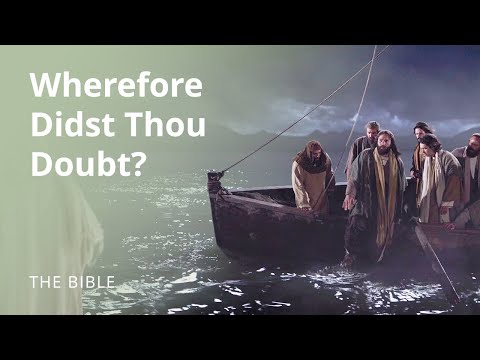
Weaving together Jesus' Walking on the Water in Matthew, Mark and John

Image result for Jesus walks on the water
John 6:19-20  Then, when they had rowed about three or four miles, they saw Jesus walking on the sea and drawing near to the boat; and they were frightened. 20 But He *said to them, “It is I; do not be afraid.” 21 So they were willing to receive Him into the boat, and immediately the boat was at the land to which they were going."

Introduction:
Oftentimes it is very illuminating to take one episode in one of the four Gospels and compare how the other Gospels record that same event. Jesus' miracle of walking on the water in John 6:15-21 represents the fifth of seven total miraculous signs in John's Gospel. Matthew 14:22-33 and Mark 6:47-51 record the same event as we find in John 6:15-21. Each Gospel writer includes details not found in the others. Whenever we weave Matthew, Mark and John together (Luke does not include this episode in his Gospel), we can see the whole picture. For the sake of the reader's convenience, I will color-code Matthew's details in orange; John's details in blue and use Mark's record as the base text (Mark's text will be in black), since it is the shortest of the three per word count in the underlying Greek text.

Jesus walks on the water 
Matthew 14:22-33; Mark 6:47-51; John 6:15-21

So Jesus, perceiving that they were intending to come and take Him by force to make Him king, withdrew again to the mountain by Himself alone. Immediately He made the disciples get into the boat and go ahead of Him to the other side, while He sent the crowds away. Now when evening came, His disciples went down to the sea, and after getting into a boat, they started to cross the sea to Capernaum.

After He had sent the crowds away, He went up on the mountain by Himself to pray when it was evening, the boat was in the middle of the sea, and He was alone on the land. After He had sent the crowds away, He went up on the mountain by Himself to pray; and when it was evening, He was there alone. But the boat was already a long distance from the land, battered by the waves; for the wind was contrary. It had already become dark, and Jesus had not yet come to them. The sea began to be stirred up because a strong wind was blowing. Then, when they had rowed about three or four miles. 

Seeing them straining at the oars, for the wind was against them, at about the fourth watch of the night He came to them, walking on the sea; and He intended to pass by them. But the boat was already a long distance from the land, battered by the waves; for the wind was contrary. And in the fourth watch of the night He came to them, walking on the sea. 

When the disciples saw Him walking on the sea, they were terrified, and said, “It is a ghost!” And they cried out in fear. But immediately Jesus spoke to them, saying, “Take courage, it is I; do not be afraid.” Peter said to Him, “Lord, if it is You, command me to come to You on the water.” And He said, “Come!” And Peter got out of the boat, and walked on the water and came toward Jesus. But seeing the wind, he became frightened, and beginning to sink, he cried out, “Lord, save me!” Immediately Jesus stretched out His hand and took hold of him, and *said to him, “You of little faith, why did you doubt?” But when they saw Him walking on the sea, they supposed that it was a ghost, and cried out; then, when they had rowed about three or four miles, they saw Jesus walking on the sea and drawing near to the boat; and they were frightened. 

For they all saw Him and were terrified. But immediately He spoke with them and said to them, “Take courage; it is I, do not be afraid.” For they all saw Him and were terrified. But immediately He spoke with them and said to them, “Take courage; it is I, do not be afraid.” But He said to them, “It is I; do not be afraid.” 

Then He got into the boat with them, and the wind stopped; and they were utterly astonished. When they got into the boat, the wind stopped. And those who were in the boat worshiped Him, saying, “You are certainly God’s Son!” So they were willing to receive Him into the boat, and immediately the boat was at the land to which they were going. 

What we learn from weaving together the Gospel accounts of Jesus' walking on the water
Whenever we can view the episode from Matthew, Mark and John, we discover the following lessons:

1. Jesus' motive, per Matthew's Gospel, for sending the disciples ahead of himself was to deal with the crowds who were wanting to make him king. This growing desire on the part of the crowd was what also prompted Jesus to be alone and apart from the disciples.

2. Once Jesus was alone, Matthew's version records that he went to pray. John adds the detail that the disciples had rowed between three and four miles, or about half of the total width of 8 miles (the sea of Galilee is 8 miles wide and 13 miles long). This would place the disciple's exactly in the middle of the Sea of Galilee, as recorded by Mark. 

3. This storm was an extraordinarily powerful one. Mark has the disciples straining at the oar and Matthew records the boat being battered by the waves.

4. Jesus sees the disciples and walks out to them in all three versions. Matthew includes a detailed response, discussion and Peter himself walking out to meet Jesus. Peter's fear and sinking in the waves is also recorded by Matthew. Mark and John give the more abbreviated version. Once Jesus gets into the boat, Mark's version records the disciples were astonished at the fact of the sudden stoppage of the wind. Matthew records the manner of their astonishment, an astonishment that led to their worship of Jesus and declaration of Him as the Son of God. John emphasizes the willingness of the disciples to receive Jesus in to the boat.

5. The outcome of the miracle is that due to the stoppage of the wind, John alone records how quickly the disciples were able to make it to the other side.

Life Application
Today we aimed to view Jesus' miracle of walking on the water in light of the three Gospels in which it is found: Matthew, Mark and John. Why this miracle? Why does it matter? 

1. Jesus is Divinely powerful enough to calm the storms of life.  
Jesus' miracle was an active demonstration of His Deity and divine authority over the created order. Certain Old Testament scriptures assert the Sovereignty of Yahweh over the sea (Psalm 65:7; 89:9; 107:28-30). 

2. Jesus' humanity enabled Him to walk into the midst of the storm. 
The disciples were already frightened enough. Per the Gospel records, they perceived him at first to be a "spirit". Only as a flesh and blood human being could Jesus effectively minister to His disciples. Interestingly enough, by calming the storm, He shows His disciples how as man He could bring into subjection the created order, thus demonstrating Himself to be the New Adam. More to the point though, as man, Jesus empathized with His followers by entering into the fray. 

3. Trust in this Jesus will enable you to get to where He is leading you in life.
John especially notes how quickly the boat got to the other shore.   

Thursday, December 1, 2016

The relationship between Jesus' baptism and believer's baptism

Image result for Jesus baptism
Matthew 3:16 "After being baptized, Jesus came up immediately from the water; and behold, the heavens were opened, and he saw the Spirit of God descending as a dove and lighting on Him."

Introduction:
When we consider Jesus' public baptism in relationship to the baptism He commands his disciples to perform in the great commission of Matthew 28:18-20, what relationship do both have with one another? Today's posts offers some quick thoughts in answer to this question.

1. Jesus' baptism provides the mode for what would be believer's baptism.
John 3:22-23 notes concerning Jesus' disciples baptizing as a continuation of John's baptism - "After these things Jesus and His disciples came into the land of Judea, and there He was spending time with them and baptizing. 23 John also was baptizing in Aenon near Salim, because there was much water there; and people were coming and were being baptized." What is the mode or manner in which water baptism ought to take place? should people be sprinkled? have water poured upon them? the answer to all of these questions is in the negative. The underlined words of the passage tell us that John (and presumably the disciples of Jesus) baptized where there was much water in order to immerse the candidates. Dr. Adrian Rogers notes on page 113 of his book - "What Every Christian Ought to Know": 

"If we baptize by sprinkling, we could baptize seven thousand people with a jugful. The reason John was baptizing down there is simple: there was much water there, and it takes a lot of water to baptize". 

The meaning of the word "baptize" itself conveys this central thought of "immersion". Hence, Jesus' baptism conveys to us the mode required to perform proper water baptism.

2. Jesus baptism communicates rich meaning into the symbolism taught by believer's baptism
In Matthew 3:16; Mark 1:10; Luke 3:22 and John 1:32 we read what occurred when the Lord Jesus Christ came up out of the cold, chilly waters of the Jordon in His baptism by John. In various respects all four Gospels record the Holy Spirit descending upon Jesus to convey the official beginning of His public ministry. As the "Anointed-One", "The Messiah" or "The Christ", the Incarnate Son of God was to be characterized as ministering on this earth in His first coming as one endued by the Holy Spirit. 

Next we read in Matthew and Mark's versions of how the heaven's opened. Our Lord Jesus Christ was to be characterized in His humanity as a man who would ever walk under an open-heaven in communion with His Heavenly Father.

Then thirdly, the first three Gospels record the Father's voice coming out of Heaven as declaring: "This is my beloved Son in whom I'm well pleased." John's version focuses more on John the Baptist's eye-witness account and his verbal confirmation of Jesus' eternal identity as the Son of God. At anyrate, we see in the baptism of Jesus the priority of God's voice being heard clearly and confirming Jesus. 

So when we consider these realities in Jesus' life, the principles that we can see in the symbolism of believer's baptism are these: a). Following the Spirit's leading b). increased fellowship with God c). increased ability to heed God's Word.

The great commentator Matthew Henry notes: "The heavens were opened when Christ was baptized, to teach us, that when we duly attend on God’s ordinances, we may expect communion with him, and communications from him."

So we have seen that Jesus' baptism informs believer's baptism by way of the mode it is performed and the rich meaning it exports, but now lets consider one last way in which Jesus' baptism relates to believer's baptism practice in the remainder of the New Testament and the local church today...

3. Jesus' baptism conveys the commitment factor we find in believer's baptism
When the Lord Jesus came to John to be baptized, he traveled some 60 miles to do so. The Lord Jesus' desired to be baptized so as to identify publicly with the people whom He would come to redeem. His baptism also was His way of initiating His public life. When a Christian gets baptized, they are "going public" with their faith and "publicly professing" their commitment to live for the Jesus whom they already received in prior saving faith. The "New Directory for Baptist Churches by Edward Hiscox" (not so new anymore, since it was printed in 1970), has this to say concerning how baptism enhances the Christian's commitment:

"Moreover, the disciple feels that in baptism he has effectually and openly come out from the world, and committed Himself to Christ and His service. This gives to the spirit a moral triumph, and fills it with boundless peace. Baptism is therefore an act of obedience, and as such brings the candidate into a more intimate and exclusive fellowship with the Lord; but it possesses no power in itself to remit sin, to change the heart, or sanctify the spirit."

Closing thoughts
Today we aimed to understand what relationship, if any, Jesus' baptism has to the New Covenant, believer's baptism He commanded His disciples to perform and ordained for His church to practice throughout the centuries and millennia. We found at least three connecting points:

1. Jesus' baptism provides the mode for believer's baptism

2. Jesus' baptism provides rich meaning that is symbolized by believer's baptism

3. Jesus' baptism conveys the commitment factor we find in believer's baptism

Wednesday, November 30, 2016

How Jesus Christ provides for our emotional needs - meditations on Jesus' walking on the water

Image result for walking on the water
John 6:15-21 So Jesus, perceiving that they were intending to come and take Him by force to make Him king, withdrew again to the mountain by Himself alone. 16 Now when evening came, His disciples went down to the sea, 17 and after getting into a boat, they started to cross the sea to Capernaum. It had already become dark, and Jesus had not yet come to them. 18 The sea began to be stirred up because a strong wind was blowing. 19 Then, when they had rowed about three or four miles, they saw Jesus walking on the sea and drawing near to the boat; and they were frightened. 20 But He said to them, “It is I; do not be afraid.” 21 So they were willing to receive Him into the boat, and immediately the boat was at the land to which they were going."

Introduction:
A quote from commentator Warren Wiersbe begins our reflections on Jesus' miracle of walking on the water: 

"Did Jesus know that a storm was coming? Of course. Then why did He deliberately send His friends into danger? Quite the opposite is true: He was rescuing them from greater danger, the danger of being swept along by a fanatical crowd. But there was another reason for that storm: The Lord has to balance our lives; otherwise, we will become proud and then fall. The disciples had experienced great joy in being part of a thrilling miracle. Now they had to face a storm and learn to trust the Lord more. The feeding of the five thousand was the lesson, but the storm was the examination after the lesson."

Whenever we consider Jesus' miracle of the feeding of the 5,000 in John 6:1-15, we could deem that a mass miracle in this chapter of John's Gospel. The point of that first miracle in John 6 was to demonstrate that Jesus could gloriously provide for the physical needs of His people. Such provision points to what He truly and ultimately came to offer: namely provision for the impoverished soul. 

Jesus provides not only for physical needs, but emotional needs
In this miracle of walking on the water, which one could deem a majestic miracle, we find the Lord Jesus providing for the psychological needs of His disciples, as well as demonstrating His Divine authority over the created realm.

In John 6:20, we find the disciples frightened and afraid. Jesus' appearance by way of walking on the water delivers to them the provisions they need for the emotional need of the moment. Much like the provision of physical needs, Jesus' provision of psychological and emotional needs points to His ultimate goal of providing for the needs of the soul. 

Commentator Matthew Henry gives us the following insight about Jesus' actions:

"Note, [1.] Our real distresses are often much increased by our imaginary ones, the creatures of our own fancy. [2.] Even the approaches of comfort and deliverance are often so misconstrued as to become the occasions of fear and perplexity. We are often not only worse frightened than hurt, but then most frightened when we are ready to be helped. But, when they were in this fright, how affectionately did Christ silence their fears with that compassionate word (John 6:20), It is I, be not afraid! Nothing is more powerful to convince sinners than that word, I am Jesus whom thou persecutest; nothing more powerful to comfort saints than this, “I am Jesus whom thou lovest; it is I that love thee, and seek thy good; be not afraid of me, nor of the storm.” When trouble is nigh Christ is nigh."

When Jesus stated in John 6:20 "it is I", the underlying Greek of this phrase could just as easily translated: "I am". The statement: "I am" hearkens back to the Divine name revealed to Moses in Exodus 3:14. Jesus here reminds His disciples that in as much as He is truly man, He is Yahweh or truly God at the same time. He is indeed God in human flesh. He is Lord over land, sea, sky, man and angels. As God, the Lord Jesus enters into the storm, into the boat and into the very fears of His disciples. His glorious light of Deity and compassionate expression of humanity dispels their fears. When we open up to Him, He will do the same for us. 

Closing thoughts:
As we close out today's post, the point of this mediation on Jesus' walking on the water, we discovered that one of the main purposes of the miracle was to gain access to His disciples. Jesus brought to them the only source of psychological and emotion comfort they could have to overcome their immense fear: namely Himself. His affirmation to them of "do not be afraid, it is I" is a powerful reminder to us in the storms of life of how He can bring the peace we need to overcome our fears. He is the "I am". He is the Provider of our emotional needs and calmer of all our fears.