 John 7:1-5 "After these things Jesus was walking in Galilee, for He was unwilling to walk in Judea because the Jews were seeking to kill Him. 2 Now the feast of the Jews, the Feast of Booths, was near. 3 Therefore His brothers said to Him, “Leave here and go into Judea, so that Your disciples also may see Your works which You are doing. 4 For no one does anything in secret when he himself seeks to be known publicly. If You do these things, show Yourself to the world.” 5 For not even His brothers were believing in Him."
Introduction:
Today's post will explore the distinction between doubt and unbelief. The above passage features Jesus in a conversation with his brothers who are related to him touching His human nature (Jesus, remember, had been virgin born of Mary, with her having His siblings born quite naturally after His birth - see Matthew 1:23; Luke 1:35; Matthew 13:55; Mark 6:3). In what is perhaps the most stunning detail of these verses - the Apostle John records that Jesus' brothers "were not believing in Him." What makes this detail even more shocking is the fact that Jesus' half-brothers acknowledge His miracle working power - however they failed to believe in the ultimate meaning of those works. How could this be? As jarring as John 7:5 is in the text, the detail certifies the historicity of the event, since truth history records "warts-and-all". The tension in this text concerning the unbelief of Jesus' half-brothers is explained quite clearly by theologian Dr. R.C Sproul in his St. Andrew's Expositional Commentary on John's Gospel, page 130:
"Let me tell you why I find this text so troubling. These were the people who had been with Jesus during His earthly ministry, watching Him day after day. In fact, they were His blood brothers and they had grown up with Him. They thought they knew Him. They thought they were on His team. However, they had their own agenda for Him. They were rooting for Him to go to Jereusalem to manifest His power. This tells us they were still unbelievers, outside the Kingdom of God."
In meditating on the above verses, I got to thinking on what distinctions there are between "unbelief" and "doubt". As a Christian, I wrestle from time-to-time with doubt - whether it be in matters of faith, practice, calling or God's purposes - as I'm sure any Christian reading this post does.
In the opening picture of today's post, we see a conversation where a man asks Jesus to help Him in His unbelief. Though doubt and unbelief can overlap, the man in Mark 9:23-24 is having a crisis of doubt, since He is at least still reaching out to Jesus. Surely the moment one doubts cannot necessarily mean that one was never "in saving faith" nor possessing genuine faith at that moment. Doubt, when wrestled with and overcome, will validate the presence of genuine faith. Unbelief, as we will see below, when persistently entertained, may indicate the lack of genuine saving faith.
We know that it is valid to distinguish between doubt and unbelief by how the New Testament portrays Peter and Judas
When Peter denied Jesus three times, Jesus later restored Peter and reinforced Peter in His faith in a wonderful post-resurrection conversation with Peter in John 21. Jesus had predicted Peter's doubt in Luke 22:31-32 and attributed such to what Jesus called "the sifting by Satan". Jesus knew Peter would doubt while indicating that He prayed for Peter's faith to be strengthened so that he could later encourage the other disciples. So we know Peter wrestled with doubt - but it was not the final, chronic unbelief like what we find here in John 7:5.
Interestingly enough, while Peter had ended up denying Jesus three times, another disciple of Jesus - Judas Iscariot - ended up denying Jesus too. Judas' denial was not just a matter of doubt - but full fledged unbelief (see John 6:70-71). His unbelief and the ultimate preference of money and safety over Jesus demonstrated that He never possessed genuine faith. Both Judas and Peter on the outside-looking-in appeared to do identical responses to Jesus with respect to their denials. However, in the final analysis, Judas' denial was chronic unbelief - like the brothers in John 17:5, whilst Peter's instance was a lapse in doubt.
Beginning to make sense of the distinctions between doubt and unbelief
How do we make sense of this distinction between doubt and unbelief? In today's post we will deal with these distinctions as they operate in the realm of the choices we make and the thoughts we entertain concerning faith, evidence and truth about Jesus. Below we will offer the following distinctions to aid us in better understanding what can be a difficult subject when talking about matters of faith, doubt and the spiritual condition of people.
1. Doubt wrestles with the truth about Jesus; whereas unbelief wrestles against the truth about Jesus
Anytime we are dealing with doubt or unbelief, it first and foremost is a matter of the will. Both wrestle. Both are responding with respect to the truth of God's word, salvation and the Lord Jesus Christ. However, doubt wrestles "with" the truth in an attempt to attain clarity. Unbelief continues to wrestle "against" the truth despite what may be sometimes in the face of full clarity. Once a skeptical Mark Twain remarked of how it wasn't the things he didn't understand in the Bible that disturbed him in as much as it were those details which he did understand that troubled him the most. So doubt wrestles with the truth to attain clarity while doubt wrestles against the truth despite what may or may not be possession of clarity on the truth. Now notice a second distinction between doubt and unbelief....
2. Doubt seeks for better reasons to hold to faith while unbelief seeks after more excuses to reject the faith
If the first distinction has to do with matters of the will, this second distinction deals with matters of the mind. The linkage between the will and the mind can be described as the relationship between a follower (the will) and a leader (the mind). The mind of a person and the will of a person are linked together by the four-lane superhighway of the human conscience. Whenever you and I consider and weigh various options in our mind, those options and their conclusions travel from the mind to the will. We could say that the combined efforts of the mind, conscience and will roughly correspond to what the Bible refers to as the "heart of a man".
In the process of "making-up our mind" to the point where we act on our thinking, the conscience will contribute - resulting in our actions being based upon either mere opinion or true conviction. I say all this to underscore the fact that the mind is just as much involved in our faith in the Lord as it is in situations where we see doubt or unbelief.
Whenever we have doubts, the process of "weighing the options" is occurring. Hebrews 11:1 reminds us that "faith is the substance of things hoped for and the evidence of things not yet seen." Whenever we are dealing with doubt as a Christian, we are in a search for better reasons for holding onto the faith we already possess. James P. Moreland and William Lane Craig spell out this distinction between doubt and unbelief in their volume: "Philosophical Foundations for a Christian Worldview", page 96, as it pertains to the relationship of the mind to evidences and truth:
"But one must be careful here to distinguish between doubt as a method and doubt as a habitual character trait (this second category corresponds to our use of "unbelief" in this post). "The former (doubt) employs the use of doubt to develop knowledge. The latter (unbelief) is rooted in a skeptical character of the heart and is not completely desirable from a Christian perspective because, as Christians, we are to cultivate faith and knowledge while at the same time not being gullible or naive. If doubt, understood as a character trait, helps one avoid naivete, then it is an intellectual virtue. If it produces cynicism and a loss of faith, then it is an intellectual vice. Wisdom requires a balanced perspective."
Doubt then wrestles with evidence, information or truth to attain better reasons for holding to them. However, as the above quote indicates, doubt left unchecked and mishandled can lapse into chronic unbelief. Therefore we have seen the distinctions between doubt and unbelief in matters of the will and mind.
Closing thoughts for today
In the next post will look at a third important area of consideration: how doubt and unbelief are distinguished in the realm of moral character development. For now, we will conclude with what we learned today:
1. Doubt wrestles with the truth about Jesus; whereas unbelief wrestles against the truth about Jesus
2. Doubt seeks for better reasons to hold to faith while unbelief seeks after more excuses to reject the faith
More next time...
 Genesis 14:17-21 "Then after his return from the defeat of Chedorlaomer and the kings who were with him, the king of Sodom went out to meet him at the valley of Shaveh (that is, the King’s Valley). 18 And Melchizedek king of Salem brought out bread and wine; now he was a priest of God Most High. 19 He blessed him and said, “Blessed be Abram of God Most High, Possessor of heaven and earth; 20 And blessed be God Most High, Who has delivered your enemies into your hand.” He gave him a tenth of all. 21 The king of Sodom said to Abram, “Give the people to me and take the goods for yourself.”
Introduction:
One of the greatest mysteries in the Bible surrounds the identity and connection of Melchizedek with the Person and work of the Lord Jesus Christ. Out of the 1189 chapters of our English Bibles, only four mention Melchizedek (Genesis 14; Psalm 110; Hebrews 5 and Hebrews 7). Three of the four indicate that this mysterious figure was far more than a priestly king who showed kindness to Abraham. In today's post we want to briefly explore the four main places we find reference to Melchizedek, and understand how this figure illuminates the Person and work of Jesus Christ.
1. Melchizedek shows that Christ meets with His people. Genesis 14
In this first mention we find Melchizedek the historic figure meeting with Abram following a major battle between Abram and five pagan kings. God granted Abram victory and so Abram was wanting to express his thanksgiving to God. The text states that there were two kings interested in talking to Abram following the victory. One of those kings, the king of Sodom, was desiring to make an alliance with Abram to secure some supposed benefit. Abram would reject the alliance. Abram's rejection of the king of Sodom pictures for us the rejection of the enticements of the world. Abram was at this point in his walk with God focusing on things above, rather than things below (Colossians 3:1-5).
The second king was Melchizedek. We are told in Genesis 14:19-20 "He blessed him and said, “Blessed be Abram of God Most High,
Possessor of heaven and earth;
20 And blessed be God Most High,
Who has delivered your enemies into your hand. He gave him a tenth of all. 21 The king of Sodom said to Abram, “Give the people to me and take the goods for yourself.” We see in this text that emphasis of Melchizedek meeting with Abram.
Now to cut to the chase, the other three chapters (Psalm 110; Hebrews 5 and 7) indicate that this is Jesus Christ in disguise. Whether the pre-incarnate Son temporarily somehow assumed a human form or somehow worked in and through the man Melchizedek, it is hard to tell. All we know is that scripture indicates that it was ultimately Christ meeting with the patriarch, picturing for us how Christ meets with His people. But now notice a second truth that Melchizedek teaches us about the Lord Jesus Christ...
2. Melchizedek shows Christ as Majestic King over His people. Psalm 110
Over 1,000 years would pass in redemptive history until Melchizedek would be mentioned again. In Psalm 110:4 "The Lord has sworn and will not change His mind, “You are a priest forever According to the order of Melchizedek.” Again to cut to the chase, the celestial figure mentioned by David in Psalm 110 is named Melchizedek, however the name is pointing to the Divine figure whom Yahweh, the LORD, is addressing. In other words, this is the preincarnate Christ being spoken to by the Heavenly Father, with the both of them together being One, Holy God (the Holy Spirit, though not mentioned, is assumed at this point).
Now how do we know that David is referring to the pre-incarnate Christ? Psalm 110 stands as the most quoted Old Testament text in the New Testament. The Book of Hebrews is believed by some to be an inspired sermon based almost exclusively on explaining Melchizedek as the Heavenly Divine High Priest. The pre-incarnate Christ in Psalm 110 is the Majestic King Whom is the ultimate King. David, the author of Psalm 110, was promised by God in 2 Samuel 7:13-16 that through his bloodline would come the redeemer, the King, the Messiah. Interestingly enough, the vision seen by David in Psalm 110 would be none other than the very One who would have united to His Person the DNA of a descended virgin girl in David's lineage (Mary) some 1,000 years later.
When Jesus raised from the dead and ascended into heaven, the early church and the Apostles saw in Christ's ascension the fulfillment of Psalm 110. For example, we see Peter proclaiming in Acts 2:34-36 "For it was not David who ascended into heaven, but he himself says: ‘The Lord said to my Lord,
“Sit at My right hand, 35 Until I make Your enemies a footstool for Your feet.”’ 36 Therefore let all the house of Israel know for certain that God has made Him both Lord and Christ—this Jesus whom you crucified.”
The fulfillment of Psalm 110 by Jesus in the New Testament includes this growing assessment of Him as the majestic priest-king. Jesus Christ, as illuminated by Melchizedek, is the Lord who meets with His people and majestically rules over them as their King. Now lets consider one final observation..
3. Melchizedek shows Jesus as the Mediator for His people. Hebrews 5 and 7
The final two chapters in the Bible mentioning Melchizedek and his connection to Jesus Christ are Hebrews 5 and 7. Hebrews 5:5-10 states - So also Christ did not glorify Himself so as to become a high priest, but He who said to Him, “You are My Son, Today I have begotten You”; 6 just as He says also in another passage, “You are a priest forever According to the order of Melchizedek.” 7 In the days of His flesh, He offered up both prayers and supplications with loud crying and tears to the One able to save Him from death, and He was heard because of His piety. 8 Although He was a Son, He learned obedience from the things which He suffered. 9 And having been made perfect, He became to all those who obey Him the source of eternal salvation, 10 being designated by God as a high priest according to the order of Melchizedek." Without offering further exposition, we can understand why our observations of Genesis 14 and Psalm 110 link to the Person and work of Jesus Christ.
With Hebrews 5 expounding on connecting Melchizedek to Jesus, Hebrews 7:1-10 is even more explicit:
"For this Melchizedek, king of Salem, priest of the Most High God, who met Abraham as he was returning from the slaughter of the kings and blessed him, 2 to whom also Abraham apportioned a tenth part of all the spoils, was first of all, by the translation of his name, king of righteousness, and then also king of Salem, which is king of peace. 3 Without father, without mother, without genealogy, having neither beginning of days nor end of life, but made like the Son of God, he remains a priest perpetually. 4 Now observe how great this man was to whom Abraham, the patriarch, gave a tenth of the choicest spoils. 5 And those indeed of the sons of Levi who receive the priest’s office have commandment in the Law to collect a tenth from the people, that is, from their brethren, although these are descended from Abraham. 6 But the one whose genealogy is not traced from them collected a tenth from Abraham and blessed the one who had the promises. 7 But without any dispute the lesser is blessed by the greater. 8 In this case mortal men receive tithes, but in that case one receives them, of whom it is witnessed that he lives on. 9 And, so to speak, through Abraham even Levi, who received tithes, paid tithes, 10 for he was still in the loins of his father when Melchizedek met him."
Again, not much exposition is required to see the linkage between Melchizedek and Christ.
Closing thoughts:
It is suggested by this writer that Melchizedek was a pre-incarnate appearance of Jesus. To draw this post to a close, we can note three observations and applications:
1. Christ meets with His people. Melchizedek is first mentioned as doing this with Abram in Genesis 14. Abram represents believers of every age. Christ ever aims to meet with His people today (Hebrews 4:14-16).
2. Christ majestically reigns over His church. He is King of Kings, Lord of Lords, worthy of our worship (Acts 2:34-36).
3. Christ mediates for the people. We have One God and Mediator between the Father and the people of God, the God man, Christ Jesus (see 1 Timothy 2:5; 1 John 2:1-2).
 Exodus 6:2-3 "God spoke further to Moses and said to him, “I am the LORD; 3 and I appeared to Abraham, Isaac, and Jacob, as God Almighty, but by My name, LORD, I did not make Myself known to them."
Why knowing the Lord is central to the Christian's faith-walk
We see God revealing His identity to Moses in the passage above. He uses the Holy Name "Yahweh" (translated "LORD" in all capital letters, same as Jehovah or "I AM" which we looked at yesterday). In verse 2 we find the phrase rendered by the New American Standard Bible "And God spoke further". That is a pretty good translation of the Hebrew, since God is literally giving Moses further insight into the revelation of His character, authority and reputation.
God is intentionally making Himself known to Moses, and desires Moses to know Him in a profound way. God makes mention of the three patriarchs of Israel - Abraham, Isaac and Jacob, and the level of their acquaintance in comparison to what He was revealing to Moses. Amazingly, the level of acquaintance Moses was going to have with God would exceed the patriarchs! When God reveals Himself to people in the scriptures, two things are occurring:
1. He is making Himself known
2. He is aiming for them to know Him
When He states at the end of Exodus 6:3 - "but by my name, LORD (Yahweh), I did not make Myself known to them", it is not that God was not Yahweh in Genesis and then suddenly became Yahweh to Moses in Exodus. Rather as God was making Himself known to the Patriarchs. Their level of illumination that was affected by His revelation to them was at a more fundamental level than Moses'.
The Patriarchs "Knew God" in the level of understanding and experience of Him as "El-Shaddai" or "God Almighty". They knew what kind of God that was making Himself known to them. In their given-level of light, Abraham, Isaac and Jacob walked out their faith-walk. However, as you go throughout the scriptures, God is slowly but surely "increasing the level of understanding" for His people each time He reveals Himself. Knowing God is an ongoing activity in the life of the saint - since there will never be a time that the believer ever fully comprehends all of God in who He is. As Jesus states in John 17:3 “This is eternal life, that they may know You, the only true God, and Jesus Christ whom You have sent.
The experience of knowing God proceeds from knowing the works of God, to the ways of God to God the Way
As we think about what it means to progress in our relationship and knowledge of God, we can consider it in terms of progressing levels of illumination - with Christ being of course the apex of such illumination.
The first level of illumination is knowing the works of God. God tells Moses that He "appeared" to the Patriarchs as "El-Shaddai" or "God Almighty" in our English Bibles. Five particular texts are in mind where we see God appearing to the Patriarchs Abraham, Isaac, Jacob and (we'll include) Joseph:
Genesis 17:1 "Now when Abram was ninety-nine years old, the LORD appeared to Abram and said to him, “I am God Almighty; Walk before Me, and be blameless."
This is the first mention of God's name "El-Shaddai" (God Almighty in our English Bibles). Clearly it was indeed the LORD (Yahweh) appearing here, however He expressed to Abraham the name "El-Shaddai" (God Almighty). Recall that all the names of God with "El" are expressions of the main name "Elohim", which answers the question: "What kind of God is God?" In this instance He is revealing to Abraham that He is mighty enough to follow through in the promises He made to Abraham in his faith-walk. Four other passages are listed below without commentary, and the reader is encouraged to look at them and draw further conclusions: Genesis 28:3; 35:11; 43:14; 48:3.
The next level of illumination knowing the ways of God. Abraham and the other patriarchs knew God in the degree as the God who was mighty enough to fulfill all of the promises He had made. Yet the level of illumination needed in seeing how exactly He was going to do that would not come until the days of Moses. As Psalm 103:7 states - "He made known His ways to Moses, His acts to the sons of Israel".
In Christ, the fullest level of knowing God is knowing Him who is the Way
When we speak of our Christian experience, we understand that we come to know God by the scriptures through Jesus Christ. Hebrews 1:1-2 notes "God, after He spoke long ago to the fathers in the prophets in many portions and in many ways, 2 in these last days has spoken to us in His Son, whom He appointed heir of all things, through whom also He made the world." Christ of course is the fullest level of illuminating light by which we can truly know God - since He is the LORD, Yahweh Himself.
So as we can see, we proceed in a deepening cycle of becoming acquainted with God's works, ways and Christ-Himself. It is in Christ we find the culmination of every work and way revealed by God in the scriptures.
The name "Yahweh" or "LORD" signifies the purpose of the faith-walk - to know God
2 Corinthians 3:18 says this about our knowing God the Way (Jesus Christ) in comparison to Moses: "But we all, with unveiled face, beholding as in a mirror the glory of the Lord, are being transformed into the same image from glory to glory, just as from the Lord, the Spirit." As we said in the beginning, God in the scriptures makes Himself known in order to prompt His people to further know Him. By God revealing Himself as Yahweh, God's people could not only know the works, but also the ways of God. As a result of Christ coming as God in Human flesh, God's people could truly know God the Way (John 14:6). That dear friend, is the chief concern of the Christian life - to Know Him.
 Romans 1:7-8 "(T)o all who are beloved of God in Rome, called as saints: Grace to you and peace from God our Father and the Lord Jesus Christ. 8 First, I thank my God through Jesus Christ for you all, because your faith is being proclaimed throughout the whole world.
Introduction:
The story is told about the man who was looking to improve his health. A friend suggested that he purchase a home gym, and so the man did that. A few months the man told his friend that he was going to sell his home gym. When his friend asked "why", the man responded that the gym did not deliver the results he thought it would. When his friend asked whether the man had actually followed the directions and placed himself "in the gym" so-to-speak, the man hung his head in shame and said: "I never thought about that"! The Gospel of Jesus Christ must be trusted in (i.e believed) and then lived out following that trust if we are to experience the powerful results spelled out by Paul in Romans.
In his commentary on Romans, theologian Robert Picirilli quotes the great theologian Thomas Aquinas regarding the spiritually practical value of studying Romans:
“A Christian life nourished on the Epistle to the Romans will never lack the three great requisites of clear perception, strong conviction, and definite usefulness.”
As Paul introduces his marvelous Epistle to the Romans, he first of all lays out in Romans 1:1-7 why the Gospel is so powerful. The Gospel is powerful due to the words upon which it is based - namely sacred scripture (Romans 1:1-2). Then the second reason why the Gospel is so powerful is due to how the living Christ is brought forth in His Person and work (Romans 1:3-7). This is all to lend support to the key verses of the entire letter, Romans 1:16-17 "For I am not ashamed of the gospel, for it is the power of God for salvation to everyone who believes, to the Jew first and also to the Greek. 17 For in it the righteousness of God is revealed from faith to faith; as it is written, “But the righteous man shall live by faith.”
Having focused upon explaining why the Gospel is so powerful, Paul is going to shift to explaining the powerful results brought by the Gospel into the life of a person who believes it. In today's post we will focus upon four such results that the Gospel can produce in the heart of someone embracing it by faith.
1. Produces a new identity. 1:7-8
We can first note how once believed, the sinner's position before and with God changes. The positional change goes from that of sinner to saint and from enemy to beloved. In Romans 1:7 we find the Apostle addressing his readers as "saints" and "beloved", testifying to their ongoing enjoyment of the benefits that come with having embraced the Gospel. Ephesians 2:5-6 states: “even when we were dead in our transgressions, made us alive together with Christ (by grace you have been saved), 6 and raised us up with Him, and seated us with Him in the heavenly places in Christ Jesus.”
The private transaction of faith that occurs between the believer and God at salvation produces a public testimony. The new-found position is not only a title, but a real living public testimony. To realize the kind of environment the Romans lived, consider this sample testimony about Rome from antiquity, as detailed by the church historian Philip Schaff:
"Never was there any age or any place where the worst forms of wickedness were practiced with a more deliberate visibility than in the city of Rome under the Caesars."
Schaff of course wrote his observations in the late nineteenth century and thus never experienced the atrocities of the twentieth century. Nevertheless, the glory of Rome was eclipsed by it darkness and debauchery. To find any spiritual hope or a people trusting in the Gospel, thriving in such an environment, spoke of the new found position brought to them as a result of the Gospel. So the Gospel's first powerful result is that it produces a new identity. But notice secondly...
2. Prayer-life. 1:9-10
Paul next focuses upon how he had prayed many times for the Romans. Their testimony of salvation and ongoing Christian growth as a result of the Gospel spawned him onto pray. Truly prior to conversion, no man can claim any sort of effective prayer-life. Paul makes reference in Romans 1:9 of "serving God in his spirit". The spirit of a man is the center of God awareness. It is that innermost place inside every person that must have lit within it the uncreated fire of God's Holy Spirit. When He comes to inhabit a person in saving faith, He illuminates and warms the otherwise stone-cold tomb of the darkened human condition. Following the reception of the Gospel, the Christian learns that their chief aim in life is to know God.
Prayer ought to grow in persistence and power as the Christian moves along with God (Luke 18). Only in giving oneself regularly to Bible reading and mediation, church attendance, prayer and active obedience will the prayer-life persist. The Devil's work is to discourage us in prayer. As we embrace the Gospel and reminds ourselves of it on a daily basis, prayer will accompany our thoughts, our actions and decisions. We will increasingly realize that we are not independent, but dependent on God. The life of prayer is not easy and at times can grow frustrating when we have to wait or when we don't see answers forthcoming. However, like the prophet Elijah, we persist until the cloud of rain the size of a man's hand appears on the horizon to indicate the end of the drought in our walk with God (see 1 Kings 18:41-46).
As 1 John 5:13 reminds us: "This is the confidence which we have before Him, that, if we ask anything according to His will, He hears us. 15 And if we know that He hears us in whatever we ask, we know that we have the requests which we have asked from Him." The Gospel results in a brand new position with God and a prayer-life. We can notice a third powerful result...
3. Progressive Christian growth. Romans 1:11-15
The Gospel is not only about bringing about the conversion of sinners but also the making of saints. Following one's conversion, we find that the Christian life is to be about a progressive, onward and upward direction of life that is called "sanctification". I will only point out a few words in Romans 1:11-15 that remind us of the importance of progressive Christian growth. First, Paul wants to see these people "established" in Romans 1:11. Next, Paul desires to bring unto them a "spiritual gift" (presumably the mutual Christian growth that comes about by living around and meditating upon the richness of the Gospel). Thirdly, Paul desires to see his readers "encouraged" in Romans 1:12. Then finally, we see that the Gospel ought to bring about progressive sanctification by the way Paul emphasizes the desire to see continued "fruit" in Romans 1:13.
As far as we know, Paul had not up to this point paid a personal visit to the Roman church. He indicates in Romans 1:13 "brethren, that often I have planned to come to you (and have been prevented so far he had been). Such hindrances could be viewed negatively. However, further reflection yields this observation: God’s divine hindrances can lead to greater opportunities. Imagine if Paul had gotten to go to Rome, we might not have had Romans! Clearly we see that The Gospel's powerful results include a positional identity, a prayer-life and progress in spiritual growth. Now let's consider one final powerful result that ought to be the case when the Gospel is embraced by faith...
4. Power for living. Romans 1:16-17
My parents used to tell me as a kid to “straighten up”. When I heard that admonition, that meant I had went to far. Now when I would "straighten-up", I would modify my behavior to satiate them so as to avoid a possible punishment. Do you know though that even though I would "straighten-up" on the outside, there was in my heart this resounding objection: "who are you to tell me what to do?" We discover in Paul's letter that the Gospel is not about behavior modification, but more so about heart transformation.
In Romans 1:16-17, the concern is about righteousness. We could translate the Greek word rendered as "righteousness" as having to do with "straightening-up". That’s what it means to be righteous. Only in and by the Gospel can a man have the power to “straighten-up”. How long does this power last? From “faith” to “faith”. From saving faith (John 1:12-13; Eph 2:8-9); through sanctifying faith (2 Thess 2:13); to faith made sight. I love what Peter writes about the Christian loving Jesus who is empowered by the Gospel in 1 Peter 1:8-9 "and though you have not seen Him, you love Him, and though you do not see Him now, but believe in Him, you greatly rejoice with joy inexpressible and full of glory, 9 obtaining as the outcome of your faith the salvation of your souls."
Closing thoughts
As we wrap up today's post, we find there are four powerful results brought about by the Gospel to those who believe it:
1. Produces a new identity. Romans 1:7-8
2. Prayer-life. Romans 1:9-11
3. Progressive Christian growth. Romans 1:12-15
4. Power for Living. Romans 1:16-17
 2 Corinthians 12:1-4 "Boasting is necessary, though it is not profitable; but I will go on to visions and revelations of the Lord. 2 I know a man in Christ who fourteen years ago—whether in the body I do not know, or out of the body I do not know, God knows—such a man was caught up to the third heaven. 3 And I know how such a man—whether in the body or apart from the body I do not know, God knows— 4 was caught up into Paradise and heard inexpressible words, which a man is not permitted to speak."
Introduction:
These last couple of posts have featured what the Bible has to teach on the subject of Heaven. We began considering the Apostle John's visions of the Heavenly throne room in Revelation 4-5. In the last post we expanded our study to include as many relevant Biblical references as space permitted. These last couple of posts have only skimmed the surface of a subject that can easily turn into a book-length treatment. Today's post will close out this short series of studies, answering how the topic of Heaven practically relates to the Christian.
Thinking a little-bit further on Heaven
It is in 2 Corinthians 12 that the Apostle Paul refers to this realm as the "third heaven" (hence the reason for terming the first two realms of the sky as "1st heaven" and the universe as "2nd heaven"). According to Strong's Exhaustive Concordance, the third heaven or "current abode of the redeemed" is described as a place of:
1. Joy. Luke 15:7,10
2. Rest. Revelation 14:13
3. Peace. Luke 16:19-25
4. Righteousness. 2 Peter 3:13
5. Service. Revelation 7:15
6. Reward. Matthew 5:11,12
7. Inheritance. 1 Peter 1:4
8. Glory. Romans 8:17,18
Further reflection upon heaven demonstrates it to be literally:
1. Place - John 14:1-3
2. Prioritizing Jesus - Acts 7:55
3. More beautiful than the natural mind can comprehend - 1 Cor 2:9; 2 Cor 12:2
4. Palatial entryway for every Christian. 2 Peter 1:11
With that brief survey of the believer's destination that is called by the name "heaven" or "paradise" in the scriptures, we can turn our attention to drawing-out some life applications for the reader.
Why the Doctrine of Heaven is crucial for the Christian
1. Eternal perspective.
The doctrine of Heaven puts into sharp focus eternity and the need to trust in Christ. It should raise the burden to get the gospel to as many people as possible.
2. Emphasizes the need for Grace.
For the Christian, the doctrine of Heaven has the positive benefit of helping us praise God for His grace and to rely ever more on such grace.
3. Emphasizes Christ's righteousness, not my own.
Only through Christ can I have confidence before the Just and Holy God. The thief on the cross evidenced the Spirit's saving work through his faith and repentance in Jesus Christ.
4. Emboldens perseverance.
The wonderful truth about Heaven emboldens perseverance. Peter writes in 2 Peter 1:11-12 "for in this way the entrance into the eternal kingdom of our Lord and Savior Jesus Christ will be abundantly supplied to you. 12 Therefore, I will always be ready to remind you of these things, even though you already know them, and have been established in the truth which is present with you."
5. Entrance into Heaven is through only One-way, Jesus Christ
In this final thought, we understand from the Bible that Jesus Christ is the way, the truth and the life, thus, no one can come to the Father but through Him (John 14:6). Jesus did not come to bring a way to Heaven, rather, He came as the way. Unless we trust in Him by grace alone through faith alone, none of what we have discussed these last few posts can be accessed by moral living, religious devotion nor good intentions.
Emphasizing the doctrine of Heaven points us to why it is that Heaven is Heaven to begin with - because Jesus Christ Himself is the dominating focus. May we become so Heavenly minded so as to be more earthly good to those around us.
 1 Corinthians 2:9 "but just as it is written, “Things which eye has not seen and ear has not heard, And which have not entered the heart of man, All that God has prepared for those who love Him.”
Introduction:
In yesterday's post we began considering what the Bible has to teach on the subject of Heaven. The focus yesterday was on John's particular vision of heaven in Revelation 4-5. We had noted that before diving into that vision, we were going to explore in brief the scripture's teaching on heaven. Today's post will aim to discover what the scriptures have to teach us on this subject. My thoughts veer towards Heaven today in light of the two-year anniversary of my father's passing. His love for Jesus will ever resonate in my mind. My prayer is that this current series of posts encourages people and makes us all think more closely about eternity.
The Bible teaches that there are 4 places called heaven.
The subject of heaven in the Bible is immense to say the least. According to Dr. John MacArthur, the Bible uses the word "heaven" 582 times in 550 verses.1 Obviously we won't be able to cover all of those instances, however we can glean a fundamental sense about what the Bible has to teach about the four main places or "realms" called heaven. When the Bible says God "created the heavens and the earth", the word "heaven" in the text is rendered plural - telling us that there are multiple realms (physical. non-physical and future) with the designation "heaven".
A. The 1st heaven - the sky

 In Genesis 1:8 we see reference to what is called "The first Heaven" or, what we know to be "the sky" - i.e "And God called the firmament Heaven. And the evening and the morning were the second day." The word translated "firmament" comes from a Latin root, "firmamentum", which is a translation of the Hebrew original meaning: "a stretched canopy or covering".
This idea of a stretched canopy give the sense of pitching a tent and stretching the canvas over a frame. In making the sky or "1st Heaven", God took the atmosphere of Nitrogen, Oxygen and other gases and stretched them around the globe he had made. Psalm 147:8 reminds us - "Who covers the heavens with clouds, Who provides rain for the earth, Who makes grass to grow on the mountains." Already He had set the earth rotating about its axis as it was illuminated by His glory. With the first heaven, the sky, now in place, Earth would be ready for the Sun He would create on day four and the birds He would create on day five.
B. The second Heaven - The Universe

 The first picture on the left was taken by the Cassini spacecraft orbiting the planet Saturn on July 19, 2013. The picture captures the "pale blue dot" of earth suspended in the blackness of the universe nearly a billion miles from the Cassini probe's location. This photograph is a fine example of what we could call - the second heaven - the universe. In Genesis 1:14 we see the first reference the details of second Heaven or "universe" - "And God said, Let there be lights in the expanse of the heavens, to divide between the day and the night; and let them be for signs, and for seasons, and for days and years".
The second heaven is the domain of stars, planets, moons and space itself. By the time of Genesis 1:14, God had already created the space in which the earth was suspended. (Job 26:7-10)
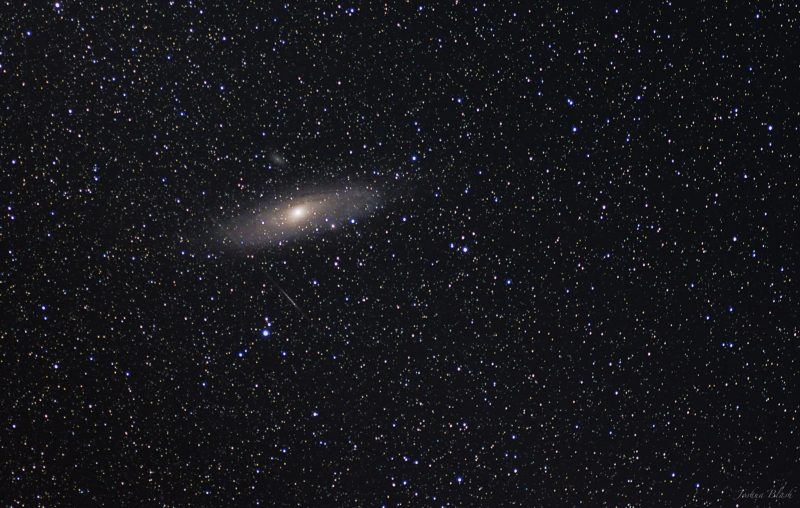
In continuing the stretching forth of the universe, God made the sun, the moon and later on the stars (Genesis 1:16). Astronomers estimate our earth and moon, along with the seven other planets and other objects going around the sun, with their attendant moons, are sweeping through our Milky Way Galaxy at 500,000 m.p.h. Our Galaxy is composed of over 100 billion stars, with over 100 billion galaxies populating our universe. If you were to take a spaceship and travel at an average speed of 17,000 m.p.h, it would take you several days to reach our moon and nearly a year to reach our sun. To get to Saturn at the same rate of speed (like the Cassini Space probe above) would take you over five years!
To measure the distances in space, the ruler used by astronomers is what is called "the light year", which measures the distance traveled by light in one year. Any signals sent by spacecraft such as Cassini travel at the speed of light, and take on average 80 minutes to reach receiving stations here on earth. To get to the nearest star traveling at the speed of light (670 million m.p.h) would take you four years (or over 100,000 years in the space shuttle!) However as you travel deeper into space, even the light year (some 6 trillion miles long) begins to lose significance, with our Milky Way Galaxy alone being 100,000 Light Years across, and our visible universe being composed of an estimated 100 billion such galaxies of smaller or greater size! As you study each of these "heavenly realms", each one gets larger and more different from common, everyday experience.
C. The Third Heaven - God's Throneroom
Clearly we don't have any photographs of what the Bible terms "the third heaven" in 2 Corinthians 12:2. No other book in the world but the Bible gives us the necessary, sufficient and accurate description of this third realm. As we travel through Genesis, we see another 30 or so mentions of the word "heaven" with most references to either the first heaven (sky) or second heaven (universe).
In Genesis 28:12 we read: "And he dreamed, and behold, a ladder was set up on the earth, and the top of it reached to the heavens. And behold, angels of God ascended and descended upon it." Though scripture up to this point indirectly alludes to the existence of a distinct realm in which God occupies as Sovereign and Lord over His creation (Genesis 2:1-3), as well as the existence of angels, yet this verse shows the activity of the third heaven touching down here on earth.
According to John 1:51, what Jacob saw was none other than an Old Testament appearance of Jesus Christ. It is in 2 Corinthians 12 that the Apostle Paul refers to this realm as the "third heaven" (hence the reason for terming the first two realms as "1st heaven" and "2nd heaven"). From what we see in the Bible's descriptions of the third heaven, that realm of God's abode must be far larger and more grander than the second heaven - the universe. It is to the third heaven that believers go who die in the Lord. 2 Peter 1:10-11 includes this phrase: "for in this way the entrance into the eternal kingdom of our Lord and Savior Jesus Christ will be abundantly supplied to you."
What John will be describing in Revelation 4-5 confirms this notion - being that from the present third heaven, the Father and the Son are and will be orchestrating all of the events and coming judgments that will impact both the second heavens and the world living under the first heaven in Revelation 6-19. More could be said but for now we must move on to the the fourth major type of realm, a realm that is referred to as "the New Heavens".
D. The "Fourth" place called Heaven - The New Heavens
Admittedly the the "New Heavens and New Earth" described in many Old and New Testament passages is a realm that is in one sense future to us, and yet in another sense is impacting our current lives as Christians. Its main time of manifestation will occur when Christ has ruled and reigned for 1,000 years and sets up the Great White Throne Judgment.
Bible Scholar George Eldon Ladd summarizes how the reality of the "New Heavens and New Earth" is partially impacting us presently as a result of Jesus' resurrection from the dead in the following chart:2
 Many Bible teachers call this Biblical pattern an "already/not yet" experience, meaning that we are "already" experiencing a foretaste of the age to come, even though it is clearly "not yet" here. We can also say that when we as Christians experienced the New Birth, that greatest of all realities described at the end of the Bible is being "previewed" in us, since the Bible describes the Christian as a "new creation in Christ" (2 Corinthians 5:17).
The Bible tells us in Revelation 20-22 that following the Great White Throne Judgment, a New Heaven and a New Earth will be established by God. Some have suggested that God will do away with this present order completely and re-create a whole new earth and a whole new Heaven. However it appears, from other scriptures such as Romans 8:21-25 and 2 Corinthians 5:17, that God will somehow (in a way we don't completely comprehend) transform our current world and perhaps the third Heaven into that incredible reality spoken of at the end of Revelation. More could be said on these two thoughts, but I want to hasten onto the main point of Revelation 21.
God's goal in the Bible: for heaven and earth to be together
The point of Revelation 21 is that the New Heavens and the New Earth are no longer separated from one another. The Glory of God will indeed flood the New earth and Heaven will touch down upon our planet. All those who by grace through faith have believed on the Lord Jesus Christ will be in that august company of the redeemed as ordained by the Father and promised by the Son (John 14:1-3; Jude 24-25). Just as the second heaven exceeds the first, and the third heaven far exceeds the second, this "New Heaven" will exceed them all. The "New Heavens and New Earth" will be saturated with God's unending glory (Habakkuk 2:14; Revelation 21-22). Furthermore, the "New Heavens" will saturate the "New Earth" with God's unending glory, literally fulfilling His ultimate will of "the earth being filled with His glory". (Habakkuk 2:14)
Endnotes:
1. John MacArthur. "The Truth About Heaven, Angels and Eternal life".
2. George Eldon Ladd. "The Gospel of the Kingdom."


