Translate

Monday, February 20, 2017

How God Works In The Lives Of The Broken-Hearted And Crushed In Spirit

Image result for broken pottery
Psalm 34:18 "The Lord is near to the brokenhearted and saves those who are crushed in spirit."

Introduction:

Today's post is going to explore what is meant by the Biblical phrase: "crushed in spirit". The above opening verse derives from David's words describing his personal walk with God during a crisis moment in his life. In Hebrew poetry, it is common for the author to express the same idea in two or more lines with different turns of expression. In Psalm 34:18, we find out that the Lord is near those who are brokenhearted in the first line, with the second line expressing much the same idea except with the phrase: "crushed in spirit". This idea of God being near the brokenhearted or crushed in spirit reveals a couple of thoughts:

1. First, since God draws near to those in such a condition of being "brokenhearted" or "crushed in spirit", the implication is that God permitted such a state to transpire. God's permissive will is revealed in scripture to indicate certain courses of action that He tolerates or wills to allow to work out His ultimate purposes (see Genesis 50:20; Romans 8:28). 

2. The second implication of the phrases "brokenhearted" or "crushed in spirit" deals with the fact that God's people are never promised immunity from danger, trial or sorrow. This point can be extremely difficult for Christians to grasp in our indulgent Western society that is geared to escape pain and promote personal peace and affluency. If we grasp what the Psalmist is saying in this text, it can revolutionize how we view difficult times with respect to our walk with God.

With these initial observations noted, lets explore what the Biblical text is talking about when it refers to being "crushed in spirit" and how God works in such a frame of mind and heart. 

Understanding what the Bible means by the human "spirit" or "heart"

What exactly is the spirit of a man? It is the contention of this writer that human beings are trichotomous or a composite of three general components: body, soul, spirit. The "spirit" and "soul" comprise man's immaterial or non-physical nature and the body of course represents the physical aspect of man's existence. Genesis 1:26-27 and Genesis 2:7 depict God revealing the creation of man from two respective angles: a spiritual being in a physical body who was to walk with God and a soul clothed in a body who was to take dominion over his surroundings and be self-aware. 

In short, here is what we learn of mankind as originally created:

1. Originally, God made Adam's body perfect, capable of interacting and working the physical environment. Being that the body of man was made from the earth, God endued the body with five senses and the capability to be aware of the world. The forming of Eve from Adam's side included these exact same properties. 

2. Humanity's soul is the life of the man.  The soul was breathed from the Spirit of God, resulting in physical life in the man.  Man was uniquely created with the ability to think, feel, choose and have convictions or a conscience. The soul is the man himself. We could say, with older Bible teachers of the past, that the soul is simply man's self awareness and the body is his center of world awareness.

3. Humanity's spirit was to be the aspect of man wherein he communed with God.  As a creature made in the image of God, the idea of "image" meant that man alone could communicate and be communicated to by God in his spirit. Even ancient Greek Philosophers like Aristotle recognized humanity's distinctiveness from the animal kingdom, assigning the term "rational animal" to describe human beings as possessing the ability to reason, express self-reflection and discern meaning, value and purpose. The idea of "animal" in Aristotle's definition refers to a "living being" (Latin term "animus"). Hence, we are living beings, with a body and the additional quality of rationality. 

When we approach God's Word, the Bible, we find terms like "spirit" and "heart" used interchangeably. It is only when we see man described in relationship to God that we find either term, "heart" or "spirit". Proverbs 20:27 gives what is perhaps the clearest definition of the human "spirit" - "The spirit of man is the lamp of the Lord, Searching all the innermost parts of his being." 

Hence, the "spirit" or "heart" refer to the innermost being of a person. In non-Christian people, the human spirit is dark and unoccupied by the Holy Spirit. At salvation, the Holy Spirit comes to occupy the human spirit of an individual. 

God allows our spirit to be crushed and our hearts broken to put us back together and to heal the wounds

A quick study of this idea of a "crushed spirit" or broken heart" can yield both surprises and hope. The surprise of course comes in finding out that reaching a state of desperation in our inner-most being is how God progresses His people along in their moral and spiritual development. Psalm 51:19 states - "The sacrifices of God are a broken spirit; A broken and a contrite heart, O God, You will not despise." The term "broken spirit" or "crushed spirit" literally gives the idea of being crushed to dust, dryness and shattering. For the believer going through this experience, it can be devastating, at first. We in American Christianity think it is our heritage to be free from difficulties. When trouble comes, we begin to wonder whether God still loves us or not. We can be doing exactly what He tells us in His Word, be in the center of his will so-to-speak, and yet, find the dryness, crushing weight of circumstances crack us on the inside. In those moments, we ask God: "what is going on?" 

I know in my life, those moments seem to occur with greater severity and great frequency. The older Christian writers would call such seasons "the dark night of the soul". God permits such seasons, and even allows us to reach the point that we not only approach the cliffs overlooking doom and despair, but allows us to plunge over that edge. It is in that apparent free-fall that we find an extraordinary supernatural side of God's grace that otherwise would had been obscured from us in the good-times. 

The Psalmist writes these words in Psalm 147:3 "He heals the brokenhearted and binds up their wounds." God wills to permit what He hates in order to accomplish the greater good He intends. Our wounding means the experience of His healing. Our crushing results in Him putting us back together. Our broken heart results in being positioned for the potter to shape and reform it to be better than ever. Dr. Charles Stanley in his recent autobiography: "Courageous Faith - My Story From A Life Of Obedience", notes the following on page 192:

"Instead of seeing the battles against you as a curse, you understand that your loving heavenly Father has planned a special blessing for you through them - that the difficulties you face are ultimately opportunities that will bring you good and will give Him glory. Likewise, knowing that He has permitted the troubles in your life for your benefit makes it easier to forgive those who hurt you and helps you to endure as the battle rages."

Thus we can say that God works in the lives of those who are brokenhearted or crushed in spirit to bring about the wonderful experience of His transforming, healing power. Damaged emotions, past hurts, unseen internal struggles are part of the garden-variety issues that afflict the deepest innermost being of people. Until the deeper work of God is done, those issues will continue to plague us. The Great Physician knows. So, what at first appears to be a mean-spirited action of God towards His people in willing to allow the crushing of the spirit or the brokenness of the heart is actually an extraordinary expression of grace. The point: to have His divine fingerprints all over those shattered pieces so that we can say that we have been handled and healed by the Master. 

Saturday, February 18, 2017

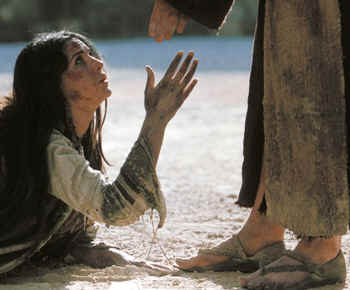
A Sinner Declared A Saint - John 7:53-8:12

Image result for jesus and the woman taken in adultery
John 7:53-8:3 Everyone went to his home. 8:1 But Jesus went to the Mount of Olives. 2 Early in the morning He came again into the temple, and all the people were coming to Him; and He sat down and began to teach them. 3 The scribes and the Pharisees brought a woman caught in adultery, and having set her in the center of the court.

Introduction:

      The account of the woman caught in adultery and Jesus' acquittal of her is perhaps one of the most powerful episodes in John's Gospel. Theologian and pastor Dr. R.C Sproul writes of the significance of this text in his "St. Andrew's Expositional Commentary" on John: 

"Jesus said to her the sweetest words any human being could ever hear from His lips: 'Neither do I condemn you" (v 11b). If you can't relate to those words, then your heart has been hardened, because each one of us comes to God like this woman, guilty, ashamed, naked, and exposed. But Christ clothes us with the cloak of His righteousness, covering our nakedness and shame, and says to us, "Neither do I condemn you." 

      Sproul is referring to that wonderful truth of justification by faith. Today's post will enable you to grasp the central truth of the Gospel: justification by faith, and the life issuing forth from it: sanctification. The beauty of these truths will be explored in the account of Jesus and the adulterous women in John 7:53-8:11. Central to the doctrine of justification is what occurs when a sinner is declared a saint. What takes place when a sinner is declared to be a saint? What changes ought to result from that momentous Divine declaration at saving faith? We will now attempt to answer these questions by exploring this powerful account. Notice the following thoughts...

1. Condemned a sinner by the Law. 7:53-8:9

      The truth of justification by faith alone has to do with the change in the sinner's legal status before Holy God. God's way of dealing with His creatures is two-fold: Law and Gospel. The Law of God is designed to show my need for the Gospel. Mankind is certainly welcomed to try to get to God by way of moral living, law-keeping and ritual. However, the Law of God's design shows that sinful man falls short. The central tenet of God's Law is: "do this and you shall live". None of course are able to meet the stringent demands of perfection. 

      The light of God's grace is necessary to show me the awfulness of my sin and the awesomeness of Jesus Christ. Once I agree with the Law's indictment of my spiritual, moral and relational estrangement, I'm ready to receive the remedy of the Gospel. The Gospel's central tenet is not "do this and live", but instead, "become alive and you shall do." Sadly, sinful man by himself is unwilling to agree. Instead, sinful human beings attempt to take the Law (or something equivalent) and make it their gospel. 

      The Pharisees and Jewish leaders had already concluded they were "right" (i.e righteous) and everyone was wrong. What they miscalculated was the inability of the Law of God to grant the righteousness required for being in relationship with Holy God. We read in Romans 3:20 that "….by the works of the law no flesh will be justified in his sight…”. The Apostle Paul, a former Pharisee himself, writes in Romans 7:7 & 9 (7) "What shall we say then? Is the Law sin? May it never be! On the contrary, I would not have come to know sin except through the Law; for I would not have known about coveting if the Law had not said, “You shall not covet.” 9 "I was once alive apart from the Law; but when the commandment came, sin became alive and I died."

      All the Law of God can do is demand righteousness, not grant it. Although the woman in this episode was clearly guilty, yet her accusers were no better. Only Christ, and Christ alone was perfect. If anyone is ever going to escape the condemnation of God's Law, they need to go the route of Christ. Thus we come to our second thought...  
2. Christ the Judge and Justifier 8:10

      A sinner's journey in becoming a saint in God's sight must first begin by their admission, by His grace, that they are indeed guilty. When we are brought to Christ, we are brought to the One that knows everything about us and Who desires to release us from those very things keeping us from Him - namely our sin, the wrath of God and condemnation. Paul spells this out in Romans 3:25-26 "whom God displayed publicly as a propitiation in His blood through faith. This was to demonstrate His righteousness, because in the forbearance of God He passed over the sins previously committed; 26 for the demonstration, I say, of His righteousness at the present time, so that He would be just and the justifier of the one who has faith in Jesus."

      When Jesus stooped down on the ground and began to write in the dust among those accusers and the woman caught in adultery, what was it He was writing. Many have speculated, but perhaps the best explanation is where many see an allusion to Jeremiah 17:13 "O Lord, the hope of Israel, All who forsake You will be put to shame.
Those who turn away on earth will be written down, because they have forsaken the fountain of living water, even the Lord." Christ is first of all portrayed as the righteous judge. By turning the tables on the legalists, it turns out that everyone deserved to be stoned! The Lawgiver was in their midst! 

       However, Jesus is simultaneously the justifier - that is - He is performing the role normally attributed to the Father as the One who declares the sinner guiltless. By performing this dual role of "Judge and Justifier" in John 7:53-8:11, Jesus is showing Himself equal with the Father in terms of Divine authority as God while of course being the man - Jesus of Nazareth. The great Bible commentator Ellicott notes: 

"Thus God appeared in a double character, at once as just or righteous Himself, and as producing a state of righteousness in the believer. Under the Old Testament God had been revealed as just; but the justice or righteousness of God was not met by any corresponding righteousness on the part of man, and therefore could only issue in condemnation. Under the New Testament the justice of God remained the same, but it was met by a corresponding state of righteousness in the believer a righteousness, however, not inherent, but superinduced by God Himself through the process of justification by faith. In this way the great Messianic condition of righteousness was fulfilled."

      So, when a sinner is declared a saint by God in salvation, we find the agreed upon indictment of the Law of God condemning them, and Christ the Judge and Justifer ever ready to acquit them. By this point in the scene, all of the woman's accusers have left. All that remains are Jesus and herself. We now come to the third main idea....

3. Condemned no more! Justification by faith 8:11

      So did the woman caught in adultery express saving faith in Jesus? We find her response to Jesus' question about her accusers with these words in John 8:10-11a "Straightening up, Jesus said to her, “Woman, where are they? Did no one condemn you?” 11 She said, “No one, Lord.”  Unless this woman's heart had been touched by grace and unless she had freely responded in turn with true saving faith, she would not had called Jesus "Lord" (see 1 Corinthians 12:1-3). Romans 10:8-10 reminds us that none can call Jesus their Lord unless the Spirit has been doing His work through the Words of God. With the adulterous woman's affirmation of Jesus' identity as her Savior and Lord, Jesus states powerfully in John 8:11b "And Jesus said, “I do not condemn you, either. Go. From now on sin no more.”

      The Apostle Paul expresses this powerful result of justification, namely: no condemnation, in his letter to the Romans. Romans 5:1 "Therefore having been justified by faith, we have peace with God." And again in Romans 8:1 "There is now therefore no more condemnation for those who are in Christ Jesus." The woman's position has changed. She is no longer a sinner apart from God, but a sinner, saved by grace, and now declared a saint of God. By position this woman is guiltless. But now we find one final truth in this change of the woman from sinner to saint, namely... 

4. Keep on for God! Sanctification from faith 8:12

      In justification the sinner is declared a saint by position. The righteousness of Jesus Christ is credited to that person. Justification is an instantaneous, legal declaration by God. But now what follows is the progressive, experiential change - sanctification. In the totality of salvation, the sinner is not only saved "from" something but also saved "to" something. Jesus told this woman to go and sin no more. 

      She was to abandon her lifestyle of sin. She was to pursue God in a progressive, ongoing work of sanctification. It didn't mean she would never sin again, since sinless perfection in this life is impossible. Nonetheless, she was now set free from the power sin had over her and she could now begin to truly walk for God. Ephesians 2:10 states: "For we are His workmanship, created in Christ Jesus for good works, which God prepared beforehand so that we would walk in them." 

      In sanctification, the Christian is becoming in experience whom God has already declared them to be by position. The grace of justification is the root, with sanctification being the stem, leaves and flower issuing forth. The practical righteousness ever being worked out by the Christian in cooperation with the Holy Spirit in sanctification is based upon Christ's credited righteousness granted in justification. We read in James 2:26 "For just as the body without the spirit is dead, so also faith without works is dead."

Closing thoughts:

      So truly we have witnesses then the transformation of the adulterous woman from a sinner to a saint. She was no longer an adulterer. Jesus told her to live for God from faith in sanctification, since she had been justified by faith in saving reliance upon Jesus Christ. The Law of God had rightly condemned her actions. By grace she saw her only place of appeal - Jesus Christ - the Judge and justifier. 

Friday, February 17, 2017

P2 - Cultivating A Proper Spiritual Atmosphere


Related image
Psalm 133:1-3 "Behold, how good and how pleasant it is For brothers to dwell together in unity! 2 It is like the precious oil upon the head, Coming down upon the beard, Even Aaron’s beard, Coming down upon the edge of his robes. 3 It is like the dew of Hermon coming down upon the mountains of Zion; For there the Lord commanded the blessing—life forever."

Introduction

In the last post we considered what it takes to cultivate a proper Christian spiritual atmosphere. We noted that a spiritual atmosphere has to do with the climate necessary for heightening awareness of God's movement. We then noted three ingredients required for this atmosphere:

1. Forgiveness
2. Obedience
3. Prayer

Today we will consider three more ingredients and conclude this short blog series. What else is necessary for cultivating a proper spiritual atmosphere in the heart, home and church? 

1. Faith. 2 Corinthians 2:14-16

No less than four times does Paul allude to the proper spiritual atmosphere of which we are expounding in this post (with words like "aroma"). A Christian life and church exercising itself in a proper spiritual atmosphere for Jesus' sake will give-off a certain scent. Psalm 133:1-2 states - "Behold, how good and how pleasant it is
For brothers to dwell together in unity! 2 It is like the precious oil upon the head, Coming down upon the beard, even Aaron’s beard, Coming down upon the edge of his robes." 

Anointing oil in the Old Testament was a special mixture of spices and oil, meant to give off a scent and to symbolize that person's place in the things of God. Ephesians 5:1-2 uses this same "aroma" imagery to capture the walk of faith with God as we aim to be "imitators of God." Certainly, who can forget the woman who anointed Jesus with her feet by sweet oil and her tears in Luke 7:44-50. The aroma released in the house of Simon the Pharisee was a stench to those untouched by grace. Yet, Jesus said of the woman: “your faith has saved you." The proper spiritual atmosphere was resident in the woman's heart due to faith. Notice fifthly...

2. Bible. 2 Corinthians 2:17a

We have seen thus far that in order to have a proper spiritual atmosphere that heightens our awareness of God's movement, we need forgiveness, obedience, prayer and faith. Here we find Paul referring to another ingredient, the sacred scriptures of the Old and New Testament. In 2 Corinthians 2:17a, we read: "For we are not like many, peddling the word of God, but as from sincerity....". Hebrews 4:12 reminds us of the place of scripture in cultivating a proper spiritual atmosphere: "For the word of God is living and active and sharper than any two-edged sword, and piercing as far as the division of soul and spirit, of both joints and marrow, and able to judge the thoughts and intentions of the heart." Colossians 3:16 tells us: "Let the word of Christ richly dwell within you, with all wisdom teaching and admonishing one another with psalms and hymns and spiritual songs, singing with thankfulness in your hearts to God."

It wasn't too long ago that our family had attended a concert put on by an award-winning harpist. The church where this event was held was among the more beautiful sanctuaries I had visited since moving to our area. As I listened to the harp being played, I marveled at the architecture. The large stained-glass windows, the statuary, paintings, grand-organ in the background and sweeping pulpit were all for the purpose of expounding the sacred book of God. We could say that the sanctuary was "richly adorned" for God's Word. Paul's point in the above text is not just to have our interior hearts adorned for scripture, but to have scripture richly adoring or dwelling the heart!

3. God. 2 Corinthians 2:17b

In this final ingredient, we find that this is not just any ingredient. We could say that without God, the other prior ingredients fail. God is God, and there is no other like Him (Isaiah 44:6). Romans 11:36 puts this final point so concisely and eloquently: "For from Him and through Him and to Him are all things. To Him be the glory forever. Amen." We need God for our proper spiritual atmosphere in our hearts, homes and churches, since He is the one for which it is set. Psalm 63:1-3 states: "O God, You are my God; I shall seek You earnestly; My soul thirsts for You, my flesh yearns for You, In a dry and weary land where there is no water. 2 Thus I have seen You in the sanctuary, To see Your power and Your glory. 3 Because Your lovingkindness is better than life, My lips will praise You."

Closing thoughts: 

When I was a boy growing up in rural Pennsylvania, I recall herds of deer roaming the country side of my home area. It would be during the late Autumn, usually after the fall rains and when the little creeks were trickling with water. The deer knew the right atmosphere and places to find the water they needed. They searched it out. What are you and I in search of today? Do we want God? If the answer is yes, then let us be sure the spiritual atmosphere or climate proper for heightened awareness of God's movement is evident in our hearts, homes and churches. Let us exercise ourselves in forgiveness, obedience, prayer, faith, the Bible and God.

Thursday, February 16, 2017

P1 - Cultivating A Proper Spiritual Atmosphere


Image result for candlelight dinner
2 Corinthians 2:14-17 "But thanks be to God, who always leads us in triumph in Christ, and manifests through us the sweet aroma of the knowledge of Him in every place. 15 For we are a fragrance of Christ to God among those who are being saved and among those who are perishing; 16 to the one an aroma from death to death, to the other an aroma from life to life. And who is adequate for these things? 17 For we are not like many, peddling the word of God, but as from sincerity, but as from God, we speak in Christ in the sight of God."

Introduction:
This past week was Valentine's day. Of all the holidays celebrated in a given year, perhaps none emphasize the importance of atmosphere like Valentine's day. Why is it, for instance, that two people in love prefer to eat at a dimly lit restaurant by candlelight rather than a play-place at a fast food chain? Or, why is it that for our family dinner on that day, my wife had candles, balloons and little heart-shaped tins with chocolates for the children to enjoy? One word: "atmosphere". Atmosphere, on a human level, deals not so much with the air we breath as it does in setting a tone, a mood and a context. The effort aims to raise awareness of the person with whom we are spending time. As we are made aware of that person, we come to appreciate them and to enjoy their company by not what they do for us but by who they are. 

When we think of this concept with reference to the spiritual atmosphere of our hearts, home or churches, certain ingredients are necessary. To define what I mean by "spiritual atmosphere" as understood from the Bible, I mean: "The climate suited for heightened awareness of God’s movement." In this post and the next, we will consider six ingredients needed for the right spiritual atmosphere in your heart, home and the church? Our main text will be 2 Corinthians 2:5-17. Let's note them in short order....

1. Forgiveness. 2 Corinthians 2:5-8, 10-11

When Jesus taught His disciples how to pray, He included the importance of forgiveness, as evidenced in Matthew 6:12-13 "And forgive us our debts, as we also have forgiven our debtors. 13 ‘And do not lead us into temptation, but deliver us from evil. [For Yours is the kingdom and the power and the glory forever. Amen.’] Jesus knew that if we are to have a healthy spiritual atmosphere in our heart, from whence we launch our prayers, there must be forgiveness. Or how about in our churches? Consider Ephesians 4:32 “Be kind to one another, tender-hearted, forgiving each other, just as God in Christ also has forgiven you.” I have sat under many preachers who proclaimed God's Word winsomely and powerfully, only to see such messages bounce off the congregation with no effect. Why? Someone had taken up offense, and soon, a portion of the whole was affected. 

The person referenced by Paul here in 2 Corinthians 2 had committed a horrible act of immoral behavior. The church rightly responded, but now the man was openly repenting of what he had done. The people needed to let go, loosen and love. If you and I take up an offense, it means we are preferring bitterness rather than forgiveness. We ought to only take-up one thing: our Bibles. We ought to never take-up offenses, lest we be put down. It is told in Mark 6 that Jesus had journeyed to the town of his childhood (Nazareth), only to receive ridicule and spite. The text tells us in Mark 6:3 that the people "became offended at him". They perceived Jesus had crossed a line and chose to be bitter rather than to get better. The result? In Mark 6:5 we read: "And He could do no miracle there except that He laid His hands on a few sick people and healed them." 

If only we will practice forgiveness and not take up offense in our hearts, our homes or our churches, we will then begin to see God's working. But now notice a second ingredient necessary for a proper spiritual atmosphere...

2. Obedience.      2 Corinthians 2:9

Paul states in 2 Corinthians 2:9 that he wrote what he did to see whether or not his readers would respond in obedience. Unless you and I are ready to obey from the onset, at some point we will switch horses mid-stream so-to-speak. Obedience flows from faith. Among the many blessings that attend a lifestyle of obedience to God, we will name two.

First, the power of the Spirit is experienced when we obey God. Acts 5:32 states: “ And we are witnesses of these things; and so is the Holy Spirit, whom God has given to those who obey Him.” To have the Spirit's power issuing forth into our thoughts and actions marks the presence of a proper spiritual atmosphere. Note a second blessing, as spelled out in Galatians 6:9 "Let us not lose heart in doing good, for in due time we will reap if we do not grow weary." Obedience to God can give us the opportunity to see the fruits of certain labors. Such verses remind us that obedience to God is worth it! So, we need forgiveness and obedience for a proper spiritual atmosphere. Let's notice a third ingredient... 

3. Prayer. 2 Corinthians 2:12-13

Famed evangelist A.W Tozer once noted that before we get with it, we must first get with Him. In 2 Corinthians 2:12-13, we find Paul referring back to the beginning his second missionary journey in Acts 16:8, 14-16. It was in this second missionary tour to Macedonia that Paul ended up preaching in Corinth for 18 months, with the church planted by his missionary associates Priscilla and Aquilla. I'm certain as Paul alluded to those early days, the church at Corinth, to which he wrote, would had recollected. 

During those days, Paul was ever in prayer. We know Paul was in prayer due to the powerful vision he had to go to Macedonia. Paul and his companions were trying to pursue ministry into one area, and God directed them to pursue Macedonia instead in Acts 16:8-9. The result? The first European convert, Lydia, has her heart opened by the Spirit to freely trust in Jesus Christ in Acts 16:14. Then later on, Paul sets free a slave girl in bondage to a spirit of divination. Paul and his ministry partners went to the place of prayer in these episodes. Much prayer marked the early Christians, and sadly, little prayer often marks our sermons, services and activities. 

A dear, dear friend of mine has taught me this little phrase: "more prayer, much prayer". Prayer, we could say, composes the oxygen of a spiritual atmosphere. Without prayer, the lungs of faith cannot breath. 

More next time....  

Tuesday, February 14, 2017

Reflections On Psalm 133 And The Importance Of Christian Fellowship In The Local Church

Image result for Psalm 133:1
Psalm 133:1-3 Behold, how good and how pleasant it is for brothers to dwell together in unity! 2 It is like the precious oil upon the head, coming down upon the beard, even Aaron’s beard, coming down upon the edge of his robes. 3 It is like the dew of Hermon
Coming down upon the mountains of Zion; For there the Lord commanded the blessing—life forever.

Introduction:

Often the poetic books in the Old Testament paint with emotions and poetry God's dealings with His people in their history. Whenever we enter into the short Psalm above, the author is reflecting upon the historical event of the beginnings of the Levitical Priesthood and the anointing of it's first High Priest - Aaron (see Leviticus 8-9). Why this event? It was a one-of-a-kind event. It was accompanied by sights and sound. The aroma of anointing oil being poured over Aaron and his sons signaled to the nation of Israel that God's appointed mediators between He and they were now in place. To certify Aaron and his son's as representatives of the people to God - God consumed the sacrifice on that first altar by the fire of His presence. 

Such a commemorative event is used to highlight the importance of uninterrupted fellowship among God's people. In the sight of God, when God's people are enjoying each other's company in His presence, His presence in turn will become more known to their awareness. God of course is everywhere, this we know. However, the senses of even a Christian person can be made dull by a combination of this world, the frailties of the flesh and the deceptions of Satan. To be part of a lively, Christian fellowship like the local church kindles the flame for God.

The manner of the description of Aaron's anointing on that inaugural day of his ministry is placed in slow motion. We are directed to behold every detail, every drop of that sweet anointing oil. Why the attention to detail? To slow down the reader to pause, to meditate, to pray.  

Aaron and his sons were called to not only serve God and the people, but to tend to the fire of the altar, lit by God. That fire would feed the heat source necessary to make smoke in what was called "the altar of incense", located in the first room of the tabernacle. The priest would make his way into that place to light the lamps of the golden lamp stand, to eat of the food off the table of shew bread and to seek God in prayer at the altar of incense. 

As the Christian is called to Jesus Christ, the Eternal High Priest, such a calling includes the identity of being a spiritual priest in the things of God (1 Peter 2:9-12). Psalm 133:3 transitions from Israel's history to Israel's geography. The mountain chain extending from Mount Hermon (pictured below) to the North to Mount Zion to the South occupies the writer's thoughts.

Image result for Mount Hermon

Mount Hermon is of special interest, since upon that mount the Lord Jesus Christ transfigured Himself before Peter, James and John (see Matthew 17:1-13; Mark 9:2-8; Luke 9:28-36).  Just as God designed the breezes of that high range to influence the weather patterns of Jerusalem to bring rain in due season, Jesus' identity as God in human flesh, revealed on that Mountain, would influence and shape what would occur in Jerusalem. His death and resurrection was but proof of all He revealed atop of that mountain.

When God's people are dwelling together in unity, a wonderful atmosphere develops that brings increased awareness of God's power and presence. The Spirit's ministry in the Word, prayer and evangelism is reinforced. The scent of Christ's presence moves and shapes God's people and soon, all around note a difference between the church and the world (see 2 Corinthians 2:14-18). 

Monday, February 13, 2017

Gospel-Shaped Giving - Proverbs 3:5-10 and other scriptures

Image result for dollar bills
Proverbs 3:5-10 Trust in the Lord with all your heart and do not lean on your own understanding. 6 In all your ways acknowledge Him, And He will make your paths straight. 7 Do not be wise in your own eyes; Fear the Lord and turn away from evil. 8 It will be healing to your body And refreshment to your bones. 9 Honor the Lord from your wealth and from the first of all your produce; 10 So your barns will be filled with plenty And your vats will overflow with new wine.

Introduction: 


Years ago when I served in my very first official ministry capacity as an assistant pastor, a particular family in the church had invited everyone to their farm for a celebration. It was during the time of corn harvest, and this particular family was known for their generosity. Every year people from all over would come to get free bags of corn offered by the family. The family believed in the Biblical teaching on giving of one's "first-fruits". Our family had the opportunity to partake of the corn they offered - a blessing we never forgot. When a heart is committed to Biblical giving and stewardship, people get blessed and God is glorified.
Message: Gospel-shaped Giving

Today's post is going to explore the Bible's teaching on tithing and stewardship. Stewardship refers to how God takes you and I out of ownership and places us into the management of His resources. When we say resources - were not only talking about finances. Resources such as time, talents and our attention could be included. Nonetheless, one's finances tends to be the most tangible means of grasping this vital concept of what we will call: "Gospel shaped giving."
To summarize, every resource God gives is informed by and directed toward the Gospel. By the end of today’s post, you will know what you need to do in evaluating how much you trust God in the realm of Gospel-shaped giving. Gospel-shaped giving involves….

God’s Prescribed Amount = 10%. Prov 3:9

It doesn't take long getting into the Bible to find out what God has to say about tithing and stewardship. Three particular men occupy what we could call: "The Bible's first tithers", namely Abel, Abraham and Jacob. First, Abel in
Genesis 4:4 "Abel, on his part also brought of the firstlings of his flock and of their fat portions. And the Lord had regard for Abel and for his offering." The term "firstlings" or "first-fruits" tells me the “when” of giving, upfront, the very best. 

The second man is Abraham. Romans 4 and Galatians 3-4 describe Abraham as "the father of faith" and "an example of faith". Abraham is referred to as the example to Christian today due to the walk with God He had prior to the revelation of God's law. In Genesis 14:19-20 we read the following encounter Abraham (Abram) had with a mysterious figure, Melchizedek: "He blessed him and said, “Blessed be Abram of God Most High, Possessor of heaven and earth; 20 And blessed be God Most High, Who has delivered your enemies into your hand. He gave him a tenth of all." Per New Testament scriptures such as Hebrews 7:5-10, Melchizedek is none other than an Old Testament appearance of Jesus. Hence, Abram was giving the tithe to Jesus!

The third man whom we could consider a "first-time tither" is Abraham's grandson - Jacob. Jacob's conversion and subsequent actions are found in Genesis 28:22 "This stone, which I have set up as a pillar, will be God’s house, and of all that You give me I will surely give a tenth to You.” Where did Jacob learn about tithing? Undoubtedly his grandfather. This reminds us of a very important point: it is up to parents and grandparents to model and teach Biblical stewardship to the children. 

The whole point of bringing forth Abel, Abram and Jacob is to show how God's prescribed amount, from the beginning, is 10%. Tithing is the ground-floor from whence one begins to give to God. I have often remarked how when we tithe, we begin to hear God on the matter of finances. The principle of first-fruits reminds us of the "when" of giving, meaning we give off the top, from the "gross" rather than the "net". After all, was it not God who supplied the gross? So God's prescribed pattern is 10%. Now lets hasten to the second point of Gospel-shaped giving...

Inviting God’s Blessing. Prov 3:10
God's blessing deals with His power and presence in our lives. Undoubtedly, scripture abounds with prime examples of how God's blessing is connected to tithing and stewardship: 
Malachi 3:10 "Bring the whole tithe into the storehouse, so that there may be food in My house, and test Me now in this,” says the Lord of hosts, “if I will not open for you the windows of heaven and pour out for you a blessing until it overflows." Luke 6:38 "Give, and it will be given to you. They will pour into your lap a good measure—pressed down, shaken together, and running over. For by your standard of measure it will be measured to you in return.” 2 Corinthians 9:6-8 "Now this I say, he who sows sparingly will also reap sparingly, and he who sows bountifully will also reap bountifully. 7 Each one must do just as he has purposed in his heart, not grudgingly or under compulsion, for God loves a cheerful giver. 8 And God is able to make all grace abound to you, so that always having all sufficiency in everything, you may have an abundance for every good deed." 

So much could be said about these verses. Nevertheless, one thing is for sure, God wants to bless His people! He wants them to have more of His power and presence in their lives, their finances, in everything! When we tithe, we are opening a window to allow the fresh breezes of God's power and presence, by His Spirit, to breath upon our minds, our hearts and the material possessions. We find out how much God means to us and how much He is interested in the "little things". We find how powerful He is and how much He truly loves us. Finally, we find out that everything we have is not our, but what He has given us.

Validated Biblical Patterns. Context of Pr. 3:1-10

The Baptist Faith & Message 2000 notes: "According to the Scriptures, Christians should contribute of their means cheerfully, regularly, systematically, proportionately, and liberally for the advancement of the Redeemer's cause on earth." In studying the roughly 100 scriptures on stewardship in Bible, we find the following Biblical validated patterns…

A. First, tithing was instituted pre-law as the ground-level for stewardship, hence it is a standard that was not abolished despite the doing way of the ceremonial aspects of the Mosaic Law.

B. Second, the New Testament never one time shows tithing as being either prohibited, replaced or removed from the Christian's responsibility of stewardship. Hebrews 7:5-10, the last mention of tithing, is not abolished. Hence, Christians ought to give.

So, Gospel-shaped giving entails God's prescribed amount (10%), invites His blessing and is validated Biblically. But the whole point of today's post is to remind us of the goal of giving to God's work - namely to...

Exalting Jesus Christ. Prov 3:9 “honor the Lord”
Gospel-shaped giving is gospel-shaped when it exalts Jesus Christ. The terminology of stewardship "i.e first-fruits") is used to describe Christ Himself. Note for example 1 Corinthians 15:20-23 But now Christ has been raised from the dead, the first fruits of those who are asleep. 21 For since by a man came death, by a man also came the resurrection of the dead. 22 For as in Adam all die, so also in Christ all will be made alive. 23 But each in his own order: Christ the first fruits, after that those who are Christ’s at His coming
." 

In terms of salvation, believers represent  and are called the “first-fruits” or fore-taste of better things to come. 1 Corinthians 16:15 states - "Now I urge you, brethren (you know the household of Stephanas, that they were the first fruits of Achaia, and that they have devoted themselves for ministry to the saints)". Or again, James 1:18 "In the exercise of His will He brought us forth by the word of truth, so that we would be a kind of first fruits among His creatures." 

What makes giving to God's work "Gospel-shaped" is how it points us to Christ and goes towards supporting the work of God towards evangelization. God has ordained at least four areas which He promises to bless: preaching, praises, missions and prayer. Those four areas are used greatly by God. Now there is a fifth area God has promised to bless and which He uses to support the first four: tithing and stewardship. All is for the sake of making Christ known so that people can know Christ. 

In closing out this post, I point the reader to a great prayer that enables us to know what to pray as we consider Gospel-shaped giving. We read the following in Proverbs 30:7-9 "Two things I asked of You, Do not refuse me before I die: 8 Keep deception and lies far from me, Give me neither poverty nor riches; Feed me with the food that is my portion, 9 That I not be full and deny You and say, “Who is the Lord?” Or that I not be in want and steal, And profane the name of my God." As we've seen today, Gospel-shaped giving entails...

1. God's ordained amount of 10%
2. Inviting of God's blessing
3. Validation in the Bible
4. Exaltation of Jesus

Saturday, February 11, 2017

Reflections on Jesus Christ As "The Only-Begotten Son"

Image result for the only begotten son of god

Introduction:


The opening verse in today's post is perhaps one of the most familiar and beloved passages in the Bible. Jesus Christ describes Himself in the third person. In John's rendering of Jesus' statement, we find the remarkable title for Jesus - the "only-begotten Son". Most modern translations apart from the King James and the New King James rendering above translate this Greek word as "one-and-only Son". Both are equally acceptable. However, the older rendering of "begotten" has a rich and long history in the the history of theological reflection. In today's post we are going to look briefly at this name of Jesus as "the only-begotten". 

Thought much can be said pertaining to the meaning of this designation for Jesus, we will point out three main thoughts concerning the title or name "only-begotten". In doing this, we will explore the meanings and application of this name in better understanding the Person and work of Jesus Christ.

So, what is the significance of Jesus Christ being the Only-begotten Son of God?

1. Eternality as God. 

To say that the Son possesses "eternality" simply means He is eternal. Whatever properties one assigns to God (i.e omniscience, omnipotence, omnipresence, omnibenevolence, self-existence, wisdom and so forth) can be assigned to the Person of the Son (with the same thing being said of the other two-persons of the Father and the Holy Spirit). Psalm 2:7 gives us a glimpse into the eternal pre-existence of the Son, wherein we read: "I will declare the decree: The Lord has said to Me,
‘You are My Son, Today I have begotten You". 

David's use of this term "begotten" is expounded upon in Hebrews 1:5-8, which states concerning Christ's eternality: For to which of the angels did He ever say: “You are My Son, Today I have begotten You”? And again: “I will be to Him a Father, And He shall be to Me a Son”? 6 But when He again brings the firstborn into the world, He says: “Let all the angels of God worship Him.” 7 And of the angels He says: “Who makes His angels spirits And His ministers a flame of fire.” 8 But to the Son He says: “Your throne, O God, is forever and ever; A scepter of righteousness is the scepter of Your kingdom" (see also John 1:1). 

The eternality of the Son is a fundamental truth in our understanding of Jesus Christ. Undoubtedly to say that He is the "only-begotten" Son means that He is eternal, but notice secondly...

2. Equality with the Father. 

In the Apostle John's opening prologue or introduction to His Gospel, we find Jesus described in His pre-existence as "The Word". In John 1:2-3 we find the following description of the Son who is the Word: "He was in the beginning with God. 3 All things were made through Him, and without Him nothing was made that was made." As John continues on with this masterful introduction to Jesus in his Gospel, we find the same thought of the Son's co-equality with the Father expressed in the final verse of the prologue of John 1:1-18. It is in John 1:18 that we find our term "begotten" used: "No one has seen God at any time. The only begotten Son, who is in the bosom of the Father, He has declared Him."

The early Christians saw in this Biblical method of describing Jesus the development of not only His eternality, but also His co-equality with the Father. In meditating on the Son as having been "begotten" by the Father from all eternity, the early church fathers saw in the Bible a way to distinguish the Father and the Son. 

Theologians sometime refer to the Son's relationship to the Father as "filiation" and the Spirit's relationship to the Father as "spiration", carefully noting how these two distinct relationships express the One Divine nature or essence shared by all three-persons. The Nicene Creed for example, recited by Christians the world-over, has the following to say concerning the Father and the Son:


"We believe in one God,
      the Father almighty,
      maker of heaven and earth,
      of all things visible and invisible.
And in one Lord Jesus Christ,
      the only Son of God,
      begotten from the Father before all ages,
           God from God,
           Light from Light,
           true God from true God,
      begotten, not made;
      of the same essence as the Father.
      Through him all things were made."

As one studies further into the theological language used to describe Jesus the Son, the term "begotten" would come to distinguish Him in His co-equality yet distinction from the Father concerning His Deity, whilst the term "birth" would describe Jesus in terms of His humanity derived from the virgin Mary. 


To "beget" someone refers to the begetter and begotten sharing the same properties and being in the same class, without particular focus so much on the beginning of the life of the one begotten. When we consider birth on the other hand, the beginning of one's life is front-loaded into the very definition of what it means to be "birthed". Hence, Jesus was "begotten" touching His Deity - which is to say - He is uncreated, just like the Father. 

Another historic Christian creed, the Chalcedonian Creed of 451 A.D, states the following about the Son in the midst of its description of Him:

"....consubstantial [co-essential] with the Father according to the Godhead, and consubstantial with us according to the Manhood; in all things like unto us, without sin; begotten before all ages of the Father according to the Godhead, and in these latter days, for us and for our salvation, born of the Virgin Mary, the Mother of God, according to the Manhood; one and the same Christ, Son, Lord, only begotten, to be acknowledged in two natures, inconfusedly, unchangeably, indivisibly, inseparably...".

Walter Elwell, editor of the "Baker Encyclopedia of the Bible", includes the following article that comments on the significance of "only-begotten" as referring to the Son's equality with the Father:

"This “only begottenness” doctrine means that Jesus is from all eternity the Son of God. He is preexistent (3:17; 11:27; 1 Jn 3:8; 4:9–14). Jesus and the Father even share the same name: “your name-the name you gave me” (Jn 17:11), for God had given his own name Yahweh to his Son when he required him to be named Jesus, meaning Yahweh saves."

So we've seen thus far that Jesus Christ as the "only-begotten" Son is with reference to His eternality and equality with the Father. However, there is a third important distinctive of this title...

3. Experiencing true humanity for your sake. 

When Jesus was referring to Himself in the third Person in John 3:16, He was speaking of Himself as the "Incarnate" only-begotten Son. The first two-points of this post have emphasized how the Son is "the only-begotten" as He was from all eternity before His days in the flesh. However, when the Son came to be in the flesh, did He cease being "the only-begotten"? Clearly not! John 1:12-14 expressly says: "But as many as received Him, to them He gave the right to become children of God, to those who believe in His name: 13 who were born, not of blood, nor of the will of the flesh, nor of the will of man, but of God. 14 And the Word became flesh and dwelt among us, and we beheld His glory, the glory as of the only begotten of the Father, full of grace and truth."

Jesus of Nazareth the man was no less the Only Begotten in His Person than He was as the Eternal Word in His Person before the flesh. The incarnation of Jesus Christ did not diminish nor subtract His Deity. Instead, the Son added unto His "Person" the experience of what it means to be a true, genuine human being without sin. The center of Jesus' identity lies in His person-hood, with His two-natures each expressing that Person hood in their unique ways. The Apostle Peter in Acts 13:33 notes: "God has fulfilled this for us their children, in that He has raised up Jesus. As it is also written in the second Psalm: ‘You are My Son,
Today I have begotten You."

So why did the eternal, only-begotten Son become man? To answer this directly, it was for your sake and my sake. 1 John 4:9 has the following to say concerning how the "only-begotten" Son as man was for our sake: "In this the love of God was manifested toward us, that God has sent His only begotten Son into the world, that we might live through Him."

Closing thoughts:

Today we have considered three significant meanings about the title attributed to the Son in both Old and New Testaments: "only-begotten"...

1. The eternality of the Son
2. The equality of the Son to the Father
3. Experiencing humanity for your sake

To think of all that Jesus did and is ought to shape our thinking and sculpt our hearts. We cannot exhaust Him. Such reflections upon the names of Jesus ought to cause us to bow our faces to the ground and worship Him!