 Ephesians 1:18-20 "I pray that the eyes of your heart may be enlightened, so that you will know what is the hope of His calling, what are the riches of the glory of His inheritance in the saints, 19 and what is the surpassing greatness of His power toward us who believe. These are in accordance with the working of the strength of His might 20 which He brought about in Christ, when He raised Him from the dead and seated Him at His right hand in the heavenly places."
Romans 8:1 "Therefore there is now no condemnation for those who are in Christ Jesus."
Introduction:
Romans 8 is a remarkable chapter in the Bible. In Romans 8 we are given an exposition of the wondrous inheritance that God has for believers in Jesus Christ. The spiritual inheritance is of such a nature that its dividends are paid out by installments of spiritual blessings in this life. In Christ Jesus, the believer experiences an "already-not-yet" spiritual inheritance, with a foretaste in this present age and with full reception in the age-to-come. I included Ephesians 1:18-20 in the opening passages to show the reader how much this inheritance requires the Holy Spirit's ministry of stirring up the spiritual senses and affections to see the significance of this truth. Today's post is going to consider the beginnings of Paul's exposition on the Christian's new inheritance in Jesus Christ in Romans 8:1-11.
How can we tell that Paul is laying out the totality of the believer's inheritance in Christ Jesus in Romans 8? The following verses reveal to us this central theme of the believer's rich inheritance in Jesus Christ.
1. The Christian's New Inheritance Entails A New Position - Romans 8:1-4
First, we see in Romans 8:4 that "the requirement of the law" might be fulfilled in us". This statement takes us back to the wonderful doctrine of justification by faith stated by Paul in Romans 5:1 - "Therefore having been justified by faith, we have peace with God through our Lord Jesus Christ". Christ in the Christian supplies the credited righteousness demanded by the Law of God. Christ the Law-giver came to earth to be the law-doer for us who believe. By His active obedience, Christ fulfilled every jot and tittle of the law. By being the perfect Adam, Christ took care of completing the covenant of works broken by the first Adam (see Romans 5:11-21; 2 Cor 5:21). As the Law-giver came to be the Law-keeper, Christ then went to the cross to be treated as the Law-breaker, taking upon Himself the curse of the Law (Galatians 3:10-13).
Romans 8:1-4 lays out for us the fact that in Christ, we have a "new-position". The James-Fausset-Brown Commentary notes about Romans 8:
"But this is no mere legal arrangement: it is a union in life; believers, through the indwelling of Christ’s Spirit in them, having one life with Him, as truly as the head and the members of the same body have one life."
The highest-state that original Adam had prior to the fall was being in a state of "no-condemnation". When Adam fell from his "original-state-of-righteousness", he experienced, in the words of Milton: "Paradise lost". In God's redemptive plan of salvation in Christ, the goal was not only to restore what had been lost in Adam - but to exceed such. In the New Adam - Jesus Christ - believers begin in a new position that at its bare minimum represents in its beginnings the highest point of the original Adam. The inheritance in Christ is going to be shown by Paul to be far greater than what Adam originally had.
2. The Believer's New Inheritance Entails A New Guest - The Holy Spirit - Romans 8:5-11
So in Romans 8:1-4, one could say that in Christ, we have a new position. We then come to the second key verse of Romans 8 that points to this theme of "the believer's inheritance in Jesus Christ": Romans 8:9-11. In Romans 8:9-11 we read - "However, you are not in the flesh but in the Spirit, if indeed the Spirit of God dwells in you. But if anyone does not have the Spirit of Christ, he does not belong to Him. 10 If Christ is in you, though the body is dead because of sin, yet the spirit is alive because of righteousness. 11 But if the Spirit of Him who raised Jesus from the dead dwells in you, He who raised Christ Jesus from the dead will also give life to your mortal bodies through His Spirit who dwells in you."
We know from this second text in Romans 8 that the Christian is already, by position, ahead of original Adam by virtue of the fact that God indwells the believer by the Person of the Holy Spirit. God spoke "to Adam" and gave him commands in Genesis 2. For the Christian, God in the Person of the Holy Spirit indwells the Christian and empowers Him to live out the commands of His word (1 Corinthians 2:10-13; 3:6; 6:19-20; Galatians 5:16; 25). These verses tell us that in addition to the "new" position we acquire in Christ at saving faith, we immediately receive the "new" Guest - the Holy Spirit. "Warren Weirsbe in his commentary on Romans 8 observes:
"Every believer is a child of God by birth and an heir of God through adoption. In fact, we are joint-heirs with Christ, so that He cannot receive His inheritance in glory until we are there to share it with Him. Thank God, the believer has no obligation to the flesh, to feed it, pamper it, obey it. Instead, we must “put to death” (mortify) the deeds of the flesh by the power of the Spirit (v. 13, see Col. 3:9ff) and allow the Spirit to direct our daily lives."
Closing Thoughts:
We know that the inheritance given to the saints is none other than God Himself. Ephesians 1:13-14 "In Him, you also, after listening to the message of truth, the gospel of your salvation—having also believed, you were sealed in Him with the Holy Spirit of promise, 14 who is given as a pledge of our inheritance, with a view to the redemption of God’s own possession, to the praise of His glory." The resurrection power of the Spirit begins in the human spirit of the believer and will find its full-culmination in the resurrection of the body at Christ's return. Christians experience the foretaste of the world-to-come by the Spirit as He presses us onward to what will be the full-reception of our spiritual blessings in the world to come. The age-to-come had broken into this present age by the coming of the Lord Jesus Christ.
 Romans 7:14 "For we know that the Law is spiritual, but I am of flesh, sold into bondage to sin."
Introduction: The Christian Is In For The Fight Of Their Life
When we pass through the start of Paul's discussion of sanctification in Romans 6:1-7:6, we understand the urgency to understand our Christian identity. The blueprints of Christian growth following one's justification by faith are laid out in those verses. We find that not only is our relationship to Jesus Christ changed relative to pre-conversion versus post-conversion, but our relationship to sin is changed as well. Romans 7:1-6 illustrates Paul's discussion in Romans 6 by showing how the believer in Jesus Christ break with the former life before Christ is likened unto the death of an old spouse. Freedom enters into the picture, meaning that the Christian is free to live rightly for God.
The design of sanctification has been laid out by the Apostle. The question of the hour is of course: "what will occur when the Christian is put into the context of working out their salvation with the internal conflict of left-over indwelling sin and this new-found nature in Jesus Christ? It is in answering this question that we will consider what I'm calling: "the fight of your life".
What Life Is Like Before Salvation With Respect To Sin And God's Law
As we come to The Holy Spirit's ongoing discussion of the victorious Christian life through the pen of Paul, we see Paul sharing his pre-conversion life in Romans 7:7-13. Recognizing who he was before Christ, Paul changes the tenses of his verbs from "things that were" to "things that are now" in his life. Why does Paul first mention his life before salvation in Jesus Christ? The mention of the law of God in these verses serves to remind us of the one way we become aware of the fact that sin is sin.
Much like traffic traveling down the interstate, many of the drivers will travel above the speed limit. However, whenever a police cruiser is sitting along the highway or is in their midst, all the drivers suddenly become "law-abiding" citizens. Why? The presence of the "law", so-to-speak, heightens the work of the consciences of the drivers, reminding them to "slow-down". Does it follow that the absence of the police officer meant that speeding was any less unlawful? Not at all. But now consider the funny thing that happens when the officer is seen by the drivers. Some of them will feel resentful, and the impulse will still be to try to speed!
 Is it the officer's fault if they still speed? Not at all. Rather, the presence of the "law" stirs up the impulse to want to rebel against authority. That impulse and bent toward unlawfulness was in that driver already.
Paul's mention of his interior spiritual condition before salvation (and really, the spiritual conditions of all human beings born into this world) reveals the treachery of sin. God is not to blame for the sinner's sin. Rather, the sinner is the source of blame. Before we can ever get saved, we must first see that were lost. Sinners are in a war but don't know they are fighting on the side of the enemy. Only when we see sin as sin will we see it as our enemy. This determination, only made possible by the Holy Spirit working His convicting work through God's Word or Law will bring this point to roost in the heart of the sinner.
The Fight For One's Sanctification Begins From The Moment Of Justification or Salvation
A wise pastor once told me that in order to understand the ramifications of Christian sanctification in Romans 6, you have to grasp the conflict of it in Romans 7 in order to experience the victory of it Romans 8. As Christians, we would prefer, I think, to skip having to fight the world, the flesh and the Devil (see 1 John 2:14-17) and just get on in becoming more like Jesus. Scripture of course doesn't portray Christian growth in this way. The Christian life is not to be conceived as developing in a serene, sterile test-tube environment free from conflict.
As we look at Romans 7:7-13 and Romans 7:14-25, we see two pictures: Pre-conversion life and Post-conversion life. We've looked briefly at what Paul is trying to point out concerning pre-conversion life. But what about post-conversion Christian life? We discover that having switched sides in the great spiritual battle between God's Kingdom and Satan's parasite kingdom, the Christian is tossed into a major struggle.
In Romans 7:14-25 Paul is describing his Christian life as a boxing ring, wherein two opponents are sparing with one another. There is "the law of sin" or "the old man, nature" (7:23) versus "the law of my mind", the "inner man" or the operations of the new nature in Christ. (7:22) As you go down through this verse, Paul describes the interior of His Christian life in relationship to sin:
7:15 "For I am doing the very thing I hate"
7:18 "For I know that nothing good dwells in me, that is, in my flesh; for the willing is present in me, but the doing of the good is not."
7:19 "For the good that I want, I do not do, but I practice the very evil that I do not want"
7:22 "for I joyfully concur with the law of God in my inner man"
7:23 "but I see a different law in the members of my body, waging war..."
Clearly there is conflict, a 12-round all and all out fight. The underlined phrases tells us that sinning for the Christian is a matter of choice. To sin as a Christian is not "I have to", but rather "I want to". Even the Great Apostle Paul dealt with this inner boxing ring. Christians are by position and experience counting themselves dead to the voice of the sin still resident in their flesh (please read Romans 6:11). However that voice that needles daily in their "old man", if not dealt with and regarded as dead by the believer, will as it were get off the cross and attempt to live. The fight is on.
Greater is He that is in me than he that is in the world
In the context of Romans 6,7 and 8 we discover one important truth about this boxing match in the Christian life: greater is the Holy Spirit that is in me than Satan that is in the world (see 1 John 5:4-5). Paul's argument, though showing the boxing match between "the old man" and "the inner man", reveals that the inner-man (that is, me in the the Lord and the Lord in me, my new nature) is much stronger and more skilled than the old man (the left-over remnants of sin that plague me in my sanctification). The Holy Spirit says through the Apostle John in 1 John 4:4 "greater is He that is in you, and he that is in the world". The argument carries on into Romans 8 and we read in Romans 8:2 "For the law of the Spirit of life in Christ Jesus has set you free from the law of sin and death."
So is there a boxing ring in the Christian? Undoubtedly! Are the opponents evenly matched? Hardly. My inner man has with Him God the Holy Spirit, living in and through me and expressing Himself by way of my mind, emotions and will. Even though the presence of sin is still in me, it is weakened and its power to utterly imprison me was taken away.
Closing thoughts and final applications
Today we have focused upon expounding on Romans 7:7-25. We've considered the fight one has in wrestling with the left-over remnants of sin whilst having the internal new nature acquired in saving faith. The Christian life is an ongoing-internal boxing match. The question is: when it is all said and done, how can one get through to victory? Consider the following three exhortations for our application:
1. Determine your enemy: sin. Romans 7:7-13
2. Determine to fight sin. Romans 7:14-20
3. Determine to win against sin in Jesus. Romans 7:21-25
The argument of Romans 6 for the victorious Christian life requires the conflict of Romans 7 to demonstrate that victorious Christian living is a real thing and not a fiction of some pious imagination. Its not easy, but it is worth it. Let's fight the good fight of faith!
/about/The-Book-of-Romans-GettyImages-108751062-57fd02ed3df78c690f809400.jpg) Romans 7:7-9 "What shall we say then? Is the Law sin? May it never be! On the contrary, I would not have come to know sin except through the Law; for I would not have known about coveting if the Law had not said, “You shall not covet.” 8 But sin, taking opportunity through the commandment, produced in me coveting of every kind; for apart from the Law sin is dead. 9 I was once alive apart from the Law; but when the commandment came, sin became alive and I died."
Romans 7:7-9 "What shall we say then? Is the Law sin? May it never be! On the contrary, I would not have come to know sin except through the Law; for I would not have known about coveting if the Law had not said, “You shall not covet.” 8 But sin, taking opportunity through the commandment, produced in me coveting of every kind; for apart from the Law sin is dead. 9 I was once alive apart from the Law; but when the commandment came, sin became alive and I died."
Introduction:
In our last post we considered the wider context of Romans 6,7 and 8. We noted four "r's" that can aid us in keeping Paul's main argument in mind: realities of our Christian identity; responsibilities of the Christian flowing from such identity; wrestlings internal to the Christian and the rights of sonship. The third of these "r's" will be our focus, since in Romans 7:7-25 we see the Apostle Paul zeroing in on what exactly is experienced by the Christian in their daily struggles with and against sin. As the Bible Knowledge Commentary notes on its introduction to the main issues of Romans 7:
"It is one thing for a believer to understand that his identification with Jesus Christ means that he has died to sin (6:2) and to count or reckon that to be true (6:11). But it is something else for him to deal with the sin nature that remains within and its efforts to express itself in his thoughts and actions. This is the internal conflict in the area of sanctification that every believer faces."
The Struggle To Rightly Interpret Romans 7:7-25
Ironically, the subject matter of Romans 7:7-25, namely the wrestlings of sin and righteousness inside every Christian, has led to another type of wrestling: namely, how to rightly interpret this chapter. John Hart in Biblia Theca Sacra, Vol. 170, pg 318-319, July-September 2013, identifies the three historic categories of interpretation:
(a) a believer’s experience (for example, Paul at maturity or pious Israelites under the law)
(b) an unbeliever’s experience (Paul [primarily in vv. 7-13], Paul and every human in Adam, or historical Israel under law)
(c) the experience of both believer and unbeliever.
Space and time does not permit me to chase down all of the streets and allies of the discussion. In future posts I hope to deal with the details of this very important conversation. Safe-to-say, how one interprets Romans 7:7-25 will determine how they grasp the presence of still-indwelling sin in the Christian life. If one goes with "option a", then Paul is describing the difference of experiences between an "immature believer" in Romans 7:7-13 and a "mature believer" in Romans 7:14-25. If one chooses "option b", then Romans 7 is chiefly talking about the "pre-conversion" life, followed by a final mention of someone who has been converted. Option "c" seems to nuance the second option and appears to be a most straight-forward handling of the text. For sake of time and space, this writer finds option "c" to be the most satisfactory in the handling of the chapter. The Holman New Testament Commentary summarizes this option:
"The best assumption to be made concerning the entirety of Romans 7:7–25 is that it is divided into two sections (as mentioned above): the value of the law and the conflict with the law. Again, this is easily the plainest way to view the past tense verbs in verses 7–13 and the present tense verbs in verses 14–25. He seems to be referring to his past experience in coming to a realization of sin through the law in verses 7–13, and his ongoing experience in wrestling with what the law continues to reveal in him in verses 14–25. In both cases, the law is “good” (vv. 12, 16). In the first case, the law aids in his salvation; in the second, the law aids in his sanctification."
Dr. John MacArthur also favors Romans 7:7-13 speaking of Paul's experience or the general experience one has before salvation with respect to the law, followed by conversion and the struggle with internal sin depicted in Romans 7:14-25. MacArthur states in one of his sermons on this text:
"When he was talking about himself before his conversion it was past tense. Verse 9, "I was once alive." This is in the past. "And then I died when I truly saw myself in the Law as a sinner, crushed under the weight of the Law," of course that's what led him to salvation. He's describing how it was in the past in verses 7 to 13 and all of a sudden the verbs come into the present tense. I am...verse 14, I do not, I am, I am doing, I do, I agree, I am the one doing it, I know, I wish, I'm doing, I find, I joyfully concur, I see...all present tense. This is post-conversion in the immediate presence. And there's a change also in the circumstance. Verses 7 to 13, "Sin killed him."
MacArthur continues:
"Here he is pictured fighting with sin and refusing to give in. There's a sense in which our sin does kill us at our salvation. We die in Christ to rise in newness of life. And yet there's a sense in which even now in our new life we go on fighting with sin, refusing to give in. So this is Paul's testimony as a Christian. And it's very, very important for us to understand that because what's here is what we live with every day...every day."
Suggesting An Outline Of Romans 7:7-25
As we close out today's post, let's consider a proposed outline to get a handle on Romans 7:7-25. It is fair to say that Romans 7 is among the more difficult chapters to interpret in God's Word. Thankfully, when we consider it in its wider context, and compare scripture with other scripture, we can arrive at what appears to be a satisfactory understanding of the text. Again, how we get a hold of Paul's key argument in Romans 7:7-25 will determine how we understand the Christian's daily struggle with indwelling sin as they strive to grow in Christian sanctification. Below I will close out with the following simple outline:
1. The Pre-conversion life (of Paul and all of us). Romans 7:7-13
2. The Post-conversion life (of Paul and every Christ-follower). Romans 7:14-20
3. The Pre-heaven hope (of Paul and every Christ-follower). Romans 7:21-25.
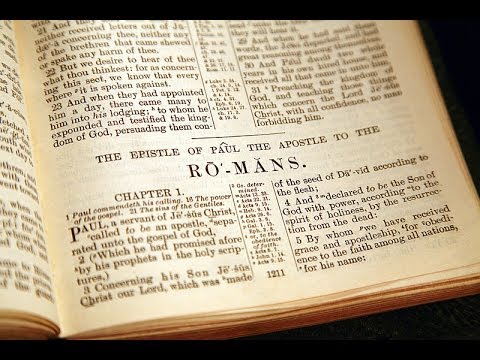 Romans 7:24-25 "Wretched man that I am! Who will set me free from the body of this death? 25 Thanks be to God through Jesus Christ our Lord! So then, on the one hand I myself with my mind am serving the law of God, but on the other, with my flesh the law of sin."
Introduction: The 4 R's Of Romans 6, 7 and 8 as shedding light on the wider context of Romans 7:7-25
In today's post we want to gain a clearer understanding of Romans 7:7-25. In order to understand Paul's main points in this passage, we need to approach it from ever-narrowing circles of context. To do this, I will simply refer to what I'm calling the "4-R's" of Romans 6-8.
Realities and Responsibilities of the Christian life - Romans 6:1-7:6
First, we see the first two "r's" in Romans 6, namely the realities and responsibilities of the Christian life. The realities are what Bible-teachers call "Gospel indicatives" , which is to say: those realities of one's position in Christ that describes "who I am" and "whose I am". Such statements as "united with Him" in Romans 6:5; "crucified with Him" in Romans 6:6 and "consider yourselves to be dead to sin, but alive to God in Christ Jesus" in Romans 6:11 are samples of Gospel indicatives. The second "r" deals with the responsibilities or "gospel imperatives" that urge the Christian to take heed to the commands or imperatives set forth in the Bible. So for instance, a Gospel imperative like, "Therefore, do not let sin reign in your mortal body" follows from the Gospel indicative or reality of me being dead to sin and alive to God in Jesus Christ. Realities and responsibilities follow as cause and effect in the Christian life. To reverse these first two "r's" is to short-circuit one's Christian growth. The Christian is given freedom to enjoy Christ's Lordship (Romans 6:20-22); Christ's life on the inside of them (Romans 6:23; Colossians 1:27) and Christ's love having rescued them from the old former "spouse" of their former union with sin and condemnation (Romans 7:1-6).
The Internal Wrestlings Experienced By The Christian In Romans 7:7-25
So we see the first two "r's" of Romans 6 as having to do with the "realities" of one's Christian identity and the responsibilities that follow in Romans 6:1-7:6. So what about the third "r"? In Romans 7:7-25 we find the "wrestlings" experienced by the believer. Inside every Christian there ensues a wrestling match between the "old-man" and the "new-man" or between "who I was" in Adam vs "who I am" in Christ. Romans 7 deals with the "rubber-meets-the-road" aspect of the Christian life. Author John Hart in his study of Romans 7 notes in volume 170 of the 2013 July-September edition of the theological journal "Bibliotheca Sacra", page 318:
"One presupposition of the present study is that the interpretation that best explains the contents of chapter 7 in light of the Roman Christian readers and their life circumstances is probably the correct interpretation."
In future posts, this blogger hopes to devote further treatment to the interpretation and application of Romans 7:7-25.
Rights Of Sonship In Romans 8
Years ago one old preacher told me that only when we understand the reality of Romans 6 and the conflict of Romans 7 will we be able to enjoy our inheritance laid out in Romans 8. We've considered three "r's" thus far in our exploration of the wider context of Romans 6-8. We've observed the realities and responsibilities of the Christian in Romans 6:1-7:6 followed by the description of the wrestlings each Christian has in Romans 7:7-25.
It is when we come to Romans 8:1-2 that we find out why it is we have realities, responsibilities and wrestlings: so that we can taste and live in the rights we have as children of God. Romans 8:1-2 states - "Therefore there is now no condemnation for those who are in Christ Jesus. 2 For the law of the Spirit of life in Christ Jesus has set you free from the law of sin and of death." Now notice the seven inherited rights or privileges we have as Christians:
a. New Position. Romans 8:1-4
b. New Guest, The Holy Spirit. Romans 8:5-13
c. New Home. Romans 8:14-17
d. New Expectation. Romans 8:18-25
e. New Prayer-life, Helper. Romans 8:26-27
f. New Assurance. Romans 8:28-37
g. New Goal For Life. Romans 8:38-39
This of course scratches the surface of this amazing chapter in Paul's magisterial letter to the church at Rome.
Closing Thoughts:
The four "r's" expounded above proceed in a cycle in both Christian experience and from what follows from the logic of Romans 6-8. As we come to know the realities of our identity in Christ, and the responsibilities that follow, we will find ourselves wrestling and come to a deeper awareness of our rights as sons and daughters by adoption into the family of God in Christ. May these thoughts serve to make more accessible the rich contents of Romans 6,7,8. To God be the glory!
 1 Corinthians 9:24-27 "Do you not know that those who run in a race all run, but only one receives the prize? Run in such a way that you may win. 25 Everyone who competes in the games exercises self-control in all things. They then do it to receive a perishable wreath, but we an imperishable. 26 Therefore I run in such a way, as not without aim; I box in such a way, as not beating the air; 27 but I discipline my body and make it my slave, so that, after I have preached to others, I myself will not be disqualified."
Introduction:
Life has been very busy as of late. Since 2014, I have been a very active runner. I may not be the fastest guy around, but, I do enjoy running. Running is an enjoyable physical and spiritual activity. This coming Saturday will be the biggest race up to this point in my fledgling running experience - a half-marathon. Over the last three years I have ran in 5Ks (3.1 mile races) and 10Ks (6.2 mile races). Each one has been enjoyable. The Lord has enabled me to net some medals and win some races. None though have been more challenging in preparation than what I'm deeming "big-race" on Saturday. On Saturday, the half-marathon I'll be running will be through the rolling hills, streets, and country-sides of a Northern New York town. In lieu of thinking about what the Lord has taught me thus far as a runner, I thought I'd share some reflections on Paul's challenge of running the race called the Christian life.
Just as the beginning of one's running must include important disciplines for there to be improvement, Christian salvation must include spiritual disciplines to improve in one's sanctification.
What the Apostle Paul writes in 1 Corinthians 9:24-27 very much captures what is involved in preparing for a running competition. There is much preparation and discipline that goes into preparing for any race of any size. Whenever I ran my first race three years ago, I had no preparation. I had turned "40" and on a whim, decided to enter a 5K race. When I finished the race, I remember laying on the ground for quite a while, regretting the decision. I had no experience and I had not a clue on what "training" involved. I almost gave-up and said to myself: "if one feels like they're going to die after every run, then running surely cannot be all that it is cracked-up to be." Thankfully, that would not be the last time I ran. I learned over-time the necessity of training and weekly exercise.
The imagery of "training", "exercise" and "running" are applied to illustrating the Christian life. Whenever we talk about the Christian life, we first and foremost must begin with the miracle of the New Birth in saving faith (John 3:3-5; James 1:18; 1 Peter 1:23). At the event of saving faith, the Holy Spirit enters into the human spirit (that inner-most part of one's immaterial nature) and begins the process of changing the sinner into more and more of a saint. The process following from the new birth is what the New Testament deems "sanctification" (see 1 Corinthians 6:19-20). Sanctification is the cooperative effort between the Holy Spirit and the Christian that enables the Christian to become more like Jesus in thought, word and deed.
An effective Christian life involves both training (the spiritual disciplines, like Bible reading, prayer, church attendance, partaking of the Lord's supper or baptism if one is a new convert) and running (the daily Christian life). Notice again 1 Corinthians 9:26-27 "Therefore I run in such a way, as not without aim; I box in such a way, as not beating the air; 27 but I discipline my body and make it my slave, so that, after I have preached to others, I myself will not be disqualified." It was only when I talked to other, more experienced runners, that I learned what training involved. Over time, I have purchased books on running, researched proper dietary needs of runners and have entered into various races. What one puts into the body makes a difference in how well one can endure in running days and race days. The indwelling Holy Spirit in the Christian makes all the difference in stirring the Christian to run the race of faith. In between race seasons, I try to run over 20 miles a week. By attending to all of these various disciplines, I have developed a lifestyle of running. When the Christian attends regularly to the Christian disciplines listed above, they will find the Christian life to be more enjoyable, doable and powerful.
Like running and racing, all those naming the name of Christ must run so as to win.
As I said earlier, I may not be the fastest runner in town, but, when race day comes, I plan on giving it all I got. The Apostle Paul is very fond of athletic imagery - and rightly so. In first century Greco-Roman life, especially Corinth, the Isthmian games were highly popular. In mimicry of the great Olympic games of Athens, such athletic competitions were central to Corinthian life. To run in such races involved running so as to win (since in some cases, losers could lose their lives)!
There was plenty of motivation, but more important than even one's life was the goal of pleasing people like the Emperor of Rome or some other high ranking official present at such competitions. All of these details of first-century life are flowing through Paul's mind as he applies pen to paper. I know when race day comes, I will run as to win. We read in 2 Timothy 2:5 "Also if anyone competes as an athlete, he does not win the prize unless he competes according to the rules." The author of Hebrews 12:2 (if he be the Apostle Paul), capitalizes on the imagery above - "fixing our eyes on Jesus, the author and perfecter of faith, who for the joy set before Him endured the cross, despising the shame, and has sat down at the right hand of the throne of God."
In my first half-marathon, all competitors will get a medal. All who run the race of faith will receive rewards when they appear before Christ at His return
The one thing that encourages me about my pending race is the fact that all participants in the half-marathon will get a medal. Certainly, for those who place overall or finish first through third in their age group, there will be additional medals. Still, to know that there will be medals for all makes running the race worth it. As a runner, I certainly strive for the medal, but I also want to run as hard as possible to perhaps get one of those other rewards! All true followers of Jesus are urged to adopt a similar attitude in 1 Corinthians 9:24-27 "Do you not know that those who run in a race all run, but only one receives the prize? Run in such a way that you may win. 25 Everyone who competes in the games exercises self-control in all things. They then do it to receive a perishable wreath, but we an imperishable." Anyone who has a lifestyle of running wants to do all they can to place and maybe even win. Anyone who is a true follower of Jesus ought to be eager to run the race of the Christian life and bring pleasure for their Lord.
Closing thoughts
As time passes, all the medals that I've acquired will lose their luster. To be honest, when the day comes where I may not be able to run anymore, I'll likely give the medals to our children. They're neat little trinkets that bring back memories of past races, however, they are perishable nonetheless. The Christian's true prize - seeing the face of God in the face of Jesus Christ - is the "imperishable" crown alluded to by Paul. The ultimate prize of seeing Jesus' face and his words: "well-done good and faithful servant" is what drives the Christ-follower to run-so-as-to-win (Matthew 25:21; 1 Corinthians 3:12-15; 2 Timothy 4:7-8; 1 John 3:1-3). May all who name the name of Jesus run the Big race of the Christian-life for the glory of Jesus!
 John 11:21-27 Martha then said to Jesus, “Lord, if You had been here, my brother would not have died. 22 Even now I know that whatever You ask of God, God will give You.” 23 Jesus said to her, “Your brother will rise again.” 24 Martha *said to Him, “I know that he will rise again in the resurrection on the last day.” 25 Jesus said to her, “I am the resurrection and the life; he who believes in Me will live even if he dies, 26 and everyone who lives and believes in Me will never die. Do you believe this?” 27 She said to Him, “Yes, Lord; I have believed that You are the Christ, the Son of God, even He who comes into the world.”
Introduction:
How often in life do you and I find ourselves in need of a miracle? Perhaps a provision? Someone’s salvation? A healing? What is it that we need? Not a miracle, but Christ in His glory. The glory of Christ is the truth of His power and Person made known. In this post, we will contend that when the glory of Jesus is understood as our need, all other needs will be more clearly understood or received. We will focus our attention today on Jesus' miracle of the raising of Lazarus. What kind of glories of Jesus are revealed by the miracle of raising Lazarus from the dead? We will first consider this miracle in light of the other "sign miracles" recorded in John's Gospel, and then draw out the various glories of Jesus Christ that issue forth from Jesus' performance of the miracle.
Seeing the miracle of Lazarus brought back to life in the context of John's other signs
Most New Testament scholars divide John's Gospel into two divisions: John 1-12 is called "The Book of Signs" and John 13-21 is termed "The Book of Glory". In brief, we find the following seven signs or miracles recorded in John's Gospel:
1. Water to Wine - John 2:1-11
2. Nobleman's son healed - John 4:46-54
3. Healing at Bethesda - John 5:1-17
4. Feeding of 5,000 - John 6:1-14
5. Walking on water - John 6:15-25
6. Healing of the blind man - John 9:1-41
7. Raising Lazarus - John 11:17-46
All of these "signs" are designed to point us to a particular truth about Jesus Christ - namely, as stated in John 20:31 "but these have been written so that you may believe that Jesus is the Christ, the Son of God; and that believing you may have life in His name." If we had more time and space, we could catalogue how each of these signs demonstrate John's two-fold point: first, of revealing to us how Jesus is the Christ (the "chosen-one" or "anointed one" who came to be man), the Son of God (i.e truly Divine) and then second, by trusting in this Divine and human Savior, we can have eternal life.
Undoubtedly, Martha's confession of Jesus as "the Christ, the Son of God, even He who comes into the world" in John 11:27 together with the response of faith from Jesus' audience in John 11:45 demonstrates how the raising of Lazarus contributes to John's overall case.
The raising of Lazarus represents the final sign recorded in the first part of John's Gospel in chapters 1-12. Jesus' power over life and death culminates what the other six signs have already communicated to us about Jesus. In the water to wine miracle, Jesus introduced Himself as the Mediator of the New Covenant and the Initiator of God's in-breaking kingdom. The raising of the Nobleman's son reveals Jesus' power communicated over a distance. In terms of the lame man at Bethesda, we find Jesus' ability to bring deliverance and healing, a central trait of the Christ or Messiah (see Isaiah 61:1-2; Luke 4:18). The feeding of the 5,000 and walking on water miracles remind us of Jesus' authority over the physical creation. Then the healing of a man with congenital blindness shows how Jesus possesses unprecedented power and authority (no examples exist in the Old Testament of people blind from birth being healed). The bring back of Lazarus from the dead sets the stage for what will be the two focal events of John 13-21 - Christ's cross and resurrection from the dead.
So having surveyed how the raising of Lazarus from the dead fits with the other six signs recorded in John's Gospel, lets consider briefly how Jesus' glory is revealed in that particular miracle.
1. The Glory of Jesus’ Deity.
John 11:17-27
Jesus' claim to be the resurrection and the life is His way of saying that He possesses the power to bring people back from the dead. Old Testament texts repeatedly testify to Yahweh, Jehovah God raising the saints to glory and immortality at the end of history (see Job 14:14; 19:25-26; Psalm 16:8-11; Isaiah 25:6-9; Daniel 12:1-2). Jesus Himself alludes to His inherent power to raise people from the dead (John 5:24-25). With this statement to Martha, Jesus is asserting His glorious Divine power. The glory of Christ's Deity is revealed in this text. All who attach themselves to Jesus have immediate access to all that is the hidden and revealed treasures of God revealed in the Person of the Son, sharing in co-equality with the Father and the Spirit.
2. The Glory of Jesus’ Humanity. John 11:28-37
John not only is arguing quite forcefully for Jesus' deity, but equally so for His true humanity. We switch from an exalted view of the Divine Christ to the true humanity of a very human Jesus. As man, Jesus had to travel (John 11:30); had feet (11:32); had a human spirit (11:33); wept (11:35) and of course is identified clearly as a man (11:37). Why is this so glorious? The Son of God can empathize. Passages throughout the New Testament such as Philippians 2:5-11; Hebrews 2:13; 4:12-16; 7:24-25 and others praise the Son as man, as God incarnate. The Son's incarnation results in Him being just as glorious in His humanity as He has been eternally with respect to His deity.
3. The Glory of Jesus’ Power. John 11:38-46
The power over death lies in the hands of God alone. Certainly we see instances of people resuscitating or bring other people back to life by God's power (see 1 Kings 17:17-24; 2 Kings 4:32-36; 2 Kings 13:20-21; Acts 9:36-43). However, only Jesus brings people back to life with unprecedented Divine authority, declaring His certainty of the person coming back to life as if it is an already done deal (see Luke 8:49-56; John 11:38-46). Jesus didn't just resuscitate others from death to life by the power of God, He did so with His power as God incarnate (as well as in conjunction with the Holy Spirit Who empowered Him in His humanity as Messiah). Just as God alone could make dead bones come to life, take on skin and flesh and become a mighty marching army and nation in Ezekiel 37-39; so only Jesus can re-animate what was dead. Jesus alone can do this physically and of course spiritually in the miracle of the new birth.
4. The Glory of Jesus’ Cross. John 11:47-57
The raising of Lazarus from the dead seemed to be the catalyst that broke the proverbial camel's back for the Jewish leaders. When we look into John 12, we find the Jews not only plotting to kill Jesus, but also Lazarus. This miracle provided the context in which the high priest Caiaphus would prophesy the substitutionary work of one man dying for the people (John 11:49). Lest the glory of the cross be included in our reckoning of how we behold Jesus' glory in the New Testament, we are then no longer speaking of the Jesus' of the New Testament. We need more than a miracle, we need Him. On then in Jesus Christ can we have clarity on either what we truly need or receive from His hand what He deems necessary for us.
 Daniel 9:19 "O Lord, hear! O Lord, forgive! O Lord, listen and take action! For Your own sake, O my God, do not delay, because Your city and Your people are called by Your name.”
1 Timothy 2:1 "First of all, then, I urge that entreaties and prayers, petitions and thanksgivings, be made on behalf of all men."
Introduction:
Today is set aside by many people in America by what is called: "The National Day of Prayer". In the above opening passages, we find two men, separated by six centuries of time, bearing the same message: seeking God on behalf of their respective situations, countries, cities and governments.
The prophet Daniel is the first of these men. He is the one who wrote Daniel 9:19, which is the theme verse for the 2017 day of prayer. For those interested, the entire event - including its history, videos and other resources -can be found at the following website: http://www.nationaldayofprayer.org. Daniel sought the Lord in his day. He had been in a foreign land - Babylon - for some seventy years. He knew what it was like to be desperate for God.
The second man, the Apostle Paul, wrote a letter to a young pastor named Timothy some six centuries after Daniel. His concern was about making sure Timothy knew what it took to pastor the church of the living God. Among his important instructions, we see Paul urging this young pastor to lead the church to seek God in prayer. On this National Day of Prayer 2017, I thought it would be appropriate to consider what it means to seek God in prayer. We will glean our observations from what Paul wrote in 1 Timothy 2. For this special "National Day of Prayer" post, we will utilize the acrostic s.e.e.k to discover how we can seek God in prayer.
Start with God. 1 Timothy 2:1
The Holy Ghost says through Paul in 1 Timothy 2:1 "First of all, then, I urge that entreaties and prayers, petitions and thanksgivings, be made on behalf of all men." Four Greek words for prayer are used by Paul in this first verse. Without going into the details, the four terms speak of a progressive effort to desperately seek God. As you study the subject of prayer, you discover that prayer is born of God in the context of need. So why pray? Because only God can control outcomes. He desires Christians to participate in prayer for the bringing about of His will in those outcomes. When you start with God in prayer, you will also end with Him in prayer (Matthew 6; Luke 11). So to "seek" God in prayer means you start with God. But notice secondly....
Expect God to respond. 1 Timothy 2:2-3
Paul continues on in 1 Timothy 2:2, noting that as we pray on behalf of kings, authorities and all people, we pray "so that we may lead a tranquil and quiet life in all godliness and dignity." Why do God's people and churches get so discouraged in prayer? we often do not expect God to respond. Prayers with no expectations lead to no results. Leonard Ravenhill, a long-time evangelist and advocate of prayer, writes:
"The lightbulb for us Christians is prayer and God has the power. But it is faith that makes the connection."
Expect great things from the Great God and watch the Great God do great things. So you need to start with God, and expect God to respond. Notice thirdly....
Express prayers for non-Christians. 1 Timothy 2:4-6
We read these words in 1 Timothy 2:3-6 "This is good and acceptable in the sight of God our Savior, 4 who desires all men to be saved and to come to the knowledge of the truth. 5 For there is one God, and one mediator also between God and men, the man Christ Jesus, 6 who gave Himself as a ransom for all, the testimony given at the proper time." So why mention Christ's Person and Accomplishment of salvation in the middle of a section on prayer? Because the cross is the ground of prayer.
Furthermore, Paul is reminding His people that a praying people must not just pray for themselves but beyond themselves. Praying for the lost means your are not just seeking the face of God, but also the heart of God. Before you ever thought about your unsaved loved ones and friends - God had them on His mind before time began. Prior to any tears the church of God may shed for the unconverted, God ordained the Son to assume humanity to shed His blood on their behalf. Prayer is the sail to which faith is attached. The Good Gospel Ship is born along by the winds of the Spirit blowing into the sail of prayer.
As Paul already wrote, praying on behalf of all people will ensure the necessary conditions for proclaiming the Gospel to those who would or could oppose it. So when you seek God, start with God, expect Him to respond and express prayers for non-Christian people, but notice finally....
Keep Praying, stop complaining. 1 Timothy 2:7-8
Paul writes these words in 1 Timothy 2:7-8 "For this I was appointed a preacher and an apostle (I am telling the truth, I am not lying) as a teacher of the Gentiles in faith and truth. 8 Therefore I want the men in every place to pray, lifting up holy hands, without wrath and dissension." Why would Paul tell this young pastor to warn the people not to pray in "wrath and dissension". Why? Because the church to often is known more for fighting one another rather than fighting the good fight of faith. The three underlined words (faith, truth and pray) signal to us how it is we must keep praying, and truly stop complaining.
Faith, rather than fear, will ensure that we pray rather than complain. Truth, rather than error, will encourage us to pray rather than complain. Then prayer itself, rather than picking on one another, characterizes the church who is praying rather than complaining. Paul's preaching in 1 Timothy 2:7 and the exhortation to pray in verse 8 go hand in hand.
God has blessed us more than we deserve. Churches who truly seek God in prayer and are about His kingdom work find far less to complain about. In fact, I would suspect that the complaining that you and I find ourselves doing is a sure sign that we are not praying as we should nor sharing the Gospel as we ought.
Closing thoughts
Lord help us as your church in America and throughout the world to be a people who s.e.e.k you in prayer not only for this day, but everyday.


