Translate

Wednesday, November 23, 2016

A quick response to those who criticize God and His commands to "wipe-out" the Canaanites in Joshua

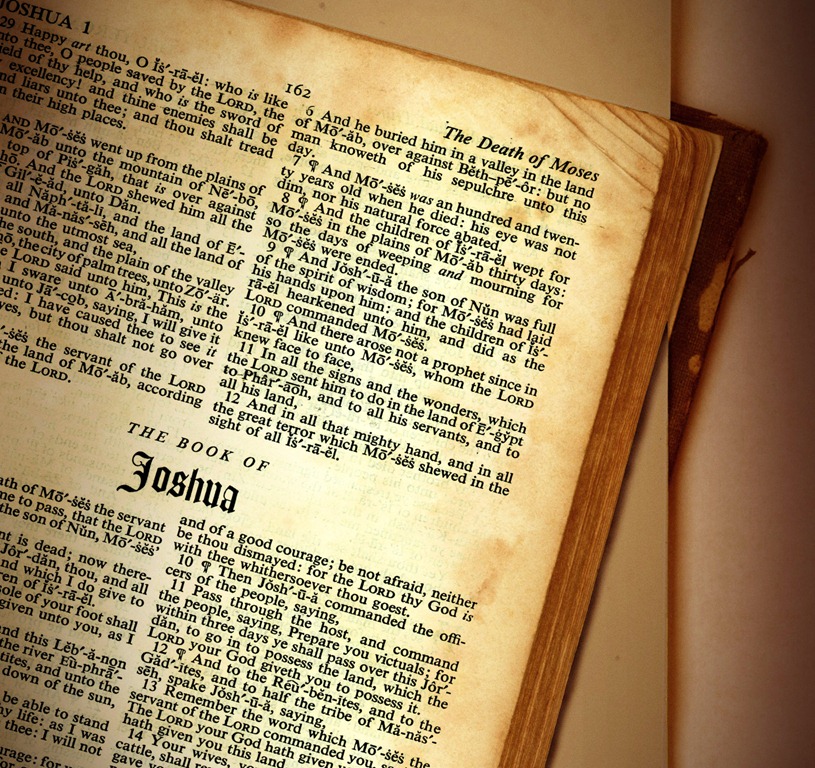
Image result for book of Joshua
Joshua 11:11 "They struck every person who was in it with the edge of the sword, utterly destroying them; there was no one left who breathed. And he burned Hazor with fire."

Introduction:
One of the most attacked areas of the Bible by critics is in the Book of Joshua and its surrounding context. More specifically, critics will contend that God is a "Moral Monster" who commands genocide. In past posts on this blogsite, I have offered a more extensive treatment in responding to this indictment on God's character and credibility of the Biblical text through a four-part series found in the following links:

1. http://www.growingchristianresources.com/2016/11/part-one-why-god-is-still-good-god-in.html

2. http://www.growingchristianresources.com/2016/11/part-two-why-god-is-still-good-god-in.html

3. http://www.growingchristianresources.com/2016/11/part-three-why-god-is-still-good-god-in.html

4. http://www.growingchristianresources.com/2016/11/conclusion-why-god-is-still-good-god-in.html

Today's post is designed to give a very short summary of the above series so that readers can give a "thumbnail sketch" of the Christian response to critics who continue to accuse Yahweh of injustice and immorality.

1. God's holiness and mercy must be considered.
God gave the Canaanites over four centuries to repent of their ways. When a prostitute named Rahab did repent in Joshua 2, God spared her. God's holiness is never factored into critics' arguments. God as a holy God means he cannot stand the sight of sin nor will he long tolerate injustice. The Canaanite culture were known for such practices as child-sacrifice. God was responding to an evil perpetrated by the culture. Ironically, those who claim God never does anything about evil and suffering end up crying "foul" when in the overall context of Joshua, He actually addresses the issues at hand.

2. Holy-war differs significantly from Genocide
Whenever we consider the details of what constitutes holy war and compare it to genocide, it is comparing apples to oranges. Genocide is a merciless, random act of ethnic purging by another people group for political purposes. Holy war in the Bible was moral purging and included an extended pre-history of God giving space for the culture to turn from their extreme wicked practices. Genocide does not include possible mercy. Holy War can be reversed if the culture repents of its ways. Jeremiah 18:8 states – “if that nation against which I have spoken turns from its evil, I will relent concerning the calamity I planned to bring on it.”

3. Ask the critic if they have read the book of Joshua and its surrounding Bible books
In addition to considering God's character and the distinctions between holy war and genocide, one may tactfully ask in a non-condescending way where or not the critic has read the Book of Joshua. Often-times it is very easy to criticize something which one has not read but chooses to criticize based upon here-say. Certainly challenging the critic to read the wider context within which Joshua is set may seem like a tall order. However, atheistic criticisms of Christianity are sometimes due to shoddy scholarship or simply not reading the text in question. 

4. Consider much of the language of Joshua as a form of "hyperbole" or over-exaggeration designed to get the point across
Christian apologist Paul Copan specializes in what can be difficult to interpret texts like Joshua (read more of Paul Copan's material at: (http://www.paulcopan.com/). In his research, as well as the observations of others, many of the cases where we find God commanding the Canaanites to be "utterly destroyed" is part of the rhetoric of holy-war. In many cases, not everyone was destroyed. Perhaps a King, representing the entire nation was executed or the army of the opposing nation. Much like in the sports world today, when one team is being interviewed after a game, they may say something to the effect: "we slaughtered everybody tonight". All listening to such rhetoric understand the players to be utilizing a figure of speech called "hyperbole" or "over-exaggeration" to get across the point that their victory was without question. Copan supports his observations by paralleling literature from the same time-period, illustrating that the Book of Joshua was as much a product of its time as it was of the Holy Spirit. This particular response is helpful, however, caution must be exercised in employing this particular observation, since there are those occasions where the Hebrews did indeed wipe out a given city and its inhabitants.

5. The Canaanites were not innocent
Often critics will cite that the Canaanites never saw the judgment of God coming upon them. However, scholar William Lane Craig observes:

"By the time of their destruction, Canaanite culture was, in fact, debauched and cruel, embracing such practices as ritual prostitution and even child sacrifice.  The Canaanites are to be destroyed “that they may not teach you to do according to all their abominable practices that they have done for their gods, and so you sin against the Lord your God” (Deut. 20.18).  God had morally sufficient reasons for His judgement upon Canaan, and Israel was merely the instrument of His justice, just as centuries later God would use the pagan nations of Assyria and Babylon to judge Israel" (Read more: http://www.reasonablefaith.org/slaughter-of-the-canaanites#ixzz4QaQYWRjV)

6. The issue of Joshua and the Canaanites does not do away with the existence of the Biblical God
In light of the above responses, we can offer one final response: namely, to say that God did something morally wrong is to assert belief in an objective moral laws, which requires God, the objective lawgiver! Again we can quote scholar William Lane Craig on this score:

"I’ve often heard popularizers raise this issue as a refutation of the moral argument for God’s existence.  But that’s plainly incorrect.  The claim that God could not have issued such a command doesn’t falsify or undercut either of the two premises in the moral argument as I have defended it:

1. If God does not exist, objective moral values do not exist.

2. Objective moral values do exist.

3. Therefore, God exists.

In fact, insofar as the atheist thinks that God did something morally wrong in commanding the extermination of the Canaanites, he affirms premise (2).  So what is the problem supposed to be?"
(Read more: http://www.reasonablefaith.org/slaughter-of-the-canaanites#ixzz4QaRMwDwb)

Closing thoughts:
Today we considered a short explanation and response to critics who convict God of wrong-doing in the book of Joshua. We considered the following five responses one could give:

1. God's holiness and mercy must be considered.

2. Holy-war differs significantly from Genocide

3. Ask the critic if they have read the book of Joshua and its surrounding Bible books

4. Consider much of the language of Joshua as a form of "hyperbole" or over-exaggeration designed to get the point across

5. The Canaanites were not innocent

6. The issue of Joshua and the Canaanites does not do away with the existence of the Biblical God




Tuesday, November 22, 2016

An outline of the Book of Joshua

Image result for book of Joshua
Joshua 24:15 "If it is disagreeable in your sight to serve the Lord, choose for yourselves today whom you will serve: whether the gods which your fathers served which were beyond the River, or the gods of the Amorites in whose land you are living; but as for me and my house, we will serve the Lord.”

Introduction:
In our last post we considered an overview of the Book of Joshua. Joshua provides invaluable historical information concerning the journeys of the nation of Israel following Moses' death. We saw how in their crossing the Jordan River, they began possessing the land promised by God to their ancestors: Abraham, Isaac and Jacob. In addition to these considerations, we saw too how the New Testament applies Joshua as an illustration of the Christian life. Canaanland is a concrete picture of the Christian life with its attendant battles, defeats and triumphs. Today we will conclude this brief study with understand how the book of Joshua portrays Jesus Christ, followed by an outline and final applications.

Seeing Jesus in Joshua
Before we offer an outline of Joshua, the most important bridge of application is that of seeing Jesus Christ in Joshua. 

Certainly, Joshua himself could function as a pictorial illustration or "type" of Jesus Christ. Both "Joshua" and "Jesus" are equivalent names, with "Jesus" representing a Greek version of the Hebrew name "Joshua". In the KJV of Hebrews 4:8, translators render it - "For if Jesus had given them rest, then would he not afterward have spoken of another day." Most modern English translations render "Jesus" as "Joshua", as in the NASB - "For if Joshua had given them rest, He would not have spoken of another day after that." Joshua himself did speak of the people having a "rest" of sorts (see Joshua 22:4). However, since it was the Spirit of Christ speaking through Joshua and in the composition of His book (see 1 Peter 1:11), the writer of Hebrews ties together the actions of Joshua foreshadowing the actions of Jesus. The Holman New Testament Commentary notes on this score:

"Joshua had given rest to Israel in his day (Josh. 23:1), but God had more than political security in mind in the use of the term rest. Joshua gave his followers temporal rest by leading them to defeat their enemies. God has provided spiritual rest for those who approach him through faith in Jesus Christ as is made clear in verses 9–10."

A suggested outline for Joshua
One of the methods to outline the book of Joshua is by noting key cities and events in their picturing of Jesus Christ and the Christian life. Below is an outline of Joshua in ten points:

1. Rest in Jesus typified by the crossing of the Jordan River. Joshua 1:1-4:14

2. Saying goodbye to the old life and putting on the new life: typified at Gilgal. Joshua 4:15-5:15

3. Fight the good fight of faith: typified in the battle of Jericho. Joshua 6

4. Getting a second chance through repentance: the failure and later victory at Ai. Joshua 7-8

5. Walk by faith, not by sight: lessons from the Gibeonites. Joshua 9:1-10:28

6. Progressing in one's Christian growth or sanctification: the Northern and Southern Campaigns. Joshua 10:29-12:22

7. Claiming the promised land of the Christian life: the twelve tribes settle in the land (with Caleb as an example in 14). Joshua 13:1-19:51

8. Refuge and rest in Christ: the cities of refuge set-up for those who committed involuntary manslaughter (especially 21:43-48). Joshua 20-21

9. United around one Lord, one faith: the dispute over the second altar. Joshua 22

10. Trust and obey, for there's no other way: Joshua's final instructions to the Israelites. Joshua 23-24. 

Closing thoughts:
We have considered the contents, connections and outline of the Book of Joshua to the Christian life. Joshua is invaluable for how he gives us the continuing story of the Hebrew people after the days of Moses. We find out that they were to possess the land promised to them by Yahweh. These historical events provide spiritual application for the Christian life in New Testament books like Hebrews. 

Themes such as sanctification, spiritual victory and following Jesus are illustrated in the book of Joshua. No doubt, we have only scratched the surface in these posts. It is hoped that the reader will study the book of Joshua further. It is suggested that the reader lay open Hebrews 3-4 and read the book of Joshua in light of Jesus Christ and the Christian life. 

Monday, November 21, 2016

An overview of the Book of Joshua

Image result for map of the book of Joshua
Joshua 24:15 "If it is disagreeable in your sight to serve the Lord, choose for yourselves today whom you will serve: whether the gods which your fathers served which were beyond the River, or the gods of the Amorites in whose land you are living; but as for me and my house, we will serve the Lord.”

Note: The map above derives from the website - http://www.believersmagazine.com/bm.php?i=20091110

Introduction:
Today's post features an overview of the sixth book of the Bible: the book of Joshua. Old Testament scholar Gleason Archer notes concerning this book: 

"It is reasonable to deduce this book was basically compiled by Joshua himself. Intimate biographical details are given from the very first chapter the only Joshua himself could have known (Joshua 5:1,6 and 24:26). There is later evidence of editorial work, such as his decease (24:29-30; 24:31)".

The opening verses of this post are among the more well known scripture passages in all of the Bible. Joshua's book details the aftermath of Moses' death and what the Israelite nation would do in following Moses' successor and long-time protege - Joshua. 

A brief note on Joshua, the man
Early-on we find Joshua being at Moses' side and ever ready to defend Moses (see Exodus 24:13; Numbers 11:28). Joshua would take on the role as a general of sorts in the battles the people would have against opponents (see Exodus 17:3-14). In Numbers 14:6,30 and 14:38, it was Joshua and Caleb who suggested that the people could enter the promised land despite protestations from their fellow spies who had journeyed in to spy out the promised land. God personally handpicked Joshua to succeed Joshua, an appointment he revealed before Moses died (Deuteronomy 1:38)

A brief summary of the book of Joshua and its connection to the Christian life
Joshua's book is all about how the people would cross the Jordan River and begin the process of possessing the land promised to their ancestors (Abraham, Isaac and Jacob). The Bible Knowledge Commentary notes:

"The purpose of the Book of Joshua is to give an official account of the historical fulfillment of the Lord’s promise to the patriarchs to give Israel the land of Canaan by holy war. A “holy war” was a conflict with religious overtones rather than one with a political motivation of defense or expansion. This can be seen in both the opening charge (1:2–6) and the concluding summary (21:43).

Specifically, the conquest of Canaan under Joshua’s leadership was based on the Abrahamic Covenant. God, having dealt with all nations, made Abraham the center of His purposes and determined to reach the lost world through Abraham’s seed."

In as much as Joshua covers a specific historic period in Israel's history (1399-1375 b.c), the New Testament gives hints to it having moral and spiritual application to today's Christian. For every New Testament doctrine, we have at least one concrete, historical illustration of that truth in the Old Testament. Hebrews uses the book of Joshua to highlight the need for repentance and even more so, how the promised-land portrays the struggles and victories experienced in one's sanctification. To put it another way, the crossing of the Red Sea illustrates salvation from sin and death; whereas the Jews crossing of the Jordan picture the death to self and entryway into the post-conversion Christian life. God promised the land of Canaan to Abraham. 

In Joshua, we find the urgency to possess the land. For Christ-followers, receiving one's spiritual inheritance in Christ occurs in conversion, with the resultant Divine declarations of justification and adoption to sonship. What follows from one's salvation (i.e justification) amounts to the ongoing-work of the Spirit's sanctification, whereby the Christian is living out and working with God in their sanctification. 

New Testament books such as Ephesians speak of the believer's spiritual inheritance and the military motif of "putting on the whole armor of God" to fight the good fight of faith. In Joshua, we see these same spiritual principles played out in a moral literal, historical fashion. 

More next time.....

Friday, November 18, 2016

A suggested meaning of "anointing with oil in the name of Lord" in James 5:13-16

Image result for anointing oil
James 5:13-16 (NASB) "Is anyone among you suffering? Then he must pray. Is anyone cheerful? He is to sing praises. 14 Is anyone among you sick? Then he must call for the elders of the church and they are to pray over him, anointing him with oil in the name of the Lord; 15 and the prayer offered in faith will restore the one who is sick, and the Lord will raise him up, and if he has committed sins,they will be forgiven him. 16 Therefore, confess your sins to one another, and pray for one another so that you may be healed. The effective prayer of a righteous man can accomplish much."


Introduction:  

Today's post will consider the actual command of anointing with oil and tracking out how it is to operate from beginning to end. James' was the half-brother of Jesus according to the flesh. His epistle or letter represents the earliest material in the New Testament with respect to practices and doctrine. The practice of anointing with oil is prescribed by James in James 5:13-16. The chief question before us, as with any part of God's word is: "what does it mean?" As we comment through James 5:13-16, applications for today's Christian and the local church will be offered. 

1. How the command to be anointed with oil in the name of the Lord is to be carried out in the church. James 5:14 

Commentary: 

James 5:14a The sick congregant must submit to the Elders and leadership of the church. To make such a request is an act of humility. Humility before the Lord positions that person to be acted upon by God for emotional, spiritual and of course, physical healing. (see 1 Peter 5:6). Whichever remedy or combination occurs is up to God's purpose. James then writes "let them offer a purposeful prayer". Quite literally, the "Elders" (actual ordained men or some form of representative leadership) are being commanded to fulfill the request of the sick congregant and come to pray with and over that person.

James 5:14b As the Elders met to pray with the sick congregant, there had to be an attending physical act. The physical act in this instance would be a sign corresponding to both their expression of faith and the One to whom they're appealing. The sign mentioned here in James' text is that of anointing oil. Standard word-study references explain the word translated "anointing" as referring to the application of oil by anointing with a household remedy. In addition to James 5:14, we see the following pattern set by Jesus and the disciples in Mark 6:13 - "And they were casting out many demons and were anointing with oil many sick people and healing them."

The use of oil in the scriptures often signifies the Holy Spirit and the power and favor of God being bestowed on that individual (Exodus 30; 1 John 2:20,27). One reference work discusses how in ancient Greece, anointing oil was used for rubbing sore muscles in gymnasts or athletes. This background may be partly informing James 5:14, suggesting the picture of Elders administering the oil to the person in a rubbing or topical application. They would accompany their anointing with the prayers, doing everything in the name of the Lord.  

2. The manner of the provision of healing promised in the act of anointing with oil. James 5:15

Commentary: James 5:15a This particular verse is perhaps the most scrutinized and disagreed upon sentence in James 5:13-16. At issue is how much certainty of healing is promised in the passage. James 5:15a could be rendered: "and the prayer from faith will save the one who is severely ill and the Lord will raise Him up. The phrase translated "severely ill" refers to somebody who is in a continual state of illness or hopeless sickness. Another reference work points to a similar meaning of the person having fallen under some type of illness. 

In these verses, the prescription of anointing with oil is for those who are experiencing perhaps more common and non-terminal illnesses (James 5:14 i.e - "is anyone sick among you") all the way to those in the worse condition (James 5:15 "severely ill"). 

Closing thoughts for today:

The question before the reader is of course how much certainty of healing is promised in the verbs translated "will save" and "will raise"? Let's note three observations:

1. First of all, in terms of the definitions of "will save" and "will raise", some interpreters have tried to make "will save" a term referring to spiritual healing, since the verb is often used in contexts describing salvation. However, there are numerous passages referenced by others that show this verb as referring specifically to saving or freeing from disease (Mt 9:22a; Mk 5:34; 10:52; Lk 8:48; 17:19; 18:42 compared to James 5:15). One way of rendering this verb to bring out its meaning could be "restore". 

The second verb translated "to raise" or "will raise" can also be legitimately translated "to restore to health" in James 5:15. (BAG 214) Thus when we consider that God is offering the opportunity for physical restoration, the provision promised within this setting is specified and made definite. As to whether there is an immediate restoration/healing or progressive restoration/healing at a later time cannot be determined from the passage.

2. Secondly, both verbs are in the future tense. As the name of the tense suggests, both verbs are referring to a state or reality that is not current in the writing of the speaker or the experience of the readers. 

3. Thirdly, James appears to be prescribing a remedy for those in the church who are suffering. In general terms, the outcome of healing should never be doubted. As was stated already, the only thing we are not told in the text is how long of time could pass between the administering of the anointing oil and the healing performed by the Lord.

Thursday, November 17, 2016

Reasons to celebrate Jesus Christ as the Bread of Life

Image result for matzo bread
John 6:35 "Jesus said to them, “I am the bread of life; he who comes to Me will not hunger, and he who believes in Me will never thirst."

Introduction:
John 6 is an ocean of truth. As the Lord Jesus Christ is seen and heard in this chapter, we find Him performing his greatest mass miracle in the feeding of the five thousand (6:1-13; 14-16). We also find Jesus walking on the water to the disciples in the middle of a storm on the Sea of Galilee (John 6:16-21). It is following these two back-to-back miracles that we find Jesus unveiling His identity as "the bread of life" in John 6:22-58. If we were to summarize the massive chapter of John 6, we could offer the following outline:

1. A mass miracle - John 6:1-16
2. A majestic miracle - John 6:16-21
3. A marvelous revelation - John 6:22-71

I won't expound too much more on the first two of these divisions. Undoubtedly John 6 offers so much insight that it will require future posts to touch the surface of this grand chapter. Instead, my aim today is far more modest: to simply consider reasons for celebrating the fact that Jesus is the "Bread of Life". Such reasons can be used for one's own devotional meditations or perhaps in a Lord's Supper celebration. As we consider briefly Jesus' revelation of Himself as the "bread of life", why celebrate this wonderful truth? As the Bread of Life, Jesus Christ....

1. Saves sinners. John 6:27-29, 47
We read in John 6:27-29 "Do not work for the food which perishes, but for the food which endures to eternal life, which the Son of Man will give to you, for on Him the Father, God, has set His seal.” 28 Therefore they said to Him, “What shall we do, so that we may work the works of God?” 29 Jesus answered and said to them, “This is the work of God, that you believe in Him whom He has sent.” 

Just as natural bread provides the staple for a diet in survival or for the nutritional needs of people to prevent starvation and ultimately death, Jesus as the "Bread of Life" is the only one who can rescue sinners from spiritual death. John records Jesus using the backdrop of God's provision for another type of bread from heaven - namely "manna". Manna was used by God to feed the Jews during their wanderings in the wilderness in the days following the Exodus from Egypt under the leadership of Moses (Exodus 16; Numbers 11; Deuteronomy 8; Joshua 5:12; Nehemiah 9:20; Psalm 78:24). 

The descriptions of this manna (which in the Hebrew means "what is it") include it being sweet to taste, coming from heaven and being enough to feed the people for that particular day. We also find in the above verses that attempts to save manna for another day would result in spoilage. So much more could be written on this intriguing bread, but we must hasten to the point: Jesus Christ is the fulfillment of the symbolism communicated by the manna God gave to the Jewish people in the Old Testament, and more. Unlike that former manna, salvation in Jesus Christ would never spoil. Like the Old Testament manna of course (but better), Jesus Christ came from heaven and is more than sufficient for every spiritual need. From salvation through sanctification, Jesus Christ as the Bread of Life will keep safe every believer until they're presented faultless before the throne. 

So as the bread of life, Jesus Christ saves sinners. But there is a second reason to celebrate Him as the Bread of life....

2. Sent from Heaven. John 6:32-33
Jesus describes Himself as the bread "sent from heaven". We find this phrase sprinkled nearly ten times throughout John 6. This tells us the direction of grace: from the "top-down". The bread of life is not found in the things of earth (moralism, man-made religion). Only the Bread of life from Heaven, Jesus Christ, can deliver saving benefits. But now lets notice one more reason to celebrate Jesus Christ - the bread of life...

3. Sustains the saints. John 6:35-37, 51, 53-58
Three times in John 6 do we find Jesus referring to Himself as "the bread of life", with exposition and applications following. As the Sustainer of the saints, Jesus Christ shows us three things:

a. He nourishes. John 6:35
b. He gives life. John 6:48
c. He assures. John 6:51

Implications and applications of Jesus as the "Bread of Life"
It is interesting to note that much of the vocabulary and descriptions used by Jesus in John 6 would appear again in His later institution of the Lord's table. The idea of "eating" and "drinking" the flesh and blood of the Lord Jesus Christ is typified in that ordinance.1 

In as much as the Lord's table is to be observed by believers in the local church, it is the Lord Jesus Christ pointed to by the supper that saves, was sent from heaven and sustains His people. Is it any wonder then that Jesus would later use the descriptions and word-pictures found here in John 6 to communicate His ordinance on the eve of His crucifixion? We praise Jesus, the bread of life, for the fact that...

1. He saves sinners
2. Was sent from heaven
3. He sustains saints who have believed on Him. 

Endnotes:
1. Unlike some Christian denominations, this writer does not see the Lord's table as a literal presentation of Christ's blood and body within the elements nor such being around, under and upon the bread and fruit of the vine. Rather, the bread and fruit of the vine picture the reality of Jesus Christ's bodily presence that attends within and through God's people as they gather together to celebrate. Jesus is always with His church and He is more realized in a powerful way when the church gathers together to celebrate this symbolic, covenant meal.

I get this notion from the fact that Jesus refers to this language before His crucifixion. Jesus was obviously alive when He first used this imagery. It is His life leading to His death and then conquering death by His resurrected life that saves and sustains the believer. The imagery is striking and very powerful and we ought not divest it of its power to communicate vividly all that Jesus has done. Nonetheless, the word-picture is a picture of a true reality that has occurred and of Jesus ever being with His people by the ministry of the Holy Spirit Who indwells His church both individually and corporately. 

Wednesday, November 16, 2016

The kind of heart it takes to pray for the salvation of the unconverted


Image result for weeping over the lost
Nehemiah 1:1-4 "while I was in Susa the capitol, 2 that Hanani, one of my brothers, and some men from Judah came; and I asked them concerning the Jews who had escaped and had survived the captivity, and about Jerusalem. 3 They said to me, “The remnant there in the province who survived the captivity are in great distress and reproach, and the wall of Jerusalem is broken down and its gates are burned with fire. 4 When I heard these words, I sat down and wept and mourned for days; and I was fasting and praying before the God of heaven."

Introduction:
Today's post is about the kind of heart it takes to pray for unconverted people. As we approach the book of Nehemiah, we find a Jew by the name of Nehemiah serving in the court of King Artaxerxes Longimanus of Persia. The year would had been around 445 b.c when the events in Nehemiah began to unfold. The great preacher of years past, Alexander MacClaren, comments on Nehemiah's reception of the bad news concerning his homeland:


"So Nehemiah prepared himself for his work by brooding over the tidings with tears, by fasting and by prayer. There is no other way of preparation. Without the sad sense of men’s sorrows, there will be no earnestness in alleviating them, nor self-sacrificing devotion; and without much prayer there will be little consciousness of weakness or dependence on divine help."

Nehemiah had a burden for the city of Jerusalem, otherwise he wouldn't had inquired about its status. As far as we know, Nehemiah had never made a personal trip to Jerusalem. What would cause a man to mourn over a city he had never seen? We must remember that Jerusalem was at the spiritual, moral and historical center of the Jewish world. To find out that it had come into disrepair would mean that one's identity was in immediate crisis. The calling God was preparing Nehemiah to fulfill was being placed upon him. He had to have a broken heart for the city in order to repair its walls. By the time Nehemiah's task of finishing the wall in Jerusalem was done, 52 days would pass. Urgency makes quick and exacting work. 

God uses broken hearts to do His work
Nehemiah was a man of prayer. Scarcely do we travel too far into the book of Nehemiah before we find Nehemiah pausing to pray. His heart was broken by the burden placed upon it. Oftentimes we as American Christians prefer avoidance of pain. We often think that we have arrived in the Christian life when we can face this world of ours without tears and turmoil in our hearts. Such notions are useless when it comes to doing God's kingdom work and praying for His results. Interceding for loss souls is no different.

Psalm 51:17 spells out this principle of brokenness as a tool used by God: "The sacrifices of God are a broken spirit;
A broken and a contrite heart, O God, You will not despise." Nehemiah would not be the first person to weep over the state of Jerusalem. Nehemiah's burden was mainly over its moral and physical state. In Matthew 23:37-39 we find the Lord Jesus looking over the same city - some 475 years later. The city was stately in its appearance. The temple was the Herodian temple, nearly unparalleled in the ancient world. Despite all physical appearances, the very place where Jesus' ancestor according to the flesh, King David, had trod had become spiritually bankrupt. The city had rejected its Messiah. As Jesus would look over it one last time before His crucifixion, we find Him saying the following words:  

“Jerusalem, Jerusalem, who kills the prophets and stones those who are sent to her! How often I wanted to gather your children together, the way a hen gathers her chicks under her wings, and you were unwilling. 38 Behold, your house is being left to you desolate! 39 For I say to you, from now on you will not see Me until you say, ‘Blessed is He who comes in the name of the Lord!’”

He wept with a broken heart. Our Lord wept tears in the days of His sojourn here on earth (Hebrews 5:7). Do we? Do we break over the lost around us? Jerusalem had rejected its Savior, and many, many people in our world today persist in their refusal to bow the knee to Jesus Christ. Sin, Satan and the flesh have blinded them (2 Corinthians 4:1-4). The unbeliever is dead to the things of God (Ephesians 2:1-2). What is required is the living voice of the Savior to call them forth from their tomb of unbelief (John 5:24-25) and to shine light into their dark world (2 Corinthians 4:1-6). The Apostle Paul writes the following words concerning his own heart toward his fellow Jews in Romans 9:1-3 -

"I am telling the truth in Christ, I am not lying, my conscience testifies with me in the Holy Spirit, 2 that I have great sorrow and unceasing grief in my heart. 3 For I could wish that I myself were accursed, separated from Christ for the sake of my brethren, my kinsmen according to the flesh...".

Closing thoughts
If you are a Christian reading this post today, will you allow your heart to be broken for your unsaved loved-ones, friends and co-workers? If you are reading this post and have never trusted in Jesus as your Savior and Lord, will you consider how the Lord endured the cross for your sake. He did so with tears, resolve and a desire to fulfill the Divine will in which He shared. 2 Peter 3:9 states - "The Lord is not slow about His promise, as some count slowness, but is patient toward you, not wishing for any to perish but for all to come to repentance."

Tuesday, November 15, 2016

A short devotional on Jesus: Shepherd and Guardian of souls

Image result for shepherd's crook
1 Peter 2:21-25 "For you have been called for this purpose, since Christ also suffered for you, leaving you an example for you to follow in His steps, 22 who committed no sin, nor was any deceit found in His mouth; 23 and while being reviled, He did not revile in return; while suffering, He uttered no threats, but kept entrusting Himself to Him who judges righteously; 24 and He Himself bore our sins in His body on the cross, so that we might die to sin and live to righteousness; for by His wounds you were healed. 25 For you were continually straying like sheep, but now you have returned to the Shepherd and Guardian of your souls."

Introduction:
Today's post is a brief devotional on Jesus Christ as the Shepherd and Guardian of our souls. What kind of Shepherd is He in these verses written by the Apostle Peter under the inspiration of the Holy Spirit? Consider with me the following thoughts...

1. Supreme example. 1 Peter 2:21
"For you have been called for this purpose, since Christ also suffered for you, leaving you an example for you to follow in His steps."

2. Sinless life. 1 Peter 2:22-23
"who committed no sin, nor was any deceit found in His mouth; 23 and while being reviled, He did not revile in return; while suffering, He uttered no threats, but kept entrusting Himself to Him who judges righteously"

3. Saving substitute. 1 Peter 2:24
"and He Himself bore our sins in His body on the cross, so that we might die to sin and live to righteousness; for by His wounds you were healed."

4. Sovereign security. 1 Peter 2:25
"For you were continually straying like sheep, but now you have returned to the Shepherd and Guardian of your souls."

Closing thoughts:
As you reflect on the above four thoughts, call them to memory throughout your day and thank the Lord Jesus. If you have never trusted in Him for what He did as your supreme example, sinless life, saving substitute and sovereign security; you can do that today. Romans 10:9-10 tells you how you can begin knowing this Jesus as your Savior and Lord - "that if you confess with your mouth Jesus as Lord, and believe in your heart that God raised Him from the dead, you will be saved; 10 for with the heart a person believes, resulting in righteousness, and with the mouth he confesses, resulting in salvation."