Translate

Friday, November 10, 2017

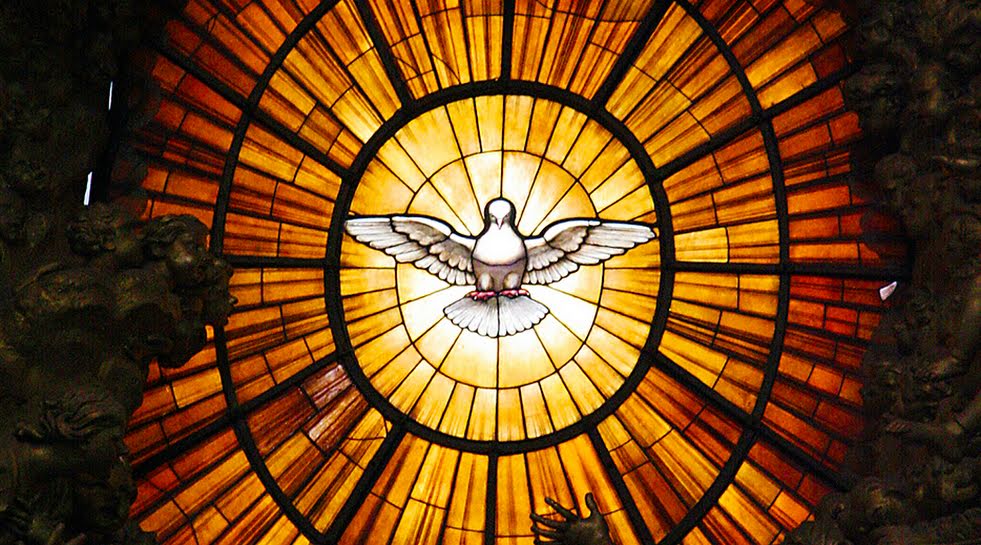
The Holy Spirit's Ministry As Comforter

Image result for the holy spirit
John 14:16-17 I will ask the Father, and He will give you another Helper, that He may be with you forever; 17 that is the Spirit of truth, whom the world cannot receive, because it does not see Him or know Him, but you know Him because He abides with you and will be in you."

Introduction:


I'll never forget my fourth grade teacher. This remarkable lady had only been with our fourth grade class for a half year. Due to unforeseen circumstances, my teacher had to leave mid-year with another taking her place. Despite that short period of time, my teacher had helped me to discover a love for reading. With a span of three months, the teacher had raised my reading level. Her encouragement spurred me onto a life-time adventure of reading. I often think of the various people God has placed across my path. In my last count, I identified over 125 specific people (teachers, maintenance people, cooks, various leaders and so forth) that I can say helped me along my journey. 


Human persons can be used greatly of God in helping and providing strength. However, I can think of no other Person that grants more help, comfort or strength than the Holy Spirit. In today's post we aim to look at the ministry of the Holy Spirit as "the Comforter" or "Helper".  It is hoped that you will discover what God's Word has to say, and in the process learn what the Bible truly means by the Spirit's comforting ministry.

1. What the Old Testament has to say about the Lord as the "Comforter" or "Helper"

The Holy Spirit's work of comfort or help implies Him being no less than God Himself.  Jesus of course spoke to His disciples of how He was going to send to them the Holy Spirit as the "comforter", or as this term is rendered in other translations "Helper" (John 14:16; 15:26-27; 16:7). This promise from Jesus has in mind all of the references to Yahweh as the "Helper" or "Comforter" of Israel. In one of the first mentions of this title we read in Deuteronomy 33:26 “There is none like the God of Jeshurun,Who rides the heavens to your help, And through the skies in His majesty." Isaiah 49:8 is another example where the LORD identifies Himself as the "Helper" of His people: "Thus says the Lord, 'In a favorable time I have answered You,
And in a day of salvation I have helped You; and I will keep You and give You for a covenant of the people, To restore the land, to make them inherit the desolate heritages.'" 

Other Old Testament passages repeatedly use this title translated "Helper" to describe the LORD's redeeming work on behalf of and in the lives of His people. (Deuteronomy 33:29; Psalm 115:9; Isaiah 41:14, 44, 49:8; Hosea 13:9).

It is very clear as one studies the revelation of the Old Testament that the primary attribute of God that is disclosed by this word translated "Helper" is that of God's strength. The Theological Wordbook of the Old Testament explains this word (Hebrew "ezer") translated helper:

"God exercises this strength on behalf of His people people against their foes. This is particularly well illustrated in Exodus 13:15. This word is used figuratively to describe the security enjoyed by the righteous....Thus in hymns of praise God's strength shows itself as His overwhelming majesty, and in the laments it appears as His helping protection."1 

So in all reality, the LORD as the believer's "Helper" is truly the One who strengthens.2

2. What Jesus teaches about the Holy Spirit as the "Helper" or "paraclete" or "comforter"

Clearly the Lord revealed Himself as the "Helper" or "Strengthener" of His people in the Old Testament. Such a title was clearly assigned to the God of scripture in the Old Testament, and continues on in Jesus' statements about Himself and the Holy Spirit. When Jesus says in John 14:16 that He will send to the disciples "another comforter" or as rendered in some English translations "another Helper", He is speaking of another who is of like-kind to Himself. The word Jesus uses to describe the Holy Spirit and Himself has the same meaning as the word we saw earlier in our study of the LORD's self designation in the Old Testament. 

Quite clearly the Divine idea of the God of the Bible being the strengthener and source of strength in His peoples' lives is ascribed to all Three Persons of the Godhead.3 R.C. Sproul in his studies on the Holy Spirit suggests that the word translated "comforter" (paraclete) referred to a family lawyer who was always on retainer and could be called upon to come to the aid and support of the family in times of need.

Without a doubt the Person of the Son, being truly Divine while being truly man, promised His disciples that upon his exit from this world in His ascension that He would send them another "Comforter". This "Comforter" or "Helper" would exercise the same level of strengthening ministry as Jesus. Case in point, consider John 15:26-27 “When the Helper comes, whom I will send to you from the Father, that is the Spirit of truth who proceeds from the Father, He will testify about Me, 27 and you will testify also, because you have been with Me from the beginning." 

Similar words are mentioned in John 16:8, with the promise being that the apostles and ultimately every Christian will not be devoid of the power and presence of God as expressed by the Person of the Holy Spirit. We will look more into this incredible truth about the Person and work of the Holy Spirit in the next post. 

Endnotes:

1. R. Laird Harris, Gleason L. Archer, Jr., Bruce K. Waltke. Theological Wordbook of the Old Testament. Moody. 1980. Page 1597.

2. As an interesting side note, when God tells Adam that Eve is going to be His "helpmeet" in Genesis 2:20, the idea is that without her, Adam would be incomplete. The same Hebrew word "ezer" is used in Genesis 2:20 as we find throughout the self-revealed title that the Lord uses for Himself in describing the need of His people for His strength and help. The bringing of the woman to the man not only would complete him but actually supply strength - i.e help.

3. The word translated "comforter" or "helper" in John 14:16 is the word "parakletos" from the verb "parakaleo" from whence comes the sometimes used title for the Holy Spirit "The Paraklete". The word refers to someone who "comes up alongside and offers strength and support". Jesus Himself is described as being our Heavenly "advocate" or "Paraclete" in 1 John 2:1 who ever represents our interests before His Father in Heaven as the believer's Prophet, priest and King. Hence the Holy Spirit then is the believer's "paraclete" or "advocate" here on earth Who works in concert with Jesus, the believer's "Advocate" or "Strengthener" in Heaven.

Wednesday, November 8, 2017

How God Grants Strength For The Journey - Daniel 10


Image result for daniel in prayer
Daniel 10:1-3 "In the third year of Cyrus king of Persia a message was revealed to Daniel, who was named Belteshazzar; and the message was true and one of great conflict, but he understood the message and had an understanding of the vision. 2 In those days, I, Daniel, had been mourning for three entire weeks. 3 I did not eat any tasty food, nor did meat or wine enter my mouth, nor did I use any ointment at all until the entire three weeks were completed."

Introduction:

The book of Daniel is equally strong in its emphasis upon prophetic events, giving examples of godly piety and prayer. Daniel, the chief protagonist and prophetic author, was a man vested with prophetic gifting. Throughout the 70 years Daniel would spend in Babylon, we find him not only interpreting dreams and seeing visions - but also growing in prayer. In today's post we want to consider a very important lesson learnt upon one's knees in prayer - strength. 

Dr. Charles Stanley has noted that when we fight whatever battle on our knees, only then can we march forward on our feet. Strength is the lesson we find Daniel learning in his time of prayer to God in Daniel 10. What is the nature of the strength available to anyone in prayer? What ways can strength be delivered when God’s people seek Him in prayer? Let’s explore the answers together in today's post.

1. Presence of the Lord Jesus Christ. Daniel 10:1-9

In the opening verses of Daniel 10, we find Daniel brought in contact with a mysterious figure. The description of this figure in terms of his raiment and other characteristics matches very closely with the description of Jesus in Revelation 1:13-16. Scholars such as the late John Walvoord and H.A Ironside have suggested this is none other than a pre-incarnate appearance of the Son of God. The presence of Christ headlines Daniel 10. The prophet is in need of strengthening. 

When we turn to the New Testament, we find Christ promising to strengthen His church and its preachers. Matthew 28:20 records the promise Jesus made to his apostles and ultimately to the church: "and I will be with you always, even to the end of the age." In 2 Timothy 4:1-2a, Paul delivers the urgent command to young pastor Timothy: "I solemnly charge you in the presence of God and of Christ Jesus, who is to judge the living and the dead, and by His appearing and His kingdom: 2 preach the word." Christ's presence among and in His people and with His preachers provides strength. As Daniel would experience ministry from the presence of the pre-incarnate Son, he would have just enough strength to interact with a second visitor - an angelic emissary sent from God.  

2. Provisions of grace from God. Daniel 10:10-17 

When we consider this second interaction of Daniel in Daniel 10, we find this mysterious figure to be an angel. Angels are among the provisions of grace given by God to strengthen His people. Passages such as Psalm 91:11 and Hebrews 1:14 promise reinforcements from Heaven at key low points in our lives. The angelic messenger to Daniel details the battle waged during Daniel's three-week fasting and prayer session. How often do you and I ponder the spiritual battle waging while we pray? Daniel experienced a delay. What would had resulted if he had stopped at week two, one or on the first day? Prayer is an exercise of the soul desperate for God.

Angels of course are not the only provisions of grace. If for anything, angelic aid is a secondary provision, with several others leading the Divine gallery of provisions. Let the reader be reminded of what such provisions are:

a). Holy Spirit. John 14:16-17

b). Mercies. Lamentations 3:21-25 "This I recall to my mind, Therefore I have hope. 22 The Lord’s lovingkindnesses indeed never cease, For His compassions never fail. 23 They are new every morning; Great is Your faithfulness. 24 “The Lord is my portion,” says my soul, “Therefore I have hope in Him.” 25 The Lord is good to those who wait for Him, To the person who seeks Him."

c). Ordinances, such as the Lord's Table, 1 Corinthians 11:23ff. 

God mediates His strengthening grace through such energies that He disposes for the care of His people. By the symbols of the Lord's supper, the Person of the Spirit and those precious mercies - God's people are renewed. We as the sheep of His pasture are frail, weak and unable to perform His will apart from His will. We need His strength. We need the Person of Christ and the wonderful provisions of grace.

3. Power of God’s words. Daniel 10:18-21

The angel says the following to Daniel in Daniel 10:19 "He said, “O man of high esteem, do not be afraid. Peace be with you; take courage and be courageous!” Now as soon as he spoke to me, I received strength and said, “May my lord speak, for you have strengthened me.” This angel was delivering a message from God to Daniel. We find too the angels at Christ's empty tomb telling the women that "He is not here, for He has risen". 

God's words, whether delivered by angelic or human agents, deliver strength. The quality of scripture to provide spiritual strength to those open to it is attested throughout its pages (2 Timothy 3:16-17; Hebrews 4:12; James 1:17-18). Romans 15:4 notes - "For whatever was written in earlier times was written for our instruction, so that through perseverance and the encouragement of the Scriptures we might have hope."

We all need strength for the journey. Thanks be to God for the strength we find in prayer to God. God strengthens His people in turn by the presence of Jesus, His provisions of grace and the power of His words. 

Saturday, November 4, 2017

The Spirit of God And The Excellency of God's Being Are Causes For Praise In Romans 11:33-36

Image result for God's greatness
Romans 11:33-36 Oh, the depth of the riches both of the wisdom and knowledge of God! How unsearchable are His judgments and unfathomable His ways! 34 For who has known the mind of the Lord, or who became His counselor? 35 Or who has first given to Him that it might be paid back to him again? 36 For from Him and through Him and to Him are all things. To Him be the glory forever. Amen.

Introduction

The last couple of posts have endeavored to answer the question: "why is God worthy of praise?" We have considered four reasons from Romans 11:33-35

Power of God
Revelation of Jesus Christ
Attributes of God
Inspired Scriptures

In Romans 11:36 we are taken to the peak of Paul's mountain of praise: "For from Him and through Him and to Him are all things. To Him be the glory forever. Amen." Only when God's grace is brought to the eyes and senses of the sinner can the conclusion be drawn: "God is worthy of praise". Moreover, the converted heart finds the power of God, revelation of Jesus, attributes of God and inspired scriptures as desirable. 

The above truths and the ones to follow are all brought to us through the Gospel. It is appropriate for Paul to close out his exposition on the Gospel by praising the destination and author if it - God Himself. Today we will consider two final reasons why God is worthy of praise to complete our acrostic p.r.a.i.s.e.

Spirit of God

In Romans 11:33-36 we find that the Holy Spirit is the Person within the Godhead who brings to us the greatness of God. This idea of the Holy Spirit being the Ambassador of God's Greatness has been written about in past posts, as referenced in the link here: http://www.growingchristianresources.com/2016/07/how-holy-spirit-acts-as-ambassador-of.html 

Without the Person and work of the Holy Spirit brought "down" to us, the greatness of the Father and His Son Jesus Christ would never be personally accessible. Apart from the Holy Spirit, no person could truly say "God is great". The Spirit of God is the fifth reason for why we can say God is worthy of praise. Now let's consider one final reason...


Excellency of His Being

Romans 11:36 is truly like a little Bible in one verse. "From Him" speaks of God as Creator; "Through Him" points to His work in redemption and "To Him" brings us to His culminating history and eternity unto Himself through the second person of the Trinity, the Lord Jesus Christ. What if God had not created the world, or provided redemption or had plans to bring history to a close: would He still be worthy of praise? Yes. Why? 

God is great whether the world exists or not. This fact about God is what makes Him God: He in and of Himself is great and worthy of praise. Such a feature of God is what theologians refer to as His "necessary being". A necessary being accounts for the explanation of His existence by referring to Himself. All other beings must refer to something or someone outside of themselves to account for why they exist (a property called "contingency"). God's existence as a being that doesn't owe His existence to anything else is what theologians refer to as Divine Aseity. Aseity refers to God's self-existence, a trait the resides at the heart of God's necessary being. 

Another feature of God's necessary being is that He cannot be any different than what He is. No matter what description of the world we're talking about, God is God in every possible world. The excellency of His being, within Himself, apart from all other things, makes God worthy of praise. His actions only amplify this reality of God's greatness.

A third and final comment on God's necessary being is that it is impossible for God not to exist. Anything that is contingent or dependent upon and outside set of conditions to account for its existence doesn't have to exist. I who am writing this post am not necessary for the universe's existence. Would the universe had been still in existence whether or not I came on the scene? Yes. However, would the universe have to exist in order for God to be God? No. God is necessarily existent. Biblical passages such as 1 Samuel 15:25 and Malachi 3:6 assert God's immutability or constancy in nature. God's eternality of nature is praised in such texts as Psalm 90 and 1 Timothy 6:16. God, as a necessary being, must exist. It is impossible for God not to exist. These reflections on God's necessary being point us to the greatness of our God and why He is worthy of praise.

Closing thoughts

We have considered over the last few posts why God is worthy of praise from Romans 11:33-36. We looked at the following six reasons as to why God is worthy of p.r.a.i.s.e

Power of God
Revelation of Jesus Christ
Attributes of God
Inspired scriptures
Spirit of God
Excellency of His being

Wednesday, November 1, 2017

How The Attributes Of God And Inspired Scriptures Are Cause For Praise In Romans 11:33-36

Image result for God and His word
Romans 11:33-35 Oh, the depth of the riches both of the wisdom and knowledge of God! How unsearchable are His judgments and unfathomable His ways! 34 For who has known the mind of the Lord, or who became His counselor? 35 Or who has first given to Him that it might be paid back to him again?

Introduction:

In our last post we considered why God is worthy of p.r.a.i.s.e. God, after all, is the Greatest Conceivable Being. He is Maximally Great, possessing great-making properties such as omniscience, omnipotence and omnipresence. Just as people who conclude the Grand Canyon to be a good enough destination to travel thousands of miles because of its "worthiness" of being a vacation spot, God far exceeds the Grand Canyon! 

Sadly, sin and the fall have rendered our spiritual eyes blind and our spiritual senses dead. What "ought" to be obvious ends up being ignored by the unbeliever. Authors such as the late Christopher Hitchens wrote books like "God is not Great" to express the epitome of unbelieving man's attitude toward God. The Holy Spirit of God is necessary to open eyes and resurrect the spiritual senses for people to see God as worthy of praise.

A couple of days ago we observed that God is worthy of p.r.a.i.s.e due to His power and the revelation of God in Jesus Christ. Today we carry on to contemplate more reasons why God is worthy of p.r.a.i.s.e.

Attributes of God

Whenever one reads the Bible, keeping in mind God's attributes aid greatly in understanding the remainder of Biblical doctrine. The attributes of God stand as a backdrop to the Biblical text. As we journey with God's people through the deserts of Sinai in Numbers or to the cool refreshing waters of Colossae (Paul's letter to the Colossians), we see God's attributes. Such attributes are found in Romans 11:33-35 - namely, God's knowledge, wisdom, judgments and ways are described as "unsearchable" and "unfathomable". 

In verse 35 we find reference to God's mind, as well as indirect reference to the Trinity by mention of the Person of the Holy Spirit. God's qualities act as rays of the sun directing our spiritual eyes and senses back to the source. We experience God's energies, which are the sum of His essence, which no man has seen nor can see (1 Timothy 6:16). God's revelation in Jesus enables us to truly know God in the Person of the Son and His power demonstrates His worthiness to be praised. Hence, God's attributes are cause for praise. But now let's notice another reason for praising God in these verses.

Inspired Scriptures

The Apostle Paul's doxology in Romans 11:33-35 is a quotation of verses from Isaiah 40:13 and Job. God has seen fit to disclose Himself in three primary ways: general revelation in creation; fullness of revelation in Jesus and special revelation in the scriptures. God's wisdom and voice are conveyed by them (Psalm 19:7-14). It is by the scriptures that God conveys His will (2 Peter 1:20-21); gives His instructions (2 Timothy 3:16); exercises His authority (1 Timothy 4:13-16) and reveals His redemptive purposes. Paul's doxology expresses all that Paul has concluded from his own inspired letter to the Romans as well as the other texts quoted in his writings. 

So God is worthy of praise due to...

Power of God
Revelation of Jesus Christ
Attributes of God
Inspired Scriptures

Next time we will consider two final reasons from Romans 11:33-36 as to why God is worthy of p.r.a.i.s.e.

Tuesday, October 31, 2017

Happy Reformation Day 2017

Romans 4:1-3 What then shall we say that Abraham, our forefather according to the flesh, has found? 2 For if Abraham was justified by works, he has something to boast about, but not before God. For what does the Scripture say? “Abraham believed God, and it was credited to him as righteousness.”

Note to Readers: You are invited to listen to a podcast on Reformation Day at the Growing Christian Resources Podcast site: http://gcrpodcast.wordpress.com/2014/10/31/podcast-reformation-day-a-cause-for-celebration/. For those wanting to know more about the Reformation, read a review of an excellent book by Erwin Lutzer on the subject at http://www.growingchristianresources.com/2016/09/book-review-of-erwin-r-lutzers-book.html

Introduction:

October 31 is a landmark day for Christians throughout the world. This particular year marks the 500th anniversary of Martin Luther's posting of the 95 theses on the church door in Wittenberg, Germany, wherein he was airing his grievances against the Roman Catholic Church's system of indulgences. With the then newly invented printing press, Luther's document spread like wildfire throughout Germany, sparking a sociological, theological and spiritual revival. All Bible believing groups, including Southern Baptists, are deeply indebted to what God did through the Protestant Reformation that began on October 31st, 1517. 

In a 2007 sermon, Southwestern Baptist Theological Seminary President Dr. Paige Patterson noted the following about Reformation Day for Southern Baptists link: http://www.swbts.edu/campus-news/news-releases/patterson-celebrates-baptist-heritage-during-reformation-day-chapel/


“If you want to be faithful to the Book, and if you want to be faithful to that part of the Reformation that died on every hand (for teaching believer’s baptism) … then stop being ashamed of being a New Testament Christian and a Baptist,” Patterson said. “You are not judging anybody else’s eternity. Many other folks who are not a part of our movement are born-again believers. Praise God for that. All we are saying is that the best way to be faithful to the Lord Jesus is to keep the whole of the Great Commission.”


Today's post is aimed at issuing forth two direct challenges to Southern Baptists and all other Bible believing groups about Reformation Day, October 31st: A rejoicing challenge and a take back challenge. 

The Rejoicing Challenge: 3 reasons to rejoice on Reformation Day, October 31st 
So why rejoice over Reformation day, October 31st? 

1. First of all, the root or formal cause of Luther's call for Reform had to do with ultimate authority in the Christian life and church.  The big question Luther needed to answer was: is the Pope and his statements concerning who went to heaven and who did not the ultimate authority for the church, or is it sacred scripture that God alone revealed to communicate matters pertaining to this life and the one to come? As Martin Luther wrestled over such questions, his conclusion was - Scripture alone! 

2. The second reason to rejoice over October 31st and Reformation Day is due to the fact that the Gospel of Justification by Faith Alone was recovered. In contrast to the man-made traditions of the Roman Catholic Church of the Middle Ages, Luther and those after him re-asserted the Biblical truth that faith alone is both the necessary and sufficient means of receiving the gift of salvation.  Thus Justification by Faith Alone became the central doctrine or material cause driving the vehicle of the Protestant Reformation.  The doctrine of scripture alone (sola scriptura) was Luther's fuel in the engine that drove His call for reform - Justification by faith alone (sola fide).  Luther himself noted that Justification by Faith is the one article upon which the church rises or falls.

3. Then the third reason to celebrate Reformation Day, October 31st, is because the Biblical concept of the church was recovered. As Martin Luther denounced the Catholic Church's system of indulgences, a second question emerged: how is a man or woman made right with God? A church that does not derive its authority from the scriptures nor teaches the Biblical concept of the Gospel - justification by faith alone, cannot be deemed a true church. 


Roman Catholicism of 16th century Europe, as well as today, communicates faith to be necessary for salvation - however it teaches that faith by itself is not sufficient.  According to Rome, one must participate in the Roman Catholic church system of baptism, confession, penance and Mass to be deemed right by God and to stay right.  

The Gospel in the Reformation's recovery of the church shined forth not as a candle but as a brilliant sun, outshining all other would be contenders. If God had not raised up men like Martin Luther to spark the Reformation movement, then perhaps I nor you would be here celebrating the revival of Biblical authority, justification by faith in the Gospel and the necessary truth of the local church committed to both those truths. The church today still needs to heed the cry of reform uttered back in 1517. Moreover, the Word of God is the standard by which all churches need to yield, thus requiring each church to check its practice and theology against that standard. 

So we need to answer the challenge to celebrate Reformation day due to what God did in calling us back to the Bible, the Gospel and the Church. But now let me issue a second challenge, a take back challenge if you will...


The Take Back Challenge: Let's take back October 31st and celebrate God's Word, the Gospel and Jesus' mission for His church
It is time to take back October 31, and use this day to proclaim the truth of scripture and the reformation, sparked on October 31, 1517. Truly the message of the Reformation is a message about "after darkness, light" (post tenebras lux).  Gospel Light, not darkness, should characterize our lives as Christians.  October 31st has been for years by Wiccans and people of the Pagan/Witchcraft worldview to observe one of the so-called "spirit nights" on their yearly calendar. Christians need to take a God-centered event like the Reformation and remind themselves of how God led His church back to the Bible and salvation through faith alone in Christ alone. 

Closing thoughts:The Reformation was about calling forth people from spiritual darkness into the light of Jesus Christ.  Someone once said: "It is more effective to light a candle than merely curse the darkness".  Let's light the Gospel light and shine the glory of the Gospel.  As Jesus said in Matthew 5:16 - “Let your light shine before men in such a way that they may see your good works, and glorify your Father who is in heaven."

Monday, October 30, 2017

God's Power And Revelation In Jesus Christ In Romans 11:33-36


Related image
Romans 11:33 Oh, the depth of the riches both of the wisdom and knowledge of God! How unsearchable are His judgments and unfathomable His ways!

Introduction:

This year I have been preaching through the Paul's letter to the Romans. It has been said that there are certain books of the Bible that can make mediocre preachers into good preachers and good preachers into great preachers. Certainly the same can be said if we apply this comparison to persons in the pew. The Book of Romans is one of those tomes in the Book of God. When meditated upon verse by verse, it deepens the faith, widens the focus and lifts one's eyes up to Jesus. Romans 11:33-36 is a veritable Mount Everest of Divine revelation.

Like most letters that we find in the New Testament, the Book of Romans has a doctrinal section (1-11) and a life-practical portion (12-16). The Apostle Paul closes out his supreme doctrinal exposition of the Gospel in Romans with the explosion of praise we find in Romans 11:33-36. As one studies over this explosion of praise that is called a "doxology", the clear message is this: God is worthy of praise. This stretch of verses represents one of the most amazing statements about God found anywhere in the Bible. 

The Baptist Faith and Message 2000 notes the following about God with respect to worship: "To Him we owe the highest love, reverence, and obedience."

Today we want to begin considering why God is worthy of praise by taking that word p.r.a.i.s.e and spelling out six reasons why God is worthy of our praise. We will draw mainly from Romans 1-11, since the doxology occurs following Paul's masterful exposition and prior to his practical section of Romans 12-16. In today's post we will focus particularly upon God's power and revelation in Jesus Christ.  

So why is God worthy of p.r.a.i.s.e? Let's consider firstly the...

Power of God. 

God's power is the first reason we can give as to why God is worthy of our praise. Romans 1:20 describes how God's power is known to all people: "For since the creation of the world His invisible attributes, His eternal power and divine nature, have been clearly seen,being understood through what has been made, so that they are without excuse." God's power is the source behind the Gospel (Romans 1:16). The power of God is described in scripture is displayed in the heavens (Psalm 19:1-6) and is responsible for the beginning of the universe (Psalm 33:6). God's power amazes the angelic hosts, prompting them to exclaim how God is worthy of all praise in Revelation 4-5. 

God's power is displayed in creation and in the many miracles recorded throughout the scripture. God's deliverance of the Israelites across the Red Sea is testified throughout the Old Testament as God's supreme Old Testament display of redemptive power in the Old Testament. 

In the New Testament we find God's power being most supremely displayed through the resurrection of Jesus from the dead (Acts 1:1-2; Romans 1:1-3). Is it no wonder that Paul writes what he does in Romans 11:33? God's power is the first reason for explaining why God is worthy of praise. 

Now lets consider one more reason before concluding our post today.........

Revelation of God in Jesus Christ

Again we refocus our attention on Paul's words in Romans 11:33 "Oh, the depth of the riches both of the wisdom and knowledge of God! How unsearchable are His judgments and unfathomable His ways!" Think about what Paul has been writing about: God's revelation of salvation in Jesus Christ. We find the praise-worthiness of God explained most fully in what some have termed the "four-number-ones" of the New Testament: John 1:1-18; Colossians 1:13-16; Hebrews 1:1-3; Revelation 1. In these "four-number-ones" we discover masterful expositions about the Lord Jesus Christ. 

We could add Romans 1:1-7 as that "fifth-number-one", since the Person and work of Christ is shown to be the center-piece of the Gospel. As Paul carries on through Romans 1-11, we find the Lord Jesus Christ as the cause for praise. The desperation of all human beings separated from God in old Adam is contrasted with the hope believers find in Jesus - the New Adam (see Romans 5). 

In Romans 9:4-5, we discover: "who are Israelites, to whom belongs the adoption as sons, and the glory and the covenants and the giving of the Law and the temple service and the promises,5 whose are the fathers, and from whom is the Christ according to the flesh, who is over all, God blessed forever. Amen." 

Jesus' unparalleled life, substitutionary death and glorious resurrection are great cause of praise to God. Jesus Christ is God-incarnate. To praise Jesus is to praise God. God's power and revelation in Jesus Christ are two reasons for saying that God is worthy of p.r.a.i.s.e. 


Saturday, October 28, 2017

Soothing Your Troubled Heart - John 13:36-14:4

Image result for do not let your heart be troubled
John 14:1 “Do not let your heart be troubled; believe in God, believe also in Me."

Introduction:

Whenever we enter into John 13-17, one of the major themes we find throughout those chapters is that of "trouble". Christians often think that following Jesus will mean exemption from distress. Whenever we turn to the pages of the Old or New Testaments, we find troubles and trials unwelcome companions in the life of faith. Jesus knew that the hearts of his disciples were roiling waves of anxiety. He had announced to them that one of them was going to betray Him. As the eyes of each disciple darted from one of their fellow-disciples to another, such a thought as betrayal brought instant pain. Only one found it to his benefit - Judas. 

In today's post we want to explore Jesus' prescriptions for soothing our hearts when troubles arise. Let's briefly look at four of them found in John 13:36-14:4.

1. Prayers of Jesus. Luke 22:31-32; John 13:36-38

We know from early on in Jesus' ministry that prayer was a priority (see Mark 1:35). The comforting thought for the Christian today has to do with Jesus' current ministry on their behalf. Whenever we turn to the letters of the New Testament, we find spelled out the High Priestly office of the Lord Jesus Christ as He occupies at the Father's right hand. Hebrews 4:14-15 states -  "Therefore, since we have a great high priest who has passed through the heavens, Jesus the Son of God, let us hold fast our confession. 15 For we do not have a high priest who cannot sympathize with our weaknesses, but One who has been tempted in all things as we are, yet without sin." The comfort found in the high priestly ministry or "session" of Jesus is that it not only persists at this present moment, but will continue on into eternity. Hebrews 7:24-25 reminds us -  "(B)ut Jesus, on the other hand, because He continues forever, holds His priesthood permanently. 25 Therefore He is able also to save forever those who draw near to God through Him, since He always lives to make intercession for them." To know that Jesus prays for His people in their defense is further stated in 1 John 2:1 - "My little children, I am writing these things to you so that you may not sin. And if anyone sins, we have an Advocate with the Father, Jesus Christ the righteous."

Now as we return to the scene of the upper room on the eve of Christ's crucifixion, we find the disciples troubled over the announcement of someone betraying Jesus. The Apostle Peter speaks up and says He will never betray Jesus, with Jesus informing him that Peter will betray him before the rooster crows (John 13:36-38). In Luke's Gospel we find the same incident with the added caveat of Jesus stating to Peter that He is interceding for Peter not to fall away in Luke 22:31-32 “Simon, Simon, behold, Satan has demanded permission to sift you like wheat; 32 but I have prayed for you, that your faith may not fail; and you, when once you have turned again, strengthen your brothers.” 

The same Lord Jesus that interceded for Peter's faith not to fail (and it didn't) is the same One that prays on behalf of believers today. At times I feel like life is going to cave-in on me. Yet, I know Jesus is praying for me and thus - my heart is soothed. 

2. Presence of God John 14:1

Not only do Jesus' prayers soothe the troubled heart, but notice also the presence of God. Jesus asserts His equality with the Father in John 14:1-6. By asserting His co-equality with the Father, Christ is saying that His presence is God's presence; His promises are God's promises and therefore - the disciples can find comfort. As we noted before, the theme of trouble weaves its way through these verses. However, let me hasten to note that the presence of God meets these troubles every step of the way. 

We read for example of “Jesus troubled in spirit” in John 13:21, yet, He knew at the beginning of the chapter that all things were in the Father's hands (John 13:1-4). Whenever Jesus states in John 14:1 “Do not let your hearts be troubled”, He backs this up with the statement "you believe in God, you believe also in me". In John 14:27, Jesus asserts His ability to give the God-kind of peace in the following way -  “Peace I leave with you, my peace I give to you, not as the world gives do I give to you”. John 16:33 is perhaps the most helpful of these passages - "These things I have spoken to you, so that in Me you may have peace. In the world you have tribulation, but take courage; I have overcome the world.” 

In all these instances, we see the presence of God incarnate. One writer notes: “Christ is God standing forth as separate but not essentially different from the Father.”

3. Place called Heaven.  John 14:2-3

As Jesus speaks on in John 14, we find Him making reference to the believer's heavenly home. What makes "Heaven, Heaven?" Is it the streets of gold? The mansions? As wonderful as these things are, there is only One Person that makes Heaven Heaven - Jesus Himself. Heaven is described in quite literal and physical terms. Jesus uses the word "place". The text of John 14:1-3 can be taken to refer to what Jesus is going to do when He returns. In one respect John 14:1-3 is describing the Lord's promise to take with Him believers who are alive and those who are in the grave (see 1 Thessalonians 4:13-18). 

However there is a second sense in which these passages speak - namely the current place of residence for the saints who go on ahead in death. 
2 Corinthians 5:6-7 notes -  "Therefore, being always of good courage, and knowing that while we are at home in the body we are absent from the Lord— 7 for we walk by faith, not by sight." I can recall when my father passed away years ago. One of the most comforting texts was not only John 14:1-3, but also Hebrews 12:22-24 "Therefore, being always of good courage, and knowing that while we are at home in the body we are absent from the Lord— 7 for we walk by faith, not by sight." When I have done funerals for those whose Christian loved-ones have passed away, I love sharing 2 Peter 1:10-11 "Therefore, brethren, be all the more diligent to make certain about His calling and choosing you; for as long as you practice these things, you will never stumble; 11 for in this way the entrance into the eternal kingdom of our Lord and Savior Jesus Christ will be abundantly supplied to you."

The place called "Heaven" is the third heaven referred to by the Apostle Paul in 2 Corinthians 12. As wonderful as that place is, it won't compare to what will be the "New Heavens and New Earth" of which Peter and John write of respectively in their letters and books (see 2 Peter 3:13; Revelation 21-22). John MacArthur notes in a fairly recent sermon on this text:

"Yes, He will come again and rapture the church, 1 Thessalonians 4, 1 Corinthians 15, gather the church to Himself. Yes, the rapture of the church is the next eschatological prophetic event. We don’t know when it’s going to happen. But in the meantime whenever a believer dies, the picture here is of the Lord standing to receive him. And that’s what he says: “I will come again and receive you to Myself that where I am, there you may be also. What is heaven? It is the place where Christ is and where He receives a believer to Himself. It is where we will all be related to Him in a perfect relationship, personally receiving each believer."

4. Personal return of Jesus.  John 14:4-5

So we have seen three prescriptions for soothing the troubled heart thus far: prayers of Jesus for His people; presence of God and the place called Heaven. Let's consider one more prescription - the personal return of Jesus. Now we alluded to this in the last thought. Jesus was thinking in terms of what happens to Christians after death as well as what will occur at the end of this age. The realities of Heaven, though subtly distinguished in the scriptures (third heaven now, new heavens later), yet there is still a lot about heaven that we will yet to behold once we get there. 

Thankfully, Christ's return and promise in bringing all those who have trusted in Him by faith need not remain an abstract thought. This promise brings with it concrete hope. 1 John 3:1-3 notes - "See how great a love the Father has bestowed on us, that we would be called children of God; and such we are. For this reason the world does not know us, because it did not know Him. 2 Beloved, now we are children of God, and it has not appeared as yet what we will be. We know that when He appears, we will be like Him, because we will see Him just as He is. 3 And everyone who has this hope fixed on Him purifies himself, just as He is pure." As Jesus was talking to His disciples, there is implicit the prospect of He being alive and well - referring of course to His resurrection, ascension and what will be His second coming. 

Closing thoughts:

Today we have considered four prescriptions to sooth the soul:

1. Prayers of Jesus
2. Presence of God
3. Place called Heaven
4. Personal return of Jesus

May these four truths bring peace to us in times such as these.