Translate

Thursday, April 9, 2020

How Christianity finds fullness in empty things - A Meditation in Preparation for Good Friday 2020


2,489 Good Friday Stock Vector Illustration And Royalty Free Good ...
Introduction:

       Sunday March 22, 2020 marked the first time in nearly 30 years of preaching that I preached to an empty sanctuary (four other people were present to help run the live-streaming equipment to broadcast the service online). Since then, a few have asked me about what affects this pandemic may have on Christianity (particularly as it relates to the temporary vacancy of church buildings). 
 Here is the church, and here is the steeple... look inside and see ...     
       Some may recall the little children’s Sunday School rhyme: “Here is the church”. The children would fold their hands and say: “Here’s the church, and here’s the steeple”. The fun part came when we would somehow twist our hands together with interlocked fingers and declare: “open the door and see all the people.” 

What Can Your Pastor Expect from You | Roscoe Lilly
     The little rhyme taught that churches are not buildings but flesh-and-blood people. Churches are groups of believers that come together to sing songs to the Lord, hear the Bible preached, celebrate Jesus’ cross around the Lord’s table and baptize new converts. Child-like faith shines its brightest light in life’s darkest hours. 

      COVID-19, as horrible as it is, will pass. Consequently, the church-at-large will find itself stronger – not weaker. Furthermore, Christianity has the much-needed message of joy, forgiveness and hope. Today I bring this post as a way of preparing for Good Friday. I want to direct our attention to how Christianity finds fulfillment in empty things. Let’s note three of them.
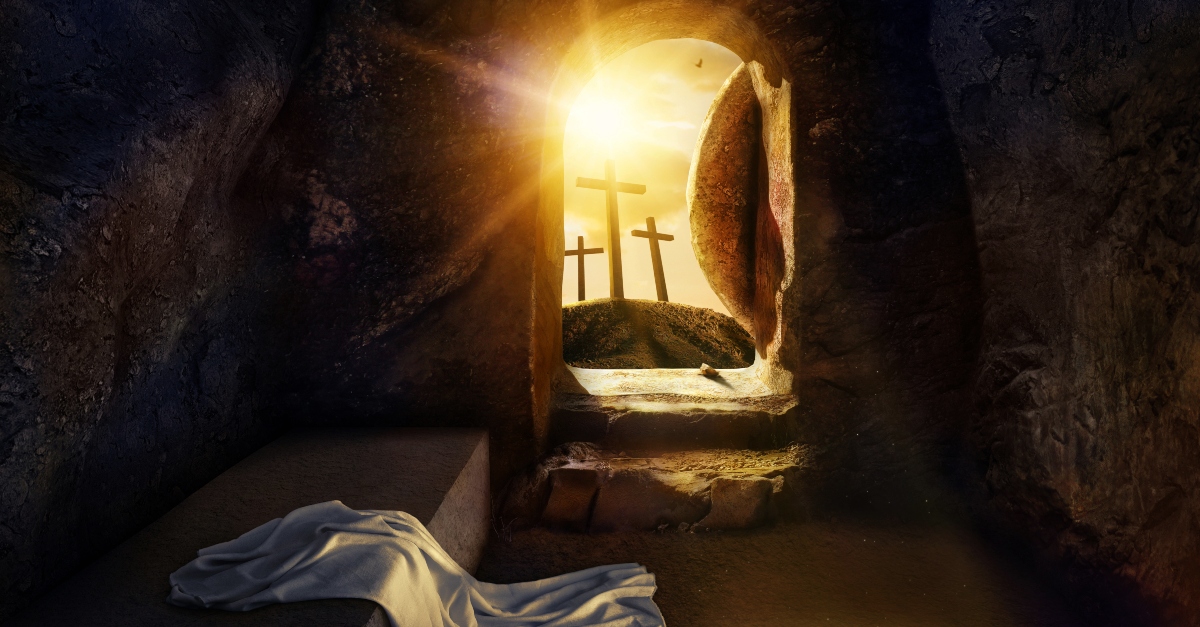
What Is the Importance of the Empty Tomb?
1. Christianity proclaims fullness of joy in an empty tomb.
       
      On the eve of his crucifixion, Jesus spoke these words John 16:22 -  

“Therefore you too have grief now; but I will see you again, and your heart will rejoice, and no one will take your joy away from you.” 

      Jesus promised His disciples that they would see him again. How? Jesus made a dozen, physical, post-mortem appearances to skeptics and believers for forty-days following His resurrection. These appearances motivated Jesus’ followers to announce: “He is not here, He is risen!” 

        Christianity communicates a message of joy (that is, a sense of abiding confidence in God regardless of the circumstances). Jesus came as God-in-the-flesh to deal directly with evil, suffering and death. When Jesus asked His disciples whom they thought Him to be, Peter responded Mark 8:29 

"And He continued by questioning them, 'But who do you say that I am?' Peter answered and said to Him, 'You are the Christ.”' 

      It was at that instant that Jesus told them what He was going to do, which never was separated from what He had told them about Himself in Mark 8:31 

"And He began to teach them that the Son of Man must suffer many things and be rejected by the elders and the chief priests and the scribes, and be killed, and after three days rise again."

     Joy in Jesus is due to the joy found in His conquering of death, Hell and the grave. Drawing joy from Jesus’ resurrection provides supernatural tools necessary to deal head-on with fear and anxiety. 
Christian share of U.S. population plunges - POLITICO
2. Christianity’s fullness of forgiveness is due to an empty cross.
       
       The crucifixion of Jesus of Nazareth is the most widely attested event of antiquity. 1  Yet, many Christians wear empty crosses and most church-buildings have crosses with no crucified Jesus upon them. Why? An empty cross declares the uniqueness of Jesus’ death for sinners. Peter, one of Jesus’ original followers (i.e. “disciples”) and “sent-ones” (i.e. “Apostles”), wrote in 1 Peter 3:18 – 

“For Christ also died for sins once for all, the just for the unjust, so that He might bring us to God, having been put to death in the flesh, but made alive in the spirit.” 

      Another early Jesus-follower and Apostle, Paul, explained the achievement of Jesus’ crucifixion in Ephesians 1:7 - 

“In Him we have redemption through His blood, the forgiveness of our trespasses, according to the riches of His grace.”  

      John, another of Jesus’ disciples and Apostles of Jesus expressed in John 3:16 – 

“that whoever believes in Him shall not perish, but have eternal life.” 

     To experience God’s forgiveness at a time such as this grants strength to cope and help others. So, Christianity proclaims fullness of joy from an empty tomb and forgiveness because of an empty cross. How else does Christianity find fullness in empty things?
Magnolia Lutheran Church sanctuary - Magnolia Lutheran Church ...
3. Christianity proclaims fullness of hope despite presently empty church buildings.
        
      Good Friday (the day of Jesus’ crucifixion) points beyond itself to Easter Sunday and Jesus’ ascension into Heaven forty-days thereafter. Overwhelmingly, Jesus and His disciples expounded on how after His ascension into Heaven, there would come a future time in which He would return to earth.2 Jesus promised to have the Father send the Holy Spirit to strengthen His church and call people to believe on Him until His return (see John 14:26; 15:26; 16:7-11, 33; Titus 2:13). 

      Church buildings are great. However, Christianity’s temporary inability to meet in buildings doesn’t mean there is no fullness of hope! Christians can still encourage fellow co-workers bravely serving in essential areas like hospitals, supermarkets and factories. Others can send cards, make phone-calls or send encouraging messages through social media. Prayer for government, medical professionals and all impacted by COVID-19 is the supreme, unseen task of the church. 

      Those early disciples were gripped by fear between that first Good Friday and Easter Sunday. Yet, Jesus’ Good Friday suffering led to His Easter victory over death. Fear gave away to hope. As a final thought to you, dear reader: trust in Jesus, who can give you strength in this time and for times to come. 

Endnotes:

1. According to Dr. Norman Geisler's book "Christian Apologetics" (ppgs 322-325), sources outside the New Testament that attest to the crucifixion include Roman historians such as Tacitus (A.D. 55-117), the Jewish historian Josephus in Book 18 of his work "Antiquities" and the Roman Historian Suetonius, just to name a few. I count at least a dozen references outside the New Testament. The four Gospels, Acts and 1 Corinthians 15:1-10 are counted by historians of all stripes as the primary source documents for Jesus' crucifixion. 

2. Luke records the words of Jesus ascending into Heaven before His disciples in Acts 1:9-11 "And after He had said these things, He was lifted up while they were looking on, and a cloud received Him out of their sight. 10 And as they were gazing intently into the sky while He was going, behold, two men in white clothing stood beside them. 11 They also said, “Men of Galilee, why do you stand looking into the sky? This Jesus, who has been taken up from you into heaven, will come in just the same way as you have watched Him go into heaven.”

The Apostle Peter would preach ten days later about the significance of Jesus' ascension, and how it tied-in with His crucifixion and resurrection in Acts 2:32-36 - This Jesus God raised up again, to which we are all witnesses. 33 Therefore having been exalted to the right hand of God, and having received from the Father the promise of the Holy Spirit, He has poured forth this which you both see and hear. 34 For it was not David who ascended into heaven, but he himself says:

‘The Lord said to my Lord,
“Sit at My right hand,
35 Until I make Your enemies a footstool for Your feet.”’

36 Therefore let all the house of Israel know for certain that God has made Him both Lord and Christ—this Jesus whom you crucified.”

    As a final thought in this end note, the Apostle Paul wrote in Philippians 3:20-21 of how Christ's ascension and soon return provide Christians with unshakable hope - "For our citizenship is in heaven, from which also we eagerly wait for a Savior, the Lord Jesus Christ; 21 who will transform the body of our humble state into conformity with the body of His glory, by the exertion of the power that He has even to subject all things to Himself."

Friday, April 3, 2020

Bird's-eye view of the Bible - Why the incarnation is important to you today: to provide righteousness and forgiveness of sin.

Jesus Christ as Incarnate Wisdom - Athanasius - Crossroads Initiative
Introduction:

       In our last post, we began to do our "bird's-eye view" of the New Testament by introducing the truth and theme of "incarnation". For readers desiring to review the previous post, simply click here: http://www.growingchristianresources.com/2020/04/birds-eye-view-of-bible-introducing.html

       What follows below is a brief review of what we mean when we use the term "incarnation" to describe the entry of the Son of God into the world. He, being truly God, came to also be truly man in the first century, so as to provide salvation that is receivable by faith in any century. Today's post will expand upon this theme of "incarnation" by offering two reasons in why the incarnation of the Son of God is relevant to us.

1. What is meant by "incarnation".

            John 1:1 begins with a the fact of the Person of the Son (called by the title "The Word") dwelling in eternity past. We see "The Word" first identified as "God": "In the beginning was the Word, and the Word was God". 

      Next we see the Word distinguished from another Divine Person whom we know is the Father but is called "God": "and the Word was with God". When we go down to John 1:14, we discover that the Word (that is, the Divine Person of the Son) entered into our world to live life as a man: 

"The Word became flesh, and dwelt among us, and we beheld His glory, the glory as of the only begotten of the Father, full of grace and truth." 

      The eternal Word or Son came to be "incarnated" or "in the flesh". Put another way, the Son, having always existed as truly God, came to express Himself a second way by becoming truly man (while still remaining truly God). 


2. Why is the incarnation of the            Son of God important to you and 
    me?

              So why was the coming of the Son of God to earth to become and live a human life so important? 

A. The first reason why the incarnation is so important was for Jesus to provide righteousness (that is, so that God could counts those who receive Jesus by faith as right with Him).What is the incarnation? | CARM.org
          
      I remember the time when our family got to go into Disney for free. We had a friend who worked for Disney and had six tickets that she could give to whomever she wanted. When she offered them to us, at first we hesitated, telling her that we didn't feel worthy of receiving them. However, the woman and her husband both insisted, and even offered to spend the day with us, guiding us through the park. Our friend had earned those tickets by being a Disney employee.  

      You see, Disney counted our family's tickets as good enough for entry into the park, even though we had not bought them, but rather because they were paid for as a result of our friend working there. 

         When Jesus came into our world, He did so as the Eternal Son of God expressing Himself as a weak, frail infant of the Virgin Mary. He became a human being, grew and experienced life as a child, teenager and an as adult man. We understand that because Jesus was sinless in His human life, He provided the right to be with God for any person who would receive Him as Savior (John 14:6; Acts 4:12; 1 Peter 2:21-22).  Jesus' perfect life actively obeyed God in complete compliance. Jesus' flawless humanity was necessary in qualifying Him to be the sacrifice for sins on the cross. The moment you and I trust in Jesus by faith we, God counts us as the "right to be with Him" or "righteousness" to us because of Jesus.

B. The second reason for the incarnation was so that Son of God could, by His death on the cross, redeem us for the forgiveness of sins (John 3:16; 1 John 4:10; 1 Peter 3:18).The Crucifixion of Jesus - Facts About His Death on the Cross
     
       There once was a man who was on his way to work on Christmas Eve and was speeding through a little town. Suddenly, a policeman pulled him over and gave him a $100 ticket. The man had to appear before the judge to pay the fine. The judge asked: "how do you plead?" The man had no choice (since the same officer was in the courtroom) and pleaded "guilty", paying the $100. As the man walked out of the court, he said to himself: "I wish someone would had paid the $100 ticket for me". The man wished the court could had "forgiven him". Yet, the man knew the ticket had to be paid in order to be declared "guiltless".  

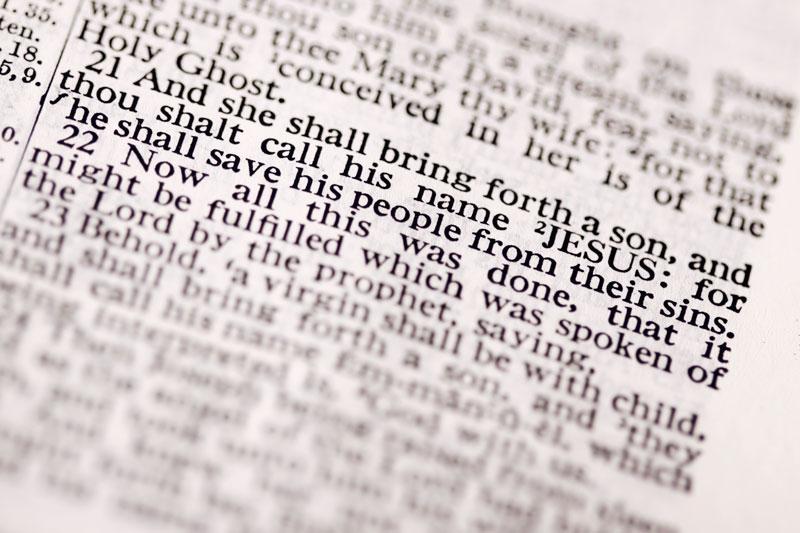
      We know that Jesus is the eternal Son of God by the Divine characteristics He has as God (Romans 9:6). He had to come be a man, since as God, He could not die (what the Bible describes as God being immortal or "incapable of dying", see 1 Timothy 6:16). As He ever remained truly "God with us" or "Immanuel" (Matthew 1:23), Jesus experienced death on the cross for sins as "truly man for us" (1 Peter 3:18). 

      By dying for our sins, Jesus also destroyed the works of the devil (Romans 5:8; 1 John 3:8). Remarkably, Jesus being truly God meant that the work of the cross had infinite value. As truly man, Jesus' work on the cross meant that the value of His saving accomplishment was made accessible to any sinner who, by God's grace, receives Him by faith (see Ephesians 2:8-9). 

More next time....

Wednesday, April 1, 2020

Bird's-eye View of the Bible - Introducing A Survey of the New Testament and the theme of "Incarnation"

Jesus Only Appears in the New Testament | Jewish Voice Ministries ...

Introduction:

      Not too long ago I finished a multi-week survey of the Old Testament in a study called: "A Bird's-Eye View of the Bible". In that survey, we explored ten major themes that covered the general contours of God's working in the formation of and working with the nation of Israel. Interested readers can read the last post I did in our "bird's-eye view" series, which includes the ten themes covered in the Old Testament by clicking on the link here: http://www.growingchristianresources.com/2020/03/birds-eye-view-of-bible-exploring-theme_24.html 

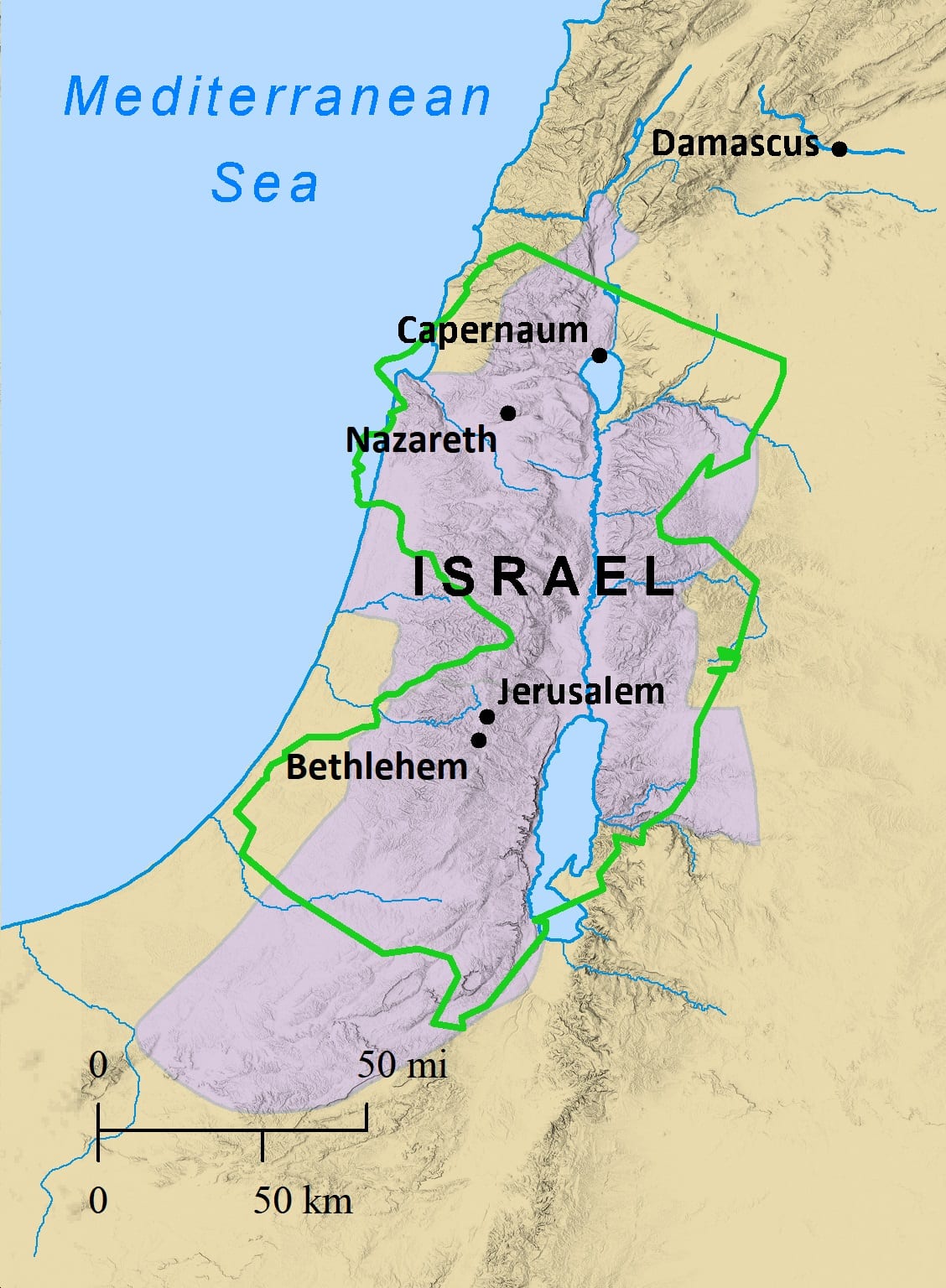
Israel in Old Testament times | Bible mapping, Bible knowledge ...
      We saw how God used the entirety of Israel's history and the history of the world to prepare for the arrival of the Son of God in history. Having completed that particular survey, we now continue on with our "Bird's-eye view" by making our way into the New Testament. 
The Big and Small World of Bible Geography
       Like what we did in the Old Testament, we will discover ten additional themes that help summarize what we find in the New Testament. The ten themes we will explore are as follows:

1. Incarnation.
2. Humiliation.
3. Gospel.
4. Exaltation.
5. Pentecost  
6. Missions. 
7. Christian. 
8. New Covenant.
9. Second coming.
10. Eternity. 

       We had expressed at the beginning of this series that all the themes we would uncover have Jesus' cross and resurrection as their central theme. The ten themes we explored in the Old Testament were referred to as "pre-cross", meaning that all the themes pointed to and prepared for what Jesus would accomplish. The themes we are about to explore are "post-cross", that is, they are themes which flow from what Jesus came to accomplish: salvation (see Mark 10:45; Luke 19:10). Today we will begin to look at the first theme of our New Testament "bird's eye view": the theme of "incarnation".

1. How God's revelation of Himself 
    in the Old Testament hints at the 
    Trinity, and why that sets the 
    stage for what we will see in the 
    New Testament's revelation 
    about God. 

Understanding and Planting Oak Trees | Mossy Oak
        We understand from our reading of the Old Testament that God revealed Himself as One God (Deuteronomy 6:4-5).  At the near beginning of Genesis we find that this One God is identified as the Person of the Holy Spirit (Genesis 1:2), having the power to create life. Additional revelation about God tells us that God is revealed as not only the Person of the Holy Spirit, but also the Person of the Father who called Israel to be a people and a nation (see Deuteronomy 32). As we read further on into the Old Testament, we see in Psalm 110 and Proverbs 30:4 of the Person of the Father speaking in eternity to another Divine Person known as: "the Son". 

     The Old Testament tends to focus more on God being one God and less on His three-fold identity as the Father, Son and Holy Spirit. Why? The way God reveals truth is by "progressive revelation", meaning that He will begin with a generalized set of features about that truth and continue to expand on further details as time goes forward. To put it another way, the acorns of truth we find in the Old Testament turn out to be the mighty oaks that fill the forest of New Testament revelation. 

      With this in mind, we can tell that the Old Testament is hinting at the idea that somehow, these three Persons share together in the same unity of Divine life that is defined with being One God (eternal, all-knowing, everywhere present, all powerful). 
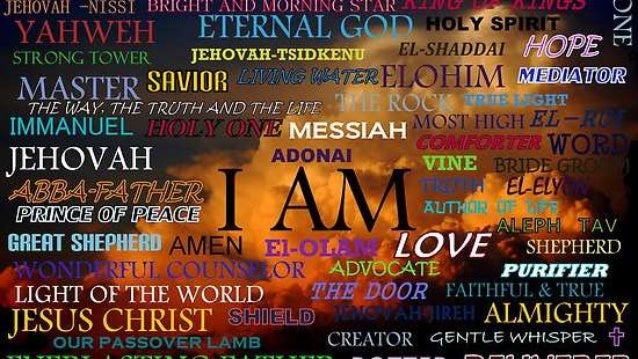
Seven names of god in judaism, Seven names of God in Christianism
      God is awesome in not only how He reveals His identity and characteristics, but also His names. Sometimes we find names that emphasize that God is definitely One God, as seen in names such as "God" (Genesis 1:1), "I am who I am" (Exodus 3:14) and "The King" (Isaiah 6). Other names of God reveal that He is more than One Person, as in Genesis 1:26 "let us make man in our image" or where you will see the name "Jehovah" used to refer to three personalities as we find in Isaiah 48:16-18. The names of God tell us quite a bit about God and help us to see the picture a little bit better.
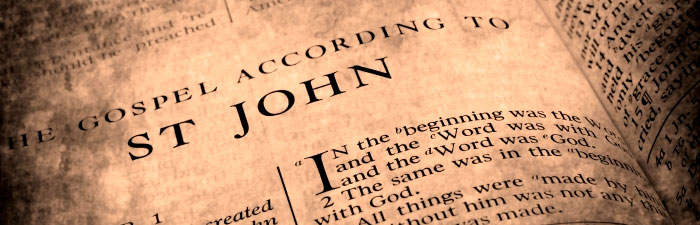
The Prologue to St. John's Gospel – Mp3 audio and text
       Whenever we come to the New Testament, we see the truths of God being One God and yet three persons most fully revealed. The New Testament's revelation of God is a further detailing of the hints about God we already saw in the Old Testament. John 1:1 is a good place to pickup on all we've said so far about God, since the eternal Person of the Son (called "the Word") in John 1:1 is the featured focal point in understanding our theme of "incarnation". 

2. What is meant by "incarnation".
Creation, the Trinity, and the Incarnation: What “God with US ...
     John 1:1 begins with a the fact of the Person of the Son (called by the title "The Word") dwelling in eternity past. We see "The Word" first identified as "God": "In the beginning was the Word, and the Word was God". Next we see the Word distinguished from another Divine Person whom we know is the Father but is called "God": "and the Word was with God". When we go down to John 1:14, we discover that the Word (that is, the Divine Person of the Son) entered into our world to live life as a man: "The Word became flesh, and dwelt among us, and we beheld His glory, the glory as of the only begotten of the Father, full of grace and truth." The eternal Word or Son came to be "incarnated" or "in the flesh". Put another way, the Son, having always existed as truly God, came to express Himself a second way by becoming truly man, while still remaining truly God. 

     In the next post, we will look at why the incarnation of the Son of God is relevant to our lives in the 21st century.

More next time....

Friday, March 27, 2020

Part Two: God's Morally Sufficient Reasons for Permitting Evil and Suffering: Thoughts on COVID-19 And Jesus' Raising of Lazarus From The Dead.

Image result for COVID-19
John 11:1-4 "Now a certain man was sick, Lazarus of Bethany, the village of Mary and her sister Martha. 2 It was the Mary who anointed the Lord with ointment, and wiped His feet with her hair, whose brother Lazarus was sick. 3 So the sisters sent word to Him, saying, “Lord, behold, he whom You love is sick.” 4 But when Jesus heard this, He said, “This sickness is not to end in death, but for the glory of God, so that the Son of God may be glorified by it.”

Introduction: Let me say upfront...


     Yesterday I began to write about some of the moral sufficient reasons God has for allowing evil and suffering to persist in our world. As I noted yesterday and I'll state once more, we want to consider reasons why God delays (or seems to delay) in preventing pain and suffering. I want to say from the onset that this post, like yesterday's, doesn't claim to know specific reasons why God would allow certain things to happen in particular situations. If details within the circumstance presents themselves in light of God's word and to a heart prepared for the answer, we then may have liberty to communicate what God is possibly doing. 

      God's desire is not for us to just know that He exists, but for us to know Him in a saving way (see 2 Peter 3:9-10). I would encourage interested readers in this present post to explore the end notes I have included for the sake of explaining the issues I raise throughout the post. For readers who missed the last post (part one), they can click on the link here: http://www.growingchristianresources.com/2020/03/part-one-gods-morally-sufficient.html  

       In yesterday's post we considered three morally sufficient reasons that God may allow evil and suffering in our world as revealed in scripture and inferred from considerations of the natural order:

 1. God's first morally sufficient reason 
    for permitting pain and suffering is 
    to bring about a greater good

2. God's second morally sufficient 
    reason for permitting pain and 
    suffering is to develop moral and 
    Godly Character.

3. God's third morally sufficient reason 
    for permitting pain and suffering for 
    circumstances that may position 
    people to response to the Gospel 
    when called to believe by the Holy 
    Spirit.

     Today we will offer two more reasons that can aid us in working through what is going on in our world in lieu of this pandemic.

The problem of evil, suffering, COVID-19 and God's morally sufficient reasons for allowing such.

     The problem of evil and suffering or, as C.S. Lewis calls it: "the problem of pain", has occupied both philosophical and theological discussions among all sorts of thinkers.1 

     Whether we're talking about humanly-contrived evils such as 911 or naturally-occurring evils such as the COVID-19 virus, people's minds rightly raise the question: "why so much evil?" As we find ourselves in an escalating pandemic, it is important for Christians to shine the light of hope in Jesus Christ to all people. The Christian worldview uniquely has the resources to equip people spiritually and psychologically to face the turmoil of COVID-19 as everyone seeks a medical and viable response to this crisis. We will consider today and tomorrow an episode in Jesus' earthly ministry that involved Him as God-incarnate dealing with the death of a beloved friend - Lazarus.2 

       As we reflect upon this episode in John 11, we will offer two other truths that can aid greatly in understanding the realities of evil, suffering and disease as they are morally permitted by a God that is Himself all-good, all-knowing and all-powerful. 

God's fourth morally sufficient 
reason for permitting pain and 
suffering is to reveal His glory.

 Image result for Jesus raising lazarus      
       One may think that God's Divine tolerance of evil and suffering would detract from the revelation of the perfections of His goodness (i.e. His glory). However, notice what Jesus says the outcome will be of Lazarus' sickness in John 11:4 

"But when Jesus heard this, He said, 'This sickness is not to end in death, but for the glory of God, so that the Son of God may be glorified by it.”' 

     Lazarus dies near the end of John 11. However, his death is only temporary. Indeed, Jesus' bringing Lazarus back to life demonstrates the truth of His words, namely, the sickness would not lead to death. Jesus stated the intended outcome of His alleged delay in getting to Lazarus: "for the glory of God" and "that the Son of man may be glorified by it." We may or may not know how God is ultimately going to be glorified in this current world-wide crisis. Still, in consideration of the three previous reasons we've given as to why God would permit such things, we have warrant for holding the conviction that God will somehow make Himself more clearly known through these circumstances.3 
Image result for jewels on a dark cloth      To illustrate my point of how God may show His glory through Divine allowance of evil and suffering, consider a jeweler and a dark-cloth. Much like a jeweler placing a black cloth in the background of a precious jewel to make the jewel's facets pop out in their brilliance, so too, God chose to create a world populated by free-moral creatures with the permitted possibility of such creatures rejecting Him. Although it may right now look like God's purposes are thwarted, nevertheless, in the end, God will be glorified (see Habakkuk 2:14; 1 Corinthians 15:24-28; Revelation 11:15; 21-22).  


God's fifth morally sufficient 
reason for permitting pain and 
suffering is to generate trust in 
Him.
Image result for trusting God
     The one trait I notice about the Biblical record's portrayal of God's Sovereignty and the reality of pain and suffering is this: God doesn't usually tell us "why".4 

       When we look once more at Jesus' miracle of raising Lazarus in John 11, do we see evidence of the strengthening of somebody's trust in Jesus? We do. Mary, Lazarus' sister, was young in her faith. She was the one who sat at Jesus feet, listening to Him teach in Luke 10:38-42. Did Mary grasp why Jesus delayed his coming to Lazarus? No. She tells Jesus in John 11:32 that if He had arrived sooner, Lazarus would not had died. Notice Jesus' response. He weeps. Yet, He doesn't explain to Mary why He delayed. Instead, Jesus does the miracle and then we find an extraordinary outcome beginning in John 12. In John 12, Mary ends up anointing Jesus six days before His crucifixion. Her faith was strengthened enough to had been strengthened and we see a prime example of what it means to follow Jesus. 

Closing thoughts:

     In today's post we laid out five morally sufficient reasons as to why  God would will to permit pain and suffering. I want to remind the reader that this post in no way claims to know specific reasons "why" in particular circumstances, since often-times, we may or may not have sufficient time and context to discern such. Still, whenever we study a chapter like John 11, we can say that situations such as the current pandemic do not rule out the existence of an all-powerful, all-good God, since He has morally-sufficient reasons behind how He directs the affairs of our lives. We discovered five such reasons from our study:

1. God's first morally sufficient reason 
    for permitting pain and suffering is 
    to bring about a greater good

2. God's second morally sufficient 
    reason for permitting pain and 
    suffering is to develop moral and 
    Godly Character.

3. God's third morally sufficient reason 
    for permitting pain and suffering for 
    circumstances that may position 
    people to response to the Gospel 
    when called to believe by the Holy 
    Spirit.

4. God's fourth morally sufficient 
    reason for permitting pain and 
    suffering is to reveal His glory.

5. God's fifth morally sufficient reason 
    for permitting pain and suffering is 
    to bring about greater trust in Him.


       May the Lord enable us to trust Him more in this world as we find ourselves dealing with what can often-be the hardships of life. I close with these words from John 11:25-27 Jesus said to her, “I am the resurrection and the life; he who believes in Me will live even if he dies, 26 and everyone who lives and believes in Me will never die. Do you believe this?” 27 She said to Him, “Yes, Lord; I have believed that You are the Christ, the Son of God, even He who comes into the world.”

Endnotes:

1. Skeptics have historically raised two types of arguments against God's existence with respect to the problem of evil. 

     The first sort of argument suggests it is impossible to affirm both God's existence and the reality of evil. The second type of argument poses a more modest proposal, namely that given all of the evil in the world, it is improbable that God exists. 

       The first of these arguments, called the "logical problem of evil" assumes God has no morally sufficient reasons for willing to allow evil in the world. The way to respond to the first argument is to show the skeptic that no one is in any position to affirm there being no such reasons, since we are finite and God is infinite. 

       The second type of argument, called "the probabilistic argument of evil", focuses upon the amount and types of evil as being far too much to account for God's existence. Again, the Christian can show that whenever we consider the lines of evidences for God's existence (origin of the universe, fine-tuning of the universe for life, the reality of objective moral values and duties and other arguments), then such evidences counter-balances and outweighs any improbability one could affirm if they only focused on the world's evil and suffering. The above post covered what is perhaps one of the most familiar miracles of Jesus recorded in the four Gospels - the raising of Lazarus from the dead.  In this particular post, I simply wanted to lay out some of the Biblical and life-practical reasons that explains God's morally sufficient purposes for permitting pain and suffering. What followed was not meant to be exhaustive, since there are morally sufficient reasons that God has for permitting much of what we see and yet, we're not in the position to necessarily know what those reasons are. 

2. As we turn our attention to Jesus' actions in John 11, the overwhelming questions before us is this: "why did Jesus delay in healing Lazarus and allow him to continue to suffer and then die?" As I noted already, Jesus expresses Himself as God in the flesh (see Matthew 26:64; 28:17; John 8:58). Moreover, Jesus' own disciples and the Gospel writers concluded that Jesus was indeed the decisive revelation of God in human flesh, being truly God and truly man in One Person (see Matthew 1:23; John 1:14). Most of all, Jesus' own enemies drew the conclusion that Jesus' actions and words were meant to convey that He regarded Himself as God-incarnate (see Mark 2:5-7). We have then a test case for wrestling with what possible morally-sufficient reasons were used by Jesus in what He would say and do in light of Lazarus' death.  

3. We read elsewhere in John's Gospel concerning why a certain man had been born blind in John 9:1-3 "As He passed by, He saw a man blind from birth. 2 And His disciples asked Him, “Rabbi, who sinned, this man or his parents, that he would be born blind?” 3 Jesus answered, “It was neither that this man sinned, nor his parents; but it was so that the works of God might be displayed in him." God can use bad circumstances to reveal His glory. 

4. In Job for example, the reader is given a gallery view of the cosmic chain of cause and effect going on between the actions of Satan, various villains in Job's life, the weather patterns and of course God's guidance of the whole process through those secondary causes. God doesn't divulge to Job why Job is undergoing his atrocities. However, by the end of Job, we find Job's trust in God strengthened, as seen in Job 42:5 “I have heard of You by the hearing of the ear; But now my eye sees You".

Thursday, March 26, 2020

Part One: God's Morally Sufficient Reasons for Permitting Evil and Suffering: Thoughts on COVID-19 And Jesus' Raising of Lazarus From The Dead.


Image result for COVID 19
John 11:1-4 "Now a certain man was sick, Lazarus of Bethany, the village of Mary and her sister Martha. 2 It was the Mary who anointed the Lord with ointment, and wiped His feet with her hair, whose brother Lazarus was sick. 3 So the sisters sent word to Him, saying, “Lord, behold, he whom You love is sick.” 4 But when Jesus heard this, He said, “This sickness is not to end in death, but for the glory of God, so that the Son of God may be glorified by it.”


Introduction: Let me say upfront...


     In this post and the next, we want to consider reasons why God delays (or seems to delay) in preventing pain and suffering. I want to say from the onset that this post in no way claims to know specific reasons why God would allow certain things to happen in particular situations. I've learned it is sometimes better to wait and remain silent than to offer what can often be presumptuous and ill-timed remarks. If details within the circumstance presents themselves in light of scripture and to a heart prepared for the answer, we then may have liberty to communicate what God is possibly doing. 

      The intentions I have instead are to offer what morally sufficient reasons God has in His working through the broader patterns of evil and suffering in our world. Such Divine reasons do apply in every detail of life, with the understanding being that we may or may not ever find out what those reasons are. God's desire is not for us to just know that He exists, but for us to know Him in a saving way (see 2 Peter 3:9-10). I would encourage interested readers to explore the end notes I have included in this post that dig deeper into the discussion.  

The problem of evil, suffering, COVID-19 and God's morally sufficient reasons for allowing such.
Image result for jesus raising lazarus
     The problem of evil and suffering or, as C.S. Lewis calls it: "the problem of pain", has occupied both philosophical and theological discussions among thinkers past and present.1 

     Whether we're talking about humanly-contrived evils such as 911 or naturally-occurring evils such as the COVID-19 virus, people's minds rightly raise the question: "why so much evil?" In a recent conversation I had with a friend, they brought up the good point that we could raise a second question: "why does God, as a holy and just God, continue to remain patient with us?" 

      As we find ourselves in an escalating pandemic, it is important for Christians to shine the light of hope in Jesus Christ to all people. The Christian worldview uniquely has the resources to equip people spiritually and psychologically to face the turmoil of COVID-19 while seeking medically and socially viable  solutions to this crisis. We will consider today and tomorrow an episode in Jesus' earthly ministry that involved Him as God-incarnate dealing with the death of a beloved friend - Lazarus.2 

       As we reflect upon this episode in John 11, we will offer five truths (with the first three today) that can aid greatly in understanding the realities of evil, suffering and disease as they are morally permitted by a God that is Himself all-good, all-knowing and all-powerful. This post will aim to offer some reasons why God would allow such evils as COVID-19 to be in our world.


1. God's first morally sufficient 
    reason for permitting pain and 
    suffering is to bring about a 
    greater good related to His will.
Image result for Jesus raising lazarus

   John 11:5-6 states - 

"Now Jesus loved Martha and her sister and Lazarus. (6) So when He heard that he was sick, He then stayed two days longer in the place where He was." 

     Jesus purposefully delayed going to Lazarus. Why? a greater good was in view. What was the greater good? John 11:14-15 tells us: 

"So Jesus then said to them plainly, “Lazarus is dead, (15) and I am glad for your sakes that I was not there, so that you may believe; but let us go to him.” 

      Jesus knew that if He raised Lazarus when He raised Him, the disciples' faith in Him would  strengthen. They were in no position to see that outcome. In many instances, the possibility of God working out a greater good through His Divine permission of evil and suffering seems quite remote. 

      Nevertheless, the Bible and Christian worldview affirm two important features of our world in light of God's existence: there is a purpose to our life and there is no such thing as pointless suffering.3 Furthermore, the Bible and Christianity affirms two additional truths which bring focus to the first two truths: Jesus' incarnation and the cross. 
Image result for Jesus incarnation       The incarnation of the Son God meant that God, as the Person of the Son becoming also a man, came to deal directly with pain and suffering. The cross reminds us that the incarnate Son of God experienced first-hand pain and suffering, resulting in the proclamation that God has overcome sin and death by His resurrection from the dead. 
Image result for Jesus cross       The timing of Jesus in waiting for two days before going to Lazarus was such that the delay proved quite strategic, as we will see later on in John 11. So, God often-times wills to permit evil and suffering to bring about a greater good which accomplishes His purposes.4 

2. God's second morally sufficient 
    reason for permitting pain and 
    suffering is to develop  
    character.
Image result for compass        Why else would God permit evil and suffering to persist in our world? for the development of moral character in people. Think about His conversation with Martha in John 11:20-27 

"Martha therefore, when she heard that Jesus was coming, went to meet Him, but Mary stayed at the house. (21) Martha then said to Jesus, “Lord, if You had been here, my brother would not have died. (22) Even now I know that whatever You ask of God, God will give You.” (23) Jesus said to her, “Your brother will rise again.” (24) Martha said to Him, “I know that he will rise again in the resurrection on the last day.” (25) Jesus said to her, “I am the resurrection and the life; he who believes in Me will live even if he dies, (26) and everyone who lives and believes in Me will never die. Do you believe this?” (27) She said to Him, “Yes, Lord; I have believed that You are the Christ, the Son of God, even He who comes into the world.”

       By the end of the conversation, Martha's faith and perspective on Jesus and the meaning of life had shifted to a more Christ-centered direction. She would never be the same after this miracle. What if Jesus had arrived two days prior? Would we had witnessed this conversation? Would Martha had experienced such a life-altering change? 

       As the late pastor and SBC statesman, Adrian Rogers, noted about God's seeming delays: "God's delays are not God's denials". God can use circumstances - both evil and good, difficult and easy - to nudge a person in a moral and spiritual direction (see John 16:7-11). So, God's morally sufficient reasons for permitting pain and suffering include some greater good and the development of Godly character. Notice a third possible morally sufficient reason God may have for permitting evil and suffering in our world.


3. God's third morally sufficient 
    reason for permitting pain and 
    suffering is to bring about 
    conditions which bring about a 
    positive response to the Gospel

Image result for the gospel of Jesus
              The situation of Jesus and Lazarus in John 11 reminds me of another episode in which Jesus answers questions directly related to why God allows evil and suffering in our world. In Luke 13:1-5 Jesus has the following conversation - 

"Now on the same occasion there were some present who reported to Him about the Galileans whose blood Pilate had mixed with their sacrifices. (2) And Jesus said to them, “Do you suppose that these Galileans were greater sinners than all other Galileans because they suffered this fate? (3) I tell you, no, but unless you repent, you will all likewise perish. (4) Or do you suppose that those eighteen on whom the tower in Siloam fell and killed them were worse culprits than all the men who live in Jerusalem? (5) I tell you, no, but unless you repent, you will all likewise perish.”


      Jesus is dealing with two incidents, both of which He never gives the full reasons for why God permitted them to occur. The only common thread we find in Jesus' two examples is the urgency for His audience to repent. Jesus showed His audience that they ought to see themselves as sinners in need of grace before a Holy God, rather than to presume their entitlement to an easy life that they think God owes them. 
      
      Repentance is both a Divine gifting of grace and definite turning of the mind and heart from sin unto Christ (see Acts 2:36-38; 2 Timothy 2:24-25). Mind you, these morally sufficient reasons cannot on their own explain every instance for why there may be suffering in a given situation, yet, increasing darkness can prepare people for a more likely reception of light. 

Closing thoughts for today 


      Jesus doesn't lay out the philosophical nor theological reasons for the Tower of Siloam falling on bystanders nor the slaughter of worshipers of God in the temple. But one thing is certain: God can use bad things to get our attention. We may not grasp the "whys". All we know is that it is incumbent upon every person to be sure they are right with God through reception of Jesus by faith. When we return back to John 11:45, we read the following outcome of this miracle - "Therefore many of the Jews who came to Mary, and saw what He had done, believed in Him."

More tomorrow....

Endnotes:

1. Skeptics have historically raised two types of arguments against God's existence with respect to the problem of evil. 

     The first sort of argument suggests it is impossible to affirm both God's existence and the reality of evil. The second type of argument poses a more modest proposal, namely that given all of the evil in the world, it is improbable that God exists. 

       The first of these arguments, called the "logical problem of evil" assumes God has no morally sufficient reasons for willing to allow evil in the world. The way to respond to the first argument is to show the skeptic that no one is in any position to affirm there being no such reasons, since we are finite and God is infinite. 

       The second type of argument, called "the probabilistic argument of evil", focuses upon the amount and types of evil as being far too much to account for God's existence. Again, the Christian can show that whenever we consider the lines of evidences for God's existence (origin of the universe, fine-tuning of the universe for life, the reality of objective moral values and duties and other arguments), then such evidences counter-balances and outweighs any improbability one could affirm if they only focused on the world's evil and suffering. The above post covered what is perhaps one of the most familiar miracles of Jesus recorded in the four Gospels - the raising of Lazarus from the dead.  In this particular post, I simply wanted to lay out some of the Biblical and life-practical reasons that explains God's morally sufficient purposes for permitting pain and suffering. What followed was not meant to be exhaustive, since there are morally sufficient reasons that God has for permitting much of what we see and yet, we're not in the position to necessarily know what those reasons are. 

2. As we turn our attention to Jesus' actions in John 11, the overwhelming questions before us is this: "why did Jesus delay in healing Lazarus and allow him to continue to suffer and then die?" As I noted already, Jesus expresses Himself as God in the flesh (see Matthew 26:64; 28:17; John 8:58). Moreover, Jesus' own disciples and the Gospel writers concluded that Jesus was indeed the decisive revelation of God in human flesh, being truly God and truly man in One Person (see Matthew 1:23; John 1:14). Most of all, Jesus' own enemies drew the conclusion that Jesus' actions and words were meant to convey that He regarded Himself as God-incarnate (see Mark 2:5-7). We have then a test case for wrestling with what possible morally-sufficient reasons were used by Jesus in what He would say and do in light of Lazarus' death.  

3. The literature refers to the idea of "pointless suffering" by the technical name: "gratuitous evil". Some atheists have attempted to argue against God's existence on the grounds that events such as the death of animals in a forest fire counts as an example of "gratuitous" or "pointless evil". Such a move attempts to undercut the Christian conviction of purpose and meaning in our world due to God's existence. The Christian can respond by pressing the atheist to list criteria by which we could judge a given event as an example of "gratuitous evil". It would be argued that no skeptic can shoulder the burden-of-proof required to demonstrate any evil or suffering as "pointless". 

4. As we consider the pathology of such diseases as COVID-19, we only have three choices for explaining why it is ultimately happening: chance, Satan or God's sovereignty. What people claim they believe and how they behave can often differ. 
  
      The concerted effort to strategically fight the virus suggests that, deep down, people don't believe we are the result of blind-chance and forces of nature. The second option for why such a thing as COVID-19 existing could be Satan. There is no doubt about, Satan is directly responsibility for much of the evil in our world, yet, He is not Sovereign and furthermore, He is bounded by finite limitations as a creature. Whatever level of involvement Satan may have (we know he can work in diseases, such as Job's case in the book of Job), the fact there are often greater goods to emerge from otherwise ravaging evils suggests Satan is not the ultimate explanation. 

       The only option left is that God's Sovereignty wills to permit the occurrences of such evils. The Bible rightly reminds us that God is not the author of evil and suffering (Habakkuk 1:13; 1 Corinthians 10:13; James 1:13). God does use evil and the choices of sinful creatures to bring about His greater purposes (see Genesis 50:20; Acts 2:23-24; 4:27-28; Romans 8:28).


Tuesday, March 24, 2020

Bird's-eye view of the Bible - Exploring the theme of hope as we conclude our study of the Old Testament


Image result for Biblical hope
Introduction:

    As we have flown over our overview of the Bible, we have covered nearly 3,500 years of time. To review where we have journeyed in this ongoing study, I'll first list the prior posts in this series that readers can review below:

Introducing the series: Bird's-eye view of the Bible. 
http://www.growingchristianresources.com/2020/01/introducing-birds-eye-view-of-bible.html

1. Theme of "Creation" in Genesis 1-2.
http://www.growingchristianresources.com/2020/01/birds-eye-view-of-bible-theme-of.html

2. Theme of "Catastrophe" in Genesis 
    3-11.
http://www.growingchristianresources.com/2020/02/birds-eye-view-of-bible-theme-of.html

3. Theme of "Patriarchs" in Genesis 12-
    50.
http://www.growingchristianresources.com/2020/02/birds-eye-view-of-bible-theme-of_9.html

4. Theme of "Redemption" in the books 
    of Exodus through Deuteronomy.
http://www.growingchristianresources.com/2020/02/birds-eye-view-of-bible-theme-of_12.html

5. Theme of "Spiritual Victory" in the 
    Book of Joshua.
http://www.growingchristianresources.com/2020/02/birds-eye-view-of-bible-theme-of-victory.html

6. Theme of "Spiritual Defeat" in the 
    Book of Judges.
http://www.growingchristianresources.com/2020/02/birds-eye-view-of-bible-breaking-sin.html

7. Theme of the "kingdom of God" in 1 
    and 2 Samuel.


8. The theme of "Straying away from        God" in 1&2 Kings and 1&2 
    Chronicles. 
http://www.growingchristianresources.com/2020/03/birds-eye-view-of-bible-theme-of.html


9. The theme of "Far-away from 
    home".
http://www.growingchristianresources.com/2020/03/birds-eye-view-of-bible-exploring-theme.html

   Image result for Biblical hope   
     As we prepare to leave the Old Testament in preparation for the New Testament, I want us to focus on the theme of hope. Have you ever had a light in a room operated by a "dimmer switch"? The dimmer switch can gradually turn on the lights and make them more bright or progressively dimmer. Whenever we think about how God is revealed the Bible, He made known the truths of His Word in a progressive way.  As we review all the themes we have observed in the Old Testament, I want us to take note of how we see the theme of "hope" gradually revealed.

 Image result for creation
     We began with God's creation of everything, life and humanity in the theme of "creation". Hope seemed at its brightest, since Adam and Eve had a perfect life with God in the first two chapters of Genesis. History began as a time of "innocence" for Adam, Eve and all creation, with God relating to them by an original covenant which, if obeyed completely, would had resulted in an eternity of fellowship with God.

     Sadly, Adam and Eve disobeyed God, listened to the serpent's suggestion to eat of the tree of knowledge of good and evil. The light of hope was gone from their life.  They had broken God's original covenant, resulting in what we called: "the catastrophe of the fall" (Romans 5:11-21). The Fall led to sin and death, as well as what would later be two other catastrophes: the Flood of Noah (Genesis 6-9) and the Tower of Babel (Genesis 10-11). Although the Fall of Genesis 3 brought incredible ruin, all was not lost. God had already planned to reveal the hope of salvation despite what He knew would take place in the catastrophe of the Fall. How do we know this?

     We read in Romans 8:21-25 that God already had planned for redemption, placing the whole of creation and humanity under a curse "for the sake of hope". We can see God initiating His eternal plan of salvation by offering Adam and Eve a second, gracious covenant which would outline the Gospel: death of an innocent on behalf of the guilty, receiving what God provided in salvation by faith apart from good deeds.

      God would regulate history and the rate of humanity's proneness to evil by way of conscience and human government.  Although man was in darkness, God was ever pointing mankind toward finding hope in God.

 Image result for abraham old testament
      We then came to Abraham and God's promise to Him of an ultimate blessing that would include the eventual nation of Israel and a descendant who would be the Savior of all time. The light of the hope of salvation was turned up a little more. We discovered a third theme which we called: "Patriarchs", since God's dealings with His people centered around Abraham, Isaac and Jacob. The covenant of grace God originally issued to Adam and Eve would find itself repeated in God's promise to never destroy the world with a flood (God's covenant to Noah in Genesis 8-9) and His covenant to Abraham, Isaac and Jacob. We once again see a glimmer of hope of God's plan of salvation working forth through what would become Abraham and his descendants.The time frame  between the days of Abraham to Moses is what we called: "the age of promise".

 Image result for red sea crossing  
     We then flew four hundred years from Abraham to Moses and came to our fourth theme: "redemption". We saw how God took a people (the Hebrews), rescued (that is, redeemed them) out of Egypt. God's purpose in redeeming the people from Egypt was to bring them to Himself, where He could meet with them at Mount Sinai, reveal the Law, reveals the tabernacle and make them into a nation of worshipers. The enslavement of an entire group of people for 400 years was indeed a dark time, yet, God brought the light of hope of salvation through Moses: God had heard their cries for help.

      God's way of regulating humanity would not only involve conscience, government and promise, but also the writing down of His laws on tablets of stone. God has always pointed mankind to their need for salvation, showing that no one can earn salvation by good moral living. Moses was given the Law of God, which was designed to point the way to people's need for the Gospel.

      In a way similar to Adam and Eve, the first generation of Israelites who came out of Egypt, under Moses, broke God's revealed law to them, and ended up wandering in the wilderness of Sinai for 40 years. Thankfully, God kept His promises to Abraham, Isaac and Jacob and would graciously bring the second generation of Israelites who followed Moses into the promise land.

 Image result for crossing jordan river
      We then came to our fifth theme of "spiritual victory". Joshua became the new leader of Israel after Moses died. God kept His promises and the people would cross the Jordan River on dry ground as they had crossed the dry-bed of the Red Sea out of Egypt some forty years earlier under Moses. The Red Sea crossing pictures salvation and entry into a new life with God. The Book of Joshua and the crossing of the Jordan river pictures both the enjoyment, spiritual warfare and growth that is included in the Christian life. The hope that is found in God shined brighter and brighter in the book of Joshua. The promised land had finally become the possession of the people to whom it was promised - God always keeps His Word.
Image result for book of Judges

      Theme six gave us the mirror opposite in the book of Judges from what we saw in Joshua, namely the theme of: "breaking the sin cycle". The book of Judges featured the next generation of Israelites living in the promised land after Joshua's death. Hope in God began to dim. The nation would suffer at the hands of one bullying nation after another. We learned how we sometimes find ourselves in a "spiritual rut". Only by admitting out sins to God can we get out of the "sin-cycle". Thankfully, Jesus has provided the solution to breaking those cycles of sin by the power He makes available through His work on the cross (1 John 1:9).

      The hope of God and His salvation at times shone brighter and at other times seemed almost blocked by man's sinful choices. I remember a small creek that ran by my boyhood home. The creek was a windy little body of water that snaked it's way through the woods and hillsides of rural Pennsylvania. There were no dams or pipes to control where it flowed. There is an old saying that goes something like this: "men and rivers are all alike, left to themselves, they run crooked". The little creek did as it pleased until redirected from an outside source. As we fly from the days of the Judges to those of the prophet Samuel, we see how crooked man can become apart from God. 1 Samuel 3 tells us that the lamp in the temple was about to no longer shine, for God's word was rare in those days.
Image result for david and goliath

      But God would intervene in Israel's history  by once again speaking through Samuel and eventually to the promises He would give to David. Much happened between the ministry of Samuel, the kingship of Israel's official first king, Saul, and the well-known episode of David and Goliath. One thing was clear, God gave a glimpse of His kingdom through establishing David as king over the earthly kingdom of Israel. God gave another covenant to David, promising an ultimate King through his descendants, which the New Testament will reveal as Jesus  (Matthew 1:1-17; Romans 1:1-3). Hope was starting to shine more brightly in the days of King David and thus our seventh theme: God and His kingdom.

 Image result for king solomon 
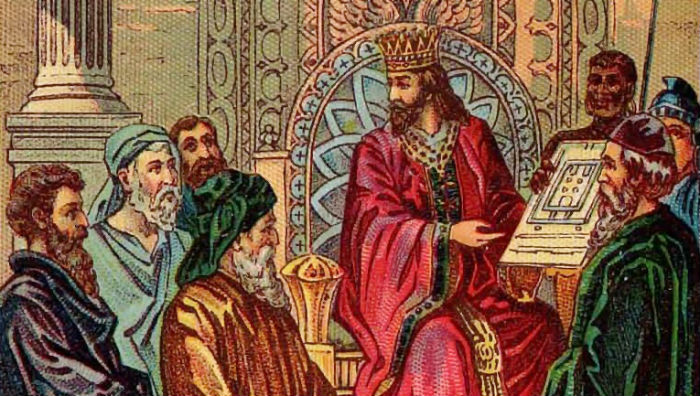
     This theme of hope shines and dims and shines like a blinking light through the eighth theme: "straying from God". David's son Solomon would follow as the third official king of Israel. Although Solomon began his kingship with desire to follow God, he would soon stray away from God. We only know from reading the book of Ecclesiastes that Solomon got back to God. The kingdom of Israel would split into two kingdoms following Solomon's death. We see nothing but straying away further from God in the Northern Kingdom called "Israel". The Southern Kingdom would have eight of its twenty kings used by God to call the people back to Himself. Sadly, despite the godly kings and prophets sent by God, the people of the Southern kingdom loved their idols and sin more than God. God used the prophets to speak of what was then a future hope of restoration back to God for a people whom God would send away into an Eastern land called "Babylon".
Image result for daniel in the bible

     It is in the ninth theme of "far away from home" that our "bird's eye view" would fly as we neared the end of the Old Testament. Beginning in 605 b.c.,King Nebuchadnezzar of Babylon and his armies conquered and took away the people of Jerusalem. Two other deportations in 597 b.c. and 586 b.c. would follow, with the final destruction of Jerusalem. Prophets such as Jeremiah, Ezekiel and Daniel communicated God's words about why the people were taken from their homeland: unrepentant sin and focusing on everything but God. Daniel in particular was of interest because of his seeing visions of things to come, predicting what would be the first and second comings of Jesus and living a life of faith for seventy years in a land far away from home. Despite the toughness of the situation, the hope of God is what got Daniel and his friends through their times in Babylon.

Image result for king nebuchadnezzar
     The time would finally come when the Jewish people would no longer live in Babylon.  A new king and empire would conquer the Babylonians. God had predicted some 200 years earlier in 720 b.c., through the prophet Isaiah, that this king, Cyrus, would be unknowingly used of God to bring about the next stage of plans for the people (see Isaiah 45). King Cyrus, and his immediate successor Darius, would make it possible for the Jews to begin returning back home. God used a Jewish man by the name of Nehemiah to go and begin the project of rebuilding Jerusalem's walls.
Image result for malachi prophet
     When it comes to regaining hope that was nearly lost, it takes time. The Jewish people had started to return to Jerusalem under the leadership of men such as Zerubbabel and Ezra the Scribe (you can read what they did in the books of Ezra and Nehemiah). Prophets such as Haggai, Zechariah and Malachi would express God's message of hope, restoring their nation and the promise of the then future Messiah.

      Malachi in particular would serve as the final writing prophet of the Old Testament, predicting the ministries of John the Baptist and Jesus  (the predicted Messiah) in the final two chapters of his book. God would then prove how much His people can hope in Him even when their lives are in danger - as we see in the book of Esther. 
 Image result for queen esther     
      Esther is the final book written in the Old Testament (written shortly after Malachi, though appearing in the order of books before his prophecy). Although Esther never mentions God by name, yet, we see evidence of God's protection of the Jewish people from the hands of their enemies. God is always on time and never late. Therefore we see this tenth theme of hope shining throughout the Old Testament,  setting the stage for what will be the coming of Jesus - our only hope and salvation.

We have explored then ten major themes in our bird's-eye overview of the Bible so far:

1. Creation.
2. Catastrophe.
3. Redemption.
4. Patriarchs.
5. Spiritual victory.
6. Breaking the sin-cycle.
7. God's kingdom.
8. Straying from God.
9. Far from home.
10. Hope.

       Four hundred years of time will pass from the writing of Malachi, the final prophet, to the events of Jesus' life recorded in Matthew's Gospel. We won't say much about this period, but there are four quick facts to consider as they relate to the coming of Jesus.
Image result for babylonian empire
      First, the Babylonians, whom we encountered in theme eight, "Far away from home", was an empire that dominated the middle eastern world for over seventy years (605-539 b.c.). The Book of Daniel covers its activities, and from the Babylonians we got the group of men whom would visit Jesus ton worship Him, otherwise known as the Magi.
Image result for medo persian empire map
      The next empire was the Medo-Persian empire, who took over Babylon and would reign for roughly 200 years (539 b.c. to 333 b.c.). The Medo-Persians invented crucifixion, which would be the method used to execute Jesus. 
Image result for greek empire
     The third empire to follow the Medo-Persians were the Greeks, led by Alexander the Great and later by his four generals following his death. The Greek empire would dominate the middle east and Europe from 333 b.c. to 63 b.c. The Greeks gave us the language in which the New Testament was written.
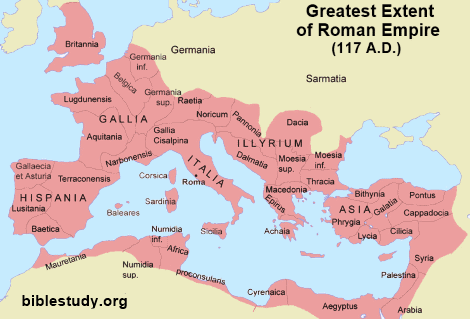
Image result for Roman empire
      The fourth and final fact to mention about the four hundred years between Malachi and Matthew is the fourth major empire, Rome, which would take over the Greek empire in 63 b.c. and be used as God's main method in bringing about Jesus' crucifixion. 

Closing thoughts:

Galatians 4:4 tells us: 

"But when the fullness of time had come, God sent forth his Son, born of woman, born under the law." 

    Daniel's prophecies predicted all of these empires in order, centuries before the events took place. God used all of Old Testament history to prepare the way for Jesus' first coming. We will now turn to ten more themes as we continue our "bird's-eye view of the Bible" in the New Testament, beginning in the next post.