Translate

Sunday, December 25, 2022

A Theological And Biblical Meditation On The Meaning Of Christmas


Introduction:

    Merry Christmas to all who have decided to visit this site today. Today's post will theologically and Biblically draw together how Christ's incarnation, crucifixion, and resurrection fit together. 

How Jesus' incarnation, crucifixion, and resurrection theologically give us the true meaning of Christmas.

    To begin our theological meditations this Christmas day, as ws we celebrate, let us remember that one cannot make sense of the meaning of Christmas apart from three foundational Christian doctrines: incarnation, crucifixion, and resurrection.

Incarnation explains the means of the Son of God's entry into our world.

    When we speak of Christ's incarnation, we refer to how the Son of God, being truly God by nature with the Father and the Holy Spirit as the blessed Trinity, came Himself into our world to assume a truly human nature in the virgin's womb (see Matthew 1:21;23; John 1:14; Colossians 2:9; 1 Timothy 3:16; Hebrews 2:11-14). Christ's incarnation is the means of coming into our world. But then, why become incarnated as a man?

Crucifixion explains the mission for why the Son of God became incarnated.

    The mission of the incarnation was for sake of crucifixion. It has been well said that the shadow of the cross ever fell upon the cradle at Bethlehem. The curse of sin brought about by the first Adam needed broken by the second Adam (see Deuteronomy 21:22-23; Romans 5:12-21; Galatians 3:10-13; 1 Corinthians 15:45-47). The curse of sin, pronounced by God in the Garden of Eden, could only be undone by one being truly God by nature (see Genesis 3:1-7; Romans 8:21-25; Colossians 1:16-21). Christ, being God, came to be man to go to the cross to bear the curse as both second Adam and ever truly God. But did His efforts work?

Resurrection was how the Son of God would manifest His glory as truly God and truly man.

    This is where we come to the third truth - Christ's resurrection. The means of entry into our world - incarnation; and the mission for which He came - crucifixion; would lead to the manifest glory of His resurrection from the dead. Bethlehem and Calvary were proved effective on the morning of the empty tomb. Christ's physical resurrection from the dead meant He would forever hold the keys of death and hell (Revelation 1:12-21).

    With those thoughts in place, the aim now is to Biblically draw as many parallels as possible between the birth narratives of Matthew and Luke to the crucifixion and resurrection accounts of the Lord Jesus Christ. John 18, 19 and 20 will be our main text for the crucifixion and resurrection narratives, with connecting points being drawn from Matthew and Luke. Below I will list some main headings and associated verses to aid you, the reader, in connecting the Christmas event of the cradle at Bethlehem to the Mission of the Savior at the cross.

1. The Shepherds told about the Savior born, who would die for the people as the Good Sherpherd.

Luke 2:11 "for today in the city of David there has been born for you a Savior, who is Christ the Lord."

John 18:14 "Now Caiaphas was he, which gave counsel to the Jews, that it was expedient that one man should die for the people."

What links these two passages together is the fact we see Jesus, our Good Shepherd.

2. He was Born and Died "The King of the Jews" because He is the True King.

Matthew 2:2 “Where is He who has been born King of the Jews? For we saw His star in the east and have come to worship Him.”

John 19:19 "And Pilate wrote a title, and put it on the cross. And the writing was, JESUS OF NAZARETH THE KING OF THE JEWS."

What links these two passages together is the fact we see Jesus our True King.

3. The Roman Empire was included in His birth and death, since Christ is the Ultimate Ruler.

Luke 2:1 "Now in those days a decree went out from Caesar Augustus, that a census be taken of all the inhabited earth."

John 19:23 "Then the soldiers, when they had crucified Jesus, took his garments, and made four parts, to every soldier a part; and also his coat: now the coat was without seam, woven from the top throughout."

What links these two passages together is the fact we see Jesus the Ultimate Ruler.

4. The Prediction of Mary's agony at His death spoken after his birth, hence He came as the obedient Son.

Luke 2:35 "and a sword will pierce even your own soul—to the end that thoughts from many hearts may be revealed.”

John 19:26-27 "When Jesus therefore saw his mother, and the disciple standing by, whom he loved, he saith unto his mother, Woman, behold thy son! 27 Then saith he to the disciple, Behold thy mother! And from that hour that disciple took her unto his own home."

What links these two passages together is the fact we see Jesus the Obedient Son.

5. The presence of myrrh in the accounts of His birth and death meant He would satisfy God's wrath for our sakes.

Luke 2:11 "After coming into the house they saw the Child with Mary His mother; and they fell to the ground and worshiped Him. Then, opening their treasures, they presented to Him gifts of gold, frankincense, and myrrh."

John 19:39 "And there came also Nicodemus, which at the first came to Jesus by night, and brought a mixture of myrrh and aloes, about an hundred pound weight."

What links these two passages together is the fact we see Jesus the Satisfaction of wrath.

6. Angels were present at His birth and resurrection, which heralded He being the victorious Savior.

Luke 2:13-14 "And suddenly there appeared with the angel a multitude of the heavenly host praising God and saying, 14 “Glory to God in the highest, And on earth peace among men with whom He is pleased.”

John 20:12-14 "and she saw two angels in white sitting, one at the head and one at the feet, where the body of Jesus had been lying. 13 And they said to her, “Woman, why are you weeping?” She said to them, “Because they have taken away my Lord, and I do not know where they have laid Him.” 14 When she had said this, she turned around and saw Jesus standing there, and did not know that it was Jesus. "

What links these two passages together is the fact we see Jesus the Victorious Savior.

Closing Thoughts

    When one considers the linkage between the manger, the cross, and resurrection, the lines of connection are extraordinary. In the midst of this Christmas Day celebration, let us not ever separate the cradle and the cross. As we have journeyed theologically and Biblically in this post, we noted the following six truths about the Lord Jesus Christ.

1. Jesus, our Good Shepherd
2. Jesus, our True King
3. Jesus, our Ultimate Ruler
4. Jesus, the Obedient Son
5. Jesus, the Satisfaction of Wrath
6. Jesus, the Victorious Savior

    May everyone have a Merry Christmas!

Friday, December 16, 2022

The Doctrine of Scripture Series: Marks Of Divine Inspiration For The Old And New Testament Canons


Introduction:

    As we have taken time to survey the doctrine of Scripture, we have done so in what I would call three stages. The first few posts handled introducing the subject as it pertains to the characteristics of Scripture itself and explaining the doctrine of inspiration. 

    Then, in “stage two” of this series, we investigated the Old Testament canon. We explored how it was the early Jews and Christians who came to recognize the 39 books of the Old Testament as Divinely inspired. Along the way, we explored the so-called “Apocryphal books”, evaluating whether or not they belong in the Old Testament canon, having concluded that they did not. 

    The third stage of this series has explored the New Testament canon. So far, we have noted the formation and collection of the New Testament books. Thus far have we traveled in our journey. For interested readers, I have preached a series of messages on Sunday nights dealing with the above topics, which readers can access at our church's website here https://www.youtube.com/@NewHopeBaptistChurchWatertown.

    In this post I want us to look at what Bible scholars refer to as "marks of Divine inspiration" or what others sometimes refer to as "tests for Divine inspiration". When one reads the early church fathers, such as Irenaeus of Lyons work "Against Heresies" (2nd century) or Eusebius' work "Ecclesiastical History" (early 4th century), certain criteria are inferred from how the early Christians recognized, received, and began to use the books of the New Testament. Similarly, when one reads through Jewish authors such as Philo of Alexandria, or Josephus, or the writings of the various Rabbinical schools (found in such volumes as "The Talmud"), similar sorts of criteria are noticed.  In my own study over the years, scholarship on canonicity done by such men as Norman Geisler, Gleason Archer, Michael Kruger, R.C. Sproul, Ben Witherington III, and David Alan Black have sharpened my thinking. What I share below are gleanings on such "marks of Divine inspiration" that I have discovered over the years, notwithstanding of course the gifted insights of Godly individuals such as those I just mentioned.

1. Why it is important to know which books are the Word of God.

    This issue of knowing which books are inspired or “canonical” has never lost its importance. Paul already had to deal with false teachers posing with their false documents claiming Divine authority. We read in 2 Thessalonians 2:1-2 “Now we request you, brethren, with regard to the coming of our Lord Jesus Christ and our gathering together to Him, 2 that you not be quickly shaken from your composure or be disturbed either by a spirit or a message or a letter as if from us, to the effect that the day of the Lord has come.”

    Luke, Paul’s aide in the ministry, wrote his Gospel to ensure the accuracy of the Gospel being preached throughout the Mediterranean world. He writes in Luke 1:1-4

“Inasmuch as many have undertaken to compile an account of the things accomplished among us, 2 just as they were handed down to us by those who from the beginning were eyewitnesses and servants of the word, 3 it seemed fitting for me as well, having investigated everything carefully from the beginning, to write it out for you in consecutive order, most excellent Theophilus; 4 so that you may know the exact truth about the things you have been taught.”

    Paul especially would urge his readers to have what he wrote read in the churches, that is, preached and taught, as we see in 1 Thessalonians 5:27 "I adjure you by the Lord to have this letter read to all the brethren." Having the right books is vital to establishing sound churches. One more example that demonstrates the importance of having the right books involves Peter’s words in 2 Peter 3:16-18

"as also in all his letters, speaking in them of these things, in which are some things hard to understand, which the untaught and unstable distort, as they do also the rest of the Scriptures, to their own destruction. 17 You therefore, beloved, knowing this beforehand, be on your guard so that you are not carried away by the error of unprincipled men and fall from your own steadfastness, 18 but grow in the grace and knowledge of our Lord and Savior Jesus Christ. To Him be the glory, both now and to the day of eternity. Amen."

    The New Testament evidence overwhelmingly shows us the importance of having the right books. I could also take the time to rehearse how the early church in the centuries after the Apostles worked through affirming and defending the New Testament canon. 

2. How we know that the books we have are the Word of God.

    Since Christianity proceeds on the basis of God’s Word, knowing which books are the Word of God is of utmost practical, as well as theological importance. Below are a series of “tests” that theologians have drawn from reading the early church father’s writings about the early church, their practices, and what they had to say about the Scriptures.

A. Old Testament marks of Divine inspiration.

    We must realize that it was the inspired books as God’s canon that formed God’s people, rather than God’s people formulating the inspired books that belonged to the canon. As each Old Testament book was composed, its recognition as inspired (and thus canonical) was immediate. Just as Isaac Newton came to recognize the law of gravity already present in creation, God’s people would recognize certain books already revealed by their Creator. So what principles were used? Let me mention two principles for how God’s people recognized the inspired books of the Old Testament Canon from insights gained in reading Normal Geisler’s “A General Introduction to the Bible” and Gleason Archer’s “A Survey of the Old Testament”.

*Miraculous Test. Was the writer confirmed by acts of God? See Exod. 4:1-9; Num. 16-17;
1 Kings 18; Mark 2; Acts 2:22; Heb. 2:4.

*Salvation Test. Can the book bring someone to saving faith? See Is. 55:11; 2 Tim. 3:15-17; Hebrews 4:12; 1 Pet. 1:23

    The Canon’s use would be used of God to call the people of God back to Himself. 2 Kings 22:9-11 “Shaphan the scribe came to the king and brought back word to the king and said, “Your servants have emptied out the money that was found in the house, and have delivered it into the hand of the workmen who have the oversight of the house of the Lord.” 10 Moreover, Shaphan the scribe told the king saying, “Hilkiah the priest has given me a book.” And Shaphan read it in the presence of the king. 11 When the king heard the words of the book of the law, he tore his clothes.“

B. New Testament marks of Divine inspiration.

    The “tests” we just looked at are similarly used in how God’s people came to recognize the New Testament books. When it comes to those, we can note three other such “tests”.

*Prophetic or Apostolic Test (Apostolicity). Was the book written by a prophet or Apostle of God, or an associate? In Exodus 24:4, we read of how Moses wrote down the words of God. Luke, and associate of Paul, writes in Luke 1:3-4 

“it seemed fitting for me as well, having investigated everything carefully from the beginning, to write it out for you in consecutive order, most excellent Theophilus; 4 so that you may know the exact truth about the things you have been taught.”

*Recognition Test. (Catholicity). When I use the term "catholicity", I mean not the Roman Catholic church. Instead, "catholicity" refers to "what was believed upon by all Christians, everywhere and at all times" (the term "catholic" derives from a Greek term meaning "universal"). In this test, we ask: was it recognized by the people of God? The Old Testament’s books recognition is demonstrated by how quickly they went into use after their writing. This observation fits too with the New Testament books. When one reads 1 Timothy 5:18, Paul cites Deuteronomy and Luke's Gospel as sacred Scripture. The dating of 1 Timothy (62-66 A.D.) and Luke's Gospel (60-62 A.D.) indicates immediate reocognition, reception, and use by God's people. 

    For an Old Testament example, in Joshua 24:26, we read of Joshua’s book being included alongside the first five books of Moses or “The Law”. Paul writes in 1 Thessalonians 5:27 “I adjure you by the Lord to have this letter read to all the brethren.” That phrase "read in all the churches" was Paul's way of saying "treat what I just wrote to you as auhthoritative Scripture". 

*Truth Test (Orthodoxy). Did the message tell the truth about God, the human condition, and the world? See Deut. 13:1-3; 18:21-22. For the New Testament, the preaching of the Apostles functioned as a standard while
the New Testament books were being written, recognized, and completed. 

    Daniel Wallace describes the three main doctrines comprising the orthodox Christian preaching (called “regula fide” or “rule of faith”): 

1. God as Creator with creation being good.
2. Jesus as truly human and truly God.
3. Creation needing redemption. 

    As the early church grew and confronted error and persecution, this “rule of faith” was a lens through which the early Christians understood the canonical books of the New Testament. Ultimately, the Old Testament Canon, Christ’s resurrection, and the completion of the New Testament canon provided the triple foundation for the
truth handed down to the saints. Jude 1:3 reminds us: 

“Beloved, while I was making every effort to write you about our common salvation, I felt the necessity to write to you appealing that you contend earnestly for the
faith which was once for all handed down to the saints.”


Closing thoughts for today:

    We have then five “tests” or marks of Divine inspiration: 

1. The miraculous test.
2. The salvation test.
3. The prophetic or apostolic test. 
4. The recognition test.
5. The truth test. 

    These types of standards are how we can tell that we have the inspired books that comprise the Old and New Testament canons. But now, what of other books which claim Divine inspiration? For that, we will reserve for our next post.


Friday, December 2, 2022

The Doctrine Of Scripture Series: Why Knowing Which Books Belong In The Biblical Canon Is So Important


Introduction:

    As we have taken time to survey the doctrine of Scripture, we have done so in what I would call three stages. The first three posts introduced the characteristics of Scripture itself and explaining the doctrine of inspiration. Then, in “stage two” of this series, we investigated the Old Testament canon, exploring how it was the early Jews and Christians came to recognize the 39 books of the Old Testament as Divinely inspired. Along the way, we explored the so-called “Apocryphal books”, evaluating whether or not they belong in the Old Testament canon, having concluded that they did not. The third stage of this series has explored the New Testament canon. So far, we have noted the formation and collection of the New Testament books. Thus far have we traveled in our journey.

    In this post, I want us to understand why the question of the canon is so important to Christians today. This post and the next one will evaluate how we can know for sure we have the right books in the Bible, as well as examining claims of Divine inspiration by other religions for their literature. 

Why it is important to know which books are the Word of God.

    This issue of knowing which books are inspired or “canonical” has never lost its importance. Paul already had to deal with false teachers posing with their false documents, claiming Divine authority. When we turn to his second letter to the church at Thessolonica, we find the first reason why the topic of canonization is important.

1. Defending Christianity - The Apologetic task of the canon. 

    We read in 2 Thessalonians 2:1-2 

“Now we request you, brethren, with regard to the coming of our Lord Jesus Christ and our gathering together to Him, 2 that you not be quickly shaken from your composure or be disturbed either by a spirit or a message or a letter as if from us, to the effect that the day of the Lord has come.”

    There were those in Paul's day who were going around, claiming that the eschatological Day of the Lord and the end of the age had passed by, leaving those behind who were never really redeemed. Imagine how much disturbance this sent through the church at Thessalonica. One of the reasons for the canon, and the New Testament canon in particular, was to provide an "apologetic", that is, a defense of the claims of Jesus' death, resurrection, ascension, and soon return. 

    So, we see the apologetic value of having a canon of inspired books wherewith we can defend the faith. But now what about proclaiming the Christian faith to those who already believe the Gospel? This brings us to Luke's introductory remarks in his Gospel, and the second reason for a canon of Scripture.

2. The Preaching Task - The Expository Function Of The Canon.

    Luke, Paul’s aide in the ministry, wrote his Gospel to ensure the accuracy of the Gospel being preached throughout the Mediterranean world. He writes in Luke 1:1-4

“Inasmuch as many have undertaken to compile an account of the things accomplished among us, 2 just as they were handed down to us by those who from the beginning were eyewitnesses and servants of the word, 3 it seemed fitting for me as well, having investigated everything carefully from the beginning, to write it out for you in consecutive order, most excellent Theophilus; 4 so that you may know the exact truth about the things you have been taught.”

    Paul especially would urge his readers to have what he wrote read in the churches, that is, preached and taught, as we see in 1 Thessalonians 5:27 

"I adjure you by the Lord to have this letter read to all the brethren. Having the right books is vital to establishing sound churches." 

    When Jesus ascended into Heaven, the early Christians had two foundations upon which they built their faith. They had the Old Testament canon. Then, they had the preaching of the Apostles that formed a body of doctrinal truth about the resurrection of Jesus from the dead. This body of truth would become codified in early creeds, some of which appear in the New Testament, and others of which appear in the second and third centuries of the early church (for example, the old Roman creed that would form the basis for the later "Apostle's Creed"). Such body of teaching came to be known as "the rule of faith" ("regula fide").

    However, as Jesus had indicated to His disciples, the Spirit was sent to make known to them all He had taught them. This meant that a third foundation for the Christian church would come along that functioned alongside those first two foundations - namely the canonical books of the New Testament canon ("regula canona").

    As the books of the New Testament were composed, the preaching of the early church became stronger, more stable, and more accurate. It was not the church that formed the New Testament. Instead, the New Testament would come to make the early church what it came to be. So, we have found that the canon of Scripture is vital for the apologetic task, the preaching task, and then one more. 

3. The Sanctification Task - The Discipleship Building Function Of The Canon.

    One more example that demonstrates the importance of having the right books involves Peter’s words in 2 Peter 3:16-18

"as also in all his letters, speaking in them of these things, in which are some things hard to understand, which the untaught and unstable distort, as they do also the rest of the Scriptures, to their own destruction. 17 You therefore, beloved, knowing this beforehand, be on your guard so that you are not carried away by the error of unprincipled men and fall from your own steadfastness, 18 but grow in the grace and knowledge of our Lord and Savior Jesus Christ. To Him be the glory, both now and to the day of eternity. Amen."

    Peter alludes to what was an already completed collection of the Apostle Paul's writings. He connects the Old Testament canon and Paul's writings, representing the New Testament canon, to the imperative of discipleship. Note again what we says in 2 Peter 3:18 "
but grow in the grace and knowledge of our Lord and Savior Jesus Christ. To Him be the glory, both now and to the day of eternity. Amen."

    You and I cannont grow apart from the canonical Scriptures. In Romans 15:4, we are reminded of the need for the Old Testament in growing the Christian faith. Then of course, Peter's words reinforce the need for the New Testament canon. Unless we build Christianity upon the canonical Scriptures, our Christianity will die on the vine. 

Closing thoughts:

    Today we found three reasons for knowing which books belong in the Biblical canon.

1. The Apologetic Task - Defending the Faith.
2. The Expository Task - Preaching the Faith.
3. The Sanctification Task - Growing in the Faith. 


Tuesday, November 22, 2022

The Doctrine Of Scripture Series: What We Have Explored In The Last Several Posts And Looking Ahead


Where we have journeyed thus far

    In our last post we looked carefully at how the New Testament canon was motivated by missions (in terms of the Spirit's inspiration of it, its writing, it recognition, and its distribution). Readers who want to review the last post may do so here http://www.growingchristianresources.com/2022/11/the-doctrine-of-scripture-series-how.html.

    The many attacks upon the Bible today warrant us knowing the history of how we got our Bibles. As for the New Testament, we explored the beginnings, receiving, recognition, and message of the New Testament canon here http://www.growingchristianresources.com/2022/11/the-doctrine-of-scripture-series-jesus.html

    Over the course of the last several posts, we have discussed the New Testament canon. We discovered that almost all the New Testament books were immediately recognized and used as inspired books by the end of the first century – or the days of the Apostles. In this blog series, I have had us explore issues surrounding the canonization of the Old and New Testament canons, as well as the doctrine of Divine inspiration and its correlary truths of inerrancy and infallibility. Readers are more than welcome to look back through the archives of this blog to see how this series began back in September of 2022. 

Making sure we are clear on what canonization is and is not.

    By the first two-thirds of the second century, every book of the New Testament was universally recognized as inspired, with the first canonical list (The Muratorian canon list) establishing that the 27 books we have today were well in use by the end of the 100’s A.D. (or second century). Contrary to popular skeptics, who claim the early church had hundreds of books to choose from, and only selected the 27 some 400 years into church history, we find history paints a different picture. Canonization was not about kicking out books that were not liked, but rather recognizing inspired books that were qualified to be in the canon.

The Triple Foundation Of Christianity

    Then finally, we noted how the message of the New Testament canon, namely in portraying, preaching, explaining, and prominently exalting Jesus Christ, shaped the New Testament church. It was Christ’s resurrection and the writing and then preaching of the New Testament books that came to define the first century church. Coupled with the already established Old Testament Canon which we’ve discussed in previous posts, we find an important point emerge. Christianity was built on a triple foundation of the Old Testament canon, Christ’s resurrection, and New Testament canon. It is this same foundation that the Holy Spirit is using today to call and regenerate sinners from every nation – until He comes.

Looking ahead

    As we aim to continue in this series, we will explore what criteria were used in the recognition and use of the New Testament books. Also, we will explore other sorts of literature that, though influential in the early church, yet were not regarded as canonical by Christians in every place, everywhere. Some interesting topics, such as the so-called "lost Gospels" or "lost books of the Bible" will be briefly explored. At least for such books as those, we will see that they were not really "lost", but instead were well-known, and immediately rejected books regarded as fraudulant by the early Christians. We will then want to consider contemporary attacks on the Bible. Amazingly, attacks on the Bible, especially in the last three centuries, do not differ in principle from attacks that went on in the first three centuries of the church. As God gives strength, I hope this series will prove useful to whomever reads these posts.
 

Friday, November 18, 2022

The Doctrine Of Scripture Series: How The New Testament Canon's Beginnings Was Motivated By World Evangelization

Introduction:

    In my last post I introduced reader's to how the New Testament canonical books came to become the collection we know of today as "The New Testament Canon". For those wanting to read the last post, simply click on the following link here http://www.growingchristianresources.com/2022/11/the-doctrine-of-scripture-series-jesus.html. One detail thatcannot be overlooked is how the growth and expansion of the church was due to her carrying out the command of Jesus to tell those around her, and the world, about the goodnews of His death, burial, and resurrection. When we discuss evangelism and missions, three New Testament passages are helpful to know. The first of these is called "The Great Commission", and stems from Matthew 28:18-20, which we could term "The Plan for Missions":

"And Jesus came up and spoke to them, saying, “All authority has been given to Me in heaven and on earth. 19 Go therefore and make disciples of all the nations, baptizing them in the name of the Father and the Son and the Holy Spirit, 20 teaching them to observe all that I commanded you; and lo, I am with you always, even to the end of the age.”

    We then have a second text, Acts 1:8, which we could designate as "The Strategy for Missions". This is to say, where one shares the Gospel in their community ("Jerusalem"); their region ("Judea and Samaria"); and then everywhere else ("the ends of the earth"). 

"but you will receive power when the Holy Spirit has come upon you; and you shall be My witnesses both in Jerusalem, and in all Judea and Samaria, and even to the remotest part of the earth.”

    Then the final passage that speaks about the Christian's responsibility in worldwide missions is what I would call "personal responsibility to do missions". 2 Corinthians 5:20-21

"Therefore, we are ambassadors for Christ, as though God were making an appeal through us; we beg you on behalf of Christ, be reconciled to God. 21 He made Him who knew no sin to be sin on our behalf, so that we might become the righteousness of God in Him."

    One New Testament scholar, David Alan Black of South Eastern Baptist Theological Seminary, has by his books aided me greatly in seeing canonization aimed at getting the message of the Gospel out to the nations. What follows derives partly from Black's analysis of the relationship between canonization and missions, and partly from observations I've come to conclude over the decades.

The New Testament Canon Followed the Pattern Of World Evangelization
    
    To chronicle how the New Testament was composed and used, we can follow the development of the New Testament canon along the lines of Jesus’ final instructions to the Apostles and church in Acts 1:8.  The mission strategy of the early church was to begin in Jerusalem, then to Judea and Samaria, with the final stage being that of the ends of the then known world. My point in what will follow is to demonstrate that God's revelation and inspiration of the Old and New Testament Scriptures, as well as His Providential guiding of the church in their canonization, was to provide the basis for doing missions. 

The Early Church had its beginnings in Jersualem.
    
    As for the “Jerusalem phrase”, we begin with Matthew and James. Matthew is our first Gospel, and arguably among the first books of the New Testament, composed as early as 45-50 A.D. It gives us the life of Christ from a Jewish perspective. He revealed Himself as God in the flesh (Matthew 1:23). He acted in history by way of His earthly ministry, miracles, crucifixion, and resurrection. 

    Following Matthew’s account, Jesus’ half brother James would write a short letter (45-50 A.D.) to the fledgling Jewish church in Jerusalem. It is in James’ letter or Epistle that we get a snapshot of the early church some 15 years after Jesus’ ascension. Matthew would provide the foundation for the first century church’s understanding of Jesus. James would shape how the church would live out the message of Jesus in its ethical and cultural commitments.

Early Christianity spreads to Judea, Samaria, and to the end of the known world.

1. The conversion of Saul of Tarsus and the writing of Romans to Philemon – 34-62 A.D.

    As Peter and the Apostles began to spread the message of the risen Christ, God wondrously converted a persecutor of the church named “Saul of Tarsus”. Upon receiving his call to become a missionary to the nations or Gentiles in Acts 9, Saul would conduct three missionary journeys and be imprisoned multiple times. Paul’s mission efforts and two of his imprisonments covers Luke’s companion volume to the Gospel of Luke, otherwise known as “Acts of the Apostles”. 

    The book of Acts covers the first thirty years of the Christian movement, with Acts 1-12 detailing the ascension of the risen Christ, the ministry of the Apostle Peter, and call of Saul of Tarsus. Acts 13-28 handles three of Saul’s missionary journeys (at which point his name would be changed to “Paul”), providing the background for the thirteen letters he wrote, which appear in our New Testaments, stretching from Romans to Philemon. Galatians and 1 & 2 Thessalonians were among his earliest writings (49-52 A.D.) Romans, 1 & 2 Corinthians were written during his third missionary journey (55-57 A.D.) Then Paul’s letters to the Ephesians, Philippians, Colossians, and Philemon were all composed during his first Roman Imprisonment, which we see at the end of the Book of Acts (60-62 A.D.)

2. Two more Gospels are written, along with Acts – Mark and Luke. 60-62 A.D.

    As the early church went from being predominately Jewish and Jerusalem centered to more Gentile and focused on reaching the world, the Holy Spirit saw fit to raise up Apostolic authors and books to spread the message of Jesus. Next to Jesus, the most influential persons in the New Testament were the Apostles Peter and Paul. Peter is credited in church history as preaching a series of sermons on Jesus’ life, which would become written down by John Mark into what we know today as “The Gospel of Mark” (roughly 60-62 A.D.) 

    As Peter preached these sermons, he is alleged to have used a newly written Gospel by an associate of the Apostle Paul, known as Luke. This book would become known as “The Gospel of Luke” and would serve the Christians well in spreading the Gospel of Jesus Christ to a largely Greco-Roman audience. Mark’s Gospel served to validate both Luke’s Gospel and the message preached by Peter as matching closely with the Gospel of Matthew (again, roughly 60-62 A.D). 

    All three Gospels, Matthew, Mark, Luke, are known collectively as the “Synoptic Gospels”, since they portray the life of Jesus in a somewhat similar way, focusing our attention mostly on His humanity while giving glimpses of His deity. We have already made mention of the Book of Acts. It was the companion volume to Luke’s Gospel, functioning as a Divinely inspired history of the Church from Jesus’ Ascension to Paul’s first Roman imprisonment, stretching from 33 A.D. to 62 A.D.

3. The remaining New Testament letters, John’s Gospel, & Revelation. 64-95 A.D.

    As we round out our survey of the composition of the New Testament books, we can note first a collection of eight letters known as the “General” Epistles. The reason for this naming of the group is that the letters are addressed to more generalized groups of believers or churches, rather than to specific persons or specific churches. 

    The book of Hebrews is most intriguing, in that we do not know the identity of the author (though many think it was Paul, however that remains to be proven with certainty). James, as we already commented, was among the earliest of New Testament books. The letters of Peter and the three letters of John urge faithfulness and defense of the faith in the face of persecution. Then lastly, the little book of Jude urges the reader to contend earnestly for the faith.

    The Apostle John was the only Apostle that did not die a martyr’s death. In 85-90 A.D. he composed his Gospel, which functions as a supplement to Matthew, Mark, and Luke. Then, as we already noted, he composed three short letters which function to enumerate the essentials of the Christian faith. It is that final book of the Bible, “Revelation” or “Apocalypse” which crowns the New Testament and finishes both canons (Old and New).

    The Gospels lay the foundation, as the Law laid the foundation in the Old Testament. It is by the Gospel accounts we find Jesus portrayed. Acts corresponds to the historical recounting of the early church, just as the historical books deal with Israel’s founding and history with God. It is by studying the Book of Acts we see Christ preached. The letters of Paul and the remaining New Testament letters (General Epistles) parallel the “writings portion” or poetic books of the Old Testament. It is in the Epistles we see Christ explained. Lastly, the Book of Revelation is the most prophetic book in all the New Testament, pointing us to Christ’s second coming, as the 17 prophetic books of the Old Testament pointed to the first coming. The Book of Revelation shows us Christ preeminent.

    In our next post, we will pull together our discussions about the canonization of the New Testament, exploring why it is relevant to Christians today. 


Monday, November 7, 2022

The Doctrine Of Scripture Series - Jesus' Promise Of The New Testament, Its Recognition, Collection, And Overall Arrangement

Introduction:

    In my last post, I began to consider the canonization the New Testament. Readers can review the last post by clicking on the following link http://www.growingchristianresources.com/2022/10/the-doctrine-of-scripture-series-how.html

    In today's post, we want to continue looking at the canonization the New Testament books by noting how Jesus Christ Himself is the reason behind it. Jesus anchors any discussion of Old Testament or New Testament canonization. He on the one hand affirmed the 39 book Old Testament we know today, as well as having fuliflled its hundreds of prophecy about Him. On the other hand, He also promised what would become the New Testament. The point of the New Testament is to portray (Gospels), proclaim (Acts), explain (Epistles), and show as preeminent (Revelation) the Lord Jesus Christ. This post will look at what exactly Jesus did promise about the forthcoming New Testament that would follow after His ascension into Heaven. We will also look at how the early Christians began to recognize and receive the New Testament books.

Jesus promised the "then" forthcoming books that would be The New Testament.

    Jesus promised his disciples that when He sent the Holy Spirit following His ascension into Heaven, the Holy Spirit would remind them of all He had taught them. John 16:12-15

“I have many more things to say to you, but you cannot bear them now. 13 But when He, the Spirit of truth, comes, He will guide you into all the truth; for He will not speak on His own initiative, but whatever He hears, He will speak; and He will disclose to you what is to come. 14 He will glorify Me, for He will take of Mine and will disclose it to you. 15 All things that the Father has are Mine; therefore I said that He takes of Mine and will disclose it to you.”

    Just as the Old Testament began and grew with the cycle of God’s revelation, acting redemptively in history, and subsequent recording of both revelation and act in Scripture, we see this same cycle in the New Testament.

The reception and recognition of the New Testament Books.

    As we now turn to recounting the historical formation of the New Testament canon, we must recognize that the Holy Spirit’s providential work through the church in this process was motivated by several factors. Norman Geisler in his book “A General Introduction to the Bible”, has noted that persecution, fighting heresy, the need for established churches, and world evangelization were used by God to prompt the church to verbalize what books it already recognized as Scripture.

    When we survey how quickly the church received and recognized the New Testament books, we find that 20 of the 27 books were immediately and universally received and recognized before the end of the 1st century. Those twenty books are the four Gospels, Paul’s letters, 1 Peter, 1 John, and mostly the Book of Revelation. 

    The other seven books (Hebrews, James, 2 Peter, 2,3 John, Jude, and in a few cases, Revelation) were recognized and used by most churches in many parts of the Roman Empire by the end of the first century, with a few hold-outs trying to determine whether those books were inspired.

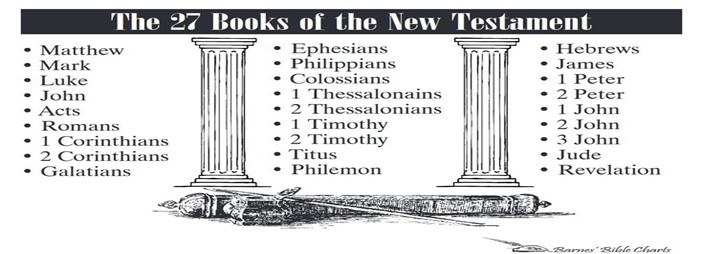
    The reader can note the above listing of the New Testament books. As for the overall development and formation of the New Testament canon itself, we can note the following observations.

1. The Gospels, Acts, and Paul’s letters were immediately recognized and put into use as Divine Scripture. As we’ve noted already, the Apostle Peter mentioned Paul’s letters as Scripture in 2 Peter 3:16 and Luke’s Gospel is quoted in 1 Timothy 5:18. 

    The citation of Luke’s Gospel carries with it the automatic acceptance of the Gospels of Matthew and Mark, being Luke had literary dependance on those first two Gospels, as well as his sequel to the Gospel of Luke – namely “Acts of the Apostles”. Also, John’s Gospel, his first letter, and Peter’s first letter came into immediate circulation and use as well. 

    The great church historian Eusebius called these books “those accepted by all”, without question, or what are deemed “homolegoumena” (confessed by all).

2. The General Epistles (Hebrews, James, 2,3 John, 2 Peter, Jude, and Revelation) were immediately accepted and used by most, with some quarters of the Western and Eastern church being cautious. According to the church historian Eusebius, these works were accepted by most, and gradually accepted by all, with a few initially disputing their legitimacy. The term “antilegoumena” is attributed to these books. 

    Thankfully the question of canonicity for these books did not last too long, persisting for only 50 years past the death of the Apostle John and being full recognized by all well within the middle to third quarter of the 100’s A.D. (second century).

    I could elaborate further here, but the interested listener may want to consult Eusebius’ Church History, Book 2, chapters 14 and 15 for the Gospels and Book 3, chapter 3 for the canonization of the New Testament letters and Revelation.

The Shape Of The New Testament Canon

    As for the "shape" or overall arrangement of the canon itself, you have the foundation, being the Four Gospels, corresponding to the Old Testament’s foundational books being that of the Law books or Torah (Genesis-Deuteronomy). Then, you have a book of the history of the church, "Acts", which corresponds to the historical books of our Old Testament (Joshua to Esther). Thirdly, we see letters to the churches that stretch from Romans to Philemon and the eight general letters (Hebrews to Jude), which correspond to the “writings” or “poetic books” of the Old Testament (Job-Song of Solomon). Then of course we have the Book of Revelation, the final prophetic book of the New Testament, corresponding to those seventeen prophetic books in our Old Testaments (Isaiah to Malachi).

Closing thoughts:

    So, we have considered the recognition and formation of the New Testament canon. In the next post we will look at how the the formation of the New Testament Canon conveyed a certain, overall message about Jesus Christ and the Christian faith.

Tuesday, October 25, 2022

The Doctrine Of Scripture Series: How The New Testament Provides Clues For Its Canonization


Introduction:

    In this series thus far, we have introduced the subject of “the doctrine of Scripture”, followed by a message on how we got our Old Testament and the question of the Old Testament canon. In our last post, we touched upon the question of the so-called “Apocryphal books”. These fifteen books, though affirmed by the Roman Catholic Church as inspired by their use of the term “Deutero-canonical”, yet were demonstrated that, in the final analysis, they cannot be considered as part of the Old Testament canon. For those interested in seeing the last post, please click here http://www.growingchristianresources.com/2022/10/the-doctrine-of-scripture-historical.html. 

    Having surveyed the issues surrounding the formation and completion of the Old Testament canon, we now turn our attention to the New Testament canon, its message, and why it matters.

The New Testament Canon.

    As we begin to study the beginning and formation of the New Testament canon, we can find evidence by looking at the New Testament documents themselves. As a reminder of what we mean by "canon", the term refers to those books that, being inspired by the Holy Spirit, are received, recognized, and used by ealry Christians as authoritative Scripture. In future posts we will examine "tests" or criteria used by early Christians to identify which books belong in the canon. As we saw in our posts on the Old Testament canon, canonicity is not a process of "kicking out" books which the church had to choose from a large body of literature to suit a certain orthodox agenda (a common assumption in skeptical scholarship). Rather, canonicity is recognizing which books are to be allowed in to a s relatively small collection of literature deemed as inspired. In time this important distinction will be discussed. For now, we turn our attention to how the process of canonicity was well underway before the close of the first century.

How the New Testament provides clues for its canonization.

    To anchor this post, let us turn to three passages that set the tone for our discussion of the New Testament Canon. The first is found in Luke 1:1-4 and the second is found in 1 Timothy 5:17-18. Luke’s Gospel was written in the early sixties’ of the first century. In his prologue (introduction), Luke claims to write an inerrant record.

“Inasmuch as many have undertaken to compile an account of the things accomplished among us, 2 just as they were handed down to us by those who from the beginning were eyewitnesses and servants of the word, 3 it seemed fitting for me as well, having investigated everything carefully from the beginning, to write it out for you in consecutive order, most excellent Theophilus; 4 so that you may know the exact truth about the things you have been taught.”

    Amazingly, Paul would write only two years later in 1 Timothy 5:17-18 about "Elders", quoting Deuteronomy 25:4 and Luke 10:7 as Scripture.

“The elders who rule well are to be considered worthy of double honor, especially those who work hard at preaching and teaching. 18 For the Scripture says, “You shall not muzzle the ox while he is threshing,” and “The laborer is worthy of his wages.”

    My point in mentioning the above Scriptures is to show that the canonization of the New Testament followed a similar pattern like we noted in our previous message on the Old Testament canon. 

    We see God’s revelation of Himself in the Person of the incarnate Son – Jesus Christ. Then, we see Jesus act redemptively in human history by His life, death, resurrection, and ascension. The beginning and growth of the New Testament canon is the Holy Spirit’s effort in expounding what Christ achieved, and how the church is to proclaim this message with twenty-seven inspired books crafted for each generation of the church to use until He returns. Note a third New Testament passage, 2 Peter 3:14-18.

“Therefore, beloved, since you look for these things, be diligent to be found by Him in peace, spotless and blameless, 15 and regard the patience of our Lord as salvation; just as also our beloved brother Paul, according to the wisdom given him, wrote to you, 16 as also in all his letters, speaking in them of these things, in which are some things hard to understand, which the untaught and unstable distort, as they do also the rest of the Scriptures, to their own destruction. 17 You therefore, beloved, knowing this beforehand, be on your guard so that you are not carried away by the error of unprincipled men and fall from your own steadfastness, 18 but grow in the grace and knowledge of our Lord and Savior Jesus Christ. To Him be the glory, both now and to the day of eternity. Amen.”

    Peter’s writing of 2 Peter was in 66 A.D, only a couple of years before his death. We find evidence that all of Paul’s letters were already recognized and used as authoritative Scripture, considered on equal footing with the Old Testament Scriptures (designated by Peter as “the other Scriptures”).

Closing thoughts:
 
    We begin to consider the canonization of the New Testament books. The books themselves provide primary evidence concerning the beginnings of this process. In our next post, we will examine Jesus' promises to His disciples that would provide the underpinnings for the writing of the New Testament books.