Translate

Showing posts with label Spiritual warfare. Show all posts

Monday, August 20, 2018

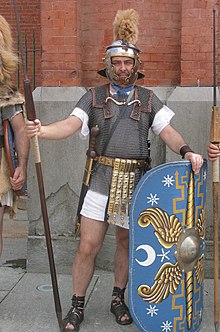
Understanding The Belt Of Truth And Breastplate Of Righteousness In Ephesians 6:14

Image result for Roman armor
Ephesians 6:14 "Stand firm therefore, having girded your loins with truth, and having put on the breastplate of righteousness."

Introduction:

This week is vacation Bible school at our church. The theme is centered around Ephesians 6:10-18. The occasion of Paul's letter to the Ephesians occurred during his house arrest at Rome in Acts 28. The author, Luke, writes the following in Acts 28:16

"When we entered Rome, Paul was allowed to stay by himself, with the soldier who was guarding him."

Paul had ample time to carefully observe the soldier guarding him. Imagine finding yourself in the same prison situation as the great apostle! Paul undoubtedly shared the Gospel with the soldiers guarding him, as explained once again by Luke in the closing of the book of Acts, Acts 28:30-31

"And he stayed two full years in his own rented quarters and was welcoming all who came to him, 31 preaching the kingdom of God and teaching concerning the Lord Jesus Christ with all openness, unhindered."

Paul's metaphor of the spiritual armor corresponded to Roman accoutrements. Other sources of antiquity describe what a Roman soldier would had worn in the day of Paul's incarceration. The Zondervan Pictorial Encyclopedia, Volume 1, Page 320, has this to say about Ephesians 6:10-18 and the ancient literary evidence that would had been available from the Greco-Roman world:

"Polybius (6,22 and 23) describes the Roman soldier as wearing such a helmet, a breastplate of brass or chain mail (lorica) to cover especially the heart and greaves; and as carrying a javelin, a sword hanging from the right side of the waist, and a shield, either one circular or one about two and a half feet by four feet in length. This description compares favorably with Paul's metaphorical statement (Ephesians 6:14-17) about the Christian armor...".


The word-picture of Roman armament picturing the need to "fight the good fight of faith" is rooted in history and Paul's travels. As we will see below, the rich spiritual truths associated with "the belt of truth" and "the breastplate of righteousness" lends to the wealth of spiritual lessons applicable to daily Christian living. 

What is meant by the "belt of truth"

What is truth? "Truth" in its most basic definition has to do with anything that "corresponds to reality". Truth "holds together" everything else in life. The phrase "belt of truth" corresponded to the piece of the soldier's equipment that held everything together, which could also be termed a "girdle". Adam Clarke notes in his commentary: 

"The girdle went to the loins and served to brace the armor tight to the body, and to support daggers, short swords and such like weapons which were frequently stuck in it." 

Christians are those people who, by nature and belief, ought to make truth their priority. Whenever we study the necessity of truth in the scriptures, we discover the following:

1. Truth is the priority of the Christian
-Priority in conversion 2 Thess 2:13; Jas 1:18;

-Priority to our walk 2 Peter 1:12; 1 John 2:27;

-Priority for our joy 2 John 4; 3 John 3

2. Truth personified by Jesus
-Isaiah 11:5; John 1:18; John 14:6

3. Truth promotes spiritual health
-Lk 12:35; 2 Cor 6:7; Eph 5:6-9; 1 Pt 1:13-15


So that's the belt of truth. Now let's consider the second piece of the spiritual armor - "the breast plate of righteousness".

What is meant by the breast plate of righteousness?

The breastplate of righteousness has rich meaning in light of the whole Bible's teaching on the subject of righteousness. Whenever we study the scripture's teaching on "righteousness", we find the general sense referring to "being in a state of rightness". Further study of the Old and New Testaments gives four types of righteousness:

1. God's righteousness

2. Christ's righteousness

3. Credited righteousness

4. Practical righteousness

The first two types of righteousness are absolute and belong to God and then specifically to the Lord Jesus Christ. God's righteousness and Christ's righteousness are equated with one another (since Christ the Son is "Immanuel", "God with us"). Both God's righteousness and Christ's refer to how God alone is right morally, spiritually and judicially. God's character is the standard of what constitutes "right" and "wrong". Hence, the only type of righteousness deemed acceptable by God is His own "rightness" (and thus Christ's righteousness, since He Himself is God in the flesh). 

For the Christian, unless they have by faith received the righteousness of Jesus Christ (as so credited or imputed unto them by the Father and applied by the Person of the Holy Spirit at conversion), no other righteousness (self-righteousness, works-righteousness) is adequate. 

One can think back to Genesis 3 in the wake of Adam and Eve's treason against God. Whenever God sought them in the garden, they hid themselves and attempted to cover their nakedness (or shame) with fig leaves. Any attempt to render ourselves pleasing to God outside of His prescribed course of salvation in Christ is nothing more than a "fig leaf" salvation. Such manufactured efforts won't cover the sinner's guilt, shame and alienation. As God provided "coats of skin" from two innocent animals to cover our original parents upon their inferred professions of faith in his salvation (Adam acknowledging his wife as "Eve", the mother of all living, Genesis 3:15, 20), so too the sinner needs "covered" by Christ's credited righteousness which is reduplicated in the sinner's life at saving faith. This third type of righteousness - "credited righteousness" - is judicially credited and declared unto the sinner by the Father at saving faith - otherwise known as the doctrine of justification by faith (see Genesis 15:6; Romans 4:1-6; Galatians 3:23-24). 

Once Christ's righteousness is credited at saving faith, the Christ-follower begins living for Him in a lifestyle characterized by the fourth type of righteousness we find in the Bible - "practical righteousness". Practical righteousness is the Christian's daily Christian life flowing from Christ's righteousness that was credited unto them in salvation. The "breastplate of righteousness" listed in the spiritual armor of Ephesians 6:14 is highly important indeed.


Understanding such truths aid in heeding the command to "put on the full armor of God". The spiritual armaments listed in Ephesians 6:10-18 would had corresponded to the armaments worn by Roman soldiers. 

So, which type of righteousness composes the breastplate of righteousness? Just as the literal breastplate served to guard the soldiers heart, lungs and vital organs, there needs to be a righteousness that can serve to guard the saints heart and vital faith. The only type of righteousness that can perform such a function is that righteousness credited to the believer in salvation - namely Christ's righteousness. The New Geneva Study Bible has this insightful comment on this point: 

"Believers are protected by the righteousness of Christ imputed to them (Rom. 4:6–11Phil. 3:9), and they can stand up to the accusations of the devil; devil in Greek means “slanderer” (Rom. 8:31–34). Simultaneously, Paul sees believers taking on the righteous character of Christ (4:25; 5:9), while their growing conformity to His image gives them confidence in resisting temptation."

Paul himself daily donned the breastplate of Christ's righteousness that had been imputed to him at salvation, as seen in Philippians 3:9 

"and may be found in Him, not having a righteousness of my own derived from the Law, but that which is through faith in Christ, the righteousness which comes from God on the basis of faith."

Closing thoughts

Today we considered the two pieces of the spiritual armor found in Ephesians 6:14 - the belt of truth and the breastplate of righteousness. May we as Christians put on the whole armor of God and be all about the truth and depend upon the righteousness of Jesus Christ, our salvation. 

Saturday, October 15, 2016

How to get free from taking up offense - forgiveness

Image result for balloons released
Luke 17:1-4 "He said to His disciples, “It is inevitable that stumbling blocks come, but woe to him through whom they come! 2 It would be better for him if a millstone were hung around his neck and he were thrown into the sea, than that he would cause one of these little ones to stumble. 3 Be on your guard! If your brother sins, rebuke him; and if he repents, forgive him. 4 And if he sins against you seven times a day, and returns to you seven times, saying, ‘I repent,’ forgive him.”

The pain of tripping over lego blocks at night
Over the years my children have enjoyed playing with little Lego blocks. I can even recall as a child getting a big pail full of Lego blocks at my grandmother's home and building houses, forts and all sorts of structures. Lego's can be a wonderful experience, that is, until you step on them at night. I'm sure you know of what I speak. You're walking through your house in the middle of the night to get a sip of water when, OUCH! Yep. Someone left their Lego's out in the middle of the living room. There have been occasions where I have almost fallen or tripped because of the pain of those sharp little edges. 

Jesus uses an interesting term here in Luke 17 to describe what it means to "take up offense" - namely, "stumbling blocks". We looked yesterday at what it means to take up offense and how it both harms and hampers the Christian. In Luke 17, this same idea is communicated by Jesus as a warning to His disciples. The word translated "stumbling block" comes from a Greek word from whence we derive our English word "scandal". Scandals in our day and age can cause onlookers to either wag their heads or, in some cases, tempt others to think of doing the same thing. Stumbling blocks or offense never benefits. 

How does one get free from offense? Perhaps from the last post, some were under the impression that one cannot escape this spiritual and emotional malady called "offense". As we explore God's Word, there is only one effective way to not only escape offense, but to avoid it all together - forgiveness. Jesus lays out in three parts the remedy of forgiveness as He warns about how to avoid and escape offense. Notice...

1. Heed the call to let go of the offense. Luke 17:1-2
Jesus starts out in Luke 17:1-2 with these words - "He said to His disciples, “It is inevitable that stumbling blocks come, but woe to him through whom they come! 2“It would be better for him if a millstone were hung around his neck and he were thrown into the sea, than that he would cause one of these little ones to stumble." So, its not a matter of "if offenses will come". Instead, it is more a matter of "when they will come". You and I cannot control what people will say or what events will come into our lives. We also are not living in a fair world, since our world is a fallen one. Older Bible teachers often refer to what are called "the noetic effects of sin", meaning the collateral damage caused by our sin, including broken relationships, mis-understandings, damaged emotions and other various spiritual, psychological and physical maladies that affect the human race.  

You and I must come to terms with the fact that we cannot control our environment nor the way people will treat us. The only thing we can control is our response. The question is: will you be bitter, or better? Will you retain a grudge, or forgive as the Lord forgave you (Colossians 3:13)? Unless the cross is in our center-line of vision, the vulnerability to taking up offenses will be pretty high. 

So to get free or remain free from offense, we've got to learn to "let go". This is at the heart of the meaning of forgiveness. But now notice what else Jesus' says...

2. Heed the call to loosen from blame. Luke 17:3-4
Jesus continues on His warning in Luke 17:3-4 3“Be on your guard! If your brother sins, rebuke him; and if he repents, forgive him. 4“And if he sins against you seven times a day, and returns to you seven times, saying, ‘I repent,’ forgive him.” So in this world of ours, and even in the church, the likelihood of someone saying something wrong, or not saying something that should had been said, can yield in us a response of anger or bitterness if we're not careful. If we have taken strides to guard are hearts through reflecting on God's Word and God's forgiveness in Jesus Christ, the chances of taking up offenses will be greatly diminished. 

Now Jesus is not dismissing from responsibility the one who says careless words or does thoughtless deeds. Often when an offense is taken up, a legitimate hurt has been committed, and not just merely a misunderstanding. Certainly those who are careless or reckless in their treatment of us should be held accountable for their actions. The key of course is by whom should they be held accountable - us or God? 

Such considerations will aid greatly in getting free from offense. We've got to let go, and loosen from blame. But now let's notice one last thing Jesus states concerning how to get free from or in avoiding offense...

3. Heed the call to love in greater faith. Luke 17:5-6
We read the following interesting response of the disciples to Jesus in Luke 17:5-6 "The apostles said to the Lord, “Increase our faith!” 6 And the Lord said, “If you had faith like a mustard seed, you would say to this mulberry tree, ‘Be uprooted and be planted in the sea’; and it would obey you." In as much as the Lord instructs on matters of prayer, I find it intriguing that this teaching and the disciples' remarks follows on the heals of Jesus' teaching on offense. Our pattern for forgiveness is the cross (Ephesians 4:32; Colossians 3:13) To forgive those who have hurt us requires, well, great faith. Whenever God is calling us to such a high calling as "letting go, loosening from blame and loving that other person", we need a greater capacity for His love to flow through us. Hence, the request for greater faith is the request for a greater ability to trust God to see them through whenever they heed these challenging words of Jesus.

Unless we forgive as the Lord forgave us, we will fall for offense every time or we will find ourselves ever "stuck in the rut" of offense, rejection and stumbling around. As Jesus points out in Luke 17:4 "And if he sins against you seven times a day, and returns to you seven times, saying, ‘I repent,’ forgive him.”

Friday, October 14, 2016

The harming and hampering effects of taking up offense

Image result for a surprised cat
Mark 6:1-3 "Jesus went out from there and came into His hometown; and His disciples followed Him. 2 When the Sabbath came, He began to teach in the synagogue; and the many listeners were astonished, saying, “Where did this man get these things, and what is this wisdom given to Him, and such miracles as these performed by His hands? 3 Is not this the carpenter, the son of Mary, and brother of James and Joses and Judas and Simon? Are not His sisters here with us?” And they took offense at Him."

Defining what it means to take up offense
Stumbling blocks or offense can prevent otherwise good, godly people from being effective in their Christian walk. When we harbor bitterness, we find ourselves incapable of receiving any further spiritual insights from God. In Mark 6:3, we find the people in Jesus' home town of Nazareth being "offended because of Him", perceiving a line having been crossed, and thus ultimately rejecting His ministry. 

When we operate in resentment, it is due to us at some point doing what the Bible refers to as "taking up an offense". To "take up an offense" means to respond in bitterness and anger rather than in forgiveness. Jesus warns of taking up offenses in Luke 17:1-5 "He said to His disciples, “It is inevitable that stumbling blocks come, but woe to him through whom they come! It would be better for him if a millstone were hung around his neck and he were thrown into the sea, than that he would cause one of these little ones to stumble. 3 Be on your guard! If your brother sins, rebuke him; and if he repents, forgive him. 4 And if he sins against you seven times a day, and returns to you seven times, saying, ‘I repent,’ forgive him.” Elsewhere in the New Testament we are given a similar warning about not taking up offense in Ephesians 4:26-27 "Be angry, and yet do not sin; do not let the sun go down on your anger, 27 and do not give the devil an opportunity."

Meet the man who took up an offense at a football game
One day a man decided to take his friend, Joe, to see a football game. Joe had never been to a game, nor was he familiar at all with football. As they were up in the stands, watching the game, the crowd around them was cheering, and the man himself was whooping and hollering, for the home team was winning. However his friend Joe sat motionless with a scowl on his face.

After the game was over, the excited man asked his friend: "So Joe, what did you think of your first football game"? His friend sharply responded: I have never been so offended in all my life! Those fellows in the striped shirts kept ever-so -often getting together in the middle of the field, stopping the players from playing. And you know what, I think they were talking about me!" 

Now this illustration conveys the truth of what happened to Jesus in Mark 6 and what He taught in Luke 17. The friend in our little story perceived a line had been crossed. He came to the game, not knowing what to expect. As he watched, he began to draw conclusions about what he thought he saw. All we know is that the man chose to respond in anger and bitterness, resulting in his inability to appreciate the effort of the other man in treating him to his first football game.

Two reasons to not get offended or take up offense
So why ought you and I not take up offenses? As we consider Jesus' actions and the crowds responses to Him in Mark 6:1-6 and the parallel account in Matthew and Luke, we can note two reasons:

1. Offense harms. Mark 6:1-4
When anyone takes up an offense, it results in harm to that person and to those around them. Oftentimes offense will array itself in religious garments. As crazy as it may sound, those that carry around offense don't half-the-time realize when they are expressing themselves in it. Offense can creep in when we least expect it. Mark 6:1-4 records the unfolding of offense at the Synagogue at Nazareth. As always, it is interesting to see how the other Gospel writer's record the same scene. Notice how we see offense creep in at Luke's parallel account in Luke 4:22 - "And all were speaking well of Him, and wondering at the gracious words which were falling from His lips; and they were saying, “Is this not Joseph’s son?” 

Everything seems to be going well for Jesus, that is, until someone says in passing: "isn't this Joseph's son". Then the offense creeps up inside those in attendance. The thing is, the offense had been taking up somewhere in the past - whether it be in the immediate past or years ago. According to Luke's version of events, the people do a 180 on Jesus and we find the harmful results of offense expressed in Luke 4:28-30 "And all the people in the synagogue were filled with rage as they heard these things; 29 and they got up and drove Him out of the city, and led Him to the brow of the hill on which their city had been built, in order to throw Him down the cliff. 30 But passing through their midst, He went His way." 

Quite literally, whenever a church or group of God's people operate in offense, the presence and power of Jesus can momentarily lift whatever blessing was upon that people. Whenever an individual Christian operates in offense, though they remain a Christian, yet, they can for a period of time think, feel and act like a lost person in whatever specific area they became offended. As we see in the text above, Jesus exited out of their midst. Truly what Proverbs 18:19 states is very sobering - "A brother offended is harder to be won than a strong city, And contentions are like the bars of a citadel."

2. Offense hampers. 
So we've seen how offense harms both the one who has offended as well as those around them. A closely related second reason for not taking up offense is due to how it hampers the spiritual life and regular life of people. It is no secret that we are living in a culture riddled with offense. I recall once stopping at a gas station and going inside to pay my bill. On the wall was a big sign with these words: "Don't be offended when we ask your age, take it as a compliment". The store owner was referring to the practice of requesting photo I.D from people who want to purchase tobacco or alcoholic beverages. Even in secular environments, offense runs rampant , which is why it is so dangerous. 

Think about what happens when such a malady is contracted like a cold by sincere people of God, Christian leaders and even pastors? If anything, pastors and Christian leadership are the most vulnerable to the ailment called "offense". If the enemy of our souls - The Devil - can trip pastors and leadership up into offense, think of the lives that would be affected. 

Now Jesus, being the Son of God in human flesh, walked above offense. However, those who saw His ministry up close became offended. In his hometown in Nazareth, we read what occurred when they took up offense in Mark 6:5-6 "And He could do no miracle there except that He laid His hands on a few sick people and healed them. 6 And He wondered at their unbelief. And He was going around the villages teaching." Matthew's parallel account reads as follows in Matthew 13:58 And He did not do many miracles there because of their unbelief. Mark's account implies a hampering of Jesus' miraculous ministry and Matthew's version indicates that Jesus just didn't do the miracles. 

Whenever people take up offense, further light from God's Word can harden such a one. Jesus knew that the people were unwilling and incapable of receiving any further light from him. Offense had hampered their abilities to receive further illumination about His Person and work. As a person persists in offense, the kingdom of darkness will energize the effort, resulting in a spiritual element of rejection. No matter what anyone may try to do to remedy the situation, it's "never good enough" for those who have been bitten by the serpent of offense. Offense both harms and hampers spiritual growth and the amount of good that would had been otherwise done if the people had responded in a redemptive posture rather than in bitterness. 

Next time we will look at how one can get free from offense. 

Wednesday, October 14, 2015

How Jesus took on the believer's 3 enemies and the confidence we have to win


Luke 4:1-3 "Jesus, full of the Holy Spirit, returned from the Jordan and was led around by the Spirit in the wilderness 2 for forty days, being tempted by the devil. And He ate nothing during those days, and when they had ended, He became hungry. 3 And the devil said to Him, “If You are the Son of God, tell this stone to become bread.”

Introduction:
How did Jesus approach to spiritual warfare? Well - obviously - it wasn't with a tank like the one pictured above. In both Luke and Mark's Gospel accounts of His temptation in the wilderness, Jesus went into that scene being both filled with the Holy Spirit and filled with the Word. Luke describes Jesus as being "filled with the Holy Spirit" and Mark elaborates on how Jesus was "impelled". For sake of completeness, Matthew's parallel states in Matthew 4:1 that Jesus was "led up by the Spirit into the wilderness." In all three parallels of Matthew, Mark and Luke - we find Jesus battling toe-to-toe with Satan by His utility of scripture. Unless we as Christians approach daily Christian life and spiritual warfare as a Spirit-filled and Word-filled people, we will fail in our daily fight of faith. Jesus supremely and perfectly modeled this for us and by His Spirit makes available the power to do as He did. Today we want to consider the enemies that Jesus fought in this wilderness temptation. The three enemies that Jesus faced and defeated can be described as the three common enemies of the believer. 

The three enemies of the believer that Jesus fought and defeated
The Devil or Satan
According to 1 John 2:14-17 there are three common enemies: Satan, the world and the flesh. Satan is the archenemy of the child of God (see 1 Peter 5:8). Thankfully we never have to deal with him directly, but more so indirectly through His vast-network of demonic agents (see 2 Corinthians 10:3-5; Ephesians 6:10-13). For all intents and purposes, whether dealing with demons or Satan himself, the effects and difficulties are practically indistinguishable.  Jesus of course went toe-to-toe with Satan in His temptation, His earthly ministry and in His defeat of Satan at the cross (see Acts 10:38; Colossians 2:11-12; 1 John 3:8).

Who is the Devil? A brief sketch of his personage and career reveals the following:

1. He was originally a powerful angel named Lucifer (Ezekiel 28; Isaiah 14), perhaps an archangel, who got his eyes off of God and instead focused on his own beauty. Shortly after the creation week scripture records Lucifer, now Satan or the Devil, leading 1/3 of the angelic hosts astray, who in their fall became the myriads of demons occupying the various orders of the kingdom of darkness. (Revelation 12) 

2. The Devil or Satan is a creature who is a liar (John 8:44), a deceiver and prince of the power of the air who blinds the hearts of unbelievers (2 Corinthians 4:1-4). As a creature, the Devil communicates his malevolent intentions through the vast network of demonic hosts we see mentioned in Ephesians 6:12.

3. We know the Devil tempted Jesus on three occasions in Matthew 4, and the Devil's aim is to do all he can to discourage and divide the church. (Matthew 16:18)

4. According to 1 Peter 5:8, The Devil is a roaring lion prowling about seeking whom he may devour. 

This sketch lays out for us why it is the Devil is the believer's common enemy in spiritual warfare. Jesus defeated Satan so that by His power we could have victory as well through the spiritual armor He has supplied (Ephesians 6:10-18). But now let's look at the two other enemies of the believer that Jesus defeated...

The flesh and the world
In 1 John 2:16 we read of three primary weapons of Satan that comprise together what we call the flesh and the world: the lust of eyes (2:16), the flesh (2:16) and the boasting about what one has (2:16). Sometimes as Christians we wonder why Jesus didn't just wipe Satan out of existence. The closest we can come to answering that question is by remembering that we are described as those who are "more than conquerors". If we are to expect to walk, talk and act like Jesus, this means necessarily experiencing everything that he did in His time on this earth. It is only in the prospect of defeat that we can understand the blessing of spiritual conquest in Jesus' name. 

The world is that network of ideas and temptations organized and trafficked by the kingdom of darkness. Any thought or imagination arrayed against the authority of Jesus Christ derives from the world and entices the internal drives we call the flesh. The flesh is the combination of left over sin-remnants that operate in the natural drives that wants anything but God. How did Jesus fare in this deadly combination of external and internal enemies?

Satan did to Jesus what he did to Adam and his wife: he tempted in the realm of the drives, the senses or the lust of the eyes (Matthew 4:1-4; Luke 4:1-4). Next Satan appealed to Jesus much like Adam in the realm of the visual, of the heart, or the boastful pride of life by showing him all the kingdoms of the world. (Matthew 4:8-11; Luke 4:5-8) Then Satan appealed to Jesus like he did Adam by the lust of the flesh, the reliance of self by tempting Jesus to cast himself to the floor of the temple. (Matthew 4:5-7; Luke 4:9-13) All three of these temptations overlapped and intertwined like newly woven ropes. 

Would Satan be able to tie up Jesus like he had with the other great but sinful men of the past? Thankfully not. Jesus was sinless, they were sinful. Despite being in a barren wasteland in contrast to Old Adam's idyllic settings in Genesis 3, Jesus the New Adam soundly defeated Satan. Jesus as God in human flesh warred with Satan and won this first of many battles.

The confidence we have to win in spiritual warfare as Christians
What is the believer's confidence in winning spiritual warfare? None other than Jesus Christ. Jesus' approach to spiritual warfare (Spirit-filled and Word-filled) is to be our own (see Ephesians 6:10-18; 2 Corinthians 10:3-4). Secondly, the believer's common enemies of the world, flesh and the devil were all defeated by Jesus. So then the confidence (the letter "c" of our A,B,C's) of spiritual warfare is Christ Himself. We must remember that Jesus Christ is not stuck in history. He is made personally and powerfully available to us by the Person and power of the Holy Spirit (see John 14:23; Romans 8:10-11; Colossians 1:27). He in us and us in Him, seated together in the heavenly realms (Ephesians 2:6-8). To know that Christ lives in me (Galatians 2:20) means that the One who has already obtained victory over the world, the flesh and the Devil is the same One who can give me the desire to be Spirit-filled and Word-filled.  

When Jesus finished His battle with the enemy, Matthew and Luke tell us that He then began His public ministry in power and authority. He in His humanity knew He was doing the Father's will. He in His Deity submitted Himself to the Father and expressed in His humanity the desire to be submitted to the Spirit of God. This was Jesus' confidence. His confidence can be ours. 

Tuesday, October 6, 2015

How Jesus Approached Spiritual Warfare

Luke 3:38-4:1  3:38 "the son of Enosh, the son of Seth, the son of Adam, the son of God. 4:1 Jesus, full of the Holy Spirit, returned from the Jordan and was led around by the Spirit in the wilderness."

Introduction
In the opening verses of today's post, you may notice that one chapter is ending and another is beginning.  As the Holy Ghost superintended Luke's writing of his Gospel, He arranged to have Jesus' genealogy go all the way back to Adam and take the reader right into the beginning of Jesus' temptation by Satan. Such a curious feature alerts the reader to the fact that side by side we see Old Adam (Lk 3:38) and Jesus the "New Adam". 

The New Testament picks up this theme of Jesus Christ being the "New Adam" or the "second Adam" to show that He came to be the head of a redeemed humanity composed of those choice saints who have freely believed on Him as Savior and Lord. (Romans 5:11-21; 1 Corinthians 15:20-28, 42-49). 

Whenever you see the genealogy prefacing the temptation account, you discover that over 70 generations of humanity represented one rusted link after another - marked by failure, sin and defeat.  Adam failed to defeat Satan in Genesis 3, as well as Abraham in his temptation (Genesis 12:10-11); Isaac in his (Genesis 26); Israel in the book of Numbers and King David in his temptation in 2 Samuel 11. From the corrosive sea of history the Holy Spirit displays the rusted chain of humanity, and on the one end is Old Adam, and on the other end is a golden link - The sinless New Adam, Jesus Christ.

Jesus acted as the New Adam and did what Adam could never do: successfully and completely defeat the enemy in spiritual warfare. We know that Jesus Christ came to be among other things an example and to empower Christians to follow Him in discipleship and victory. 1 Peter 2:21 reminds us - "For you have been called for this purpose, since Christ also suffered for you, leaving you an example for you to follow in His steps."Today we are going to consider how Jesus implemented the most successful method of obtaining victory in spiritual warfare. Last week we considered at length the "A,B,C's of spiritual warfare". Everything that Paul wrote in Ephesians 6 under the inspiration of the Holy Spirit represents the fully-mature tree of the seeds of thought we see represented in Jesus' life. Notice how Jesus models for us spiritual warfare....

Jesus' approach to spiritual warfare: Spirit-filled and Word-filled. 
So how did Jesus approach His pending confrontation with the Devil? First note that he was Spirit-filled. Luke 4:1 states - "Jesus, full of the Holy Spirit, returned from the Jordan and was led around by the Spirit in the wilderness." Mark in his parallel describes Jesus' filling of the Holy Spirit in Mark 1:12 - "Immediately the Spirit impelled Him to go out into the wilderness." Jesus as God in human flesh (John 1:14; Colossians 2:9), being equal with the Father and the Spirit in regards to Deity, nevertheless surrendered His access to the benefits that come with Deity while ministering in His days on this earth (see Philippians 2:5-11). Jesus yielded to the Holy Spirit in His humanity for two main reasons: as a matter of prophetic fulfillment as the Messiah (Isaiah 61:1-2a; Luke 4:18) and as an example for Christians. 

As you go on down through the remainder of Luke 4:1-13, we find Jesus' approach to spiritual warfare being done in a second manner - namely He was filled with the Word. On three occassions it is recorded that Satan tempted Jesus in certain areas, and on each occassion Jesus responded with a quotation from scripture. In Luke 4:4 Jesus quoted Deuteronomy 8:3 in asserting the fact that man shall not live by bread alone, but by every Word that proceeds out of the mouth of God. 

Secondly, in Luke 4:8 we see Jesus quoting Deuteronomy 6:13 in declaring that no one else is to be worshipped save God alone. Then thirdly we find Jesus quoting Deuteronomy 6:16 in Luke 4:12 in his final engagement with the Devil in the wilderness wherein he states about not putting God to the test. 

Jesus demonstrated this two-fold approach to spiritual warfare of being Spirit-filled and Word-filled. As Christians, we too ought to do the same. Let me close out today's post by reminding us of another scripture that encourages us to follow Jesus in everything, 1 John 2:6 - "the one who says he abides in Him ought himself to walk in the same manner as He walked."   

Friday, October 2, 2015

Spiritual Warfare A,B,C - Confidence to win in spiritual warfare


Ephesians 6:13 "Therefore, take up the full armor of God, so that you will be able to resist in the evil day, and having done everything, to stand firm."

Introduction and review
The last couple of days have served to unpack the A,B,C's of spiritual warfare. In this short series we have noted that when approaching spiritual warfare, we need to be Spirit filled and word filled, per what we looked at in Ephesians 6:11. Carnal weapons of the flesh have no place in spiritual warfare (2 Corinthians 10:3-5).  God's supplied Word and He in the Person of the Holy Spirit are the only ways we can approach our daily warfare as Christians. 

Then we noted yesterday the "B" of the A,B,C's - "Believer's three common enemies". In considering 1 John 2:14-17 and Ephesians 6:12, we saw that the Devil (via his demonic network), the world and the flesh are the three main enemies we deal with in spiritual conflict. Today's post aims to show the confidence we have in spiritual warfare.

The Confidence in Spiritual Warfare
Ephesians 6:13 states - "Therefore, take up the full armor of God, so that you will be able to resist in the evil day, and having done everything, to stand firm." A brief unfolding of this verse, one phrase at a time, will show why it is we as Christians can have confidence in spiritual warfare.

1. Divine provision of spiritual armor

Paul writes first of all: "Therefore take up the full armor of God...". In the days that Paul wrote this letter, he was chained to a Roman soldier who was likely a member of the elite Roman unite called the "Italian band". When a Roman soldier went into battle, they had behind them the entire Roman Senate and authority of the Emperor. Furthermore, they possessed what was then the finest armor of any army in the world. 

The word translated "full armor" could just as easily be translated "full array". The Roman soldier had everything he needed, and then some, to defeat his enemy. Christians have at their disposal the entirety of God's provision of the spiritual armor. Moreover, the Holy Spirit Himself indwells the Christian. 

No demon, no desire of the flesh and no influence in the world is greater than the Spirit of God (1 John 4:4). We also have the authority of the King of Kings, Jesus Christ Himself, behind and in us (Colossians 1:27). We have the Father's favor watching over us (James 1:17). The Christian as the provision of God when it comes to fighting the good fight of faith. So there is the Divine provision, but notice secondly....

2. Divine power to fight
Ephesians 6:13 says next - ..."so that you will be able to resist in the evil day...". To know that we as Christians have God's very power available to resist temptations, overcome fear and resist the Devil ought to increase our confidence. 1 Corinthians 10:13 reminds us - "No temptation has overtaken you but such as is common to man; and God is faithful, who will not allow you to be tempted beyond what you are able, but with the temptation will provide the way of escape also, so that you will be able to endure it." 

Oftentimes I will hear Christians worry about whether or not they would be able to take a stand for Jesus if the situation demanded it. My answer to them is a resounding "yes"! These texts, and many others (Hebrews 12:3; James 1:3-4; 1 Peter 1:5-7; 1 Peter 4:10-11) speak to how we have the Divine power to win spiritual battles and Divine provision, but notice lastly...

3. Divine guarantee of victory
Ephesians 6:13 says once more - ..."and having done everything, to stand firm." The verb translated "having done everything" is the same exact verb found in Philippians 2:12 - "So then, my beloved, just as you have always obeyed, not as in my presence only, but now much more in my absence, work out your salvation with fear and trembling." 

Will the fight of faith be immune from troubles and pain? No. We must literally "work it out" in the exercise of our faith in prayer (Jude 1:20); the scriptures (2 Timothy 2:15) and church attendance (Hebrews 10:24-25). We must "work it out" by ways of loving our enemies (Matthew 22:39); watching our speech (James 1:26-27) and enduring hardship (2 Timothy 3:12). Yet, we know that God is the One working forth in us His perfect and pleasing will and a glory that cannot compare (2 Corinthians 4:18; Philippians 2:13). The victory has already been won by Jesus. We are  running our victory lap for the King of Kings (Hebrews 12:1-3). 

Thus Divine provision, power and guarantee comprises the confidence Christians have in spiritual warfare.

Closing thoughts
We have explored the A,B,C's of spiritual warfare these last few posts. We have discovered the following:

1. Our approach must be as Spirit-filled and word-filled people. 

2. Believers have three enemies: the world, the flesh and the Devil. 

3. Then the confidence we have in spiritual warfare is the Divine provision of the spiritual armor, Divine power to fight and Divine guarantee to win. 

Thursday, October 1, 2015

Spiritual Warfare A,B,C - Believer's 3 Common Enemies


Ephesians 6:10-11 "Finally, be strong in the Lord and in the strength of His might.11 Put on the full armor of God, so that you will be able to stand firm against the schemes of the devil."

John 2:16-17 "Do not love the world nor the things in the world. If anyone loves the world, the love of the Father is not in him. 16 For all that is in the world, the lust of the flesh and the lust of the eyes and the boastful pride of life, is not from the Father, but is from the world."

Introduction:
We saw in yesterday's post the two-pronged method for approaching spiritual warfare: Spirit-filled and word-filled living. Both the Spirit's leading and the authority of God's word go hand-in-hand in the Christian's daily warfare. Consider the following observation from Dr. Charles Stanley in his book: "The Wonderful Spirit-Filled Life", page 210: "Peace or no peace. Guilty conscience or no guilty conscience. The Word of God stands. It is the final authority for the Spirit-filled believer. The Spirit-filled life is a life lived in accordance with the teachings of Scripture - whether one feels like it or not and whether it bears witness to one's spirit or not." Dr. Stanley later on notes in page 213 of the same book: "That is why the Spirit-filled life begins with surrender to the Lordship of Christ. Surrendered Christians approach the text with humble hearts, not hidden agendas. Spirit-filled believers come to the scriptures with teachable spirits. They don't view Bible study as simply a fact-finding mission. They see it as an opportunity to peer into the mind and heart of God."

With thse thoughts in mind, today's post is all about identifying the three common enemies faced by every Christian. In the opening passage above we see them underlined: the Devil, the world and the flesh. The contexts of both scriptures indicate the following:

1. Common Enemy in spiritual warfare is The Devil.

2. Cravings that contribute to our spiritual warfare is the flesh.

3. Context in which our warfare occurs is the world. 

Enemy #1: The Devil
Ephesians 6:11 warns the reader of the "schemes" or "methodologies" of the Devil. Who is the Devil? A brief sketch of his personage and career reveals the following:

1. He was originally a powerful angel named Lucifer (Ezekiel 28; Isaiah 14), perhaps an archangel, who got his eyes off of God and instead focused on his own beauty. Shortly after the creation week scripture records Lucifer, now Satan or the Devil, leading 1/3 of the angelic hosts astray, who in their fall became the myriads of demons occupying the various orders of the kingdom of darkness. (Revelation 12) 

2. The Devil or Satan is a creature who is a liar (John 8:44), a deceiver and prince of the power of the air who blinds the hearts of unbelievers (2 Corinthians 4:1-4). As a creature, the Devil communicates his malevolent intentions through the vast network of demonic hosts we see mentioned in Ephesians 6:12.

3. We know the Devil tempted Jesus on three occasions in Matthew 4, and the Devil's aim is to do all he can to discourage and divide the church. (Matthew 16:18)

4. According to 1 Peter 5:8, The Devil is a roaring lion prowling about seeking whom he may devour. 

This sketch lays out for us why it is the Devil is the believer's common enemy in spiritual warfare. Now notice the second enemy...

Enemy #2 - The World
1 John 2:16 warns us about not loving "the world". The Greek word behind this word (kosmos) is the word from whence we get our terms "cosmetics" and "cosmology" and "cosmopolitan".  A "kosmos" or "world" refers to a certain orderly arrangement or system, hence for example, cosmetics are products designed to help someone arrange the colors and appearance of their face. I someone were to take up the study of "cosmology", they would be concerned about studying the arrangement of things in our universe. When reference is made to a "cosmopolitan person", that person is typically a traveler, a "person of the world" who dresses in the finest clothes and keeps up with the trends of things worldwide. 

Whenever the Apostle John refers to the term "world", he is talking about the organized system of thought that is under the authority of Satan. The Devil is the common enemy of the believer. Other than Adam, Job, King David and Jesus, no other person has ever had to deal with Satan directly, but moreso indirectly. Satan wields his influence through his vast network of demonic hosts (Ephesians 6:12) and through the network system known as the world.

The physical body gathers its understanding of reality through the five senses, and this is how the influence of the world makes its way through if unchecked by the vigilant Christ follower. This is why John warns his readers to "not love the world". Elsewhere in the New Testament we read about the influence of the world and the need to be cautious of it. Romans 12:2 states -  "And do not be conformed to this world, but be transformed by the renewing of your mind, so that you may prove what the will of God is, that which is good and acceptable and perfect." James 1:27 gives this insight: "Pure and undefiled religion in the sight of our God and Father is this: to visit orphans and widows in their distress, and to keep oneself unstained by the world." Jesus gave this simultaneous warning and encouragement in John 16:33 - "These things I have spoken to you, so that in Me you may have peace. In the world you have tribulation, but take courage; I have overcome the world.” Now notice the third enemy...

Enemy #3 - The flesh
Notice what the Apostle John writes in 1 John 2:16 "For all that is in the world, the lust of the flesh and the lust of the eyes and the boastful pride of life, is not from the Father, but is from the world." What is meant by the term "flesh"? The term "flesh" can have one of two meanings in the New Testament. 

The first meaning of "flesh" refers to the physical body of a person, whereas the second meaning describes the expression of our soul's drives in cooperation with the remnants of sin in the soul. Galatians 5:19-21 gives the fullest definition of the flesh in the New Testament: "Now the deeds of the flesh are evident, which are: immorality, impurity, sensuality, 20 idolatry, sorcery, enmities, strife, jealousy, outbursts of anger, disputes, dissensions, factions,21 envying, drunkenness, carousing, and things like these, of which I forewarn you, just as I have forewarned you, that those who practice such things will not inherit the kingdom of God."

The flesh is an "expression", a "reaction" to certain conditions whereby the inborn drives of a person are set aflame and decisions are made to feed the hunger. The indwelling Holy Spirit aims to teach the child of God to "put on Jesus Christ, make no provision for the flesh to fulfill its lusts." (Romans 13:14) 

Therefore when we are dealing with spiritual warfare, the flesh and the inward desires that go unchecked are among the most damaging of the three enemies. Unlike the Devil and the World, which attacks from the outside, the flesh works inward to outward. 

Closing thoughts for today
We considered in yesterday's post the approach one needs to spiritual warfare: namely the filling of the Holy Spirit and being filled with the word. Today's post served to unfold the believer's three common enemies: the world, the flesh and the Devil. Tomorrow we will consider the confidence the Christ has in spiritual warfare as we conclude this study on the A,B,C's of spiritual warfare.

Wednesday, September 30, 2015

Spiritual Warfare A,B,C - Approaching Spiritual Warfare


Ephesians 6:10 "Finally, be strong in the Lord and in the strength of His might."

Introduction:
The subject of spiritual warfare is of perennial interest among Christians. Understanding Christian spiritual warfare is vital in breaking Christian people out of a civilian mindset and into the clear reality of needing to be soldiers of the cross. Spiritual warfare also eases somewhat the disillusionment the we feel between living for God in this world and the opposition from the world.  We realize it is not abnormal to experience opposition for being a Christian. I would like to attempt a brief summary of this vast subject of spiritual warfare from the standpoint of Ephesians 6:10-13 for the purpose of spelling out what I call the "A,B,C's of spiritual warfare". Today's post will deal with the first of these, namely the approach to spiritual warfare.

The approach to spiritual warfare - Spirit and the Word
Ephesians 6:10 gives us two and only two ways in which one can approach spiritual warfare in the Christian life. The first is what we looked at in detail yesterday, namely the Spirit-filled life. The second approach is closely related to being filled with the Holy Spirit, namely being filled with the scriptures or maintaining one's exposure to the Word of God.

Ephesians 6:10a states - "Finally, be strong in the Lord...". The underlined words indicate an imperative command that is coined in the passive sense of dependency upon someone. To "be strong in the Lord" refers to depending upon the Person and work of the Holy Spirit. With the Person and work of the Holy Spirit, we cannot understand and discern, which are marks of the strength needed when fighting the good fight of faith. (Ephesians 1:17) Ephesians 3:16 proves that the source of such strength comes from the Spirit: "that He would grant you, according to the riches of His glory, to be strengthened with power through His Spirit in the inner man." 

This strengthening of the Spirit comes to the degree we are filled with or influenced by the Holy Spirit (Ephesians 5:18). Moreover, the Spirit's strength is enjoyed and experienced as we position ourselves in a posture of prayer (Ephesians 6:18). 

But now we notice the second phrase of Ephesians 6:10 - namely: "and in the strength of His might." This second phrase identifies the second  closely related approach to spiritual warfare, the Word of God. 

So how do we know that "the strength of his might" is most likely referencing the scriptures? First, the word of God itself is the offensive weapon of the otherwise defensive armaments in the spiritual armor of Ephesians 6:14-18. Second, Hebrews 4:12 ties together this concept of God's might and spiritual warfare - "For the word of God is living and active and sharper than any two-edged sword, and piercing as far as the division of soul and spirit, of both joints and marrow, and able to judge the thoughts and intentions of the heart." Then thirdly, 2 Corinthians 6:7 alludes to carrying forth spiritual weaponry in the right hand and the left, which in context includes the word of God.  

This then is the two-fold approach to spiritual warfare: namely being filled with the Holy Spirit and being in His Word. 

More tomorrow....

Tuesday, September 29, 2015

Relating the Spirit-filled life to spiritual warfare


Ephesians 6:10-12 "Finally, be strong in the Lord and in the strength of His might. 11 Put on the full armor of God, so that you will be able to stand firm against the schemes of the devil. 12 For our struggle is not against flesh and blood, but against the rulers, against the powers, against the world forces of this darkness, against the spiritual forces of wickedness in the heavenly places."

Introduction
In today's post we now turn our attention exclusively to Ephesians 6, with the goal this week to discover what putting on the full armor of God actually means. Such a command can sound so abstract until we consider the wider context of Ephesians 6:10-18. Today's focus will be on exploring the necessary condition for putting on the whole armor of God: being filled with the Holy Spirit. We will consider this thought under two main headings:

1. Putting on the whole armor of God means being Spirit-filled

2. The Spirit-filled life is pre-requisite to putting on the full-armor of God

Putting on the Whole Armor of God means being Spirit filled. 
Notice what Paul writes in Ephesians 6:10 "Finally, be strong in the Lord and in the strength of His might." Whenever you see that underlined word: "finally", the indication is that Paul is bring to a close a series of points. Notice....

1. Ephesians 4:1 "Therefore I, the prisoner of the Lord, implore you to walk in a manner worthy of the calling with which you have been called."

The whole idea of "walking with God" is a huge point in this second part of Ephesians. Like connecting the dots throughout the remainder of Ephesians 4,5 and 6, we can trace the remaining chain of commands:

2. Ephesians 4:17 "So this I say, and affirm together with the Lord, that you walk no longer just as the Gentiles also walk, in the futility of their mind."

3. Ephesians 5:1-2  "Therefore be imitators of God, as beloved children; 2 and walk in love, just as Christ also loved you and gave Himself up for us, an offering and a sacrifice to God as a fragrant aroma."

4. Ephesians 5:15,18 15 "Therefore be careful how you walk, not as unwise men but as wise." 18 "And do not get drunk with wine, for that is dissipation, but be filled with the Spirit."

To walk with God requires the believer to be "filled" or "under the influence" of the Holy Spirit. The filling of the Holy is commanded not only here in Ephesians, but elsewhere in the scriptures and stated in differing ways. For example, Galatians 5:16 "But I say, walk by the Spirit, and you will not carry out the desire of the flesh." Colossians 3:16 "Let the word of Christ richly dwell within you, with all wisdom teaching and admonishing one another with psalms and hymns and spiritual songs, singing with thankfulness in your hearts to God." To have the scriptures memorized or to have spent time in them to the point of having them in me is practically equivalent to submitting oneself under the Spirit's influence. 1 Thessalonians 5:19 "Do not quench the Spirit." Thus when Paul commands believers to "put on the full armor of God", he is is effect commanding them to be "Spirit-filled people" on a regular basis.   

The Spirit-filled life is pre-requisite to putting on the full-armor of God
As is always the case in the Spirit-filled life: the issue is not about you getting more of the Spirit but rather Him getting more of you. Thus putting on the full armor of God means being filled with the Holy Spirit. As we have already witnessed in Paul's flow of argument through Ephesians 4,5,6; life requires the Spirit-filled life. Undoubtedly, whether in our churches, marriages, parenting or workplaces, relating and responding to people in a Christ-like manner can only occur when we have given ourselves daily to the Spirit's filling ministry. 

When I think of the "Spirit-filled" life, such a condition can be likened unto the "chain-mail" a soldier would had worn in the Roman army of the 1st century. According to the Zondervan Pictorial Encyclopedia of the Bible, such "chain-mail" (called by the Roman Soldiers lorica) would had protected the heart and vital organs behind the rib cage. 

wikipedia picture

Putting on the Whole Armor of God must begin from the inside to the outside - from the heart and mind to to attitudes then actions. 

The filling of the Holy Spirit means we are guarding the organ of thought and passion for God - the heart. The heart (which again, is the seat of the emotions and in all reality, the causal center of human life itself) must be guarded at all costs. The heart in scripture is described as the well-spring of life (Proverbs 4:23); the source of either the overflow of evils in a man (Matt 15:19) or goodness (Matt 12:34-35). The passions in the heart follow after whatever the mind deems to be the best course of action, whether good or evil (see James 1:13-15). 

Certainly the Holy Spirit's indwelling presence is a must, being that this is after all "the whole armor of God". One must be a Christian to wear the spiritual armor. However, to ensure effectiveness in spiritual warfare and defending Kingdom ground in our marriages (Ephesians 5:22-33); child-rearing (Ephesians 6:1-4) and workplaces (Ephesians 6:5-9), we as Christians must daily be Spirit-filled. This is why Paul's command to put on the full armor of God in Ephesians 6:10-18 comes at the tail end of a string of commands that are about making sure we are walking with God as Spirit-filled believers.

Wednesday, April 15, 2015

3 reasons why you and I need to pray

Ephesians 6:18-20 "With all prayer and petition pray at all times in the Spirit, and with this in view, be on the alert with allperseverance and petition for all the saints, 19 and prayon my behalf, that utterance may be given to me in the opening of my mouth, to make known with boldness the mystery of the gospel, 20 for which I am an ambassadorin chains; that in proclaiming it I may speak boldly, as I ought to speak."

Why pray?
Today's post aims to answer the simple question: "why pray?". The command to pray in Ephesians 6:18-20 occurs on the heals of Paul's extensive treatment of the spiritual armor and the need to fight the good fight of faith. As Paul prepares to close out his Epistle to the Ephesians, his final set of commands will deal with prayer and the need of it. In short order we will propose three reasons why we need to pray from Ephesians 6:18-20.

We need to pray because of alertness
Ephesians 6:18a notes - "With all prayer and petition pray at all times in the Spirit, and with this in view, be on the alert....". The Christian walk can often be characterized as a slumber moreso than a consistent attendance to the priorities of the Kingdom. Prayer for the Christian life is like oxygen to the lungs - without it we suffocate and lag behind. When we read in the accounts of Jesus and his disciples in the Garden of Gethesemane in Matthew 26:41 and Mark 14:38, His appeal to them is to "watch and pray". Alertness in the Christian life is held to such a high premium that it is plainly comanded of every Christian in Ephesians 5:14-17. Jesus Himself is portrayed at the beginning of his ministry literally waking up early in the morning to pray. (Mark 1:35) Spiritual alertness is an impossibility without prayer. Notice a second reason why we need to pray...

We need to pray because of God's power
Ephesians 6:18-19 continues with these words - "with all perseverance and petition for all the saints, 19 and pray on my behalf, that utterance may be given to me in the opening of my mouth, to make known with boldness the mystery of the gospel....". Churches and individual Christian lives seem to be characterized more by activity than God's power. Prayer is the open window inviting the Spirit of God to blow His fresh Divine power on our otherwise weak and anemic human efforts. Jesus told his disciples not to fear, since the Spirit would grant them the words to say at just the right moment. (Matthew 10:19) No preaching of the word nor understanding of it can happen apart from the power of God's grace available to do either. (Psalm 119:27) When Jesus stood at Lazarus' tomb in John 11, He intentionally prayer aloud for the sake of those nearby to demonstrate the fact that He was relying on the power of His Heavenly Father and the Person of the Spirit to raise Lazarus from the dead. Prayer is needed because of the need for God's power. 1 Thessalonians 1:2-5 reminds us that the preaching and teaching of God's Word is effective insofar as it is accompanied by the Spirit's power. Lest the people of God and the preacher are devoted to prayer, no power from on high will be experienced. Jesus even instructed the early church to wait on the Spirit until He empowered them to do their missionary work. (Acts 1:8) The early disciples went into an upstairs room and prayed for ten days until the Spirit came and empowered them. We must pray if we ever expect to see God's power in our lives, as well as for the sake of alertness. Now notice a final reason to pray....

We need to pray because we need boldness
We read in Ephesians 6:19b-20 - "to make known with boldness the mystery of the gospel, 20 for which I am an ambassador in chains; that in proclaiming it I may speak boldly, as I ought to speak." Without prayer, Christians can be lethargic, powerless and timid people. Is it any wonder why churches and Christians today are timid, not wanting to take or stand or stand for what is right? Could it be because of prayerlessness in both the pew and the pulpit? Again we see in the Garden of Gethsemane Jesus praying three times to the Father, and meanwhile the disciples fast asleep nearby. Colossians 1:3-6 records these words - "We give thanks to God, the Father of our Lord Jesus Christ, praying always for you, 4 since we heard of your faith in Christ Jesus and the love which you have for all the saints; 5 because of the hope laid up for you in heaven, of which you previously heard in the word of truth, the gospel 6 which has come to you, just as in all the world also it is constantly bearing fruit and increasing, even as it has been doing in you also since the day you heard of it and understood the grace of God in truth." Wherever we see boldness in the people of God, prayer before and after is always present. In regards to the spiritual armor, prayer functions like the direct orders from the commanding officer. A soldier may very well have the weapons and armor he needs to fight the battle. However, if the soldier has no direction nor rapport with his commanding officer, his conflict will end in defeat. In prayer, I am yielding my will and allegiance to the King of Kings, Jesus Christ. The Holy Spirit inside of the Christian is the 1st Officer, with Jesus Christ as the Captain and Lord of the soul. When we fail to pray, we plan to fail. We need prayer because of the need for alertness, the need for God's power and the need for boldness in this 21st century world.