Translate

Showing posts with label First Advent. Show all posts

Wednesday, December 8, 2021

Why Celebrating Lord's Supper Is Beneficial For Churches And Christ-followers During Advent Season


Introduction: 

    Whenever God ordained the proclamation of salvation, He did so through the revelation of His word and the visual aids of feasts and ceremonial ordinances in the Old Testament. It is by the Spirit and the Word of God that the human soul is transformed in saving faith (Psalm 19:7; 1 Peter 1:23; James 1:18,21). For Old Testament believers, the feasts and ceremonies pictured for the people God's redemptive work (the one particular example I am think about is the Passover celebration). 

    When Jesus came to earth in His first Advent (that is, coming), He instructed His disciples to begin practicing two ordinances: believer's baptism and the Lord's Table (referred to also as "Communion" or "The Lord's Table" or "Lord's Supper" - see especially 1 Corinthians 10:16-17; 1 Corinthians 11:23-27). The term "ordinance" refers to what Jesus commanded  or "ordained" for the New Testament Church to practice. Wherever we find Jesus commanding us to do something in the Gospels; preached and practiced in the Book of Acts; and then explained in the New Testament letters, we have then standardized ordinances. As is the nature of the case, Jesus prescribed baptism and the Lord's Table to be those ordinances.

    As we consider this time of year, Advent, we find it bringing to mind the incarnation of the Son of God to live, die, and rise again. The Lord Jesus Christ is the focal point of Advent and the reason for celebrating the Lord's Table. What I spell out below will highlight four main purposes I see for Christians and churches celebrating the Lord's Supper. 

The Purposes for the Lord's Table and main point of application

    In today's blog we want to understand the purposes for which the Lord's Supper was prescribed by the Lord Jesus Christ to His church.  Regular observance of this "meal" by the local church enables the body of Christ to maintain its corporate identity and grow closer together (1 Corinthians 10:16-17).  Below are four reasons why celebrating the Lord's supper is vital to Christians both individually and as members of the local church. I would also add that whenever a church observes the Lord's Supper during Advent, it can help God's people to focus their attention on the true meaning of the season. Our key text will derive from 1 Corinthians 11:17-34. The reader is encouraged to read the text and use the headings to work through Paul teaching in that passage. 

1. The Lord's Supper is used by Christ to repair divisions. 1 Corinthians 11:17-22

    The letter of 1 Corinthians was written to a church that was fractured in its fellowship.  Jesus had prayed in John 17:21 that His church as a whole would be one as He and the Father are one.  Clearly the church at Corinth was going in the opposite direction - which is why the Holy Ghost inserted instructions about the Lord's Supper.  The Lord's supper gives the church the opportunity to seek forgiveness, heal division and fix fellowship issues that may have arisen since the last Lord's supper (1 Corinthians 11:28-34). 

    What Jesus achieved on the cross provided the ability for reconciliation between believing sinners and God. The cross is also how followers of Christ can draw from God's immeasurable grace through Jesus Christ. The Lord's Table is that glorious sign or symbol, which signifies or reminds all of Christ's followers that they are on level ground at the cross. Having such a reminder can enable followers of Jesus Christ to exercise themselves in reaching out to others with His love during this Advent season.

2. The Lord's Supper rejoices in the cross. 1 Cor 11:23-25

    The cross in the scriptures is the event that the Holy Spirit uses to point us to the source of salvation.  Additionally, the cross is the place the Holy Spirit uses to cleanse believers in their post-conversion sanctification.  The cross must never be forgotten (1 Corinthians 2:2). 

    The Lord's table intentionally focuses the entire church on all the significance and daily need for the cross (1 Corinthians 10:16-17). The busyness of Christmas can be a challenging time in focusing one's attention on the cross. The cross of Calvary is the reason for the cradle at Bethlehem. In a time where crass materialism can nearly eclipse the true intent of Advent, coming together with one's local church, composed of true followers of Christ, gathered around the Lord's Table, can reignite the desire to rejoice in the cross.

3.  The Lord's Supper repeats the Gospel. 1 Corinthians 11:26

    The Gospel of Jesus Christ focuses upon what Jesus came to do in His first coming - accomplish salvation.  The Gospel also tells us how we can be saved from the reality of God's wrath that is coming upon this world in Christ's second coming (Romans 5:9-10; 1 Thessalonians 1:10). By the Holy Spirit, Jesus Christ communicates and reinforces these truths to the hearts of His church through their observance of the Lord's Supper (1 Corinthians 10:16-17; 11:26).  This is why the Lord's table is celebrated in conjunction with the communication of the scriptures. 

    Furthermore, every follower of Jesus Christ needs to preach the Gospel to themselves everyday, especially during Advent season. As we travel to see loved ones or express "Merry Christmas" to neighbors, we never know how God may open up "Divine Appointments"for us to share the Gospel. The Holy Spirit uses the Lord's Table to visualize the Gospel, to remind every Christ-follower that partakes of the bread and fruit of the vine of the necessity of the Gospel for this life and the life-to-come. 

4. The Lord's Supper urges re-examination of the Christian walk. 1 Corinthians 11:27-34

    We are told in 2 Corinthians 13:5 to "examine ourselves to see whether or not we are in the faith".  What kinds of questions are good to ask ourselves when getting ready to receive the Lord's Supper (or communion, as it is sometimes called)?  What unconfessed sin has crept into my life since I last partook of the Lord's supper?  Do I have any resentment towards anyone?  Have I grown cold in my love for Jesus, His Word or prayer?  How am I doing in the areas of supporting the local church of which I am a member through my giving of tithes and offerings? Am I mad at God? Have I done anything to grieve His Spirit?  Have I seen growth and change in my life for the glory of God?  What has God shown me about Himself since the last time I partook of His meal? 

    Such diagnostic questions are useful as we celebrate Advent. There is no cruise control on the steering column of the Christian life.  We don't coast, we aim to strive for all we can in Christ, since it is He who is working in us His perfect and pleasing will. (Philippians 3:12-13) 

Closing thoughts:

    Today we considered for purposes for the celebration of the Lord's table, and why Jesus originated this ordinance for the local church. We also made some observations as to how churches that celebrate the Lord's Supper during Advent can draw applications for daily Christian living during the Season. The four purposes we saw today are:

1. Repair divisions

2. Rejoice in the cross

3. Repeat the Gospel

4. Re-examine one's Christian walk

May every reader have a blessed Advent Season.

Monday, November 29, 2021

P1 The Son of God Became Man To Repair What Was Broken By Man


Introduction:

    In our last post we defined what we mean by the term "incarnation". Whenever we talk about the miracle of the incarnation, it refers to the Son of God coming into the world to become "in-the-flesh" (older theologians would sometimes call the incarnation by another term, "the enmanning"of the Son of God). We offered a concise definition of the incarnation as follows: 

the Son, being truly God, joined to himself true humanity, with all its qualities, minus sin. 

We defined what we meant by the term "incarnation", along with providing Scriptural references to show the significance of it. Readers who missed the last post can read it by clicking here: http://www.growingchristianresources.com/2021/11/what-is-meant-by-incarnation-of-son-of.html

    In today's post we want to consider why the Son of God came to be man. To see the reason for the incarnation, one must start in the opening chapters of the Book of Genesis. Genesis 1-2 records God's creation of the universe, all of life, and human beings. Genesis 3 records the fall of mankind and God's graceful dealings with our original parents. What precipitated from the Fall in the garden will provide the description of why Christ became man for our sakes.

1. Christ came to repair broken communion with God = A SPIRITUAL CRISIS.

    When God originally created Adam and his wife, they had communion with Him. We read in Genesis 1:26-28 "God created man in His own image, in the image of God He created him; male and female He created them. 28 God blessed them; and God said to them, 'Be fruitful and multiply, and fill the earth, and subdue it; and rule over the fish of the sea and over the birds of the sky and over every living thing that moves on the earth.' Genesis 2:15 further specifies the type of communion mankind had originally with God: "Then the Lord God took the man and put him into the garden of Eden to cultivate it and keep it." 

    Genesis 3:8 then records what was likely a common occurance between God and our original parents, along with a sad note at it's end: "They heard the sound of the Lord God walking in the garden in the cool of the day, and the man and his wife hid themselves from the presence of the Lord God among the trees of the garden." The latter part of Genesis 3:6 tells us that this original communion was broken. 

    We read then of Adam's response to God in Genesis 3:10 "He said, 'I heard the sound of You in the garden, and I was afraid because I was naked; so I hid myself.”' With broken communion following from Adam and his wife's rebellion, we see then a second consequence.

2. Broken Law of God. = A MORAL CRISIS. 

    God gave commands to Adam. Whenever God gave commands, He was revealing His moral character in vocal form to Adam (what would then become later written form to Moses in the giving of the Law). Genesis 2:16-17 states: "The Lord God commanded the man, saying, 'From any tree of the garden you may eat freely; 17 but from the tree of the knowledge of good and evil you shall not eat, for in the day that you eat from it you will surely die.”'

    Sadly, Adam broke those commands, as recorded in Genesis 3:6 "When the woman saw that the tree was good for food, and that it was a delight to the eyes, and that the tree was desirable to make one wise, she took from its fruit and ate; and she gave also to her husband with her, and he ate." Anytime God's commands are broken, what follows is a moral crisis, which reflects the deep spiritual crisis in Adam and all of us who descend from him. This then leads to a third crisis which Christ would come to repair in His incarnation.. 

3. Christ came to repair a broken Covenant with God. = A RELATIONAL CRISIS. 

    As we see God communing with man and issuing commands, theologians come to understand such actions on God's part as the formation of an original covenant with man. A covenant is a "binding agreement" involving two parties. Covenants occur throughout the Bible and include such features as promises, blessings, commands, and consequences for obedience or disobedience. As the following passages will illustrate, this original covenant (called by theologians "the covenant of creation"or "the covenant of works") would become broken by the original Adam - he representing all humanity. 

    In Genesis 2:19-21 we read: "out of the ground the Lord God formed every beast of the field and every bird of the sky, and brought them to the man to see what he would call them; and whatever the man called a living creature, that was its name. 20 The man gave names to all the cattle, and to the birds of the sky, and to every beast of the field, but for Adam there was not found a helper suitable for him. 21 So the Lord God caused a deep sleep to fall upon the man, and he slept; then He took one of his ribs and closed up the flesh at that place." 

    Covenants in the Bible were God's way of relating with his creation (see for example Jeremiah 33:20, God's covenant with day and night). God never spoke nor interracted with His creation apart from the context of a covenant. The Hebrew word for covenant ("berith") has as a root meaning the act of "cutting". Such rites as shedding of blood or cutting served to ratify the covenant made between two parties (see Genesis 15 for example). As for the woman taken out of man's side, this solemnized the institution of marriage and signified what God was doing in the original covenant to Adam and his wife. 

    Sadly, Adam broke the original covenant with God. We know for certain that the events recorded in Genesis 1:26-3:14 record the issuing forth of God's first covenant with man, followed by Adam's breakage of it. We read in Job 31:33 “Have I covered my transgressions like Adam, By hiding my iniquity in my bosom." Hosea 6:7 makes this point even more explicit: "But like Adam they have transgressed the covenant; There they have dealt treacherously against Me." 

    This tragedy meant that with a broken covenant, God was under obligation to do one thing: carry out the sanctions He had stated in Genesis 2:16-17 "for in the day that you eat from it you will surely die." Yet, Adam and Eve did not physically die in Genesis 3. Why? God had already planned to put forth a second covenant - one that He, in the sending of the Son, would pay for and guarantee. 

    This second gesture by God in covering Adam and Eve with coats of skin is called by theologians "the covenant of grace". This action of God in Genesis 3:20-21 would foreshadow what God the Father and the Son had agreed upon before the beginning of creation - that history would include the cross. 


More next time... 


Sunday, November 28, 2021

P2 The Son of God Became Man To Repair What Was Broken By Man - A Closer Look At The Second Adam


Introduction:

    In our last post we considered why the Son of God came to be man: to repair what was broken. In today's post I want to continue from where we had left off in the last post. We had noted three things Christ came to repair in becoming man for our sakes:

1. Christ came to repair broken Communion with God = A SPIRITUAL CRISIS.

2. Christ came to repair the broken Law of God. = A MORAL CRISIS. 

3. Christ came to repair a broken Covenant with God. = A RELATIONAL CRISIS. 

    In this post I want to conclude our discussion by looking at a fourth important truth which brings clarity to our discussions about Christ's incarnation: Christ would become the New Adam to repair what was broken. 

Christ would become the New Adam to repair what was broken. 

    We observed that as a result of the original rebellion of the first Adam, a three-fold crisis ensued: a relational crisis (loss of communion); a moral crisis (breakage of God's moral law); and a spiritual crisis (breakage of covenant). Furthermore, God would come to offer grace to Adam and Eve by slaying two animals in their place (see Genesis 3:20-21). To put forth such a covenant of grace, the broken original covenant required a guarantee by the One who made it that it might be somehow fulfilled. 

    A man, "Adam", broke it. A second "Adam-like" person would have to ensure that He could carry it out by living a perfect life. Furthermore, since God, in the Person of the Father, had issued forth the covenant of creation with the representative head of all humanity, "Adam", this same God would have to ensure its completion by a second Adam. God's solution entailed that the eternal Person of the Son would go to earth, become a man, and offer Himself as the sinner's substitute. 

The development of "two-Adam" theology in the Old Testament

    The genealogy in Luke 3:22-38 records 75 generations of human beings, all kinds of sinners, between two Adams, a sinful first Adam and a sinless second Adam. The Old Testament had "set the table"for this two-Adam portrayal. The original Adam brought about sin and death on all humanity (see Romans 5:12-20). Genesis 1-11 records the history of sin, death, and destruction by the posterity of the original Adam. Even by starting over again with the flood of Noah, the problem of man's sinfulness could not be washed away by water, but rather by blood. 

    Genesis 12 has God calling forth Abraham to bring forth from Himself and Sarah what would be the nation of Israel. Abraham, in many respects, functions as an illustration of original Adam. Abraham (and his descendants, which would become Israel), in many respects, is a replay of the original Adam. 

    Israel functioned as God's representative of the nations (just as Adam functioned as God's representative of individual human beings). Israel was tested, tried, and found wanting. Adam ended up being a disobedient created "son of God" (see Genesis 3; Luke 3:38). Israel, going forth from Abraham, would be known also as a created son of God that would disobey Him (see Deuteronomy 32;  Hosea 11:1). Both Adam, Israel, and all of humanity would require the Eternal, uncreated Son of God to come and be man on their behalf. 

    Like Adam sent from the Garden into exile, Israel was sent from the promised land into exile (Assyria, then Babylon). God dealt graciously with Adam in His covenant of grace with him. God also gave Abraham a gracious covenant (along with David much later on), which would become fully expressed in the promised New Covenant in Jeremiah 31:31-34 and other passages. Adam is at one of the end-points of Christ's genealogy in Luke 3:23-38. Abraham leads off Christ's genealogy in Matthew 1:1-17.   

    The whole Old Testament narrative from Genesis 12 to Malachi 4 details the history of the creation, fall, and promised restoration of Israel. God would issue forth to Israel covenants of a gracious nature through Abraham and David. The Old Testament ends with the necessity of the predicted redeemer, the Messiah, whom God promised could restore Israel in the future. 

The New Testament's portrayal of the two Adams

    The New Testament's development of this "two-Adam" doctrine served to highlight how Jesus came to be "the New Adam", that is, "the new head"of a redeemed humanity, composed of sinners drawn in grace to receive Christ in saving faith. 

    Paul records in Romans 5:14 "Nevertheless death reigned from Adam until Moses, even over those who had not sinned in the likeness of the offense of Adam, who is a type of Him who was to come." He also states in 1 Corinthians 15:45-47 "So also it is written, 'The first man, Adam, became a living soul.' The last Adam became a life-giving spirit. 46 However, the spiritual is not first, but the natural; then the spiritual. 47 The first man is from the earth, earthy; the second man is from heaven."'

    When Jesus came to present Himself for baptism by John the Baptist, He came as the second Adam to publically identify Himself with those He came to redeem. We read in Matthew 3:15 "But Jesus answering said to him, 'Permit it at this time; for in this way it is fitting for us to fulfill all righteousness.'” Jesus would perfectly obey God as the second Adam, undergoing temptation by Satan in the wilderness (Matthew 4) and being tempted at all points as we are, yet without sin (see Hebrews 4:14-15; 1 Peter 2:21-22). 

    Christ came to pay the unpaid bill left by the original Adam in the breaking of the covenant of creation. For God to forgive sins (whether of Adam and Eve, or for believers who exercised faith in the promises of God illustrated by the sacrifices in the Tabernacle and Temple, or even follows of Christ this day), there had to be the fulfillment of this first covenant broken by the original Adam. This is one of the reasons Christ came, to live a perfect life as the Second Adam in order to present Himself as the fit subsitute on behalf of sinners. 

    Christ, the new Adam, perfectly obeyed the much fuller form of the written Law of God. He paid the bills by taking His perfect life and offering it upon the cross as the sinner's substitute, bearing the curse pronounced by God in Genesis 3 (see 2 Corinthians 5:21; Galatians 3:10-13; 1 Peter 3:18). We read in Hebrews 7:22 "So much the more also Jesus has become the guarantee of a better covenant." This is why Jesus expressed the following striking words on the cross in John 19:30 - "it is finished".  

Closing thoughts:

    In these last two posts, we noted four reasons why the Son of God became man in terms of repairing what was broken by man.

1. Christ came to repair broken Communion with God = A SPIRITUAL CRISIS.

2. Christ came to repair the broken Law of God. = A MORAL CRISIS. 

3. Christ came to repair a broken Covenant with God. = A RELATIONAL CRISIS. 

4. Christ would become the New Adam to repair what was broken. 


Saturday, November 27, 2021

What is meant by the incarnation of the Son of God?

Introduction:

    Next to God's act of creation and the resurrection of Jesus from the dead, no miracle is more central to the Christian faith than the incarnation of the Son of God. In today's post, we want to define what is meant by the term "incarnation". 

    The term itself is composed of two Latin words: "in" and "carnos". To take the latter term first, "carnos" refers to "flesh". When I was in grade school, they would sometimes serve what was called "chilli con carne" (chili with meat). If we talk about the animal kingdom, we will refer to some animals as "carnivors" (literally "flesh eaters"). As for the prefix "in", much like our English preposition "in", refers to coming to be "in" something. Therefore, whenever we talk about the miracle of the incarnation, it refers to the Son of God coming into the world to become "in-the-flesh" (older theologians would sometimes call the incarnation by another term, "the enmanning"of the Son of God). If I were to offer a concise definition of the incarnation, it would be this: The Son, being truly God, joined to himself true humanity, with all its qualities, minus sin. 

Major Biblical passages that speak of the incarnation

Key Old Testament texts on the incarnation

    To begin with the Biblical texts I use to arrive at the above definition of the incarnation, one has to start at Genesis 3:15 "And I will put enmity between you and the woman, and between your seed and her seed; He shall bruise you on the head, and you shall bruise him on the heel.” Theologians refer to this text as the "protoevangelium" (the first mention of the Gospel). The ages-long battle between two seeds is taken to refer to Satan and Christ, and the followers of each. Whenever reference is made to "seed"', a close synonym is the term "descendant". So, even in the first mention of the Gospel, we already find a hint of God utilizing a human bloodline to bring about salvation. 

    Another Old Testament text that predicted Christ's incarnation is Isaiah 7:14 "Therefore the Lord Himself will give you a sign: Behold, a virgin will be with child and bear a son, and she will call His name Immanuel." Isaiah wrote these words over 700 years before Christ came onto the scene. In Matthew and Luke's infancy narratives concerning Jesus, they both reference Isaiah 7:14 to express how the Holy Spirit would miraculously bring about the humanity of Christ in the virgin's womb (see Matthew 1:20-23 and Luke 1:35). 

    Then a final Old Testament text worthy of mention in regards to predicting the incarnation is Micah 5:2-3 “But as for you, Bethlehem Ephrathah, too little to be among the clans of Judah, from you One will go forth for Me to be ruler in Israel. His goings forth are from long ago, from the days of eternity. 3 Therefore He will give them up until the time when she who is in labor has borne a child. Then the remainder of His brethren will return to the sons of Israel." What makes Micah's prophecy so important is that we not only see whence the Messiah will derive (Bethelehm); but also He being truly God and truly man. 

Key New Testament texts on the incarnation

    We have offered a definition of the incarnation as follows: the Son, being truly God, joined to himself true humanity, with all its qualities, minus sin. The above Old Testament texts affirm the promise of incarnation. What follows are New Testament texts which explain the fact of Christ's incarnation. 

    We begin by first considering the Gospel accounts. Matthew 1:20b-21 “Joseph, son of David, do not be afraid to take Mary as your wife; for the Child who has been conceived in her is of the Holy Spirit. 21 She will bear a Son; and you shall call His name Jesus, for He will save His people from their sins.” Luke 1:35 "The angel answered and said to her, 'The Holy Spirit will come upon you, and the power of the Most High will overshadow you; and for that reason the holy Child shall be called the Son of God.'" John 1:14 "And the Word became flesh, and dwelt among us, and we saw His glory, glory as of the only begotten from the Father, full of grace and truth. 

    In considering these three passages from the Gospel records, we are told "that" the incarnation took place in time and in space without an explanation of "how exactly" the Holy Spirit miraculously joined the humanity of Christ to His Person (what theologians call "the hypostatic union", that is, the uniting of a human nature to the Divine Person of the Son, who already possessed an eternal Divine nature).

    The remainder of the New Testament passages that express Christ's incarnation are found in the New Testament letters or "epistles".  Colossians 2:9 "For in Him all the fullness of Deity dwells in bodily form." Philippians 2:8 "Being found in appearance as a man, He humbled Himself by becoming obedient to the point of death, even death on a cross." 1 Timothy 3:16a “By common confession, great is the mystery of godliness: He who was revealed in the flesh.” Hebrews 10:5b “Therefore, when He comes into the world, He says, 'Sacrifice and offering You have not desired, but a body You have prepared for Me.”' 1 Peter 2:22 “who committed no sin, nor was any deceit found in His mouth.” 

    The above passages round out what we find of major passages in the New Testament on the incarnation. One more text is worthy of mention, since it connects back to Genesis 3:15, namely Revelation 12:5 "And she gave birth to a son, a male child, who is to rule all the nations with a rod of iron; and her child was caught up to God and to His throne." In striking brevity, John the Apostle records how Christ in His incarnation and virgin birth came the first time, ascended into Heaven, and is returning to set up His Kingdom here on earth. Note in the wider context of Revelation 12 how Satan battles to prevent the arrival of the Son of God into history - and fails. Note also how Satan will once again try to thwart the Son's return to set up His kingdom - and fail. 

Final thoughts:

    The incarnation of the Son of God is the focal point of the upcoming Advent season. Christ's coming into our world was necessary to provide salvation, the foundation for the Christian life, and by ever remaining man for our sakes.  Followers of Jesus look forward to His soon return. 

    For unbelievers, the incarnation of Jesus Christ makes history and humanity accountable to repent and believe the Gospel message about Him. Author Kevin Zuber in his book, "The Essential Scriptures: A Handbook of Biblical Texts For Key Doctrines", notes this on page 132:

"The only reason to include such a doctrine so contrary to nature and experience is that this was the truth about His birth." 

To paraphrase one notable thinker: "if it is even possible that God exists, and if this God created all that we know out of nothing, then events such as the raising of a dead man to life" (and we could easily include the incarnation) "is mere child's play." 


Sunday, December 25, 2016

The careful planning that made Christmas possible

Image result for Nativity
Galatians 4:4 "when the fullness of the time came, God sent forth His Son, born of a woman, born under the Law"

Introduction:
In just a few short hours our children will be unwrapping the presents under the tree. For months the planning of gifts has been undertaken most by my wife. She is a very strategic shopper and listener of my children's favorite hobbies and heroes. I'm always amazed at how she is able to get that "just-right" present. Time is taken to make the preparations for that special moment when our children unwrap their gifts. 

When we look at Christmas - the concept of time plays a huge role in our thinking.  My children are finding time to be moving quite slowly right now!  They can't wait to open their presents! Time is certainly a factor when it comes to planning Christmas.  But no one knew that more than God. 

God's Sovereign Timing for Christmas
God the Father, the Son and Holy Spirit had determined the time in which the Son was going to enter history before the world was ever made.  Passages such as Acts 2:23-24 and 2 Timothy 1:9 speak of God the Father planning the cross, with God the Son agreeing with the Father to be the one Who would partake unto His Person full humanity in order to die and rise from the dead.  In Ephesians 1:11, we understand that the Holy Spirit was involved in this plan, agreeing to apply the benefits of salvation to all whom He would call and convict to believe on the Son. 

Before Genesis 1:1, there was nothing but God Himself.  The Trinity was not lonely.  God saw all of history in His mind.  He knew that the fall of Adam and Eve was going to occur and he knew that the cross would be necessary to redeem all of those whom He would call and convict to believe on Him.  The birth of the Savior in regards to His humanity was definitely pre-planned. 

Hebrews 10:4-7 records these words of Jesus, spoken in the eternal glory He shared with the Father:
         
"Therefore, when He comes into the world, He says,  “SACRIFICE AND OFFERING YOU HAVE NOT DESIRED,  BUT A BODY YOU HAVE PREPARED FOR ME; IN WHOLE 
BURNT OFFERINGS AND sacrifices FOR SIN YOU HAVE TAKEN NO PLEASURE.
“THEN I SAID, ‘BEHOLD, I HAVE COME  (IN THE SCROLL OF THE BOOK IT IS WRITTEN OF ME) TO DO YOUR WILL, O GOD.’”

Jesus spoke these words while preparing to enter this world from eternity!  The appointed time for His arrival was set.  God alone could perfectly time time itself. He alone is Sovereign (that is, in control of all things).  In as much as Christmas speaks about God becoming frail humanity - it also points us to the Sovereign God who, along with the One who would become man, made Christmas possible. 

Saturday, December 24, 2016

The Music of Christmas: Reflections on the Magnifcat and Benedictus in Luke's Gospel

Image result for Christ's birth
Luke 1:46-47 "And Mary said:
“My soul exalts the Lord,
47 And my spirit has rejoiced in God my Savior."

Introduction:
Music and the proclamation of the scriptures go hand-in-hand. From the very beginning God had ordained praise and worship - as seen in the opening scenes of creation when the angels praise God for the laying of the earth's foundations in Job 38:4-7 “Where were you when I laid the foundation of the earth? Tell Me, if you have understanding, 5 Who set its measurements? Since you know. Or who stretched the line on it? 6 “On what were its bases sunk? Or who laid its cornerstone, 7 When the morning stars sang together And all the sons of God shouted for joy?" 

We can picture music and the proclamation of the Word as two majestic steeds pulling the chariot of God's glory (I draw this thought from such passages as Ezekiel 1 and Isaiah 6:1-3). His glory is brought before us by a combination of Word and song - with the latter serving the needs of the former. Christian people have more songs and more to do with singing than any other religion combined. 

Whenever we come to the birth-narratives of the Lord Jesus in Luke's Gospel, we find songs of praise intermingled with the declarations of His arrival. I thought it would benefit us today to consider the place of music in the celebration of Advent.

The Praises of Jesus' birth in Luke
The infancy narratives in the first two chapters of Luke's Gospel record for us five songs and poems sung by various saints or angels that praise the arrival of God in human flesh.  The first two occurred right before Christ's birth.  They are found in Luke 1:46-56 and Luke 1:67-79. 

If you notice in some of your Bibles, these particular portions of scripture have weird sounding titles.  For instance the first song, the song of Mary, is called "The Magnificat".  The reason for this is because these are the first words of Mary's song as it is recorded in the Latin Bible - The Vulgate.  This was the version of the Bible used for 1,000 years in the Old Roman Catholic Church. The influence of that version carried over into some of the terms we use in describing details of the Bible in our English translations.  The title "The Magnificat" is Latin for "The Exultation".  You may recognize from the word our English word "Magnificent".  No doubt, what Mary sings and Who she sings about is the one who is God, coming through her womb as a virgin born human being.

The second song in Luke's record is the song of Zacharias called "The Benedictus" (meaning blessed).  Perhaps you have heard of an opening prayer where the persons asks for God's blessing on a given event as being called a "benediction".  Like the first, the meaning is profound. Zacharias is praising God for his sending of the forerunner through he and his wife, Elizabeth.   No doubt, the events surrounding the Savior's coming into the world were indeed blessed! 

Some further reflections on these songs can prove beneficial in preparing our hearts and minds for Christmas day. First, we can note three things about Mary's song in Luke 1:46-56:

1. The Savior in her womb is personally meaningful  

Notice how often Mary uses the words "my" or "me" in 1:46-49.  Mary sees the profound significance of Christ's coming for her own life.  She has embraced everything spoken to her by the angel.  She has taken God at His word and is overjoyed at the fact that in her womb is the Living word. 

2. The Savior in her womb is powerfully Mighty  

Mary rehearses how this One in her womb Pre-existed as the God of glory throughout the history of the world in Luke 1:50-53.  He is Sovereign ruler over the nations. (Psalm 2).  He is God and God alone and will not share His glory with any other.  He knows how to deliver His people.  These ideas flow from Mary's lips as the Holy Spirit gives her utterance. 

3. The Savior in her womb is prophecy's fulfillment 

In Luke 1:54-55 Mary is thinking of all the times God promised and predicted the coming of Messiah.  From Abraham down to Malachi, God kept revealing how the Promise of Salvation would one day become the Person of salvation, born in due time.  For Mary, the literal fulfillment of that truth was now living inside of her. 

In reflecting on Mary's song, we can also glean some remarkable insights from the Wonder of the Benedictus as conveyed by Zechariah. With Mary praising the wonder of Christ's soon birth, Zechariah too is praising God for the fact of the forerunner - John.  With only 6 months difference between their births, God's perfect timing was truly incredible.  This song is full of statements regarding God's promises and prophecies about salvation, redemption and the Light of Hope that is seen in the coming of Messiah.  The one who would announce that coming is spoken of in scriptures such as Malachi 4 and Isaiah 40.  Truly the power of worship was declaring that the plan of God in Heaven was getting ready to touch down here on earth.  

Closing thoughts
As we are hours away from Christmas day, it is certain that among children and adults alike, the anticipation is building. When we read these songs in Luke's Gospel, we can see how music was used by God in conjunction with the proclamation of His Word to prepare the people for the arrival of the glory of His Son in human flesh. May we have excitement as we look forward to singing God's praises and meditating on His Word this Advent season and in preparation for Christmas.

Thursday, December 22, 2016

A suggested way to argue for the virgin birth

Image result for virgin birth
1 Peter 3:15 "but sanctify Christ as Lord in your hearts, always being ready to make a defense to everyone who asks you to give an account for the hope that is in you, yet with gentleness and reverence."

Note: Today I want to point readers to a series of posts I wrote on my other blog-site concerning the doctrine of the virgin birth. In the series, we consider how one may argue for the reality of the virgin birth. The links for all the post can be found at the following link:
https://biblicalexegete.wordpress.com/2016/12/22/arguing-for-the-historicity-of-the-virgin-birth/ . To God be the glory!

Tuesday, December 20, 2016

How Christ's Miracle Birth Is The Basis For the Christian's Miracle Birth

Image result for nativity images
John 1:12-14 "But as many as received Him, to them He gave the right to become children of God, even to those who believe in His name, 13 who were born, not of blood nor of the will of the flesh nor of the will of man, but of God. 14 And the Word became flesh, and dwelt among us, and we saw His glory, glory as of the only begotten from the Father, full of grace and truth."

Introduction and Review

Yesterday we began considering the Person of the Miraculous Son. We discovered that the four gospels portray two starting points for getting to know Jesus Christ. The first is what Bible teachers and theologians call "Christology from above", meaning we start by considering Jesus Christ as the Eternal Son Pre-existing in eternity with the Father and Spirit as One Triune God. The journey the Son makes from eternity into time entails his entryway through the virgin birth/conception, his life, death, burial, resurrection and ascension. John's Gospel appears to offer us this starting point for considering the miraculous Son.

The other three Gospels, Matthew and Luke, as well as Mark, present what Bible teachers and theologians call a "Christology from below", meaning we begin with Jesus from the standpoint of his humanity, and based upon his virgin birth, later adult life, miracles, teachings, relationships, death, burial, resurrection and ascension, we are brought to the conclusion that Jesus is Who He said He was - God in human flesh. 

Both starting points are equally important. Considering Jesus Christ 
"from above" reminds us that God was burdened enough to provide redemption as to come down Himself in the Person of the Son to become what He came to save: His people. Likewise, when we consider Jesus Christ from the standpoint of "here below", we are reminded of how personal He is and how marvelous it is to have fellowship with the miraculous Son through faith Who is God in human flesh. 

Those were some of the thoughts we explored in yesterday's post. Today we want to consider one of the main reasons the Miraculous Son came: to achieve a miraculous birth.

Jesus Christ in his humanity had a miraculous birth so as to provide the basis for the New birth in salvation

What is Advent or Christmas really all about? The central event is the birth of Jesus Christ into this world. It must be realized that such an event was necessary if salvation's beginning point was to be established. For many years I have read and re-read John 1:1-18 and have enjoyed its profound truth. However it was not until recently that I noticed how the truth of the New birth in salvation is literally presented next to the truth of Jesus Christ's incarnation. Many others throughout church history have noted the link - a link which is undoubtedly intentional on the part of John as he wrote under the inspiration of the Holy Ghost. Matthew Henry, the great commentator, notes:

"Many say that they are Christ's own, yet do not receive him, because they will not part with their sins, nor have him to reign over them. All the children of God are born again. This new birth is through the word of God as the means, 1Pe 1:23, and by the Spirit of God as the Author. By his Divine presence Christ always was in the world. But now that the fullness of time was come, he was, after another manner, God manifested in the flesh." 

We can outline John 1:12-14 as follows:

The reality of the Christian's New Birth. John 1:12-13

John 1:12-13 notes about the New birth in salvation: 12 "But as many as received Him, to them He gave the right to become children of God, even to those who believe in His name, 13 who were born, not of blood nor of the will of the flesh nor of the will of man, but of God." The above text deals with the beginning of one's salvation - what the Bible calls "The New Birth" or "Regeneration". The Baptist Faith and Message 2000 (the doctrinal statement of the Southern Baptist Convention) defines the "New Birth" accordingly:"Regeneration, or the new birth, is a work of God's grace whereby believers become new creatures in Christ Jesus. It is a change of heart wrought by the Holy Spirit through conviction of sin, to which the sinner responds in repentance toward God and faith in the Lord Jesus Christ. Repentance and faith are inseparable experiences of grace."

The New Testament speaks of the beginning of Christian salvation as being that of a "New Birth". Jesus for example in John 3:1-8 discusses with Nicodemas what it means to be "born-again". Peter too talks about being "begotten" or "born again" by God in 1 Peter 1:3-5 and 23. This language of "birthing" and "regeneration" to describe saving faith is used in Titus 3:5 - "He saved us, not on the basis of deeds which we have done in righteousness, but according to His mercy, by the washing of regeneration and renewing by the Holy Spirit." 


The root of the reality of the Christian's new birth - Jesus' incarnation. John 1:14

John 1:14 connects the reality of the New birth to the Miraculous Son's miracle birth - "And the Word became flesh, and dwelt among us, and we saw His glory, glory as of the only begotten from the Father, full of grace and truth." The Evangelical Dictionary of Theology, page 239, has this to note about the significance of Jesus' incarnation: 

"The virgin birth and resurrection are signs that here we have something unique in the realm of humanity. Who or what He is can be discovered only by contrasting Him with others, and it shines out most clearly when all others are against Him. The event of his coming to suffer and triumph as man in our midst is absolutely decisive for every individual he encounters and for the destiny of the whole world. (John 3:16-18; 10:27-28; 12:31; 16:11; 1 John 3:8). 

The reflection of the Miraculous Son's humanity is to be seen in the Christian's humanity

What then are we saying? As seen in today's post,  everything Jesus came to achieve in the realm of His humanity was so that all who by grace through faith heed the call to salvation can experience everything he experienced. Jesus Christ had a miraculous birth so that all sinners Divinely affected by the Spirit through the scriptures, and responding in savimg faith, could have a miraculous birth. When Jesus died on the cross as the crucified One, this meant that the Christian could say: "I have been crucified with Christ...." (Galatians 2:20). 

When Jesus raised from the dead, guess what? Every Christian could also say they too have been raised to walk forth in newness of life! (Romans 6:4-11; 8:11) Then of course as Jesus Christ ascended into heaven in glorified, physical, resurrected humanity - the Christian now can say they are spiritually seated in the heavens with Jesus and look forward to when He returns to give them a glorified, physical, resurrected body like His own. (Ephesians 2:6-11; 1 Corinthians 15:35-58)

Closing thoughts

The Miraculous Son came, was to achieve a miraculous birth. As I heard one preacher state years-ago: "At salvation, supernatural Jesus stepped inside natural me, which in turn by faith natural me stepped inside Jesus Christ, and natural me was born-again to become supernatural!" 

Monday, December 19, 2016

Two ways of viewing one miraculous life


Image result for nativity images
Matthew 1:23 “Behold, the virgin shall be with child and shall bear a Son, and they shall call His name Immanuel,” which translated means, “God with us.”

John 1:14 "And the Word became flesh, and dwelt among us, and we saw His glory, glory as of the only begotten from the Father, full of grace and truth."

Two Biblical ways of thinking about the miraculous life of Jesus Christ
Today's post wants to consider Jesus Christ from the standpoint of His miraculous life. Advent season focuses upon the miracle that took place in Mary's womb when the Holy Spirit joined a truly human, sinless nature to the Divine Person of the Son of God. One way to consider the Son is to view Him from His pre-existence in eternity to the point where He entered into history by the gateway of the virgin's womb. The other way is to consider the miraculous Jesus from the inception of His humanity through His earthly life, crucifixion, resurrection and ascension. The former way is called "Christology from above" and the latter method is referred to as "Christology from below". Both John's Gospel and the two other Gospels of Matthew and Luke present to us these two starting points for considering the miraculous Person of Jesus Christ. Mark's Gospel joins in with Matthew and Luke, with the difference being that Mark begins considering Jesus from the beginnings of His earthly adult life and ministry. 

Thinking about Jesus Christ as God who came down to be God in human flesh
John begins with the identical wording of Genesis 1:1, namely "in the beginning". The Son is described as co-existing with the Person of the Father in eternity, or what Bible teachers call the Son's "Pre-existence". When we talk about Jesus Christ in the manner described by John, we talk of Him as Eternal Deity, sharing in the same Divine nature with the Father and the Spirit. John's goal in his Gospel is to demonstrate how this Eternal Person of the Son came into time and history through the virgin birth and became God in human flesh. In summary, John presents Jesus Christ as "from above" and demonstrates how the Eternally Divine Son, by way of His incarnation as a human being, lived, died, raised and ascended as God in human flesh.

Thinking about Jesus Christ, with regards to His humanity, as having a beginning in time starting with the virgin birth conception
Matthew and Luke present the starting point for talking about Jesus Christ from the vantage point of His humanity. Matthew and Luke begin with Jesus' genealogy and virgin birth, while Mark's Gospel begins with His public ministry. These three Gospels emphasize Christ's humanity while reminding the reader of Christ ever-remaining God throughout their narratives. Matthew, Mark and Luke introduce the miraculous life of Jesus to us at "ground-level" or looking at Jesus from below". 

The miraculous life of Jesus of Nazareth is tied to the miraculous phenomena of prophetic testimony and prediction from the Old Testament. By appealing to the promises and prophecies of the Old Testament, the first three Gospels, as well as John, affirm the Son's pre-existence while reinforcing the reality of the beginning of his human life in the virgin-birth conception. 

Such a miraculous life is not portrayed as a still life painting to be admired from afar, but a vivid, living breathing Person who came to bring about miraculous life.
Both the above portraits compose one complete masterpiece in the four Gospels. Jesus Christ, in regards to his humanity, was conceived in the virgin's womb, was born, lived, died, raised and ascended into Heaven as a man.

Throughout the Gospels of Matthew and Luke we are reminded that Jesus ever retained His fully Divine nature. John's Gospel reiterates the fact that Jesus became and remained a genuine human being. When combined with Mark's testimony of Jesus' mission and ministry, we have a composite picture of the Miraculous Son as God in human flesh who was virgin conceived, born, lived, died, raised from the dead and ascended. Mark's Gospel begins with Jesus the Son as an adult man who has been alive for 30 years and is getting ready to begin His public ministry. 

Closing thoughts
Jesus Christ the Miraculous Son not only came in a miraculous fashion but lived a life that was woven in the miraculous and demonstrated the reality of such in the realm of ordinary human life. Jesus would end up performing 35 miracles, preaching five recorded sermons, telling over 50 parables, calling twelve disciples and fulfilling 109 prophecies all before ascending into Heaven following his crucifixion and resurrection. Such a miraculous Person as Jesus Christ, Who exists as both Eternal God and finite resurrected man must not be conceived of as stuck in the pages of history or sealed off somewhere in heaven. His miraculous life was lived so that He could save and redeem His people who are called to a redeemed, miraculous life for the glory of God. 

Sunday, December 18, 2016

Some Thoughts On The Fourth Sunday In Advent

Image result for four advent candles
John 1:1-5 "In the beginning was the Word, and the Word was with God, and the Word was God. 2 He was in the beginning with God. 3 All things came into being through Him, and apart from Him nothing came into being that has come into being. 4 In Him was life, and the life was the Light of men. 5 The Light shines in the darkness, and the darkness did not comprehend it."

Introduction:
These last few Sundays have been devoted to offering reflections upon the season known on the Christian calendar as "Advent". Advent is a word which means "coming" or "arrival". For the reader's convenience, I have included links to the last three Advent Sunday related posts:

1.http://www.growingchristianresources.com/2016/11/celebrating-first-sunday-of-advent-some.html

2. http://www.growingchristianresources.com/2016/12/some-thoughts-on-second-sunday-of-advent.html


Each Sunday of Advent aims to prepare people to celebrate and to reflect on Christ's first "advent" or "coming". The first Sunday of Advent emphasized the theme of "hope"; the second, "faith" and the third "joy". This fourth Sunday of Advent centers around the theme of "peace". These various themes of course inform the lighting of what are called "Advent candles". At our church we have been lighting the Advent Candles and have followed up such events with a brief reading of scripture. Whenever we think of "peace", we think of how Christ came into our world to bring about and provide Himself as the embodiment of peace with God. 

In the opening passage of today's post, we find reference to Christ as He was in eternity. Jesus Christ was and ever remained God. When He came into this world, He brought unto His Person a truly human nature through the virgin birth conception. The uniting of true humanity and true Deity in one Person signaled the essence of His mission: to make definite the meeting place within Himself for the bringing together of God and human beings who respond in faith to Him. 

Such bringing together of God and man in One Person would be the pattern for the goal of salvation: reconciliation. To reconcile sinful man and Holy God results in peace. We read in Ephesians 2:13-18 "But now in Christ Jesus you who formerly were far off have been brought near by the blood of Christ. 14 For He Himself is our peace, who made both groups into one and broke down the barrier of the dividing wall, 15 by abolishing in His flesh the enmity, which is the Law of commandments contained in ordinances, so that in Himself He might make the two into one new man, thus establishing peace, 16 and might reconcile them both in one body to God through the cross, by it having put to death the enmity. 17 And He came and preached peace to you who were far away, and peace to those who were near; 18 for through Him we both have our access in one Spirit to the Father." Consider Romans 5:1-5, which speaks more poignantly about this peace applied to the sinner at saving faith: "Therefore, having been justified by faith, we have peace with God through our Lord Jesus Christ, 2 through whom also we have obtained our introduction by faith into this grace in which we stand; and we exult in hope of the glory of God. 3 And not only this, but we also exult in our tribulations, knowing that tribulation brings about perseverance; 4 and perseverance, proven character; and proven character, hope; 5 and hope does not disappoint, because the love of God has been poured out within our hearts through the Holy Spirit who was given to us."

Closing thoughts
Years ago there used to be bumper-stickers that read: "No Jesus, No Peace / Know Jesus, Know Peace". This play on words captures the heart of what this fourth Sunday in Advent is all about. Since Jesus came into our world over 2,000 years ago, there has been available to all who trust in Him by faith the resource for hope, faith, joy and peace. May we look to Jesus and pray for His Second Advent. He is our hope. He is our faith. He is our joy. He is our peace.


Saturday, December 17, 2016

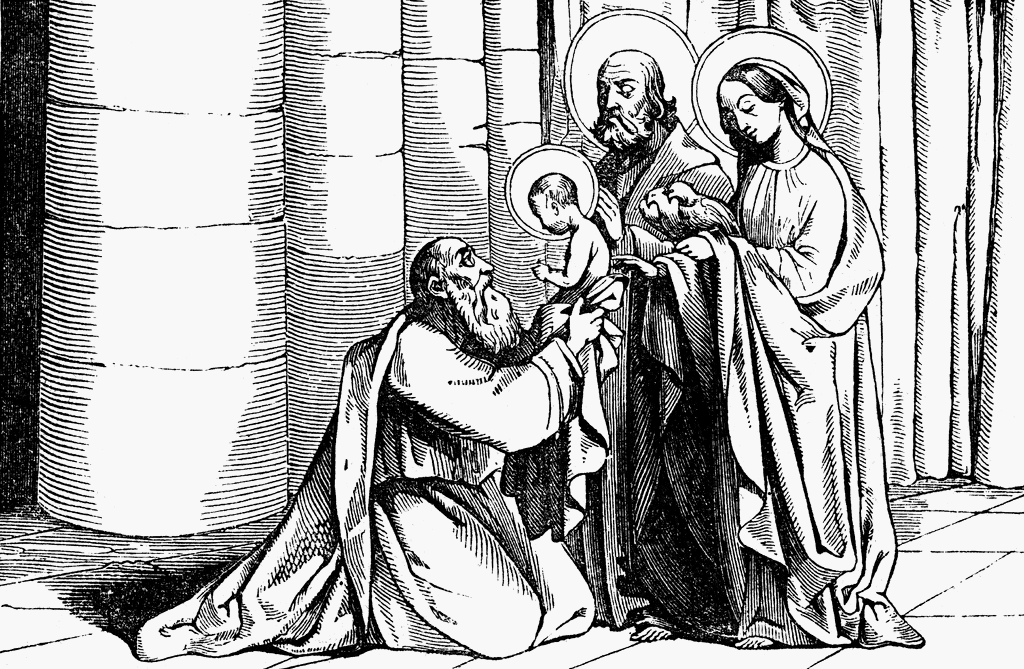
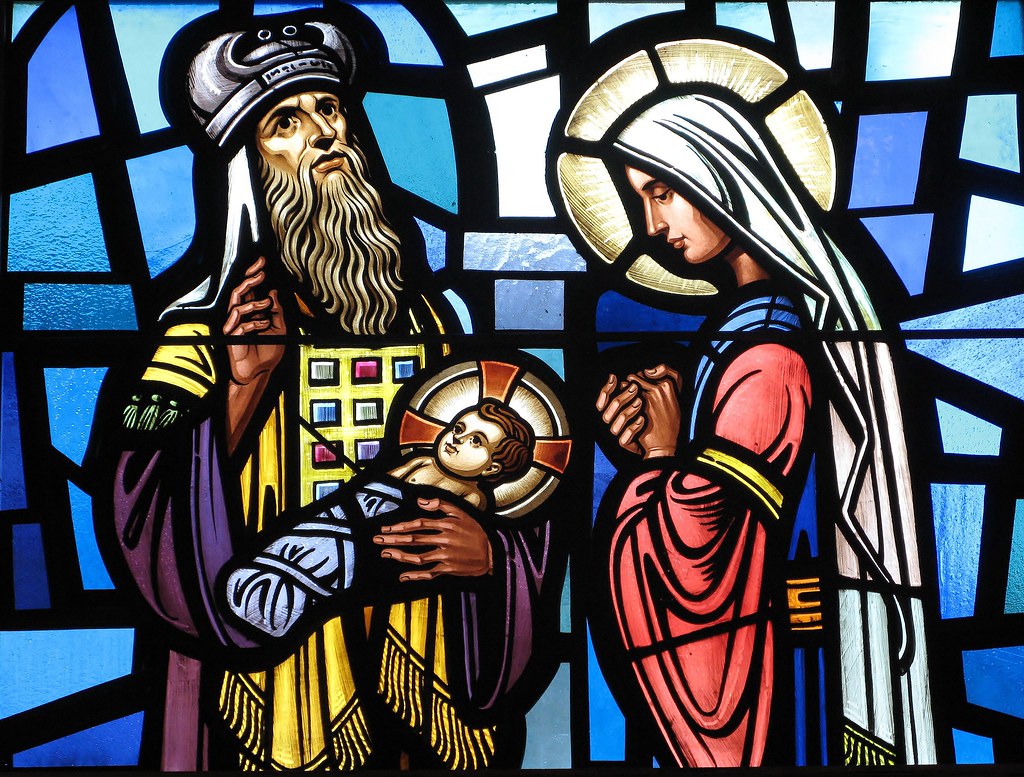
P3 God's Perfect Gift - Reflections on Jesus' Presentation at The Temple in Luke 2:21-40

Image result for presentation of jesus at the temple pictures
Luke 2:25-33 "And there was a man in Jerusalem whose name was Simeon; and this man was righteous and devout, looking for the consolation of Israel; and the Holy Spirit was upon him. 26 And it had been revealed to him by the Holy Spirit that he would not see death before he had seen the Lord’s Christ. 27 And he came in the Spirit into the temple; and when the parents brought in the child Jesus, to carry out for Him the custom of the Law, 28 then he took Him into his arms, and blessed God, and said, 29 “Now Lord, You are releasing Your bond-servant to depart in peace, According to Your word;
30 For my eyes have seen Your salvation, 31 Which You have prepared in the presence of all peoples, 32 A Light of revelation to the Gentiles,
And the glory of Your people Israel.”
33 And His father and mother were amazed at the things which were being said about Him."

Introduction:
Over the last couple of days we have been considering how Jesus' presentation at the temple by Joseph and Mary portray Him being God's Perfect Gift. Thus far we have noted how He is the Gospel's Savior and the fact that He is infinitely holy. Today we want to consider two final reasons: The fulfillment of prophecy and the fact that Jesus is the treasure of grace.

The Spirit of prophecy that was present on the day Jesus was presented at the temple
We find two important figures in this episode of Jesus early human life. Simeon is described as a devout man. We can further note that Simeon was functioning in a prophetic role, since Luke 2:25 states how "the Holy Spirit was upon Him." Simeon had upon him the Spirit of prophecy that enabled Him to utter incredible predictions concerning the Lord Jesus Christ. Anna the prophetess is presented as well, solidifying to reads the presence of prophetic activity in this scene.

We know from other passages in the Bible the role the prophetic office had in preparing the way for the coming of the Messiah. 1 Peter 1:10-11 states - "As to this salvation, the prophets who prophesied of the grace that would come to you made careful searches and inquiries, 11 seeking to know what person or time the Spirit of Christ within them was indicating as He predicted the sufferings of Christ and the glories to follow. 12 It was revealed to them that they were not serving themselves, but you, in these things which now have been announced to you through those who preached the gospel to you by the Holy Spirit sent from heaven—things into which angels long to look." Jesus Himself notes in Luke 24:44 "Now He said to them, “These are My words which I spoke to you while I was still with you, that all things which are written about Me in the Law of Moses and the Prophets and the Psalms must be fulfilled.”

By the time Jesus would finish His ministry and go to the cross, more than 100 prophecies would be fulfilled. The presence of Simeon and Anna both signify how it was that Jesus Christ was God's Perfect Gift - He fulfilled prophecy. So, we have seen thus far how Jesus is God's perfect gift: He is the Gospel's Savior, infinitely holy and the fulfillment of prophecy. Now lets consider one final reason as we close out this blog series...

Jesus Christ, as God's perfect gift, is the treasure of grace.
In Luke 2:39-40 we read - "When they had performed everything according to the Law of the Lord, they returned to Galilee, to their own city of Nazareth. 40 The Child continued to grow and become strong, increasing in wisdom; and the grace of God was upon Him." Jesus Christ came as the embodiment of grace. John 1:17 states - "For the Law was given through Moses; grace and truth were realized through Jesus Christ. Or again, Titus 2:11-12 "For the grace of God has appeared, bringing salvation to all men, 12 instructing us to deny ungodliness and worldly desires and to live sensibly, righteously and godly in the present age." Now we know, going back to Luke 2, that Jesus was treasured by the response to the earlier announcement by the shepherds we see in Mary herself in Luke 2:19-20 "But Mary treasured all these things, pondering them in her heart. 20 The shepherds went back, glorifying and praising God for all that they had heard and seen, just as had been told them."

Years ago I heard a preacher speaking at a conference. He told the crowd that when we proclaim Jesus Christ in our Gospel presentations, we rightly refer to Him as "Savior" and "Lord". The first title speaks to our rescue from wrath and sin and the second speaks of Christ's authority over the believer from conversion through sanctification and into eternity. However, there is that third element that speaks of the affections one ought to have for this Savior and Lord - namely that He is "treasure". Colossians 2:3 communicates this point of Jesus Christ being the treasure of grace: "in whom are hidden all the treasures of wisdom and knowledge." Would it be that as we contemplate God's Perfect gift, Jesus Christ, that we would grasp the fact that He is the treasure of grace.

Closing thoughts
We have spent these last few days considering God's Perfect Gift. We have looked at how Jesus' presentation at the temple by his parents has quite a bit to teach us about this truth. We utilized the acrostic g.i.f.t to flesh out what is meant when we say that Jesus Christ is God's Perfect Gift.

Gospel's Savior - Luke 2:21
Infinitely Holy - Luke 2:22-24
Fulfillment of Prophecy  - Luke 2:25-38
Treasure of Grace - Luke 2:39-40


Friday, December 16, 2016

P2 God's Perfect Gift - Reflections on Jesus' Presentation at The Temple in Luke 2:21-40

Related image
Luke 2:22-24 "And when the days for their purification according to the law of Moses were completed, they brought Him up to Jerusalem to present Him to the Lord 23 (as it is written in the Law of the Lord, “Every firstborn male that opens the womb shall be called holy to the Lord”), 24 and to offer a sacrifice according to what was said in the Law of the Lord, “A pair of turtledoves or two young pigeons.”

Introduction:
In yesterday's post we began to consider God's Perfect gift - the Lord Jesus Christ - as He is presented at the temple in Luke 2:21-40. We used the acrostic g.i.f.t to begin our navigation of this important text. We noted that what makes Jesus God's perfect gift is the fact that He is the Gospel's Savior. Today we want to focus on the letter 'i' and note a second reason why Jesus is God's Perfect Gift: He is infinitely holy.

So what motivated Mary and Joseph to present Jesus at the temple
The couple presented Jesus at the temple as prescribed by the Mosaic Law. When one reads the rituals and ceremonies in Exodus, Leviticus, Numbers and Deuteronomy in light of the revelation of Jesus Christ, there is discovered an order, a pattern. God is not a God of randomness. For example, we read of God's institution of the Passover Festival in Exodus 12. That festival was to remind the Jews of how He had redeemed them from their bondage in Egypt. We then find right after that commemoration further commentary on the significance of the Passover celebration and an associated festival called "The Feast of Unleavened Bread" beginning in Exodus 13:3. 

However, sandwiched in between these two festivals is a ritual that appears to be an incidental detail in Exodus 13:1-2 - "Sanctify to Me every firstborn, the first offspring of every womb among the sons of Israel, both of man and beast; it belongs to Me.” Leviticus 12:1-4 expands on this further: "Then the Lord spoke to Moses, saying, 2 “Speak to the sons of Israel, saying: ‘When a woman gives birth and bears a male child, then she shall be unclean for seven days, as in the days of her menstruation she shall be unclean. 3 On the eighth day the flesh of his foreskin shall be circumcised. 4 Then she shall remain in the blood of her purification for thirty-three days; she shall not touch any consecrated thing, nor enter the sanctuary until the days of her purification are completed." The significance of this short little command can only be ultimately seen when we realize the actions of Mary and Joseph. The infant Jesus would had been 40 days old by the time He had been presented at the temple. Such numbers like "40" speak of testing, trial or some-sort of significant spiritual event in the lives of God's people (Moses on top of the mountain with God for 40 days; 40 years of wilderness wanderings; Goliath taunting Israel for 40 days; Elijah fasting for 40 days; Jesus' temptation for 40 days). This little infant would be subject to testing, to trial and would demonstrate unparalleled spiritual significance.  

More amazing parallels between Jesus life, the Jewish feasts and all the entailed His presentation at the temple
Consider the context of Exodus 12-13: the institution of the Passover and the feast of unleavened bread. The Passover celebration would begin on the evening of the 14th day of the Jewish month of Abib (our March or April). Our Lord Jesus Christ would celebrate the Lord's table on that evening. We find further that Jesus came to be understood early on in His ministry as "The Lamb of God" (see John 1:29). 

When Jesus would be crucified, He would be crucified on the very day the Passover lambs would be slaughtered. The feast of unleavened bread would begin that Saturday, following on the heels of Passover. Our Lord Jesus' body was laid to rest in the tomb on the first day of the celebration of unleavened bread. Such incredible parallels exist between Jesus' presentation at the temple, the past Jewish festivals and what would be the mission for which He came: to die on the cross and be raised from the dead. 

When we realize that the presentation of any male Jewish child signified that one being set apart as holy to God, we then see how the infant Christ was uniquely holy touching His humanity. Moreover, by ever remaining God, the little bundle in Mary and Joseph's arms was not just holy, but infinitely holy. 

Closing thoughts:
So with the presentation of the infant Jesus at the temple per what is found in Exodus 13:1-2, as well as the historic connection to the Passover and Unleavened Bread feasts, the symbolism could not hardly be more striking: The infinitely holy One was being presented in fulfillment of the law in order to bear out the obligations necessary to be the sinner's Savior. This Jesus was God's Perfect Gift: The Gospel's Savior, being infinitely holy.

More tomorrow....