Translate

Showing posts with label Systematic Theology. Show all posts

Tuesday, February 3, 2026

Post #27 1700 Years of the Nicene Creed - The Nicene Creed's Confession Of Last Things (Eschatology) and a word on theological triage

Introduction:

    In our study of the Niceno-Constantinopolitan Creed of 381 A.D., we have explored the Creed's confession of God the Father and God the Son. As we are coming down the homestretch of what the Nicene Creed has to say about God the Son, we come to that section that deals with summarizing the Biblical teaching on "eschatology" or the study of last things.

Theological triage. 

    In an emergency room, doctors and nurses are able to know who to treat and who is to remain in the waiting room by a process known as "triage". A person with a broken arm, though serious, is not regarded as severe as another in cardiac arrest. Determining which is which is the whole point of triage. 

    In the study of Bible doctrine and theology, theologians undergo a similar approach to "theological triage", noting what the Bible states as of first, second, and of third importance, as well as viewing historic creeds like the Nicene Creed. Readers may refer to an excellent article on theological triage by Al Mohler here A Call for Theological Triage and Christian Maturity - AlbertMohler.com 

    Let me mention one more important point before we go forward. This author affirms the historic and Biblical doctrine of "Scripture Alone" (sola scriptura). Whenever Jesus for example was dealing with His opponents, He would always distinguish between "it is written" (quoting from the Old Testament at the time) and "you've heard it said" (the traditions of the Pharisees). Jesus was a proponent of sola Scriptura, affirming that all other secondary forms of authority are decided by the primary and only infallible, inerrant source of the faith - Scripture. Sola Scriptura does not exclude consultation of such secondary authorities like creeds, commentaries, and church leaders (otherwise we would have to call it "solo-scriptura"). 

    We ought to know what the church-at-large has historically taught so as to check our own doctrinal positions to ensure doctrinal fidelity. What sola Scriptura reminds us of is that those secondary reference markers are to be checked against the only source which God has revealed through the Prophets and Apostle - the Bible. Even as we move forward in our study of the Nicene Creed, we mustn't think it is the same level of authority as the Scripture (for the Creed is only a summary, an outline of what Christians confess). If the reader wants more details on where I stand on the place and purpose of creeds and confession in Christian practice, then please review my first post in this series here  http://www.growingchristianresources.com/2025/05/post-1-1700-years-of-nicene-creed-what.html  

The Nicene Creed's confession of eschatology or "last things".

    If we use the approach of "theological triage" introduced above, we can begin to grasp what the Nicene Creed has to confess regarding eschatology. Eschatology (more popularly known by some as "Bible Prophecy") covers the following subjects typically discussed today: the state of the soul after death, Heaven, Hell, Christ's physical, bodily second coming, resurrection of the soul and body, the final judgment, and the New Heavens and New Earth. Most would consider these "first-tier" subjects or those dogmas that are confessed by Christians everywhere and at all times. 

    There are other topics that are discussed among Christians that though important, do tend to not be as central as the above subjects. There are what we would call "second-tier" areas, such as whether or not Christ will have a millennial reign on earth and whether or not Israel is to be restored. Sometimes a second-tier issue can become emotionally charged enough or touch upon a current issue in the culture that makes it hover between first and second-tier status (the whole matter of Israel's current status has become a hot-button topic in recent years, for example).  

    Then there are then so-called "third-tier" topics that are intramural discussions among Christian denominations and churches, such as whether or not there will be a future tribulation period, whether or not there is a rapture, the timing of the rapture relative to the tribulation, identity of the Anti-Christ, and whether or not world events are setting up future end-times scenarios. 

    As the reader can note, some of the first grouping of topics on eschatology are those covered not only in the historic Christian creeds (Apostle's Creed, Nicene Creed, Athanasian Creed), but also historic confessions (such as the 2nd London Baptist Confession 1689, Westminster Confession of Faith, Augsburg Confession) and more recent ones (Baptist Faith and Message 2000 for example). The second and third groupings, as I said, tend to be discussed among denominations and larger segments of Christianity. 

    I bring this out to remind the reader that although all doctrine is important, yet not all doctrine is of equal weight and bearing on the totality of Christian conviction. For instance, if I deny the physical, bodily return of Jesus Christ, I may need to question the genuineness of my Christian confession. However, if I differ with someone else on the timing of the rapture or even on whether or not there is to be a future millennial reign of Christ on earth, Christian faith and practice will remain intact. This is why studying the historic Creed of Christianity is valuable, since we're reminded by such summaries what is central, secondary, and tertiary in the realm of Christian doctrine, judging all of course by the final court of appeal - The Bible.    

    When you look at the Nicene Creed's summary of eschatology, its "short list" of what it considers primary-tier or first-order doctrines central to the Christian faith, you find the following.

1. Christ's physical, bodily second coming = "and He shall come again, with glory."

2. Final judgment = "to judge the quick and the dead."

3. Christ's eternal Kingdom = "whose kingdom shall have no end."

    Those three clauses give us the first group of statements by the Creed on eschatology. They occur as the concluding statements in the overall confession of the Son's deity, humanity, substitutionary atonement, resurrection, and ascension. 

    We then come to the final sentences of the Nicene Creed, which give us further statements on eschatology:

1. The resurrection of the body = "and we look for the resurrection of the dead

2. New Heavens and New Earth = "and the life of the world to come. Amen"

    It is of interest to note that the first grouping of eschatology occurs at the end of the confession on Christology, whereas the second grouping comes after statements made about the church and baptism. 

Why theological triage is relevant to our confession of eschatology in the Nicene Creed

    We must remember that the Nicene Creed is a confession recited by Christians who meet together for Sunday worship. Their identities and understanding of where they're heading is wrapped up in the Person of Jesus Christ, who reveals the Father, who won their salvation, and who is coming again. 

    Typical debates in eschatology today about Premillennialism, Amillennialism, and Postmillennialism won't be settled by appealing to the Nicene Creed, since such matters are of second-tier status, not first-tier central Christian affirmations. As for third-tier level discussions such as the timing of the rapture (an intramural discussion among certain strands of premillennial believers), the Nicene Creed will not be the place to go. Why?

    The point of creeds is not to exhaust all the Bible has to say on such matters as eschatology, but rather to provide a summary of the most salient points of the faith "once for all delivered to the saints". In the realm of theological triage, the creeds give us "first tier" concerns. 

    When we look at confessions of faith like those mentioned above, they will get more detailed, bringing into view the second-tier as well as first tier commitments. Then of course we have doctrinal statements relevant to denominations or churches that may even spell out their teaching on third-tier matters, since such subjects are of importance in those immediate contexts of Christians. 

Closing thoughts:

    As a final note, whether one is a Premillennialist (which I am), or Postmillennialist, or Amillennialist, the importance of such tried-and-true summaries like the Nicene Creed is I can confess what the Creed says about Christ's second coming along with those dear brothers and sisters who espouse different schools of eschatological thinking. Creeds help us to see the Christian faith from the 30,000 foot level, especially in this era of history where so many attacks are daily leveled against Christians. May we prayerfully and thoughtfully consider these thoughts as we move forward in this study. 

Monday, July 5, 2021

P2 - Jesus and the Biblical Worldview Of Justice - True Justice Is Relevant Because Human Beings Are Made In God's Image

Introduction:

       In our last post, we began to consider what Jesus taught on the Biblical worldview of justice, which readers may review here: http://www.growingchristianresources.com/2021/07/p1-jesus-and-biblical-worldview-of.html 

    We noted that the first foundation for understanding justice is that it is grounded in the character and revelation of God Himself. Moral categories such as "justice" are what we call "objective truths", meaning that they are what they are regardless of what anyone may think, and they are the same across cultures, times and places. Justice is not some abstraction that exists independently of God, but rather is a perfection of which God is by His very nature. To put it another way, God is just because He is God. We not only live in a physical, but moral universe. Moreover, anytime we are dealing with morality, we involve persons. Years ago I learned the following moral argument for God's existence:

Premise one: If God does not exist, objective moral values and duties do not exist.

Premise two: Objective moral values and duties exist.

Therefore: God exists.

        For there to be some sort of universal law, there is necessarily a Lawgiver and there are moral persons to whom such an objective morality is given as an obligation for them to live by. In today's post, we continue on developing our Biblical worldview of justice by noting the second important foundation for it - that human beings, both men and women, are made in God's image. We shall then close the post with final applications and resources for the reader to further reinforce their understanding.

What is meant by "made in God's image"

    The first time we come across the idea of man "made in God's image" is in Genesis 1:26- 

"Then God said, 'Let Us make man in Our image, according to Our likeness; and let them rule over the fish of the sea and over the birds of the sky and over the cattle and over all the earth, and over every creeping thing that creeps on the earth.”

As theologians over the centuries have wrestled with what is meant by this term, three major ideas have emerged. The first possible meaning of "God's image" in man has to do with "exercising of authority" or "function". Men and women both appear to have the ability to cultivate and bring into order the creation around them and certain levels of the animal kingdom. Undoubtedly, the fall of human beings in Genesis 3 greatly impaired this functional element of the "image of God in man". Nevertheless, we still see this first meaning operative in humanity.

    The second possible meaning to "made in God's image" (Latin "imago dei") is in how human beings are made for relationship with one another and with God - hence, a "relational" meaning. In Genesis 5:3, we read of how Seth, Adam's son - 

"When Adam had lived one hundred and thirty years, he became the father of a son in his own likeness, according to his image, and named him Seth."

    As men and women relate to one another in marriage as God's image bearers, as well as with their children, we see how imperative it is for human beings to have social relationships. Also too, both men and women were created with the fundamental need to have a relationship with God. In the fall, the relationship Adam and Eve had with God was severed - resulting in man's profound spiritual and moral lostness (see Ephesians 2:12). Nevertheless, when Christ came into the world to provide salvation, the promise of salvation is at the moment of saving faith, this capacity to know God and relate to Him is restored to the redeemed man or women (see Colossians 3:10).

    So we see a functional and relational meaning assigned to this idea of "imago dei" or "made in God's image. One more meaning is worth mentioning, and that is that the idea of man made in God's image has to do with each person's inherent "dignity". Genesis 9:6 has God issuing forth this command in his covenant with Noah - 

“Whoever sheds man’s blood, By man his blood shall be shed, For in the image of God He made man."

    Any form of premeditated taking of life in a criminal setting is defined by Scripture as murder, or destroying of a fellow image bearer. As the reader notes what is written below in regards to social issues such as "right-to-life" and "opposing racism", both issues deal with how fellow image bearers (whether unborn or different ethnicities) are to be treated with dignity due to the "imago dei" embedded in the biological and moral/spiritual nature that defines what it means to be "human" in male and females. With these functional, relational and dignity elements briefly defined as constituting what it means when we say "made in God's image" (or imago dei), we can now proceed to see how Jesus treated this issue with respect to a Biblical worldview of justice.

Jesus deals with dignity of human life or "man made in God's image"

        Jesus comes upon a second scene and the Sabbath issue comes up again. Jesus raised the issue on the right to life and value of life in Mark 3:4 “And He said to them, “Is it lawful to do good or to do harm on the Sabbath, to save a life or to kill?” But they kept silent”. 

         The arbitrary, man-made tradition that claimed to “preserve what was right on the Sabbath” would had preferred the injustice of the man with a withered hand remaining unhealed by Jesus. Just as it was in Jesus’ day, true justice demands that all human beings, whether unborn, whatever ethnicity, whatever gender, are inherently valuable because of their being made in God’s image. But now, what happens whenever we reject the revelation of “true justice” for the arbitrary, man-made system of moral relativism in which society defines what is “just”?

The late Christian thinker Francis Schaeffer delivered a historic message in 1982 entitled “The Christian Manifesto”, in which he described what was going in our nation because of justice defined by man-made arbitrary law detached from God’s law: 

“More frightening still, in our country, at our own moment of history, is the fact that any basis of law then becomes arbitrary -- merely certain people making decisions as to what is for the good of society at the given moment. Now this is the real reason for the breakdown in morals in our country. It's the real reason for the breakdown in values in our country, and it is the reason that our Supreme Court now functions so thoroughly upon the fact of arbitrary law. They have no basis for law that is fixed, therefore, like the young person who decides to live hedonistically upon their own chosen arbitrary values, society is now doing the same thing legally. Certain few people come together and decide what they arbitrarily believe is for the good of society at the given moment, and that becomes law.” 

       This dominance of arbitrary law, in its various forms, has operated in our nation for the last 125 years. Let me contrast the Biblical view of true justice with a slice of that timeframe to show the fruits of what arbitrary, moral relativism has done in getting us to where we are at. Let’s consider three major moral issues.

THE SANCTITY OF LIFE. 

        True justice and “God’s image in man” affirms the inherent value of the unborn. Exodus 21:21-23 

“If men struggle with each other and strike a woman with child so that she gives birth prematurely, yet there is no injury, he shall surely be fined as the woman’s husband may demand of him, and he shall pay as the judges decide. 23 But if there is any further injury, then you shall appoint as a penalty life for life”. 

       Passages such as Luke 1:15; Luke 1:35 and Galatians 1:15 respectively assert the personal identities of Jesus, John the Baptist and Paul in the womb. Anything that would had occurred to terminate these lives pre-term would had been understood as injustice or objectively wrong (notwithstanding, the unimaginable difference it would had made on the history itself!). This rightful opposition to abortion was increasingly fought against and overturned in the Roe vs. Wade decision of 1973. Arbitrary, societal law decided that the life of the mother was the priority, coupled with a denial of the personhood of the baby. Consequences? 62.5 million babies gone as of 2021.

MARRIAGE & GENDER. 

       Our Lord repeated the definition of marriage in Matthew 19:4-5 

"And He answered and said, “Have you not read that He who created them from the beginning made them male and female, 5 and said, ‘For this reason a man shall leave his father and mother and be joined to his wife, and the two shall become one flesh’?  

       This understanding of marriage, virtually unchallenged and universally recognized by all people everywhere for all time, increasingly eroded throughout the 2oth century. When our nation passed “no-fault divorce” in the 1960’s along with the rapid increase of “living together” cohabitation through the 1970’s, the rate of traditional marriages declined through the 80’s and 90’s. Sadly, the American church closely mimicked these trends. This opened the door for increasing demands for same-sex marriage (where sadly, increasing numbers of professing Christians are weakening and accommodating to the pressure). 

         In parallel to this, a legal theory, which became “critical theory”, emerged in the mid-twentieth century. Critical theory advocates that society is composed of “oppressors” and “the oppressed”. Critical theory’s view of justice is called “social justice”.  The Oxford English Dictionary defines “social justice” as: 

“justice in terms of the distribution of wealth, opportunities, and privileges within a society.”  

        In short, “social justice” is what society says it is in terms of “equal goods and privileges” rather than “objective right and wrong” as defined by true justice. 

        Thus, when Critical theory is applied to marriage, legal leverage is pushed to demand equal access to societal and economic benefits of marriage for same-sex couples, resulting in proponents of traditional marriage being deemed as “oppressors”. Similarly, whenever Critical Theory is applied to matters of gender, we have the LBGTQ movement, which asserts that the Biblical and traditional view of gender is “oppressive”; that gender is a matter of one’s choice as defined by society; and that all public spaces need restructured to accommodate those persons who identify themselves by any gender. Despite the signing of the “Defense of Marriage Act” in 1996, which denied federal recognition of same-sex marriage, two landmark Supreme Court Cases (United States v. Windsor (2013) and Obergefell v. Hodges (2015) overturned the act, paving the away for what is now uniform federal endorsement of same-sex marriage.   

FIGHTING RACISM. 

         Scripture uniformly denounces racism. Jesus Himself treated the Samaritan woman at the well with dignity equal to his own (Samaritans were an ethnicity hated by the Jews). The Day of Pentecost in Acts 2 featured the Holy Spirit poured out on 17 different ethnicities, opening the doors for anyone in any nation to hear and believe the Gospel. Galatians 3:28 expressly states: 

"There is neither Jew nor Greek, there is neither slave nor free man, there is neither male nor female; for you are all one in Christ Jesus."  

         The Bible affirms the beauty and equality of all ethnicities as part of one human race, as captured in the song of Revelation 5:4 “Worthy are You to take the book and to break its seals; for You were slain, and purchased for God with Your blood men from every tribe and tongue and people and nation.”

         A Judeo/Christian framework (not meaning that every founding father was a Christian, but rather had a working understanding of a Judeo-Christian ethic) informed our nation’s founding. For instance, the opening lines of the Declaration of Independence: 

“We hold these truths to be self-evident, that all men are created equal, that they are endowed by their Creator with certain unalienable Rights, that among these are Life, Liberty and the pursuit of Happiness.”  

        Martin Luther King Jr. fought for Civil Rights with this same Judeo/Christian view of true justice as seen in an excerpt from his famous “Letter from a Birmingham Jail:  

“I would agree with St. Augustine that "an unjust law is no law at all." Now, what is the difference between the two? How does one determine whether a law is just or unjust? A just law is a man-made code that squares with the moral law or the law of God. An unjust law is a code that is out of harmony with the moral law. To put it in the terms of St. Thomas Aquinas: An unjust law is a human law that is not rooted in eternal law and natural law. Any law that uplifts human personality is just. Any law that degrades human personality is unjust. All segregation statutes are unjust because segregation distorts the soul and damages the personality."

Anytime true Biblical justice is replaced by arbitrary justice, injustice will result. Now I have mentioned already the arbitrary, man-made theory of law called “critical theory”. When critical theory is applied to issues of race, we have “Critical Race Theory” (CRT), which in principle undoes any progress made in past civil rights efforts. How? Such an arbitrary view of justice sows seeds to further alienate people, rather than encourage true listening to one another and working together, since it puts at odds those who are deemed “white” and classified as “systemically and irretrievably racist” from those who are the “oppressed”. We can never expect true dialogue whenever only one group is allowed to speak and the other is forced to remain silent. Furthermore, CRT neither affirms God’s existence (let alone an eternal foundation for justice); nor does it envision human beings as made in His image. This can never work with a Biblical worldview of justice nor provide help in interpreting Scripture. 

These key areas all touch upon the importance of understanding the eternal basis and application of true justice. Furthermore, just as Jesus’ teaching on justice and the inherent dignity of human beings contrasted with the arbitrary laws of the Pharisees; the Bible-believing Christian needs to make sure they understand a Biblical view of justice if they expect to navigate the increasing cultural pressure and indoctrination of our current generation; preserve Biblical marriage as that of one man, one woman; and oppose evils like racism and abortion-on-demand. 

How we can begin to apply Jesus’ Biblical worldview of justice.                                    

        In the recent SBC 2021 convention in Nashville, there were major discussions about so-called “Critical Race Theory” and efforts to express resolutions banning abortion. As I see it, the mettle of our SBC is undergoing a major season of testing. The convention passed the so-called “Resolution 9” in 2019 which affirmed the usefulness of Critical Race Theory and Intersectionality as a tool for studying scripture. The key phrase in the controversial resolution is found in its second "resolved" section: 

RESOLVED, That critical race theory and intersectionality should only be employed as analytical tools subordinate to Scripture—not as transcendent ideological frameworks." 

       I hope readers understand how important I think it is to oppose evils such as racism. If for anything, the reason why I wrote on this topic of articulating a Biblical Worldview of Justice was to lay out how such a worldview aids in combatting such evils, since Scripture itself is sufficient for affirming the equality of value and dignity of every ethnicity. Since we have seen what a Biblical Worldview of Justice looks like, it is for that reason that I can express that the SBC should never had passed resolution 9. Why? Like trying to mix oil and water, critical race theory and a Biblical worldview of justice cannot fit together. 

        Christians must have a Biblical worldview of justice, based upon the sufficiency of scripture, if they expect to fight evils such as racism and defend the rights of the unborn and defend Biblical marriage. Despite the efforts of some this year to get the Convention to rescind that resolution so as to express a clear statement on the sufficiency of Scripture in fighting evils like racism, such efforts failed. Another, more broadly worded resolution was passed, yet, it failed to decry what should had been the taking down of “Resolution 9”. 

        Another resolution was proposed by one pastor that would had overtly had the SBC uniformly call for a ban on abortion. Those present at the Convention felt that affirming another resolution against abortion was unnecessary, since the SBC has historically opposed abortion in principle and at different points throughout its history. I am thankful to the Lord that the SBC still affirms its general pro-life stance, however, in the wake of the persistent march of secularism, a fresh clear statement that lays out the Biblical Worldview of justice, with respect to the unborn, would had served to propel the SBC's pro-life commitments. 

        These are indeed trying times. I pray for our new SBC president (Ed Litton) and leadership, since the next several years could reveal whether or not the SBC will continue to hold the line of commitment to Biblical inerrancy and sufficiency, uphold stances on issues such as I mentioned in today’s post and retain the urgency to win as many souls to Christ as possible.  

        For those of us who are followers of Jesus, how can we begin to develop and apply the sort of Biblical worldview about justice and humanity taught by Jesus in Mark 2-3?

1. Pray for our leaders, in both church-life and the government. 1 Timothy 2:1-2 - "First of all, then, I urge that entreaties and prayers, petitions and thanksgivings, be made on behalf of all men, 2 for kings and all who are in authority, so that we may lead a tranquil and quiet life in all godliness and dignity."

2. Petition law-makers to not vote for ungodly legislation that could become law. The website of “New Yorkers for Constitutional Freedom”, albanyupdate.com, has resources which give the latest news on legislation which impacts major ethical and moral issues of our day.

3. Pursue a Biblical worldview of justice, as Jesus taught. A great resource I would recommend, which I endorse and have signed, is the “Statement on Social Justice and the Gospel”, which is linked here: https://statementonsocialjustice.com/wp-content/uploads/2018/09/SSJG-FINAL.pdf).

Thursday, July 1, 2021

P1 Jesus And The Biblical Worldview Of Justice - True Justice Is A Revelation Of God's Character


Introduction:  

         Over the last couple of years all of us have witnessed and heard much about “calls for justice”. In Jesus’ day, there was a major discussion, a debate, that involved what was “just” and “unjust” to do on the Sabbath. Mark 2:24 picks up the discussion: 

“The Pharisees were saying to Him, “Look, why are they doing what is not lawful on the Sabbath?”  

       Much like our day, Jesus had to express how true justice contrasted to what had become a man-made, arbitrary system of justice based on human traditions. 

        Our nation and our children are experiencing unprecedented confusion over what defines justice and what it even means to be human. This post will begin to equip you on how you can Biblically navigate the current cultural climate and on how to begin to develop a Biblical worldview which can handle issues such as abortion, Biblical marriage, gender and racism. So, when it comes to understanding what Jesus taught on true justice, let us note first…

True justice is a revelation from God’s character.    Mark 2:23-28

        When we speak of “true justice” or a “Biblical worldview of justice”, the following chart summarizes:


God’s justice or eternal law/revelation of His Word

--------------------------------

Natural law/“law of the conscience”, sense of objective morality 

-------------------------------

Human laws, uphold what is “right”, punish the “wrong”

        Many Christian thinkers over the centuries, including Augustine, Thomas Aquinas and Martin Luther King Jr. articulated a very similar sort of "multi-tiered" understanding of how God's perfection of justice is the ground for objective moral standards such as "justice" in our world, our consciences and the basis of government. In Mark 2:24, we find the Pharisees accusing Jesus and His disciples of “doing what was not lawful on the Sabbath”. It is clear in this passage that the topic of “justice” is involved. What is “justice” as it relates to “God’s justice”? God’s justice is that perfection expressing God’s holy goodness as being always right; doing always right and opposing what is not right. Simply put, justice is God being right, because He is right and thus always doing right. 

        This reality of God’s eternal justice, or what theologians call “eternal law”, sets the moral pattern in our world in what is called “natural law”. “Natural law” includes our own sense of “right and wrong” or “dictates of the conscience” are due to what the Bible describes as “made in His image”. This means we are created with a hardwired knowledge about God and to relate ethically to other people.  

Deuteronomy 32:4-5 “For I proclaim the name of the Lord; ascribe greatness to our God! 4 “The Rock! His work is perfect, For all His ways are just; A God of faithfulness and without injustice, Righteous and upright is He.” 

Isaiah 1:17 "Learn to do good; Seek justice, Reprove the ruthless, Defend the orphan, Plead for the widow.” 

Jeremiah 9:23-24 "Thus says the Lord, “Let not a wise man boast of his wisdom, and let not the mighty man boast of his might, let not a rich man boast of his riches; 24 but let him who boasts boast of this, that he understands and knows Me, that I am the Lord who exercises lovingkindness, justice and righteousness on earth; for I delight in these things,” declares the Lord."


James 5:3-4 "your gold and your silver have rusted; and their rust will be a witness against you and will consume your flesh like fire. It is in the last days that you have stored up your treasure! 4 Behold, the pay of the laborers who mowed your fields, and which has been withheld by you, cries out against you; and the outcry of those who did the harvesting has reached the ears of the Lord of Sabaoth."

Revelation 15:3 “And they sang the song of Moses, the bond-servant of God, and the song of the Lamb, saying, “Great and marvelous are Your works, O Lord God, the Almighty; Righteous and true are Your ways, King of the nations!” 

        So, we see then that true justice is grounded in God’s justice or “eternal law” and is revealed in creation and ourselves as bearers of His image by way of “natural law”. 

        One more category is necessary when articulating a Biblical worldview of justice, that is, “man-made laws”. What is the basis for them? Romans 13:1-2 

“Every person is to be in subjection to the governing authorities. For there is no authority except from God, and those which exist are established by God. 2 Therefore whoever resists authority has opposed the ordinance of God; and they who have opposed will receive condemnation upon themselves." 

        Any human laws that expect to be truly “just laws” must align with the self-evident truths of “natural law”, which in turn is an expression of God’s justice or His “eternal law”.

As Jesus dealt with the Pharisees opposition to him and His disciples, He appealed back to the episode of David and His men, when they went to the high priest of Israel in search of food in 1 Samuel 21. God’s Word was used by Jesus to demonstrate the true intent of the Sabbath - and thus true justice. Jesus Himself stated this intent in Mark 2:27-28 "Jesus said to them, “The Sabbath was made for man, and not man for the Sabbath. 28 So the Son of Man is Lord even of the Sabbath.” 

        This contrasts with the Pharisees’ view of justice, which became based upon their arbitrary system of rules which made justice more of what they defined it to be, rather than rooted in God’s character. Their system could be pictured as follows:

Man-made arbitrary law (man, not God, determines what is just) 

----------------------------

Justice based off of the majority-view in society

        Is it no wonder why Jesus pressed like He did? They in practice (even if they did not admit by word of mouth) had cut God and His revealed Word out of the picture. Their view of justice, in practice, became a form of “moral relativism”, which means moral standards that are defined by human beings “relative” to their setting, opinion or culture. So true justice is a revelation of God’s character, the first foundation for our understanding. The next post will continue, considering the second major pillar for a Biblical worldview of justice as taught by Jesus.  

Friday, April 17, 2020

That's A Good Question! How can an unchanging God change His mind? More on God's emotional life.

8 best apps for parents of babies and toddlers
Introduction:

     In the last post we began to look at God's emotional life here: http://www.growingchristianresources.com/2020/04/thats-good-question-answering-recent.html. Recently, I had received a question about this topic in a Sunday night live Q&A service (in which we live streamed and received questions from viewers). I began to deal with how God's emotional-life differs from our emotional life. In this post, I continue on with the response I gave to this question, focusing on the seemingly perplexing issue of how an unchanging God is described as "changing His mind" or emotions. For those interested in watching the video segment to which this question is related, you can click on the link here to our church's You Tube channel that features the "Q&A service" from April 5, 2020 and forward to time segment 30:15-43:30 in which the question is addressed. https://www.youtube.com/watch?v=mbH84ZEGlR0&t=2607s

So what does the Bible mean when it says "God changed His mind", even though it elsewhere describes God as unchanging?

Answer:

1. Scripture does present God as unchanging in terms of His being while seemingly "changing His mind".

     "Scripture says that on several occasions (for instance in the book of Jonah), that Jonah is talking to God in chapter three of His prophecy. Jonah said something to the effect: "I knew that you were a God who would change your mind".  What had happened, Jonah had been told by God to proclaim throughout the city of Nineveh in three days God was going to judge them. Then, the King of Nineveh decreed a time of repentance where everyone was to dress in sackcloth and sit on ashes (a customary ancient form of mourning) and cry out to God for repentance. It says in the book of Jonah that "God changed his mind".  So, some people have asked: "well, how can that be the case?" We read, for instance, in Numbers 23:19 

"God is not a man that he should change his mind nor son of man that he should repent". 

      Yet, there in the book of Jonah, we see God changing his mind.  Although God is by nature unchanging (what theologians call "immutable"), we see instances in scripture where we see him described as changing his mind that is referring to God from the standpoint of the creatures. What is going on then? 

2. God, in Scripture, uses two different methods of expressing His nature and identity.

      Scripture talks of God in two ways. There are those verses that speaks of God as He is in and of Himself - namely, He's unchanging. Then, there are those verses in which God adapts the revelation of Himself in forms of figurative language to bridge understanding to His people (older writers liken this to a parent speaking baby-talk to their child).
Top Surprises of Life After Baby Arrives
      As to the first sort of way scripture refers to God, we turn to James 1:17, which says - 

"every good and perfect gift comes down from the Father of heavenly lights with whom there is no variation nor shifting of shadow." 

      So, with respect to God from God's perspective, there is no change within Him. His emotions are constant. They are "always-on", so-to-speak. God's emotional life is unvarying. 
Kids Reveal 9 Things Parents Should Never Do During a Road Trip ...
      To illustrate, whenever I was a child, my mom or dad would take me to do errands or go on a trip. They would tell me at the beginning of the trip - "we're going to the store" or "we're going to Grandma's house". As to their plan and point of view, there was nothing different to alter that plan. They told me what was happening. They were the same mom and dad to me. As a principle of perspective and truth - my mom and dad kept the same unvarying plan and course. 

              But with respect to our finite perspective, as we experience and interact with God from our point of view, it seems as if God does change his mind. Romans 2:4 says this: 

"do you think lightly of the riches of his kindness and tolerance and patience, knowing that the kindness of God leads you to repentance". 

      So, we understand that it is God's intention to change people and to change their lives. So whenever we read in scripture those places where God is described as "changing his mind", that is, figurative language used in scripture to ascribe changeable human-like emotions to God (called "anthropopathism", or "human-like emotions"). God does this in revealing Himself  by adapting the revelation of Himself to people so that they can relate to Him. 
Family vacation, rv camper travel with kids, happy parents with ...
       If we go back to my illustration of my parents and myself as a child on a trip, my parents could make several stops along the way to our intended destination. In my child-like understanding, I wondered why my parents "changed their minds" about our trip. Sometimes they would explain to me in words I could grasp why we were making this stop or that stop (and sometimes they would say "trust me"). 

       As a child, it was hard for me to grasp they're overall intentions, yet, they had never ultimately changed in their intentions nor as my parents in the illustration of the journey. If anything, such interactions demonstrated I was the one who was changing: learning to trust them or growing in contentment. As to my vantage point, my parents seemed to change their minds a lot, yet, from their vantage point - they had already had those plans in mind and still had the ultimate destination of our trip in mind. 

          In divine revelation, it's God's way of expressing himself in ways that are understandable to us. Scripture itself demonstrates this principle by which God adapted His communication to words in the original Hebrew, Aramaic and Greek written by the prophets and apostles (over 770,000 words an average English translation of Old and New Testaments). In other words, wherever we read in scripture where it says: "God changes his mind", that's actually Scripture's way of indicating a change in ourselves. 

       The author A.W. Tozer puts it this way, more-or-less:

"that whenever we read of God changing his mind that means there's been a change in the moral situation of the person. So, for example, a person who perhaps all their lives was in rebellion against God and opposition against God hears the Gospel. The Spirit of God does His work in them and now they're responding by faith to Jesus Christ. What has taken place? Has there been a change in God? No. God's always angry at sin and He hates it. God is always gracious and merciful towards those who repent. So what's changed? It's not God. Instead, its the person that's changed." 
How To: Remove Wax Easily : 6 Steps (with Pictures) - Instructables

              Sometimes we can illustrate it in this way. Say you have the sun and then you have maybe a block of wax and a block of clay. As you sit that block of wax and that block of clay out in the sunlight, the block of clay will harden but the block of wax will soften. Now what has changed? It's not the sun. The sun is shining. It's doing what it always does. 
What Is the Sun Made Of and When Will It Die? | Quanta Magazine
     The sun does not change relative to the block of wax and the block of clay. Instead, it's the block of clay and the block of wax that has changed.  So, from the perspective and the vantage point of the blocks of clay and wax, there has indeed been a change (a change in the situation of each). In like manner, when we talk about people and how it is they experience what seems to be a change in God, it's actually those persons experiencing a change within themselves.

3. God has an emotional-life without the frailties and sin we typically have because of what kind of God He is by nature. 

        So, how is it that God can have an emotional life and yet we have emotions? Furthermore, so oftentimes our emotions come out as sinful and frail. How can we draw all of this to a conclusion? We've been made in the image of God.  We read in Genesis 1:26 where God says: "Let Us make man in our image in our likeness." And so when God made human beings, He included in His design of human beings that they were to have emotions. Moreover, they were to have a creaturely emotions that were expressive of their Creator.  Of course, when man fell into sin, that meant that the entire nature of man's being (emotionally, psychologically, intellectually) was affected by sin. 

Closing thoughts

        So, emotions in of themselves are not sinful.  Rather, they are expressed in connection with ,the nature of the one that expresses them. For God, God has emotions that are expressed without sin because He is God, that by nature, cannot sin (see Habakkuk 1:13; Titus 1:2; James 1:17; 1 John 1:5-7).  We express emotions and they are subject to change. We respond to the changes of circumstances.  Just because God has emotions it doesn't necessarily mean that they are sinful. As a final thought, Scripture certainly bears out that God has an emotional life, even though it is different from our own."

Wednesday, April 15, 2020

That's a good question! Answering a recent question on God's emotional life.


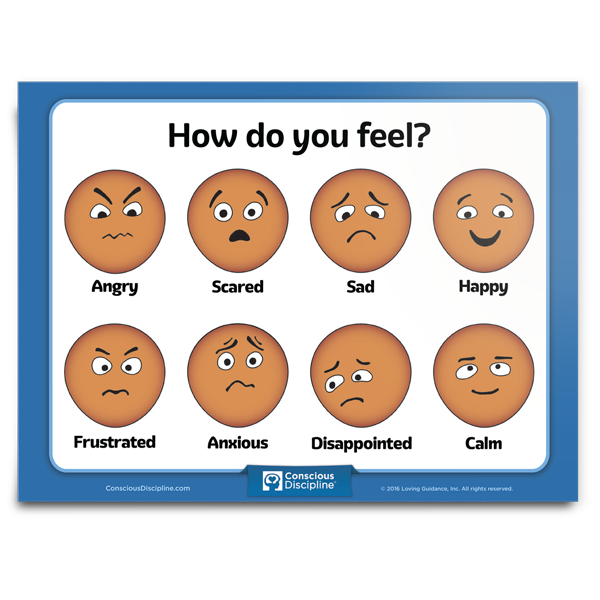
Resource: How Do You Feel Chart | Conscious Discipline
Introduction:

     Every so often, on Sunday nights, we do a live question and answer time that entails people submitting questions they have about the Bible. Recently I received one question that was a very good question about God's emotional life. I thought I would reproduce both the question and response given. For those interested in watching the video segment to which this question is related, you can click on the link here to our church's You Tube channel that features the "Q&A service" from April 5, 2020 and forward to time segment 30:15-43:30 in which the question is addressed. https://www.youtube.com/watch?v=mbH84ZEGlR0&t=2607s

The Question: How do we Biblically make sense of God's emotional life?

      We're going to begin tonight with a question that is addressed in this way. This is the question. 

      "Please address the emotions of our creator including the Trinity he is perfect and yet scripturally contains all the emotions of a frail and sinful man. It doesn't compute. Yet many of our emotions are sinful. So the question is: how can we account for the emotional life of God and how does that compare with our emotions and is it right to talk about God having an emotional life? We have emotions. We have an emotional life and yet, so often, we express our emotions in sinful ways. Is it right to talk about God having emotions?" 

Answer from the Bible about God's emotional life

1. Let's first realize, God has an 
    emotional life.     
     
    Well that's a good question! I begin at Exodus 34. Exodus 34, and  I'm going to pick up at verse 6. Here we see God. He's talking to Moses on top of Mount Sinai and God is revealing some things about Himself to Moses and so we read in verse six of Exodus 34 - 

     "Then the Lord passed by in front of him and proclaimed: 'the Lord the Lord God compassionate and gracious slow to anger and abounding in loving kindness and truth who keeps loving kindness for thousands who forgives iniquity transgression and sin, yet, He will by no means leave the guilty unpunished. Visiting the iniquity of father's on the children on the grandchildren to the third and fourth generation."'

      That is from Exodus 34:6-7. So we understand that God indeed does have an emotional life. Let me just give you some scriptures that speaks love the emotional life of the God of the Bible. 

      We see here in Exodus 34:6 how God is described as being "slow to anger, abounding in love and mercy." As matter of fact, throughout the Old Testament, we see several times where God is expressed in these words in terms of His emotional life. Nehemiah writes in Nehemiah 9:17 -  

"but you are a God of forgiveness gracious and compassionate slow to anger and abounding in loving kindness and you did not forsake them." 

      Nehemiah is talking there about the people of God. We read in Psalm 108:4 of the emotional life of God -  

"for your loving kindness is great above the heavens and your truth reaches to the sky."

     So there in Psalm 108:4 we see reference there to God's loving kindness and how it is his truth reaches to the skies. So no doubt about it God, has an emotional life.

2. Let's compare God's emotional life to our own.
    
       Now we understand that in terms of the nature of God's emotions, His emotions are not subject to change. Sometimes theologians will use a term called "impassibility". When we describe God as "impassible", that doesn't mean that God is aloof or somehow separated from the plight of humanity. Also, impassibility doesn't mean that God is some sort of sterile being that has no emotions. 

     Instead, when we talk about Divine impassibility, this simply means that God's emotions are constant. In other words, God's emotions are not caused by anything outside of himself. Our human emotions are "passible", meaning that they react to whatever is coming to them "passively" from the outside. All human emotions, even ones which are expressed as a result of intentions on our part, are prompted. I can be happy one moment but then, if something goes wrong, I change to sadness, gloom or frustration. I am passible with respect to my emotional life. My emotions, we could say, are "reactionary." God's emotions, on the other hand, are regulated by his attributes. Numbers 23:19 for example says: 

"God is not a man that He should lie down or a son of man that He should repent. Has he said and will he not do it or has he spoken an will he not make it good."  

      So there we see God is not a man, rather, His emotions are constant. They're not affected by anything outside of Himself. God's emotions are always "on".  Then we read then in 1 Samuel 15:29 similar terms - 

"The Glory of Israel will not repentant he is not a like a man who changes his mind ." 

Malachi 3:6 reminds us - 

"Oh Lord you do not change so that Jacob would not be consumed." 

      God described himself in this way. He says: "I am the Lord who does not change so that Jacob is not consumed." So God by nature, with respect to his emotional life, expresses emotions that never change. They are constant. To cite further examples, we read in Zechariah 8:17 that God is constantly angry at sin. God has always known that there would be sin in our world. God ever opposes anything that would get in the way between the creature and Himself (especially those things that will hurt us or cause us to harm others). God hates sin. 

    So, we understand that God hates sin. We understand that God is a constantly loving God. John 3:16 is a familiar verse in the Bible. There we see how God so loved the world that He gave His only begotten Son, that whosoever believes in Him will not perish but have everlasting life. Again, God by nature is unchanging in his emotional life, which is to say He's impassible. Impassibility tells us that  His emotions are not passive. He does not change his emotions due to outside circumstances. Rather his emotions are regulated by what is within himself.


In the next post we will continue answering this question by grasping how God is unchanging in His emotional life and yet is often described in the Bible as "changing His mind" or emotions. 

Thursday, December 5, 2019

The eternal God and the supernatural realm

Image result for eternal god"
Psalm 90:1-2  "Lord, You have been our dwelling place in all generations.
2 Before the mountains were born
Or You gave birth to the earth and the world, Even from everlasting to everlasting, You are God."  

Introduction:

   Today's post aims to introduce readers to a Biblical view of the supernatural realm. In order to begin, we must first consider the nature, attributes and identity of God. Below are a series of thoughts which serve to pull together such a consideration. May this post raise our awareness of God's supernatural power and presence. 

1. Scriptures and definition of the eternal God and supernatural.

       As we begin to consider the supernatural realm, we must begin with the only being that is eternal by nature - God. God is eternal. As we consider this first heading under “eternity”, we can refer to God’s existence by the phrase: "that God is". Hebrews 11:6 expresses: “And without faith it is impossible to please Him, for he who comes to God must believe that He is and that He is a rewarder of those who seek Him.” Eternity is foundational to thinking about God (see Romans 1:20; Colossians 1:16-17; 1 Timothy 1:17).

      We could define eternity as: "without beginning, without end, fullness of being without the limitations of time." Passages such as Psalm 90:2; 102:25; Isaiah 57:15; John 1:1-3; Hebrews 9:14; 1 Timothy 6:16; Rev. 4:8 speak to us of God's eternity.  Boethius, a 6th century Christian thinker, defines eternity as: 

“the complete, simultaneous and perfect possession of everlasting life.” 

In thinking about: "that God is", i.e., His existence, other related perfections fill out our basic idea about God.

1. There is God’s Divine "immensity", that perfection dealing with God's relationship to space as He being in it and beyond it (see 1 Kings 8:27; Acts 17:25-30).

2. There is Divine infinity, speaking of the endless extent of the Divine nature. Paul speaks of God's Divine power or omnipotence in Romans 1:20.

3. God being a spiritual, immaterial being, per Jesus' words in John 4:24.

4. God as a Personal being that creates, Genesis 1:1; 33:6; 1 Cor 8:6; 2 Peter 3

Ways to think about God’s Divine eternity and the supernatural realm.

      New Testament passages such as Colossians 1:16-17 and Hebrews 1 speak of “God” and “everything else”. The “everything else” refers to creation. Creation is divided up into two distinct and somewhat interactive realms: “visible” and “invisible”. The “invisible” realm is another way of talking about “the supernatural realm”, as it refers to an unseen part creation (God of course is His own, separate, uncreated reality apart from creation). God of course is deemed “invisible” (1 Timothy 1:17), spiritual (John 4:24) and personal (Acts 17:25-30). He differs by the fact He is without beginning (Psalm 90; 102; Revelation 4:8) and self-existing apart from and prior to creation (Isaiah 44:6; 43:10-11). There is an illustration I can think of to approach the otherwise incomprehensible truth God’s Divine eternity and His relationship to the supernatural.

Illustration: God and “everything else”
“God” <--∞ --> “angelic realm, humans, cats, wooly-worms, amoebas, atoms”

The little sign separating God and everything else is the infinity sign. No matter whether a creature is an archangel or the smallest of smallest things, there lies an infinite, qualitative distance between the created realm and God. For God to communicate to us by revelation is an act of grace on His part. 

Where we get this notion of divine eternity?

1. Scripture.

2. The beginning of the universe

For the universe to have begun, it needed its origin in a cause that is without beginning. Moreover, for there to be a finite universe, produced by an eternal being, the eternal being had to have had a will and and a mind (since the infinite cause, God, brought about a finite effect, the universe).

3. The attributes of God

Consideration of God's attributes demonstrate this most essential perfection of eternity. Omniscience, omnipotence, omnipresence and other perfections require a God that is not bounded by time.

Take-aways for your life.

1. What we learned today. As we close this post, we note that reference to the phrase: "that God is" means His existence. Eternity was defined as: "without beginning, without end, fulness of being without the limitations of time." Standard arguments for God’s existence bolster this claim of Divine eternity, since they show that the finite realm of creation requires a timeless, spaceless, immaterial, infinitely powerful, all present mind with a will we call: "God"

2. We need greater awareness of the supernatural realm

A.W. Tozer once remarked about God’s Divine eternity and the supernatural realm’s relevance to our lives:2. “A spiritual kingdom lies all about us, enclosing us, embracing us, altogether within reach of our inner selves, waiting for us to recognize it. God Himself is here waiting our response to His Presence. This eternal world will come alive to us the moment we begin to reckon upon its reality.”

3. How we live day-to-day

Giving time to think about God’s eternity lifts our focus from the horizontal, visible world of our five senses to that of the “stuff” that drives us to worship. To realize that we live out our daily lives and spiritual lives before a holy, eternal God to whom we are accountable, and that, in the Person of the Son, came as “God with us” to be “man for us”, ought to sharpen our awareness of Him.

4. Strengthening our prayer lives

When we pray, we ought to think of prayer as “the greatest adventure”, since we are treading into the very foothills of God’s eternal presence. We could say far more, but let us live this week in light of this truth that God, is, eternal.

Friday, May 31, 2019

Thinking about God through the books of the Bible

Image result for Holy Bible
Jeremiah 9:23-24  "Thus says the Lord, “Let not a wise man boast of his wisdom, and let not the mighty man boast of his might, let not a rich man boast of his riches; 24 but let him who boasts boast of this, that he understands and knows Me, that I am the Lord who exercises lovingkindness, justice and righteousness on earth; for I delight in these things,” declares the Lord."

Introduction: Why it is so important to think about God

The great 19th century Baptist preacher Charles Haddon Spurgeon comments in a sermon about the benefits of thinking about God. J.I. Packer begins his classic book, "Knowing God" (readers can click on the Amazon link to see more information about this amazing book here: https://www.amazon.com/dp/B006NZ66RC/ref=dp-kindle-redirect?_encoding=UTF8&btkr=1 ), by quoting Spurgeon:

"The proper study of a Christian is the Godhead. The highest science, the loftiest speculation, the mightiest philosophy, which can ever engage the attention of a child of God, is the name, the nature, the person, the work, the doings, and the existence of the great God whom he calls his Father."

"There is something exceedingly improving to the mind in a contemplation of the Divinity. It is a subject so vast, that all our thoughts are lost in its immensity; so deep, that our pride is drowned in its infinity."

As Packer begins to develop why he is writing his book "knowing God", he lays out in his second chapter how pursuit of God through studying His being and perfections can benefit us:

1. Those who know God have great energy for God. 

2. Those who know God have great thoughts of God.

3. Those who know God show great boldness for God. 

4. Those who know God have great contentment in God. 

Review of the last post that began thinking about God from general revelation and focusing upon thinking about God through the special revelation of the Bible

In our last post we considered thinking about God by way of general revelation, religious experience and natural theology. (curious readers can review the last post by clicking on the link here:  http://www.growingchristianresources.com/2019/05/thinking-about-god-through-general.html ).

In this post I want us to consider how we can think about God through His special revelation in the Bible and by the Person of Jesus Christ. The way we will pursue such thoughts is by considering key passages, themes or summaries of each book of the Bible that will draw for us a Biblical portrait of God with regard to His being, attributes, names and identity.

In Genesis, God is the Providential Creator. 

He is the Creator of all space, time, matter, life and humanity (Genesis 1:1, 2-25, 26-27). As the eternal Sovereign exercising authority as King over what He decreed, God reigns with no rivals, declaring all He has made "good" (Genesis 2:1-4). God made man as a covenantal being, meaning that God pledged Himself to man and desired man to pledge himself to God through obedience. Man broke this original "covenant of works" (Genesis 2:16-17). God knew man would fall and already intended to offer man, through His covenant with Adam's wife, a covenant of grace (Genesis 3:15). Both Adam and his wife respond by faith, as indicated by Adam's naming of her as "Eve" or "mother of all who live" and God's clothing of them in the skins of animals sacrificed on their behalf. God's covenant of grace is expressed repeatedly, most notably in His dealings with Abraham (Genesis 12, 17, 22), Isaac (Genesis 26) and Jacob (Genesis 28,32,35) and the various covenants He would make with Israel (see Romans 9:1-5). 

In Exodus, God is the Redeemer.
In Exodus 3 we find God calling Moses to go to Pharaoh and exclaim: "let my people go". When Moses inquires as to the identity of the One commissioning him, God replies in Exodus 3:14 "God said to Moses, “I AM WHO I AM”; and He said, “Thus you shall say to the sons of Israel, ‘I AM has sent me to you.’”

In Leviticus, God is Holy
In Leviticus 11:44 we see God issue the command: "be holy, for I am holy." God "holiness" is His "otherness". The holiness of God speaks of the concentration of all of God's moral perfections, such as mercy, goodness, love, justice, forbearance." 

In Numbers, God leads His people.
For 40 years Israel wondered in the wilderness as the result of their unbelief. God led them by His self-revelation of theophanies as a "pillar of cloud" by day, guarding them from the burning heat of the desert sun, and as a "pillar of fire" by night. God was demonstrating that "darkness and light" are the same to Him, since He sees all and knows all things. As Numbers 23:19 reminds us - “God is not a man, that He should lie, Nor a son of man, that He should repent; Has He said, and will He not do it? Or has He spoken, and will He not make it good?"

In Deuteronomy, God is the living God.
The first major division of the Bible, Pentateuch, formerly introduces us to God. By way of His names we see two major designations: "Elohim", found 2706 times, is in proper contexts referring to God as He is as God, the Almighty, eternal, Divine Being that makes covenant with His creation and people. The second name is God's personal name, "Jehovah" or "Yahweh" (pronounced "Adonai" in the Hebrew Bible), found 5766 times in the Old Testament. This most common name of God reveals how God is in His being as "the self-sufficient one". 

Whenever God first revealed Himself to Moses in Exodus 3, He was revealing Himself as the theologians refer, a se, a Latin phrase referring to God's self-sufficiency or "aseity". We see then that God is the Creator, the Providential Sovereign One that is the Redeemer of His people. The remainder of the Historical books of the Old Testament reveal further truths.

In Joshua, He Captain of Salvation.

Judges, He is our Deliverer.

Ruth, He is our Kinsmen Redeemer.

1 & 2 Samuel, He's the Prophet's message.

1 & 2 Chronicles, He is the Sovereign God.

In Ezra, He is the Faithful scribe.

Nehemiah tells us that God is the Finisher of what He begins.

Esther presents God as always on time.

In the Hebrew Bible, the books of Joshua through 2 Kings are regarded as the "former prophets". The Jews used this designation to indicate that God's prophetic voice threaded its way through the history of his people Israel as they became entangled in the affairs of the surrounding nations. In the Hebrew Bible, the Jews placed Ezra, Nehemiah, 1 & 2 Chronicles as the final books, since they summarize the entire history of God's dealings with His people from the beginnings of creation until 90 year period following their return from exile in Babylon. 

What follows are the prophetic books as we find in our English Bibles. God always had a word in the foreground of what He was otherwise orchestrating to prepare for the arrival of the Eternal Son in His incarnation as Jesus of Nazareth. 

In Isaiah with see God as the Supreme King.

Jeremiah portrays God as hope in the midst of sorrow.

Lamentations describes God present in the pit of our despair.

Ezekiel focuses upon the glory of God - craving Him when He seems absent and rejoicing at the prospect of His return.

Daniel reveals the Ancient of days and the second Person of the Godhead, the Son.

Hosea shows God as the faithful spouse.

Joel makes known to us God in the Person of the Holy Spirit.

Amos reveals God as Truth

Obadiah reveals how God humbles the proud.

Jonah depicts God as the Great Foreign Missionary seeking the lost.

Micah states there none like our God.

Nahum presents God having His way in the storm.

Habakkuk reminds us that God hears our prayers.

Zephaniah describes God as rejoicing over His people.

Haggai presents the coming Messiah as the One to be desired.

Zechariah points the way to God as the fountain of salvation.

Malachi closes out the Old Testament by announcing the Lord as having the power to heal the wound of sin.

In our English Bibles we find 39 Old Testament books and 27 New Testament books. Each time God revealed Himself, there followed an additional body of written Divine revelation that connected to the previous collection. God's self-disclosure or "revelation" was progressive, much like the beauty and scent of a rose is progressively observed and sensed as the petals "progressively" unfold. 

The major prophetic periods of the Old Testament were Moses, Elijah/Elisha and the writing prophets. Each period was prefaced by God disclosing Himself as Creator, Redeemer, Sovereign King and as a plurality of Persons united in one being. 

400 years would transpire between the close of Malachi and the beginning of Matthew. Although scholars often refer to this period as the "silent years" (due to no composition of Divinely-inspired books), nonetheless, God was preparing history for the arrival of Jesus Christ. 14 non-inspired Jewish writings, called "the Apocrypha", give us an idea of what the Jewish people were thinking in the centuries leading up to Christ's first coming or "advent". We can tell from that body of writings that the Jews were looking for their Messiah. Once Jesus came on the scene, He represented the final and decisive revelation of God in history (see Hebrews 1:1-2). The New Testament stands as the final collection of inspired documents expounding the life, death, resurrection, ascension and soon-to-return of Jesus Christ.

In Matthew, Jesus is Royalty.

In Mark, Jesus is Servant.

In Luke, Jesus is Perfect Man.

In John, Jesus is truly God in the flesh.

In Acts, He is preached among the nations.

In Romans, all who believe on Him are declared "righteous" or "justified".

1 Corinthians emphasizes Jesus as the believer's Sanctifier by His Holy Spirit.

2 Corinthians reminds us that God's glory is revealed on the face of Jesus Christ.

Galatians tells us that He is the true Gospel.

Ephesians reveals He is the believer's inheritance.

Philippians details how the Son as truly God came to experience life as truly man in His incarnation.

Colossians expounds on Jesus as the exalted, ascended Lord.

1 Thessalonians tells us Jesus is returning for His church.

2 Thessalonians describes how He will return to defeat the forces of evil.

1 Timothy unfolds Christ as the Shepherd of His church.

2 Timothy unfolds Christ as the theme of inspired, inerrant scripture.

Titus reveals how Jesus is our God and Savior.

Philemon emphasizes the importance of forgiving one another, just as Jesus did us on the cross.

Hebrews unfolds the glory of Jesus as our High Priest, exalted in the heavens. 

James reminds us that God is immutable, without shifting or variation of shadow.

1 Peter presents Jesus as our Chief Cornerstone.

2 Peter alerts us to Him returning in the glory of the Father.

1,2,3 John presents Christ as our beloved Master.

Jude promises that believers in Christ will have His preserving power to the end. 

Revelation is the final revealed book ever composed, portraying Jesus Christ as King of Kings, and Lord of Lords. 

The New Testament books focus their attention on expounding the Person and accomplished work of the Son of God. However, we must not forget that we see the work of the Person of the Holy Spirit carrying on the work of the Son following His ascension into Heaven in the Acts of the Apostles. The Holy Spirit is calling all kinds of people, from every nation, in every century of history, to place their trust in Jesus as Savior and Lord. Once the response of faith is given to the Gospel call of the Spirit, the "salvation accomplished" by the Son becomes the "salvation applied" by the Holy Spirit. 

Closing thoughts on thinking about God through the Bible

As we consider the survey we undertook in thinking about God through the books of the Bible, we've noted God's being, attributes, activities and identity. He is the immaterial, eternal, infinite, immutable, without parts, constant in His emotional life, immortal, omnipresent, omniscient, all-wise, all-good, holy, just, loving, merciful, transcendent yet immanent, Creator, Sustainer, Redeemer and Completer of all things created and all persons that are redeemed in saving faith. God alone is able to create something from nothing, raise life from death and provide salvation. 

This One God is revealed in His identity as Father, Son and Holy Spirit, with all three Persons equal in power, glory and only differing by identity. Such an important exercise of thinking about God through the books of the Bible is what we call "Biblical Theology". Whenever we aim to think further about how we can organize such thoughts about God in a system that would provide a resource for practical efforts such as preaching, teaching and evangelism, we call such an effort "systematic theology". 

In order to evaluate whether our method of thinking about God through the Books of the Bible is on the right track, theologians have come to use a specific method of thinking about God called "Perfect Being Theology" - which will be the focus of our next post.