Translate

Showing posts with label Hinduism. Show all posts

Thursday, August 31, 2017

Shadows Of The Truth - Hinduism And Buddhism Compared To Biblical Christianity

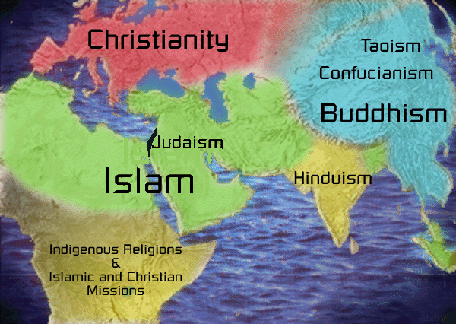
Image result for eastern religions
Acts 17:22-23 "So Paul stood in the midst of the Areopagus and said, “Men of Athens, I observe that you are very religious in all respects. 23 For while I was passing through and examining the objects of your worship, I also found an altar with this inscription, ‘TO AN UNKNOWN GOD.’ Therefore what you worship in ignorance, this I proclaim to you."

Introduction:

On August 21st, 2017, many people throughout the United States watched a solar eclipse. The wonder of the moon passing between our earth and the sun captured imagination and scientific curiosity. Where we live, relative to our location on the earth, the moon blocked out about 80% of the sun (due to being in what is called the "penumbra" of the moon's shadow). 
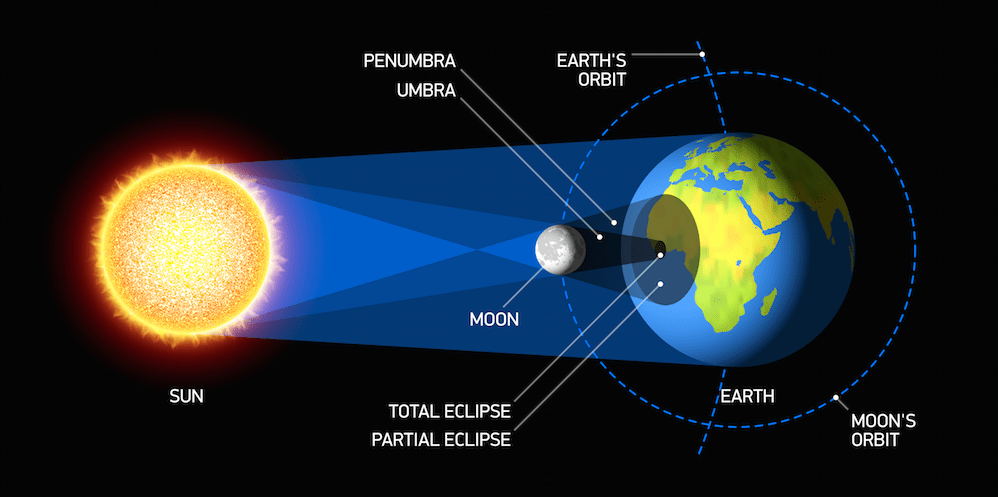
Image result for solar eclipse

A strange and faint shadow clung to the outside surroundings. For a brief moment, the day-time sky was dominated by a faint shadow. 

Whenever the Apostle Paul enters Athens Greece, he entered into the cultural and intellectual center of what had by that point represented the former glories of Greece. Rome was in power and the ancient Greek philosophies of the Stoics, Epicureans and others dominated the city. The intellectuals of the day did not realize they were dwelling in the shadows. They thought they had true light. 

The torch of reason burned on the mixed fuel of philosophical thought and paganism. God's general revelation of Himself, known to all people, was intermixed in with what had by that point become the warping of the truth. Paul came to bring forth the true light of the Gospel as so centered around the death and resurrection of Jesus.

All religions, philosophies and ideologies are striving to grab hold of a particular principle or truth that is a shadowy counterpart to the real sets of truths that is Christianity. All religions are a mixture of God's general revelation, man-made ideas, superstition and elements of spiritual darkness. As we can see in the opening text above, Paul indicates that his audience had an altar dedicated to "The Unknown God", quite literally in the Greek "Agnostos", from whence we derive the English word "Agnostic" to describe those who assert that one cannot know whether we can know anything about God. 

In today's post I wants us to consider to Eastern religions and their respective central projects: Hinduism and Buddhism. As will be seen, each of these strive to grab hold of a principle that is but a shadow of the reality proclaimed by Biblical Christianity.

Hinduism's Main Project And Shadow - Union With Whatever Is Divine. Christianity's Guarantee and Reality - Union With God Through Jesus Christ

C.V. Matthew, a specialist in the belief system of Hinduism, writes in his book: "The Saffron Mission. A Historical Analysis Of Modern Hindu And Missionary Practices" (Cambridge Press. 1999):

"Roughly 8 “sects” of Hinduism. Hinduism portrays itself as an all-inclusive, tolerant, multi-path system to the Ultimate Religion. All Hindus view themselves as the society of the living God. They desire immersion in all of life’s activities while trying to gain, on their view, good karma in this life. For the Hindu, union with what they deem “Universal Soul”. Hinduism is as much about the Indian culture, language and way of life as the rituals." 

It needs to be understood that in this post, we are painting with a very broad brush. Nevertheless, to get to the root of Hinduism's main goal, one could say that all the rituals, the 330 million deities, the various sects, the various holy books (Vedas, Upanishads and the like) are all aimed at one thing: escaping the cycle of birth/rebirth and to find union with the Divine principle they call "Brahma". 

In Hinduism, people are endlessly born, dying and being reborn as different life forms. Evil and sin are illusions or “maya”. The goal of Hinduism is to come to a union with the impersonal “all” or “Brahma”, thus getting past the illusion of good and evil. Depending upon how morally one lives in this life and how much ritual one participates in will, in the Hindu mind, determine whether one has "good Karma" or "bad Karma". Karma is a Hindu word referring to "works or deeds" and is essentially a debt-based system of works salvation. 

Apologist and author Ravi Zacharias notes about Hinduism: “For the Hindu, karma-the moral law of cause-and-effect-is a life-defining concept. Life carries its moral bills, and they are paid in the cyclical pattern of rebirth until all dues are paid in full. Hinduism here conveys an inherited sense of wrong, which is lived out in the next life, in vegetable, animal, or human form. This doctrine is nonnegotiable in Hindu philosophy.”

Sanasara is likened to a wheel of sorts, wherein a person keeps literally going around in circles. "Sanasara" (sometimes spelt: “samsara”) and its related concept "karma" portray a person trying to live good enough in this life to have a better spot in the next. The goal of Hinduism is to escape "Sanasara" and to achieve "Moksha" or union with the Universal Soul.


The Bible paints a different picture. There was a literal Adam and Eve and a serpent named Satan who came to tempt them. Passages such as Romans 5:12 summarize for us the events of the fall, namely that through one man, sin entered into the world, and through sin came death upon us all. In contrast to Hinduism, evil and sin are not illusory. Instead, they’re realities that intruded into the perfect creation made by God (See Genesis 3:7-21; 1 Kings 8:46; Rom. 5:11-21) 

In Biblical Christianity, we find that God has provided Himself in the Person of the Son taking unto Himself a truly human nature in His incarnation as Jesus of Nazareth. Jesus Christ is the One way through which all by faith can have union with God through Him (see John 14:6; 2 Peter 1:3-4). This union is a relational union. 

Unlike Hinduism, the follower of Jesus Christ does not go out of existence or meld their human nature into God's Divine nature. Instead, the Christian comes to participate in and with Christ, Who is Himself united to the Christian by way of His human nature while at the same time ever united to the Father and the Holy Spirit by way of His Divine nature. Only Christianity guarantees reconciliation, relationship and thus true reunion with God in Christ.

Buddhism's Central Project And Shadow: Refuge From Distress And Pain. Christianity's Promise And Guarantee: Redemption And Forgiveness Caused By Sin And Pain

Jacky Sach, a practicing Zen Buddhist, writes in her book: "Essential Buddhism - Everything You Need To Understand About This Ancient Tradition" (F+W Publications, 2006), concerning the central aim of Buddhism:

"Our minds can be our worst enemies. When we desire something our egos can come out in full force and feel threatened at the idea of not getting what we want. We can become irritable, selfish, and stressed. Whether our desire is for a new home, a new job, a larger piece of pie, or peace of mind, the threat of not achieving our desired objective can turn us into unruly and unpleasant individuals. Trying to turn over our desires, to find a place in life where we are content just to be, filled with compassion and love for our fellow humans and our surroundings, is absolutely heaven on earth."

Siddharta Gautama, the founder of Buddhism, was born to an affluent family around the time of 566 b.c. When he came to be aware of the world outside his palatial home, Gautama witnessed suffering, pain and hardship. He saw the injustice of suffering and concluded that the problem lied within each person by way of their desires. By a process of a seven-year journey of introspection, Gautama became renamed as "Buddha" or "the enlightened one". His claim was that by becoming detached from one's desires and discovering that ultimate reality is nothing, one can achieve "Nirvana" or a semblance of heaven here on earth.

The problem with Buddha's teaching was that he was teaching a half-truth. Surely the issues of humanity's problems are found within man, but the way he described it and the solution he proposed was way different than from what we see in Biblical Christianity. Buddha attempted to achieve his project apart from any belief in any deity, let alone the true and living God. 

In the end, Buddhism is a system of practice and belief that tries to reform and purify humanity without God. By detachment from everything, including desire, the Buddhist claims their own brand of salvation.

Biblical Christianity proclaims the truth of how sin and evil are real (Genesis 3:7-15; 1 Kings 8:46; Romans 3:23; 5:11-21) and how Jesus Christ came to destroy the works of the Devil (1 John 3:8), redeem sinners who believe by grace (John 3:16; Eph 2:8-9) and to make all who follow Him by faith into new people (2 Cor. 5:17). In Christianity, rescue from sin involves not detachment but reattachment to the God who made me and redeemed me (2 Corinthians 5:15-21). 

Reality is not nothing but something that God will one day transform into a New Heavens and New Earth, wherein righteousness will dwell (2 Peter 3:13). Heaven is a real place, not a state of mind (John 14:1-3; Philippians 3:20-21). Hell is a real place that can be avoid in Christ by faith but will be occupied by those who persist in their rejection of God and Christ and die in their sins (Luke 16; John 3:36). Only in Jesus Christ is true forgiveness, freedom and redemption found (John 8:12, 36; Ephesians 1:7). 

Closing thoughts

Today we considered shadows of truth that are found in two world religions: Hinduism and Buddhism. We also noted that despite their best efforts, all religions outside Christianity fail to arrive at the central purposes of their respective projects. In Jesus Christ alone is found true union with God by faith and true redemption and forgiveness that is caused by sin. As we consider the imitations and comparison to the genuine article, we can come to better appreciate all that God offers in Jesus Christ through the Old and New Testaments. 

Tuesday, November 10, 2015

Contrasting Hindu and Christian views of God and spirituality


Isaiah 43:10-11 “You are My witnesses,” declares the Lord,“And My servant whom I have chosen,
So that you may know and believe Me
And understand that I am He. Before Me there was no God formed, And there will be none after Me. 11 “I, even I, am the Lord, And there is no savior besides Me.


Titus 2:13-14 "looking for the blessed hope and the appearing of the glory of our great God and Savior, Christ Jesus, 14 who gave Himself for us to redeem us from every lawless deed, and to purify for Himself a people for His own possession, zealous for good deeds."

Introduction and Review:
Yesterday we considered a suggested way of sharing the Gospel with a Hindu. Today is a continuation of yesterday's discussion, aimed at dealing with specific doctrinal truths one can share to help their Hindu friend see the difference between Christianity and Hinduism. In my experience of talking with Hindus, their underlying belief is that all religions can be tacked onto Hinduism, regardless of the differences. It is vital that in sharing the Gospel of Jesus Christ with Hindus that we stress the exclusivity of salvation by grace alone, through faith alone in Christ alone in a compassionate, winsome way. 

God is immanent and transcedent, but not Pantheistic
First of all let's define some terms. Pantheism is the belief that God is all and all is God. Hinduism is partly pantheistic, meaning that all life, humanity and their concept of deity are all rolled up into one. In Pantheism, to look at a flower, a tree or the air is to experience god as much as I am god and you are god. The Bible makes it plain that God is to be regarded in a complete category by Himself apart from His creation. Bible teachers use the term "transcendence" to describe this feature of the God of scripture. Passages such as Jeremiah 23:23-24; Isaiah 44:6; 1 Corinthians 8:6-7 and Romans 11:36 describe God is high and exalted above His creation. However at the same time God is also immanent, that is to say, He is everywhere with His creation. Thus in Acts 17:278 we do live and move and have our being in God and Colossians 1:16-17 describes Jesus Christ as holding all things together by the Word of His power. 

Madasamy Thirumali writes the following about God's transcendence and immanance in contrast to Hinduism in his book: "Sharing Your Faith with a Hindu", page 82: "Hindus think that becoming one with God is their ultimate salvation, calling it super-spirituality. According to the Bible, this is not acceptable. It is an idolatrous position to put God and creation as one. We are to abide in Him in the sense of fellowship, but we don't become one with Him in the sense of being equal. Christians respect and love nature as the creation of God, but we do not worship it as a god or spirit." Thirumali later writes on the same page of his book: "Christians also hold that while God is seperate from creation, He is active throughout the world and throughout history in the lives of human kind and all He has made."

Contrasting the spiritual goals of Hinduism versus Biblical Christianity
When we think about the spiritual goals set by the Gospel versus Hinduism, the difference is quite profound. Bringing out God's Transcedence and Immanence is vital, being that it avoids the trap of idolatry that is at the heart of pantheism and Hinduism in particular. Paul Carden in his video series on "Christianity, Cults and Religions", notes the following contrasts that relate to our discussion in today's post:

"In Hindu meditation, absorption into the Ultimate is the goal. In Buddhism, detachment from reality and absorption into the void is the goal. Christian meditation aims at attachment to the living God." Paul Carden then cites Psalm 48:9 as an example of how the Christian relates to the True and Living God: "We have thought on Your lovingkindness, O God,In the midst of Your temple."

Christianity alone is based in both miracles and history
The Christian faith is based around five definite miracles: Creation, a Divinely Inspired Bible, Christ's Incarnation, Christ's Resurrection and Christ's 2nd coming. All five miracles involve the all-powerful, Triune God that, being above history and creation is nonetheless involved with it. He made it. Furthermore, God speaks through a book - the Bible. Thirdly, the Son, being God, came to this world to take on human flesh and is thus the Unique Revelation of God in history and salvation. Jesus' resurrection from the dead is a documented, historical event. Then the final miracle that determines history and salvation as spelled out by Christianity is Christ's second coming. 

Hinduism does not have any reliably documented miracles upon which to build its faith. Myths - yes. Narratives - yes. Truth - No. The writings of Hinduism, called the Vedas and Upanishads, are collections of Philosophy, fables and sayings that contain no examples of fulfilled prophecy. In Hinduism, there is no concept of resurrection - only reincarnation. History and life is an endless cycle, with no ultimate purpose other than an undefined one. Meanwhile Christianity asserts life and history to be a one-time time line with a beginning and an end, Creation, the cross and 2nd coming. 

Salvation described by the Gospel has no comparison from Hinduism
Finally, Biblical salvation is by grace alone through faith alone in Christ alone. (John 3:16; Ephesians 2:8-9) Hinduism suggests different methods of salvation that aim at working harder and doing better but never hoping to achieve any sense of certainty about one's future, reconciliation or forgiveness. 

Monday, November 9, 2015

A suggested way to share Jesus with a Hindu


1 Corinthians 8:4-6 "Therefore concerning the eating of things sacrificed to idols, we know that there is no such thing as an idol in the world, and that there is no God but one. 5 For even if there are so-called gods whether in heaven or on earth, as indeed there are many gods and many lords, 6 yet for us there is but one God, the Father, from whom are all things and we exist for Him; and one Lord, Jesus Christ, by whom are all things, and we exist through Him."

Introduction
Over the years I have had opportunities here and there to share the Gospel of Jesus Christ with adherents of the Hindu religion. One time I had the opportunity to sit down with a man who is a devout Hindu. In all the conversations I have had over the years with people of non-Christian religions, none have been kinder than the beautiful Indian people who adhere to the Hindu religion. However, God's issue with all unbelievers is not their niceness, or lack thereof, but that they are not right with Him through Jesus Christ. 

Today I want to share a method of sharing the Gospel that God could use in the event you ever come in contact with any devotees of Eastern religion or any worldview for that matter. I used this method with the dear man above. To my knowledge, he has not yet responded to the Gospel of Jesus Christ. My prayer is that the Holy Spirit would lead him and other people in the Hindu world to a saving knowledge of the truth through faith and repentance in Jesus Christ. Christian apologist Dr. William Lane Craig's definition of evangelism is an excellent reminder of Who is the true evangelist in all our conversations: "Evangelism is where we communicate Jesus Christ by the power of the Holy Spirit and leave the results up to God."

Laying out four words for sharing the Bible's Gospel message with Hindus
When my friend came to me and we sat down, the very first thing I did was to outline for him the entire Bible in four words. Now before I give you the four words, I must say that when dealing with Hindus or any other adherent of any non-Christian religion, it is more important for you to know the Gospel of Jesus Christ than it is to know details about the opposing religion. As valuable as apologetics (defending the faith against non-Christian belief systems) can be and as vital as it is to have a familiarity with the tenets of the opposing belief system, it must be remembered that the Holy Spirit's effective work through the Gospel will win the soul to Jesus. 

With that said, I will list out the four words that I used with my Hindu friend in summarizing the Bible, and then briefly break them down as I did to him:

1. Creation
2. Fall
3. Cross
4. 2nd Coming

Why emphasize creation, fall, cross and 2nd coming?
Why begin with these four fundamental truths? Simply because we Christians living in America are under the mistaken assumption that everyone knows what they are and mean. Lack of spiritual vitality in our churches ought to be evidence enough to show that not everyone is as familiar with the Gospel as claimed. Furthermore, my Hindu friend had never read a Bible, nor even knew what a Bible was. Understand that this young man is highly educated and successful business owner. We all need to be reminded of and re-exposed to the four truths above everyday. 

Breaking down the Bible's salvation message in four words to show Hindus the Savior Jesus Christ

1. Creation. 
I began with Genesis 1 and creation because in the Hindu religion, there are many gods, not one Supreme, All-Powerful Creator who alone is God. Hinduism as a belief system has several versions of how the world began and in many cases, their view of the universe is that it is an endless cycle of birth-rebirth. Knowing that my friend was not familiar with the Bible, I tried to keep Bible references to a minimum. The ones I used for this first point were:
a. Genesis 1:1 This is to assert that God is the Creator of all reality.

b. Genesis 1:26 This was to assert that the God of the Bible is the Creator of humanity as well as reality

c. 1 Corinthians 8:6 This passage reaffirms the Monotheism (belief in One God) of the Old Testament and the fact that Jesus the Son shares equally in that Divine nature and is God. 

Now why did I include Christ's Deity? Because in Hinduism, there is the belief that their many gods have the ability to appear in the forms of men and animals. Nothing is unique. However my aim in sharing this with my Hindu friend was to show that the God of the Bible is unique, and that Jesus Christ is the Unique revelation of God and thus the Creator. So point one of outlining the Bible with a Hindu is: Creation.

2. Fall. 
My next point with my Hindu friend dealt with the fall and rebellion of man in the Garden of Eden. Mind you that this intelligent man had never heard of the Garden of Eden, Adam and Eve nor the account of the Creation and Fall. 

To the Hindu, the whole point of their religion is to escape the endless cycle of Sanasara (some spell it "samsara") or Karma. In Hinduism, people are endlessly born, dying and being reborn as different life forms. Depending upon how morally one lives in this life and how much ritual one participates in will, in the Hindu mind, determine whether one has "good Karma" or "bad Karma". Karma is a Hindu word referring to "works or deeds" and is essentially a debt-based system of works salvation. Sansara is likened to a wheel of sorts, wherein a person keeps literally going around in circles. "Sansara" and its related concept "karma" portray a person trying to live good enough in this life to have a better spot in the next. The ultimate goal of Hinduism is to escape "Sansara" (which my friend readily affirmed in our conversation) and to achieve "Moksha" or union with the Universal Soul.

In Hinduism, the underlying principle is that you are never good enough, never will be good enough and thus you need to keep working harder and living better to escape that iron-clad law. The whole concept of "Karma" then is how Hinduism explains the evil in our world, even though in the final analysis the evil we see is not the true and ultimate reality, but what the Hindus call "maya" or illusion.

The Bible of course paints a different picture. There was a literal Adam and Eve and a serpent named Satan who came to tempt them. Passages such as Romans 5:12 summarize for us the events of the fall, namely that through one man sin entered into the world, and through sin came death upon us all. The point of bring up this detail was to show my Hindu friend that evil and sin are not illusory, but realities that intruded into the perfect creation made by God. At this point it is useful to bring out that this life is the only life you got, and that there is no "sansara" or endless wheel of Karma, birth, death and rebirth. Salvation is not escape from an endless cycle of nothingness but escape from wrath and reconciliation to the Creator. This leads naturally into the third main point of the Bible and sharing Jesus with a Hindu...

3. Cross
Why call this point "cross" rather than "salvation"? Hindus need to know that salvation is historical, personal and one-time achieved. The same God who created all things and Whose name and love was rejected by Adam and Eve in favor of a Tree is by nature obligate to show wrath but desires to show mercy. In tying together this point, I began with God's response to Adam and Eve, judgment, followed by mercy. Without going into too much detail, Genesis 3:15-21 demonstrates that Adam and Eve both looked to God in faith for their salvation. His killing of two innocent animals in their place and covering their nakedness and shame set the pattern for salvation: the shedding of innocent blood on behalf of grace led believing, repenting sinners. 

The slaying of innocents in the Garden of Eden would serve to point to the ultimate slaying of the innocent Son in His humanity. For my friend, Romans 5:8 served quite well for this point: "God demonstrated His own love for us in this that while we were yet sinners, Christ died for us." In Hinduism, the many deities they worship view human beings a pawns on the chessboard of fate, sources for their amusement. The many deities of Hinduism range from being impersonal forces to deities that are as subject to failure as we are. A major "honor/shame" theme runs through all the many varied forms of the Hindu religion. The Gospel is unique in that it is underscored by a "Grace/forgiveness" theme, meaning that God chooses to save whomever He wills based entirely upon His desire to love. God wants to save as many people as possible. Nothing we can do can earn His favor. Period.  

All who believe on Jesus do so because of grace, calling them and keeping them until they are in Heaven with Him. All who persist in unbelief and die and go to hell do so because of their own doing. 

The cross utterly smashes the Hindu system because it asserts that God who made everything became nothing so that we who are nothing could by grace through faith become more valuable than everything He made. So we have creation, fall and cross, but there is one more point in this suggested way of sharing the Gospel with a Hindu...

4. 2nd Coming. 
My Hindu friend at this point is listening very intently and as I am sharing with him I am praying the whole time. At points along the way when I did mention something about Hinduism, I would ask him if what I shared was correct. This is done for two reasons: to make sure he knows I am trying to get to know him and secondly, to make sure I am operating in the realm of truth rather than lies. 

One of the things we have repeated in this post is how much Hindus view reality and life as an endless cycle. 

It has been noted that when Jesus came to this world, he took mankind's cyclical view of life and stretched it out to be one line with a beginning, middle and end. The beginning is creation, of which Jesus is the very embodiment thereof. The middle is the cross, upon which He died and then conquered death in His resurrection. Why? Due to the fall that took place near the beginning and to be the redeemer of all men, especially those who believe. (1 Timothy 4:10). The end point is of course Jesus' second coming. Hinduism knows of no end to history or life. However Jesus' second coming underscores the fact that He who is the Author and Finisher of faith (Hebrews 12:1) is the Author and Finisher of everything. How you are related to Him (faith or unbelief) will tell you your destination. 

My friend of course was unfamiliar with Heaven and Hell, judgment and heaven. To ensure that such truths were not just abstract ideas, centering the end of the conversation on Christ's second coming enables the conversation to end where it really began: upon Jesus Christ.

Final thoughts:
I wish I could tell you that the Hindu man to which I had spoken readily responded to the Gospel. For five minutes he sat in stunned silence. I gently said to him: "I can tell you are thinking over what was said, what are your thoughts?" The man told me that for him, we are all the same. The only response I could give him was: "dear friend, your response and the look upon your face tells me you believe otherwise. We are indeed quite different". Politely he got up and shook my hand and I never saw him again. I would ask you to pray for that man and for the Hindu world of over 1 billion Hindus. Let me close with Isaiah 55:10-11 “For as the rain and the snow come down from heaven,And do not return there without watering the earth And making it bear and sprout, And furnishing seed to the sower and bread to the eater; 11 So will My word be which goes forth from My mouth; It will not return to Me empty, Without accomplishing what I desire, And without succeeding in the matter for which I sent it."

Thursday, September 18, 2014

A suggested way of sharing Jesus with a Hindu

1 Corinthians 8:4-6 "Therefore concerning the eating of things sacrificed to idols, we know that there is no such thing as an idol in the world, and that there is no God but one. 5 For even if there are so-called gods whether in heaven or on earth, as indeed there are many gods and many lords, 6 yet for us there is but one God, the Father, from whom are all things and we exist for Him; and one Lord, Jesus Christ, by whom are all things, and we exist through Him."

Introduction
Over the years I have had opportunities here and there to share the Gospel of Jesus Christ with adherents of the Hindu religion. One time I had the opportunity to sit down with a man who is a devout Hindu. In all the conversations I have had over the years with people of non-Christian religions, none have been kinder than the beautiful Indian people who adhere to the Hindu religion. However, God's issue with all unbelievers is not their niceness, or lack thereof, but that they are not right with Him through Jesus Christ. 

Today I want to share a method of sharing the Gospel that God could use in the event you ever come in contact with any devotees of Eastern religion or any worldview for that matter. I used this method with the dear man above. To my knowledge, he has not yet responded to the Gospel of Jesus Christ. My prayer is that the Holy Spirit would lead him and other people in the Hindu world to a saving knowledge of the truth through faith and repentance in Jesus Christ. Christian apologist Dr. William Lane Craig's definition of evangelism is an excellent reminder of Who is the true evangelist in all our conversations: "Evangelism is where we communicate Jesus Christ by the power of the Holy Spirit and leave the results up to God."

Laying out four words for sharing the Bible's Gospel message with Hindus
When my friend came to me and we sat down, the very first thing I did was to outline for him the entire Bible in four words. Now before I give you the four words, I must say that when dealing with Hindus or any other adherent of any non-Christian religion, it is more important for you to know the Gospel of Jesus Christ than it is to know details about the opposing religion. As valuable as apologetics (defending the faith against non-Christian belief systems) can be and as vital as it is to have a familiarity with the tenets of the opposing belief system, it must be remembered that the Holy Spirit's effective work through the Gospel will win the soul to Jesus. 

With that said, I will list out the four words that I used with my Hindu friend in summarizing the Bible, and then briefly break them down as I did to him:

1. Creation
2. Fall
3. Cross
4. 2nd Coming

Why emphasize creation, fall, cross and 2nd coming?
Why begin with these four fundamental truths? Simply because we Christians living in America are under the mistaken assumption that everyone knows what they are and mean. Lack of spiritual vitality in our churches ought to be evidence enough to show that not everyone is as familiar with the Gospel as claimed. Furthermore, my Hindu friend had never read a Bible, nor even knew what a Bible was. Understand that this young man is highly educated and successful business owner. We all need to be reminded of and re-exposed to the four truths above everyday. 

Breaking down the Bible's salvation message in four words to show Hindus the Savior Jesus Christ

1. Creation. 
I began with Genesis 1 and creation because in the Hindu religion, there are many gods, not one Supreme, All-Powerful Creator who alone is God. Hinduism as a belief system has several versions of how the world began and in many cases, their view of the universe is that it is an endless cycle of birth-rebirth. Knowing that my friend was not familiar with the Bible, I tried to keep Bible references to a minimum. The ones I used for this first point were:
a. Genesis 1:1 This is to assert that God is the Creator of all reality.

b. Genesis 1:26 This was to assert that the God of the Bible is the Creator of humanity as well as reality

c. 1 Corinthians 8:6 This passage reaffirms the Monotheism (belief in One God) of the Old Testament and the fact that Jesus the Son shares equally in that Divine nature and is God. 

Now why did I include Christ's Deity? Because in Hinduism, there is the belief that their many gods have the ability to appear in the forms of men and animals. Nothing is unique. However my aim in sharing this with my Hindu friend was to show that the God of the Bible is unique, and that Jesus Christ is the Unique revelation of God and thus the Creator. So point one of outlining the Bible with a Hindu is: Creation.

2. Fall. 
My next point with my Hindu friend dealt with the fall and rebellion of man in the Garden of Eden. Mind you that this intelligent man had never heard of the Garden of Eden, Adam and Eve nor the account of the Creation and Fall. 

To the Hindu, the whole point of their religion is to escape the endless cycle of Sanasara (some spell it "samsara") or Karma. In Hinduism, people are endlessly born, dying and being reborn as different life forms. Depending upon how morally one lives in this life and how much ritual one participates in will, in the Hindu mind, determine whether one has "good Karma" or "bad Karma". Karma is a Hindu word referring to "works or deeds" and is essentially a debt-based system of works salvation. Sansara is likened to a wheel of sorts, wherein a person keeps literally going around in circles. "Sansara" and its related concept "karma" portray a person trying to live good enough in this life to have a better spot in the next. The ultimate goal of Hinduism is to escape "Sansara" (which my friend readily affirmed in our conversation) and to achieve "Moksha" or union with the Universal Soul.

In Hinduism, the underlying principle is that you are never good enough, never will be good enough and thus you need to keep working harder and living better to escape that iron-clad law. The whole concept of "Karma" then is how Hinduism explains the evil in our world, even though in the final analysis the evil we see is not the true and ultimate reality, but what the Hindus call "maya" or illusion.

The Bible of course paints a different picture. There was a literal Adam and Eve and a serpent named Satan who came to tempt them. Passages such as Romans 5:12 summarize for us the events of the fall, namely that through one man sin entered into the world, and through sin came death upon us all. The point of bring up this detail was to show my Hindu friend that evil and sin are not illusory, but realities that intruded into the perfect creation made by God. At this point it is useful to bring out that this life is the only life you got, and that there is no "sansara" or endless wheel of Karma, birth, death and rebirth. Salvation is not escape from an endless cycle of nothingness but escape from wrath and reconciliation to the Creator. This leads naturally into the third main point of the Bible and sharing Jesus with a Hindu...

3. Cross
Why call this point "cross" rather than "salvation"? Hindus need to know that salvation is historical, personal and one-time achieved. The same God who created all things and Whose name and love was rejected by Adam and Eve in favor of a Tree is by nature obligate to show wrath but desires to show mercy. In tying together this point, I began with God's response to Adam and Eve, judgment, followed by mercy. Without going into too much detail, Genesis 3:15-21 demonstrates that Adam and Eve both looked to God in faith for their salvation. His killing of two innocent animals in their place and covering their nakedness and shame set the pattern for salvation: the shedding of innocent blood on behalf of grace led believing, repenting sinners. 

The slaying of innocents in the Garden of Eden would serve to point to the ultimate slaying of the innocent Son in His humanity. For my friend, Romans 5:8 served quite well for this point: "God demonstrated His own love for us in this that while we were yet sinners, Christ died for us." In Hinduism, the many deities they worship view human beings a pawns on the chessboard of fate, sources for their amusement. The many deities of Hinduism range from being impersonal forces to deities that are as subject to failure as we are. A major "honor/shame" theme runs through all the many varied forms of the Hindu religion. The Gospel is unique in that it is underscored by a "Grace/forgiveness" theme, meaning that God chooses to save whomever He wills based entirely upon His desire to love. God wants to save as many people as possible. Nothing we can do can earn His favor. Period.  

All who believe on Jesus do so because of grace, calling them and keeping them until they are in Heaven with Him. All who persist in unbelief and die and go to hell do so because of their own doing. 

The cross utterly smashes the Hindu system because it asserts that God who made everything became nothing so that we who are nothing could by grace through faith become more valuable than everything He made. So we have creation, fall and cross, but there is one more point in this suggested way of sharing the Gospel with a Hindu...

4. 2nd Coming. 
My Hindu friend at this point is listening very intently and as I am sharing with him I am praying the whole time. At points along the way when I did mention something about Hinduism, I would ask him if what I shared was correct. This is done for two reasons: to make sure he knows I am trying to get to know him and secondly, to make sure I am operating in the realm of truth rather than lies. 

One of the things we have repeated in this post is how much Hindus view reality and life as an endless cycle. 

It has been noted that when Jesus came to this world, he took mankind's cyclical view of life and stretched it out to be one line with a beginning, middle and end. The beginning is creation, of which Jesus is the very embodiment thereof. The middle is the cross, upon which He died and then conquered death in His resurrection. Why? Due to the fall that took place near the beginning and to be the redeemer of all men, especially those who believe. (1 Timothy 4:10). The end point is of course Jesus' second coming. Hinduism knows of no end to history or life. However Jesus' second coming underscores the fact that He who is the Author and Finisher of faith (Hebrews 12:1) is the Author and Finisher of everything. How you are related to Him (faith or unbelief) will tell you your destination. 

My friend of course was unfamiliar with Heaven and Hell, judgment and heaven. To ensure that such truths were not just abstract ideas, centering the end of the conversation on Christ's second coming enables the conversation to end where it really began: upon Jesus Christ.

Final thoughts:
I wish I could tell you that the Hindu man to which I had spoken readily responded to the Gospel. For five minutes he sat in stunned silence. I gently said to him: "I can tell you are thinking over what was said, what are your thoughts?" The man told me that for him, we are all the same. The only response I could give him was: "dear friend, your response and the look upon your face tells me you believe otherwise. We are indeed quite different". Politely he got up and shook my hand and I never saw him again. I would ask you to pray for that man and for the Hindu world of over 1 billion Hindus. Let me close with Isaiah 55:10-11 “For as the rain and the snow come down from heaven,And do not return there without watering the earth And making it bear and sprout, And furnishing seed to the sower and bread to the eater; 11 So will My word be which goes forth from My mouth; It will not return to Me empty, Without accomplishing what I desire, And without succeeding in the matter for which I sent it."