Translate

Showing posts with label Parables of Jesus. Show all posts

Monday, August 28, 2017

Interpreting Jesus' Parables And Using Them To Understand Other Parts Of The Bible

Image result for parables
Matthew 13:10 And the disciples came and said to Him, “Why do You speak to them in parables?”

Introduction:

In today's post we aim to introduce the reader to the parables of Jesus and some practical tips to studying and applying them.  Not only do Jesus' parables connect readers and listeners to important spiritual truths, but at times, Jesus' parables can shed light on harder-to-understand portions of the Bible. We will begin this post by first defining a parable, and then walk our way through various examples on how to interpret and apply the parables of Jesus by using one of His more well-known parables: "the parable of the soils"

1. What is a parable?

The most fundamental meaning of the term "parable" as to do with taking a known idea, principle, experience or story and placing it alongside a spiritual truth in order to shed light on that spiritual concept. The simple diagram below illustrates what is literally meant by the term "parable":
----------------------spiritual truth--------------------

____common experience, story, illustration__

The term "parable" comes from two Greek terms: "para" meaning "alongside" and "ballo" meaning "to throw, cast".  When combined together, the term describes someone like Jesus taking a known thing and "casting it up alongside" and otherwise unknown spiritual truth that needs illuminated to the listener. 

Some Bible teachers estimate that in upwards of 30% of Jesus' teaching was in the form of parables.1  We discover over 50 parables of all different forms told by Jesus in the pages of the four Gospels. By studying them we can glean important insights into areas such as salvation, practical everyday Christian life, the Kingdom, the supernatural realm, bringing glory to God and relating to other people.

2. How do we understand the parables?   
As we come to the parable of the soils in Matthew 13:1-23, Jesus gives us the key to understanding His parables. As a matter of fact the parallel passage in Mark 4:13 actually has Jesus saying: "And He said to them, 'Do you not understand this parable? How will you understand all the parables?" We will first of all look at the simple method for interpreting Jesus' parables as gleaned from Matthew 13:1-23 and other passages.

a. Observe the setting of the parable.
In Jesus' parable of the Sower the setting features a sower or a farmer, seed and different types of soils.  Consulting a good Bible Dictionary or a good Study Bible with study notes can enable the reader to begin understanding the imagery of many of Jesus' parables. Resources such as J. Dwight Pentecost's "The Parables of Jesus" notes: Since wheat was a staple of the diet in Palestine, the procedure of raising wheat would had been very familiar to the Lord's hearers. In preparation for sowing the seed, the ground was cleared of all old growth. This caused the entire field to look the same. The sower had no idea of what roots or rocks lay beneath the surface soil."

Pentecost then compares this ancient method of farming to today:

"The soil was not plowed as is done today, but rather the seed was broadcast by the sower on the surface of the soil. The seed was then scratched into the soil with a primitive wooden plow. The sowing was done before the early rains that caused the seed to germinate. The sower waited through the growing period for the coming of the latter rains that brought the grain to full fruition and thus provided a bountiful harvest."

Such background information will ensure the reader that they are getting to the intended meaning meant by Jesus and a better understanding of what He is communicating.

b. Find the key point of the parable.
Parables by and large are designed to communicate one main idea, principle or truth, however there will be those parables that are composed of multiple parts, requiring each part to be interpreted.  Jesus' parable of the soils is told by Jesus in Matthew 13:1-9, with His own interpretation of it given in 13:18-23. Clearly there is more than one part to the parable, however there is at the same time one overall theme, namely the different patterns we see in how people hear and understand the Word of God (compare Matthew 6:23). 

Bible scholar Simon J. Kistemaker reminds us: Althought it is generally true that a parable teaches only one basic lesson, this rule should not be pressed too far. Some of Jesus' parables are complex in composition. Later he writes: Moreover, in Jesus' parables it is not the beginning of the story but the end that is important."3

c. Cross reference other scriptures to see how the parable connects you to other parts of the Bible.
Jesus' telling of this parable of the soils in Matthew 13 ought to be compared to His telling of it in Mark 4:3-8 and Luke 8:5-8. Such cross comparison can enable the reader to understand the nuances of Jesus' parables. 

Over time the parables can provide a window in which to see the broader unity of the Word of God. In seeing the bigger picture of God's truth, we can then come back to the parable itself and have an even better understanding.

Take for instance Paul's discussion in Romans 10:16-21 of how the majority of people hearing the Gospel end up not heeding it. There are certainly excuses typically raised by people for not believing the Gospel, which Paul dismisses due to all men being without excuse (see Romans 1:18-21; 10:18:21). Why is it that people so often either reject the gospel or seem to believe but then later on fall away? Jesus parable of the soils can aid in shedding further light on the interpretation of Romans 10:16-21. 

The first three soils in Jesus' parable refer mainly to hypocrites or "make-believers" that seem genuine but do not possess true saving faith. Only the fourth soil in Jesus' parable speaks of one who have "heard the word in an honest and good heart" (Luke 8:15). The first three types of people in Jesus' parable and those in Paul's exposition are like those described in Hebrews 4:2 "For indeed we have had good news preached to us, just as they also; but the word they heard did not profit them, because it was not united by faith in those who heard." 

d. Live out the main point or teaching(s) of the parable
It is obvious that the reason why parables begin in the realm of the known and proceed to the unknown is to get the listener to bring spiritual truths to bear in everyday life. As James notes in James 2:26 "For just as the body without the spirit is dead, so also faith without works is dead." In studying the parables, the reader or listener or preacher is able to cloth spiritual and oftentimes abstract principles in the garments of everyday life. Ordinary life is where God would have us to live out extraordinary lives for His glory.

Endnotes:
1. Simon Kistemaker. The Parables - Understanding the Stories that Jesus Told. Baker. 2002. Page 10 

2. J. Dwight Pentecost.  The Parables of Jesus.  1982. Kregel. Page 46.

3. Simon Kistemaker. The Parables - Understanding the Stories that Jesus Told. Baker. 2002. Page 11

Wednesday, December 14, 2016

The "Lost and Found" Chapter in the Bible

Image result for seeking what was lost
Luke 15:1-5 "Now all the tax collectors and the sinners were coming near Him to listen to Him. 2 Both the Pharisees and the scribes began to grumble, saying, “This man receives sinners and eats with them.” 3 So He told them this parable, saying, 4 “What man among you, if he has a hundred sheep and has lost one of them, does not leave the ninety-nine in the open pasture and go after the one which is lost until he finds it? 5 When he has found it, he lays it on his shoulders, rejoicing."

Introduction:
In every church there is what is called a "lost and found" room. This designated room, shelf or place in an office is where one can find lost Bibles, hats, shirts or toys. Amazingly, as a pastor, I have never once had a lost phone put in a lost and found area (people keep track of their phones, I suppose). When a given item is found by its owner or the one looking for it, there is an expression of relief; in other cases, joy or jubilation. I myself had recently lost a set of important keys. I searched and searched for two days. When the keys were found, I told two other people (it was a cause for celebration)! Lost and found rooms or finding valuable items that we thought would never be retrieved entail life's little victories. 

There is one sort of seeking and retrieval that can never compare: namely, when God convinces a sinner to forsake their dependence on themselves and their sins and to trust in Jesus as Savior and Lord. Luke 15 represents what one could call the "Lost and Found" chapter in the Bible. When we say "Lost and Found" we are referring to how this theme threads its way through three parables told by Jesus concerning:

a).  the finding of a lost sheep (Luke 15:1-7) 

b). a lost coin (Luke 15:8-10) 

c).  a lost son (Luke 15:11-32). 

We want to consider the broad details of Luke 15 to grasp this theme of "lost and found".

1. What is lost and found is very valuable 

Jesus begins with a sheep. A valuable animal for sure. However, in the second parable, we find the losing of a coin which represents a larger proportion of the woman's wealth in the parable. The third parable presents the most valuable thing that, when lost, and then found, cannot be compared in terms of value: namely a human soul. Jesus purposefully strings three parables together like a string of pearls to drive home the point of the value of the lost item or person to the one desiring to be reconnected to it. So, we find then that the value of a lost soul being reconciled to God is extremely valuable. Now notice the second trait...

2. Whatever is lost and found was desperately lost

Once again, we find Jesus presenting this theme of "what was lost is now found". We saw the emphasis of value, now we consider a second trait of the lost items or people in these parables: namely their desperation. As Jesus shared these parables, everyone would had identified with them. Who hasn't lost an animal (or in their case, a sheep). Who hasn't lost money? Who hasn't had a wayward child? Each situation presents an increasing level of desperation, a decreasing likelihood of the object being reconciled to the person and a greater amount of effort expended to find it. Finding a lost sheep requires the shepherd leaving the 99 to search hills and valleys for that one lost sheep. The parable of the lost coin entails a woman searching in the cracks of her stone floor. The cracks are thin and the house would be dimly lit. To be able to find such a coin in such conditions would, amazingly, be even harder. What about a lost son coming back to his father. The situation is so desperate, the assumption is that the runaway son is dead. 

The level of desperation for a lost soul is more profound than anyone can imagine. The decreasing proportion of the lost item to the overall remaining items or people (one sheep in one hundred, one coin in ten and one of two sons, or we could even say, both sons) only highlights this second point of the value of the lost item. Only God can save lost souls. 

3. What is lost and found is cause for joy when found 

So far, we have seen Jesus teach about the value of the lost and the desperate situation of the lost. Jesus then, in all three parables, gets to the point when their is joy over finding the lost item or person. Virtually the same phrase is said once the item is returned or found. The shepherd says when finding the lost sheep in Luke 15:6 "And when he comes home, he calls together his friends and his neighbors, saying to them, ‘Rejoice with me, for I have found my sheep which was lost!’ The woman exclaims after finding her lost coin in Luke 15:9 "When she has found it, she calls together her friends and neighbors, saying, ‘Rejoice with me, for I have found the coin which I had lost!" Then of course, the greatest exclamation of joy of finding what was formerly lost is the Father's words concerning his formerly wayward son in Luke 15:24 "for this son of mine was dead and has come to life again; he was lost and has been found.’ And they began to celebrate." As a matter of fact, the joy of the Father is so emphasized that we find him proclaiming his joy once more at the close of the third parable in Luke 15:32 "But we had to celebrate and rejoice, for this brother of yours was dead and has begun to live, and was lost and has been found.’”

4. The Father rejoices when what was lost is found

So we have seen how much the lost are valued, in a desperate condition and the joy experienced when the lost are reconciled or found. We find the Father (God the Father) to be present in incognito throughout these parables and increasingly identified in all three. He is likened to a shepherd in the first parable and alluded to as the source of rejoicing in Heaven whenever one lost sinner is found. In the second parable, we find Him likened to the owner of a house and then (indirectly) alluded to as rejoicing in the presence of His angels (see Luke 15:10). The third parable features a father figure showing lavish grace. We expect by the nature of the progression to have the heavenly Father directly identified. 

Interestingly Jesus concludes the parable with the tenderness of the father figure toward his son and his conversation with his older one pointing the way to the heart of the Heavenly Father. The actions and words of the father-figure so capture the character of the Heavenly Father (which no man has seen, nor can see), that Jesus' parables together capture the efforts of the Father in seeking the lost. 

Closing thoughts
Today we have explored Luke 15 by considering the theme of "lost and found". We noted how Jesus ultimately points to how God the Father is seeking after the lost. We noted the following four observations that tie together the three parables found in Luke 15...

1. What is lost and found is very valuable

2. Whatever is lost and found was desperately lost

3. What is lost and found is cause for joy when found

4. The Father rejoices when what was lost is found


Tuesday, November 4, 2014

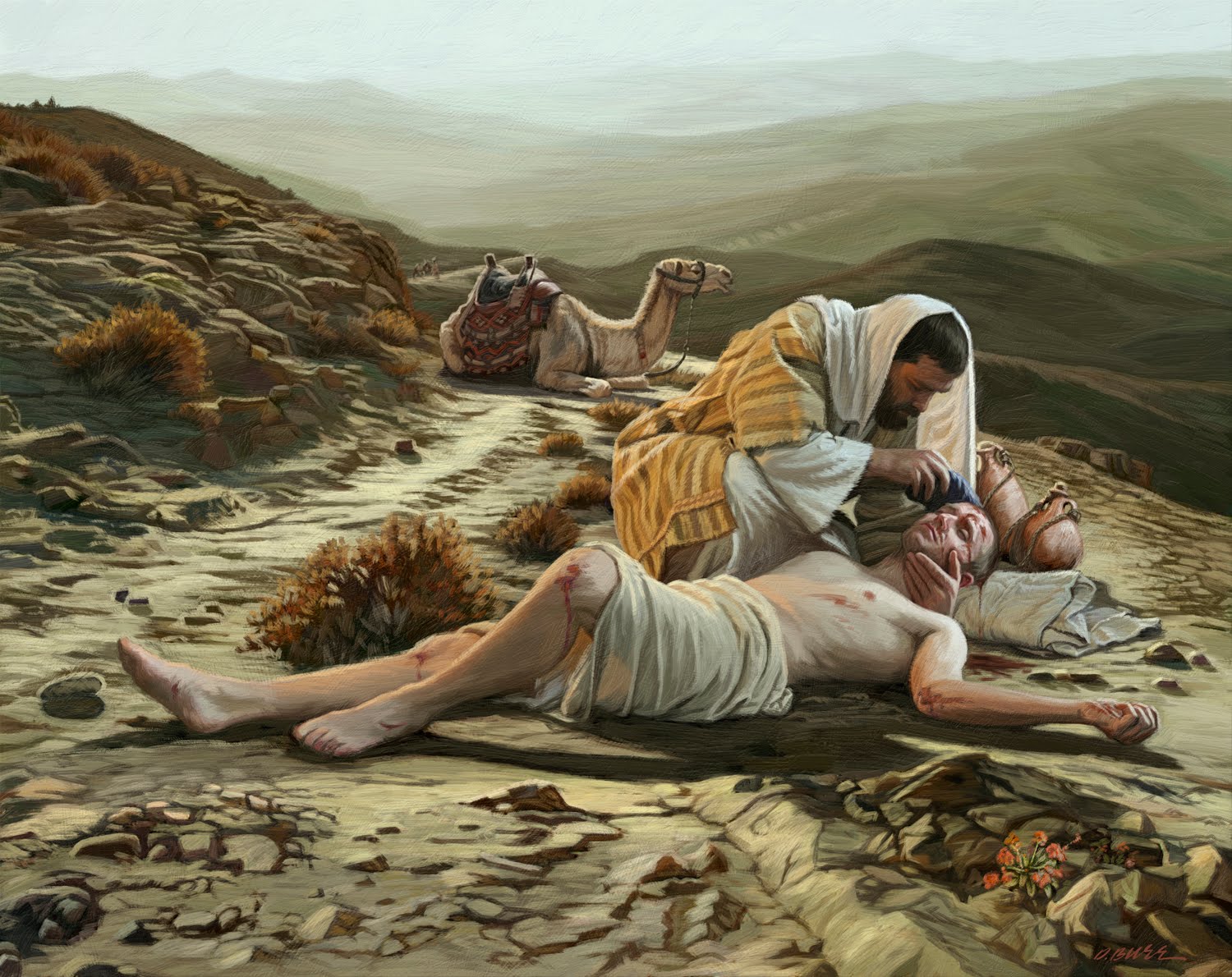
The Good Samaritan and Eternal Life - Luke 10


Luke 10:21-24 21 At that very time He rejoiced greatly in the Holy Spirit, and said, “I praise You, O Father, Lord of heaven and earth, that You have hidden these things from the wise and intelligent and have revealed them to infants. Yes, Father, for this way was well-pleasing in Your sight. 22 All things have been handed over to Me by My Father, and no one knows who the Son is except the Father, and who the Father is except the Son, and anyone to whom the Son wills to reveal Him.”
23 Turning to the disciples, He said privately, “Blessed are the eyes which see the things you see, 24 for I say to you, that many prophets and kings wished to see the things which you see, and did not see them, and to hear the things which you hear, and did not hear them.”


Introduction:
The opening verses set the stage for what will become a conversation centered around the question of eternal life. Jesus had sent out 70 of his followers to minister in His name. Upon their return and report about what they had seen and done, Jesus rejoices over their progress and insights. It would seem at least for the time being that some where finally grasping all that He, the Master, had been telling them. However an expert in the Old Testament would change the tone of the scene by asking a very important question, resulting in Jesus telling one of the most familiar of all His parables; the Good Samaritan. The question had to do with the subject of eternal life, and the issue as to how one acquires or obtains it. As the conversation then turns to the issue of "who then is my neighbor?", the topic of "loving one's neighbor" is closely related to the subject of eternal life. Both overlapping ideas come together in both Jesus' conversation with this expert in the Law and the resulting parable of the Good Samaritan. In today's post, we briefly want to consider the following thoughts about Eternal life as will be scene through the lens of the parable of the Good Samaritan:

1. Defining Eternal Life. Luke 10:22-24
2. Question about Eternal life. Luke 10:25-28
3. The fruit of eternal life. Luke 10:29-37

Point of Application:
Eternal life will evidence a heart for God and for people in this life. 

Defining Eternal Life. Luke 10:22-24
To begin, Jesus describes what it looks like when someone has experienced eternal life in Luke 10:22-24. We know that Jesus is talking about this subject due to the question that will be raised by the expert of the Law later on in the passage. Jesus' description of knowing, seeing and hearing God in and through Himself sounds very similar to John 17:3 - "This is eternal life, that they may know You, the only true God, and Jesus Christ whom You have sent." One person has defined salvation as the very life of God penetrating the human soul. How is it that God's very life manifests in the life of the believer? According to Jesus, eternal life has to do with knowing and loving God. Without a doubt the later conversation Jesus will have with the young lawyer or expert in the law cites the greatest commandment of loving God with all one's heart. We could call this the theological definition of eternal life. 

There is a second and equally important definition of eternal life - namely a relational one. To love one's neighbor as oneself is defined in scripture as having eternal life, or the very life of God Himself coursing through one's actions, thoughts and words. 1 John 3:14 states - "We know that we have passed out of death into life, because we love the brethren. He who does not love abides in death." This is likely why Jesus ended up telling the parable of the Good Samaritan, to give a tangible picture of what one looks like who has actually acquired eternal life. Knowing God, Loving God and loving one's neighbor all converge together to define what it means to have eternal life. As we noted earlier, eternal life will evidence a heart for God and for people in this life. Having defined eternal life, let's then move to the question raised about eternal life.

A question is raised about eternal life. Luke 10:25-28
The young Lawyer or expert in the Law of God comes to test Jesus. This young religious leader was more interested analyzing Jesus than surrendering to Him. The question he raises is among one of the most important we find in the Bible: "What must I do to inherit eternal life?" Being that Jesus knew this man's expertise, he took the man to the law of God itself. It was a common practice among the Jews to study the Law of God in tandem and arrive at an understanding of it through a series of questions. 1

As Jesus asks the question to this expert about how he reads the law on the matter, what Jesus is doing is to get the man to see himself in the mirror of God's law. Later on in Luke 10:29 we see the man "wanting to justify himself", a tragic statement about what looked to be an otherwise positive conversation. The young man answered Jesus' question with impeccable accuracy, however by virtue of the fact that he was trying to justify himself meant he was missing the whole point of the conversation. 

The strategy of Jesus in taking the man to the Law of God was brilliant and Biblical. Why? Only the Law of God can show me my need for the grace of God. It is in the Law of God we see mention made about salvation and the need for it. In-as-much as the Law of God demands us to be made right with God, it cannot supply what it demands. This young man perhaps thought He could find a way to have eternal life while hanging onto his own righteousness. 

Jesus then switches up tactics and tells one of the most important of his parables. Essentially several characters in the story are introduced, all of which the young expert in the law would had understood. He himself would had recognized the Priest and Levite, since most likely he himself was closely alligned with both types of men. These were considered the religious elite. If anyone had eternal life- it would surely be a priest or a servant in the temple (i.e a Levite).

But then Jesus introduces a third main character - a Samaritan. Now of course as is always the case in most of Jesus' parables, there is the pattern of a problem needing to be solved, people who are cast as potential heroes or villians, and then a resolution that drives home a particular point. The goal of any parable is to move from the unknown to the known. In this instance, Jesus was aiming to answer the question: who then is my neighbor? 

Samaritans were hated by the Jews, and vice-versa. The guy who had been mugged and left for dead is the issue at hand and of course the focal point of the whole parable: who then is my neighbor? As we noted earlier, in scripture, to function as a neighbor or to love one's neghbor is to evidence eternal life. 

All three main characters see the troubled man lying along the roadside, however only the Samaritan tends to the victim and ensures that he will recover and get well. Jesus then closes out the parable with a question of His own to the young expert in the Law in Luke 10:36 "Which of these three do you think proved to be a neighbor to the man who fell into the robbers’ hands?” I would say this is tantamount to Jesus saying: "Which of these three do you think proved have eternal life". Why? Because those who have eternal life will be those who love their neighbor. Indeed, eternal life will evidence a heart for God and for people in this life. So then what fruit of eternal life does Jesus bring out about this Samaritan who excercised true neigborly love for the man who had been left for dead? 

The fruit of eternal life. Luke 10:29-37
Four fruits of eternal life are exhibited by the Good Samaritan: first we compassion in Luke 10:33; secondly, unselfishness in Luke 10:34; third, justice in Luke 10:35 and finally, mercy, admitted by the young lawyer in Luke 10:36. Loving one's neighbor and possession of eternal life are brought together in a couple of passages that help us see the fruit of one who knows and loves God. Micah 6:8 states - "He has told you, O man, what is good;And what does the Lord require of you
But to do justice, to love kindness,
And to walk humbly with your God?" Galatians 5:22-23 reads - "
But the fruit of the Spirit is love, joy, peace, patience, kindness, goodness, faithfulness, 23 gentleness, self-control; against such things there is no law."

Jesus then closes out both the parable and his conversation with the young expert or lawyer with these words in Luke 10:37  "And he said, “The one who showed mercy toward him.” Then Jesus said to him, “Go and do the same.” In Jesus' teaching and the Jewish mind, doing and living were the chief evidences of a life in communion with God. Until someone was actually living the life, the could not say they had grasped it. The theology had to be married to practiced, which was the whole thrust of Jesus' remarks. 

Closing thought:
Therefore we simply close with our main point of application: eternal life will evidence a heart for God and for people in this life.

Endnotes:
1. Author Dr. George Byron Koch in his book "What we believe in why?", page 130, gives the following insight about Jesus exchange with this young man: "If you go into a modern yeshiva (Jewish seminary), you will see men carefully studying the Tanakh (Hebrew Old Testament) and Talmud (a Rabbinic series of comments on the Talmud), sometimes alone, but often in pairs. The pairs are called 'haverim', or friends. They read together and debate, dee, long, rigorously. They ask and challenge each other, point by point. They agree and disagree. 'What does it say? How do you read it?" Koch then concludes: "Any yeshiva student would instantly recognize this form of exchange, and especially the question, 'What does the law of Moses say? How do you read it?" The question jumps out as a classic form of rabbinic questioning, and of the contesting questions to which the Rabbis put their students, and the students put each other." 


Thursday, September 25, 2014

Jesus teaches on spiritual change


Luke 5:27-32 After that He went out and noticed a tax collector named Levi sitting in the tax booth, and He said to him, “Follow Me.” 28 And he left everything behind, and got up and began to follow Him. 29 And Levi gave a big reception for Him in his house; and there was a great crowd oftax collectors and other people who were reclining at the table with them. 30 The Pharisees and their scribes began grumbling at His disciples, saying, “Why do you eat and drink with the tax collectors and sinners?” 31 And Jesus answered and said to them,“It is not those who are well who need a physician, but those who are sick. 32 I have not come to call the righteous but sinners to repentance.”

Introduction:
Luke 5:27 introduces us to one of the most important conversions in redemptive history - the conversion of Matthew. Otherwise known as Levi, Matthew had been a lowly tax collector. No doubt the so-called "god" in his life was greed. I'm certain that on the day Jesus found Matthew (Levi), the tinkling of coins could had been heard as he counted up the profits he had taken from his fellow countrymen. When Jesus called his name and said: "Come, follow me", Matthew did an about-face in his heart. He left everything behind. The man who took it all now was willing to give it all away for Jesus'. Spiritual change had taken place.

Later on Jesus' disciples would be confronted by the Pharisees asking them about Jesus' seeming lack of discernment in keeping company with tax collectors and sinners. In the course of their conversation, Jesus interjects with a short pithy saying in Luke 5:31 “It is not those who are well who need a physician, but those who are sick. 32 I have not come to call the righteous but sinners to repentance.”
Retaining their pride and self righteousness, the Pharisees demonstrate their lack of desire to change. 

How is it that one man - an outcast, a man who lived on the fringe, could so easily change and yet those who were religious, the teachers of the law, could not change? Today's lesson is about looking at spiritual change. What does Jesus have to say about the spiritual "about face" depicted here in Luke 5:27-39? Notice...

1. Spiritual change begins with repentance. Luke 5:27-32
As we already saw, Matthew did a total 180 from his love of money to loving Jesus. What brought about the change? As one begins to study God's Word on the subject of spiritual change, we see that it all begins with repentance and its twin grace faith. Repentance in its most basic definition has to do with a changing of one's mind, whereas faith deals with the firm persuasion of the heart. Both are Divinely wrought by the Holy Spirit, being Divine giftings that result in a decision of the will. We know for example that in salvation, sinners are commanded to repent, as seen in Acts 3:19  "Therefore repent and return, so that your sins may be wiped away, in order that times of refreshing may come from the presence of the Lord." And yet repentance is a Sovereignly bestowed grace as seen in 2 Timothy 2:25 "with gentleness correcting those who are in opposition, if perhaps God may grant them repentance leading to the knowledge of the truth."

Perhaps a way to illustrate faith and its twin repentance is by a simple magnet. On any given magnet there are two poles. Depending upon how I turn the magnet, one pole will repel and the other will attract. In the miracle of salvation, repentance is that repelling grace that convinces me of the awfulness of my sin. I am shown by the Holy Spirit how repulsive my sin is. At the same time faith is the attractive pole of salvation. Again the Holy Spirit shows me Jesus Christ in all His awesome splendor. In salvation I run from my sin and into the arms of Jesus. Repentance drives me from my sin and faith drives me to Jesus. This is what we see perfectly illustrated in Matthew's life. Spiritual change begins with repentance and its twin faith. But notice another truth about spiritual change as taught by Jesus....

2. Spiritual change requires the cross. Luke 5:33-35
Luke's account has the Pharisees asking Jesus about fasting whereas Matthew states that the disciples of John were proposing the question. Both accounts, when harmonized together, offer the simply conclusion that both were coming to Jesus at the same time. No doubt the Pharisees' motive was that of ill-intent whereas the disciples of John the Baptist were genuinely curious. To both groups Jesus gives the short little parable about the bridegroom and his attendants. John's disciples would had immediately recognized the illustration, since their Rabbi, John the Baptist, taught it earlier in his own ministry in John 3:29  "He who has the bride is the bridegroom; but the friend of the bridegroom, who stands and hears him, rejoices greatly because of the bridegroom’s voice. So this joy of mine has been made full."

John the Baptist saw himself as the groomsman of the bridegroom Jesus Christ. John's job was to confirm that identity and fulfillment of Messiah coming, just as a friend of the bridegroom would had confirmed to the guests in attendance that the marriage covenant between the groom and bride had been consummated. As Jesus spoke this short little parable to John the Baptists disciples, he also would had been speaking to the Pharisees, who saw themselves as being in spiritual union with the God of Israel. Lest they were willing to repent and unite to Christ by faith, no union could be possible. 

Now herein is a major point made by Jesus in the short little parable that points us to the pending cross. Jesus says in Luke 5:35  "But the days will come; and when the bridegroom is taken away from them, then they will fast in those days.” With the Bridegroom being clearly Jesus Christ, how would he be "taken away"? Jesus Himself would eventually answer that question by His own statements about His death by crucifixion, followed by resurrection and then His ascent into Heaven 40 days after His resurrection. True spiritual change is always connected to the cross. Though Jesus was speaking pre-cross in Luke 5, yet in His mind and the mind of the Father, the cross was a done deal. Any spiritual change, even if appearing indirectly linked to the cross, is always and without exception tied to the cross and empty tomb. 

So spiritual change begins with repentance and requires the cross but notice lastly....

Spiritual change transforms the old into the new. Luke 5:36-39
Jesus then closes out His remarks in this chapter by stressing how spiritual change transforms things from old to new. Just as it would be absurd to patch up an old, hole-ridden garment by cutting up a brand new one to patch it, so it is in attempting to take the Christian life as nothing more than a "patch job" by Jesus. The Pharisees attempted spiritual change by hanging onto empty tradition and trying to achieve the fruits of the New Covenant by adhering to the Law under the Old Covenant. Jesus of course was inaugurating the New Covenant as its Mediator.  Only when people would by grace through faith unite with Him in repentance and faith can there be a genuine change from old to new. 2 Corinthians 5:17 states - "If any man be in Christ, he is a new creation, the old things have passed away and behold, the new things have come."

Likewise Jesus hitches on another short parable about old wineskins and new wineskins with corresponding batches of old and new wine. The imagery is Jesus' way of digging back into Old Testament prophecies that use the "old/new wine" theme in predicting the coming New Covenant salvation that would be achieved by Jesus. Joel  2:23-25 states - "So rejoice, O sons of Zion,And be glad in the Lord your God; For He has given you the early rain for your vindication. And He has poured down for you the rain, The early and latter rain as before. 24 The threshing floors will be full of grain, And the vats will overflow with the new wine and oil. 25 “Then I will make up to you for the years That the swarming locust has eaten, The creeping locust, the stripping locust and the gnawing locust, My great army which I sent among you." It would be in the same chapter of Joel that Peter on the day of Pentecost would show that the coming of the Holy Spirit demonstrated Jesus' promise of the inauguration of the New Covenant church age wherein we are living. 

The old way of Judaism could not handle the realities of the New Covenant age of the Holy Spirit. To put it another way, the Christian's life is so different from their former life, that by attempting to revisit it, the result could lead to chaos, just as putting in fermenting wine could burst old, brittle wineskins. The old life of who the Christian once was has no place nor spot. The old man, old way of life is gone. The new has come and is being created in the image of the Savior. (Colossians 3:10)

Closing thoughts:
Today we considered what Jesus taught about spiritual change in Luke 5:27-39. We discovered that spiritual change begins with repentance (5:27-32); requires the cross (5:33-35) and transforms the old into the new (5:36-39). 

Saturday, July 26, 2014

Rejoice in the Kingdom of God - Matthew 13:44-46


Matthew 13:44-46 “The kingdom of heaven is like a treasure hidden in the field, which a man found and hid again; and from joy over it he goes and sells all that he has and buys that field. 45 “Again, the kingdom of heaven is like a merchant in search of fine pearls, 46 who, on finding one pearl of great value, went and sold all that he had and bought it. 

Introduction:
Today's post features another look at Jesus' ongoing series of parables about the Kingdom of God in Matthew 13. When we speak of the Kingdom of God in the scriptures, two other truths are found associated with it in the Bible. The first of those is the Gospel itself, which is called by Matthew in Matthew 4:17 "the Gospel of the Kingdom". The Kingdom of God speaks of the power and authority of God expressed through the Divine King, Jesus Christ. Thus it only makes sense that King Jesus would have a message being heralded about His identity and achievement as Savior and Lord, namely the Gospel. Whatever we say about the Kingdom we necessarily say about the Gospel.

The second truth associated with the Kingdom of God is the Christian life. The New Birth that manifests itself in saving faith by the word of God is how one enters into the Kingdom. (John 3:3; James 1:18; 1 Peter 1:23) Furthermore, living for Jesus is described as Kingdom living and often times has to do with the attitudes and actions of the follower of Jesus Christ. (see Romans 14:17). Again, whatever we say about the Kingdom tells an awful lot about how we view and live the Christian life. To put it plainly: if you and I are not prioritizing the Kingdom then such an attitude will come out in how we view the Gospel and the Christian life.

These observations serve to show why Jesus' kingdom parables are so important.  If you and I understand the nature of God's Kingdom, then we will necessarily understanding the importance of the Gospel and the significance of living for Jesus as His followers. 

Point of Application:
Today's post will be looking at two short parables found in Matthew 13:44-46 - "The parable of the treasure" (13:44) and "The parable of the Pearl of Great Price" (13:45-46). The main point of today's post is: "Christians ought rejoice in the Kingdom of God". Lets now look at the two parables to flesh out what we mean by this point of application.

The joy of the kingdom. Matthew 13:44
We read in Matthew 13:44 “The kingdom of heaven is like a treasure hidden in the field, which a man found and hid again; and from joy over it he goes and sells all that he has and buys that field." As we noted earlier, how one views the Kingdom will determine how they view the Gospel and the Christian life. If you and I are to rejoice in the Kingdom, we must see how joyful it is! Joy in the Kingdom of God is what comes with salvation. Zaccheus in Luke 19:6-8 illustrates this well: "And he hurried and came down and received Him gladly. 7 When they saw it, they all began to grumble, saying, “He has gone to be the guest of a man who is a sinner.”8 Zaccheus stopped and said to the Lord, “Behold, Lord, half of my possessions I will give to the poor, and if I have defrauded anyone of anything, I will give back four times as much.” Notice how Zaccheus receives Jesus "gladly". Paul speaks of this same type of joy in Philippians 3:7-9 "But whatever things were gain to me, those things I have counted as loss for the sake of Christ. 8 More than that, I count all things to be loss in view of the surpassing value of knowing Christ Jesus my Lord, for whom I have suffered the loss of all things, and count them but rubbish so that I may gain Christ, 9 and may be found in Him, not having a righteousness of my own derived from the Law, but that which is through faith in Christ, the righteousness which comes from God on the basis of faith." We understand that as Christians we too are to have joy over the Kingdom of God. Romans 14:17 reminds us - "for the kingdom of God is not eating and drinking, but righteousness and peace and joy in the Holy Spirit." Hebrews 10:34 echoes it this way: "For you showed sympathy to the prisoners and accepted joyfully the seizure of your property, knowing that you have for yourselves a better possession and a lasting one." Joy is the essence of the Kingdom of God, since the God who is Most glorious is the Cause of it. Thus Christians ought to rejoice over the Kingdom of God because of it being joyful to think about, hear about and live out. But notice a second reason for rejoicing about the Kingdom of God....

The Value of the Kingdom. Matthew 13:45-46
Notice what we read in Matthew 13:45-46 “Again, the kingdom of heaven is like a merchant seeking fine pearls, 46 and upon finding one pearl of great value, he went and sold all that he had and bought it." The little word "again" tells us that Jesus is connecting each of these parables together like a string of pearls, adding layer upon layer and thought upon thought.  In this little parable we see a man selling all that he had over having discovered a "pearl of great price". Whether on land or sea, Jesus' hearers would had identified with what Jesus was saying. The value of God's Kingdom is learned through see the hardships that come about through increased acquaintance with this fallen world. 

Whenever I read this short little parable, Moses comes immediately to mind, since he risked it all to follow after the Lord. Hebrews 11:24-29 records:  "By faith Moses, when he had grown up, refused to be called the son of Pharaoh’s daughter, 25 choosing rather to endure ill-treatment with the people of God than to enjoy the passing pleasures of sin, 26 considering the reproach of Christ greater riches than the treasures of Egypt; for he was looking to the reward. 27 By faith he left Egypt, not fearing the wrath of the king; for he endured, as seeing Him who is unseen. 28 By faith he kept the Passover and the sprinkling of the blood, so that he who destroyed the firstborn would not touch them. 29 By faith they passed through the Red Sea as though they were passing through dry land; and the Egyptians, when they attempted it, were drowned." Moses had it all in his first 40 years of life, then lost it all in the next 40 years of his life and then had more than it all in the final 40 years of his life. 

Again when we talk about the kingdom, we can easily include the Gospel message and Christian life, since both are cut from the same Kingdom cloth. The Gospel establishes God's Kingdom reign in the hearts of men and the Christian life expresses God's kingdom reign before men. Are you and I willing to risk it all to live for Jesus and to know His Gospel in the scriptures? Have we reached the point, like Moses, where we find the Christian life and the scriptures to be so amazing that we don't need this world and its wares to thrill our souls? I read this past week a statement written by a pastor who noted that as he has gotten older, he has found himself preaching more on heaven. I too can vouch for that, being that in comparison to God's Kingdom, Christ, His Word and the Christian walk, this world pales in comparison.  

Closing Thoughts:
We ought to rejoice over the Kingdom of God because of the joy it brings and the value it has. 

Sunday, July 13, 2014

The size and influence of God's Kingdom Matthew 13:31-35


Matthew 13:31a "He presented another parable to them, saying, “The kingdom of heaven is like...."

Yesterday we considered the concept and reality of God's Kingdom in Matthew 13. God's Kingdom has to do with His royal reign in history, the hearts of men and over the church. Jesus Christ is the embodiment and full manifestation of the Kingdom, being that He is the King who mediates His rule over the Kingdom spiritually right now, awaiting the timing of the Father whereby He will return to begin His physical kingdom. In this period of time the Kingdom can be described as an "already/not yet" reality. That is to say, there are realities of God's Kingdom reign that are happening right now and there are other aspects of it that are yet to come. 

Certainly the Kingdom of God can be a very abstract concept to every Christ follower living in this 21st century world where there is digital everything, terrorism, war, famine, disease and suffering. Jesus' choice of communication in Matthew 13 is by way of parables. Parables take us on a journey from what is known to unknown.  To explain the immensity of the Kingdom and its influence, Jesus takes his listeners and us to a garden and then a woman's home.


Point of Application:
When we consider the powerful message being communicated by Jesus in these two parables, here is what we realize: The Gospel of the Kingdom as unlimited potential in whom it can affect.


The immensity of the Kingdom
Matthew 13:31-32 reads - "He presented another parable to them, saying, “The kingdom of heaven is like a mustard seed, which a man took and sowed in his field; 32 and this is smaller than all other seeds, but when it is full grown, it is larger than the garden plants and becomes a tree, so that the birds of the air come and nest in its branches.” Simon Kistemaker points out in his book "The Parables", page 53, that Jesus is alluding to Old Testament passages such as Daniel 4:12; Ezekiel 17:23 and 31:26 in the telling of the parable.  Whether we are referring to a pagan king's kingdom like Nebuchadnezzar's Babylon in Daniel or Israel itself in Ezekiel's passage, both have in common the fact that they were established and owed their existence to the Sovereignty of God. We won't go into all the history of each, but both started out small: Babylon beginning as a tower in Genesis 11 and Israel coming forth from Abram in Genesis 12. 

But way beyond those allusions, Jesus' whole point is to demonstrate that we cannot judge the effectiveness nor size of the Kingdom by the way it appears now. Simon Kistemaker comments: "The tree has not yet reached maturity; it is still growing. We look at the phenomenon of the growing tree and know that God is at work developing His kingdom." Certainly now the Kingdom of God is expanding through the evangelization efforts of the church.  Even when Jesus returns and sets up His earthly Kingdom, no doubt the Kingdom will enter into a new stage - a visible Kingdom stage.  However it will not reach its full bloom until the final judgment, when Christ hands over the Kingdom to the Father and the glory of God covers the heavens and the earth and all things are made new. (Habakkuk 2:14; 1 Corinthians 15:23-28; Revelation 21-22). 

The influence of the Kingdom
Matthew 13:33 "He spoke another parable to them, “The kingdom of heaven is like leaven, which a woman took and hid in three pecks of flour until it was all leavened.” Now Jesus moves from the garden to a woman's home.  The mustard plant becomes the largest plant in a garden, despite the fact it's seed form is comparatively insignificantly small. In His second parable here, the parable of the leaven, Jesus compares the Kingdom to a woman making bread. 

The concept of leaven has to do with taking a piece of fermented dough, like sour dough bread, and adding it to a flour mixture until that mixture too was affected and began to rise. When we lived in Pennsylvania, we had what was called "friendship bread" which was similar in thought to what Jesus is communicating. Someone would pinch off a piece of the dough of friendship bread "called a starter" they had and give it to you.  That starter would then require you adding certain things to it in a plastic bag over a period of ten days.  Over that time period, the bread would grow in size and then on the tenth day, you would pinch off a portion and bake the rest.  Then as an act of "friendship", you would pass on the portion to someone else to start the whole cycle once again. 

Whenever a leavened piece of bread was placed in a flour mixture in ancient Israel, a typical batch would yield enough to feed dozens of people.  Such leavening techniques were used by the Jews for centuries. Jesus' useage of this idea would had been immediately familiar to his listeners.  

The Kingdom of God has more influence and pull than we realize. We so often operate in the visible realm, not factoring in the fact that God is Sovereign and that His kingdom influence ranges far beyond the immediate moment.  In relating both the parable of the mustard seed and the parable of the leaven (or yeast), Simon Kistemaker notes:  "In the parable of the mustard seed, Jesus makes known the extent and outward spread of the Kingdom. In the parable of the yeast, Jesus focuses attention on the internal power of the kingdom that leaves nothing unaffected.

Closing thoughts
When we consider the powerful message being communicated by Jesus in these two parables, here is what we realize: The Gospel of the Kingdom as unlimited potential in whom it can affect. No matter how difficult things may get, no matter how slow things may move at a given time and no matter how seemingly small the outcomes of current efforts, God's Sovereign Kingdom agenda will prevail and those whom He looks to affect for the purpose of believing on Him as their Savior and Lord will be accomplished. The Gospel is so worth it, because Jesus is. May we be ever faithful in telling as many people as possible about Jesus Christ.  

Saturday, July 12, 2014

The Kingdom of God in Matthew 13


Matthew 13:1-3 "That day Jesus went out of the house and was sitting by the sea. 2 And large crowds gathered to Him, so He got into a boat and sat down, and the whole crowd was standing on the beach. 3 And He spoke many things to them in parables."

Defining the Kingdom
When we speak of the Kingdom of God, to what are we referring? God's Kingdom has to do with the domain and influence of His Person and power both in the hearts of men, history and eternity. Simon J. Kistemaker in his book, "The Parables", page 52, simply refers to God's Kingdom as "God's Royal Rule". The Baptist Faith & Message 2000 defines the Kingdom accordingly: "The Kingdom of God includes both His general sovereignty over the universe and His particular kingship over men who willfully acknowledge Him as King. Particularly the Kingdom is the realm of salvation into which men enter by trustful, childlike commitment to Jesus Christ. Christians ought to pray and to labor that the Kingdom may come and God's will be done on earth. The full consummation of the Kingdom awaits the return of Jesus Christ and the end of this age."

Undoubtedly when Jesus Christ ascended into Heaven, He went to a coronation of His kingly reign in Heaven over His church. (Acts 2:34-36; Revelation 1:5). Having inaugurated His Davidic Kingship, He awaits the time when He will return to set up His Kingdom here on earth to rule and reign 1,000 years (Revelation 20). If we were to describe Christ's ascension as "point A" and His return to set up His earthly Kingdom as "point B", then what lies in between (apart from the seven year tribulation period proceeding Christ's second coming) would mainly describe this church age in which we are living. The Gospel we preach is after all the Gospel of the Kingdom, being that it is issued forth by King Jesus who has all authority in Heaven and on earth. (Matthew 28:18-20). 

Today's post simply aims to see how Jesus Himself explained the facets of this Kingdom.  Eight parables are told by Jesus in Matthew 13, and each of them describe a facet of the Kingdom.  Much like a brilliant diamond of truth, Jesus is turning the truth of His Kingdom in His hand for the reader to see one facet at a time. I will simply list the parables He tells in Matthew 13, with a brief word or two about the main points being conveyed.  Hopefully by the end of today's post, the reader will gain a fuller understanding of Jesus' Kingdom parables and the Kingdom of God itself in Matthew 13. 

The Kingdom of God in Matthew 13

1. Parable of the soils. The responses to the Kingdom. Matthew 13:1-9; 10-17; 18:23. 


2. Parable of the tares. The Sower's Harvest or the King's Kingdom. Matthew 13:24-30, 36-43


3. Parable of the Mustard Seed. The Size of the Kingdom. Matthew 13:31-32


4. Parable of he Yeast/Leaven.
Influence of the Kingdom. Matthew 33-35


5. Parable of the Hidden Treasure. Joy of the Kingdom. Matthew 13:44


6. Parable of the Pearl of Great Price. Value of the Kingdom. Matthew 13:45-46


7. Parable of the Dragnet.
Finality of the Kingdom. Matthew 13:47-51


8. Parable of the Scribe. Kingdom is to be treasured. Matthew 13:52

Saturday, June 21, 2014

How will it all end? Looking once again at Jesus' parable of the tares


Matthew 13:24 Jesus presented another parable to them, saying, “The kingdom of heaven may be compared to a man who sowed good seed in his field.

Introduction:
Today's post features another look at Jesus' Parable of the Tares.  Scripture is certainly amazing in how one can study the same passage time and time again and come away with an insight they never saw before. In my library are hundreds of books. I have read many of those books, some old, some small. Each time I have read a given book, I think on it and then put it on my shelf.  Those books, though precious to me, are mostly one time reads. Their meaning can be exhausted and summarized. However the Bible is so different, so unique.  I have been studying God's book for over two decades and I can tell you that each time I go to it, I find something new.  It is inexhaustible. Its words are God's words. No other book - no matter how lofty in its language or strong in its argumentation can match the Bible. So it is with this Parable of the Tares. Previously I have written on this remarkable parable and so I will simply list the links to those posts for the reader's reference:

1. http://pastormahlon.blogspot.com/2014/06/the-main-point-of-jesus-parable-of.html


2. http://pastormahlon.blogspot.com/2014/06/jesus-parable-of-tares-presented-and.html


Some interesting traits to note about the Parable of the Tares
Out of the more than fifty parables that Jesus tells in the four Gospels, the "Parable of the Tares" is only found here in Matthew. As we noted in the last post on the parable of the tares, Jesus is giving us a view of the Kingdom from God's vantage point. In the closely related "parable of the Sower" in Matthew 13:1-23, Jesus is giving the hearers a view of the Kingdom from a ground level human perspective. 


When we look specifically at the "Parable of the Tares", we find another interesting characteristic. In both Jesus telling of the parable in Matthew 13:24-30 and His explanation of it in 13:36-43, we find roughly seven verses of material featuring Jesus' teaching.  In each section, we have three main areas of focus: "The Sowers", "The Seed" and then "The Harvest". In the telling of the parable, Jesus devotes three verses (24,25,28) to the sowers, three verses to the two types of seed (26,27,29) and one verse to the harvest (30). Yet in Jesus' explanation of the parable in 13:36-43, we discover the opposite pattern: two verses for the sowers (37,39), one verse for the seed (38) and four and one-half verses dedicated to the harvest (39-43). Truly the end, the outcome, defines what goes on in the present age.  


The interpretation of the parable hinges on how everyone relates to the sowers.  
The two sowers
The whole Parable of the Tares centers around the sowers and the other details in how they relate to them.  It must be noted that though this parable is called "the parable of the tares", the "tares" and the "seed" are so defined by their relationship to the two sowers. The tares are those who by nature are "sons of disobedience". Paul writes for example in Ephesians 2:2 "in which you formerly walked according to the course of this world, according to the prince of the power of the air, of the spirit that is now working in the sons of disobedience." The unbelieving Pharisees are described by Jesus as having the Devil for their father in John 8:44. In contrast, the children of the Kingdom have been "born again" and have the new nature. (John 1:3; 1 Peter 1:3). 

Two sowers and two seeds
Clearly the seeds are so defined by their relationship to the sowers. Now even though their are two sowers, the two are not equal.  After all, "The Sower", the Son of Man, owns the field or the world.  Furthermore, the "Enemy" will be cast into the lake of fire at the end of the age along with the tares. 

In seeing how the seeds relate to the sowers, then truly the harvest is determined by the prevailing of the Sower, Jesus Christ.  With wheat and tares growing together, and the Spirit of God regenerating some of those tares through His Sovereign work and the evangelistic influence of the wheat, the same Sovereignty that guarantees the final harvest of souls is the same Sovereign Lord who gives tares the opportunity to hear the Gospel.  He through the testimony of the wheat urges those tares to be converted to wheat before the end of the harvest. Commentator Herbert Lockyer notes: "This is why He has sown you where you live and labor. As one bought with a price and born of His Spirit, and a new creation in Him and an heir of eternal life, He expects you to bear fruit in the corner of the field of this world, in which He has sowed you."

The one Sower and one final harvest
With the tares and wheat's respective relationship to the sowers shown, we now turn lastly to how the harvest relates to the sowers. Matthew 13:39-43 gives us a very important point about which sower is running the harvest - The Son of Man.  Notice that once we cross the thresh-hold of Matthew 13:39, the age has ended and now all things are in the hands of the Son of Man.  The Son of Man "sends for His angels" in 13:41 to gather out of "His" Kingdom the tares so to speak.  The power and authority of judgment is in the Son's hands in 13:42. Then the final state of the "wheat" is guaranteed. Interestingly all those "wheat" that the Son planted made it and did not "deconvert" into tares. Most commentators have noted that God alone can convert a tare into wheat.  

Final thoughts
So as one can see, the entirety of the parable hangs generally upon the two sowers, and ultimately upon the One sower who owns the field - the Lord Jesus Christ. The question is: in what way are you related to Him? 

Thursday, June 12, 2014

The main point of Jesus' parable of the tares in Matthew 13


Matthew 13:36 "Then He left the crowds and went into the house. And His disciples came to Him and said, “Explain to us the parable of the tares of the field.”


Introduction:
A few days ago I had posted the parable of the tares in Matthew 13:24-30 along with Jesus' explanation of the parable in Matthew 13:36-43 at http://pastormahlon.blogspot.com/2014/06/jesus-parable-of-tares-presented-and.html.


The aim in that post was to simply present the parable and Jesus' explanation of it. Today's post aims to understand the main point of Jesus' parable of the tares.


The parable of the tares is concerned with the activity of two sowers
In referring back to Jesus' presentation of the parable of the tares (or weeds, as it has been also termed) in Matthew 13:24-30, the middle of the parable brings out what appears to be it's focal point in Matthew 13:26-28 "But when the wheat sprouted and bore grain, then the tares became evident also. 27 The slaves of the landowner came and said to him, ‘Sir, did you not sow good seed in your field? How then does it have tares?’ 28 And he said to them, ‘An enemy has done this!’ The slaves said to him, ‘Do you want us, then, to go and gather them up?’


When Jesus finished telling this parable and the disciples came to him later on in private, what is the first thing they ask in Matthew 13:26 "Then He left the crowds and went into the house. And His disciples came to Him and said, “Explain to us the parable of the tares of the field.” The fact the disciples are calling this parable by a specific name indicates they feel the seemingly unresolved tension presented by Jesus in the parable, namely, the presence of a second enemy sower doing his dirty work in the Sower's field. 


How the parable of the tares relates to the parable of the sower


There is no doubt that Jesus' parable of the tares has a relationship to the other parables in Matthew 13. Noting how the parables of the Sower and the Tares function together can aid greatly in understanding the latter's main point. Dr. J. Dwight Pentecost notes: "Once again Christ built on the familiar figure of a sower sowing good seed in a field. Since this parable was built on the previous parables, the interpretation of the sower, the seed, and the field are the same here as Christ previously explained."1 


In the parable of the Sower and the Seed in Matthew 13:1-9, 18-23, Jesus' focus there has to do with the typical responses we can expect to see to the Kingdom's message, the Gospel. Its as if Jesus in that parable is giving the listener a view of the field from ground level. In this parable of the tares (or weeds) in Matthew 13:24-30, 30-36, Jesus is giving us a birds-eye view of the same field. The time frame is also broadened in that with the parable of the sower, the process and details of each type of soil in between sowing and harvest is the focus.  In the parable of the tares, the broader picture of just the sowing the wheat and the tares is the focal point. In short, it appears that in the parable of the sower we are getting the view of God's redemptive work in this world from a human perspective, whereas in the parable of the tares we are seeing the same work from a Sovereign point of view that includes the counter sowing techniques of the enemy of our souls.


The Sovereign sower and Satan the evil sower
As we look specifically at Jesus' interpretation of His own parable in Matthew 13:36-43, we see descriptions of these two sowers of unequal power and totally different character.


He states in Matthew 13:37-38a "And He said, “The one who sows the good seed is the Son of Man, 38 and the field is the world." Now the question is: "Who owns the field, the world?" By right the Sower owns the field. Jesus states as much in his telling of this parable in Matthew 13:24b “The kingdom of heaven may be compared to a man who sowed good seed in his field." Jesus of course is the Sower. Clearly Jesus elsewhere is described as having all authority in heaven and on earth, having the capability of controlling outcomes and directing the course of history and human affairs, just like the Heavenly Father. (Matthew 28:18; 1 Corinthians 8:6; Colossians 1:16-18; Revelation 1:5-7).


So then who is the second evil sower in the parable - termed "the enemy" in Matthew 13:28? Jesus explains in Matthew 13:38b-39 "and the tares are the sons of the evil one; 39 and the enemy who sowed them is the devil, and the harvest is the end of the age; and the reapers are angels." The devil of course is described as "Satan" or "The Adversary" who opposes Christ and His people in Revelation 12. The Devil blinds unbelievers (2 Corinthians 4:4) and has been given allowance by God to exercise temporary jurisdiction in this world as the "prince of the power of the air". (2 Corinthians 4:4; 1 John 2:14) Satan's task aims to destroy and make useless the Son's field and to ruin the entire harvest by way of over sowing with "weed" or what Jesus describes as "sons of the evil one" in 13:38. 


Life-Application: Jesus' ultimately controls outcomes
As we draw today's post to a conclusion, the one question not answered in this parable is: "why didn't the first sower go after the second evil sower"?  With no doubt the problem of evil is present in this parable. Jesus' main point is to assert the fact that in the end, His will concerning the wheat, the sons of the Kingdom, will prevail despite the efforts of the evil enemy sower.


Endnotes:
1. J. Dwight Pentecost. The Parables of Jesus. Kregel. Page 50.