Translate

Monday, April 3, 2017

Reflections On What Makes God, God - i.e Divine Aseity - And Why It Matters To You

Image result for divine aseity
Isaiah 43:10-11 “You are My witnesses,” declares the Lord, “And My servant whom I have chosen, So that you may know and believe Me And understand that I am He. Before Me there was no God formed, And there will be none after Me. 11 “I, even I, am the Lord, And there is no savior besides Me.

Introducing Divine Aseity (A-say-i-tee)

When you read through Isaiah 43-44, you find celebrated a characteristic of God that is unique to Himself - a trait that Bible teachers call "aseity" (a-say-itee). I like to think of this eternal quality of God as being "God's Godness" or "what makes God - God". Theologian Dr. R.C Sproul writes concerning God's Divine Aseity: 


"When we affirm that God is eternal, we are also saying that He possesses the attribute of aseity, or self-existence. This means that God eternally has existed of Himself and in Himself."

God's Divine Aseity (from two Latin words: "a" and "se" meaning "from oneself") refers to God's uniqueness and independence from the rest of creation. Unlike everything else, which derives its existence from God (whether the universe, galaxies, people, animals, plants, and so forth) - God is His own source of His own life. The universe itself is dependent on God, since it was He who spoke it into existence (Genesis 1:1-2; Psalm 33:6). Theologians throughout the centuries have pointed to particular Biblical texts that express God's Divine aseity, such as Psalm 90:1-4; 102:25-27; Isaiah 40:28-31; 43:10-11; 44:6; John 5:26 and Revelation 4:10.

Why God's Divine Aseity is so important 
The modern classic book on the doctrine of God by J.I Packer, "Knowing God", lays out the practical and profound reasons why Christ-followers ought to include God's aseity in their everyday lives:

"In theology, endless mistakes result from supposing that the conditions, bounds, and limits of our own finite existence apply to God. The doctrine of his aseity stands as a bulwark against such mistakes. In our life of faith, we easily impoverish ourselves by embracing an idea of God that is too limited and small, and again the doctrine of God’s aseity stands as a bulwark to stop this happening. It is vital for spiritual health to believe that God is great (cf. Ps. 95:1–7), and grasping the truth of his aseity is the first step on the road to doing this."

Below the reader will find four life-practical reasons for focusing on God's Divine aseity.

1. Aseity is the essential starting place for the worship of God

To begin, Divine Aseity is important for the worship songs we commonly sing. One of my favorite hymns that celebrates the Aseity of God is the song "Come Thou Fount of Every Blessing." The lyrics of the hymn begin as follows: 

"Come thou fount of every blessing Tune my heart to sing Thy grace Streams of mercy never ceasing Call for songs of loudest praise". 

How do great songs of worship like this hymn rely on God's Aseity? The fact that God is described as a fountain means that He is His own source of blessing. We are dependent on God for everything and celebrate the Triune God of scripture that alone is our source of life and eternal life. A fountain of water feeds itself in producing a beautiful stream of water to be enjoyed by all who look upon it. Likewise, God's Aseity refers to all that we see of Him flowing outwardly from within the kind of God he is: eternal, self-sufficient, infinite, holy, immaterial, changeless, uncreated and many more attributes expressed in the Bible. There is God. There is everything else. The universe and all it contains is not even a footnote in comparison to the vast aseity of God. 

The Apostle Paul's burst of worship in Romans 11:36 assumes Divine Aseity: "For from Him and to Him and through Him are all things. To Him be the glory for ever and ever, amen."

2. Aseity is essential to understanding God in His Word

Another reason we could cite as to why God's Aseity is so important is in how the revelation of Himself to us in His Word requires Him to possess this quality. Isaiah brings out three main titles of God: Savior (Isaiah 43:3), Creator (43:15) and King of Israel (43:15). As you read these chapters, you find a repeated phrase that speaks of God's Aseity - namely that God is the only Lord, and there is no other, neither before nor after Him. (Isaiah 43:10-11; 44:6-8).  God's Aseity insures that God is the sole source of salvation, the sole source of all things as Creator and the Sole King over His people.

3. Aseity is essential to waging war on worldliness

Isaiah then contrasts God who is Aseity to that of man made idols that are not gods at all (Isaiah 44:9-20). Quite the opposite of Aseity is the fact that idolatry is foolishness, since men take blocks of wood or stone and take half for firewood and half to make an image.  Those false gods cannot save, only condemn. 

Furthermore, idols cannot create but only destroy and they cannot reign but only be worthless. The idols that we combat are those idols that come up in our hearts. Whenever we begin to think that God or Christ is not enough, and that we need to "supplement" He and His word, we have drifted into the realm of idolatry or worldliness (1 John 2:15-17). Only when we see God in His Aseity do we realize the lie of sin, that nothing can fully complete except God alone.

4. Aseity is essential for the work of salvation

Only the God that is Aseity, the God that is His own Source of life and eternal power, can redeem and forgive (Isaiah 43:10-11;44:21-28).  For example, when you turn to Colossians 2, you discover two essential truths about Jesus Christ: He being truly God and truly man. Take everything you just learned about God in Isaiah 43-44 and apply it to the Son, Jesus Christ. The Lord Jesus Christ, touching His Divinity, shares the same exact qualities with the Father, being the "fulness of Deity in bodily form" (Colossians 2:9). 

The Son shares in the same nature of aseity as the Father, meaning He can be regarded as the Savior, Creator and King (Colossians 2:10-11). Equally important is the fact that the Son came to begin sharing in our humanity, meaning He could now die for our sins and raise from the dead (Colossians 2:11-15). By being both truly God and truly man, Jesus Christ's saving work carries with it infinite value and is effectively applied to all who by grace through faith believe on Him (Colossians 2:1-7).

Closing thoughts:

Celebrate God's aseity. Praise Christ today for His aseity - the quality that makes Him an equal sharer with the Father and the Spirit and thus the source of your salvation. Also praise Him that He came to share in your humanity so that He could shed His blood for you and rise from the dead.

Saturday, April 1, 2017

Behold Your God! Outlines And Reflections Of Isaiah 40

Image result for know God
Isaiah 40:9 "Get yourself up on a high mountain, O Zion, bearer of good news, lift up your voice mightily, O Jerusalem, bearer of good news; Lift it up, do not fear. Say to the cities of Judah, “Here is your God!”

Introduction:

There are certain chapters in God's Word that contain enough revelation about God to provide a sweeping overview of His essence and attributes in one place. Isaiah 40 is a Mount Everest in the study of "Theology Proper" or the doctrine of God. Isaiah's marvelous chapter functions like a Divinely revealed telescope, giving the reader the opportunity to view the reality, the being and attributes of God. Its as if Isaiah is beckoning us to run to this chapter and urging us to "behold your God!". In this one chapter we get thoroughly introduced to the God of sacred scripture.  In today's blog I want to give you the reader an outline of this marvelous chapter. The goal is to whet the appetite for more of God!

The prophet Isaiah begins the chapter with God being the source of comfort and ends with the same truth. We as human beings search for comfort in created things and then consider God. Whenever we turn to the Old and New Testaments, the order is reversed!  To paraphrase the great Christian thinker A.W Tozer's practical application of theology proper: whatever enters into a person's heart when they think about God represents the most important thing about that person. To summarize Tozer's point - the one goal of life is this: to know God. In contrast to pagan deities, Isaiah is aiming to show his readers and us what kind of God God is with respect to His being, attributes and character. 

What kind of God is the God of the Bible and Who is he revealed to be in Isaiah 40?  

1. God is One God Who is Personal.    Isaiah 40:1-9

Note: The seeds of thought pertaining to God's Triune identity in the New Testament are found in the first nine verses of Isaiah 40. God is indeed One in being and plural in terms of His identity. God's capacity to relate within Himself explains why human beings made in his image are by nature relational. Isaiah begins his chapter by showing us how God is one and yet Personal.
  
A. God is the Personal God that is the  One True God.  Isaiah 40:1

B. This Personal God is Father, Son and Spirit. Isaiah 40:2-9 
    
2. God is Perfectly Infinite.    Isaiah 40:10-26


Note: Christian thinkers refer to what is called "Perfect Being Theology". God as a Perfect Being refers to how He is the greatest being that can be conceived. Many of the major characteristics or attributes describing God's very being are found in Isaiah 40:10-26. Like rays of the sun, the attributes of God carry in them the totality of both their source and the other qualities of God. Thus, for example, God is all-knowingly wise and all-wise in terms of the knowledge He possesses. We sometimes refer to God's perfections as "The Perfect Being" as being necessarily perfect, meaning that He cannot be any other way. You and I, dear reader, are not necessary beings, but what we call "contingent", meaning that we could had possessed different qualities than what we have. I could be shorter or taller, fatter or thinner. God, however, is unchanging and thus necessarily exists, possessing the following attributes as described by Isaiah.

A. All-Good God (Omni-Benevolent)     Isaiah 40:10-11

B. All Wise God (Omni-sapient)
    Isaiah 40:12

C. All Knowing God (Omni-scient)
    Isaiah 40:13-14

D. Infinite.               Isaiah 40:15-17

E. Self Existent (Aseity).

    Isaiah 40:18-20

F. All Present (Omni-present) 

   Isaiah 40:21-22

G. All Powerful (Omni-potent) 

    Isaiah 40:23-26

3. God is the Providing God.   Isaiah 40:27-31


Note: When we study theology proper or "The Doctrine of God", we not only discover how God is above His creation or "transcendent", but also how He is ever relating to and near to His creation or "immanent". God's provisions bring home most practically this point.

A. He is able to provide.                           Isaiah 40:27-28

B. He knows how to provide.

    Isaiah 40:29

C. He knows to whom to provide.

    Isaiah 40:30-31

To God be the glory! May you and I dear reader find our strength in Him as we enjoy Him!

Friday, March 31, 2017

Why Jesus needed to ascend into Heaven rather than remain here on earth for our sakes

Image result for ascension of jesus christ
John 14:16-20 "I will ask the Father, and He will give you another Helper, that He may be with you forever; 17 that is the Spirit of truth, whom the world cannot receive, because it does not see Him or know Him, but you know Him because He abides with you and will be in you. 18 “I will not leave you as orphans; I will come to you. 19 After a little while the world will no longer see Me, but you will see Me; because I live, you will live also. 20 In that day you will know that I am in My Father, and you in Me, and I in you."

Introduction:

In our last post we began considering what it means to be united to Jesus Christ. Union with Christ lies at the core of Christian identity. Union is that ministry of the Holy Spirit that connects the Christian to Christ. Such union begins at conversion and continues on into sanctification. In the above opening passage, we see first mention of this concept by the Lord Jesus Christ. This truth is relayed in the context of the devastating announcement that He was going to be leaving His disciples. His promise to the disciples was that upon His ascension into Heaven, He would have the Holy Spirit sent to them in His name (see John 14:26-27; 15:26-37; 16:8-12). Today's post wants to briefly explain why Jesus words here in John 14,15,16 turn out to be better for our sake. In other words: why did Jesus need to ascend into heaven rather than remain here on earth as it relates to our relationship to Him and He with us?

It is far better for Jesus to be "in" us and us to be "in" Him than how He was with His disciples

Now it is at this point I raise this question: which is better? to have the physical, pre-pentecost Jesus here and localized or to have the glorified physical post-pentecost Jesus in Heaven? I raise this question as it pertains to comparing the relationship with Christ experienced by all Christians versus what the disciples had in the four Gospel accounts. 

I'm sure we all have said to ourselves: "how great it must had been to hear Jesus preach, watch Him do miracles and eat meals together with Him". The disciples had certainly come to enjoy the company of their master. However, Jesus' ultimate aim was not merely to be with them. Doubtless He would go to the cross and die for them (and us) and rise from the dead. 

However, even beyond those crucial works, the Lord Jesus Christ was expressing this incredible state whereby He could be "in" His people and He "in them. The only way this amazing state could be achieved was for Jesus to ascend 40 days after His resurrection and for the Holy Spirit to be sent in His name at Pentecost in Acts 2. The Lord Jesus Christ functions currently as the Mediator between believers and God (see 1 Timothy 2:5 and 1 John 2:1-2). In as much as we are saved by Christ's accomplished work at the cross and resurrection (see Ephesians 1:7; Romans 4:25); the Christian is also a recipient of His ongoing work as Prophet (Hebrews 1:1-2); Priest (Hebrews 7:24-25) and King (Romans 9:5; Philippians 3:20). These incredible benefits are possible due to the Holy Spirit's uniting of each Christian to Christ in justification and continuing such connection in sanctification (1 Corinthians 1:30). Thus, these are some of the main reasons why Jesus needed to ascend into Heaven rather than remain here on earth for our sakes.

Thursday, March 30, 2017

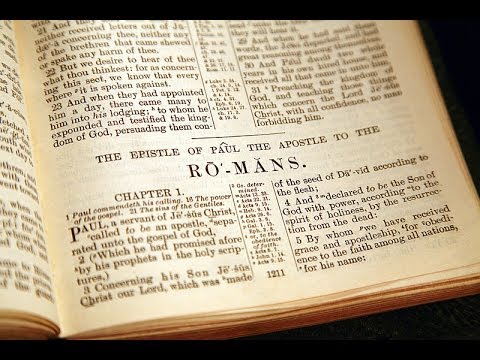
Thoughts on the relationship between Romans 1:1-3:20 to 3:21-5:21 to 6:1-8:39

Image result for book of Romans
Romans 1:1 "Paul, a bond-servant of Christ Jesus, called as an apostle, set apart for the gospel of God."

Introduction:

In today's brief post, I want us to consider how the introduction and three major sections of Paul's letter to the church of Rome fit together. Paul's letter consists of unfolding to his readers and us God's powerful Gospel as spelled out in Romans 1:16-17. It is undeniable that Paul's thoughts unfold in a logical and ever-escalating fashion as he takes the reader though the foothills and summits of the Gospel. By considering certain major transitional words (such as, although, therefore, because, much more), one can begin to see an overall flow of thought. For the sake of those wanting to study, teach or preach Romans, I offer the following suggested themes of Romans 1:1-3:20; 3:21-5:21 and 6:1:8:39...

1. The Gospel Introduced. Romans 1:1-17

2. The Crises Of Sinful Man In Need Of The Gospel. Romans 1:18-3:20

3. The Cardinal Truth Of The Gospel: Justification By Faith Alone. Romans 3:21-5:21

4. The Christian Life In Sanctification Flowing From Justification In Union With Christ. Romans 6:1-8:39.

Now these headings are by no means meant to be final headings. Instead, they give the reader an idea of Paul's main subject matter in each of these key sections. Certainly, one can consult a standard study Bible, commentary or Bible dictionary to gain a more detailed understanding of each section. It is sometimes helpful though in one's study of scripture to mark down what one sees in reading through a Bible book so as to keep in mind and in heart what is before them. We read the Bible so as to live the Bible for the glory of Christ.  

Wednesday, March 29, 2017

One Sweet Powerful Union - Understanding The Christian's Union With Jesus Christ

Image result for union with christ
Romans 6:5 "For if we have become united with Him in the likeness of His death, certainly we shall also be in the likeness of His resurrection."

Introduction:

Whenever we talk about the Christian life as presented in the New Testament, certain terms are used to describe it. With regards to the beginning of the Christian life, we discover one is regenerated or born again - thus marking the official moment of entry into the Christian life. In this moment of entry, a whole host of graces are experienced simultaneously: regeneration (John 3:3-5); justification or God's legal declaration and accrediting of Christ's righteousness to the sinner (Romans 4:3; Galatians 3:23-24); adoption into God's family (Romans 8:14-16; Galatians 4:4-6); sealing or preserving of one's faith (Ephesians 1:11-14) and of course the beginning of one's sanctification or growth in Christ (Philippians 1:6). 

The second way the New Testament describes the Christian life is by the broad term of sanctification. In conversion (which includes justification, adoption and all the beginning graces of salvation), one is declared positionally right with God in Jesus Christ. In sanctification, one is being made in experience and practice what God declared them to be in position and circumstance at salvation. In conversion, God is the one doing the work of calling, regenerating and justifying the sinner. The faith expressed by the sinner in salvation is a response to the call and facilitating work of the Spirit - apart from whose working there would be no faith to express (see John 16:8-16; Ephesians 2:8-9). Sanctification, or post-conversion Christian living, entails a cooperative effort between the Holy Spirit and the Christian (see Philippians 2:12-13). We can graphically illustrate what we're talking about below:

justification/conversion       Sanctification

point & time work of God(.)        Progressive                                                             cooperative effort 
                                             between us and God
                                                     --------Heaven
                                                ------
                                        (.)---          
                                       sanctification
                                                                                begins

Both ways of the describing the Christian life are distinct and yet related to one another. Conversion or justification by faith is a point and time event (symbolized by the "dot" (.)). Sanctification is, on the other hand, an "onward & upward" progression, signified by an onward and upward series of "ups" and "downs" which gradually and progressively increase one's experience of God. It must be noted that the course of one's sanctification may not be a consistent onward and upward upon close inspection, however, the overall course of the Christian life ought to be characterized by arriving at a closer walk with God and greater Christ-likeness. 

Avoiding extremes

The question is: how is one's conversion connected to their post-conversion or sanctification? This question is important, since many Christians live practically as if their sanctification is totally up to their will-power. Other Christians will go to the other extreme and say: "let go, and let God". The first extreme, called "activism", envisions the Christian doing all the work in sanctification. The second extreme, called "quietism", pictures God doing all the work. Both extremes are in error due to missing one key vital truth that connects God's work of conversion/justification to the cooperative work He and the believer have in sanctification: namely union with Christ. 

One Sweet Powerful Union: Union with Christ

The Evangelical Dictionary of Theology defines "union with Christ" as having to do with identification with Christ. It notes on page 588:

"...the theological concept of identification with Christ relates a Christian to the person and work of Christ by Divine reckoning, by the human experience of faith, and by the spiritual union of the believer with Christ effected by the baptism of the Holy Spirit."

Theologian Michael Horton on page 587 of his volume:"The Christian Faith" describes this union of the believer and Jesus Christ in both salvation and sanctification as follows:

"Nevertheless, our subjective inclusion in Christ occurs when the Spirit calls us effectually to Christ and gives us the faith to cling to him for all of his riches."

To understand this union more concretely, Jesus compares union with Him as a branch to a vine and the vine to the branches (John 15:1-7). In Ephesians 5:22-33, the union of Christ and His people is likened unto the union shared between a husband and the wife. This idea of "union with Christ" is vital, since Christ connects not only our justification and sanctification together, but also connects His Person and current work to us by the ministry of the Holy Spirit that both initially and progressively continue such a connection (see 1 Corinthians 12:12-13). 

In closing

As we have briefly considered the importance and meaning of "union with Christ", I want to leave the reader with a quote from a recent book on sanctification, with particular reference to the topic at hand. Dr. Sinclair Ferguson declares the sweetness of this union on page 59 of his book: "Devoted to God - Blueprints For Sanctification":

"Thus, through the Spirit's uniting us to Christ we have been connected to the source of our salvation. His justification-God's declaration that He was righteous-is our justification; his sanctification-since He sanctified Himself for our sakes-is also ours. Thus, everything Christ did He did for me in obedience to His Father. All that He has done is therefore mine as a gift. He gave Himself for me, in His love to me; and now through the Spirit all that He did is mine."


Tuesday, March 28, 2017

A License Not To Sin - Romans 6:1-3

Image result for license not to sin
Romans 6:1-3 "What shall we say then? Are we to continue in sin so that grace may increase? 2 May it never be! How shall we who died to sin still live in it? 3 Or do you not know that all of us who have been baptized into Christ Jesus have been baptized into His death?"

Introduction:

In my wallet I possess a driver's license. That license is issued by the state in which I live to indicate my competency to drive a motor vehicle. Even though I have a driver's license, it doesn't mean I can drive anyway I please. If I were to be pulled over by a police officer for speeding - that officer would ask for my license and registration. Now it would be absurd for me to say to that officer: "Mr. Officer, as you can see, I have a driver's license here. I'm not sure what the problem is, since this license gives me the freedom to drive anyway I want". I'm sure that officer would remind me that the license does issue its holder freedom - the freedom to drive lawfully. 

Do you realize that the Christian has been issued a license that gives them the freedom to live for God? Romans 3:21-5:12 deals with Paul's treatment on justification by faith alone. Throughout history, critics of justification by faith have accused proponents of giving Christians the "license to sin". Put plainly, they claim that since God justifies the sinner at salvation, all sins are paid for and thus - the Christian is free to live anyway they please. This gross error is what theologians call "antinomianism" - meaning "without law" or "without morals". 

The error of antinominianism is in that it not only perverts the Law of God - but more so the grace of God. The Gospel proclaims we are saved by grace through faith alone apart from the law to a Christian life that is not lawless. In Romans 6:1-3 we are being introduced to the license or freedom the Christian has in Christ - the license not to sin. Three questions are raised by Paul to begin his formal treatment of sanctification. To grasp the fact that Christians have the freedom to live for God or the license not to sin, we can summarize the three questions as follows:

1. Do I have the right to sin? No 

Romans 6:1 "What shall we say then? Are we to continue in sin so that grace may increase? 2 May it never be!" When one becomes a Christian, they are brought into a new life, united to Christ, with new rights. We have the right to live for God. The right to love God. The right to hate sin. Whenever we compare those rights to the one right don't have - the right to sin, we discover that in all reality, nothing is lost. Whenever you think about it, a "right" in the moral and spiritual sense is something granted by God. The sinner's claim on having the "right to sin" is a deception of the fallen nature. So, the Christian has the license to live for God and does not have the right to sin.

2. Do I have to sin? No

Romans 6:2b "How shall we who died to sin still live in it?" This second question deals with the issue of no longer having the necessity to sin. Before Christ, the sinner could say: "I couldn't help my self" because they not only sinner out of willingness, but also necessity. Necessity has to do with the overall disposition of one's moral and spiritual nature. 

What happens when the nature is changed to a new one in Christ? The human will now has options! Fallen man's freedom of the will is limited to only doing what pleases himself. He is free to whatever he wants and yet, no matter how religious or moral he may be, unless the Holy Spirit is acting upon and in the heart - that person will refuse God 100% of the time. At saving faith, the will is "freed" to do the one thing it refused to do - truly and freely love God. 

In post-conversion, Christians will still sin - however, the Christian cannot claim they "had to sin", since the necessity to sin is removed. Even though I may sin post-conversion, I don't have to. One's growth in sanctification ought to see a lessening frequency and severity of sins relative to what they would had been pre-conversion. 

3. Can I have victory over sins? Yes

Romans 6:3 "Or do you not know that all of us who have been baptized into Christ Jesus have been baptized into His death?" Let us suppose one has a dead mouse in a mouse trap. If you were to put a piece of cheese up to his nose - would he grab for it? Clearly not. Why? The mouse is "dead". No amount cheese, even the finest cut, will entice a dead mouse. Paul describes the Christian's relationship to the power of sin as being "dead". By one's union in Christ - sin - in effect - is "dead to them". This is Paul's way of saying that in Christ, grounds is given to the Christian to have victory. Victory over particular sins requires a daily giving of oneself to God's Word, pray and putting on the shield of faith (see Ephesians 6:1-11). Our flesh may very well "flare-up" in such instances - since the "power of sin" is cancelled in sanctification - rather than the presence thereof. 

We must remember that in justification - the penalty of sin is removed. In sanctification - the power of sin is removed. Only when I am in heaven with Jesus - or glorification - will the presence of sin be removed. With that distinction made, since my relationship with Christ is defined - that means my relationship to sin ought to change. The more I grow deeper in love with Jesus, the higher will be my hatred of sin. In sanctification - I am becoming in experience whom God declared me to be by position in justification.

Closing thoughts

Today we considered how Christians possess a "license not to sin" or, stated positively - "license to live for God". We explored this truth by way of the three questions raised by Paul in Romans 6:1-3, and phrased them as follows:

1. Does the Christian have the right to sin? No

2. Does the Christian have to sin? No

3. Can the Christian have victory over sins? Yes

Monday, March 27, 2017

Your Crisis, His Triumph, Your Move - Romans 5:12-21

Image result for bible on a pulpit

Romans 5:18-21 "So then as through one transgression there resulted condemnation to all men, even so through one act of righteousness there resulted justification of life to all men. 19 For as through the one man’s disobedience the many were made sinners, even so through the obedience of the One the many will be made righteous. 20 The Law came in so that the transgression would increase; but where sin increased, grace abounded all the more, 21 so that, as sin reigned in death, even so grace would reign through righteousness to eternal life through Jesus Christ our Lord."

Introduction:

As one travels further into Paul's letter to the Romans, it becomes abundantly clear that the richness of this Book of the Bible seems unending. At our church I am currently preaching through this marvelous letter. Anyone who preaches through a Book of the Bible will be stretched and challenged in their mind and heart. God's Word shapes our world and motivates us to reach higher and deeper in Christ. The Book of Romans takes the reader down through the foothills, rolling rivers and highest summits of the Gospel. As a preacher, I am reminded daily that I am the student and God through His Word is the Master-teacher. The preacher of the Word can never hope to master the Word, however joy is found whenever the Word is mastering him. 

To summarize today’s post: we will consider how all of history and your own personal story are defined by two men – Adam and Jesus Christ. How do the actions of either affect you? Your identity, association or union with either one defines who you are as a person and, more importantly, your spiritual status with God. Today we want to look at your crisis, His triumph and your move.

Illustrating Paul's thought by what I once saw on a billboard

In this text, Paul centers his remarks around a remarkable comparison between the historic Adam of Genesis 1-3 and the Lord Jesus Christ. What we see developing is a portrayal of two-humanities, each with its representative head. 

I can recall driving in a particular state years ago. On a billboard a certain Native American Indian Tribe had been awarded a particular award from the state government for its particular contributions. The billboard depicted a man receiving the medal and then wearing it around his neck. When I first saw that billboard, I was confused. According to the picture, even though the award was being given to this particular Native American Indian tribe or "nation", nevertheless, all one could see was an individual receiving the award. 

I learned later on that the man in the picture was the Chief or representative leader of that tribe. Whatever he received was attributed to every member of that tribe throughout the state. Even for those individuals who lived out of the state, it didn't matter. The award could be just as much theirs, since they were associated and united to that chief by the dictates of that particular tribe. This particular Native American tribe operated with a similar concept we see here in Romans 5:12-21 - the idea of a representative or federal headship.

Adam and Jesus: Representative Heads Of Two Classifications Of Humanity

As we noted before, human history can be defined by two men: Adam and Jesus. The first Adam and Jesus the "second Adam" (see 1 Corinthians 15:45-47) are the representative or "federal heads" of two humanities. 

We can first note parallels between both. First, each entered upon by a type of birth (to be in the first Adam, one must be "born"; to enter into the second Adam, Christ, one must be "born again"). Second, each passes along moral and spiritual traits (as well biological) to its members deriving from that respective original head (for Adam's humanity, there is sin, shame and judgment; for Jesus' humanity, justification, forgiveness and eternal hope). Lastly, each representative head is defined by scripture with respect to God, with such relationship defining the category of humanity in union with each representative (thus, "in Adam", human beings are guilty sinners before God, since Adam, post-fall, was guilty and sinful; whereas all who are in Jesus by faith, are declared innocent and righteous, since Jesus is actually innocent and righteous. 

These distinctions weave their way throughout Paul's argument and serve to clarify what Paul is doing in his comparison of Jesus to Adam. Let's explore how Paul unfolds this comparison in Romans 5:12-21. 


1. Your Crisis (Guilt By Association). Romans 5:12-15

I can recall as a child a childhood chum by the name of Roy. Roy was one of those kids who would keep you in stitches. Unfortunately, Roy would be the type of guy that could get anyone in trouble and then sneak off without hardly getting caught. I would often be either a willing or unwitting "partner in crime". When I would get caught, I would sometimes blame Roy. But my parents would always ask: "did you have to follow Roy"? clearly the answer was "no". Although I was guilty by association, my choice to do what Roy did was my responsibility. In Adam, all are born into this world "guilty by association". Just by virtue of the fact that we are related to original Adam means we're already in a moral, spiritual and relational crisis with God. Whenever we consider Paul's remarks in Romans 5:15-18, we can summarize by asking some questions:


What happened? 
Gen 3:17-19 "Then to Adam He said, “Because you have listened to the voice of your wife, and have eaten from the tree about which I commanded you, saying, ‘You shall not eat from it’; Cursed is the ground because of you; In toil you will eat of it All the days of your life. 

The outcome? 
Gen 5 (death); Ezekiel 18:4 Behold, all souls are Mine; the soul of the father as well as the soul of the son is Mine. The soul who sins will die. Romans 3:23; Ephesians 2:1-4 (wrath, darkness). 

To put the crisis another way: 
1 Cor 15:21-22 For since by a man came death, by a man also came the resurrection of the dead. 22 For as in Adam all die, so also in Christ all will be made alive.  

Thus: All born into this world are united in Adam, as their representative head. Guilty by association. Now thankfully, God did not leave things as there were. He chose to send His Son to taking unto His Person true humanity. His human DNA he got from His mother (Mary), whilst retaining His eternal Divine nature with which He shared with the Father. The crisis of Adam is really our crisis. But now, we need to consider secondly the Triumph of Jesus.

2. His Triumph (Forgiveness By Association). Romans 5:15-17

We can summarize Romans 5:15-17 in the following fashion:

Vs 15 Much more “did the grace of God and the gift by the grace of one Man, Jesus Christ, abound to the many.”

Vs 16 on the other hand “the free gift arose from many transgressions, resulting in justification.”

Vs 17 much more those who receive the abundance of grace…will reign in life through the One, Jesus Christ.

We see here a mighty triumph by what Paul's refers to as "The New Adam", Jesus Christ. All "united to Him" in saving faith are treated in the same fashion as He. 

To illustrate this point, my wife recently posted the following on Facebook:

"I got to thinking .... We've been given the Holy Spirit and named co-heirs to Christ. We are wealthier than the wealthiest man on the Forbes list in position, yet we walk around defeated and beat down. Lets not look at the circumstances around us and lose heart. Lets allow our outer personas to match the gift we have on the inside. We are loved. We are treasured. We are rich. Walk in His confidence. Romans 8:17 " Now if we are children, then we are heirs—heirs of God and co-heirs with Christ, if indeed we share in his sufferings in order that we may also share in his glory."

All the benefits and glories associated with Christ become every child of God responding to the Gospel call in saving faith. This is the Triumph of the New Adam over the crisis brought about by the first Adam. So then, we come to the final point of today's post in our study of Romans 5:12-21...

Your Move (Remain In Adam or Trust In Jesus). Romans 5:18-21

We can focus our attention here on two verses - Romans 5:12 and 5:18. Romans 5:12 states - "Therefore, just as through one man sin entered into the world, and death through sin, and so death spread to all men, because all sinned." Then, Romans 5:18  "So then as through one transgression there resulted condemnation to all men, even so through one act of righteousness there resulted justification of life to all men." Whenever we read these two passages, it must be understood that the phrase "all men" refers to all members under each respective representative head. Throughout the New Testament, one's union to each head is described by the prepositions "in", "by" or "through" (ex: "in Adam" 1 Corinthians 15:22; "in Christ" found almost 15x in Romans alone!). This concept of "union with Christ" will be explored in future posts when we reach Romans 6. 

One of the points of the Gospel is that the sinner need not remain "in Adam". To remain in Adam or be in Adam means: Born naturally, living naturally, rejecting the Gospel, thus, dying in your sins and suffering eternally as a result of such rejection. Transferal from "Old Adam" to "New Adam" occurs due to being justified by faith (see Paul's foregoing argument in Romans 4:1-5:11). To be in Christ (New Adam) entails: born again by grace alone through faith alone in the Gospel, living a new life in sanctification, thus: hope for eternity and life with God in Christ.

Conclusion:

Today we considered Romans 5:12-21 in terms of what we called: "your crisis, His triumph, your move." We looked at Paul's analogy of Adam and Christ, noting that they represent two heads of two sorts of humanity. Whichever one we are in has profound spiritual and eternal implications. 

Saturday, March 25, 2017

Jesus' Cry Of Forgiveness From The Cross - Luke 23:34

Image result for Father forgive them
Hebrews 12:3 "For consider Him who has endured such hostility by sinners against Himself, so that you will not grow weary and lose heart."

Introduction:

Today's post wants to take to heart the command given in the opening verse above. How can one practically consider what Jesus did on the cross as a means of strengthening their faith? Remarkably, we have seven sayings or statements uttered by Jesus in the six hours He hung on the cross. The following verses from the Gospels summarize these sayings:


1. “But Jesus was saying, ‘Father, forgive them; for they do not know what they are doing.’ And they cast lots, dividing up His garments among themselves.” Lk 23:34 

2. “And He said to him, “Truly I say to you, today you shall be with Me in Paradise.” Lk 23:43 

3. “When Jesus then saw His mother, and the disciple whom He loved standing nearby, He said to His mother, “Woman, behold, your son!” 27 Then He said to the disciple, “Behold, your mother!” From that hour the disciple took her into his own household.” Jn 19:26-27 

4. "About the ninth hour Jesus cried out with a loud voice, saying, “Eli, Eli, lama sabachthani?” that is, “My God, My God, why have You forsaken Me?” Mt 27:46. Compare Mk 15:34.
5. “After this, Jesus, knowing that all things had already been accomplished, to fulfill the Scripture, said, “I am thirsty.” John 19:28

6. “Therefore when Jesus had received the sour wine, He said, “It is finished!” And He bowed His head and gave up His spirit.” John 19:30 

7. And Jesus, crying out with a loud voice, said, “Father, into Your hands I commit My spirit.” Having said this, He breathed His last.” Luke 23:46 

By meditating on these sayings, we can find a bottomless well from whence to drink and nourish our otherwise barren soul. Today's post will focus on the first saying or what we could call: "The cry of forgiveness".


The cry of forgiveness. Luke 23:34

Andrew W. Blackwood Jr. writes on page 12 of his book: "The Voice From The Cross" - 

"The crucifiers knew well that they were destroying an innocent Man, but each of them had a plausible reason for His act. A soldier, after all, must obey orders. The governor must keep the peace. The High Priest must protect the people from blasphemy. So weak men worked together to destroy the Son of God. They killed Him, but they could not destroy Him. Even in death His love rose above their hatred."

It is in this first saying that Jesus expresses the heart and intent of His atoning work: to provide the basis, the grounds for the forgiveness of sins done by sinners. His addressing God as "Father" would had been shocking to Jewish ears, since no example is found of the Heavenly Father being explicitly referred to on such personal, intimate terms in the Old Testament. Nearly ten times is reference found to the Divine "Father" by name in the O.T. These roughly ten O.T passages speak mainly of the covenant relationship of the Father, Yahweh, to His proverbial adopted son, Israel. Even in spots where the author might address God by the title "Father", it is with the understanding of that person's relationship to the nation of Israel, which was most beloved of God among the nations.
Yet, when Jesus appears on the seen, roughly 140 places refer to the Person of the Father, with nearly all of them addressing Him personally. 

The expression "Father forgive them" denotes Christ's unique relationship to the Father, reminding us that He ever remained the eternal Son in union with the Father in the Godhead. However, as man, He looks up and utters this cry and does so for the sake of those crucifying Him and for those who would had done the same from every generation of sinful men. 

This first "saying" stays the hand of omnipotence from wiping earth off the face of history and interposes between the wrath of the Father and the sinful human race so deserving of such wrath. Christ here gives reason for why the Father ought to forgive such malevolent persons: "for they do not know what they are doing." Ignorance does not necessarily excuse one from responsibility. After all, the Jews and Romans both knew they were executing an innocent man. However, the part they were not privy to was the fact He was not just a man. The Apostle Paul in 1 Corinthians 2:8 comments - "the wisdom which none of the rulers of this age has understood; for if they had understood it they would not have crucified the Lord of glory."
The wonderful 19th century preacher Charles Haddon Spurgeon notes on page 19 of his book: "Christ's Words From The Cross" - 

"Remember, if there be nothing good in you, and if there be everything conceivable that is malignant and bad, yet none of these things can be any barrier to prevent Christ's exercising of the office of Intercessor for you." 

The remarkable thing about this first saying from the cross is that it historically depicts Christ's current heavenly activity on behalf of believers. His High-priestly ministry, though assumed following His ascension into heaven 40 days after His resurrection, was nonetheless a part of His Messianic identity. This opening statement gives us a gateway into the width and depth of the courtyard of the crucifixion scene. May the Christian's faith be nourished by this first saying as we contemplate and consider what He achieved over 2,000 years ago. 


Friday, March 24, 2017

Life-practical Considerations Of Jesus As The Resurrected, Last Adam

Image result for jesus as the last adam

1 Corinthians 15:42-45 "So also is the resurrection of the dead. It is sown a perishable body, it is raised an imperishable body; 43 it is sown in dishonor, it is raised in glory; it is sown in weakness, it is raised in power; 44 it is sown a natural body, it is raised a spiritual body. If there is a natural body, there is also a spiritual body. 45 So also it is written, “The first man, Adam, became a living soul.” The last Adam became a life-giving spirit."

Introduction:

Over the last couple of posts we have been exploring the Biblical revelation of Jesus as "The New Adam" or "The Second Adam". Paul compares Adam and Jesus in both Romans 5 and 1 Corinthians 15. Today's post is going to consider how this title of Jesus as "the New Adam" provides a valuable resource for better understanding everyday Christian living. We had broached this notion a little bit in previous posts, however, we want to explore the practical ramifications for Christian living as we understand better Jesus as the "Second Adam". We will derive today's post from 1 Corinthians 15:42-58. 

So how does understanding Jesus as the New Adam or Second Adam impact the Christian on a practical level?

1. The Christian's continuing hope in resurrection. 1 Cor. 15:42-49

The whole point of 1 Corinthians 15 is to give an exposition and defense of the most important doctrine of the Christian faith - namely, Jesus' resurrection from the dead. In the latter part of the chapter, Paul brings out the life-practical ramifications. In 1 Corinthians 15:20ff, it is abundantly clear that because Jesus is risen from the dead, the Christ-follower has an abundant source of hope. Furthermore, the Christian learns that their ultimate hope and destiny is to experience their own resurrection and to have this current body transformed in a glorified resurrected one whether by death (1 Corinthians 15:55-57) or rapture (1 Corinthians 15:50-54). 

2. The Christian's comfort in facing death. 1 Corinthians 15:50-57

As Paul carries on his exposition, we find that the promise of resurrection is coupled with promises pertaining to comfort for the Christian when their time comes to leave this world. As the great commentator Warren Wiersbe notes: 

"Christians have victory in death and over death! Why? Because of the victory of Jesus Christ in His own resurrection. Jesus said, “Because I live, ye shall also” (John 14:19)."

3. The Christian's confidence in serving God. 1 Corinthians 15:58

As Paul finishes up 1 Corinthians 15, we find this final verse of the chapter to be most encouraging. 1 Corinthians 15:58 reads - "Therefore, my beloved brethren, be steadfast, immovable, always abounding in the work of the Lord, knowing that your toil is not in vain in the Lord." All of these verses from 1 Corinthians 15:42 and following center around Jesus' resurrection and His revelation as the Second Adam. By being united to Jesus by the Holy Spirit in saving faith, I find that union to be an ongoing, ever-present reality. Serving the Lord is not always easy. In fact, the further along one goes in their Christian life and service in whatever capacity to Him, the so-called "easy times" seem increasingly rare. However, the desire to serve God and to hear those words: "well-done thou good and faithful servant" eclipse the ache for momentary comforts and ease. Its worth serving the Lord because of the fact of whom we are united to - the New Adam, Jesus Christ. 

Thursday, March 23, 2017

Seeing The Unity Of The Bible Through Jesus The New Adam

Image result for unity of the Bible
Romans 5:12-14 "Therefore, just as through one man sin entered into the world, and death through sin, and so death spread to all men, because all sinned— 13 for until the Law sin was in the world, but sin is not imputed when there is no law. 14 Nevertheless death reigned from Adam until Moses, even over those who had not sinned in the likeness of the offense of Adam, who is a type of Him who was to come."

Introduction:

In our last post we considered the significance of Jesus Christ as the "New Adam" or "Second Adam". We offered some basic reflections upon Paul's comparison of Adam and Jesus in Romans 5:12-21 and 1 Corinthians 15:20-23 and 15:45-48. We discovered that two major doctrines are highlighted by such "two-Adam" theology: justification by faith alone and Christ's resurrection. We also discovered that two Christian-life teachings are made clearer by comparing Adam to Jesus: believer's Baptism and one's growth in sanctification. 

In today's post, we want to consider how original Adam and Jesus as the "Second-Adam" or "New Adam" aids in helping us to wrap our arms around the message of the entire Bible.

How Romans 5:12-21 hints at the "Old Adam" and "New Adam" comparison as grasping the main point of God's written revelation of the Bible

Romans 5:12-21 appears to have in view three particular time-frames that are well-represented in the Old and New Testaments. 

1. Book of Genesis - Noah and Abraham are "Adam-like" representatives who are called by God, fail along the way and were called and empowered to embrace God's saving grace

First, we find reference to the time period from Adam up until the Exodus of Israel from Egypt in Romans 5:14 "Nevertheless death reigned from Adam until Moses, even over those who had not sinned in the likeness of the offense of Adam, who is a type of Him who was to come." This corresponds to what would be the Book of Genesis and the few opening chapters of the Book of Exodus. Sin and death had already entered into the created order due to the treachery of the original Adam. The genealogies of Genesis 5 and 11 bear out the theme of "death" reigning in the world. The corruption of the nations in Genesis 10-11 further testify to the ripple effects of the curse brought on by Adam's sin and the inheritance of such by his descendants. 

Throughout Genesis at least, we find two key figures that function as "Adam-like" individuals: Noah and Abraham. Through Noah, God would once more begin the human race after the flood. However, as already mentioned, the curse of Adam's sin could not be washed away by the water. The shedding of innocent blood by a God-appointed substitute would be the only thing to take care of such matters. 

The second "Adam-like" figure was Abraham. God called Abraham to create forth a people of God and ultimately the nation of Israel in Genesis 12,15,17 and 22. Whether we talk about original Adam, Noah or Abraham, all ultimately failed at certain points with respect to being faithful to God and thus needed His salvation in saving grace through faith alone. The Book of Genesis contains seeds of thought that would blossom in the latter portions of the Old Testament.  

2. Exodus - Malachi: Israel is an "Adam-like" figure that was called by God, failed in its historic temptation and needed God's saving grace

The second major era referenced in Romans 5:12-21 is what follows from the days of Moses and the formation of God people in the nation of Israel. Romans 5:18 states: "For as through the one man’s disobedience the many were made sinners, even so through the obedience of the One the many will be made righteous. 20 The Law came in so that the transgression would increase; but where sin increased, grace abounded all the more." We could summarize the entire remaining 38 books of the Old Testament has being about one nation: Israel, and one God's dealing with that nation. 

Israel, much like Noah and Abraham, functions in an "Adam-like" capacity. Israel came forth biologically from the bloodline of Abraham, Isaac and Jacob in the book of Genesis. The Hebrew people in Exodus were officially formed into a nation at Mount Sinai in Exodus 19-23. We then find repeatedly throughout the Old Testament Israel being tempted and failing, just like Adam. Israel was to be a blessing to all the nations that could not be so apart from God's elective purpose of grace (Deuteronomy 7:7-8; Amos 3:1-7). She being God's "chosen people" broke covenant with God, thus having God announce the need for a New Covenant in Jeremiah 31:31-34 and other places. 

By the end of the Old Testament, we find Israel having gone through exile, just as Adam and Eve had been exiled from the Garden of Eden. What was needed was another covenant. Just as God killed two innocent substitutes to cover the sin of Adam and Eve, there would need to be an ultimate Substitute that would take the place of Adam's fallen race.  

3. Matthew - Revelation. Jesus is the New Adam that triumphs where Adam and all humanity failed

Paul's remarks in Romans 5:19-21 bear out the contrast between "Old Adam" and Jesus Christ the "Second Adam". Adam of course had failed, having broken God's original covenant with him in Genesis 3:1-7 and resulting in God issuing forth a second covenant, a covenant of grace by way of the slaying of two animals. We know Adam and Eve believed on God's promise and words in Genesis 3:15 by virtue of the fact they had placed upon them coats of skin - signs of God's covenant of grace. Noah and Abraham and Israel, as already seen, functioned as "Adam-like" figures. The entire Old Testament looks forward to the day when humanity would have a representative that would prove perfect in mediating between them and God. 

Jesus of course went through the same pattern as we have already alluded to in Adam, Noah, Abraham and Israel. The Gospel of Matthew, for example, has Jesus virgin born (Adam had been formed out of the "virgin-soil" of the ground with no earthly father) (see Genesis 1:26-28; 2:7 and Matthew 1:20-23). Next, Jesus is later tempted b Satan in the wilderness, just as Adam had been tempted by Satan (Matthew 3). Jesus succeeds in his trial, proving, for the first time ever, that Satan could be completely defeated by a man. Matthew goes on by portraying Jesus' as having authority over the Sabbath (Matthew 12:8); power to defeat the demonic realm (Matthew 12:22-29); authority over the winds and water (Matthew 14:13-36) and renaming one of His disciples (Matthew 16:18). In as much as many of these episodes identify His truly Divine authority, the Gospels also serve to show us not only Jesus' true humanity, but moreso His humanity in the role of being the second Adam. Such glimpses have prompted some New Testament scholars to suggest Matthew is portraying Jesus as a fulfillment of Israel and/or is functioning as a second Adam. 

This idea of Jesus coming into our world to begin a whole new redeemed humanity is expounded at length throughout the rest of the New Testament (see for instance Romans 5:12-21; 1 Corinthians 15:20-23; 45-48; 2 Corinthians 5:17; Galatians 4:4; Ephesians 4:17-24; Philippians 2:5-11; Colossians 1:16-18; 3:10; 1 Peter 1:18-19). To paraphrase New Testament scholar Dr. Daniel Wallace in a recent lecture on the New Testament text: "The most important event in all of human history was the crucifixion and resurrection of the God-man, Jesus Christ. Such an event required the writing of further scripture." The New Testament then is all about unfolding for us the triumph and identity of the New Adam, and how it is sinful humanity must united to Him by being born-again in saving faith.  

Closing thoughts

Today's post aimed to take Jesus' designation as "the Second Adam" and use it as a lens for beholding the Bible's unity. We used Romans 5:12-21 as a base text and noted how it unfolds the Bible's unity by way of the Old Adam vs New Adam comparison. We saw three particular historic eras within this text and thus discovered a way in seeing the Bible's unity through the revelation of Jesus as the New Adam. We noted the following:

1. Book of Genesis - Noah and Abraham are "Adam-like" representatives who are called by God, fail along the way and were called and empowered to embrace God's saving grace

2. Exodus - Malachi: Israel is an "Adam-like" figure that was called by God, failed in its historic temptation and needed God's saving grace

3. Matthew - Revelation. Jesus is the New Adam that triumphs where Adam and all humanity failed, henceforth Jesus has provided saving grace to all who respond in faith to Him