Translate

Thursday, May 19, 2016

P1 - Five important words that describe the Bible


Genesis 3:1 "Now the serpent was more crafty than any beast of the field which the LORD God had made. And he said to the woman, “Indeed, has God said, ‘You shall not eat from any tree of the garden’?” 


The first question in the God's Word had to do with God's Word
Everything up until Genesis 3 had been commanded and declared by God. Satan took God's commands and declarations and put question marks on the end.  Sin entered into the world as a result of man losing and refusing to fight the battle for God's Words.  

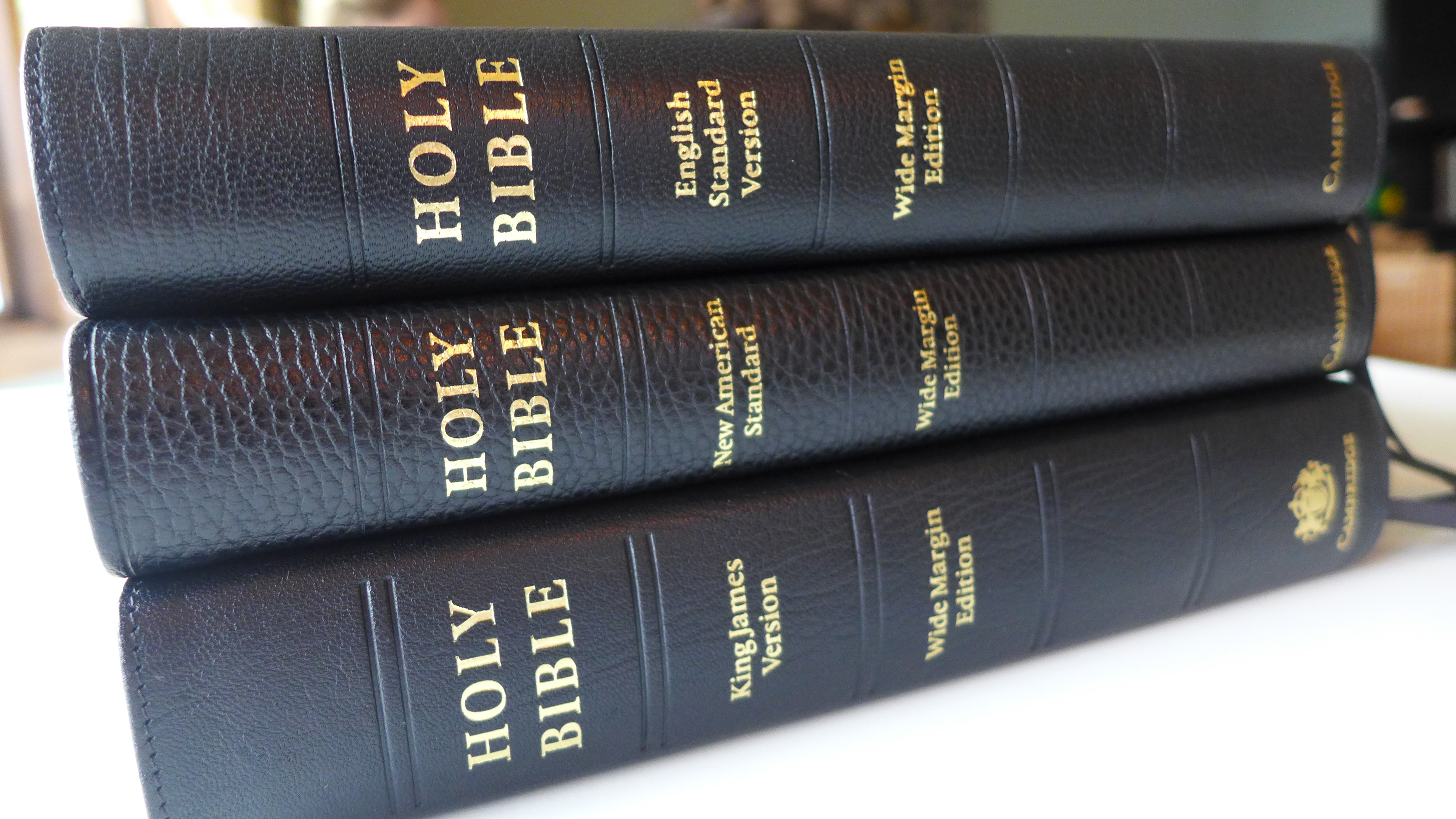
As Christians, we need to know that the Bible we carry in our hands is the Word of God.  In today's post I want to introduce the reader to five terms that have been used by theologians to describe how the scriptures journeyed from God's mouth to man's hand.  Those five terms of which I speak are the following:

1. Revelation
2. Inspiration
3. Canonicity
4. Preservation
5. Illumination

Each of these terms could be given their own post. However, for today, I just want you the reader to be equipped with brief definitions of the first three so as to get in your mind the reliability and sufficiency of your Bible as God's very words. The next post will deal with the latter two terms.

1. Revelation - Making known that which was previously unknown  
In Bible doctrine we usually distinguish three types of revelation:

a. General Revelation - This is God revealing or making known His glory and power in creation and the conscience  (Psalm 19:7-11; Romans 1:18-31, 2:15)

b. Full Revelation - This is God's revelation of His Person and Majesty through the incarnation of God the Son, Jesus Christ. (Hebrews 1:1-3)

c. Special Revelation - This is God's Revelation of His purposes and will through the writing of the Old and New Testament scriptures, of which we are focusing upon in this particular blog today. (Deuteronomy 29:29; 2 Timothy 3:16; 2 Peter 1:21)

God revealed His words to His prophets, by whom spoke and then wrote down the revelation. In the New Testament the terms employed to refer to God's revelation refer to "unveiling that which was previously hidden".  (Exodus 24:4; Amos 3:7; Ephesians 1:10; 1 Peter 1:10-11)

2.  Inspiration - Human authors were given a unique measure of grace through their own writing styles to produce documents free from error and sufficient for faith and practice

Revelation (not the Book but the act of God making the unknown known) leads next to inspiration.  It is in the act of inspiration that God takes His revealed will and superintends over the writing styles of the biblical authors to produce the Bible books. In 2 Timothy 3:16 we read that "all scripture is inspired", meaning literally that: "God breathed out the scriptures."  Just as He breathed out His breath into the nostrils of Adam and Adam became a living soul, so did the writings of the Apostles and Prophets become living scripture as they wrote.  

With the more than 40 authors, writing on three continents and in three languages, over 1500 years period of time, God used their writing styles and situations to produce a unified library of 66 documents free from error.  Once the last period of the Book of Revelation was completed, the Grace of inspiration would never operate again.  So with God's words written as perfectly true words, how would God's people know which books were God's books as opposed to forgeries?

3. Canonicity - The identification, reception and arranging of the individually inspired Bible books into the official collection of God's words
Virtually all the Bible books were immediately identified, received and collected by God's people for public reading, preaching and application.  The term "canon" literally means "measuring rod", hence the Bible is the final authority or "measuring rod" on all matters.  Not just any book could be considered part of God's Divine Library of the Bible.  Church history tells us that God's people used a variety of tests for recognizing God's words.1

God perfectly inspired the individual Bible books, not the manner of their order or arrangement.  God in His Providence led the people of God to take up the task of receiving and arranging the books of scripture.  Without a doubt the Holy Spirit guided the process, and it must be remembered that the Bible produced the church, not the other way around.  By recognizing the nature of canonicity, we can see why its not a big deal for certain Bibles to have differing order or arrangement of the Bible books.2  In our next post we will deal with two other terms: preservation and illumination. 

End Notes:______________________

1. So what were the tests?  Some examples are as follows:
a. Was the author a prophet, apostle or associate of an apostle?
b. Does the book correspond with previous revelation?
c. Does the Book bring about conversion?
d. Does the book point to Jesus Christ, the fullness of God's revelation?
e. Is the book recognized by virtually all Christians as God's word?

Tests such as these were used, and once individually recognized, the church came to arrange the books for use and preaching purposes.


2. For example we know by Jesus' day that the Old Testament was arranged in a three-fold way (Law, Prophets, Writings). (Luke 24:44) However in our English Bibles our Old Testaments are arranged as: Law, Historical Books, Poetic Books and Prophetic Books (Major and Minor Prophets). These differing arrangements have nothing to do with the words of scripture (inspiration), rather they represent the ways God's people came to organize the 66 Bible books.  Thus we see for instance Catholic Bibles, Eastern Orthodox Bibles and Protestant Bibles (the last which would be to most readers perhaps the most familiar) having their Bible Books in differing order.  

The Catholic and Eastern Orthodox have additional books, of which I will not address right now (these issues have been addressed in other past blogs).  Suffice it to say, all three orderings have in common the universally recognized 66 Books which appear by themselves in such English translation and versions such as KJV, NKJV, NASB, NIV, ESV, NLT. 

Wednesday, May 18, 2016

Empowerment for the Christian Walk - The Spirit-filled Life


Acts 11:22-24 The news about them reached the ears of the church at Jerusalem, and they sent Barnabas off to Antioch. 23 Then when he arrived and witnessed the grace of God, he rejoiced and began to encourage them all with resolute heart to remain true to the Lord; 24 for he was a good man, and full of the Holy Spirit and of faith. And considerable numbers were brought to the Lord.

Introduction: Rechargeable batteries and the Spirit-filled life
It is amazing how many batteries one can go through when raising children as active and fun-loving as our own.  Although it has been several years, when younger children were smaller, they would come to my wife or me and inquire about batteries. Even our older ones - or we ourselves - find the batteries in our devices needing recharged. No sooner do we buy those big packs of 10 or more batteries then to find out that we need to purchase more batteries! For electronic devices, unless you plug them in for a periodic recharge, their performance will degrade. Having available power is important whether we are talking about children's toys, cell-phones or computers.

What ought to characterize the Christian throughout the remainder of their post-conversion life? The Spirit-filled life.
Just as in the illustration above, you and I as Christians - whether new to the faith or converted for years - continue to live life in this world - with the batteries of the Christian walk needing  recharged.  We need empowerment. The Spirit-filled life can be likened to the repeated need to be recharged and influenced by the Spirit following one's conversion to saving faith. To be a Spirit-filled Christian is to be a Spirit-led, Spirit-empowered one.  

Meet a Spirit-filled man by the name of Barnabas
Acts 11:19-30 details the events the were still following from the persecution of Stephen the Martyr in Acts 7-8.  The church had blossomed and grown despite the hardship and tribulations that she endured.  Acts 11:21 records a major development in regards to the progress of the church at Antioch - "And the hand of the Lord was with them, and a large number who believed turned to the Lord." These people were getting converted as a result of the Spirit's work through the preaching of the Gospel. But now with the people becoming new believers, what was going to be needed? How was this fledgling Christian movement in Antioch going to continue on from this point? Enter the man Barnabas and the key trait which he possessed - being filled with the Holy Spirit.

Acts 11:24, quoted at the beginning of today's post, records how Barnabas "....was a good man, and full of the Holy Spirit and of faith."  In the remainder of time that we have I would like us to briefly consider what the rest of Acts 11 (particularly 11:23-25 and 30) has to teach us about the filling of the Spirit in regards to is characteristics.

Characteristics of the Spirit-filled life. Acts 11:23-25, 30
1. Clear testimony  11:23a
2. Confident joy      11:23b
3. Consistent in Faith 11:24a
4. Kingdom fruit 11:24b
5. Counted reliable  11:30

Certainly there are other scriptures in the New Testament that bear out more examples and more traits - yet Barnabas' is a great introduction to the Spirit-filled or Spirit-empowered life in terms of what it looks like, sounds like and acts like.  Barnabas (whose name means "son of encouragement) was the type of Christian you enjoyed being around.  The Spirit-filled Christian not only has enough "rechargable energy" for their own Christian walk but they operate in the "over-flow" of the Holy Spirit to the affecting of others.  

It is only apropos that in the very first place that we find the name "Christian" being used to describe Jesus followers that it should be attached to this idea of being "filled with the Holy Spirit." Just as the new birth or regenerative work of the Holy Spirit constitutes the epicenter of conversion; the filling or empowering ministry of the Holy Spirit occupies the center of the post-conversion Christian walk. The filling of the Spirit enables me to become in experience of my sanctification (i.e progressive Christian growth) whom God has legally declared me to be in justification in salvation. As we find Barnabas to be a grand example of this precious truth of the Spirit-filled life, may those who are Christians heed the admonition of the Apostle Paul in Ephesians 5:18 - to be filled with the Holy Spirit.

Tuesday, May 17, 2016

Understanding the miracle of the New Birth


James 1:17-18 17 Every good thing given and every perfect gift is from above, coming down from the Father of lights, with whom there is no variation or shifting shadow. 18 In the exercise of His will He brought us forth by the word of truth, so that we would be a kind of first fruits among His creatures.

Introduction:
Today I wanted us to better understand what is meant when Christians and the Bible speak about the beginning point of salvation - "The New Birth". It can be instructive to grasp how earlier Christians spoke of Biblical truth in order to see whether or not we are on the right track. Such an exercise is what we call "historical theology". Far from being dull and dry, historical theology connects us to Christians of the past. If anything, their insights can aid us in a deeper understanding of Biblical truth. Historical theology's accuracy is measured by what the Bible teaches by way of its major themes and development of doctrinal truth (or what is called Biblical theology). Both types of theological study assist in better comprehending what God has revealed about this truth of regeneration or the new birth. 

How Christians have historically defined the New Birth in Christian Salvation
The above text deals with the beginning of one's salvation - what the Bible calls "The New Birth" or "Regeneration". The Baptist Faith and Message 2000 (the doctrinal statement of the Southern Baptist Convention) defines the "New Birth" accordingly: "Regeneration, or the new birth, is a work of God's grace whereby believers become new creatures in Christ Jesus. It is a change of heart wrought by the Holy Spirit through conviction of sin, to which the sinner responds in repentance toward God and faith in the Lord Jesus Christ. Repentance and faith are inseparable experiences of grace." Henceforth we can see that regeneration is all about a change of heart brought about by God in the sinner, followed by a response of repentance and faith. 

Baptists have come to understand both the individual Christian life and corporate church life as rooted in this entry point of the Christian life. The 1689 Baptist Confession defines regeneration or the New Birth accordingly: "(God) is pleased in his appointed, and accepted time, effectually to call, by his Word and Spirit, out of that state of sin and death in which they are by nature, to grace and salvation by Jesus Christ; enlightening their minds spiritually and savingly to understand the things of God." We can pause here to note how this older Baptist confession includes and enlightening of the mind, as well as a change of heart. The confession goes onward: "taking away their heart of stone, and giving unto them a heart of flesh; renewing their wills, and by his almighty power determining them to that which is good, and effectually drawing them to Jesus Christ; yet so as they come most freely, being made willing by his grace." 

One more example, the 1833 New Hampshire Confession, speaks of regeneration in this way: We believe that, in order to be saved, sinners must be regenerated, or born again; that regeneration consists in giving a holy disposition to the mind; that it is effected in a manner above our comprehension by the power of the Holy Spirit, in connection with divine truth, so as to secure our voluntary obedience to the gospel; and that its proper evidence appears in the holy fruits of repentance, and faith, and newness of life." Here we see how regeneration not only affects the heart (seat of emotions) and the mind with respect to their illumination, but also the will with regards to its inclination. Such is the understanding of God's work of regeneration through some of the thoughts of earlier Christians. But now, the true measure of any doctrine is to see what the Bible teaches. 

The Biblical source, the effects and the activities involved in the New Birth
The New Testament speaks of the beginning of Christian salvation as being that of a "New Birth".  Jesus for example in John 3:1-8 discusses with Nicodemas what it means to be "born-again".  Peter too talks about being "begotten" or "born again" by God in 1 Peter 1:3 and 23.  This language of "birthing" and "regeneration" to describe saving faith is used in Titus 3:5 - "He saved us, not on the basis of deeds which we have done in righteousness, but according to His mercy, by the washing of regeneration and renewing by the Holy Spirit." 

James 1:17-21 is the text I want us to specifically focus upon in drawing to a close today's post on the New Birth, since James was the first New Testament Book.  As you go down through James'  treatment, you discover the following about the New Birth or as it is sometimes termed "regeneration":

1. The New Birth Comes from God. James 1:17
This is clearly the origin of the New Birth.  This tells us that salvation by its very nature is a genuine miracle.  We could call this first thought the "source" of regeneration or the New Birth.

2. The New Birth Brings a change of heart.  James 1:18
The New Birth, being a work of God, brings with it the grace that accompanies salvation.  As we will see in later blogs, whenever you and I have been born again - there must needs had been a change of heart.  We could term this the "effects" of the New Birth or regeneration.

3. The New Birth Involves faith and repentance. James 1:19-21
Any definition of the New Birth must include "faith and repentance".  Apart from faith and repentance, the New Birth simply will not occur.  James speaks about both repentance (James 1:19-21a) and faith (1:21b) in this authoritative definition of "The New Birth".   We could call this last point the "activities involved" in the New Birth. 

I would encourage the reader to study over James 1:17-21 and the other texts mentioned in today's blog to gain a better understanding of this essential truth of Christian salvation - The New Birth. Furthermore, consider again what older Christians taught, since how Biblical truth was expressed in former generations can shine fresh light on current study and application of such truth. One thing is for certain - the New Birth and its attendant graces is a miracle of God wrought in the heart and thus marking the beginning point of salvation. 

Monday, May 16, 2016

Keep the fire of the Lord burning

Leviticus 9:22-24 "Then Aaron lifted up his hands toward the people and blessed them, and he stepped down after making the sin offering and the burnt offering and the peace offerings. 23 Moses and Aaron went into the tent of meeting. When they came out and blessed the people, the glory of the Lord appeared to all the people. 24 Then fire came out from before the Lord and consumed the burnt offering and the portions of fat on the altar; and when all the people saw it, they shouted and fell on their faces."

Introduction
I was thinking upon this particular passage of scripture a few days ago. Aaron, Moses' brother, was chosen by God to be the first high priest of Israel. His family and clan and tribe were the chosen portion of Israel that were set aside by God to represent His interests to the people. The Book of Leviticus represents the Israelite's first month or two of life following their Exodus from Egypt. We see the beginnings of their journeys and the start of a ministry. As God was finalizing all of the instructions to Aaron and his sons through Moses, the one feature of their calling and office as priests had to do with keeping the fire burning upon the altar (see Leviticus 6:13).

Undoubtedly the preparation for the moment recorded for us in Leviticus 9 was momentous. The priesthood of Israel was a special office commissioned by God. Aaron and his sons had experienced the prescribed rituals of anointing and donning of garments. However, one thing was needed - the fire of God. Lest the Spirit of God would come and kindle the altar, the priesthood would remain a ritual - and not a relationship with the covenant keeping God of Israel. 

The scene must had been truly an emotional one as the Jewish Levitical priesthood was getting underway. The people were present. Moses was there. Aaron and his sons were arrayed in their white garments. Then the fire came. The corporate spiritual life of a nation could now officially begin. They had experienced the deliverance by God from Egypt and were at the place God had called them. But until the fire of His presence kindled that altar, the ministry, the life of following God - could not commence nor continue. 

Matthew Henry, the great commentator of old wrote these words: "This fire did, as it were, take possession of the altar. The fire was thus kindled in God’s house, which was to continue as long as the house stood, as we read before, Lev. 6:13. This also was a figure of good things to come. The Spirit descended upon the apostles in fire (Acts 2:3), so ratifying their commission, as this spoken of here did the priests’. And the descent of this holy fire into our souls to kindle in them pious and devout affections towards God, and such a holy zeal as burns up the flesh and the lusts of it, is a certain token of God’s gracious acceptance of our persons and performances. That redounds to God’s glory which is the work of his own grace in us." 

Henry continues: "Hereby we know that we dwell in God, and God in us, because he hath thus given us of his Spirit, 1 John 4:13. Now henceforward, (1.) All their sacrifices and incense must be offered with this fire. Note, Nothing goes to God but what comes from him. We must have grace, that holy fire, from the God of grace, else we cannot serve him acceptably,Heb. 12:28. (2.) The priests must keep it burning with a constant supply of fuel, and the fuel must be wood, the cleanest of fuel. Thus those to whom God has given grace must take heed of quenching the Spirit."

Israel of the Old Testament was characterized by the heavenly fire of Yahweh. Such fire represented the Person of the Spirit of God attending with His people. God was the One that met Moses in the fiery bush and revealed His name as Yahweh (Exodus 3:14). Moses' calling could not commence without that confirmation of God's glorious presence. The beginnings of Aaron's ministry, the ministry of the tabernacle and the much later ministry of the temple built by Solomon had with them the coming of the heavenly fire. 

In the New Testament we see yet again the Holy Spirit descending upon His church. The church worldwide and on the local level is composed of all born-again people who are classified as a spiritual priesthood (1 Peter 2:9-10). Jesus had told his disciples to wait and tarry in Jerusalem until the Power from on High came down (see Acts 1:8). The one crucial difference between the Spirit's ministry in the Old Testament and today is that whilst He dwelt with and among the people in O.T Israel; He now permanently dwells in and through the church. Lest the Spirit comes, indwells at salvation and continues to lead and guide in sanctification - no spiritual life and service to God will commence or continue. The Spirit did come. 

When He comes into our hearts at salvation, simultaneously faith issues forth. True, genuine trust is issued froth by the sinner and they freely embrace Jesus Christ - resulting in their conversion. The Baptist Faith and Message 2000 notes: "Regeneration, or the new birth, is a work of God's grace whereby believers become new creatures in Christ Jesus. It is a change of heart wrought by the Holy Spirit through conviction of sin, to which the sinner responds in repentance toward God and faith in the Lord Jesus Christ. Repentance and faith are inseparable experiences of grace. Repentance is a genuine turning from sin toward God. Faith is the acceptance of Jesus Christ and commitment of the entire personality to Him as Lord and Saviour." Scripture describes this miracle as regeneration or the new birth (John 3:1-5; Titus 3:5; James 1:18; 1 Peter 1:3,23). 

When a man preaches a sermon or a anyone serves God in any capacity, they can only do so by the Spirit's continuing work of gifting and empowerment in their post-conversion Christian walk (Ephesians 4:11-12). Today, I simply close with the thought that as Christians, we need to tend to the fire of God kindled in our human spirit by the Holy Spirit. Let's keep the fire burning and thus serve God with joy and gladness!

Thursday, May 12, 2016

The God that is knowable and incomprehensible


1 Kings 3:9-14 So give Your servant an understanding heart to judge Your people to discern between good and evil. For who is able to judge this great people of Yours?”10 It was pleasing in the sight of the Lord that Solomon had asked this thing. 11 God said to him, “Because you have asked this thing and have not asked for yourself long life, nor have asked riches for yourself, nor have you asked for the life of your enemies, but have asked for yourself discernment to understand justice, 12 behold, I have done according to your words. Behold, I have given you a wise and discerning heart, so that there has been no one like you before you, nor shall one like you arise after you. 13 I have also given you what you have not asked, both riches and honor, so that there will not be any among the kings like you all your days. 14 If you walk in My ways, keeping My statutes and commandments, as your father David walked, then I will prolong your days.”

Introduction:

    The relationship King Solomon had with God in the early parts of his reign as King in Jerusalem is most instructive to believers today. Two truths characterize the Christian's walk with God. The passage above speaks of that first truth: "knowability". Solomon knew His God - and His God knew Him. They talked, listened and communed with one another. Solomon was intimidated by his role in life. As king of Jerusalem - he had big shoes to fill - for David had been his father. Solomon's conversation with God shows how he was going to get the job done. Solomon knew God - and God knew Solomon.

Now we fast forward a few chapters later in 1 Kings. Solomon's major project of building the temple had been complete. The king was dedicating the temple. In 1 Kings 8:27-30 we read -  “But will God indeed dwell on the earth? Behold, heaven and the highest heaven cannot contain You, how much less this house which I have built! 28 Yet have regard to the prayer of Your servant and to his supplication, O Lord my God, to listen to the cry and to the prayer which Your servant prays before You today; 29 that Your eyes may be open toward this house night and day, toward the place of which You have said, ‘My name shall be there,’ to listen to the prayer which Your servant shall pray toward this place. 30 Listen to the supplication of Your servant and of Your people Israel, when they pray toward this place; hear in heaven Your dwelling place; hear and forgive." Here we see the second truth associated with one's walk with God - namely that God is incomprehensible.

      When we say God is incomprehensible, we refer to how we in our reason, our thinking and our writing cannot exhaustively comprehend Him. I can know of light for instance - that it illuminates dark places. However, the intricacies of the behavior of photons (the particles / waves that make up the light) at the sub-atomic level are still by-and-large not completely comprehensible. As the late physicist Richard Feynman once quipped: "He who says he completely understands quantum theory (the science of the really, really small sub-atomic world) as shown he does not completely understand it". 

    Or take another more concrete example - one's relationship with their spouse. I know my wife. I know her likes, dislikes. I know from the tone in her voice or the gait of her walk what she is thinking. Yet, there is a mystery side to her which alludes full comprehension. I know her enough to want to draw closer and yet she has enough mystery as a woman to make me want to know more about her.

    With God, He is knowable and yet incomprehensible. Per Solomon's words, he could hold a conversation with God and walk with Him in the decisions of the moment. Yet, Solomon also knew that the being and glory of God exceeds the physical confines of our universe. To know God is to experience His manifestation to us. Such an incomprehensible God is know by His written revelation and the fullness of His revelation in Jesus Christ. To be in awe of His incomprehensibility is to bow before His majesty. May we today aim to know God, whose incomprehensibility drives us to worship Him. 

Wednesday, May 11, 2016

The God of Revealed Scripture

Malachi 3:6 “For I, the Lord, do not change; therefore you, O sons of Jacob, are not consumed."

James 1:17 "Every good thing given and every perfect gift is from above, coming down from the Father of lights, with whom there is no variation or shifting shadow."

Introduction:
The Baptist Faith and Message 2000 is the confessional statement of the Southern Baptist Convention. In its attempt to express what Southern Baptist's teach on matters of doctrine, the Christian life and social issues, the very first article deals with the doctrine of the Bible. In outlining the character of the Bible as being without error (i.e "inerrant") and incapable of leading one astray in matters of life and practice (i.e "infallible") among other traits with respect to its binding authority, the Bible is described as a product of Divine revelation.

The very first sentence of the BFM 2000 article on scripture reads as follows: "The Holy Bible was written by men divinely inspired and is God's revelation of Himself to man." This first sentence is crucial, since it expresses the Bible being the product of not just any deity, but One True and Living God. 

In our 21st century world we are more aware of other competing worldviews and religions than ever before. In our culture today, and even among Christians, when one says "God", such a term may not be taken to mean the same thing to different people. Furthermore, movements such as Wicca, Buddhism and the New Atheism are very popular among younger North Americans seeking to have a form of spirituality apart from organized religion. In order to communicate why we as Christians believe the Bible to be a Divinely revealed book, we need to first express the Divine source and His identity. In other words, it is crucial in establishing our view of scripture that we first identify the Divine author Himself. What kind of God is this God? 

What kind of God is the God of revealed scripture?
In the second article of the BFM 2000, the nature of the God of revealed scripture, and His identity, is explained. The God of revealed scripture is not some pervasive, impersonal force permeating our universe - as believed by Eastern religions and popularly expressed in the Star Wars franchise (called pantheism). Neither is the God of revealed scripture the immaterial soul of our world, equal to it and thus an impersonal force animating every rock, tree and person - as espoused by such groups as Wicca. The God of revealed scripture is not a collection of deities that extend back into eternity past, with Yahweh and Jesus being but the latest development in that long chain of beings (as in Mormonism). Such definitions are foreign to scripture and such deities are illusions and idols.

Rather, the BFM 2000 offers this following description of what kind of Being God is:

"There is one and only one living and true God. He is an intelligent, spiritual, and personal Being, the Creator, Redeemer, Preserver, and Ruler of the universe. God is infinite in holiness and all other perfections. God is all powerful and all knowing; and His perfect knowledge extends to all things, past, present, and future, including the future decisions of His free creatures. To Him we owe the highest love, reverence, and obedience."

Identifying the God of revealed scripture
In defining the kind of God the God of revealed scripture is, the BFM 2000 goes onto identify this God in its second article:

"The eternal Triune God reveals Himself to us as Father, Son, and Holy Spirit, with distinct personal attributes, but without division of nature, essence, or being."

Now we won't go any further into the specific details of how we can reasonably justify our belief in this particular God's existence - but we will make some general remarks. God's existence is revealed through His general revelation in creation (Psalm 19:1-6; Romans 1:18-31) and the moral laws written into the conscience (Romans 2:14-15). Moreover, God's existence and nature can be inferred through apologetical arguments such as the argument from observations of the universe, the universe's fine-tuning for the existence of life and the reality of objective moral values and duties. Then to specifically demonstrate the reality of the God expressed in the above statements, one can appeal to the resurrection of Jesus as the historical demonstration of the fact that the God of revealed scripture alone exists. 

Reasonable considerations affirm that Christians have justified reasons for believing in the God of revealed scripture. Such considerations bow of course to the Bible, and thankfully, are confirmed and further specified by it. 

Why does this matter to you?
Children, students and adults are called to the Christian life for one purpose: to know and love God. The second, closely related reason is to love other people with this love (see Matthew 22:37-39). The Christian life is not only a conversion of the soul to Jesus (James 1:18; 1 Peter 1:23) but also is to be a transformation of one's mind (Romans 12:2). To know why we believe why we believe is as important as communicating what we believe. Only when we progressively grasp why we believe what we believe will we then be equipped to answer: "How then shall we live?"  

The Divine authority of the Bible as God's inerrant and infallible revelation of Himself is built upon the premise that God never lies (Titus 1:2; Hebrews 6:18); never fails (Hebrews 13:5) and doesn't change (Malachi 3:6; James 1:17). All of scripture is predicated and based upon God's character as God. Furthermore, as Jesus of Nazareth is indeed the Decisive revelation of God in history, as demonstrated by His resurrection from the dead, then we can consider His remarkable life and death as further demonstration of the Bible's character as revealed written revelation. Jesus Himself taught as much (see Matthew 5:18; Luke 24:44; John 10:35). 

This is an important point, since our view of God drives our view of scripture. Such a foundation can greatly guard our faith in times of doubt, fear and struggle. If we believe that God created our world, and that this God reveals Himself in and through this world, and that the resurrection did indeed occur, then the concept of Divine revelation in written form won't be near as hard to accept. If anything, this God, the Triune God, with the Person of the Son demonstrating such truth by His incarnation, death and resurrection, has inseparably revealed Himself in words. Such words only exist and are codified in one book: the Bible. 

Tuesday, May 10, 2016

New Hope in Jesus Christ - Exaltation of Jesus

Romans 11:33-36 33 Oh, the depth of the riches both of the wisdom and knowledge of God!How unsearchable are His judgments and unfathomable His ways! 34 For who has known the mind of the Lord, or who became His counselor? 35 Or who has first given to Him that it might be paid back to him again? 36 For from Him and through Him and to Him are all things. To Him be the glory forever. Amen.

Introduction:
Over the last few days we have considered new hope in Jesus Christ. The words "new" and "hope" evoke anticipation, confidence and resolve. The Christian life ought be characterized as one full of hope. Romans 5:1-5 and other passages spell out this crucial theme. We have noted that in reinforcing this new hope, we need the following:

Hunger to lovingly know God and people

Ongoing discipleship / evangelism

Proclamation of the Word

Such elements represent an ongoing process and find their culmination in today's final point on this theme: "Exaltation of Jesus".

The above opening text is perhaps my favor set of verses in the Bible. Romans 11:33-36 brings to a conclusion the substantial doctrinal treatment Paul gives to unfolding the power of the Gospel. In these few verses we are shown the depths of God, the heights of God and the breadth of His glory. Verse 36 could be summarized as a mini-outline of the Bible:

"from Him" = creation
"through Him" = redemption
"to Him" = 2nd coming

We know that Jesus Christ is the decisive revelation of God in human flesh. It is the Son who reveals the Father, with the Holy Spirit shedding light on the Father and the Son. The exaltation of Jesus demands our humility. All the efforts we undertake to reinforce our newness of hope in Him must culminate in exaltation. 

Think about why we go on long vacations to places we have never been. We want to be blown away. Author John Piper has often remarked how people want to go to the Grand Canyon to be swallowed up by its grandness. To lose themselves in the grandeur of it all. Whenever I saw the Milky Way years ago during a major power outage, I was blown away. All I could do was praise God in view of His handi-work. Piper also notes too that missions exist because worship doesn't. Missions is driven by the impulse to bring honor and glory to God. 

Exaltation ought to thread its way through our hungering, ongoing discipleship and proclamation. All three of these efforts aim for this final point. But it doesn't end there. Exaltation has this quality of feeding itself back into and through those first three points. Think of what happens when a sound system has feed-back. A microphone gets to close to a speaker and the signal from the speaker gets fed back through the mic, through the sound-system and into the mic, reverberating and amplifying the sound until the mic is cut off. Whenever I think of H.O.P.E, exaltation of Jesus is the supernatural feed back that amplifies the new hope in Him. 

In a local church, the music, preaching, teaching, small groups, fellow-ship meals, outreach efforts, membership classes, hospital visits and other ministries ought to be feeding back in and through exaltation. The Bible itself operates in this fashion. Think about it - the last two chapters of Revelation drive the entire drama of the prior 1187 chapters. Exaltation of Jesus shapes and molds all history and eternity. It is He who reveals the Father. It is He in whom all the fullness of Deity dwells. God is one God, existing in three persons, with each Person being truly and fully God: Father, Son and Spirit. The Son represents that executive branch of the God-head. 

Our hope, after-all, is built on nothing less, than Jesus blood and righteousness. We dare not trust the sweetest frame, but wholly lean on Jesus name.  

Monday, May 9, 2016

New Hope in Jesus Christ - Proclamation of the Word


Ephesians 4:11-13 "And He gave some as apostles, and some as prophets, and some as evangelists, and some as pastors and teachers, 12 for the equipping of the saints for the work of service, to the building up of the body of Christ; 13 until we all attain to the unity of the faith, and of the knowledge of the Son of God, to a mature man, to the measure of the stature which belongs to the fullness of Christ."

1 Timothy 4:6 "In pointing out these things to the brethren, you will be a good servant of Christ Jesus, constantly nourished on the words of the faith and of the sound doctrine which you have been following."

Introduction:
Christian leader Joseph Stowell made the following observation about the great Renaissance artist Michelangelo in his devotional book: "Day by Day with Jesus - Strength for the Journey": "Michelangelo is said to have often painted with a brush in one hand and a shielded candle in another to prevent his shadow from covering the masterpiece he was creating. As God works through us to craft His glory and gain, we must be careful that our shadows are not cast across the canvas of His work."

Why is proclamation of God's Word so vital for living out the hope we have in Jesus Christ? Yesterday we had considered the importance of discipleship and evangelism. The clearest definition we find for "discipleship" is where Jesus expresses in Luke 9:23-24 "And He was saying to them all, “If anyone wishes to come after Me, he must deny himself, and take up his cross daily and follow Me. 24 For whoever wishes to save his life will lose it, but whoever loses his life for My sake, he is the one who will save it." 

To be a disciple means to follow Jesus in attitude, in mind and in heart for the goal of becoming like Him. As a pastor, I am convinced that the hindrances to our Christian growth stems from us doing what Michelangelo in the quote above tried to avoid: namely casting our own shadows on God's continuing work of making us more and more like Jesus. 

We often will cite Ephesians 2:8-9 as one of the clearest Biblical definitions of salvation - and rightly so. In that text we see defined salvation by grace alone through faith alone in Christ alone. However very few people go onto Ephesians 2:10, which deals with why the Lord calls and saves sinners: "For we are His workmanship, created in Christ Jesus for good works, which God prepared beforehand so that we would walk in them." 

Healthy Christian growth is not optional for the Christian
Oddly enough, many Christians today seem satisfied with little or no progress in their Christian walk. God chose, called and convicted sinners by His Spirit to believe on Christ apart from good works for the purpose of growing up in a salvation that is to abound in good works. The overall pattern and design of the Christian life is to grow onward and upward in the Lord. Such growth may experience seasonal declines, however the vast majority of the Christian life ought to witness advances and an overall pattern of change. 

Passages such as 2 Peter 3:18 explicitly command us to grow up in our walk with Christ: "but grow in the grace and knowledge of our Lord and Savior Jesus Christ. To Him be the glory, both now and to the day of eternity. Amen." Peter also writes in 1 Peter 2:2 "like newborn babies, long for the pure milk of the word, so that by it you may grow in respect to salvation." Like the Apostle Peter, the Apostle Paul also explains the need of healthy Christian growth. Romans 12:2 is but one example - "And do not be conformed to this world, but be transformed by the renewing of your mind, so that you may prove what the will of God is, that which is good and acceptable and perfect." All of these passages urges Christians to pursue healthy Christian discipleship.

The urgency for healthy Christian growth is not up for debate in the scriptures. The question is: what and how do Christians grow in their Christian lives?  God has prescribed three main ministries in the local church to ensure the spiritual healthy of Christians. Solomon writes in Ecclesiastes 4:12  "And if one can overpower him who is alone, two can resist him. A cord of three strands is not quickly torn apart." We will be exploring two chapters (Ephesians 4 and 1 Timothy 4) to discover what I am calling "the 3-braided rope" of healthy Christian growth in Christians and the church, which includes the following:

1. Pastoral ministry (1 Timothy 4; Ephesians 4:11-12)

2. Church-body life (Ephesians 4:13-24)

3. Small-groups (Ephesians 4:25-29)

So let us look first of all at how God has prescribed pastoral ministry for the healthy Christian growth of the Christian and the local church.

God has ordained pastoral ministry to be one of the three resources for healthy Christian growth
It is appropriate to be drawing these posts from Ephesians 4 and 1 Timothy 4, since both letters were written to the same church. Paul's letter to the Ephesian church was written in 60 A.D to the Ephesian congregation, urging them to be enriched in every spiritual blessing in Christ. Paul's letter to Timothy was composed 2 years later, urging him as a pastor to grow spiritually (1 Timothy 4:16) and to lead the Ephesians in ongoing spiritual growth and conduct (1 Timothy 3:15). 

When we come first of all to 1 Timothy 4, we see in general outline form the importance of pastoral ministry in the life of the Christian and the local church. Paul's point of the importance of pastoral ministry in 1 Timothy 4 can be summarized under four headings that spell out why Christians and churches need pastoral ministry for their Christian growth. We will consider these in alphabetical form:

1. Anchoring of people in God's truth. 1 Timothy 4:1-6
Christians and churches need men who will courageously and compassionately preach the truth in love. Moreover, pastors need to love their people by being present and interactive in their lives. A good pastor can provide an anchoring point for a church or a Christian who is experiencing seismic shifts. The pastor's ability to do so stems not from himself, but rather Christ working in and through him (see Colossians 1:27). 

2. Building godliness into people's lives. 1 Timothy 4:7-8
Jesus desires not only a loving church, but a loving church that loves His holiness and expresses holy love. As we saw a couple of days of ago, expressing the newness of hope in Jesus includes aiming to lovingly know God and other people. Pastors need to regularly urge their congregations onto holy lives that bear witness of God's love and transforming power (1 Peter 2:9-12; Hebrews 3:12-13; Hebrews 10:24-25; 1 Peter 5)

3. Communicating the Gospel. 1 Timothy 4:9-10
Five times in Paul's pastoral letters (1 Timothy, 2 Timothy and Titus) we find reference to these "statements worthy of all acceptance". In 1 Timothy 4:9-10 we find one of the clearest statements summarizing the Person and work of Jesus Christ as communicated in the Gospel. A pastor not only needs to feed His flock but also evangelize sinners both inside and outside the church. His purpose is undoubtedly to equip the saints to be witnesses of Christ wherever they live and work. Yet too, the pastor himself ought to be about looking for opportunities to share Jesus in personal daily interactions with people. Such practices enable the pastor to urge his people to communicate the Gospel.

So thus far we have seen how God uses pastoral ministry to encourage healthy Christian growth: anchoring people in the truth, building godliness into people's lives and communicating the Gospel. Now lets consider one final element as to why pastoral ministry is necessary for healthy Christian growth, namely....

4. Demonstrating healthy Christianity. 1 Timothy 4:11-16
If a pastor is to be effective in urging his congregation to healthy Christian growth in discipleship, he himself must live it! Paul writes in 1 Timothy 4:15-16 "Take pains with these things; be absorbed in them, so that your progress will be evident to all.16 Pay close attention to yourself and to your teaching; persevere in these things, for as you do this you will ensure salvation both for yourself and for those who hear you."

As we think about proclaiming God's Word, the pulpit is what we typically think about - and rightly so. However, other ways of proclaiming God's Word and practicing some of the above principles can include conferences, encouraging and training more people to teach in Sunday School, small-groups and church events. 

As we are living in a 21st century world, other secondary means can be used to facilitate proclamation of the Word, namely: podcasts, You Tube, i-Tunes, Facebook and other venues.

Linking arms with other churches to increase efforts for proclaiming the Word can generate even more volumes of newness of hope across the Christian community. Such efforts could result in such things as community prayer times/revivals to reaching the secular and unchurched community.

Closing thoughts
As we have seen today, pastoral ministry and proclamation of the Word are necessary for Christian growth in discipleship. Pastors have been called by God to anchor people in His truth (1 Timothy 4:1-6); build godliness into people's lives (1 Timothy 4:7-8); communicate the gospel (1 Timothy 4:9-10) and demonstrate healthy Christianity (1 Timothy 4:11-16). Every member of the congregation to one degree or another has a share in this vital ministry of getting the Word out to people. Though this post did focus mainly on preaching, we musn't exclude proclamation to the preaching task. God has gifted many people in His church to creatively communicate His truth in various ways and venues to supplement the primary work He does through the preaching of God's Word. In turning quickly to Ephesians 4:11-12, we find an inspired summary of why pastor ministry is among the three God-ordained methods for healthy Christian growth in Christians and the local church: "And He gave some as apostles, and some as prophets, and some as evangelists, and some as pastors and teachers, 12 for the equipping of the saints for the work of service, to the building up of the body of Christ."

Sunday, May 8, 2016

New Hope in Jesus Christ - Ongoing Discipleship / Evangelism


Matthew 28:18-20 "And Jesus came up and spoke to them, saying, “All authority has been given to Me in heaven and on earth. 19 Go therefore and make disciples of all the nations, baptizing them in the name of the Father and the Son and the Holy Spirit, 20 teaching them to observe all that I commanded you; and lo, I am with you always, even to the end of the age.”

Luke 5:27-28 And after these things he went forth, and saw a publican, named Levi, sitting at the receipt of custom: and he said unto him, Follow me. 28 And he left all, rose up, and followed him.

Introduction:
The above picture takes me back to my Bible College days when we learned about the Christian life. The professor was with the Navigators - a discipleship ministry that stressed Bible verse memorization, spiritual disciplines and evangelism. Such instruction was life- changing. We considered yesterday what is entailed in our new found hope in Jesus Christ. We considered ramifications of this "new hope" as revealed in Romans 5:1-5. We explored how hungering to love God and people is essential to growing in this hope. Loving God includes and assumes knowing God. 

We could say that loving God means lovingly knowing God. As we lovingly know God, we will in turn want to lovingly know other people. We finally proposed a glimpse of what hungering for God looked like in the individual Christian life and the corporate church life. 

Today's post once again considers this theme of new hope in Jesus Christ. By considering this word "hope" as an acrostic for exploring this theme, we saw already the need to hunger to love God and people. Today we want to see the importance of ongoing discipleship and evangelism as the means for reinforcing our hope.

What is discipleship?
What is a suggested definition of discipleship? Discipleship, by definition, refers to the process by which a person by grace through faith believes on Christ as Savior and Lord while forsaking himself to become like the Master.  Such a process begins as a point of entry at conversion or the New Birth and continues on as a process in the post-conversion Christian life or what is also called sanctification. Jesus brings forth the nuts and bolts of what it means to be a disciple throughout the Gospel accounts.  

Discipleship begins with the Call of Christ
Luke records the conversion of one of the twelve original disciples - Levi (or more commonly known as Matthew).  Matthew (Levi) would 30 years after this event write the first Gospel in our New Testament - the Gospel of Matthew.  But before Matthew became "Saint Matthew", he was sinner Matthew.  He took advantage, extorted and did whatever it took to make that next dollar.  As a tax-collector for Rome, he not only made it his business to get the necessary taxes from his fellow Jews, he also charged "hidden" fees over and above the tax to line his own pockets.  Jews hated tax-collectors - and tax collectors loved money.  The last thing that Matthew was thinking of doing was turning His entire life over to Christ to follow Him. 

The Call of Discipleship identifies the claim of Christ on your life
Matthew was into his career, his life.  He was making money.  Then came that voice - that voice which cut through the air and into his heart.  Suddenly the clinking of coinage and the rustling of bills were over-powered by the voice of the One who was now laying claim on Matthew.  

This was a voice that was unlike any voice he had ever heard.  Two words: "Follow Me".  What follows is as shocking as it is unexpected.  Matthew, the man of means, the man of money, was touched by Divine Grace.  The same voice which created all life and through whom came the entire universe was now through human vocal cords penetrating the dark heart of Matthew.  

The Call of Discipleship makes following Christ a foregone conclusion 

Grace made following Jesus a foregone conclusion.  He left all, rose up and followed Him. This is how life with Jesus Christ begins: with a call issued forth from Him, through His word, into your heart.  To be a disciple means to forsake all that you used to define yourself in favor of following the One who is unlike yourself.  By faith, as you follow the One calling your name, you will grow in your desire to be so much like Him that you too we see that what Matthew did was the only thing that makes sense - Go and Follow the Master. 

Discipleship leads to multiplication
In the Great Commission passage of Matthew 28:18-20, we find the disciples being commanded to go into all the world and make other disciples. It has always puzzled me why churches separate discipleship and evangelism. The two are two sides of the same coin. One cannot complete the discipleship process without multiplying themselves, and yet whenever we consider that less than 10% of local church membership actively shares the Gospel may indicate lack of understanding about discipleship. 

Whenever churches desire to get their members involved in missions and evangelism, they will coerce, bring in a revivalist or tell them to simply do it. Undoubtedly, such measures are good, but no adequate. I truly wonder what would happen if local churches had a well-defined method of discipleship making? Books such as "The Simple Church" and "The Gospel According to Jesus" have emphasized how much we need to re-connect evangelism to discipleship and thus to the mission of the local church. In a recent book by Rice Broocks entitled: "Man, Myth, Messiah", Brooks closes out his apologetic book with two chapters devoted to tying together evangelism, apologetics and discipleship.  

It would seem that whenever Christians are actively involved in an ongoing process of discipleship/evangelism, new hope is rekindled in Jesus Christ. Certainly we could expand further on these thoughts. But for now, we will let these ideas simmer in our hearts, pray and then ask God to prompt us to action. May we kindle the flame of new hope in Jesus Christ by way of ongoing discipleship that leads to evangelism.

Saturday, May 7, 2016

New Hope in Jesus Christ - Hungering to love God and love people

Romans 5:1-5 "Therefore, having been justified by faith, we have peace with God through our Lord Jesus Christ, 2 through whom also we have obtained our introduction by faith into this grace in which we stand; and we exult in hope of the glory of God. 3 And not only this, but we also exult in our tribulations, knowing that tribulation brings about perseverance; 4 and perseverance, proven character; and proven character, hope; 5 and hope does not disappoint, because the love of God has been poured out within our hearts through the Holy Spirit who was given to us."

Introduction
As I was driving down the road the other day, I was reflecting on the name of the church God has called me to shepherd: "New Hope Baptist Church". Whenever my wife and I first heard of New Hope, the name caught our attention. 

Two words capture the eye whenever they are seen: "new" and "hope". Everyone loves "new things". Whenever a package claims to be "new and improved", we instinctively find ourselves wanting to get it, to have it and partake of it. The second word, "hope" - brings courage, confidence, light and joy to those who have not had it or had little supply of it. These two little words, when combined together, capture the essence of what occurs at the beginning of the Christian life and throughout its days. 

The Apostle Paul begins Romans 5 by connecting the position Christians have before God (justified or legally declared righteous by God with the credited righteousness of Jesus Christ) with the power of Christian living expressed in the experience of hope - from beginning to end. What does new found hope in Jesus Christ bring to the sinner who responds to the Spirit's call at saving faith? Certainly a change in position before God (from that of enmity to innocence). But with the positional righteousness of Jesus Christ credited at saving faith comes the ever-increasing experience of living in Him and He in us. Such a reality is the essence of New Hope in Jesus Christ. 

Since Paul mentions the word "hope" three times in this text, I thought it would be interesting to consider this word as an acrostic for describing what the Christian-life and the local church ought to be like. In other words: Hunger to love God and love people; Ongoing discipleship/evangelism; Proclamation of the Word of God and Exaltation of Jesus. When people meet Christ-followers, they ought to discern such "hope". 1 Peter 3:15 states - "but sanctify Christ as Lord in your hearts, always being ready to make a defense to everyone who asks you to give an account for the hope that is in you, yet with gentleness and reverence." 

So what is there about new "h.o.p.e" in Jesus Christ that sets apart the Christian and what should be the spiritual vitality of the local church? For brevity's sake, let's consider the letter "H" for today.

Hunger to love God and people
Jesus was asked what the greatest commandment was in Matthew 22. His response is found in Matthew 22:37-39 And He said to him, “‘You shall love the Lord your God with all your heart, and with all your soul, and with all your mind.’38 This is the great and foremost commandment. 39 The second is like it, ‘You shall love your neighbor as yourself." The aim of the Christian life is to know God and love God. In so far as we love God through the Lord Jesus Christ, such love will compel us to love others. In like manner, how we love those who treat us well or who treat us terribly will measure how much God's love is flowing through us. 

Hunger for God is proportional to love for Him. Hunger for God is indicated in the way I love others. 1 John 4:7-10 states - "Beloved, let us love one another, for love is from God; and everyone who loves is born of God and knows God. 8 The one who does not love does not know God, for God is love. 9 By this the love of God was manifested in us, that God has sent His only begotten Son into the world so that we might live through Him. 10 In this is love, not that we loved God, but that He loved us and sent His Son to be the propitiation for our sins. 11 Beloved, if God so loved us, we also ought to love one another." Implied in our loving of God is knowing God. One cannot love another person without knowing them. Hence when I say "loving God", it is short-hand for expressing the essentials of relating to God (knowing, praying, listening, obeying, believing and so on).

The love for God and love for others increases our hunger for Him. Like an electrical circuit, whereby one end of a wire is connected to a positive battery terminal and the other to a negative terminal, both terminals are needed to complete the circuit. The positive part of the circuit is where the flow begins - namely God's love. The other terminal represents the pouring out of His love into others. 

So what can this look like in individual Christians or the local church? Hungering to love God and others can entail such realities as:

-A God-enriched environment where people are encouraged and convinced to dig into the scriptures and apply it to their lives. Experiencing the Lord Jesus Christ in prayer, scripture reading, fasting, fellowship with other Christians in church services or home-based Bible study groups ought to be the norm, not the exception. Acts 4:13 describes the early public opinion of the early Christians - ....."they were amazed, and began to recognize them as having been with Jesus." 

-There ought to be expressions of extravagant love and concern for one another. Jesus states in John 13:34 "A new commandment I give to you, that you love one another, even as I have loved you, that you also love one another. 35 By this all men will know that you are My disciples, if you have love for one another.” Whenever those who are not Christians see people not only helping others with no prospect of anything in return, the mark of extravagant, Godly love will include the compulsion to not merely know about God, but to know Him in Jesus. 

Such an impulse arises not from the natural human heart, but rather the supernatural work of the Holy Spirit working on the heart. This kind of hunger is urged upon us in Hebrews 10:24 "and let us consider how to stimulate one another to love and good deeds". Or again in 1 Peter 2:12 "Keep your behavior excellent among the Gentiles, so that in the thing in which they slander you as evildoers, they may because of your good deeds, as they observe them, glorify God in the day of visitation."

Such thoughts are but the beginnings of reflecting on what it means to hunger in our love for God and others. Whenever we crave to love God and others, the hope of the Christian life will increase itself in ever increasing measure. The hope of salvation expressed in justification is not only a personal reality, but a corporate-church reality that, when taken to heart - results in a Kingdom reality. Hope flows as a river through the Christian's soul. Hungering for God turns this flow of hope from a trickle to a torrent. We stand amazed in His presence and hunger to love Him. We pray and stand in such amazing hope, all the while desiring to love others for the sake that they too can enjoy the new hope in Jesus Christ.