Translate

Friday, November 28, 2014

Tests for determining true from false miracles: True miracles confirm God's Word


Deuteronomy 13:1-3a “If a prophet or a dreamer of dreams arises among you and gives you a sign or a wonder, 2 and the sign or the wonder comes true, concerning which he spoke to you, saying, ‘Let us go after other gods (whom you have not known) and let us serve them,’3 you shall not listen to the words of that prophet or that dreamer of dreams...".

Introduction and Review
A couple of days ago we looked at the first test for determining true from false miracles: http://pastormahlon.blogspot.com/2014/11/tests-for-determining-true-from-false.html. This overall series on the miraculous has been concerned with both defining miracles and demonstrating their reality. This particular portion of the series is aiming to discern between true and false miracles, since God in the scripture reveals certain "tests" for doing so. The proposed definition of a miracle that emerged from our study is the following: "A miracle is an irregular, direct act of God that has attending signs the confirm God's personal identity, message and messenger."

We saw a couple of days ago that a true miracle will point people to the True and living God, whereas a counterfeit miracle will point to anything or anyone else but God. Today we consider how a true miracle will confirm God's Word.

True miracles confirm God's Word
Deuteronomy 18:21-22 states: "You may say in your heart, ‘How will we know the word which the Lord has not spoken?’ 22 When a prophet speaks in the name of the Lord, if the thing does not come about or come true, that is the thing which the Lord has not spoken. The prophet has spoken it presumptuously; you shall not be afraid of him." Bible prophecy can be classed under the general designation of miracle, being that it is irregular, is directly done (or in this case 'spoken') by God, includes a sign (written words, or additional signs by the prophet or apostle communicating them) and confirms the message, messenger and God Himself (whether salvation or judgment). 

Why did Moses labor so hard in writing what He did under the inspiration of the Holy Spirit? There were false prophets claiming to speak in the name of the Lord in His day. Men such as Balaam in the book of Numbers convinced thousands of Israelites to follow him and commit immorality. (Numbers 22-25) In this case we have a prophet claiming to speak for God, however are his supposed "prophecies" corresponding to the words of scripture previously revealed? Does his message accurately predict the future? 

Isaiah 41:21-33 poses a similar test of judging whether a religious claim or a prophet is true or false based upon whether or not they accurately predict the future and describe the past. 

A true miracle will serve to point back to the scriptures and to the God revealed in them.  If any alleged miracle, sign or wonder does not point back to the Bible, the only conclusion to be drawn is that the source of the miracle or prophecy is either a human sleight-of-hand or occultic activity.

More tomorrow.....


Thursday, November 27, 2014

Jesus teaches us how to be thankful


1 Corinthians 11:24
and when He had given thanks, He broke it and said, “This is My body, which is for you; do this in remembrance of Me.”


1 Thessalonians 5:18 in everything give thanks; for this is the will of God in Christ Jesus for you.

I wish all who read this post today a happy Thanksgiving. I can think of no more appropriate person to look to give thanks nor learn from in giving thanks than Jesus Christ. In today's post I wanted to consider the instances in which Jesus gave thanks throughout his ministry.  How He gave thanks sets the pattern for the Christian in cultivating a life of thanksgiving to Him. Since giving thanks was common for Jesus throughout His earthly ministry, then it stands to reasons that giving thanks leads to Christ-like-ness. Below I will list all the references we find in the Gospel accounts concerning the times in which Jesus gave thanks.  My prayer is that they edify and encourage you and I in our faith walk. May you, dear reader, enjoy this wonderful day and give thanks to Jesus Christ our Savior, Lord and Treasure!

Matthew 15:36
"and He took the seven loaves and the fish; and giving thanks, He broke them and started giving them to the disciples, and the disciples gave them to the people."

Matthew 26:27
"And when He had taken a cup and given thanks, He gave it to them, saying, “Drink from it, all of you."

Mark 8:6
"And He *directed the people to sit down on the ground; and taking the seven loaves, He gave thanks and broke them, and started giving them to His disciples to serve to them, and they served them to the people."

Mark 14:23
"And when He had taken a cup and given thanks, He gave it to them, and they all drank from it."

Luke 22:17
"And when He had taken a cup and given thanks, He said, “Take this and share it among yourselves."

Luke 22:19
"And when He had taken some bread and given thanks, He broke it and gave it to them, saying, “This is My body which is given for you; do this in remembrance of Me.”

John 6:11
"Jesus then took the loaves, and having given thanks, He distributed to those who were seated; likewise also of the fish as much as they wanted."

John 6:23
"There came other small boats from Tiberias near to the place where they ate the bread after the Lord had given thanks."

Wednesday, November 26, 2014

Tests for determining true from false miracles - Points to the True God


Deuteronomy 13:1-3a “If a prophet or a dreamer of dreams arises among you and gives you a sign or a wonder, 2 and the sign or the wonder comes true, concerning which he spoke to you, saying, ‘Let us go after other gods (whom you have not known) and let us serve them,’3 you shall not listen to the words of that prophet or that dreamer of dreams...".

Introduction and Review
We have been taking time to consider the simple question: what is a miracle? In the past four posts, we have explored various passages of scripture to arrive at a full answer to the question. The proposed answer and definition of a miracle that emerged from our study is the following: "A miracle is an irregular, direct act of God that has attending signs that confirm God's personal identity, message and messenger." 

We labored to show that contrary to what skeptics may say, the world in which we live and the scientific laws used to describe such a world do not exclude the possibility of miracles. Dr. Norman Geisler in his book: "Unshakable Foundations", quotes a helpful insight from C.S Lewis' book "God in the Dock": "This point of scientific method shows (what no one to my knowledge ever denied) that if miracles did occur, science, as science, could not prove, or disprove, their occurrence.What cannot be trusted to recur is not material for science: that is why history is not one of the sciences. You cannot find out what Napoleon did at the battle of Austerlitz by asking him to come and fight again in a laboratory with the same combat - go to the records. We have not, in fact, proved that science excludes miracles: we have only proved that the question of miracles, like innumerable other questions, excludes laboratory treatment."  

From the above quote and the observations made over the past few posts, there can be no doubt that to say there are absolutely no such thing as miracles is not based on scientific findings but rather skeptical worldview assumptions. 

With the above point made clear, and the definition of a miracle stated, we need to explore whether or not we can tell the difference between "true miracles" and counterfeits. Why? Because other non-Christian religions make claims to miracles. Mormonism for instance claims that Joseph Smith was a prophet and that the "Book of Mormon" was a revelation from God. Mormons will claim that their religion is a continuation of Biblical Christianity and actually corrects some of what was lost in the ensuing 2,000 year history of the Christian church. Can such claims be truly evaluated? This blogger thinks they can. This blogger will propose that three tests from the Bible can evaluate whether a given miracle claim (whether it be a sign, wonder, working, revelation or vision) that claims to be from God is actually from God. Today's post will consider the first of those tests.

How to tell the difference between true and false miracles

True miracles point to the True God
In our proposed definition for miracles we stated: "A miracle is an irregular, direct act of God that has attending signs the confirm God's personal identity, message and messenger." Out of all the words in this definition, the most important one is the term "God". When looking at a potentially miraculous event, we need to ask whether or not the miracle points us to the God of the Bible or to a demonic source. Deuteronomy 13:1-3 is an interesting text in that it does not deny the possibility of false prophets and counterfeit miracles. 

In the opening text of today's post, the assertion being made by Moses is that just because a miraculous event has been done does not necessarily mean God is the source of it. The key phrase in the passage is found in Deuteronomy 13:2, where the worker of the alleged miracle tells the people to go after other gods and serve them. According to the remainder of Deuteronomy 13:3, we read that God in His Sovereignty permits such activity to test the people to see where their heart are at. 

So a counterfeit miracle will not point to the true and living God but rather will point to the demonic forces behind such counterfeit signs. Let the reader be reminded that any god or deity worshiped by man is a demon (1 Corinthians 10) and is not the True and Living God of scripture. 

So would Joseph's Smith's alleged visions, Book of Mormon and the other Mormon literature (Pearl of Great Price and Doctrine and Covenants) pass the above test? In having read those documents, we discover from Mormonism that God is not the One God revealed in Three Persons of the Bible. Rather the Mormon deity is a multitude of gods that were men who became deified. The god over this world of ours was, in Mormon teaching, a man like us who became a god. The Mormon Jesus is going through the process of development. Just by viewing the Mormon teaching on God, we discover that their view of deity and the Biblically revealed God are totally different, thus marking Mormonism as a non-biblical religion and the Book of Mormon and its attendant volumes as books of a man's imagination. 

In a future post we will consider another test we can use to determine if a given miracle claim is a true miracle from God or a fraud.


Tuesday, November 25, 2014

What is a miracle? Miracles convey a message about the God of the Bible

Hebrews 2:3-4 "how will we escape if we neglect so great a salvation? After it was at the first spoken through the Lord, it was confirmed to us by those who heard, 4 God also testifying with them, both by signs and wonders and byvarious miracles and by gifts of the Holy Spirit according to His own will."


Introduction & Review
We have spent the past three days discussing the reality and nature of the miraculous. We have aimed in this series to answer the question: what is a miracle? Thus far in our study we have proposed three parts of our overall answer to that question:

1. Miracles are irregular events
2. Miracles are directly done by God
3. Miracles include visible signs

Today's post continues our discussion with the goal of proposing a full definition and answer to this question regarding miracles. My prayer is that this discussion had aided readers in not only better understanding miracles, but also the place of miracles in the defense of the Christian faith and in seeing how awesome the God of the Bible really is. 

Miracles convey a message about the God of the Bible
Whether we are talking about Moses, the prophets, Jesus or the Apostles, the miraculous was manifested by God to convey a message. The messages that were typically heralded with their attending miracles were either ones of Divine judgment or salvation. We have seen that miracles can be defined as: irregular events directly done by God and including visible signs. However what are their chief purpose? Are miracles mainly for showing off? If a person has the gift of healing, can they at will go in and empty hospitals to gain notoriety for themselves or do things that would cause the world to lay at their feet? 

If such motivations or results occur, then we are not dealing with a God-sourced miracle, but rather either a fraud performing sleight-of-hand tricks or some type of demonic counterfeit. 

In Exodus 34:10 we see this beginning sentence: "Then God said, 'Behold, I am going to make a covenant....". Why is it that God did all the "workings", "signs" and "wonders" in and through the nation of Israel? To convey the fact that out of all the nations of the earth, Israel was His chosen people. When the Apostle Peter states in Acts 10:38 "You know of Jesus of Nazareth, how God anointed Him with the Holy Spirit and with power, and how He went about doing good and healing all who were oppressed by the devil, for God was with Him". We ask the question: what purpose were miracles wrought by Jesus? Answer: to make known His identity and person as God in human flesh. 

The 35 miraculous events surrounding Jesus Christ were designed to communicate as much as possible the truth of Who He was. Hebrews 2:3 says these words - "how will we escape if we neglect so great a salvation? After it was at the first spoken through the Lord, it was confirmed to us by those who heard." The Apostolic signs, workings and wonders were designed by God to validate and communicate to onlookers the authenticity of the message and messengers. 

Closing thoughts:
Today we have spent some time answering the question: What is a miracle? In our brief study of a few key passages we have discovered key headings that can aid in answering such a question:

1. Miracles are irregular events
2. Miracles are directly done by God
3. Miracles include visible signs
4. Miracles convey a message about the God of the Bible

With this four-fold description, we can offer the following answer to the question: "What is a miracle?" A miracle is an irregular event directly done by God that includes visible signs that aim to convey a message confirming God's power, message and messenger." Tomorrow we will consider a very important issue in this study: namely how to tell whether or not an alleged miracle is truly from God or a counterfeit.  

Monday, November 24, 2014

What is a miracle? Miracles include visible signs


Hebrews 2:3-4 "how will we escape if we neglect so great asalvation? After it was at the first spoken through the Lord, it was confirmed to us by those who heard, 4 God also testifying with them, both by signs and wonders and byvarious miracles and by gifts of the Holy Spirit according to His own will."

Introduction and Review
For the past couple of days we have been doing a series of posts that aim to answer the question: what is a miracle?
In studying a few key scriptures we have come up with two thoughts thus far:

1. Miracles are irregular events
2. Miracles are directly done by God

In looking at these two descriptions, we realized that a miracle is any irregular event directly done by God. Today we consider another description that we can add to our overall answer to this question. 

Miracles include a visible sign 
So in understanding that miracles are irregular events directly done by God, how can we tell whether or not a miracle has occurred? Notice again what we read in Exodus 34:10 "....and all the people among whom you live will see the working of the Lord, for it is a fearful thing that I am going to perform with you....". 

Whenever we consider the miraculous in the Bible, we see other words used to describe such events.  For example, Hebrews 2:3-4 states - "how will we escape if we neglect so great asalvation? After it was at the first spoken through the Lord, it was confirmed to us by those who heard, 4 God also testifying with them, both by signs and wonders and by various miracles and by gifts of the Holy Spirit according to His own will."  

The reader may had noticed the three underlined words in the text. These three words are the most common ones used in providing both the categories and detailed explanation of miracles. The first, "sign", refers to a visible phenomena the points back to the miracle and ultimately to God Himself. The Apostle John for instance uses this term to describe seven main miracles of Jesus in the Gospel of John. Just a signs in a building point people to finding specific locations and other people, the word "sign" tells us that the particular miracle has the quality of "pointing back" to it's point of origin - God Himself.

Then we see the second underlined in Hebrews 2:4, namely "wonders". This term is used often in contexts where God is directly affecting the physical environment or physical laws that would otherwise operate in a predictable fashion in the course of His Providence. Much like a catalyst works in chemistry, causing two or more elements to react and change, a "wonder" functions in much the same way. Think of "wonders" as God's "billboard" for bearing witness about Himself, His message and His messengers. 

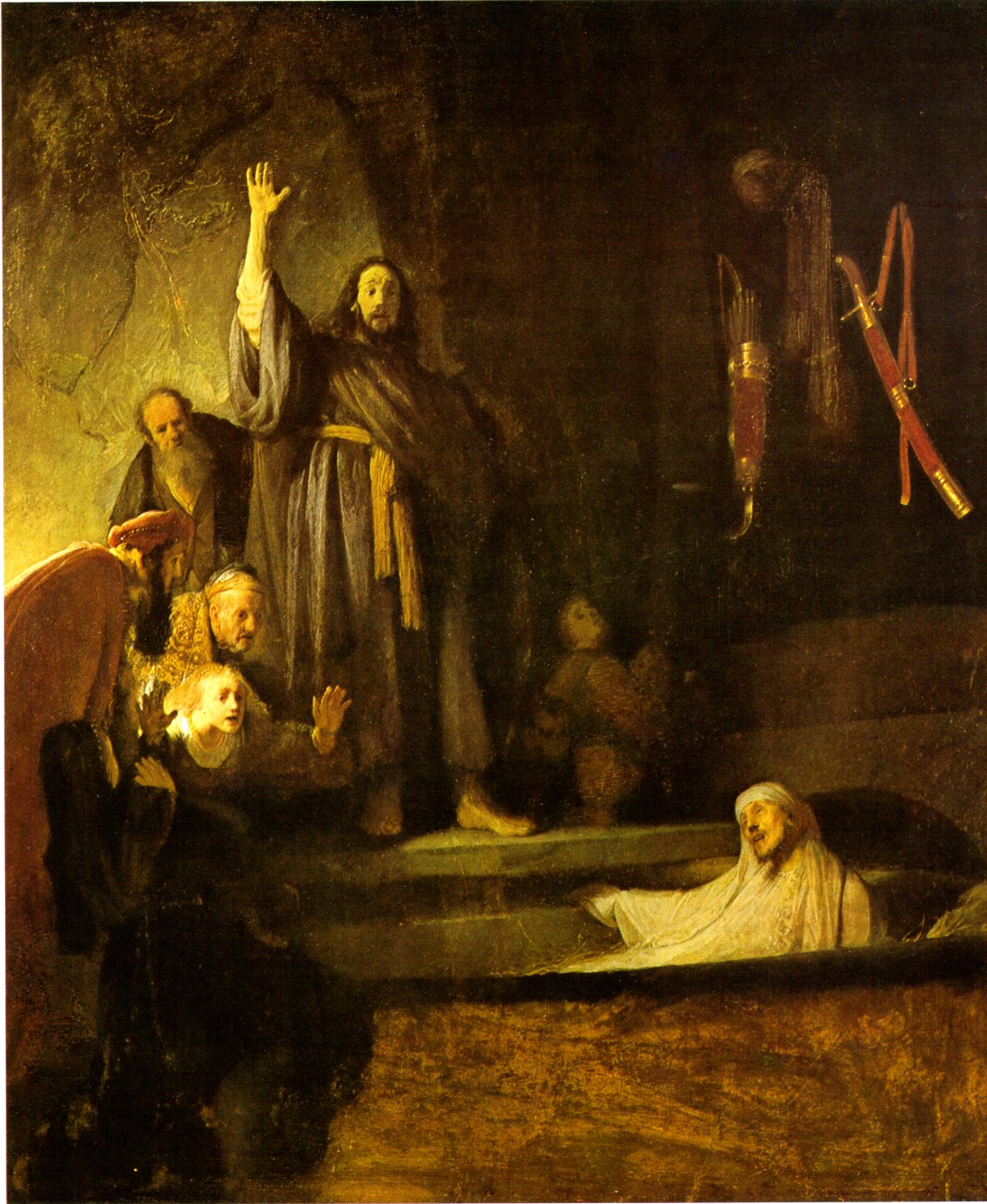
Then the third term, translated "miracles", can just as easily be translated "workings". This term refers to a type of miracle whereby God may use ordinary events or people to do extraordinary things. Physical healing is one of the most common examples of this type of miracle. God can choose to use the body's own immune system to eradicate disease or reanimate dead people to come back to life - just as Jesus did with Lazarus. "Workings" are the most practical-type of miracle that are not so much designed to "shock and awe" as they are to meet a personal and practical need. 

Now with all three of these types of miracles, God includes some type of visible manifestation to vindicate His power and presence and the people whom he has directed to communicate His words. With the inclusion of such visible signs, miracles can be tested and verified. Such a point is worth noting, demonstrating that God's manifestation of such miracles was to demonstrate the truth of what was being said. Though miracles in and of themselves contain no power to convert the human soul, they do work in rendering people without excuse for not believing in God or trusting in Him for their salvation. 

We see then that miracles are possible in this world as part of irregular events that occur in this world.  We have also observed that a miracle, by definition, is an event directly done by God. Both these points show the possibility of miracles and their source. Today's trait included the idea that miracles include some sort of visible accompanying sign that verifies the reality of the One true and living God, the messenger and the message being conveyed. This final point shows that miracles are not just things that are imagined in the mind. Rather a true miracle can be readily identified as a genuine event occuring in history. 

Tomorrow we will consider one last characteristic that will complete our overall answer to the question: what is a miracle?

Sunday, November 23, 2014

What is a miracle? An event directly done by God

Exodus 34:10 "Then God said, “Behold, I am going to make a covenant. Before all your people I will perform miracles which have not been produced in all the earth nor among any of the nations; and all the people among whom you live will see the working of the Lord, for it is a fearful thing that I am going to perform with you." 

Introduction and Review
In yesterday's post we began answering the question: what is a miracle? We proposed the first part of the answer: "miracles are by their essence irregular events". In the course of the conversation we proposed the following logical argument:

#1 Irregular events do occur in this world

#2 A Miracle, per our definition, is an irregular event

Therefore miracles can occur in this world

Now this first trait declares the possibility of miracles in this world, however it by itself does not fully answer the question: what is a miracle? Today's post continues on our discussion by proposing a second defining characteristic of miracles: namely that miracles are events directly done by God.

Miracles are directly done by God
God says in the middle of Exodus 34:10 ..."Before all your people I will perform miracles which have not been produced...". The underlined word "produced" is defined in one Hebrew dictionary as always being tied directly to God as the subject doing the "producing", "fashioning" or "creating". Interestingly enough this same Hebrew verb is found in the first verse of the Bible, Genesis 1:1, where we read: "In the beginning God created the heavens and the earth". Whenever we consider the kind of activity God is doing here in relationship to the created order when it comes to miracles, we can use the word "direct" to explain such activity.

In scripture, God's interraction with His creation can be described under two general headings. The first is what Bible teachers call "providence", meaning God's "indirect" Sovereign influence exercised through events, the wills of men and physical processes. God's Providential activity includes the use of secondary agents such as people to achieve His purposes. Thus God's activity in this world, as it relates to providence, is what we could term "indirect". 

A miracle on the otherhand involves God's "direct" involvement with His creation.  What can be interesting of course is when God performs a miracle through the use of ordinary people and situations. Why is that interesting? Because for those people who have by grace through faith trusted in Jesus for their salvation, a miraculous intervention by God will be recognized as such. However, for the unbeliever, when looking at the same event, they may only see the natural occurrence of the thing and conclude it to be nothing more than an anomaly or coincidence. 

The literature on the subject of miracles often emphasizes that true miracles occur in specific contexts and for specific purposes. When God wrought forth miracles in the Bible, they always occurred, to borrow a term from Dr. William Lane Craig, in "religiously significant contexts". God's direct intervention in the affairs of people and events is a reminder to us that He is The Personal as well as The Powerful God revealed in the Bible. Thus, from our brief survey of scripture, we can define a miracle as an irregular occurrence that is done directly by God. 

I request patience from my readers, being that we are building to an overall answer to the question about miracles. This current series is attempting to equip the Christian reader to deal with the skeptical and cynical age in which we live. Tomorrow we will consider another description that aids in answering the question: what is a miracle?

Saturday, November 22, 2014

What is a miracle? Irregular Events that are possible in this world


Exodus 34:10 "Then God said, “Behold, I am going to make a covenant. Before all your people I will perform miracles which have not been produced in all the earth nor among any of the nations; and all the people among whom you live will see the working of the Lord, for it is a fearful thing that I am going to perform with you."

Introduction:
How do we define the word "miracle"? This will be the aim of today's blog as we explore some of the major scriptures that speak on the subject of the miraculous. Below I will put forth some of the key scriptures that mention the miraculous and then propose headings that will aid in arriving at answering the question: What is a miracle? 

Miracles are irregular events
In the opening verse of today's post, God indicates that He is going to "perform miracles that have not been produced in all the earth nor among all the nations." The Hebrew word translated "miracle" is found over 70 times in the Old Testament and is defined by various Hebrew dictionaries as referring to something that is difficult to do, beyond one's ability or treated as a distinguished and separate activity. We could summarize this idea of "miracle" by noting that it is an extremely irregular event. This of course is only one facet of attempting to arrive at a Biblical definition of a miracle. Apologist Dr. Norman Geisler notes in his "Baker Encyclopedia of Christian Apologetics", page 472: "In addition to its dimensions, a true miracle has distinguishing marks. The most basic is that a true miracle is an exception to natural law. Natural laws are regular, predictable events, but miracles are special, unpredictable events." Geisler goes on in noting additional attributes of the miraculous that can be helpful in answering our question regarding the definition of a miracle: "a true miracle also produces results; always bring glory to God, bring good to the natural world" and "true miracles never fail." 

An example of how the reality of the miraculous can demonstrate God's existence
Another Christian apologist, Dr. William Lane Craig, refers to miracles as "naturally impossible events", meaning that no natural processes can bring about what is otherwise a miracle. Although I'll be using the phrase: "irregular event", Dr. Craig's idea communicates essentially the same idea as mine. In using Dr. William Lane Craig's discussions on miracles and their place in the course of naturally occurring events, we can propose a sample argument for God's existence. 

Take for example Jesus' resurrection from the dead. Known physical laws and processes describe for us a physical reality in which we should not expect dead men to rise from the dead. Yet Jesus' resurrection from the dead is among the most established events in all of human history. Thus, in noting the historical reality of Jesus' resurrection, we can only conclude that it is a miracle, and that in being a miracle, a non-natural, albeit a "Supernatural" cause is behind Jesus' resurrection- namely God Himself. The logic for this line of thinking may go something like this:

#1 Miracles are non-natural events that are naturally impossible events. Only natural events that are naturally possible can occur if in fact the God of the Bible does not exist

#2 History's task is to recount all events that occur, including naturally possible & naturally impossible events

#3 The Gospel records document Jesus' physical resurrection and have been shown under close scrutiny to be reliable documents

#4 Jesus resurrection was a miraculous event that could be classified as occurring as a result of non-natural causes

#5 Jesus resurrection from the dead is a miracle that did occur in history

Therefore, since non-natural events, as well as natural events do occur in our world, and being that non-natural events (such as Jesus resurrection) has been shown to occur, then it only stands to reason that the God of the Bible exists. 

Some further thoughts on "irregular events" and why miracles can be legitimately considered as part of our world This point about irregularity is important because so many skeptics will say that miracles are impossible, being that in the normal course of human experience, no such event can happen? However, if there are irregular events that can occur in history, which may not be experienced regularly by human beings, then does that rule out the miraculous?  

For instance, when I lived in central Florida, there was one year where the storm paths of three hurricanes in once season crisscrossed over the very neighborhood where we lived. For even one hurricane to make it that far inland into central Florida had not occurred in 40 years. Imagine the less likelihood of three hurricanes and their storm paths all crisscrossing one another in one season? 

Are we saying that this highly irregular pattern of hurricanes constitutes a definite miracle. Hardly. There are obviously other traits that need to be considered before saying something is a definite miracle. Consider the following logical statement:

#1 We see the possibility of irregular events occurring in the world; 

#2 and miracles are by definition irregular events 

Therefore, it can be rightly concluded that miracles can occur in this world. 

Closing thoughts for now
In beginning to answer the question: what is a miracle? We have proposed thus far that miracles by their essence are events that occur irregularly. This point establishes the possibility of miracles. Tomorrow's post will discuss a second trait that can be used in answering the question: what is a miracle?

More tomorrow....