Translate

Thursday, June 2, 2016

The B.I.B.L.E is the book for me

2 Timothy 3:16-17 "All Scripture is inspired by God and profitable for teaching, for reproof, for correction, for training in righteousness; 17 so that the man of God may be adequate, equipped for every good work."

Introduction:
I can recall growing up as a child and singing in Sunday School: "The B.I.B.L.E.". It went something like this: "The B.I.B.L.E, yes that's the book for me, I stand alone on the word of God, the B.I.B.L.E.". In our last post we considered what is meant by the term "Holy Bible". Today I want to look further into the character of the Bible itself by taking that acrostic "B.I.B.L.E" and briefly express why it should not only be the book for me, but also for you. 

Book of God
This was the primary focus of yesterday's post. As the "Holy Bible", the Bible is God's book. Henceforth it is holy because it is set-apart as unique from all other religious and non-religious books. It is also holy because of its Divine authorship. Then finally, the Bible is the Holy Book of God due to the fact the like the nature of its author, it contains no errors. The Baptist Faith and Message 2000 states: "The Holy Bible was written by men divinely inspired and is God's revelation of Himself to man. It is a perfect treasure of divine instruction. It has God for its author, salvation for its end, and truth, without any mixture of error, for its matter. Therefore, all Scripture is totally true and trustworthy."

Inspired by God
Inspiration is the act whereby God places the revelation of His mind to men into the words of men. Passages such as 2 Peter 1:20-21 and 2 Timothy 3:16 speak to this point. Under the heading of inspiration we can include other "in" words: "inerrant" and "indestructible".

Book of men
This third reason for why the B.I.B.L.E is the book for me is because it is a book of men. What do I mean by this? It is important to realize that in as much as the Bible is the Book of God revealed by God, it is a book of men through which God so composed His words. Just as the gulf stream runs its course from the Atlantic into the Gulf of Mexico, affected by the mighty ocean and yet at the same time affects storms blowing in from East to West, so we see the mystery of God's Sovereignty and human volition working together in the production of scripture. As a book of men, the Bible is the only international book that claims to be Divinely inspired. It is written in multiple languages, on multiple continents and covering nearly two millennia with respect to its authorship. God saw fit to use 40 different people to ensure that His message would reach as many people as possible. 

Living Book
The Bible is the Book of God, Inspired and is also a Book - containing books - Divinely inspired through men (hence "a Book of men"). But lets add a fourth thought - namely, the Bible is a living book. Passages such as Isaiah 34:16 and Hebrews 4:12 tells us that the Bible is not a static book - but an influencing, living, breathing book. The Person of the Holy Spirit oversaw its composition through the 40 authors and ever-attends in its preaching and teaching. I may read all other books which tell me how to live, but the Bible is the only book that can live through me.

Exalts Jesus Christ
I love the final sentence of the BFM 2000 concerning the Bible: "All Scripture is a testimony to Christ, who is Himself the focus of divine revelation." All other so-called holy books claiming to be Divinely inspired or about Jesus refer to Him, but do not focus on Him. The Book of Mormon may mention their version of Jesus here and there, however, Jesus is more like a footnote to their portrayal of history. Moreover, the Book of Mormon proceeds about 3/4 of the way through before one even gets to see Jesus - which is a different Jesus altogether when read against the backdrop of Mormon doctrine. The Bible on the other hand from Genesis to Revelation points to and focuses upon Jesus Christ. Think about it in this way:

The Law points to Jesus
The historical Books prepare for Jesus
The poetic books praise Jesus
The prophetic books predict Jesus
The Gospels portray Jesus
The Acts preach Jesus
The epistles explain Jesus
The Revelation exalts Jesus.

These five reasons are why the B.I.B.L.E is the book for me. I pray they may be the reasons for the Bible to be the book(s) for you too. 

Wednesday, June 1, 2016

What is meant by the term: "The Holy Bible"

2 Peter 1:16-21 For we did not follow cleverly devised tales when we made known to you the power and coming of our Lord Jesus Christ, but we were eyewitnesses of His majesty. 17 For when He received honor and glory from God the Father, such an utterance as this was made to Him by the Majestic Glory, “This is My beloved Son with whom I am well-pleased”—18 and we ourselves heard this utterance made from heaven when we were with Him on the holy mountain. 19 So we have the prophetic word made more sure, to which you do well to pay attention as to a lamp shining in a dark place, until the day dawns and the morning star arises in your hearts. 20 But know this first of all, that no prophecy of Scripture is a matter of one’s own interpretation, 21 for no prophecy was ever made by an act of human will, but men moved by the Holy Spirit spoke from God.

Introduction
The first sentence of the Baptist Faith & Message 2000 reads as follows: "The Holy Bible was written by men divinely inspired and is God's revelation of Himself to man." When the Apostle Peter above was recounting by memory, through the Holy Spirit, his experiences with the Lord Jesus Christ - he tied the revelation of Jesus Christ to the revelation of scripture. Undoubtedly the Bible is unique. It is authoritative. The scripture carries a weight unlike any other book - whether it be religious or otherwise. 

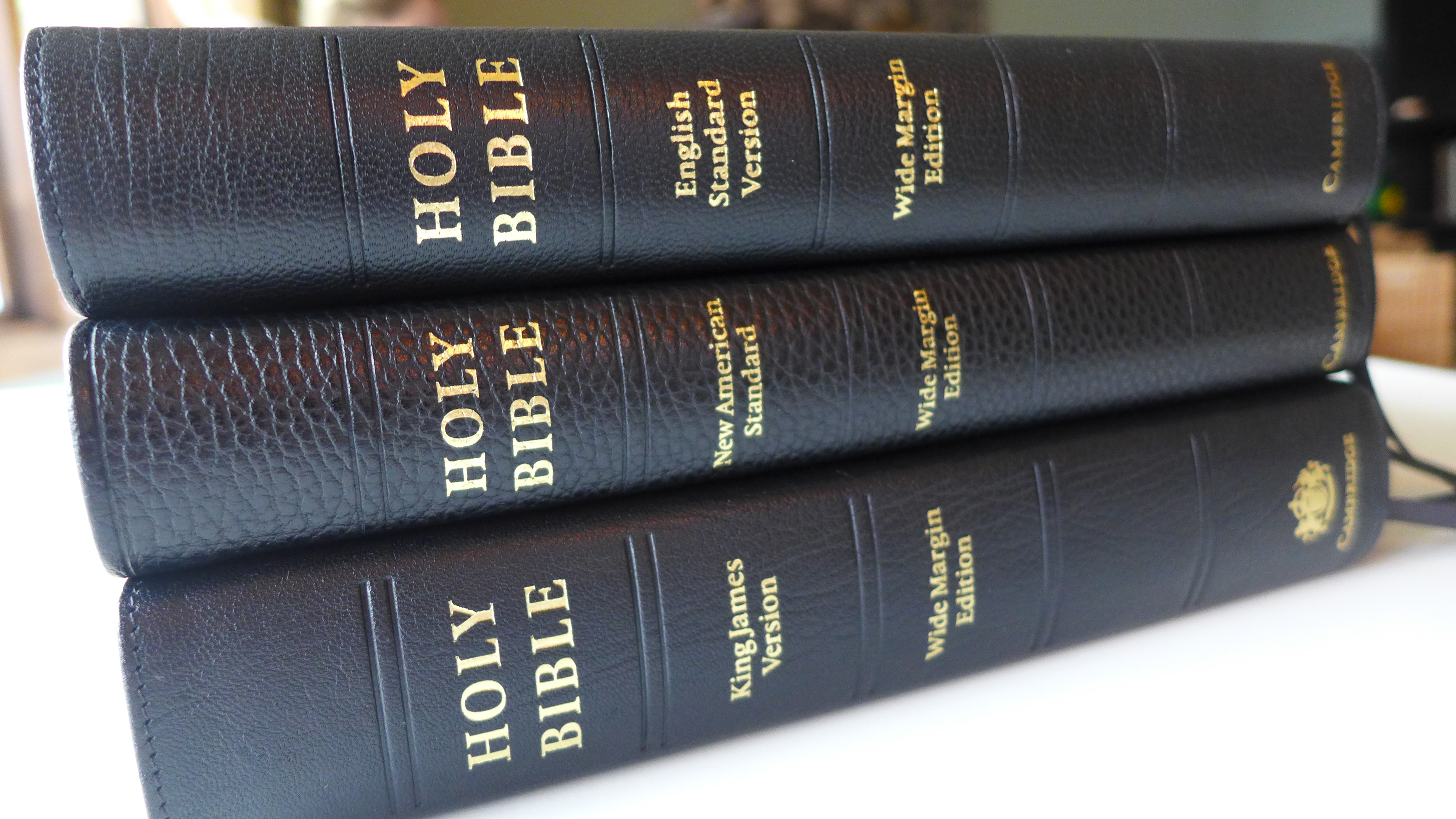
I am sure readers have seen on the spines of Bibles or on the cover the following words: "The Holy Bible". What is meant by this phrase "The Holy Bible"? The Baptist Faith and Message 2000 sees fit to begin its first article on the scriptures by right-away using this familiar but perhaps not-often-thought of phrase. Today's post will aim to unpack what we mean when we say the Bible is a book that alone is worthy of the title: "The Holy Bible".

1. The Holy Bible is a "set-apart" book 
Anything holy means to be set-apart
The idea of being "set apart" is the most common way of referring to the concept of holiness. The Bible is really a collection of 66 separate books individually revealed by God to His people through the Biblical authors (i.e inspiration), who in turn received them, recognized them as such (i.e canonization) and henceforth has been regarded as the final authority of faith and practice.  Throughout the history of the revelation, inspiration and canonization of the books of the Bible, there has been a "setting apart" - first by God and then by God's people. As Dr. Loraine Boettner writes:  "Hence we can hardly over-estimate the importance of a correct doctrine of scripture."  

2. The Holy Bible alone is a Divinely revealed book
This second point deals with the source of the scriptures - namely God Himself. The Baptist Faith and Message notes in its first sentence that: "...and is God's revelation of Himself to man." To elaborate on this particular sentence, the BFM 2000 makes further statements such as: "It has God for its author..." and "It reveals principles by which God judges us" and "All Scripture is a testimony to Christ, who is Himself the focus of Divine revelation."  

These sentiments capture what Peter writes in 2 Peter 1:20-21 "But know this first of all, that no prophecy of Scripture is a matter of one’s own interpretation, 21 for no prophecy was ever made by an act of human will, but men moved by the Holy Spirit spoke from God." So when we say the Bible is "The Holy Bible", we refer to it as set-apart - in a class by itself; as well as it being Divinely inspired and authored by God as He worked through the nearly 40 human authors. Now notice a third meaning of this term "Holy Bible".

3. The Holy Bible alone is a set of books without error
To revisit briefly what we mean by the term "holy", at times a holy thing can refer to that which is set apart for God's use. On other occasions, a "holy thing" speaks of how it is sourced in God Himself. In other words, whatsoever comes in contact with God or that is sent by God comes with a measure of His approval. The scriptures come without measure. This third use of "holy" in the phrase "Holy Bible" speaks of its purity - i.e inerrancy. 

The Baptist Faith and Message asserts in three different ways this important truth of the Bible being without error as originally given. 

In the second sentence we read this phrase: "It is a perfect treasure of Divine instruction". From the scriptures given below the BFM's first article, texts such as Psalm 19:7 would reflect this type of wording. 

The third sentence states this same truth negatively: "without any mixture of error, for its matter". This statement tells us what the Bible is not: namely a book prone to error (which touches on what is sometimes called "infallibility). Then the BFM 2000 rounds out its three statements on inerrancy with a final positive statement: "Therefore, all scripture is totally true and trustworthy".  

Joseph D. Wooddell in his contribution to a recent commentary on the Baptist Faith and Message 2000, notes: "The question of whether the doctrine of inerrancy is reasonable seems easy enough to answer. If God is maximally perfect and has written a book, then that book probably would be inerrant. It certainly seems reasonable that a maximally perfect person could write such a book. This assumes that such a person would have character, knowledge, and power for doing so. But, of course, this is precisely what orthodox Christians believe about God. So, on an orthodox construal of God, it seems reasonable to believe scripture to be inerrant."

Closing thoughts
Today we traced out what is meant by the commonly seen phrase: "The Holy Bible". We noted three observations:

1). The Holy Bible is a set apart book
2). The Holy Bible alone is Divinely authored
3). The Holy Bible alone is without error

Tuesday, May 31, 2016

The importance of spiritual authority in the Christian life and the local church


2 Timothy 3:16-17 "All Scripture is inspired by God and profitable for teaching, for reproof, for correction, for training in righteousness; 17 so that the man of God may be adequate, equipped for every good work."

Introduction:
Who is in charge? To whom or to what standard do people answer? No one considers the importance of authority until there is either a decision to be made, a crisis or a major transition in life. Today's post will attempt to tease out three distinctions with respect to spiritual authority in the Christian life and the local church. When we speak of spiritual authority, it is helpful to consider three headings:

1. God is the Divine Authority
2. The Bible is His definite authority
3. All other authorities are delegated authorities.

God is the Divine Authority
Ultimate authority is possessed by God and God alone. Psalm 47:7-8 reminds us - "For God is the King of all the earth;Sing praises with a skillful psalm. 8 God reigns over the nations, God sits on His holy throne." Such authority is called by scripture and Bible teachers "God's Sovereignty". Psalm 103:19 for example states - "The Lord has established His throne in the heavens, And His sovereignty rules over all." In the New Testament we find this same truth echoed in 1 Timothy 6:15 - "which He will bring about at the proper time—He who is the blessed and only Sovereign, the King of kings and Lord of lords." The Sovereignty of God is uncontested in the Bible. Most people pay lip service to the idea of God's Sovereign, ultimate authority. People have no problem with a God running the affairs of the world as long as they still retain their own, personal, self-perceived autonomy. The moment God's authority is brought to bear on a personal level - people begin to shift in their seats. Famous general George Patton once quipped: "All human beings have an innate resistence to obedience." 

The defining authority of all faith, practice and life is the Bible
When we speak of God's Sovereign final authority, how is it that such authority is brought to personally bear directly on a person? Certainly God delegates His authority to civil governments to exercise justice and maintain order in societies (Romans 13). A city government can enact laws to tell a man to not spit on the sidewalk, however civil government cannot convince the man that this is the preferrable course of action. At best, government can curb evil behavior and keep crime to a tolerable minimum. The Bible alone has the authority to not only prescribe right behavior, but is vested with God's authority and power to change lives. This is why we can say that Bible has definite authority. We will say more about this in a moment. For now, we have before us God as our Divine authority and the Bible as our definite authority. However, there is a third heading to consider when speaking about spiritual authority.

Delegated authorities derive their authority from the Bible and God
When we come to the church - who is in charge? What holds sway over the conscience of a man - the one place where right and wrong are inscribed? Such authority can be deemed final authority when it wields the same type of authority as God Himself. Pastors are delegated the authority by Christ to lead the church - however they are not the final authority. Pastors are accountable to the churches they shepherd. 

The congregation of God's people function as God's delegated governing authority - however churches need to be led by competent, Biblical shepherds.  Both types of leadership and authority co-exist in a local church as delegated authorities with different roles - and yet neither one can be deemed "final authority". 

Further thoughts on the Bible as the defining authority of faith and life
Having observed the distinctions between Divine, definite and delegated authorities, lets speak further on the second of these - namely that the Bible is God's definite authority. When we say the Bible is God's definite authority, by what do we mean?

First and foremost, the Bible is deemed "The Word of God". The title "Word of God" means that the Bible's 66 books are God's voice in written form. 

Secondly, throughout the Bible on hundreds of occasions we find the phrase: "thus says the Lord" closely attached to the words of the prophets. 

Thirdly, no other book or written document in the world functions in the unique capacity of final authority like the Bible. The Baptist Faith & Message 2000 defines in more precise terms what is meant by the Bible being called "the final authority of all faith, practice and life: "Therefore, all Scripture is totally true and trustworthy. It reveals the principles by which God judges us, and therefore is, and will remain to the end of the world, the true center of Christian union, and the supreme standard by which all human conduct, creeds, and religious opinions should be tried. All Scripture is a testimony to Christ, who is Himself the focus of divine revelation." The Bible is thus the only authority that is final. It is definite.1

Closing thoughts:
We briefly considered the subject of spiritual authority in today's post. we noted the following distinctions:

1. God is the Divine Authority
2. The Bible is His definite authority

3. All other authorities are delegated authorities.

As we grasp the distinctions between these three and how they relate to one another, we will lead better and more effective Christian lives as Christ-followers and churches. 

Endnotes:
1. Theologian Charles Hodge in Volume 1 of His Systematic Theology, page 159, summarizes beautifully how the Bible functions as the written form of God's authoritative voice: "Prophecy, i.e., what a prophet said, was not human, but divine. It was not the prophet’s own interpretation of the mind and will of God. He spoke as the organ of the Holy Ghost."

Hodge then later writes: What the Prophets said God said....it is another decisive proof that the sacred writers were the organs of God in the sense above stated, that whatever they said the Spirit is declared to have said. Christ himself said that David by the Spirit called the Messiah Lord. (Matt. 22:43.) 

David in the 95th Psalm said, “To-day if ye will hear his voice, harden not your heart;” but the Apostle (Heb. 3:7), says that these were the words of the Holy Ghost. 

Again, in (Hebrews) ch. 10:15, the same Apostle says, “Whereof the Holy Ghost also is a witness to us: for after that he had said before, This is the covenant that I will make with them after those days, saith the Lord.” Thus quoting the language of Jeremiah 31:33, as the language of the Holy Ghost."

Hodge then concludes his argument demonstrating how the Bible is the final authority of all faith, practice and life, insofar as it functions as God's verbalized authority to men in general and the church in particular: In Acts 4:25, the assembled Apostles said, “with one accord,” “Lord thou art God Who by the mouth of thy servant David hast said, Why did the heathen rage?” In Acts 28:25, Paul said to the Jews, “Well spake the Holy Ghost by Esaias the prophet unto our fathers.” It is in this way that Christ and his Apostles constantly refer to the Scriptures, showing beyond doubt that they believed and taught, that what the sacred writers said the Holy Ghost said."


Friday, May 27, 2016

A children's lesson: How Everyone Knows About the God of the Bible

Psalm 8:2 “From the mouth of infants and nursing babes, You have established praise….”.
 
Introduction: How children know about God, how they typically react to Jesus and why that is important
Over the past two days we have considered God’s power and goodness revealed in general revelation and the specific revelation of Himself in Jesus Christ and the scriptures. But how can one communicate such vital truths to children? As we reflect on the above opening verse, a very important point is made about how knowledge about God is an inborn knowledge. When this knowledge gleaned from general revelation is brought into contact with the remarkable life and ministry of Jesus Christ - the connection is made that the God of sacred scripture was revealed in the Person of Son incarnating Himself in human flesh. 

Amazingly, little children oftentimes are fascinated by Jesus - even if they are not yet to the point to where we can say they have actual saving faith operating inside of them. Such little ones (at least among Baptist people) are said to have not yet reached the age of accountability - which is defined as that point where a child connects "right and wrong" as having to do with God. Jesus connects this link by citing Psalm 8:4 in Matthew 21:15-16 during His triumphal entry: "But when the chief priests and the scribes saw the wonderful things that He had done, and the children who were shouting in the temple, “Hosanna to the Son of David,” they became indignant 16 and said to Him, “Do You hear what these children are saying?” And Jesus said to them, “Yes; have you never read, ‘Out of the mouth of infants and nursing babies You have prepared praise for Yourself’?”

I have marveled over the years when hearing small children express profound truths about God that is undoubtedly operating at a deeper level than their immediate awareness and reason. Children are the most open to such properly basic knowledge due to the fact that they are operating under what Bible teachers call “common grace”. When we talk about properly basic knowledge, we refer to how we know things apart from arguments and evidence. Common grace is God’s goodness extended to all people whereby that know about Him, even though such grace does not lead anyone to trust in Jesus. 

Such grace operates among all people and includes such things as knowledge about God’s existence, awareness of right and wrong, knowledge about the external world and other such information that does not require argument and evidence to show it as true knowledge (see Psalm 19:1-6; Acts 14:17; 17:22-25; Romans 1:18-20; 2:15).

The knowledge about God ought to be discussed with children, since again, they are the most open. When we consider how we would communicate the posts of the last couple of days with children who are elementary age, where would we begin? Below is a sample lesson that would take the 1st sentence of the Baptist Faith and Message and then break down the posts of the last two days into a format that small children could understand.

Children’s Lesson: How everyone knows about the God of the Bible 

Basic idea: God talked to people about Himself through the Bible. (Note: This basic idea breaks down the first sentence of the Baptist Faith and Message 2000 which reads: “The Holy Bible was written by men divinely inspired and is God’s revelation of Himself to man”.)

First main question: So children, what can we say about this God?

Follow-up question#1: How many of you know it is wrong to lie? Is it wrong to pick on your brother or sister? Should you always be thankful? Is it better to be mean or nice to other people? 


Think about this children, the fact that you know that lying is wrong, or that it is better to be nice to people shows that you know deep down right and wrong. This is because the God of the Bible is real, He is what we call a Good God.

If I had all of you children draw the straightest line possible on a piece of paper, could you do it? Now if I hold a ruler next to each of your lines, do you think your lines would match the ruler. God as a good God is how we know what is good and bad. 


Follow-up question #2: Have you ever looked at the stars at night? Does the sky seem really, really big to you? How big is big? Did you know that God is so big and so strong that He made everything we see, including you?

Conclusion about the kind of God we find in creation and in the Bible: God is all-strong and all-good. Every child and adult knows about God being all-strong and all-good. But how can you know this God?

Second major question: So how does Jesus show us this all-strong, all good-God?

Point #1: Jesus was so awesome in how He made people feel better and no longer be sick. Jesus did the things that only God could do and even claimed Himself to be God. Jesus was a man who was also God at the same time.

Point #2: Jesus’ dying on the cross shows how good God is. God in His love gave Jesus.


Point #3: When Jesus became alive three days after dying on the cross, He showed that the God He claimed to be and the God He talked about to others is real!


Closing thoughts: The God of the Bible is shown through and by Jesus. This same God made everything. God’s goodness is why you and I know right and wrong to be true. If you will trust in Jesus, you will know God and love God.
 

Thursday, May 26, 2016

P2 The God of the Bible Revealed in General Revelation and in Jesus Christ


Psalm 19:1 “The Heavens declare the glory of God, and the firmament shows forth His handiwork.

Psalm 19:7 “The Law of the Lord is perfect converting the soul”

John 1:18 “….He has explained Him”.

Introduction:

In yesterday's post we began considering the God of the Bible. We noted that God's essential nature as an all-powerful and all-good God can be discerned from observations in both the external world and the moral order. One of my favorite designations for the Bible is “God’s Book”. The Baptist Faith & Message 2000 begins its first article with these words: 

“The Holy Bible was written by men divinely inspired and is God’s revelation of Himself to man.” As one goes down through the rest of article, the emphasis is plain: God is the central character and focal point of sacred scripture. The BFM 2000 describes God as the Bible’s “author”. 

Further reading yields that by the principles of the Bible, God “judges” men’s hearts. Finally, all scripture is a testimony to Christ, who is Himself the focus of Divine revelation. 

We had also observed that in as much as the Bible is “God’s Book”, we need to also know the “God of the Book”. The above three verses tell us three main truths about this God: 

1). His existence is revealed in the external world and the moral realm

2). He expresses Himself in scripture 

3). He is explained through Jesus Christ. 

God's existence is fundamental to saving faith, along with trust in the specific revelation He expresses in the Bible and in the Person and work of Jesus Christ. Hebrews 11:6 states: "And without faith it is impossible to please Him, for he who comes to God must believe that He is and that He is a rewarder of those who seek Him."

Today we are going to present a couple basic arguments for God's existence, along with showing how they connect to God's revelation of Himself in Jesus. 
  
1. God's power is observed in the external world by noting how the universe had a finite beginning
When we consider that the universe is not eternal, but rather began a finite time ago, we can propose the following argument for God’s existence:

Premise #1: Anything that begins to exist, has a cause for its existence

Premise #2: The universe began to exist

Therefore: The universe has a cause for its existence.

This first argument, though not telling us directly the nature of the cause of the universe, nonetheless suggests that the cause of the universe had to be outside of and prior to its beginning. Other arguments can be brought in to demonstrate that this cause is Personal, Eternal and Self-sufficient. 


The way we know that the cause of the universe is Personal is that one cannot get a finite effect (such as our universe) from an infinite cause unless that cause is endowed with the ability to choose when the universe would begin. The universe is an impersonal, material, finite reality. The cause of the universe would then need to be Personal, immaterial and infinite in power. These reflections upon the external world – such as our universe – lead to the conclusion that this Personal, immaterial all-powerful cause is God. 

2. God's goodness is observed in the moral order as the Lawgiver and source of objective moral values and duties
But now what about the moral order that we see in the universe – which is to say – the reality of objective moral values and duties? Again we can offer what is called the “moral argument” for God’s existence:

Premise #1: If God does not exist, objective moral values and duties do not exist

Premise #2: Objective moral values and duties do exist

Therefore: God exists

If people are asked whether or not it is wrong in all places, all times, regardless of cultural context, to harm little children – what will people say? Universally the answer would be: “of course it wrong”. Or again, do people believe in fairness, tolerance, the important of helping out others? When pressed, people will be heard saying things like: “that’s not fair” or “racism is wrong” or be outraged when witnessing a crime and feel the compulsion to decide whether or not to intervene. 


These moral impulses are hardwired into the fabric of humanity. Moreover, humanity has such values because they derive from a Moral Lawgiver. C.S Lewis once remarked that he would not know what a crooked line was lest there be a straight line with which to compare it. The obligation to “do what is right” cannot be explained by scientific hypotheses such as biological evolution. For the sake of argument - even if somebody should subscribe to belief in biological evolution through natural selection and mutation - evolution only serves to explain the biological survival of the fittest, rather than truth. In short, biological evolution has no place for truth - since its aim is not to discover truth, but only to describe what is seen presently and assuming that similar processes were operating in the far past to bring about life. 

On a worldview that believes only in the reality of the natural world, since truth itself is an immaterial property, then one subscribing to naturalism cannot know whether or not their naturalistic worldview is true. God’s existence as a Good God can only explain why there are moral obligations and ethical principles. 

Hence by considering nature and the moral code that the created order has contained within it – imposing itself upon us, we can conclude that the God of general revelation is the all-powerful creator, that is an all-good God.

Romans 1:18-20 expresses the first conclusion, namely that what can be known of God with respect to His Deity and power, is made known to all men. Romans 2:14-25 expresses the second conclusion drawn from natural theology – namely that the moral law written on the heart is evidence from the moral realm that this God that exists is not only all-powerful, but also all-Good.

Connecting God's general revelation of Himself as the All-Powerful, All-good God to the revelation of Himself in Jesus
As we noted at the beginning of this post, God has expressed Himself specifically in the Bible. The Bible is the revelation of Himself to man - as so stated in the Baptist Faith and Message. With that said, the Bible's central character is none-other than the Person of Jesus Christ. 


The remarkable ministry, claims and works done by Christ prefaced His historic death and resurrection from the dead. When we consider the God whom Jesus proclaimed in His earthly ministry as being not only His Father, but also He Himself sharing in the same nature with the Father - Jesus claims nothing less than full-deity (see John 5:18-24). 

Jesus' resurrection demonstrates in both a historical and theological way that the God He proclaimed and claimed to be the incarnation thereof does indeed exist. Henceforth, in Jesus we find general revelation's implicit claims about God and the Bible's specific revelation of God shown to be about the same God. One scholar, Dr. William Lane Craig, has summarized all of this in a fine argument, with which I will close out today's post:

Premise #1 There are four facts which are widely accepted by historians and scholars of different persuasions: Jesus' honorable burial; the discovery of the empty tomb; His post-mortem appearances & sudden faith of the disciples

Premise #2 The hypothesis that God raised Jesus from the dead is the best explanation of these facts

Premise #3 The hypothesis that God raised Jesus from the dead entails that God exists

Therefore: God exists

Wednesday, May 25, 2016

P1 - The God of the Bible Revealed in General Revelation


Psalm 19:1 “The Heavens declare the glory of God, and the firmament shows forth His handiwork.

Psalm 19:7 “The Law of the Lord is perfect converting the soul”

John 1:18 “….He has explained Him”.

Introduction:One of my favorite designations for the Bible is “God’s Book”. The Baptist Faith & Message 2000 begins its first article with these words: 


“The Holy Bible was written by men divinely inspired and is God’s revelation of Himself to man.” As one goes down through the rest of article, the emphasis is plain: God is the central character and focal point of sacred scripture. The BFM 2000 describes God as the Bible’s “author”. 

Further reading yields that by the principles of the Bible, God “judges” men’s hearts. Finally, all scripture is a testimony to Christ, who is Himself the focus of Divine revelation. In as much as the Bible is “God’s Book”, we need to also know the “God of the Book”. The above three verses tell us three main truths about this God: 

1). His existence is revealed in the external world and the moral realm

2). He expresses Himself in scripture 

3). He is explained through Jesus Christ. 

Today’s post wants to consider the first of these - namely, that the God of the Bible is the same God that is discerned from the testimony of the external world and the reality of objective moral values and duties.

Why begin with “The God of the Book” before getting to the “Book of God”
What kind of God is this God? Undoubtedly we have the special revelation of scripture and the fullness of revelation in Jesus Christ to tell us the specifics about God. However, we also understand that God has expressed Himself in a general, non-redemptive form of revelation that Bible teachers call "general revelation". 

With the increasing tides of secularism and spiritualism, the God of the Bible needs to be explained for what and Who He truly is: the One All-Good, All powerful God. The exercise of discerning God's nature and characteristics from His general revelation in the external world and the moral realm is called "natural theology". 

Prophets of the Old Testament like David in Psalm 8 and 19 and the New Testament Apostles like Paul in Acts 14 and 17 argued for the existence and nature of the true God from observations gleaned from general revelation. Their strategy was to engage their audiences, who had never heard the special revelation of God in the Bible, with information they already had about God. Romans 1:18-20 and 2:14 state that all men born into this world have an inherent knowledge of both the power and moral character of God. Thus the pattern of beginning with God's general revelation and the insights of natural theology is one that is advocated by the Bible. 

Before we can talk about “God’s Book”, we must first talk about “The God of the Book”. 
As mentioned, the task of drawing conclusions from God's general revelation in both the external world and the human heart what we call “natural theology”. There is an amazing amount of truth we can glean about God, from creation and the moral make-up of man independent from and yet which complements the authoritative Divine revelation of the scriptures. 

Such inferences do not lead one to knowing God, but rather knowing about God. Two of several “arguments” for God’s existence can be drawn from reasonable reflections upon the physical properties external world and the reality of objective moral values and duties. In the next post, we will consider those arguments, their implications and what they tell us about the God of the Book. 

Friday, May 20, 2016

P2 - Five important words that describe the Bible


Genesis 3:1 "Now the serpent was more crafty than any beast of the field which the LORD God had made. And he said to the woman, “Indeed, has God said, ‘You shall not eat from any tree of the garden’?” 

Introduction and Review
Yesterday we began considering five important words or terms associated with describing the nature and character of scripture. As Christians, we need to know that the Bible we carry in our hands is the Word of God.  In today's post we will conclude where we began by focusing in on the two last terms (preservation, illumination) that followed after the three we did yesterday (revelation, inspiration, canonicity).  As we noted yesterday, each of these terms could be given their own post. The point of these two posts is to get into the reader's mind the reliability and sufficiency of the Bible as God's very words.

1. PreservationGod's Providential preservation of the words of the Bible in the hand-copied texts of the Old and New Testament.

We possess more certainty over the words of the Bibles in our possession today as being those originally penned by the Biblical authors than we do of any other ancient document.  Once that original manuscript left the hand of that prophet or apostle, how was its contents preserved as it was copied over and over again? Certainly as the scriptures were copied by hand, minor variations would had entered into the textual stream. However we can be assured that we have the words of God in our manuscripts. Insofar as a manuscript copy and translation represents those words, that copy or translation carries the authority of being God's Word. A whole field of study aims to answer this question.1

Perhaps in illustration I heard one time will aid in this point. Take any dollar bill or paper currency that you have in your possession and ask yourself whether that bill can be used to make a purchase? Of course the answer is yes. That bill is a copy of the original plates on a printing press to produce the bill. Perhaps when you got the paper currency, it was torn, tattered or worn. Despite its condition, that dollar bill is a valuable and carries the authority of a Federal Reserve Note just as much as those original plates. The plates are flawless, and the dollar bill bearing their image carries those flawless elements, despite having tears and signs of use. The authority of such and is for all practical intents and purposes flawless in as much as it represents its original. So it is the same with the copies and translations of the Old and New Testaments. We should have no worries concerning the Bibles we have today - they are the Word of God!  

If God had not guaranteed the preservation of His words down to our day, we would have no idea what He communicated. (Matthew 5:18)  More could be said but we must hasten to the final key term...

2. Illumination - How God the Holy Spirit helps Christians understand the meaning of the Revealed, Inspired, Canonical and Preserved Text

When a Christian is converted by grace through faith, the Holy Spirit enables him or her to understand the meaning of the words of the Bible.  Passages such as 1 Corinthians 2:10-13 and 1 John 2:20,27 give us this promise of the Spirit's ministry in the life of the Christian.  Without the Holy Spirit's work of illumination, I could not preach the Bible with clarity nor could those to whom I preach apply what is preached.  Furthermore, without the proverbial "light-bulb" of understanding given by the Holy Spirit, no Christian could have fruitful study of God's word.2 

Conclusion
As you consider the five terms: Revelation, Inspiration, Canonicity, Preservation & Illumination, you will discover the truth of the matter: the Bible that you and I carry to church and read every week is the Word of God.  I would like to end today's blog with this quote from the Baptist Faith & Message 2000 Article 1 on the Holy Scriptures, of which I affirm: "The Holy Bible was written by men divinely inspired and is God's revelation of Himself to man. It is a perfect treasure of divine instruction. It has God for its author, salvation for its end, and truth, without any mixture of error, for its matter. Therefore, all Scripture is totally true and trustworthy."    

End Notes:______________________
1The scholarly field to which I'm referring is called textual criticism. 
 Without going into too much detail, the thousands upon thousands of copies of manuscripts, both Old and New Testament, can reconstruct the original text in over 99,9% of cases, with no variation in the copies affecting any doctrine or teaching.  

2. Often people will confuse the terms "revelation" and "illumination". It is important to keep those two terms distinct, since God is not giving no new revelations today. Any insights people have into the spiritual realm or in guidance for every day life is a result of the Spirit's illuminating work through the scriptures. Even when we hear God's voice and know what He wants us to do, its because at some point we heard a Biblical- based sermon or read a Bible verse that spoke on that subject.