Translate

Wednesday, November 16, 2016

The kind of heart it takes to pray for the salvation of the unconverted


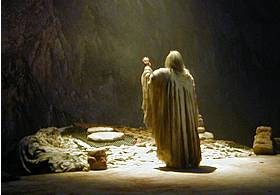
Image result for weeping over the lost
Nehemiah 1:1-4 "while I was in Susa the capitol, 2 that Hanani, one of my brothers, and some men from Judah came; and I asked them concerning the Jews who had escaped and had survived the captivity, and about Jerusalem. 3 They said to me, “The remnant there in the province who survived the captivity are in great distress and reproach, and the wall of Jerusalem is broken down and its gates are burned with fire. 4 When I heard these words, I sat down and wept and mourned for days; and I was fasting and praying before the God of heaven."

Introduction:
Today's post is about the kind of heart it takes to pray for unconverted people. As we approach the book of Nehemiah, we find a Jew by the name of Nehemiah serving in the court of King Artaxerxes Longimanus of Persia. The year would had been around 445 b.c when the events in Nehemiah began to unfold. The great preacher of years past, Alexander MacClaren, comments on Nehemiah's reception of the bad news concerning his homeland:


"So Nehemiah prepared himself for his work by brooding over the tidings with tears, by fasting and by prayer. There is no other way of preparation. Without the sad sense of men’s sorrows, there will be no earnestness in alleviating them, nor self-sacrificing devotion; and without much prayer there will be little consciousness of weakness or dependence on divine help."

Nehemiah had a burden for the city of Jerusalem, otherwise he wouldn't had inquired about its status. As far as we know, Nehemiah had never made a personal trip to Jerusalem. What would cause a man to mourn over a city he had never seen? We must remember that Jerusalem was at the spiritual, moral and historical center of the Jewish world. To find out that it had come into disrepair would mean that one's identity was in immediate crisis. The calling God was preparing Nehemiah to fulfill was being placed upon him. He had to have a broken heart for the city in order to repair its walls. By the time Nehemiah's task of finishing the wall in Jerusalem was done, 52 days would pass. Urgency makes quick and exacting work. 

God uses broken hearts to do His work
Nehemiah was a man of prayer. Scarcely do we travel too far into the book of Nehemiah before we find Nehemiah pausing to pray. His heart was broken by the burden placed upon it. Oftentimes we as American Christians prefer avoidance of pain. We often think that we have arrived in the Christian life when we can face this world of ours without tears and turmoil in our hearts. Such notions are useless when it comes to doing God's kingdom work and praying for His results. Interceding for loss souls is no different.

Psalm 51:17 spells out this principle of brokenness as a tool used by God: "The sacrifices of God are a broken spirit;
A broken and a contrite heart, O God, You will not despise." Nehemiah would not be the first person to weep over the state of Jerusalem. Nehemiah's burden was mainly over its moral and physical state. In Matthew 23:37-39 we find the Lord Jesus looking over the same city - some 475 years later. The city was stately in its appearance. The temple was the Herodian temple, nearly unparalleled in the ancient world. Despite all physical appearances, the very place where Jesus' ancestor according to the flesh, King David, had trod had become spiritually bankrupt. The city had rejected its Messiah. As Jesus would look over it one last time before His crucifixion, we find Him saying the following words:  

“Jerusalem, Jerusalem, who kills the prophets and stones those who are sent to her! How often I wanted to gather your children together, the way a hen gathers her chicks under her wings, and you were unwilling. 38 Behold, your house is being left to you desolate! 39 For I say to you, from now on you will not see Me until you say, ‘Blessed is He who comes in the name of the Lord!’”

He wept with a broken heart. Our Lord wept tears in the days of His sojourn here on earth (Hebrews 5:7). Do we? Do we break over the lost around us? Jerusalem had rejected its Savior, and many, many people in our world today persist in their refusal to bow the knee to Jesus Christ. Sin, Satan and the flesh have blinded them (2 Corinthians 4:1-4). The unbeliever is dead to the things of God (Ephesians 2:1-2). What is required is the living voice of the Savior to call them forth from their tomb of unbelief (John 5:24-25) and to shine light into their dark world (2 Corinthians 4:1-6). The Apostle Paul writes the following words concerning his own heart toward his fellow Jews in Romans 9:1-3 -

"I am telling the truth in Christ, I am not lying, my conscience testifies with me in the Holy Spirit, 2 that I have great sorrow and unceasing grief in my heart. 3 For I could wish that I myself were accursed, separated from Christ for the sake of my brethren, my kinsmen according to the flesh...".

Closing thoughts
If you are a Christian reading this post today, will you allow your heart to be broken for your unsaved loved-ones, friends and co-workers? If you are reading this post and have never trusted in Jesus as your Savior and Lord, will you consider how the Lord endured the cross for your sake. He did so with tears, resolve and a desire to fulfill the Divine will in which He shared. 2 Peter 3:9 states - "The Lord is not slow about His promise, as some count slowness, but is patient toward you, not wishing for any to perish but for all to come to repentance."

Tuesday, November 15, 2016

A short devotional on Jesus: Shepherd and Guardian of souls

Image result for shepherd's crook
1 Peter 2:21-25 "For you have been called for this purpose, since Christ also suffered for you, leaving you an example for you to follow in His steps, 22 who committed no sin, nor was any deceit found in His mouth; 23 and while being reviled, He did not revile in return; while suffering, He uttered no threats, but kept entrusting Himself to Him who judges righteously; 24 and He Himself bore our sins in His body on the cross, so that we might die to sin and live to righteousness; for by His wounds you were healed. 25 For you were continually straying like sheep, but now you have returned to the Shepherd and Guardian of your souls."

Introduction:
Today's post is a brief devotional on Jesus Christ as the Shepherd and Guardian of our souls. What kind of Shepherd is He in these verses written by the Apostle Peter under the inspiration of the Holy Spirit? Consider with me the following thoughts...

1. Supreme example. 1 Peter 2:21
"For you have been called for this purpose, since Christ also suffered for you, leaving you an example for you to follow in His steps."

2. Sinless life. 1 Peter 2:22-23
"who committed no sin, nor was any deceit found in His mouth; 23 and while being reviled, He did not revile in return; while suffering, He uttered no threats, but kept entrusting Himself to Him who judges righteously"

3. Saving substitute. 1 Peter 2:24
"and He Himself bore our sins in His body on the cross, so that we might die to sin and live to righteousness; for by His wounds you were healed."

4. Sovereign security. 1 Peter 2:25
"For you were continually straying like sheep, but now you have returned to the Shepherd and Guardian of your souls."

Closing thoughts:
As you reflect on the above four thoughts, call them to memory throughout your day and thank the Lord Jesus. If you have never trusted in Him for what He did as your supreme example, sinless life, saving substitute and sovereign security; you can do that today. Romans 10:9-10 tells you how you can begin knowing this Jesus as your Savior and Lord - "that if you confess with your mouth Jesus as Lord, and believe in your heart that God raised Him from the dead, you will be saved; 10 for with the heart a person believes, resulting in righteousness, and with the mouth he confesses, resulting in salvation."

Monday, November 14, 2016

Four purposes for the Lord's Supper

Image result for the last supper
1 Corinthians 11:28 "But a man must examine himself, and in so doing he is to eat of the bread and drink of the cup."

Introduction:
I will never forget as a youngster the fascination I had with stereo equipment. The bigger the speaker and the louder the stereo yielded a bigger smile. Whenever it became possible to attach a good stereo to a big t.v screen, what was a smile became a shout of jubilation! Why? Because watching t.v went from a passive activity to a full-fledged experience and event. Supreme audio and video to this day still gives me goose bumps whenever we are getting ready to watch a movie and that bass-rumbling "THX" monicker pops up on the screen.

Whenever God ordained the proclamation of salvation, He did so through the audio of the preaching of His word and the visual aids of feasts and ceremonial ordinances in the Old Testament. It was the scriptures that converted the human soul (Psalm 19:7) and it was the feasts and ceremonies that pictured for the people God's saga of redemption. When Jesus came and the New Testament era began following the Day of Pentecost, one of the Old Testament feasts - Passover, was succeeded by Jesus' institution of His Covenant meal, called by many Christian groups today "The Lord's Table". 

The Purposes for the Lord's Table and main point of application
In today's blog we want to understand the purposes for which the Lord's Supper was prescribed by the Lord Jesus Christ to His church.  Regular observance of this "meal" by the local church enables the body of Christ to maintain its corporate identity and grow closer together (1 Corinthians 10:16-17)  Below are four reasons why celebrating the Lord's supper is vital to Christians both individually and as members of the local church. Our key text will derive from 1 Corinthians 11:17-34. The reader is encouraged to read the text and use the headings and explanation below to work through the text.

1. The Lord's Supper is used by Christ to repair divisions. 1 Corinthians 11:17-22
The letter of 1 Corinthians was written to a church that was fractured in its fellowship.  Jesus had prayed in John 17:21 that His church as a whole would be one as He and the Father are one.  Clearly the church at Corinth was going in the opposite direction - which is why the Holy Ghost inserted instructions about the Lord's Supper.  The Lord's supper gives the church the opportunity to seek forgiveness, heal division and fix fellowship issues that may have arisen since the last Lord's supper. (1 Corinthians 11:28-34)

2. The Lord's Supper rejoices in the cross. 1 Cor 11:23-25
The cross in the scriptures was the event that the Holy Spirit used to point me to the source of my salvation.  Additionally, the cross is the place the Holy Spirit uses to cleanse me in my post-conversion sanctification.  The cross must never be forgotten (1 Corinthians 2:2)  The Lord's table intentionally focuses the entire church on all the significance and daily need for the cross.  (1 Corinthians 10:16-17)

3.  The Lord's Supper repeats the Gospel. 1 Corinthians 11:26
The Gospel of Jesus Christ focuses upon what Jesus came to do in His first coming - accomplish salvation.  The Gospel also tells us how we can be saved from the reality of God's wrath that is coming upon this world in Christ's second coming. (Romans 5:9-10; 1 Thessalonians 1:10) By the Holy Spirit, Jesus Christ communicates and reinforces these truths to the hearts of His church through their observance of His ordinance (1 Corinthians 10:16-17; 11:26)  This is why the Lord's table is celebrated in conjunction with the communication of the scriptures.

4. The Lord's Supper urges re-examination of the Christian walk. 1 Corinthians 11:27-34
We are told in 2 Corinthians 13:5 to "examine ourselves to see whether or not we are in the faith".  What kinds of questions are good to ask myself when getting ready to receive the Lord's Supper (or communion, as it is sometimes called)?  What if any unconfessed sin has crept into my life since I last partook of the Lord's supper?  Do I have any resentment towards anyone?  Have I grown cold in my love for Jesus, His Word or prayer?  How am I doing in the areas of supporting the local church of which I am a member through my giving of tithes and offerings? Am I mad at God? Have I done anything to grieve His Spirit?  Have I seen growth and change in my life for the glory of God?  What has God shown me about Himself since the last time I partook of His meal?

Questions like the ones above remind the Christian of the need for daily examination.  There is no cruise control on the steering column of the Christian life.  We don't coast, we aim to strive for all we can in Christ, since it is He who is working in us His perfect and pleasing will. (Philippians 3:12-13) 

Closing thoughts:
Today we considered for purposes for the celebration of the Lord's table, and why Jesus originated this ordinance for the local church:

1. Repair divisions
2. Rejoice in the cross
3. Repeat the Gospel
4. Re-examine one's Christian walk

Saturday, November 12, 2016

Knowing Jesus better in the Gospel of Luke

Image result for Luke's Gospel
Luke 19:10 "For the Son of Man has come to seek and to save that which was lost.”

Introduction:
Today's post is aimed at introducing the reader to Luke's Gospel. The opening verse above gives us the theme surrounding Luke's portrayal of Jesus: "The Son who is Perfect Man". If we consider how Jesus is depicted in Matthew and Mark's Gospels, Matthew portrays Him as the King and Mark presents Him as the Suffering Servant. In Matthew's Gospel we see the majestic Christ. In Mark we see the humble Christ. In Luke's Gospel we witness the Historic Christ. This is not to say that Matthew and Mark (and John) are not historical. All four Gospels record reliable history concerning the Lord Jesus Christ. Luke's Gospel explicitly opens with some statements which serve notice that what is about to be read is genuine history, carefully researched and verified by eye-witnesses. 

When we consider the sheer size of Luke's Gospel and the companion volume "Acts of the Apostles", both together comprise over 25% of the total contents of the New Testament. Thus a brief look at Luke's Gospel will greatly enhance one's understanding of the New Testament in general and Jesus Christ in particular.

Outlines of Luke's Gospel
Biblical scholar Dr. Richard Fairman has developed the following brief outline that takes into consideration the contents of Luke 19:10:

1. "He came".  Luke 1:1-4:13
2. "to seek".     Luke 4:14-19:28
3. "to save".     Luke 19:29-24:53

Such an outline gives us a starting point for keeping in mind the main contents of Luke's Gospel. Another way of considering Luke's Gospel would be in lines with the main activities performed by Jesus. Below is a suggested outline:

I. Preparation & Arrival.  1:1-3:20
II. Public Ministry.           3:21-22:53
III. Passion and Crucifixion.   22:54-23:56
     
     A. Trials.  22:54-23:25
     B. Cross.  23:26-23:56

IV. Resurrection & Ascension. 24:1-53

     A. Resurrection. 24:1-12
     B. Appearances. 24:13-29
     C. Ascension.     24:50-53

The uniqueness of Luke's Gospel
When we consider Matthew, Mark and Luke as a group of Gospels, we often refer to them as the "synoptic Gospels". The reason for this term is because the term "synoptic" means "to see together". Hence, Matthew, Mark and Luke see Jesus in a somewhat similar pattern. Luke's Gospel is unique relative to Matthew and Mark for four reasons that end up aiding the Bible student in their understanding of Jesus' life and the New Testament.

A. Luke talks more about the Holy Spirit than the other two Gospels combined
Luke makes more references to the Holy Spirit in both his Gospel and Acts than any writer in either Old or New Testament (over 50 references in all!) To keep today's post at a readable length, I will give the reader main headings with accompanying scripture from Luke and Acts that refer to the Holy Spirit. May the reader find these to be encouraging, informative and insightful to the glory of Jesus Christ!

1. Filling of the Holy Spirit.
In the life of Christ: Luke 4:1

In the life of the church: Acts 6:3,5,11:24; 13:52

2. Conception
In the humanity of Christ: Luke 1:35

The believer's New birth: Acts 2:33,38; 8:15,17,19; 10:45-47; 19:2

3. Leading/prompting
In Jesus' life: Luke 2:27,27

In the church's life: Acts 1:2; 8:29; 11:12; 13:2,4; 15:28; 16:6; 19:21; 20:22,23; 21:4

4. Baptism
Jesus' baptism: Luke 3:16

Spirit's baptism (to inaugurate New Covenant church) promised on the day of Pentecost by Jesus: Acts 1:5

5. Anointing of the Spirit
Jesus' anointing: Luke 4:18; 10:21; 12:12

Anointing of the Holy Spirit in the church: Acts 1:8; 4:8,31; 5:32; 6:10; 11:28; 13:9; 20:28; 21:11; 28:28

6. Warnings of blaspheming the Holy Spirit
Jesus' warnings: Luke 12:10

Possible blaspheming by individuals: Acts 8:9-24

7. The Person of the Holy Spirit is God
Jesus says the Spirit to be fully Divine: Luke 12:10

The Holy Spirit is explicitly equated to be fully Divine: Acts 5:3,4,9

B. Luke's focus on discipleship
Not only does Luke write more about the Holy Spirit and Matthew and Mark, he secondly emphasizes the place of discipleship. In all of the material we find unique to Luke, the longest section of Luke 9:61-19:28 deals with teachings or episode clustered around the theme of discipleship or following after Jesus Christ. 

C. The ascension of Jesus
In addition to the Person and work of the Holy Spirit and discipleship, we thirdly find Luke emphasizing the ascension of Jesus. The Synoptic Gospels and John's Gospel portray Jesus Christ's life, death, burial and resurrection. However, Luke's Gospel and the companion "Acts of the Apostles", as well as Mark's Gospel (Mark 16:19-20), record Christ's ascension. This one event represents the culminating event of Christ's first coming. Matthew and John point decisively in the direction of Jesus' ascending into heaven, however, Luke makes the ascension a centerpiece of how he ends his Gospel and how he begins Acts. Nearly every book in the New Testament following Acts builds one's proper understanding of Jesus' current ministry and future second coming off of the fact He ascended as the exalted Prophet, Priest and King.

D. Luke details activities of Jesus found in no other Gospels
In that same general section of Luke 9:61-19:28, we find Jesus' ministry in the region of Perea. The map below summarizes Jesus' ministry in this region relative to the three other major areas we find him at work (Galilee, Samaria and Judea). What is interesting to note about this particular area is that it was the same area, East of the Jordon River, that Moses and Israel encamped at the end of Deuteronomy and Joshua later led the Israelites to cross into the Promised land. Further study would possibly reveal some significance to Jesus' ministry in this region. 

Image result for jesus ministry map

Closing thoughts:
We aimed today to introduce the reader to the Gospel of Luke. We noted how Jesus is depicted as the Perfect Son of Man. We also offered some outlines to navigate the Gospel and then ended with some unique features about Luke that sheds light on the ministry of Jesus and truths found in the New Testament. 

Friday, November 11, 2016

P2 Does prayer change God, or does it change me?

Image result for Moses praying
Psalm 106:23 "Therefore He said that He would destroy them, Had not Moses His chosen one stood in the breach before Him, To turn away His wrath from destroying them."

Introduction:
In yesterday's post we began consideration of Moses intercession on behalf on the nation of Israel. Israel had been worshipping a golden calf while Moses was atop Mount Sinai, receiving the ten commandments. God told Moses to get down to the people and to leave Him alone, since He was about to destroy them and start anew with Moses. Moses' intercession led to the statement in Exodus 32:13 of "God changing His mind". We attempted to understand how God's immutability (that quality of God that describe Him not changing) relates to Biblical statements that assert His "changing His mind". We concluded yesterday with an illustration of wax melting in a car in the heat of the sun. We noted that just like the hot wax changing from solid to a liquid, we in our prayer times change in the light of God's unvarying presence. Today we want to conclude this short study by asking yet again: does prayer change me or God?

So, prayer changes me, not God
To cut to the chase, as the heading suggests - prayer does change us, rather than God. When Moses was praying to God on behalf of Israel, did God experience change within His being? Scholar John S. Feinberg in his volume "No One Like Him", page 271, notes: 

"So it appears that God must be immutable in his person, purposes, will (decree), and ethical rules, but he can change punishments for disobeying his commands without changing anything else about himself that must remain stable."

With regard to the interpretation of Exodus 32, Feinberg notes on page 274 of the same book:

"In this case as well, God must forego completely destroying Israel because of His covenant promises to Abraham (promises Moses reminds God of), promises that are unchanging. So God changes His relationship with Israel because of His unchanging covenants and unchanging moral governance of the world. The way the Biblical writer reports this is to use the anthropomorphism (a figure of speech ascribing human qualities or features to something) that God "repented" of the evil He had planned to do." 

So in the case of God, no internal changes occurred. He ever remained all-knowing, all-powerful, holy, loving and so-forth. The manner of His dealings with people will differ with respect to changes either in that person or in the situation. 

Moreover, in cases of intercessory prayer, God chooses to use such prayer as a means of carrying out His will. From the vantage point of Moses and us, God appeared to change. However, concerning God's perspective, His intentions of preserving Israel never changed. Matthew Henry's Concise Commentary makes the following observation: 

"In answer to the prayers of Moses, God showed his purpose of sparing the people, as he had before seemed determined on their destruction; which change of the outward discovery of his purpose, is called repenting of the evil."

The point of the comment is this: inwardly, God never changed. Moses' experience of God's activities in prayer observed what appeared to be a change: a change in dealings, a change in how God's actions were going to affect His people.  

Closing thoughts:
As Adrian Rogers as noted: "The prayers that reach in heaven start in heaven. God closes the circuit." Would it be today that as we intercede on behalf of others, that God would change us. Would the light of His unvarying presence shine through the windows of prayer so as to mold and shape us, resulting in us releasing a sweet aroma unto Him - the aroma of prayer. 

Thursday, November 10, 2016

P1 Does prayer change God, or does it change me?

Image result for Moses praying
Exodus 32:9-11 "The Lord said to Moses, “I have seen this people, and behold, they are an obstinate people. 10 Now then let Me alone, that My anger may burn against them and that I may destroy them; and I will make of you a great nation. 11 Then Moses entreated the Lord his God, and said, “O Lord, why does Your anger burn against Your people whom You have brought out from the land of Egypt with great power and with a mighty hand?"

Exodus 32:14 "So the Lord changed His mind about the harm which He said He would do to His people."

Malachi 3:6 “For I, the Lord, do not change; therefore you, O sons of Jacob, are not consumed."

Introduction: God is unchanging and yet scripture states He changes His mind
Today's post deals with a difficult matter of interpretation in the scripture relative to God's nature in relationship to prayer. When we speak of God as "unchanging", the term used to describe this quality of God is called "immutability". Hebrews 1:11-12 (quoting Psalm 102:26) states concerning Christ's Divine nature in relationship to the heavens - "They will perish, but You remain; And they all will become old like a garment, 12 And like a mantle You will roll them up; Like a garment they will also be changed. But You are the same, And Your years will not come to an end.” Malachi 3:6, quoted at the beginning of this post, asserts that God does not change. In James 1:17, we are told that the Heavenly Father is the Father of Heavenly lights, in whom there is no variation or shifting of shadow. Such statements strongly affirm that within God's eternal nature, attributes and moral character, there is a constant, continuous, non-varying manner in His overall Divine life. 

But then we run across other passages of scripture that seem to indicate God "changing something". For the purposes of today's post, we find specific cases were God seems to change his mind in the contexts of prayer and people repenting of their sins. Certainly Exodus 32 depicts Moses interceding for the people in light of their treachery of the Golden Calf. Once Moses interceded and appealed to the unvarying promises that Yahweh made to Abraham, Isaac and Jacob (Exodus 32:13), God "changed His mind" relative to the destruction He planned to do against the nation of Israel (see Exodus 32:14). Other texts such as 1 Samuel 15:10-11, 28-29 and Jonah 3:10 portray God "changing His mind" or "repenting" of the judgments He was going to pour out on the people. 

So how do we reconcile these two categories of scripture? How do we understand the clear statements of God being "immutable" and thus, not subject to change within His internal character and being, whilst seeing scriptures that assert the "changing of His mind". Furthermore, how does this affect our understanding of prayer relative to God?

Illustration: The sun and melted wax in a hot car
Not too long ago I had been in the back of our family car when I noticed what appeared to be melted wax near one of the cup holders. My wife enjoys wax-warmers. They are little "peanut-butter-cup-shaped" pieces of wax one places in a special device called a "wax-warmer". Once these "wax-warmers" are melted, they emit the given scent of what one would smell from an actual burning candle. 

On a particular occasion my wife had purchased some of these little objects and one of our children had been playing with one of them and put it near the cup-holder. In the heat of a hot-summer day, the interior temperature of the car and the sun blazing through the windows had softened the little wax-warmer enough to melt it. Once it had cooled, it turned back into hardened wax and left a nice little task for someone to clean. 

Now I tell this little tale to highlight our discussion. What changed? Did the sun change? No. Whether there was wax or not didn't effect the sun shining forth some 93 million miles away. Would the wax warmer had melted by itself if it had not been placed in the hot car on a sunny day? Likely. But now we interpose a car window, infrared radiation heat bouncing around in the car and a hot surface, and lo and behold: a melted wax-warmer. The wax-warmer changed relative to its placement in that hot car. We of course would say that the sun had heated up enough to melt the wax-warmer, even-though the sun's heat and light remained constant. It is from the vantage-point of inside the car that we use the language of change. In this illustration, the wax-warmer was changed, not the sun. It was changed due to what was interposed between it and the sun - namely the window.

We can say for now that the passages that speak of God's unchanging character (or "immutability) are illustrated by the sun in the above comparison. Likewise, the other scriptures that refer to God "changing His mind" compare to the above illustration. With regards to prayer, it corresponds to the windows of the car through which the sunlight is shining. When we pray, we are, as it were, putting forth windows through which God can shine forth His unvarying purposes. In short, the answer to the question of whether or not prayer changes us or God is: prayer is designated by God to change us and our situations. 

In the next post we will draw out further implications and conclusions about our discussion on whether prayer changes us or God. 

Wednesday, November 9, 2016

Thoughts on the relationship between Matthew and Mark's Gospel

Image result for Matthew and Mark's Gospel
Matthew 21:5 “Say to the daughter of Zion, ‘Behold your King is coming to you, Gentle, and mounted on a donkey,
Even on a colt, the foal of a beast of burden.’”

Mark 10:45 "For even the Son of Man did not come to be served, but to serve, and to give His life a ransom for many.”

Introduction:
In past posts we have featured looking at the Person and work of Jesus Christ in both Matthew's Gospel here: http://www.growingchristianresources.com/2016/10/an-overview-of-matthews-gospel.html and Mark's Gospel here: http://www.growingchristianresources.com/2016/11/six-reasons-why-you-ought-to-read-marks.html

Today I thought it would be edifying to consider how Jesus is portrayed in both Matthew and Mark. Whenever we study Jesus in the the Gospels, it is worthwhile to keep in mind each Gospel on its own merit. Equally important too is consideration of how the Gospels interrelate to one another. Such a consideration has been labeled by Bible scholars as the "synoptic problem" ("synopitic" referring to how the first three Gospels "see-together" the life of Jesus in basically the same way). In this post we will consider out each relates to one another, how each was composed and how the testimonies of Matthew and Mark aid us in seeing Jesus Christ in their gospels.  

Lining up how Matthew and Mark present the story of Jesus' life, death and resurrection


Eusebius of Caesarea, the greatest church historian of the first three centuries, was one of the first Bible scholars to put together a series of tables that outlined how Matthew and Mark relate together. Such efforts have been studied for centuries in an attempt to understand how Jesus can be seen in two Gospels, three Gospels or all four. 


Today a person can buy a tool called a "Harmony" and study how all four Gospels line up with one another. The one I consulted is based off "The NIV Harmony of the Gospels", edited by Robert L. Thomas and Stanley N. Gundry. This particular tool is helpful to the Bible student in how it features all four Gospels side-by-side in continuous, running text.

When we consider how Matthew and Mark relate, as well as what they together show us about the Lord Jesus Christ, here is what we find (note the chapter designations under each Gospel and the themes connecting them all together:


    Matthew's Gospel                  Mark's Gospel
1:1-17 Genealogy

1:18-25 Jesus' virgin birth

2:1-23 Magi and early years

3:1-4:11 baptism, temptation, ministry starts 1:1-13

4:12-22; 8;9;12 Galilean ministry           1:14-6:26
                        Choosing of the 12

5-8  Sermon on the Mount

13                Parables of the Kingdom         4
8-9,14            Feeding of the 5,000            6
15-16  Peter's Confession of Jesus as the Messiah 9
17                      Transfiguration                         9
18   Jesus' first instructions about the church       9
19-23                Jesus final week                   10-12
24-25                Olivet Discourse                   13-14
26                 Condemnation by the Jews         14
27                   Crucifixion of Jesus                  15
28       Jesus resurrection and appearances       16


Other than the omission of the birth accounts from the first two chapters in Matthew and the extended versions of Jesus' sermons, Mark's Gospel represents virtually the same material in slightly different form! Bible scholars have noted that there is 92-93% agreement shared between Matthew and Mark. The question is of course, why?

The relationship between the first three Gospels helps us to understand the relationship between the first two

Early church history tells us that the Gospel of Matthew was composed first. As the Gospel of Matthew came to be used throughout the region of Jerusalem and Judea by the early church, it became apparent that the church was going to need at least one more written Gospel to meet the growth of Christianity across the first century Gentile world. The Apostles Paul and Peter had been preaching the Gospel and eventually, their traveling ministry partners (Mark for Peter and Luke for Paul) would each write down summaries of their preaching. As the Holy Spirit so led Luke, he composed a Gospel for Gentile readers that would be roughly based off of Matthew. In like manner, Peter's preaching of a series of messages on Jesus' life would be recorded by Mark under the inspiration of the Holy Spirit.

According to New Testament scholar David Alan Black, Mark's Gospel was specifically composed to record Peter's preaching from his usage of an already extant Matthew and a new written Luke. We can picture Peter literally consulting both of these Gospels, in effect delivering a shortened version of Matthew, in combination with his eye-witness accounts, to a Roman audience, while at the same time validating Luke's then-newly composed Gospel to be used throughout the Gentile world. This scenario may best explain why Matthew and Mark line-up so well together.

What Matthew and Mark's testimonies tell us about the Jesus they portrayed in their Gospels


Matthew was a tax-collector, considered among the lowest-of-the-low on the social ladder of Judaism. His position would had precluded him from participation in the spiritual life of His people. Matthew's testimony of his call to follow Jesus in Matthew 9:9-13 culminates in that section with one of Jesus' statements about the purpose for which He came in verse 13: "I did not come to call the righteous, but sinners." Mark 2:12-17 also records this same scene.

Mark records himself in a rather awkward episode in Mark 14:51-52 at the scene of Jesus' arrest: "A young man was following Him, wearing nothing but a linen sheet over his naked body; and they seized him. 52 But he pulled free of the linen sheet and escaped naked." Years later Mark would sign onto the first missionary journey of the Apostle Paul, only to defect and leave Paul in the midst of the work, resulting in a near jeopardizing of the work (see Acts 13:13; 15:38-39). Thankfully, Mark would at some point repent of his defection and be restored to Paul as one who was deemed "useful" for the ministry in 2 Timothy 4:11. Undoubtedly by the time Mark would had been composing his Gospel under the inspiration of the Holy Ghost, he would had written with a humility befitting one who knew the Savior's love, forgiveness and reconciliation.

Closing thoughts


Both Matthew and Mark's testimonies as men who had checkered pasts, men who were considered the refuse of society or failures, were given the privilege to record the life, death and resurrection of the One who saved them. Both Gospels in their own right present Jesus Christ in incredible ways. Matthew would record Jesus as the matchless King. Mark would depict Jesus as the suffering servant. Both together give us a beautiful composite of Jesus that seeks and saves the lost. These thoughts represent a taste of the Jesus we see in Matthew and Mark's Gospel.