Translate

Monday, December 19, 2016

Two ways of viewing one miraculous life


Image result for nativity images
Matthew 1:23 “Behold, the virgin shall be with child and shall bear a Son, and they shall call His name Immanuel,” which translated means, “God with us.”

John 1:14 "And the Word became flesh, and dwelt among us, and we saw His glory, glory as of the only begotten from the Father, full of grace and truth."

Two Biblical ways of thinking about the miraculous life of Jesus Christ
Today's post wants to consider Jesus Christ from the standpoint of His miraculous life. Advent season focuses upon the miracle that took place in Mary's womb when the Holy Spirit joined a truly human, sinless nature to the Divine Person of the Son of God. One way to consider the Son is to view Him from His pre-existence in eternity to the point where He entered into history by the gateway of the virgin's womb. The other way is to consider the miraculous Jesus from the inception of His humanity through His earthly life, crucifixion, resurrection and ascension. The former way is called "Christology from above" and the latter method is referred to as "Christology from below". Both John's Gospel and the two other Gospels of Matthew and Luke present to us these two starting points for considering the miraculous Person of Jesus Christ. Mark's Gospel joins in with Matthew and Luke, with the difference being that Mark begins considering Jesus from the beginnings of His earthly adult life and ministry. 

Thinking about Jesus Christ as God who came down to be God in human flesh
John begins with the identical wording of Genesis 1:1, namely "in the beginning". The Son is described as co-existing with the Person of the Father in eternity, or what Bible teachers call the Son's "Pre-existence". When we talk about Jesus Christ in the manner described by John, we talk of Him as Eternal Deity, sharing in the same Divine nature with the Father and the Spirit. John's goal in his Gospel is to demonstrate how this Eternal Person of the Son came into time and history through the virgin birth and became God in human flesh. In summary, John presents Jesus Christ as "from above" and demonstrates how the Eternally Divine Son, by way of His incarnation as a human being, lived, died, raised and ascended as God in human flesh.

Thinking about Jesus Christ, with regards to His humanity, as having a beginning in time starting with the virgin birth conception
Matthew and Luke present the starting point for talking about Jesus Christ from the vantage point of His humanity. Matthew and Luke begin with Jesus' genealogy and virgin birth, while Mark's Gospel begins with His public ministry. These three Gospels emphasize Christ's humanity while reminding the reader of Christ ever-remaining God throughout their narratives. Matthew, Mark and Luke introduce the miraculous life of Jesus to us at "ground-level" or looking at Jesus from below". 

The miraculous life of Jesus of Nazareth is tied to the miraculous phenomena of prophetic testimony and prediction from the Old Testament. By appealing to the promises and prophecies of the Old Testament, the first three Gospels, as well as John, affirm the Son's pre-existence while reinforcing the reality of the beginning of his human life in the virgin-birth conception. 

Such a miraculous life is not portrayed as a still life painting to be admired from afar, but a vivid, living breathing Person who came to bring about miraculous life.
Both the above portraits compose one complete masterpiece in the four Gospels. Jesus Christ, in regards to his humanity, was conceived in the virgin's womb, was born, lived, died, raised and ascended into Heaven as a man.

Throughout the Gospels of Matthew and Luke we are reminded that Jesus ever retained His fully Divine nature. John's Gospel reiterates the fact that Jesus became and remained a genuine human being. When combined with Mark's testimony of Jesus' mission and ministry, we have a composite picture of the Miraculous Son as God in human flesh who was virgin conceived, born, lived, died, raised from the dead and ascended. Mark's Gospel begins with Jesus the Son as an adult man who has been alive for 30 years and is getting ready to begin His public ministry. 

Closing thoughts
Jesus Christ the Miraculous Son not only came in a miraculous fashion but lived a life that was woven in the miraculous and demonstrated the reality of such in the realm of ordinary human life. Jesus would end up performing 35 miracles, preaching five recorded sermons, telling over 50 parables, calling twelve disciples and fulfilling 109 prophecies all before ascending into Heaven following his crucifixion and resurrection. Such a miraculous Person as Jesus Christ, Who exists as both Eternal God and finite resurrected man must not be conceived of as stuck in the pages of history or sealed off somewhere in heaven. His miraculous life was lived so that He could save and redeem His people who are called to a redeemed, miraculous life for the glory of God. 

Sunday, December 18, 2016

Some Thoughts On The Fourth Sunday In Advent

Image result for four advent candles
John 1:1-5 "In the beginning was the Word, and the Word was with God, and the Word was God. 2 He was in the beginning with God. 3 All things came into being through Him, and apart from Him nothing came into being that has come into being. 4 In Him was life, and the life was the Light of men. 5 The Light shines in the darkness, and the darkness did not comprehend it."

Introduction:
These last few Sundays have been devoted to offering reflections upon the season known on the Christian calendar as "Advent". Advent is a word which means "coming" or "arrival". For the reader's convenience, I have included links to the last three Advent Sunday related posts:

1.http://www.growingchristianresources.com/2016/11/celebrating-first-sunday-of-advent-some.html

2. http://www.growingchristianresources.com/2016/12/some-thoughts-on-second-sunday-of-advent.html


Each Sunday of Advent aims to prepare people to celebrate and to reflect on Christ's first "advent" or "coming". The first Sunday of Advent emphasized the theme of "hope"; the second, "faith" and the third "joy". This fourth Sunday of Advent centers around the theme of "peace". These various themes of course inform the lighting of what are called "Advent candles". At our church we have been lighting the Advent Candles and have followed up such events with a brief reading of scripture. Whenever we think of "peace", we think of how Christ came into our world to bring about and provide Himself as the embodiment of peace with God. 

In the opening passage of today's post, we find reference to Christ as He was in eternity. Jesus Christ was and ever remained God. When He came into this world, He brought unto His Person a truly human nature through the virgin birth conception. The uniting of true humanity and true Deity in one Person signaled the essence of His mission: to make definite the meeting place within Himself for the bringing together of God and human beings who respond in faith to Him. 

Such bringing together of God and man in One Person would be the pattern for the goal of salvation: reconciliation. To reconcile sinful man and Holy God results in peace. We read in Ephesians 2:13-18 "But now in Christ Jesus you who formerly were far off have been brought near by the blood of Christ. 14 For He Himself is our peace, who made both groups into one and broke down the barrier of the dividing wall, 15 by abolishing in His flesh the enmity, which is the Law of commandments contained in ordinances, so that in Himself He might make the two into one new man, thus establishing peace, 16 and might reconcile them both in one body to God through the cross, by it having put to death the enmity. 17 And He came and preached peace to you who were far away, and peace to those who were near; 18 for through Him we both have our access in one Spirit to the Father." Consider Romans 5:1-5, which speaks more poignantly about this peace applied to the sinner at saving faith: "Therefore, having been justified by faith, we have peace with God through our Lord Jesus Christ, 2 through whom also we have obtained our introduction by faith into this grace in which we stand; and we exult in hope of the glory of God. 3 And not only this, but we also exult in our tribulations, knowing that tribulation brings about perseverance; 4 and perseverance, proven character; and proven character, hope; 5 and hope does not disappoint, because the love of God has been poured out within our hearts through the Holy Spirit who was given to us."

Closing thoughts
Years ago there used to be bumper-stickers that read: "No Jesus, No Peace / Know Jesus, Know Peace". This play on words captures the heart of what this fourth Sunday in Advent is all about. Since Jesus came into our world over 2,000 years ago, there has been available to all who trust in Him by faith the resource for hope, faith, joy and peace. May we look to Jesus and pray for His Second Advent. He is our hope. He is our faith. He is our joy. He is our peace.


Saturday, December 17, 2016

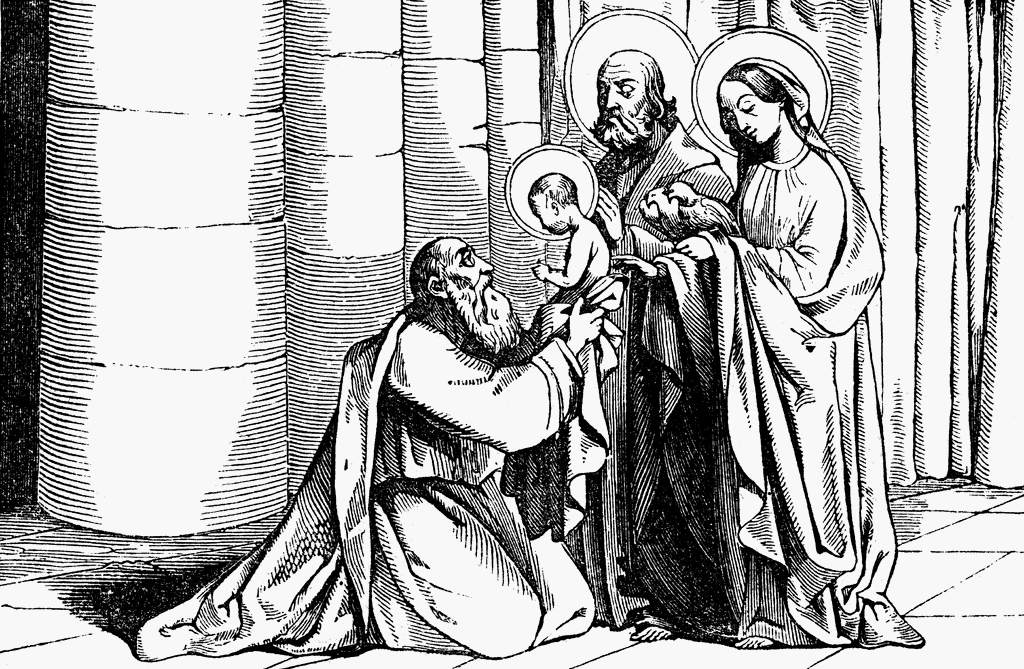
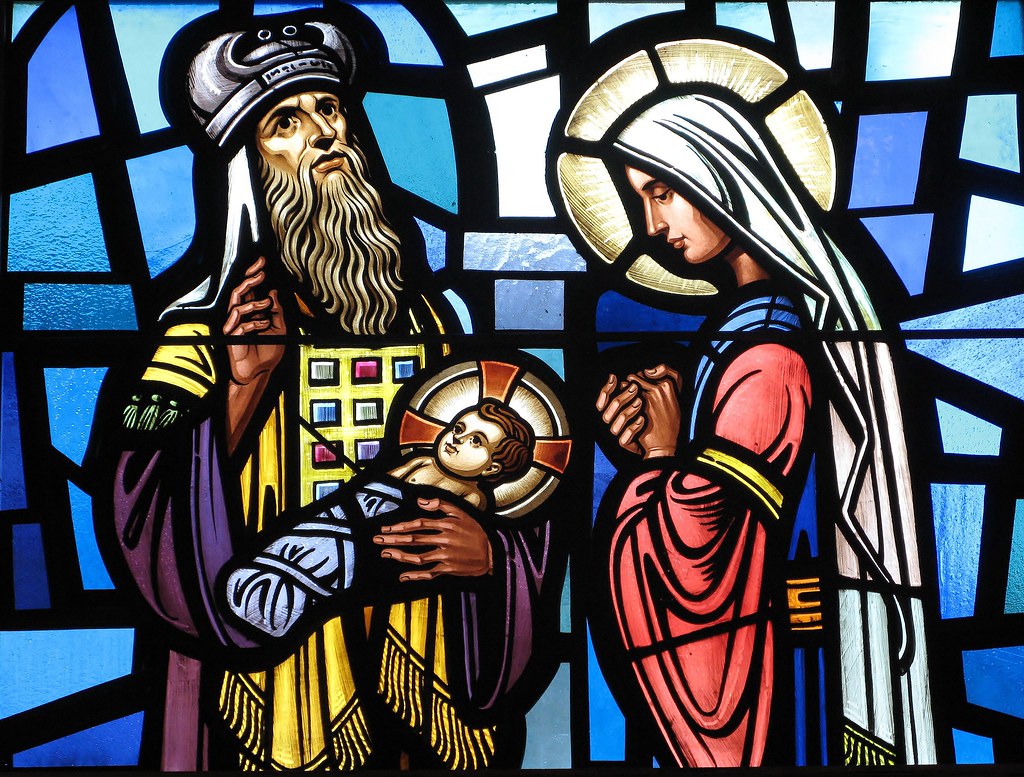
P3 God's Perfect Gift - Reflections on Jesus' Presentation at The Temple in Luke 2:21-40

Image result for presentation of jesus at the temple pictures
Luke 2:25-33 "And there was a man in Jerusalem whose name was Simeon; and this man was righteous and devout, looking for the consolation of Israel; and the Holy Spirit was upon him. 26 And it had been revealed to him by the Holy Spirit that he would not see death before he had seen the Lord’s Christ. 27 And he came in the Spirit into the temple; and when the parents brought in the child Jesus, to carry out for Him the custom of the Law, 28 then he took Him into his arms, and blessed God, and said, 29 “Now Lord, You are releasing Your bond-servant to depart in peace, According to Your word;
30 For my eyes have seen Your salvation, 31 Which You have prepared in the presence of all peoples, 32 A Light of revelation to the Gentiles,
And the glory of Your people Israel.”
33 And His father and mother were amazed at the things which were being said about Him."

Introduction:
Over the last couple of days we have been considering how Jesus' presentation at the temple by Joseph and Mary portray Him being God's Perfect Gift. Thus far we have noted how He is the Gospel's Savior and the fact that He is infinitely holy. Today we want to consider two final reasons: The fulfillment of prophecy and the fact that Jesus is the treasure of grace.

The Spirit of prophecy that was present on the day Jesus was presented at the temple
We find two important figures in this episode of Jesus early human life. Simeon is described as a devout man. We can further note that Simeon was functioning in a prophetic role, since Luke 2:25 states how "the Holy Spirit was upon Him." Simeon had upon him the Spirit of prophecy that enabled Him to utter incredible predictions concerning the Lord Jesus Christ. Anna the prophetess is presented as well, solidifying to reads the presence of prophetic activity in this scene.

We know from other passages in the Bible the role the prophetic office had in preparing the way for the coming of the Messiah. 1 Peter 1:10-11 states - "As to this salvation, the prophets who prophesied of the grace that would come to you made careful searches and inquiries, 11 seeking to know what person or time the Spirit of Christ within them was indicating as He predicted the sufferings of Christ and the glories to follow. 12 It was revealed to them that they were not serving themselves, but you, in these things which now have been announced to you through those who preached the gospel to you by the Holy Spirit sent from heaven—things into which angels long to look." Jesus Himself notes in Luke 24:44 "Now He said to them, “These are My words which I spoke to you while I was still with you, that all things which are written about Me in the Law of Moses and the Prophets and the Psalms must be fulfilled.”

By the time Jesus would finish His ministry and go to the cross, more than 100 prophecies would be fulfilled. The presence of Simeon and Anna both signify how it was that Jesus Christ was God's Perfect Gift - He fulfilled prophecy. So, we have seen thus far how Jesus is God's perfect gift: He is the Gospel's Savior, infinitely holy and the fulfillment of prophecy. Now lets consider one final reason as we close out this blog series...

Jesus Christ, as God's perfect gift, is the treasure of grace.
In Luke 2:39-40 we read - "When they had performed everything according to the Law of the Lord, they returned to Galilee, to their own city of Nazareth. 40 The Child continued to grow and become strong, increasing in wisdom; and the grace of God was upon Him." Jesus Christ came as the embodiment of grace. John 1:17 states - "For the Law was given through Moses; grace and truth were realized through Jesus Christ. Or again, Titus 2:11-12 "For the grace of God has appeared, bringing salvation to all men, 12 instructing us to deny ungodliness and worldly desires and to live sensibly, righteously and godly in the present age." Now we know, going back to Luke 2, that Jesus was treasured by the response to the earlier announcement by the shepherds we see in Mary herself in Luke 2:19-20 "But Mary treasured all these things, pondering them in her heart. 20 The shepherds went back, glorifying and praising God for all that they had heard and seen, just as had been told them."

Years ago I heard a preacher speaking at a conference. He told the crowd that when we proclaim Jesus Christ in our Gospel presentations, we rightly refer to Him as "Savior" and "Lord". The first title speaks to our rescue from wrath and sin and the second speaks of Christ's authority over the believer from conversion through sanctification and into eternity. However, there is that third element that speaks of the affections one ought to have for this Savior and Lord - namely that He is "treasure". Colossians 2:3 communicates this point of Jesus Christ being the treasure of grace: "in whom are hidden all the treasures of wisdom and knowledge." Would it be that as we contemplate God's Perfect gift, Jesus Christ, that we would grasp the fact that He is the treasure of grace.

Closing thoughts
We have spent these last few days considering God's Perfect Gift. We have looked at how Jesus' presentation at the temple by his parents has quite a bit to teach us about this truth. We utilized the acrostic g.i.f.t to flesh out what is meant when we say that Jesus Christ is God's Perfect Gift.

Gospel's Savior - Luke 2:21
Infinitely Holy - Luke 2:22-24
Fulfillment of Prophecy  - Luke 2:25-38
Treasure of Grace - Luke 2:39-40


Friday, December 16, 2016

P2 God's Perfect Gift - Reflections on Jesus' Presentation at The Temple in Luke 2:21-40

Related image
Luke 2:22-24 "And when the days for their purification according to the law of Moses were completed, they brought Him up to Jerusalem to present Him to the Lord 23 (as it is written in the Law of the Lord, “Every firstborn male that opens the womb shall be called holy to the Lord”), 24 and to offer a sacrifice according to what was said in the Law of the Lord, “A pair of turtledoves or two young pigeons.”

Introduction:
In yesterday's post we began to consider God's Perfect gift - the Lord Jesus Christ - as He is presented at the temple in Luke 2:21-40. We used the acrostic g.i.f.t to begin our navigation of this important text. We noted that what makes Jesus God's perfect gift is the fact that He is the Gospel's Savior. Today we want to focus on the letter 'i' and note a second reason why Jesus is God's Perfect Gift: He is infinitely holy.

So what motivated Mary and Joseph to present Jesus at the temple
The couple presented Jesus at the temple as prescribed by the Mosaic Law. When one reads the rituals and ceremonies in Exodus, Leviticus, Numbers and Deuteronomy in light of the revelation of Jesus Christ, there is discovered an order, a pattern. God is not a God of randomness. For example, we read of God's institution of the Passover Festival in Exodus 12. That festival was to remind the Jews of how He had redeemed them from their bondage in Egypt. We then find right after that commemoration further commentary on the significance of the Passover celebration and an associated festival called "The Feast of Unleavened Bread" beginning in Exodus 13:3. 

However, sandwiched in between these two festivals is a ritual that appears to be an incidental detail in Exodus 13:1-2 - "Sanctify to Me every firstborn, the first offspring of every womb among the sons of Israel, both of man and beast; it belongs to Me.” Leviticus 12:1-4 expands on this further: "Then the Lord spoke to Moses, saying, 2 “Speak to the sons of Israel, saying: ‘When a woman gives birth and bears a male child, then she shall be unclean for seven days, as in the days of her menstruation she shall be unclean. 3 On the eighth day the flesh of his foreskin shall be circumcised. 4 Then she shall remain in the blood of her purification for thirty-three days; she shall not touch any consecrated thing, nor enter the sanctuary until the days of her purification are completed." The significance of this short little command can only be ultimately seen when we realize the actions of Mary and Joseph. The infant Jesus would had been 40 days old by the time He had been presented at the temple. Such numbers like "40" speak of testing, trial or some-sort of significant spiritual event in the lives of God's people (Moses on top of the mountain with God for 40 days; 40 years of wilderness wanderings; Goliath taunting Israel for 40 days; Elijah fasting for 40 days; Jesus' temptation for 40 days). This little infant would be subject to testing, to trial and would demonstrate unparalleled spiritual significance.  

More amazing parallels between Jesus life, the Jewish feasts and all the entailed His presentation at the temple
Consider the context of Exodus 12-13: the institution of the Passover and the feast of unleavened bread. The Passover celebration would begin on the evening of the 14th day of the Jewish month of Abib (our March or April). Our Lord Jesus Christ would celebrate the Lord's table on that evening. We find further that Jesus came to be understood early on in His ministry as "The Lamb of God" (see John 1:29). 

When Jesus would be crucified, He would be crucified on the very day the Passover lambs would be slaughtered. The feast of unleavened bread would begin that Saturday, following on the heels of Passover. Our Lord Jesus' body was laid to rest in the tomb on the first day of the celebration of unleavened bread. Such incredible parallels exist between Jesus' presentation at the temple, the past Jewish festivals and what would be the mission for which He came: to die on the cross and be raised from the dead. 

When we realize that the presentation of any male Jewish child signified that one being set apart as holy to God, we then see how the infant Christ was uniquely holy touching His humanity. Moreover, by ever remaining God, the little bundle in Mary and Joseph's arms was not just holy, but infinitely holy. 

Closing thoughts:
So with the presentation of the infant Jesus at the temple per what is found in Exodus 13:1-2, as well as the historic connection to the Passover and Unleavened Bread feasts, the symbolism could not hardly be more striking: The infinitely holy One was being presented in fulfillment of the law in order to bear out the obligations necessary to be the sinner's Savior. This Jesus was God's Perfect Gift: The Gospel's Savior, being infinitely holy.

More tomorrow....


Thursday, December 15, 2016

P1 God's Perfect Gift - Reflections on Jesus' Presentation at The Temple in Luke 2:21-40

Image result for Jesus presented at the temple
Luke 2:21-22 "And when eight days had passed, before His circumcision, His name was then called Jesus, the name given by the angel before He was conceived in the womb.
22 And when the days for their purification according to the law of Moses were completed, they brought Him up to Jerusalem to present Him to the Lord."

Introduction:
Recently I just completed shopping for some items for my wife. Searching for the "right" gift takes forethought, knowledge of that person and the determination to search wherever possible to find that particular item (or set of items). Many people reading this post today are in the process of trying to find the "right" gift or gifts. We all know what it is like when we have achieved our goal and that person is delighted by what we bought. When it comes though to a "perfect" gift, there is only "One, Ultimate, Perfect Gift". James 1:17 reminds us with respect to God: "Every good thing given and every perfect gift is from above, coming down from the Father of lights, with whom there is no variation or shifting shadow." 

In today's post we want to consider the One Perfect Gift the Father gave. Interestingly enough, the Perfect Gift given by God the Father was a gift no one was looking to obtain nor had the interest in receiving apart from His grace. Nonetheless, the perfection of the Gift lies not within the recipients, but in the Gift and the Giver of the Gift. This Perfect Gift of which I speak is none-other than the Lord Jesus Christ. 

Understanding the scene of Jesus' presentation at the temple
In the account of Luke 2:21-40 we find the episode of Mary and Joseph presenting the infant Jesus at the Temple in Jerusalem. John MacArthur comments on what Mary and Joseph are doing with the infant Christ:

"Performing everything according to the law of the Lord refers back to verse 22. After a Jewish woman gave birth to a male child, she was to go forty days later to the temple to make purification sacrifice.  And that's exactly what they did as verse 22 indicates when the days, the forty days for their purification according to the law of Moses were completed, they brought the baby up to Jerusalem to present Him to the Lord.  They went up, they made the appropriate sacrifice. They did what they were to do. Setting apart the male child, verse 23, indicates as the Old Testament instruction had been given in Exodus and in Numbers.  And then verse 24, to offer the sacrifice, in their case a pair of turtledoves, two young pigeons because they were too poor to afford a lamb.  So they did that. They made the sacrifice.  They presented the male child to the Lord. They uniquely presented this child, this virgin-conceived child to God."

What makes God's Perfect Gift so grand? This gift is the Gospel's Savior
So as we consider this Perfect gift, the Lord Jesus Christ, we find that everything occurring in this text: the setting, the ceremony of bring the infant child to the temple, the words that would be spoken by Simeon, and then Anna, was supremely orchestrated and set by God to convey the significance of this gift. If we take that word "g.i.f.t", we can note four significant features of God's perfect gift, the Lord Jesus Christ, as found here in Luke 2:21-40...

1. Gospel's Savior. Luke 2:21
Luke 2:21 reads - "And when eight days had passed, before His circumcision, His name was then called Jesus, the name given by the angel before He was conceived in the womb." This bit of information is parenthetical and takes us back to when Jesus had been named. Matthew 1:21-23 gives the clearest explanation of the meaning of Jesus' name: "She will bear a Son; and you shall call His name Jesus, for He will save His people from their sins.” 22 Now all this took place to fulfill what was spoken by the Lord through the prophet: 23 “Behold, the virgin shall be with child and shall bear a Son, and they shall call His name Immanuel,” which translated means, “God with us.” The infant in Mary's arms was and remained God in the flesh. True humanity were united to the Person of the Son who had eternal been God along with the Father and the Holy Spirit. The Son came in the virginal conception, was born and would now be presented (see Hebrews 10:1-10). He came to experience human life, beginning the days following His birth as a helpless baby in the arms of his parents. 

Though frail and infantile in his humanity in this scene of Luke 2:21-40, the Son ever remained omnipotent, all-knowing, ever-where present with respect to His Deity. In this course of events, we find the Son voluntarily laying aside the benefits that come with being God whilst not ceasing to be truly and eternal Divine.  

As the Gospel's Savior, this Jesus could shed blood as the sinner's substitute. As the Gospel's Savior, this Jesus ever-remained truly Lord and God, which carries with it the unique capacity to provide salvation ("salvation is of the Lord" Jonah 2:9). 

As the Gospel's Savior, the very law He had revealed as God along with the Father and Holy Spirit He obligated Himself to complete as perfect man. A sinful man, Adam, had broken the original covenant God had made (see Genesis 3:1-14). Divine justice demanded that a man repair what had been broken. None but a sinless human being could remedy the situation (see Romans 5:12-20; 1 Corinthians 15:44-49). 

The Gospel's Savior was presented that day at the temple. Just as the Father had given this perfect gift for a humanity He wanted to redeem, this perfect Gift would be historically presented and testified of for all to read about, hear and see. Thus we find God's Perfect Gift being the perfect gift due to the fact that He is the Gospel's Savior.

More tomorrow....

Wednesday, December 14, 2016

The "Lost and Found" Chapter in the Bible

Image result for seeking what was lost
Luke 15:1-5 "Now all the tax collectors and the sinners were coming near Him to listen to Him. 2 Both the Pharisees and the scribes began to grumble, saying, “This man receives sinners and eats with them.” 3 So He told them this parable, saying, 4 “What man among you, if he has a hundred sheep and has lost one of them, does not leave the ninety-nine in the open pasture and go after the one which is lost until he finds it? 5 When he has found it, he lays it on his shoulders, rejoicing."

Introduction:
In every church there is what is called a "lost and found" room. This designated room, shelf or place in an office is where one can find lost Bibles, hats, shirts or toys. Amazingly, as a pastor, I have never once had a lost phone put in a lost and found area (people keep track of their phones, I suppose). When a given item is found by its owner or the one looking for it, there is an expression of relief; in other cases, joy or jubilation. I myself had recently lost a set of important keys. I searched and searched for two days. When the keys were found, I told two other people (it was a cause for celebration)! Lost and found rooms or finding valuable items that we thought would never be retrieved entail life's little victories. 

There is one sort of seeking and retrieval that can never compare: namely, when God convinces a sinner to forsake their dependence on themselves and their sins and to trust in Jesus as Savior and Lord. Luke 15 represents what one could call the "Lost and Found" chapter in the Bible. When we say "Lost and Found" we are referring to how this theme threads its way through three parables told by Jesus concerning:

a).  the finding of a lost sheep (Luke 15:1-7) 

b). a lost coin (Luke 15:8-10) 

c).  a lost son (Luke 15:11-32). 

We want to consider the broad details of Luke 15 to grasp this theme of "lost and found".

1. What is lost and found is very valuable 

Jesus begins with a sheep. A valuable animal for sure. However, in the second parable, we find the losing of a coin which represents a larger proportion of the woman's wealth in the parable. The third parable presents the most valuable thing that, when lost, and then found, cannot be compared in terms of value: namely a human soul. Jesus purposefully strings three parables together like a string of pearls to drive home the point of the value of the lost item or person to the one desiring to be reconnected to it. So, we find then that the value of a lost soul being reconciled to God is extremely valuable. Now notice the second trait...

2. Whatever is lost and found was desperately lost

Once again, we find Jesus presenting this theme of "what was lost is now found". We saw the emphasis of value, now we consider a second trait of the lost items or people in these parables: namely their desperation. As Jesus shared these parables, everyone would had identified with them. Who hasn't lost an animal (or in their case, a sheep). Who hasn't lost money? Who hasn't had a wayward child? Each situation presents an increasing level of desperation, a decreasing likelihood of the object being reconciled to the person and a greater amount of effort expended to find it. Finding a lost sheep requires the shepherd leaving the 99 to search hills and valleys for that one lost sheep. The parable of the lost coin entails a woman searching in the cracks of her stone floor. The cracks are thin and the house would be dimly lit. To be able to find such a coin in such conditions would, amazingly, be even harder. What about a lost son coming back to his father. The situation is so desperate, the assumption is that the runaway son is dead. 

The level of desperation for a lost soul is more profound than anyone can imagine. The decreasing proportion of the lost item to the overall remaining items or people (one sheep in one hundred, one coin in ten and one of two sons, or we could even say, both sons) only highlights this second point of the value of the lost item. Only God can save lost souls. 

3. What is lost and found is cause for joy when found 

So far, we have seen Jesus teach about the value of the lost and the desperate situation of the lost. Jesus then, in all three parables, gets to the point when their is joy over finding the lost item or person. Virtually the same phrase is said once the item is returned or found. The shepherd says when finding the lost sheep in Luke 15:6 "And when he comes home, he calls together his friends and his neighbors, saying to them, ‘Rejoice with me, for I have found my sheep which was lost!’ The woman exclaims after finding her lost coin in Luke 15:9 "When she has found it, she calls together her friends and neighbors, saying, ‘Rejoice with me, for I have found the coin which I had lost!" Then of course, the greatest exclamation of joy of finding what was formerly lost is the Father's words concerning his formerly wayward son in Luke 15:24 "for this son of mine was dead and has come to life again; he was lost and has been found.’ And they began to celebrate." As a matter of fact, the joy of the Father is so emphasized that we find him proclaiming his joy once more at the close of the third parable in Luke 15:32 "But we had to celebrate and rejoice, for this brother of yours was dead and has begun to live, and was lost and has been found.’”

4. The Father rejoices when what was lost is found

So we have seen how much the lost are valued, in a desperate condition and the joy experienced when the lost are reconciled or found. We find the Father (God the Father) to be present in incognito throughout these parables and increasingly identified in all three. He is likened to a shepherd in the first parable and alluded to as the source of rejoicing in Heaven whenever one lost sinner is found. In the second parable, we find Him likened to the owner of a house and then (indirectly) alluded to as rejoicing in the presence of His angels (see Luke 15:10). The third parable features a father figure showing lavish grace. We expect by the nature of the progression to have the heavenly Father directly identified. 

Interestingly Jesus concludes the parable with the tenderness of the father figure toward his son and his conversation with his older one pointing the way to the heart of the Heavenly Father. The actions and words of the father-figure so capture the character of the Heavenly Father (which no man has seen, nor can see), that Jesus' parables together capture the efforts of the Father in seeking the lost. 

Closing thoughts
Today we have explored Luke 15 by considering the theme of "lost and found". We noted how Jesus ultimately points to how God the Father is seeking after the lost. We noted the following four observations that tie together the three parables found in Luke 15...

1. What is lost and found is very valuable

2. Whatever is lost and found was desperately lost

3. What is lost and found is cause for joy when found

4. The Father rejoices when what was lost is found


Tuesday, December 13, 2016

The Centrality of the Lamb of God at Christmas

Image result for Jesus lamb of God
Numbers 28:4 ‘You shall offer the one lamb in the morning and the other lamb you shall offer at twilight"

Introduction:
Today I want to talk about the centrality of the Lamb of God to Christmas.  Jesus is referred to as the Lamb of God no less than 25 times in the New Testament.  In today's post we will deal with the centrality of the Lamb of God as He pertained to the timing of Christmas. 

The centrality of the lamb in communicating the timing of the sacrificial system
In Numbers 28 we see a summary list of all the major sacrifices and festivals that were to be celebrated by the Jewish people.  Lambs figured quite prominently into God's provision of the sacrificial system in the Old Testament.  For example, with regards to the timing of the sacrifices, Moses writes in Numbers 28:2“Command the sons of Israel and say to them, ‘You shall be careful to present My offering, My food for My offerings by fire, of a soothing aroma to Me, at their appointed time".  That phrase "appointed time", as well as the word "festival", communicate the combined idea in the Hebrew a dress rehearsal.  The sacrifices and feasts of Israel were like dress rehearsals, with Jesus Christ being the final and only performance of salvation.  As you go down through the remainder of Numbers 28, we see how lambs were significant in the daily, weekly, monthly and the annual Passover celebration:

-Daily there were to be two lambs offered, one in the morning, and one in the evening. (Numbers 28:1-8)

-Weekly, or every Sabbath, two male lambs were to be sacrificed. (Numbers 28:9-10)

-Monthly, at the beginning of each month, the people were to sacrifice seven male lambs without defect, along with other types of animals.  (Numbers 28:11-15)

-Annually, once a year, at the Passover celebration, commemorating the Jews Exodus from Egypt, the Bible speaks of the people roasting a lamb for the Passover meal and spreading its blood over the door posts of their homes. (Numbers 28:16; Exodus 12:1-13)

We could go further into the chapter, but the point is made: lambs were central to the cycles of time in the Old Testament sacrificial system (mentioned some 30 times or so in Numbers 28-29 alone). 

The Lamb of God - central to God's timing in accomplishing salvation
Truly the Old Testament is used to prepare for Christ's first coming in the New Testament, with His title "The Lamb of God" being no exception.  In the New Testament, the Bible is very clear about Jesus, the Lamb of God, coming at the right time.  We know that from eternity Jesus was regarded as the Lamb of God.  Consider for example Revelation 13:8 "And all that dwell upon the earth shall worship him, whose names are not written in the book of life of the Lamb slain from the foundation of the world." (KJV)  Being regarded as the Lamb of God in eternity, He came to become the Lamb of God in time.  Galatians 4:4-5 tells us: "when the fulness of the time was come, God sent forth his Son, made of a woman,  made under the law, To redeem them that were under the law, that we might receive the adoption of sons."

The timing of Jesus' coming into the world was perfect timing. In Luke 2:1-7, we see several indications of the timing of Christmas being centered around the Lamb of God - Jesus Christ:

1. The timing was right historically  - Luke 2:1-3 tells us of a census taken in the Roman world which prompted Joseph and Mary to go up to Bethlehem, some 90 miles from Nazareth, where Joseph and Mary resided.  

2. The timing was right for His birth -Luke 2:5-7 tells us that Mary had reached full term with the God/man in her womb, revealing that the timing of His birth was right.

3. The timing of heaven and earth was right - Luke 2:8-20 that shepherds were in their fields, watching their flocks of sheep (lambs!), and suddenly the hosts of heaven made the announcement of Christ's birth. 

4.The timing of creation was right - Then in Matthew 2:2 we see the magi coming to worship the now two year old Christ child upon seeing a star which appeared over the night skies of Persia in their land.  For two years they traveled to see this wonder of wonders - the Lamb of God. 

God brought all this together to reveal this truth of the lamb of God coming at the right time that first Christmas.