Translate

Saturday, March 24, 2018

P1 - A Way To Prepare One's Heart And Mind For The Lord's Table

See the source image
Matthew 26:17-20 "Now on the first day of Unleavened Bread the disciples came to Jesus and asked, “Where do You want us to prepare for You to eat the Passover?” 18 And He said, “Go into the city to a certain man, and say to him, ‘The Teacher says, “My time is near; I am to keep the Passover at your house with My disciples.”’” 19 The disciples did as Jesus had directed them; and they prepared the Passover.
20 Now when evening came, Jesus was reclining at the table with the twelve disciples."

Introduction:

Preparation. The meaning of the term "preparation" conveys "putting things into order" in anticipation of the main event at hand. Too often in my own Christian walk, I find little time spent in "quietness, stillness and preparation" for whatever God has planned to bring to my attention. The ancient Jews placed much emphasis upon "preparation". The spirituality of the Old and New Testament scriptures was not treated haphazardly. An prime example of this point is in how the Jews prepared for the Passover celebration.

To ready the heart and mind for the reception of the Passover was just as important as the actual event itself. A typical Jewish family would spend an entire year in advance. Central to the celebration of the Passover was the lamb. Lambs that were a year-old and without blemish were fit-candidates for selection by the family. Once the lamb was selected on the first day of the given Passover week (i.e. Sunday, further preparations were made to eventually roast the lamb per God's instructions to His people through Moses in Exodus 12.

Eventually, the Jews were commanded to travel far and wide to celebrate the Passover in Jerusalem. Preparation focused one's intention and will on bringing pleasure to their Lord. The external rites associated with Passover and the later New Covenant meal of the Lord's Supper were Divinely given to order the interior lives of God's people. To neglect preparation of one's heart and mind in the things of God can lead to a later inability to digest later truths God wants to impart through His word.

What Jesus would do with His disciples in the institution of Lord's Table of communion entailed transferring the Passover celebration into the New Covenant meal for the church. Clearly this process required "preparation". To achieve this event, Jesus told his disciples to "prepare" a place where they would celebrate.

So how can one prepare for participating in the Lord's supper celebration? Let's offer one main point for today and focus on further thoughts in the next post.

Consider the privilege of the cost of following Jesus. Matthew 26:6-13; Mark 14:3-9; John 12:1-8  

Each of the four Gospels record Jesus' final meal with His disciples in the closing hours leading to His arrest, trials, tortures and crucifixion. Matthew, Mark and John record the event of Mary of Bethany anointing Jesus. John 12:3 records the following details of Mary's act of devotion:

"Mary then took a pound of very costly perfume of pure nard, and anointed the feet of Jesus and wiped His feet with her hair; and the house was filled with the fragrance of the perfume."

Judas' negative reaction to her act reveals the costliness of what she did. The perfume itself was high quality. The fragrance that would suffuse that place would accompany our Lord in that final meal with His disciples, as well as His journey to the cross. No doubt what Mary did was of very great cost. The cost of preparation on her part bespeaks of the much greater cost paid for our salvation by the Lord Jesus. Jesus indicates that what Mary did was to prepare for His pending burial following His crucifixion, as expressed in Mark 14:8

"She has done what she could; she has anointed My body beforehand for the burial."

Whenever any Christian is getting ready to celebrate the Lord's supper, they ought to carefully consider the privilege of the price paid to follow Jesus. Jesus Himself reminds His followers of how counting the cost and dying to oneself is at the heart of discipleship (see Matthew 10:39; 16:25; Mark 8:35; Luke 9:23-24; 17:33; John 12:21-25). 

Too often Christians complain about inconveniences. The self-indulgence of our Western world is at odds with the call of Christ to "die to oneself". I frequently find myself wrangling with my flesh. The principle of "self", namely "me-in-me", imposes itself on that impulse to follow my Lord. Self must die daily. There is an extravagance expressed in Mary of Bethany's love for her Lord that is absent in so much of Christian living.

Sadly, we never experience an extravagance of love for Jesus until we are willingly or actively giving of ourselves to others for His sake. Jesus Himself commented that what Mary did would find itself expressed in the sharing of the Gospel. The fact we find her lavishing of love on our Lord in the Gospel records confirms this point. So, in preparing for the Lord's supper, one ought to consider the privilege of the cost of following Jesus.

More next time....


Friday, March 23, 2018

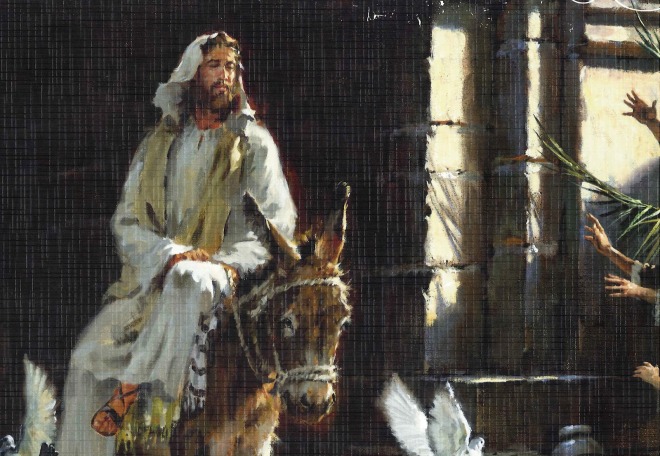
What is Palm Sunday? Four Reasons Palm Sunday Is Significant

See the source image
Matthew 21:1-3 "When they had approached Jerusalem and had come to Bethphage, at the Mount of Olives, then Jesus sent two disciples, 2 saying to them,“Go into the village opposite you, and immediately you will find a donkey tied there and a colt with her; untie them and bring them to Me. 3 If anyone says anything to you, you shall say, ‘The Lord has need of them,’ and immediately he will send them.”

Introduction:

I can recall as a child receiving little "palm branches" to take home after a Palm Sunday celebration in church. This upcoming weekend will mark the celebration of "Palm Sunday" by Christians throughout the world. What is Palm Sunday? Why is this coming Sunday important? Please note the following points...

1. Preparation. Matthew 21:1-3

Jesus was preparing for what would be the week leading up to His crucifixion. In the cycle of Jewish fesitivals, Passover Week was getting underway. The day in which Jesus rode into Jerusalem on a Donkey was the day the passover lambs were officially chosen by each Jewish family to begin preparation for what would be their slaughter by Thursday night of that week. 

This particular day was part of the original Passover liturgy instituted by Yahweh to the people through Moses in Exodus 12:3-6

"Speak to all the congregation of Israel, saying, ‘On the tenth of this month they are each one to take a lamb for themselves, according to their fathers’ households, a lamb for each household. 4 Now if the household is too small for a lamb, then he and his neighbor nearest to his house are to take one according to the number of persons in them; according to what each man should eat, you are to divide the lamb.5 Your lamb shall be an unblemished male a year old; you may take it from the sheep or from the goats. 6 You shall keep it until the fourteenth day of the same month, then the whole assembly of the congregation of Israel is to kill it at twilight."

The lamb was raised for an entire year and named by the family. At the time of the lamb's "selection", it was deemed "ready" for the Passover. Jesus came as "the Lamb of God" - i.e as the "Choice Lamb". He was prepared from before the foundation of the world by the Father (John 1:29; Revelation 5:6). The Son came willingly of His own accord (see Hebrews 10:5-7). and is described in passages such as 1 Corinthians 5:7 as the lamb of God. So Palm Sunday focuses our attention upon preparation to worship the Lord Jesus Christ. 

2. Prophetic Fulfillment. Matthew 21:4-5

Matthew records that when Jesus efforts of riding into Jerusalem were not random. The Jews were looking for a Messiah that would fit their profile of a political conqueror to overthrow Rome. Much of the 1st century Jewish expectation of Messiah was colored by the Jewish revolts led by the Maccabean brothers against the Seleucid armies in 168-165 b.c. According to the apocryphal book of 1 Maccabees and the 1st century Jewish historian Josephus, the Seleucids were led by a diabolical leader named Antiochus Epiphanes. Antiochus' schemes included trying to pervert Jewish worship. The Maccabean revolts not only withstood such attempts, but resulted in temporarily freeing Jerusalem from the tyranny of the Seleucids. Soon after this event, the Jews minted coins with Palm branches commemorating this event.

See the source image

By Jesus' day, many Jews were hoping to have a Messianic figure that would once more do away with the iron grip of their captors (in this instance, the Romans).

Jesus did not come to overthrow Rome. Instead, the purpose for Jesus' riding into Jerusalem was to fulfill prophecy. Zechariah 9:9, composed by Divine inspiration some 520 years prior to this event, is quoted by Matthew in Matthew 21:4-5 - 

"This took place to fulfill what was spoken through the prophet: 5 'Say to the daughter of Zion, ‘Behold your King is coming to you, Gentle, and mounted on a donkey, Even on a colt, the foal of a beast of burden.’”

Everything that Jesus did was not random nor accidental - but intentional. Even the riding of a donkey was to remind the people that He was the rightful "King of the Jews". The ancient practice of coronation of Israel's kings included them riding on mules (compare 1 Kings 1:38). Jesus was yielding Himself to His Father's will as He made His way to Calvary. So Palm Sunday is important due to how it prepares the heart for Jesus and prophetic fulfillment.

3. Presentation. Matthew 21:6-9

Just as those lambs were formally prepared, they were also presented. When Jesus came riding into Jerusalem on a Donkey, He was presenting Himself as Israel's King. Many people in that scene were asking questions regarding Jesus' identity. One of the aims of Jesus' actions was to send a message to the Jewish leadership and to the nation - "here is your King". According to passages like Isaiah 53, He would be not only be the Lamb of God, but also a rejected Savior. This idea once again reminds us that when Jesus had rode through on that first "Palm Sunday", He was fulfilling prophecy. The people who were crying "Hosanna" would within a week's time shout "crucify Him." So notice the three reasons we've covered thus far pertaining to Palm Sunday's importance: preparation, prophetic fulfillment and presentation of Jesus to His people. Now lets consider one last reason why Palm Sunday is important. 

4. Passion. Matthew 21:10-11

Matthew 21:10-11 records -

"When He had entered Jerusalem, all the city was stirred, saying, “Who is this?” 11 And the crowds were saying, “This is the prophet Jesus, from Nazareth in Galilee.”

Once Jesus had rode into Jerusalem, it was His way of officially concluding the public ministry phase of His first coming and entering into what many theologians call His "passion" (from a Latin root meaning "suffering"). Luke's version includes the following detail of Jesus weeping over Jerusalem following His triumphal entry in Luke 19:41-44  

"When He approached Jerusalem, He saw the city and wept over it,42 saying, “If you had known in this day, even you, the things which make for peace! But now they have been hidden from your eyes. 43 For the days will come upon you when your enemies will throw up a barricade against you, and surround you and hem you in on every side,44 and they will level you to the ground and your children within you, andthey will not leave in you one stone upon another, because you did not recognize the time of your visitation.”

Jesus' weeping was due to His foresight into what would be the destruction of Jerusalem in 70 A.D. Readers can consult historic works such as Flavius Josephus (a first century Jewish Historian), who records the horrendous details of that sequence of events that were fulfilled as Jesus had predicted. Jesus' emotional anguish over the people rejecting God's plans and purposes through Him would get deeper by the end of the week. The emotional anguish would turn into physical agony on the cross. The physical and emotional agony would compound to spiritual agony that He would endure in His humanity while at the same time experiencing the anguish of the pains of sinbearing as the Divine Son. As the God/man, Jesus would passionately face crucifixion.

Praise be to God! The true triumph of the pending "holy week" would not lie ultimately in His riding into Jersualem, but rather in His death on the the cross and triumphal resurrection three days later outside the Holy City!

Closing thoughts:

So in today's post we have looked at four reasons why Palm Sunday is significant:

1. Preparation for worshipping Jesus
2. Prophetic fulfillment
3. Presentation of the King 
4. Passion week leading to crucifixion and then resurrection.

Wednesday, March 21, 2018

P2 - How Jesus Christ Provides For Christians That Feel Spiritually Drained

See the source image
Romans 15:5-6 "Now may the God who gives perseverance and encouragement grant you to be of the same mind with one another according to Christ Jesus, 6 so that with one accord you may with one voice glorify the God and Father of our Lord Jesus Christ."

Introduction:

In our last post, we considered how Jesus Christ provides for the Christian whenever they feel spiritually drained. We introduced this subject by first identifying the typical spiritual ailments that afflict all Christians. In this post we aim to explore how Christ has specifically provided for any Christian that has experienced what it is like to be spiritually, physically and emotionally drained. 

1. Jesus' incarnation enabled Him to experience fatigue

Jesus did experience, as man, what is was like to get drained. In Luke 8:46 we read of the account where a woman with a severe hemorrhage sought Jesus for healing. She was crawling along the ground among the mob of people encircling Jesus. The woman desired to touch the hem of his robe. In Jewish culture it was common for the men to have tassels on their robes that symbolized the promises and commands of the Torah or God's law.  As soon as the woman did this, Luke 8:46 tells us: “power went out from him to heal the woman”. Jesus sensed this "draining".

To remind the reader briefly: Jesus of Nazareth ever remained God. Isaiah 40:28 asserts that God never grows tired nor weary. Jesus of Nazareth ever remained the Divine Person of the Son. With that said, the reader must remember that from the moment He entered into the virgin's womb, the Holy Spirit joined a truly human nature to the Son of God - resulting in union of two natures within the Person of the Son. Henceforth, the Son of God could experience reality as both God and man. He never grew tired in His deity and yet, He would experience the fatigue of human existence as a man. The Lord Jesus Christ knew what it felt to pour out Himself for the sake of others. 

2. Jesus became incarnate to model how getting alone with the heavenly Father will replenish the spiritual fuel-tank of the Christian

To cite one more example of Jesus' experience of being "drained", consider Mark 8:24. Mark 8:24 plainly states that Jesus was fast asleep in the bottom of a boat. The Son of God did experience fatigue as such experience touched His humanity.

Yet, we never once see Jesus get distressed, delay obedience nor get discouraged over fear that God may had somehow abandoned Him. As one writer has note:

"our Lord was often imposed upon by life, by people and by circumstance, yet, He never once was unsettled in His spirit."

Whenever Paul cites Jesus in Romans 15:3, He describes how Jesus "never pleased Himself". Jesus willing took whatever this world and humanity threw at Him. He put Himself last. Is it no wonder we find Jesus retreating in solitude to get recharged with the Father (see Matthew 14:23; Mark 1:35; Luke 5:16; 6:12).  Such an example set before the Christian by the Lord Jesus portrays the path to replenishment - namely finding time alone with God.

Most certainly, other important disciplines are needful for replenishment, which the Apostle Paul lays out in Romans 15 (meditating on scripture, making time for God's people and majoring on the Holy Spirit's leadership). Yet, Jesus gives us the foundation for refueling the spiritual tank of the Christian-life - time alone with God. Why? All the other Christian disciplines are but means to this singular goal of knowing the Heavenly Father through the Lord Jesus Christ.


3. Jesus became incarnate to provide the Christian what they need whenever they get drained 


The Apostle Peter's sermon on the life of Jesus in Acts 10 gives abundant testimony of all that Jesus did in the course of His earthly ministry in the Gospel accounts. Acts 10:38 records an excerpt from that address:

"You know of Jesus of Nazareth, how God anointed Him with the Holy Spirit and with power, and how He went about doing good and healing all who were oppressed by the devil, for God was with Him."

Jesus went about "doing good". Jesus went about "healing all who were oppressed by the devil". Yet, in the midst of all the business of ministry and life, Jesus never lost His sense of the presence of the Father. Whenever a Christ-follower is able to walk-about with that supreme awareness of God's working in and through them, others will take notice. With the work of ministry and the involvement of one's soul in communion with God comes the draining of one's physical body. Jesus never let the work of God take priority over His time-alone with God. Jesus would get drained - but never empty.

By becoming truly man, the Son of God provided the resources every Christian can access in living daily for Him. The Apostle Peter describes the Christian's access to the benefits accrued by Christ in His incarnation as that of "partaking" or "participation" in the Divine nature (compare 2 Peter 1:3-4). Paul uses different terms to describe this availability every Christian has to get refueled in their spiritual walk by the vocabulary of "union with Christ" and "drinking in of the Spirit" (see 1 Corinthians 12:12-13).

The Person of the Son will ever have residing in Himself the two natures of true deity and true humanity. The wonder of the Christian in union with Jesus is that all He is and all He did makes me a beneficiary of all I need to live out effectively for Him in this world. Quite literally, I'm living the Christian life as Christ, in-turn, by the ministry of the Holy Spirit, lives out the life in me (see Galatians 2:20).

Friday, March 16, 2018

P1 - How Jesus Christ Provides For Christians That Feel Spiritually Drained

See the source image
Romans 15:1-3 "Now we who are strong ought to bear the weaknesses of those without strength and not just please ourselves. 2 Each of us is to please his neighbor for his good, to his edification. 3 For even Christ did not please Himself; but as it is written, “The reproaches of those who reproached You fell on Me.”

Introduction:

The Christian life is a call to die to self, put others ahead of ourselves and to fix our eyes on Jesus. Each of the aforementioned elements do not follow from the carnal drives that remain in the Christian. Christ-followers find propensities within themselves to put themselves ahead of others. One author has termed the "self-life" as the "me-in-me" life. The self-life is the number-one competitor to ongoing Christian growth. The goal of Christian-growth is to have "Him-in-me" characterizing Christian-living, rather than the all-to-often "me-in-me" mentality. Thankfully every Christian has access to Christ by the indwelling Person and work of the Holy Spirit (see 1 Corinthians 2:12-13; 3:16; 6:19-20; Galatians 2:20; 5:16; Ephesians 5:18).

What can lead to feeling spiritually emotionally or physically drained

If dealing with oneself is not enough, we find in the opening verses of Romans 15 certain spiritual maladies that affect all Christians. Seasons come into the Christian's walk that are characterized by "weaknesses" and "having no strength" (see Romans 15:1). Such spiritual-liabilities may arise not so much as a direct result of overt sin as through the process of emptying the spiritual gas-tank. Everyone experiences what it is like to get "drained". Following the point beyond what were terming "spiritually drained" is a matter of whether or not the Christian does something about it through the Divinely appointed means of grace through Christ.  

To illustrate, I can recall as a boy how my father would let me borrow the family car. He always told me to make sure that whenever I was done - to fill the tank. My father always ran the car above the three-quarter mark. But do you know, as a teenage boy, I would run that car until it got near to "E". More than one time I would hear him say: "E" means "empty", not "enough". I won't comment further on my driving habits today, however, I too often find myself treating my Christian life much like I did the family car. If I would follow the Heavenly Father by the example set by the Son and empowered by His Spirit on a consistent basis, though I may still experience "drainage", yet, the gas-gauge might be able to never read "E". Each occasion of life is an opportunity for me to either "trust in the Lord" rather than to "lean on my own understanding" (see Proverbs 3:5-6).  

1 Thessalonians 5:14 elaborates for us on the "spiritual maladies already mentioned in in Romans 15:1 -  

“We urge you, brethren, admonish the unruly, encourage the fainthearted, help the weak, be patient with everyone.”

Jude adds insight to the garden-variety ailments that afflict God's people, and what their fellow-believers need to do, in Jude 1:22 “....have mercy on some who are doubting.”

In the verses above I identify four maladies, the first resulting from interacting with the needs of others, whilst the remainder follow from the Christian either unintentionally or at times carelessly letting down their guard: drained --> discouraged, delayed obedience, distress.

How Christ is the resource for the Christian that feels drained 


Whenever the Apostle writes about the typical Christian experience, his inclusion of the Lord Jesus Christ is such a relief. Why? Christ came to partake of true humanity for three main reasons:

a). to atone for sin (Romans 5:6-8; 1 John 2:1-2).

b). to defeat Satan by becoming the New Adam (Romans 5:12-21; 1 John 3:8).

c).  to provide what was needed for His people to gain victory over the world, flesh and Devil in their humanity (Hebrews 2:14).

A quick study of Jesus' life reveals how he would get drained in the course of His everyday life. Spiritual, emotional and physical drainage is part-and-parcel of living in this world. Yet, unlike those of us who follow Him in faith, the Lord Jesus Christ never once lost awareness of who He was nor ever acted carelessly. Jesus told the woman at the well in John 4:13-14 that "whoever drinks of the water that I will give him shall never thirst".

As we shall see, although Jesus did experience what it was liked to get drained, He never once had his spiritual gas tank read "E". That is, the Lord Jesus did get saddened but never discouraged (there is a difference, mind-you). He often faced opposition when doing the will of the Father but never delayed in obedience. His heart grew heavier with the pending approach of Calvary, yet, He never got distressed due to feeling like God was no longer in control. To describe Jesus' experience in another way: Jesus never let His well run dry. Three headings will guide us through considerations of how Jesus Christ, by His incarnation, provides everything the Christian needs to not go empty whenever they are feeling drained. To those headings we will look in the next post. 

More next time....


Saturday, March 10, 2018

P3 - The Judgment Seat of Christ - Why It Matters To You

Image result for gold silver precious stones

1 Corinthians 3:11-15 "For no man can lay a foundation other than the one which is laid, which is Jesus Christ. 12 Now if any man builds on the foundation with gold, silver, precious stones, wood, hay, straw, 13 each man’s work will become evident; for the day will show it because it is to be revealed with fire, and the fire itself will test the quality of each man’s work. 14 If any man’s work which he has built on it remains, he will receive a reward. 15 If any man’s work is burned up, he will suffer loss; but he himself will be saved, yet so as through fire."

Introduction:

Over the last few posts, we have explored the topic of "the judgment seat of Christ". This future event will feature Christ evaluating each Christian's post-conversion life. This event, as we discovered, will occur right after the rapture of the church. For those wanting to review the first post in this series, click here: http://www.growingchristianresources.com/2018/03/p1-judgment-seat-of-christ-when-it-will.html

We also took the time to survey the types of rewards that Jesus will hand out to those persons demonstrating faithfulness to him in this life. For those interested in reviewing that post, please click here: http://www.growingchristianresources.com/2018/03/p2-judgment-seat-of-christ-what-will.html

In this third and final installment of our series, we want to explore why there must be a judgment seat if the Christian's salvation is a settled matter. We will also suggest two life-practical reasons why Christians ought to take more seriously the kinds of rewards they'll receive while living their lives for Jesus.

Why the judgment seat of Christ, if the Christian's salvation is already a settled matter?

We've looked at when the judgment seat of Christ will occur and what we can expect from it. However, why would Jesus have each of His people stand before His throne for a time of examination and reward, whenever the issue of salvation is not in question? After all, isn't the point of salvation to simply save us from present and future wrath (see Romans 5:9-10; 1 Thessalonians 1:10)? 

Hopefully, the reader has already understood that Christianity is much more than "fire-insurance". Christians are not only saved "from something", but "to something". The Gospel not only provides "fire insurance" but "life assurance". Think about how grateful every Christian will be when they stand before their Lord? Or, think about how much it can motivate present faith to hear the commendation of their Lord: "well done thou good and faithful servant" (Matthew 25:21,23). 

Two reasons come to mind as to why Jesus would have Christians stand before him at the "Bema-seat" to give an account.

a. Motivation for godly living. 

Think of someone going to school to get a diploma or a degree. How motivating it is to reflect on that time they step across a stage to get that piece of paper. Or, think about how athletes will train for months to get a medal? Again, motivation is a big factor in how well they train and perform. Motivation is more than appropriate as to why rewards are handed out in either case. Think about how much motivation the Christian needs to live the Godly life. I myself often think about "is it worth it"? 

Whenever I think about seeing the Lord Jesus, hearing his commendation and receiving rewards for having "lived the life well", the virtues His Spirit is working forth in my life are made all the stronger. Passages such as 1 John 3:1-3 connect the Lord's return to how much of a godly life the Christian will lead.

b. Majesty of Christ.

Whenever we turn to Revelation 4:10-11, we find reference to 24 elders, which represent the saints of God in every age. Notice the description of what believers will do when they see their Lord in Revelation 4:10-11,

"the twenty-four elders will fall down before Him who sits on the throne, and will worship Him who lives forever and ever, and will cast their crowns before the throne, saying, 11 “Worthy are You, our Lord and our God, to receive glory and honor and power; for You created all things, and because of Your will they existed, and were created.”

Closing thoughts:

In these last couple of posts, we've considered the subject of the "judgment seat of Christ" or the matter of the Christian's future rewards. We considered the timing this examination of the Christian (following the rapture of the church, 1 Corinthians 15:51-52; 2 Corinthians 5:5-10; 1 Thessalonians 4:15-17; Revelation 19:7-8). We also looked at the particular areas and rewards Christ will give to each believer. We then considered why the judgment seat of Christ will occur. What final thoughts can we offer as we close out our survey of this vital area of Biblical revelation?So many thoughts could be offered, but for sake of time, let me mention a handful to tie our study to a close. 

All of the crowns we looked at earlier are not designed for the Christian to wear around in eternity to boast and say: "look what I've done!" Rather, the purpose of the rewards or crowns is to ascribe glory to Jesus Christ and say, in effect, "look what He has done"! The theme of heaven is the glory of God in Christ. The Christian is destined to reign with Jesus as an heir of God and co-heir with Him (Romans 8:14-16). To point the glory to Jesus Christ is much like Olympic athletes that gladly yield their accomplishments for the raising of the flag of their country while on the podium. The ultimate reason for the Bema-seat or Judgment-seat of Christ is for His church to shine forth and point to Him that made it possible for each Christian to stand before His throne. 

Thursday, March 8, 2018

P2 - The Judgment Seat of Christ - What Will Take Place

Image result for bema seat
2 Corinthians 5:10 "For we must all appear before the judgment seat of Christ, so that each one may be recompensed for his deeds in the body, according to what he has done, whether good or bad."

Introduction:

In our last post we began considering the subject of the Christian's future rewards. For those desiring to review the previous post, click here: http://www.growingchristianresources.com/2018/03/p1-judgment-seat-of-christ-when-it-will.html.

We noted that this event, called "the judgment seat of Christ", will occur following the rapture or "catching-away" of Christians by Jesus from this planet before or near the beginning of the seven-year tribulation period. Quite frankly, the subject of future rewards doesn't get mentioned much in pulpits. The value of such a study and the preaching of it is in how it can motivate Christians to more godly living.

As Paul writes in Romans 14:10-12, each Christian will stand before the Lord to "give an account". The opening text in today's post, 2 Corinthians 5:10, indicates that during the judgment seat of Christ examination, believers will be evaluated on the basis of what they did with respect to "deeds done while in the body". Paul's remarks in 2 Corinthians 5:5-10 provide the logic behind why believers must have their physical, glorified resurrected bodies re-united with what will be their perfected, immaterial souls following the rapture of the church. In today's post, we aim to answer the question about the kinds of rewards Christ will issue at His judgment seat or "Bema-seat". 


What kind of rewards will believers receive at the judgment seat of Christ?

As we consider the cluster of texts that discuss the judgment seat of Christ, we discover three particular areas and five particular rewards handed out once every Christian is with the Lord Jesus Christ. 

The three main areas in which each Christian will be examined are the following:

a. The ways in which we conducted our lives following saving faith. Romans 14:10-12

b. The works we did will be examined as to whether they subtracted (i.e. wood, hay, or stubble) or contributed (i.e. gold, silver, precious stones) to the Kingdom (1 Corinthians 3:10-15).

c. The witness of the Christian will be scrutinized with respect to words said and opportunities to share their faith (2 Corinthians 5:5-10)

In the above three areas, the New Testament bears out five main rewards or "crowns" that represent areas of responsibility each Christian has in the course of daily Christian-living. The late Bible scholar J. Dwight Pentecost notes the following headings for these rewards:

a. Incorruptible Crown, given for the mastery of the old-man or the flesh (1 Corinthians 9:25).

b. Crown of Rejoicing, given to soul-winners (1 Thessalonians 2:19).

c. Crown of Life, given for enduring trials (James 1:12).

d. Crown of Righteousness, for loving His appearing (2 Timothy 4:8).

e. Crown of Glory, for feeding the flock (1 Peter 5:4). 

Whenever I scan over the above five rewards and three main areas, I'm immediately convicted, challenged and comforted all at once. The conviction comes when I find myself not doing as well as I ought often-times. I sometimes neglect witnessing opportunities or choose to follow the flesh rather than the Spirit. Some days are "wood,hay and stubble" days for sure. 

The above scriptures challenge the Christian to strive all the more to live a life that is pleasurable to God. After-all, the Christian is saved not only from wrath, sin and hell; but also to to good works (Ephesians 2:10; Philippians 2:12-13; 1 Peter 2:9-12; 2 Peter 1:3-4; Hebrews 10:24-25). It is then I find comfort in knowing that all the good works that I am expected to do post-conversion are as a result of the Holy Spirit empowering me to do such (again, Philippians 2:12-13). Ephesians 2:10 reminds us that such works were "prepared in advance". Thus, in that glorious time in heaven, right after the rapture, whenever I stand before Christ, the glory will not be in my rewards. Rather, the glory will manifest in the raising of the banner of His glorious name. It is in Jesus' accomplishments on the cross that believers derive any credit to live this life and to stand blameless before His throne. 
More next post....

Wednesday, March 7, 2018

P1 - The Judgment Seat of Christ - When It Will Take Place

Image result for Olympic medal ceremony
Romans 14:10-12 "But you, why do you judge your brother? Or you again, why do you regard your brother with contempt? For we will all stand before the judgment seat of God. 11 For it is written, “As I live, says the Lord, every knee shall bow to Me, And every tongue shall give praise to God. 12 So then each one of us will give an account of himself to God."

Introduction

Anytime one watches an event like the Olympics, one of the most dramatic moments comes in the medal ceremony. Not only are gold, silver or bronze medallions placed around the necks of the athletes, but what follows adds to the ceremony: namely, the raising of the flags represented by each participant receiving such rewards. Even though the athlete competed, trained and won the given event, yet it is the particular country that is made prominent. To compete for one's country justifies the years of hard training to perform for those few moments. 

How often do we read of the Christian life as mimicking an athletic competition? 1 Corinthians 9:24-25 states for example:

"Do you not know that those who run in a race all run, but only one receives the prize? Run in such a way that you may win. 25 Everyone who competes in the games exercises self-control in all things. They then do it to receive a perishable wreath, but we an imperishable."

In Romans 14:10-12, Paul makes mention of standing before the "judgment seat of God". This phrase derives from the world of the courtroom, of the orator speaking from a raised platform or of ancient games such as the Olympics in Athens or Isthmian Games in Corinth. The word behind this phrase is that of "Bema Seat". The "bema-seat" or "judgment-seat of God" (or Christ) is to be the set-aside time when all Christians will stand before Christ. This time of examination, of reward, is distinguished from the Great White Throne judgment that we read about in passages such as Revelation 20. 

What occupies the interest of today's post is why the judgment seat of Christ (as it is so named in 2 Corinthians 5:10) is so important to believers. Why should I care about an event that is in the future, in heaven? Why should the judgment seat of Christ make a difference if one's salvation in Christ is not going to be in question in that time? Below we will explore, in brief, the answers to such questions as we explore the Christian's future reward ceremony.

When will the judgment seat of Christ take place?

Romans 14:10-12 sees eternity in a looking glass as the Christian life is lived out on the sea of this life. Romans 14 is chiefly concerned with godly decision-making and how one lives their life for the Lord. The pressing matter of Romans 14:10-12 concerns the Lord's overall evaluation of how each believer has lived their life. 

It is popularly held by many Christians that such a rewards ceremony - or time of evaluation - occurs postmortem. The Bible doesn't support such an opinion. For those dying in Jesus at this current time, the immaterial self or soul (with spirit) is separated from the body. Whenever we read texts such as 2 Corinthians 5:6-10, which speak on the judgment seat of Christ, we find Christians receiving their rewards as embodied persons. 

There is only one event in the New Testament that has the immaterial self, severed at death from the body, being reunited with that same-said body in glory and immortality. That said event is none-other than the "catching away of the church" or what is also called "the rapture of the church" (the term "rapture" derives from the Latin "rapio" meaning "to snatch"). Passages such as 1 Thessalonians 4:15-17 explain this event of the rapture:

"For this we say to you by the word of the Lord, that we who are alive and remain until the coming of the Lord, will not precede those who have fallen asleep. 16 For the Lord Himself will descend from heaven with a shout, with the voice of the archangel and with the trumpet of God, and the dead in Christ will rise first. 17 Then we who are alive and remain will be caught up together with them in the clouds to meet the Lord in the air, and so we shall always be with the Lord."

In an undisclosed time, the Lord Jesus Christ will return in the clouds of heaven to perform the mass miracle of resurrecting dead Christians and translating the physical bodies of living believers. Consequently, both the "dead in Christ" and "those remaining and alive" will have glorified resurrected bodies in union with their perfected immaterial selves. Other texts such as 1 Corinthians 15:51-52 and 2 Corinthians 5:1-10 give us the setting for the Judgement Seat of Christ. This collection of texts point to the timing of the "Bema Seat" or "judgment seat of Christ" as none other than following the rapture of the church. 

We know for sure this is the case due to seeing a completely prepared church (i.e a prepared bride) returning with Jesus Christ at the end of the future seven year Tribulation period in Revelation 19:7-8. John records in his vision of Revelation 19:7-8 the following words - 

"Let us rejoice and be glad and give the glory to Him, for the marriage of the Lamb has come and His bride has made herself ready.” 8 It was given to her to clothe herself in fine linen, bright and clean; for the fine linen is the righteous acts of the saints."

The particular passage just quoted provides the end point that marks the completion of the "bema-seat" of Christ spoken of by the Apostle Paul. Hence, while Christians are standing before Christ's throne in Heaven for reception of rewards and evaluation of their lives lived out in this present age, the justice of God will roll out upon the inhabitants of this planet that remain under the tyranny of Anti-Christ (see Revelation chapters 6-18).   

The subject of the Christian's future rewards is unfortunately rarely heard in today's pulpits. The immediate profit gained from the subject of future Christian rewards is the way such a topic gets people to thinking about eternity. How one lives in the here and now does matter. W.A. Criswell, the great Baptist preacher of yesteryear, preached once on the subject of the judgment seat of Christ and the Christian's future rewards. He made the following comments in a sermon:

"And as I walk to the throne of grace, and the Lord looks in the Book and He reads the Book of Life and my name, and He reads the book of the works, and He sees what I’ve done, may the Lord have cause to say, "Well done, good and faithful servant [Matthew 25:14-30]; pastored that church down there; preached My gospel to those people down there; tried to comfort their hearts down there; tried to be an exponent of the message of Jesus down there.  Welcome, welcome, thou blessed of My Father.  Well done thou good and faithful servant.  Enter thou into the joy of thy Lord."

Criswell later remarks:

"That’s the way to do.  That’s the way to build.  That’s the way to live.  Now, I’m not preaching to you.  I’m preaching to me. O God, help me to be a better Christian.  Lord, help my tongue to say blessed things, good things, helpful things, encouraging things.  Help my tongue to name the name of Jesus.  Help me toward my family and toward the circle of my home, and help me among the people with whom I work."

That is what makes a study on the judgment seat of Christ so invaluable to the Christian life. Each Christ-follower is caused to examine how they ought to live for their Lord today, since how they lived for their Lord will be examined in that day each stands before their Lord to give an account. In our next post, we will explore this topic further by answering the question: "what kind of rewards will believers receive at the judgment seat of Christ?"

More in the next post....