Translate

Monday, August 20, 2018

Understanding The Belt Of Truth And Breastplate Of Righteousness In Ephesians 6:14

Image result for Roman armor
Ephesians 6:14 "Stand firm therefore, having girded your loins with truth, and having put on the breastplate of righteousness."

Introduction:

This week is vacation Bible school at our church. The theme is centered around Ephesians 6:10-18. The occasion of Paul's letter to the Ephesians occurred during his house arrest at Rome in Acts 28. The author, Luke, writes the following in Acts 28:16 - 

"When we entered Rome, Paul was allowed to stay by himself, with the soldier who was guarding him."

Paul had ample time to carefully observe the soldier guarding him. Imagine finding yourself in the same prison situation as the great apostle! Paul undoubtedly shared the Gospel with the soldiers guarding him, as explained once again by Luke in the closing of the book of Acts, Acts 28:30-31 - 

"And he stayed two full years in his own rented quarters and was welcoming all who came to him, 31 preaching the kingdom of God and teaching concerning the Lord Jesus Christ with all openness, unhindered."

Paul's metaphor of the spiritual armor corresponded to Roman accoutrements. Other sources of antiquity describe what a Roman soldier would had worn in the day of Paul's incarceration. The Zondervan Pictorial Encyclopedia, Volume 1, Page 320, has this to say about Ephesians 6:10-18 and the ancient literary evidence that would had been available from the Greco-Roman world:

"Polybius (6,22 and 23) describes the Roman soldier as wearing such a helmet, a breastplate of brass or chain mail (lorica) to cover especially the heart and greaves; and as carrying a javelin, a sword hanging from the right side of the waist, and a shield, either one circular or one about two and a half feet by four feet in length. This description compares favorably with Paul's metaphorical statement (Ephesians 6:14-17) about the Christian armor...".


The word-picture of Roman armament picturing the need to "fight the good fight of faith" is rooted in history and Paul's travels. As we will see below, the rich spiritual truths associated with "the belt of truth" and "the breastplate of righteousness" lends to the wealth of spiritual lessons applicable to daily Christian living. 

What is meant by the "belt of truth"

What is truth? "Truth" in its most basic definition has to do with anything that "corresponds to reality". Truth "holds together" everything else in life. The phrase "belt of truth" corresponded to the piece of the soldier's equipment that held everything together, which could also be termed a "girdle". Adam Clarke notes in his commentary: 

"The girdle went to the loins and served to brace the armor tight to the body, and to support daggers, short swords and such like weapons which were frequently stuck in it." 

Christians are those people who, by nature and belief, ought to make truth their priority. Whenever we study the necessity of truth in the scriptures, we discover the following:

1. Truth is the priority of the Christian
-Priority in conversion 2 Thess 2:13; Jas 1:18;

-Priority to our walk 2 Peter 1:12; 1 John 2:27;

-Priority for our joy 2 John 4; 3 John 3

2. Truth personified by Jesus
-Isaiah 11:5; John 1:18; John 14:6

3. Truth promotes spiritual health
-Lk 12:35; 2 Cor 6:7; Eph 5:6-9; 1 Pt 1:13-15


So that's the belt of truth. Now let's consider the second piece of the spiritual armor - "the breast plate of righteousness".

What is meant by the breast plate of righteousness?

The breastplate of righteousness has rich meaning in light of the whole Bible's teaching on the subject of righteousness. Whenever we study the scripture's teaching on "righteousness", we find the general sense referring to "being in a state of rightness". Further study of the Old and New Testaments gives four types of righteousness:

1. God's righteousness

2. Christ's righteousness

3. Credited righteousness

4. Practical righteousness

The first two types of righteousness are absolute and belong to God and then specifically to the Lord Jesus Christ. God's righteousness and Christ's righteousness are equated with one another (since Christ the Son is "Immanuel", "God with us"). Both God's righteousness and Christ's refer to how God alone is right morally, spiritually and judicially. God's character is the standard of what constitutes "right" and "wrong". Hence, the only type of righteousness deemed acceptable by God is His own "rightness" (and thus Christ's righteousness, since He Himself is God in the flesh). 

For the Christian, unless they have by faith received the righteousness of Jesus Christ (as so credited or imputed unto them by the Father and applied by the Person of the Holy Spirit at conversion), no other righteousness (self-righteousness, works-righteousness) is adequate. 

One can think back to Genesis 3 in the wake of Adam and Eve's treason against God. Whenever God sought them in the garden, they hid themselves and attempted to cover their nakedness (or shame) with fig leaves. Any attempt to render ourselves pleasing to God outside of His prescribed course of salvation in Christ is nothing more than a "fig leaf" salvation. Such manufactured efforts won't cover the sinner's guilt, shame and alienation. As God provided "coats of skin" from two innocent animals to cover our original parents upon their inferred professions of faith in his salvation (Adam acknowledging his wife as "Eve", the mother of all living, Genesis 3:15, 20), so too the sinner needs "covered" by Christ's credited righteousness which is reduplicated in the sinner's life at saving faith. This third type of righteousness - "credited righteousness" - is judicially credited and declared unto the sinner by the Father at saving faith - otherwise known as the doctrine of justification by faith (see Genesis 15:6; Romans 4:1-6; Galatians 3:23-24). 

Once Christ's righteousness is credited at saving faith, the Christ-follower begins living for Him in a lifestyle characterized by the fourth type of righteousness we find in the Bible - "practical righteousness". Practical righteousness is the Christian's daily Christian life flowing from Christ's righteousness that was credited unto them in salvation. The "breastplate of righteousness" listed in the spiritual armor of Ephesians 6:14 is highly important indeed.


Understanding such truths aid in heeding the command to "put on the full armor of God". The spiritual armaments listed in Ephesians 6:10-18 would had corresponded to the armaments worn by Roman soldiers. 

So, which type of righteousness composes the breastplate of righteousness? Just as the literal breastplate served to guard the soldiers heart, lungs and vital organs, there needs to be a righteousness that can serve to guard the saints heart and vital faith. The only type of righteousness that can perform such a function is that righteousness credited to the believer in salvation - namely Christ's righteousness. The New Geneva Study Bible has this insightful comment on this point: 

"Believers are protected by the righteousness of Christ imputed to them (Rom. 4:6–11; Phil. 3:9), and they can stand up to the accusations of the devil; devil in Greek means “slanderer” (Rom. 8:31–34). Simultaneously, Paul sees believers taking on the righteous character of Christ (4:25; 5:9), while their growing conformity to His image gives them confidence in resisting temptation."

Paul himself daily donned the breastplate of Christ's righteousness that had been imputed to him at salvation, as seen in Philippians 3:9 

"and may be found in Him, not having a righteousness of my own derived from the Law, but that which is through faith in Christ, the righteousness which comes from God on the basis of faith."

Closing thoughts

Today we considered the two pieces of the spiritual armor found in Ephesians 6:14 - the belt of truth and the breastplate of righteousness. May we as Christians put on the whole armor of God and be all about the truth and depend upon the righteousness of Jesus Christ, our salvation. 

Tuesday, August 14, 2018

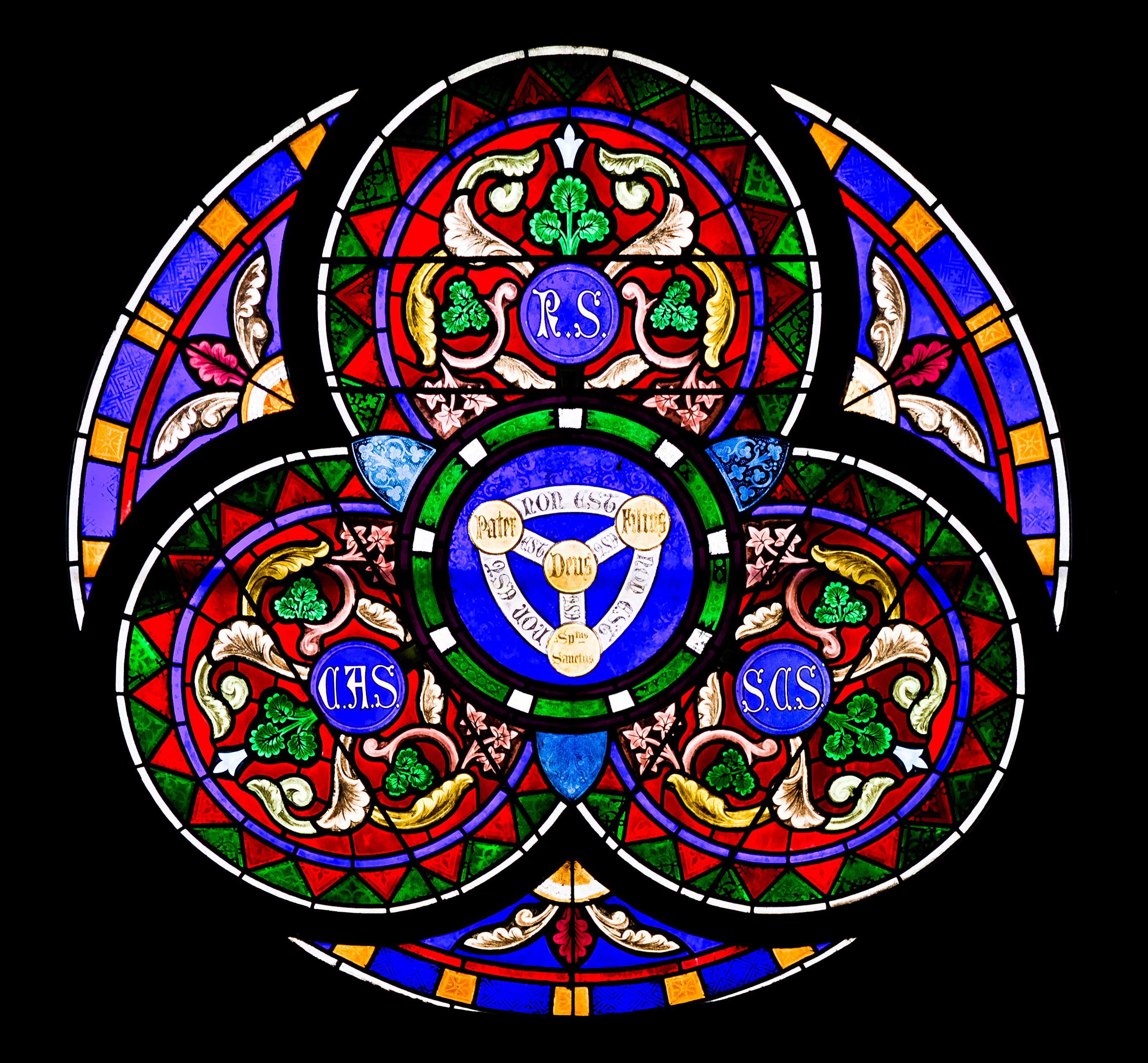
Part Six: The Doctrine Of Divine Simplicity: The Distinctions And Unity Of The Father, Son And Holy Spirit

See the source image
1 Timothy 6:16 "who alone possesses immortality and dwells in unapproachable light, whom no man has seen or can see. To Him be honor and eternal dominion! Amen."


Introduction:

In the last several posts, we have explored the doctrine of divine simplicity and its relationship to the doctrine of the Trinity. These two doctrines work together to expound on the Biblical revelation of God. One of the important applications of this type of study is to understand how to talk about God to others. The doctrine of Divine simplicity (DDS) asserts that God is not composed of parts. When we speak of God in this way, we refer to how His essence (i.e. "what He is") and existence (i.e. "how He is") and attributes (i.e. "what describes God as God") are all one, eternal, ultimate, Personal, living reality that never developed but has always been the case without beginning. Put another way, to say "God is without parts" is to mean that God has always been God, without change and possessing every perfection and fullness of being from all eternity. 
Those that affirm the DDS teach that whenever we consider all of the attributes of God taught from scripture, they leads us to conclude God's Divine simplicity with respect to His essence (i.e. "what He is") and existence (i.e. "how He is"). 

A note on how the Doctrine of Divine Simplicity is useful in evaluating other worldviews

The DDS enables us to combat other conceptions of God that are unbiblical (such as Mormonism, Pantheism, Polytheism and other worldviews). Other conceptions of Deity portray a god that is composed of parts, that is growing in knowledge or which has picked up attributes and knowledge in its relationship with the created order. The Bible affirms that God is unlike any other and without comparison (Isaiah 43:10-11; Isaiah 44:11), immaterial by nature (John 4:24) and without parts. The God of Biblical revelation never hungers, fatigues nor is a creature like us (Numbers 23:19; 1 Samuel 15:25; Isaiah 40:11; Acts 16:17). Such express ideas lead back to the inferred  doctrine of Divine Simplicity.

When it comes to the doctrine of the Trinity, the doctrine of Divine simplicity can work together with that doctrine to expound on the Biblical revelation of God. In the last several posts, we considered two out of three planks or concepts that comprise the Biblical doctrine of the Trinity. For review, all three planks are listed below:


a. Monotheism = oneness of God's being

b. Plurality of Personhood = that is, the Father, Son and Holy Spirit sharing the Divinely simple nature.

c. The co-equality of the Persons = that is, Father, Son and Spirit are equal in glory, eternity and power in their sharing the Divinely simple nature.

In today's post, we want to explore the third of these planks to see how well the Doctrine of Divine Simplicity functions together with it in expounding the God of the Bible.


Plank #3 of the Trinity: Co-Equality of the Persons sharing in the one, simple Divine essence


By reflecting on the first and second "planks", we then find the third plank of the doctrine of the Trinity to follow: namely, that all three Persons are co-equal and co-eternal. On this point, I find it helpful to ask this question: "where does the eternal, simple, undivided essence of the one God reside?" We understand from statements such as 1 Kings 8:6 that the essence of God cannot be contained by heaven nor the heaven of heavens. 


Creation itself is incapable of containing the infinite being of God. The answer to the question is found in the three Persons of the Trinity. To flesh out further this third plank of the Trinity as it relates to the doctrine of Divine simplicity, we can observe it from two vantage points: how the Triune Persons are united together and how the Triune Persons are each distinct from one another.


a. The unity of the Triune Persons as mutually indwelling one another while bearing forth the Divinely simple essence of deity.

Each person (or 'subsistence', personal instance of deity) not only possesses all the attributes that are appropriate to deity, but the Father, Son and Spirit mutually indwell one another. The language of "mutual indwelling" is found in Jesus' extended discussions with his disciples in the upper room on the eve of his crucifixion in John 13-17. We get a hint of this whenever Jesus explains to Philip in John 14:6-8 that anyone that Has seen the Son, as seen the Father. We then see references to the "Father being glorified in the Son" (John 14:13). Moreover, the Persons of the Trinity somehow indwelling believers as one God (John 14:23). As one goes further into Jesus' extended exposition in John 13-17, this language of "in me" or "He in me and I in Him" increases, with the highest frequency occurring in John 17. 


To illustrate what we mean by "mutually indwelling", I think of bubbles in a tub or on a surface. I'm sure readers have noticed how bubbles can have bubbles within themselves. In turn, those bubbles can have their surfaces penetrate and indwell their bubble neighbors, causing the entire bubble structure to be pretty close to being one "bubble structure". the following picture below depicts my point.

Image result for bubbles inside bubbles

The early Greek church fathers, such as Gregory of Nyssa, Gregory of Nazianzus and Athanasius saw this language of "mutually indwelling" as the Three Persons containing within themselves the one undivided, Divine nature. A wonderful term that came common in the Christian writings of the first several centuries was "perichoresis", which envision the Persons of the Trinity in a Divine-sort-of dance in, out and through one another. This writer would suggest that the doctrine of Divine simplicity fits quite well in describing the unity of being mutually shared by and indwelling in, among and through the Father, Son and Spirit.

As observed, the doctrine of the Trinity does not have the three Persons set off to one side and the Divine essence of God set off to the other side as a "fourth something". Rather, the Divine essence resides as the undivided, vibrant, eternal, simple, living, mutually indwelling reality shared and expressed by the Father, Son and Holy Spirit. The attributes which we see in scripture, such as love, is expressed by the Father (as lover), the Son (as beloved) and the Spirit (the Personal agent of loving activity between the Father and Son) as that perfection that is the Divine essence of God being love in and of Himself (see 1 John 4:8). 

The 1689 London Baptist Confession rounds out its discussion of the Trinity with this practical note:

(The Persons of the Trinity are) "all infinite, without beginning, therefore but one God, who is not to be divided in nature and being, but distinguished by several peculiar relative properties and personal relations; which doctrine of the Trinity is the foundation of all our communion with God, and comfortable dependence on him."
 
b. The Personal Distinctions Of Each Persons Of The Trinity In Which Each Bears The Divine Simplicity of Deity


When understanding how the Doctrine of Divine Simplicity fits with the doctrine of the Trinity, we can talk of how all three Persons mutually indwell one another or are united together as One God. But there is a second way in which we discuss the Trinity - namely, the distinct identities of the "subsistences" that are known as Father, Son and Holy Spirit. 

When we speak of God, there are no distinctions between His essence and attributes. God's essence is carried forth truly and fully by each of the members of the Trinity. We saw in the last post that the term "subsistence" is used by older doctrinal confessions to express the members of the Godhead. This older term was chosen by the drafters of the older Baptist confessions, since the term "Person", though not inaccurate, nonetheless carried baggage that may have us picture God as three separated people. A subsistence refers to a property bearer or instance of the given essence of a being. The Father, Son and Spirit are Personal subsistences that each bear truly and completely the simplicity of being. 

How the doctrine of Divine simplicity works in expressing the co-equality of the Father, Son and Holy Spirit

To further clarify what I mean when I say that each Person of the Trinity is a subsistence bearing forth the Divine simplicity of being, it all stems from how we understand the Persons of the Trinity in their interrelationship to one another. The Father so bears or expresses, by virtue of Who He is as a member of the Trinity, the trueness of Deity. The Father is the eternal initiator of the Trinitarian relationships (not essence) with the Son and Spirit. The Father brings to us Himself as a Divine bearer of the undivided essence. The opening lines of the Nicene Creed bear this out: "I believe in One God, the Father". 

This fullness of deity, so possessed truly by the Father, is described in scripture as equally shared by and possessed in true fullness by the Son, world without end (see John 1:1, 18; 14:8; 1 Corinthians 8:6; Romans 9:5). The Son is not composed of a "semi-divine" substance, but instead possesses the same, Divinely simple essence with which He co-shared with the Father. The Son is the Son by virtue of Who He is in relationship with the Father. The creeds describe the Son as "begotten, not made". 

The Holy Spirit proceeds from the Father by the Son or for the Son. Like the Father and the Son, the Spirit is Himself a bearer of the Divinely simple essence with which He shares co-eternally and equally with them. Since the divine nature of God is "simple", the nature is not separated into "parts" by the Father, the Son and the Spirit. 

The Baptist Faith and Message 2000 recognizes the compatibility of the oneness of God's nature and the "Threeness" of the Divine persons in Article 2 of its summary of the doctrine of God. In a more detailed description, the older 1689 Baptist Confession notes about the Persons of the Trinity in how they each bear forth the undivided, Divinely simple essence of Deity:

"therefore but one God, who is not to be divided in nature and being, but distinguished by several peculiar relative properties and personal relations; which doctrine of the Trinity is the foundation of all our communion with God, and comfortable dependence on him."

Both the Father and the Son, each possessing and sharing the true and fullness of deity, in turn share equally with the Spirit (Ephesians 2:8). The Holy Spirit is also designated with titles of deity ("God" in Acts 5:4-5; "LORD" in 2 Corinthians 3:16-17), who in turn is Himself a Divine Personal agent sharing in the one, undivided, simple nature with the Father and Son. As I heard one modern author note: "God is One "what" and three "whos".


Closing thoughts for today
We explored how the doctrine of Divine simplicity works with the third plank of the doctrine of the Trinity in expounding the distinctness of the Three Persons which together identify the One God of the Bible. We viewed these two doctrines working together from the standpoints of the unity of the Three Persons and the distinction of the identities of each of the three Persons (or "subsistences"). In our explorations, we found that the ancient doctrine of "mutually indwelling" or "perichoresis", which describes how the members of the Trinity indwell one another, is quite compatible with the doctrine of Divine simplicity. Hence, in considering the other "two planks" of the Trinity already explained in previous posts of this series, the possible compatibility of the doctrines of Divine Simplicity and the Trinity holds consistent. In the next post, we will attempt to draw this series to a close with final applications. 


Thursday, August 9, 2018

Part Five: The Compatibility Of The Doctrines Of Divine Simplicity And The Trinity

Image result for sunrise
2 Corinthians 13:14 The grace of the Lord Jesus Christ, and the love of God, and the fellowship of the Holy Spirit, be with you all.

Introduction:

We have taken the time to journey our way through a doctrine that has been in use by Christians since the early days of the church: the doctrine of Divine Simplicity. For readers that are interested in links to previous posts in this series, please click on the link to the last post, which contains links to the other parts of this series here: 

http://www.growingchristianresources.com/2018/08/part-four-doctrine-of-divine-simplicity.html

This doctrine asserts that everything in God is God and that His very essence contains no "parts" that would somehow compose Him. Scripture's way of describing God as Divinely simple is seen in those texts which equate His attributes with Himself. For example, we see that God "is" light (1 John 1:5-7); God "is" love (1 John 4:8); God "is" holy (Isaiah 6:3; Psalm 99:1); God "is" all-knowing (1 John 3:20) as language describing God's simplicity of being. God's attributes are not just descriptions that we "predicate" to Him. As a human being, I can be loving, which predicates the act or attribute of love. However, to say I "am" love is blasphemous, since I am but a creature. For God, we don't merely "predicate" to Him the attributes we find of Him in scripture. Instead, Scripture identifies God with His attributes, which means He is not lacking in any property necessary for Him being God.   

God is not some sort of Divine being assembled from a collection of eternal properties and attributes that resulted in He being God. This mistaken notion of God is referred to as "complexity". Complexity (that is, composed of parts and things which go from a state of potentially being what they "could be" to becoming "what they are") is a trait shared by all created things. If God were "complex" (such as all created beings) rather than simple, then whatever properties we speak of, those properties would somehow either pre-exist prior to God or God would had picked them up along the way. Rather, what we have discussed in these last series of posts is how Divine Simplicity attempts to explain how God is God and why God is totally different from everything else. 

The Doctrine of Divine Simplicity (DDS), in concert with the Doctrine of the Trinity, expresses the first plank of the Trinity doctrine: monotheism. We mentioned in the last post how the doctrine of the Trinity, along with the doctrine of Divine simplicity, works in tandem to express the Biblical revelation of God that is Personally involved in His creation (such as in answering prayers, guiding people in history and working in the salvation of sinners). In today's post, we continue on with our discussion of how Divine Simplicity and the Trinity are compatible doctrines that work together to expound on the God of the Bible. 

Plank #2 of the Trinity: there are a plurality of Persons sharing the Divine nature - Father, Son and Holy Spirit

The doctrine of the Trinity not only asserts monotheism, but secondly, it affirms that this monotheistic nature is undividedly shared by Three co-eternal, co-equal persons (compare Matthew 28:19; 1 Corinthians 8:6; 2 Corinthians 13:14). Within the shared relationship of the members of the Trinity, each member (Father, Son and Spirit) is an "instance" or a true possessor of the Divine nature. The doctrine of the Trinity affirms that each member of the Trinity is a true Personal, eternal  instance or "subsistence" of the Divine nature. (Note: if readers feel the need to skip the following discussion on the meaning of the term "subsistence", they may do so and move onto the next heading of the post, otherwise, dive in!) Put another way, its not like the Father is 1/3 God, the Son is 1/3 God and the Holy Spirit is 1/3 God. Recall, the Divine being of God is simple - incapable of division and not composed of parts. Each Person of the Trinity bears forth the essence of Deity. It is within and through the Trinitarian relationship between Father, Son and Spirit that the undivided essence of Deity resides and is expressed. Again, readers can explore the next two paragraphs which attempt to trace this thought out or simply move onto the next heading in this post, wherein I discuss what I call "compound unity".

What do we mean by "subsistence" with reference to the Trinity (optional reading section)

A "subsistence" is a bearer of properties or characteristics that indicate the sort of substance we are talking about. Subsistences can be non-living things (such as rocks) or living things (such as my cat). Subsistences can also lack a will or include a will, dependent upon whether we speak of the given substance being a mind (immaterial and endowed with volition), or rocks. The 1689 Baptist Confession explains this idea in the following sense as pertaining to God:

"In this divine and infinite Being there are three subsistences, the Father, the Word or Son, and Holy Spirit, of one substance, power, and eternity, each having the whole divine essence, yet the essence undivided."

Again, when we speak of "properties", we mean all of the attributes that describe or indicate what a given entity is. The essence or "substance" of a given thing is that to which the various properties are assigned. When we speak of God, we have not one, not two but three, Divinely Personalized "subsistences" or property bearers. The question is: what sort of property is it that the Triune Persons are bearing? If we say a Divinely Simple nature, then each "subsistence" or "Person" can with the other two make a unified decision to create or not to create. Also too, the Triune Persons, each carrying the unified essence of Deity with the other two Persons, can answer prayers and legitimately interact with the world without undergoing internal changes to what it means to be God. 

The Doctrine Of The Trinity and the Doctrine of Divine Simplicity present a God that is a "compound unity"

One question that was asked of me in in this series of posts had to do with a term I used: "compound unity". When I use the term "compound", I speak to the discrete identities of the Father, Son and Spirit. The London Baptist Confession of 1689, Article 2, has the following final statement in its section on the Persons of the Trinity:

"but distinguished by several peculiar relative properties and personal relations; which doctrine of the Trinity is the foundation of all our communion with God, and comfortable dependence on him."

Though the essence of God is without parts and devoid of literal distinctions among the Divine attributes, this does not apply to the three "subsistences" or Persons which bear the essence. In other words, it is appropriate to make necessary identity distinctions between the members of the Trinity. The Father is not the Son, the Son is not the Father and the Spirit is neither the other two. 

We do differentiate between the Persons by their identities. When I use the term "unity", that term speaks to the simple essence which is borne truly and completely by each Person. Since the Divine Essence is "Simple", this means that the Trinity is not "three deities", but Three Persons (or subsistences) within and through whom consists the one essence of Divine being. The Athanasian Creed has the following thoughts within its rich contents:

"The Father eternal; the Son eternal; and the Holy Ghost eternal. And yet they are not three eternals; but one eternal. As also there are not three uncreated; nor three infinites, but one uncreated; and one infinite. So likewise the Father is Almighty; the Son Almighty; and the Holy Ghost Almighty. And yet they are not three Almighties; but one Almighty."


Ending on a practical note for today

I know these last several posts have taken us into deep waters. However, using our minds to think hard about God is a form of worship (see Matthew 22:37; Romans 12:1-2) that cultivates the appetite of the heart for the Lord (Psalm 34:8; 2 Peter 3:18). Where does all the above, admittedly technical sort of discussion, lead us? I come back to the issue of prayer. When we pray, we pray to the Father, through the Son, by the Spirit (see Ephesians 2:18). When we address one of the Persons, we are also including the other two, since, after all, we are praying to God (John 14:8,23; Romans 11:34-35; Hebrews 1:1-2). Such a Divine nature as that of the Biblical God, incapable of division, is expressed truly and totally by each member of the Trinity, which together constitute the identity of God. It is important what we think about God. It is vital how we talk about God, since the Bible reveals a God that is very Personal and worthy of worship.

More next time....

Saturday, August 4, 2018

Part Four - The Doctrine Of Divine Simplicity: Noting Some Objections And Some Practical Points

Image result for prayer
Ephesians 2:18 "For through Him we both have our access in one Spirit to the Father."


Introduction:

We are currently in a series of posts that aim to introduce and expound upon the doctrine of Divine Simplicity (DDS). For those interested in wanting to explore previous installments of this series, please click on the links below:


http://www.growingchristianresources.com/2018/07/part-one-introducing-doctrine-of-divine.html


http://www.growingchristianresources.com/2018/07/part-two-biblical-support-and.html

http://www.growingchristianresources.com/2018/08/part-three-doctrine-of-divine.html

When we speak of God's essence as "simple", we refer to how God is not composed of parts - that is - God's attributes or properties are not set off to the one side and His being on the other side. Everything that is in God is God. God is eternal, unchanging and cannot be added to nor improved. The Doctrine of Divine Simplicity attempts to give an account of God's oneness of being - a truth that is foundational to the Biblical concept of God, and more specifically, the doctrine of the Trinity.


A Practical Set Of Points: Does Divine Simplicity Rule Out God's Ability To Answer Prayers, Interact With Our World Or Make Choices, Such As To Create The World


It is important to pause here for a set of practical reflections in our journey through the doctrine of Divine Simplicity (DDS). We've been starting to look at how the doctrine works together with the doctrine of the Trinity. At this juncture, we need to consider objections to the DDS to assess just how Biblical and philosophically sound the doctrine truly is. Besides, if any doctrine, no matter how compelling, is not in lines with the Biblical revelation of God - then the said doctrine (Divine Simplicity included) is not useful for Christian growth nor communicating the God of the Bible. Two great issues are in view when discussing this particular teaching. 

First, some critics, whom I greatly admire, have charged that the Doctrine of Divine Simplicity (DDS) conflicts with the Biblical doctrine of the Trinity. The critics claim that if there are no distinctions within God's essence in regard to His attributes and very existence, then how can one hold to the Trinity? The Trinity asserts distinctions between the Father, Son and Spirit. This first sort of object deserves an attempted response. We will offer a response to this first objection by considering the compatibility of the DDS and the Trinity in the next post.

The second "big" issue when discussing Divine Simplicity deals with whether or not the Doctrine of Divine Simplicity severely limits God with respect to His creation. This objection will be handled in today's post. Thinkers who reject Divine Simplicity believe that if God is literally without parts and has no distinction in His attributes, essence and existence, then we end up having a God that must act in a certain way and think in a certain way. On their view, this renders the act of creation as something God "had to do", rather than Him "choosing to do". Furthermore, if God's essence is simple ("without parts or distinctions"), then this could lead one to conclude that God has no ability to make choices, answer prayers or interact with our world (called by the technical term "the modal collapse problem", meaning there are no free-will decisions possible by creatures, or God, and that He "had" to create by necessity). 

On a practical level, if this is an outcome of the doctrine of Divine Simplicity, then our choices, prayers and the doctrine of creation itself are delusions. At worse, if the criticisms of Simplicity hold true, then our world is governed by fatalism (the idea that all things in history, even God Himself, is governed by a determined set of forces, eliminating true expressions of freedom of the will). This possible scenario is why some oppose the Doctrine of Divine Simplicity, since the concern is that God ends up as a remote Deity, incapable of interaction. On a practical, doctrinal and philosophical level, these possible implications of the Doctrine, if true, leave us in a disastrous situation in how we communicate the Gospel, the Biblical conception of God and everyday living.

The technical discussion that ensues between devotees and opponents of Divine simplicity can get quite technical. We won't dive into the nuances of such discussions in this post. Instead, we will only offer a response to these particular objections to see if they hold. Whenever we look at the doctrine of the Divine Simplicity, we find that the doctrine by itself delivers to us a God that is One God. What is needed is a second doctrine conjoined along with Simplicity that overcomes the objections. Unless this writer is missing something brought out by such objections, it would seem that the Biblical doctrine of the Trinity can come alongside the DDS to adequately handle such concerns.  

It seems to this writer that once we apprehend (note: not comprehend) how the Trinity and the Doctrine of Simplicity function together, we have the God of scripture that is more than capable of answering prayers, interacting with our world and choosing to create it without adding nor subtracting anything from Himself. The Persons of the Trinity, bearing forth in their identities the Divine essence which comprises their function as the Triune God, exercise the requisite will to determine when the world would exist, to answer prayers and to interact with the creation. It would seem that if the Divine essence of the doctrine of Divine simplicity did not include the Biblical revelation of the Trinity - then the above objections would hold. However, whenever we conjoin the DDS to the doctrine of the Trinity, we have a God who is extremely personal and yet is undivided in His very essence and unchanged.

A Little Bit Of What I Mean When I Say God Is A Compound Unity

For sake of completion for today, I want to answer a question raised to me about a particular phrase I used in my last post. I noted in the last post that when talking to people for the first time about the Trinity, I use the term "compound unity". I plan on expounding further on this designation in the next post. For now, let me comment that when I say "compound", I'm referring to the identity of the Three Person, who together comprise the identification of the God of the Bible, or, answer the question: "who is God?" When I say "unity". I'm referring to the one, undivided and thus simple essence truly born and expressed by the Father, Son and Holy Spirit. Again, I'll develop this more fully when we look at how the doctrines of Divine simplicity and the Trinity can work together. 

Closing thoughts for today

These practical points flow out from carefully considering why it seems that the doctrines of Divine Simplicity and the Trinity do fit together. We as finite people, I think, can know "that" such doctrines fit together, even though we may not full comprehend "how" they fit (which leads to the whole debate over the legitimacy of the doctrine of Divine Simplicity as useful in studying the Biblical revelation of God).

More next time.... 


Wednesday, August 1, 2018

Part Three - The Doctrine of Divine Simplicity and the Doctrine Of The Trinity Explain Biblical Monotheism

Image result for monotheism trinity


2 Corinthians 13:14
"The grace of the Lord Jesus Christ, and the love of God, and the fellowship of the Holy Spirit, be with you all."

Introduction:

In the last two postings, we introduced readers to the doctrine of "Divine Simplicity". To recap what is meant by this idea of "Divine Simplicity", I'll refer readers to click on links to the previous two posts to review the full-discussion:

http://www.growingchristianresources.com/2018/07/part-one-introducing-doctrine-of-divine.html


For those readers short-on-time, we can refer to theologian Wayne Grudem's summarization of the Doctrine of Divine Simplicity (oftentimes designated "DDS"), wherein he uses a synonymous term "unity":

"The unity of God may be defined as follows: 'God is not divided into parts, yet we see different attributes of God emphasized at different times'. This attribute of God has also been called "God's simplicity', using simple in the less common sense of 'not complex' or 'not composed of parts'. But since the word 'simple' today has the more common sense of 'easy to understand' and 'unintelligent or foolish,' it is more helpful now to speak of God's 'unity' rather than his 'simplicity'. (Wayne Grudem, Systematic Theology, page 177).

Grudem then later notes:

"When scripture speaks about God's attributes it never singles out one attribute of God as more important than all the rest. There is an assumption that every attribute is completely true of God and is true of all of God's character." (Wayne Grudem, Systematic Theology, page 178).


The Doctrine Of Divine Simplicity Serves To Communicate The Biblical Revelation Of God's Oneness Of Being


The doctrine of Divine Simplicity (DDS) provides theological shorthand for describing God's oneness of being as well as explaining why He is contrasted to His creation. When underscoring the oneness of God's essence or being and what is meant by God being "One God" - the doctrine of divine simplicity aids greatly in safeguarding the Biblical revelation of God as One God. Thomas Aquinas, a 13th century thinker, wrote the following in terms of Divine Simplicity's role in affirming God as one God:

"For God Himself is His own nature. Therefore, in the same way, God is God, and He is this God." 

The doctrine of Divine Simplicity, when allied with the doctrine of the Trinity, expresses not just any bare monotheism (such as found in Islam or some expressions of Judaism), but the specific, Trinitarian monotheism revealed in the Biblical text. Today's post will aim to show how the Biblical doctrine of the Trinity is compatible with the doctrine of Divine simplicity. 

The Doctrine of The Trinity and The Doctrine of Divine Simplicity Can Work Together To Explain The Biblical Revelation Of God

Whenever we speak of the doctrine of the Trinity, we are transitioning from discussing "what God is" as One God to the particular identity of this God. In sum then, the doctrine of the Trinity tells us "who God is", while the doctrine of Divine Simplicity tells us "what God is". Whenever we doctrinally and practically consider the Biblical revelation of God as "one in being and three in Personhood", we can use both these doctrines to approach the Biblical revelation about God.

Plank #1 of the Trinity: God is one in essence, i.e. A Biblical Monotheism

The doctrine of Divine Simplicity is at the root of the first fundamental truth of the doctrine of the Trinity: "monotheism" or the oneness of God's being. Three "planks" comprise the Biblical understanding of the Trinity: 

a. Monotheism = oneness of God's being

b. Plurality of Personhood = that is, the Father, Son and Holy Spirit sharing the Divinely simple nature.

c. The co-equality of the Persons = that is, Father, Son and Spirit are equal in glory, eternity and power in their  sharing the Divinely simple nature.

As explained already, the Doctrine of Divine Simplicity explains to us the oneness of God, and why it is God is one in essence (telling us 'what God is' in and of Himself) and existence (that is, 'how God is' as eternal, uncreated being'). God is His own self-contained, explanation for why He is what He is (see Deuteronomy 6:4-5; Isaiah 43:10-11; Isaiah 44:6). God as "One God" is unchanging, perfect and incapable of improvement with or without creation (Psalm 102; Malachi 3:6; Hebrews 1:5-13). The Baptist Faith and Message 2000 explains this point of monotheism in its second article on "God":

"There is one and only one living and true God. He is an intelligent, spiritual, and personal Being, the Creator, Redeemer, Preserver, and Ruler of the universe. God is infinite in holiness and all other perfections. God is all powerful and all knowing; and His perfect knowledge extends to all things, past, present, and future, including the future decisions of His free creatures. To Him we owe the highest love, reverence, and obedience."

The Baptist Faith and Message asserts an explicit commitment to monotheism, followed by a listing of the main roles and attributes associated with God's very being. The older London Baptist confession of 1689 expresses this first plank of monotheism by including the concept of "simplicity" (i.e. without body parts) which we've discussed:

"The Lord our God is but one only living and true God; whose subsistence is in and of himself, infinite in being and perfection; whose essence cannot be comprehended by any but himself; a most pure spirit, invisible, without body, parts, or passions, who only hath immortality, dwelling in the light which no man can approach unto....".

The doctrine of the Trinity affirms that God is One God. When explaining this first plank to people, I like to use the phrase "compound unity" to segue into what would be the "second plank", which speaks to plurality of persons. When I say "compound", I'm speaking of the Persons of the Trinity. The term "unity" refers to the simple essence itself. Hence, the doctrine of the Trinity presents God as a compound (with respect to the members of the Godhead) unity (with respect to the essence). God is plural in Person while one in essence.

We must not conceive of the Divine essence as a "fourth" thing, such as an inert cloud, set along side the Three Persons. The next post will explore this second plank in further detail and how the three Persons and the Divine essence are inextricably bound as One God who is Father, Son and Spirit.

For now it is worth noting that with respect to Biblical monotheism, especially the full-orbed revelation of the doctrine in the New Testament, the Three Persons of the Trinity are the living relationship and communion that so defines the Divine essence of God.
The simple essence of God resides in, among and through the Three Persons. If there were no Father, Son and Spirit, there would be no God.The doctrine of Divine Simplicity asserts that God, with respect to His essence or being, is uncompounded. With that said, the doctrine of Divine Simplicity does not conflict nor preclude the plurality of identity or personhood that we see when we speak of the Father, Son and Holy Spirit (Genesis 1:26; Deuteronomy 32; Proverbs 30:4; Isaiah 48; Matthew 28:19; 2 Corinthians 13:14). Why? Simplicity speaks to God's divine existence (i.e. 'how God is God') and essence (i.e. "what God is as God'). 

However, the doctrine of Divine simplicity does not touch upon God's identity (i.e. "who God is as God"). The identity of the Triune Persons reveal a "compound" or "plurality" to the identity of God. As we have stressed in this post, both doctrines partner together to expound the Biblical testimony of what God is and who He is. The second "plank", plurality of personhood, will be the focus of the next post.

More next time....