Isaiah 44:6-9 “Thus says the Lord, the King of Israel and his Redeemer, the Lord of hosts:
‘I am the first and I am the last,
And there is no God besides Me.
7 ‘Who is like Me? Let him proclaim and declare it; Yes, let him recount it to Me in order, From the time that I established the ancient nation. And let them declare to them the things that are coming And the events that are going to take place. 8 ‘Do not tremble and do not be afraid; Have I not long since announced it to you and declared it? And you are My witnesses. Is there any God besides Me, Or is there any other Rock? I know of none.’”
Introduction:
The last few posts have been dedicated to unpacking the Biblical, theological and life-practical applications of God's necessary existence. God's necessary existence describes in what way God exists. To be a necessarily existing being means that it is impossible for such a being not to exist. The closest illustrations we may have of necessarily existing things are ententies such as numbers, laws of logic and moral standards. Such things might exist in God's mind as part of His Divine character. All other beings and things in our universe exist contingently, meaning that their existence is based upon something or someone outside of themselves. A contingent being or thing could had been different or could not had existed at all; whereas with God, He cannot be different than what He already is and as already noted, He must exist. For further reflection on these ideas, I invite the reader to review back through the last couple of postings.
In today's post I want to close out our series on God's necessary existence by seeing how this truth of God factors into how one does Christian apologetics and evangelism. Christian apologetics refers to the defense and communication of the Christian faith to opponents and curious questioners. With respect to evangelism, apologetics functions as a plow in turning-up the evangelistic soil so that the evangelistic endeavor can plant the seeds of the Gospel. God's necessary existence has factored into one of the most profound arguments for His existence ever devised.
Why is there something rather than nothing? Introducing the Theistic Argument from God's Necessity
The seventeenth century genius G.W. Leibnitz raised a question that represents one of the oldest question in the history of human thought: "why is there something rather than nothing?" In raising this question, Leibnitz crafted the following argument that serves to explain the type of cause behind the existence of the universe:
Premise #1: Anything that exists is an explanation for its existence whether by necessity of its nature or external cause.
Premise #2: The universe has an explanation for its existence, which is God
Premise #3: The universe exists
Premise #4: Therefore the universe has an explanation for its existence
Premise #5: Therefore, the explanation for the universe’s existence is God
Thankfully there is a video available online that visualizes and explains this argument here: https://www.youtube.com/watch?v=FPCzEP0oD7I&t=6s
Considering some questions about this argument and possible responses raised by critics
Now when we look over this argument, some questions might be raised which can in turn be given satisfactory responses.
1. Why is the first premise not susceptible to the objection that some truths may have no explanation for their truth?
To say that the universe is all there is begs the question: Why does the universe exist? As the first premise states, anything that exists has an explanation for its existence, whether it is necessary or contingent (that is, dependent on something or someone outside of itself).
2. Explain why the typical atheist is himself committed to the truth of the second premise.
Premise #2 is logically equivalent to the Atheistic assertion that: if the universe has an explanation for its existence, then atheism is not true, and thus theism is true.
3. Why is the second premise quite plausible in its own right?
The cause must be greater than the effect, and other than its effect. Hence, A timeless, spaceless, non-physical mind that is eternal and necessary chose to create a time-bound, space-time reality that is physical, non-animate and contingent.
4. What response can be made to someone who claims that perhaps the universe exists by a necessity of its own nature?
A necessarily existing object cannot be differently configured or exist otherwise than what it is. A contingent object could be otherwise than what it is. Our universe could be different, since the constants for instance operate regardless of the universe’s physical properties. Hence the universe cannot be necessarily existing.
Why is this argument important for Christian apologetics and evangelism?
The argument from God's necessary existence does something that no other theistic argument can do: provide an explanation for why the particular cause of the universe must be a necessarily existing, all-powerful, timeless, spaceless, un-embodied mind (i.e God). This argument also explains why the universe cannot be eternal or necessary, but instead finite and contingent or dependent upon God for its existence. The eternality of the universe or even other proposed scenarios for the cause of the universe, such as the so-called "multiverse" or the universe simply being its own cause are shown quite implausible, since none of those causes are "necessarily existing causes".
Closing thoughts:
I know these notions can get us deep in the weeds, but they are worth considering, since in our apologetics and evangelism, we are proclaiming the One true living God worthy of worship who has been decisively revealed through Jesus Christ. Consequently, Jesus himself as God in human flesh is the One Person who both exists necessarily by virtue of His deity (Colossians 1:13-16; Hebrews 1:1-14; 13:8) and contingently by virtue of His humanity (Matthew 1:21; Luke 1:35; Philippians 2:5-11; Hebrews 2:18). As a final thought, I would encourage readers to visit the website: reasonablefaith.org and check out the apologetic resources that explain further what we have looked at this post.

Welcome to Growing Christian Resources, where you can search over 2,000 resources pertaining to your Christian walk, the explanation and defense of the Christian worldview and links to audio and video resources. Please checkout the New Hope podcast at www.gcrpodcast.wordpress.com and www.newhope-ny.org. For those desiring to dig-deeper into the scriptures, please check out www.biblicalexegete.wordpress.com.
Friday, June 2, 2017


Thursday, June 1, 2017
God's Necessary Existence: Further Reflections, Biblical Passages & Applications

Romans 11:36 "For from Him and through Him and to Him are all things. To Him be the glory forever. Amen."
Introduction:
Over the last couple of posts, we have been exploring the notion of God's necessary existence. We aim today to put some Bible underneath all that has been said in the last couple of posts. James Pedigru Boice was a major Baptist theologian of the 19th century who wrote an influential theological volume used to train pastors called: "Abstract Of Systematic Theology". What Boice has to say about God's necessary existence is understandable and profound:
"How do we know that God must be such, if there is a God? In whatever way we know this, we know at least that much of God that he must be the Absolute, the Infinite, the Unconditioned. Even before we are supposed to know that he exists, therefore, we know this much of the nature which must be his, and upon the first evidence of his existence have the right to attribute to him all that is therein contained. The characteristics thus ascribed to him, reveal him, therefore, to us, as an infinite existence, without other limitations than are found in his own nature, or essence, who, as Absolute, cannot be dependent, but must be the source and Sovereign of all else."
Coming to a better understanding of God's Necessary Existence: Key Biblical Texts
Whenever we speak of God "necessarily existing", we are referring to the fact the God in and of Himself exists without any outside help, aid or supplement. God is God with or without the universe, planets and people. Theologian Wayne Grudem summarizes God's Necessary Existence on page 162 of his "Systematic Theology":
It is not just that we exist and God has always existed; it is also that God necessarily exists in an infinitely, better, stronger and ore excellent way."
Grudem then concludes his discussion on God's necessary existence:
"All else can pass away in an instant; he necessarily exists forever".
God's necessary existence means that He must exist and thus, "cannot not exist". A tree can or cannot exist. The universe can or cannot exist. However, God, by definition, cannot fail to exist since in order for anything to begin to exist, He must exist. Some important scriptures remind us of this fundamental truth of God as necessarily existing:
1. Psalm 90:2 states - "Before the mountains were born, before You gave birth to the earth and the world, from eternity to eternity, You are God."
2. The Apostle Paul contrasts the pagan deities worshiped by the Greek and Roman philosophers of his day to the God of Biblical revelation in Acts 17:24-26 "The God who made the world and all things in it, since He is Lord of heaven and earth, does not dwell in temples made with hands; 25 nor is He served by human hands, as though He needed anything, since He Himself gives to all people life and breath and all things; 26 and He made from one man every nation of mankind to live on all the face of the earth, having determined their appointed times and the boundaries of their habitation."
3. Concerning the Divine nature of the Lord Jesus Christ as the pre-existing "Word", the apostle John presents Him as sharing in the necessary existence of deity with the Father, as seen in John 1:1-3 "In the beginning was the Word, and the Word was with God, and the Word was God. 2 He was in the beginning with God. 3 All things came into being through Him, and apart from Him nothing came into being that has come into being.
4. Romans 11:36 plainly states on this subject of God's necessary existence: "For from Him and through Him and to Him are all things. To Him be the glory forever. Amen." Apart from God, nothing would exist nor could anything be sustained.
As mentioned earlier in this post, other key texts, such as Psalm 102, Hebrews 1:4-13 and other passages assert this unique quality of God's existence as that of necessary existence.
Closing thoughts and applications:
If God did not exist, we would not exist. God's necessary existence is as much an applicable truth as it is a rich truth for our meditation. By nature, God's necessary existence implies He being the standard for objective or universal moral values and duties. If God did not exist, we would have no standards of "right" and "wrong". Ethical decision making would not be possible and we would not be around to make such decision if God's existence was "contingent" or "dependent" on something outside of Himself. If God did not exist, there would be no salvation. Think about it, the New Testament's insistence upon Jesus possessing this Divine quality of necessary existence means He is God revealed in human flesh. Unless the Son of God necessarily existed with respect to His divine nature, then salvation would not be possible. Such reflections and applications ought to cause us to praise God for the fact that He necessarily exists. This quality is what sets God apart from everything else and worthy of our worship.
Wednesday, May 31, 2017
Contrasting Our Existence To God's Necessary Existence

Psalm 8:1-4 "O Lord, our Lord,
How majestic is Your name in all the earth, Who have displayed Your splendor above the heavens! 2 From the mouth of infants and nursing babes You have established strength because of Your adversaries, to make the enemy and the revengeful cease. 3 When I consider Your heavens, the work of Your fingers, the moon and the stars, which You have ordained; 4 What is man that You take thought of him, And the son of man that You care for him?"
Introduction:
In the last post we introduced the reader to the concept of God's necessary existence. The Bible affirms God's necessary existence in general without hardly going into exquisit detail. God's eternality, omnipotence, omniscience and so forth sets Him apart from all other fraudulent conceptions of other deities in all other religions. In these series of posts, we are affirming the fact that not only does the God of the Bible exists, but that He exists necessarily. This idea of "necessary existence" means that it is impossible for God not to exist, since without Him we would have no universe, no morality, no meaning and no life! As we noted already, the Bible does not go into fine detail as to how God necessarily exists. Nevertheless, we often find God contrasted with His creation and human beings, going the route of affirming what God "is-not" (for example, God is "not-finite" but "infinite" - Psalm 147:5). In today's post we are going to contrast human beings and creation with God to hopefully bring further clarity to this idea of His necessary existence.
Contrasting Our Existence To God's Necessary Existence
As noted earlier, when we attempt to meditate on God's being and nature, we consider what God is not or by way of negation (called by theologians "via negativa" or "by way of negation"). By noting our particular situation and state of existence, we can contrast what is not the case with God in order to grasp what can be said about Him. A quick example of what I'm referring to is when we speak of God as being of an "infinite" nature. Unlike all other things and people - which are finite or inscribed within the limitations of creaturely existence (i.e "finite"), God by nature, revelation in the scriptures (see Psalm 147:5) and by definition is not finite - hence, "infinite".
Whatever we have left over from stating what God "is not", we can then discuss what God "is" by way of revelation, then by reason and finally by reflection.
Whenever we think a little bit about our own existence, a simple question can be raised: "could I had been born with different color hair, have a different height or have other different qualities?" The short answer to this question would be: "yes". Another question we could ask about our own existence would be: "is it necessary for me to exist in order for the world to carry-on as it always has? The short answer to this second question would be: "no". We may not like to think about it, but it is not necessary for us to exist in order for the world and the universe to continue on in this present moment and into the future. History could had been otherwise with or without us.
As human beings, when we speak of our reliance upon things outside of ourselves to maintain our existence or the fact we could had been different than what we are at this moment, we are referring to what thinkers call: "contingency".
This fundamental property of "contingency" is shared by all created entities: from planets to people, from galaxies to germs. Anything that is "contingent" is described as having been at one point not in existence (i.e having a beginning and thus a cause for its existence) and relying upon things outside of itself.
It is also possible for us to have different qualities and properties than what we actually have, since as human beings, we are subject to changes both internally and externally. Even though we as human beings are alive, we still require other factors to sustain our existence: air, food, a suitable environment, a planet, a solar system that supports a suitable cosmic environment for our planet to continue its orbit, a main-sequence star that adequately warms our planet and so-forth. Such reflection on our "contingent" existence helps us to see the opposite type of existence that God alone possesses: namely, "necessary existence".
Closing thoughts
Today we introduced the reader to a second important concept that describes the way in which we exist, the universe exists and all-other created things exist - namely, contingency. A contingent being does not have to exist and could had been different. Contingent beings and things require a necessary being or cause to originate them and to sustain them. Reflections such as these will aid us as we further pursue understanding God's necessary existence. In the next post, we will consider some key Biblical texts that affirm this vital truth of God's necessary existence.
Tuesday, May 30, 2017
Introducing God's Necessary Existence: Meditations And Applications

Exodus 3:14 "God said to Moses, “I AM WHO I AM”; and He said, “Thus you shall say to the sons of Israel, ‘I AM has sent me to you.’”
Introduction:
A child learns from an early age to depend on their parents. Everything that the child needs derives from either the parents or other people. Even when children grow into adulthood, though many people would like to think they are "on their own", no man is ultimately an island unto themselves. The trait of "self-sufficiency" can only be applied to one being - God Himself. As we begin reflecting on God's existence, I'd like us to think about the manner in which God exists. Over the course of today's post and perhaps the next couple of postings, we are going to look at a feature of God's existence that is unique to Him: namely, God's necessary existence.
God's Necessary Existence
To begin our thinking about this topic, let's ask ourselves the following question: "if God did not exist, would it matter?" How one answers this question gets to the heart of this important topic of God's necessary existence. In this post, we will contend that God's existence as a necessary being means that He must exist. The important ramifications and further reflections on this truth will be fleshed out below.
The Bible Asserts God's Necessary Existence
Exodus 3:14 records God's self-revelation of His name, nature and character as the God of Israel and thus the God of creation and redemption. By asserting Himself with the Hebrew verb translated: "to be", God is proclaiming His uniqueness as the self-existing God responsible for the existence and sustaining of everything else in the created order (see Genesis 1:1; Psalm 33:6; 102; Isaiah 43:10-11; Romans 11:36; Hebrews 1:4-13). Theologian J.I. Packer notes the following about God's necessary existence in his book: "Concise Theology":
"Children sometimes ask, “Who made God?” The clearest answer is that God never needed to be made, because he was always there. He exists in a different way from us: we, his creatures, exist in a dependent, derived, finite, fragile way, but our Maker exists in an eternal, self-sustaining, necessary way—necessary, that is, in the sense that God does not have it in him to go out of existence."
Author, philosopher and theologian Norman Geisler discusses the necessary existence of God in terms of answering the question: "who made God?" in the book: "Who made God? And Answers To Over 100 Other Tough Questions To Faith", page 23, with the following response:
"Who made God? No one did. He was not made. He has always existed. Only things that had a beginning-like the world-need a maker. God had no beginning, so God did not need to be made."
Closing Thoughts
Today I wanted to introduce the reader to this important concept of God's existence, namely, that God exists necessarily. We noted that it is impossible for God not to exist, since without God, there would be no universe nor any other set of objective standards (such a morality, logic and so forth). My aim in the next post will be to flesh this out further by contrasting God's necessary existence to our own.
Monday, May 29, 2017
A Brief Explanation Of The Bible's Necessity: Thoughts And Applications
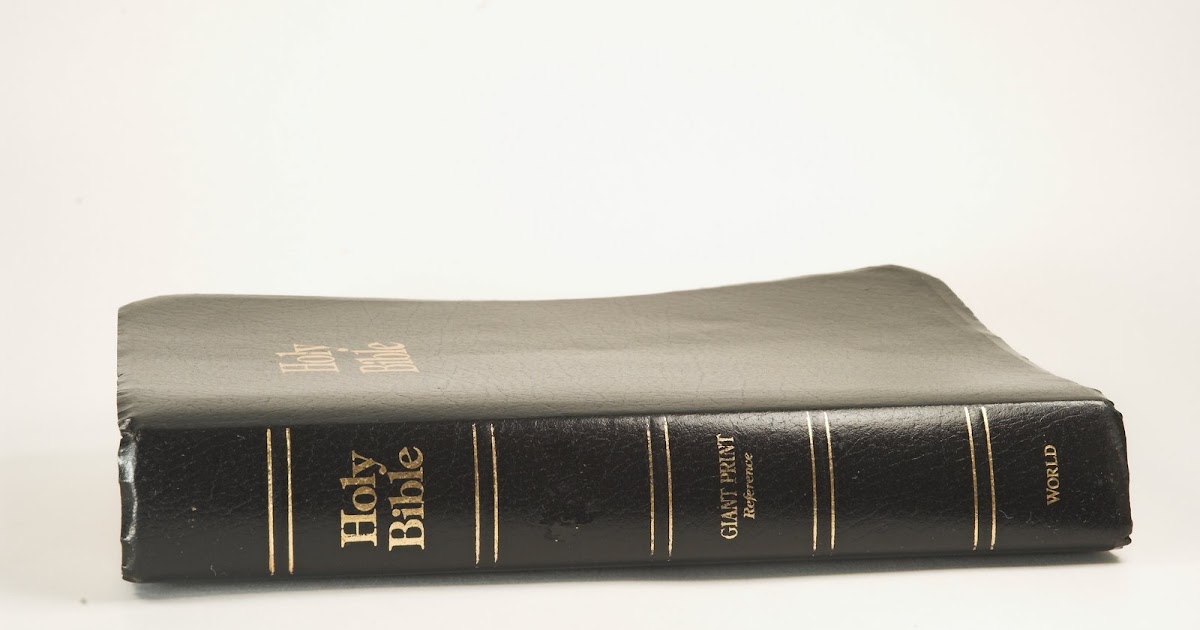
1 Timothy 4:13-16 "Until I come, give attention to the public reading of Scripture, to exhortation and teaching. 14 Do not neglect the spiritual gift within you, which was bestowed on you through prophetic utterance with the laying on of hands by the presbytery. 15 Take pains with these things; be absorbed in them, so that your progress will be evident to all. 16 Pay close attention to yourself and to your teaching; persevere in these things, for as you do this you will ensure salvation both for yourself and for those who hear you."
Introduction:
Over the last few posts, we have explored key attributes or characteristics of the Bible. In what author Kevin DeYoung suggests, the following acrostic "S.C.A.N" captures the four main attributes of our study: sufficiency, clarity, authority and necessity. My hope is that this short study has introduced you to some rich concepts and has helped you to have a higher regard for the precious Book of God.
We have looked thus far at three attributes of scripture: Sufficiency, Clarity and Authority. The final attribute of scripture we will consider is that of its necessity.
Gaining A Better Understanding Of The Bible's Necessity
Whenever one goes to purchase a car, there is “standard” equipment and then “options”. Pinstripes, chrome and a certain type of feature in the car’s audio doesn’t make the car go faster or go period. However, if the car didn’t come with tires, a motor and a transmission, then one would not have a working automobile! Such standard equipment is “necessary” for the car to operate.
For many of us who are Christ-followers, we surely ought to know from this study that the Bible is “necessary” for the Christian’s life’s beginning and continuance. Yet, how often do we treat the Bible as an “option” rather than as “standard equipment”?
Author Kevin DeYoung describes the necessity of scripture as follows:
“We need the revelation of God to know God, and the only sure, saving, final, perfect revelation of God is found in scripture.”
Imagine what would happen if the Bible had never been revealed? People would never know about the Gospel, how to get to Heaven, anything about Jesus, the meaning of life and the specifics about the God that created this world and all it contains. Centuries ago it was said that science explains how the heavens go, whilst the Bible explains how to get to heaven. The Bible is necessary for understanding this life. The Holy Spirit converts the souls of sinners who respond by faith through the Bible being taught, preached or explained (1 Peter 1:23; James 1:18). We could go on, but it ought to be patently clear that the Bible’s sufficiency, clarity and authority leads to this final attribute of its necessity.
Closing thoughts and applications
As we close out this study, I want to leave the reader with life-practical points that demonstrate the necessity of scripture and by implication, include the other three attributes of scripture expressed in this study. The Bible’s sufficiency, clarity and authority are needed to:
1. Battle sin. Psalm 119:9-11
2. Live for God. Joshua 1:8; 24:15; Psalm 1:1-2; 2 Timothy 3:17
3. Think clearly. Hebrews 4:12
4. Believe rightly. 1 Corinthians 2:10-13
5. To do church correctly. 1 Timothy 4:13-16
6. To preach effectively. 2 Tim. 4:1-5
7. Share the Gospel. Romans 10:8-17
Sources Cited In The Last Four Postings
Baptist Faith & Message 2000. Available at: http://www.sbc.net/bfm2000/bfm2000.asp
DeYoung, Kevin. Taking God At His Word: Why The Bible Is Knowable, Necessary, and Enough, And What It Means For You And Me. Crossway. 2014
Grudem, Wayne. Systematic Theology. Zondervan. 1994
Ryrie, Charles. "The Importance Of Inerrancy". Biblotheca Sacra. Volume 120. Page 137ff
Saturday, May 27, 2017
A Brief Summary Of The Bible's Attribute Of Authority

2 Timothy 3:16-17 "All Scripture is inspired by God and profitable for teaching, for reproof, for correction, for training in righteousness; 17 so that the man of God may be adequate, equipped for every good work."
Introduction:
We've noted in the last two posts how the four main attributes of scripture (sufficiency, clarity, authority and necessity) rise and fall together. To state it another way: one cannot assert the sufficiency of scripture and yet deny its clarity, authority and necessity. When we affirm one of these qualities, we affirm all of them. In today's post we want to consider the Bible's authority.
A Brief Exposition On The Bible's Authority
We’ve looked at the Bible’s sufficiency and clarity, but what about its authority? Author Wayne Grudem gives the following definition of “authority”:
“The authority of scripture means that all the words in Scripture are God’s words in such a way that to disbelieve or disobey any word of scripture is to disobey God.”
Kevin DeYoung, in his book: “Taking God At His Word” uses the term: “final word” on page 78 to designate the role of scripture in his chapter on the Bible being the final authority.
When we designate the Bible is our final authority, are we excluding all other forms of authority (such as pastors, church congregations, science, government, etc)? not at all! All other authorities are important and function to provide guidance, protection and accountability. The Baptist Faith and Message 2000 notes about the Bible’s authority:
“the supreme standard by which all human conduct, creeds, and religious opinions should be tried.”
When we talk of the Bible's authority, two very important doctrines must be mention: inerrancy and infallbility. Biblical inerrancy is another way of saying that the Bible is "totally true" in all it says, containing not one error in its words as originally given. The latter term "infallibility" refers to how the scriptures are never wrong, or, put another way: "always lead to a correct knowledge and understanding of God and everything else. The late theologian Dr. Charles Ryrie comments on this link in his article: "The Importance Of Inerrancy", in volume 120 of Bibliotheca Sacra:
"Both the authority of Christ and the authority of the Scriptures depend on the inerrancy of the Scriptures, for statements that are not completely true cannot be absolutely authoritative. Furthermore, parts of the Bible cannot be true and thus authoritative while other parts are not. It is not a book that is authoritative only in matters of “faith and practice.”
What Jesus Said About Biblical Authority
The best Person to look to in understanding the Bible’s authority is none other than Jesus Himself. In almost 30 spots in the four Gospels, we find Jesus using the phrase “it is written” in His quotations of the Old Testament. This little phrase was distinctly used by Jesus to highlight the Old Testament as God’s words in contrast to when He referenced the Jewish teachers, wherein He would say: “you have heard it said”. One of the names we use for the Bible, “scripture”, which derives from a Latin term “scriptura” meaning “that which is written” and undoubtedly reflects the attitude Jesus had toward the Bible being God’s written, authoritative revelation to us.
Closing thoughts:
The Bible’s authority is unique authority, in that it alone has sway over the conscience and it alone is the final court of appeals when it comes to weighing not only matters of life but also in getting ready for the life to come. Some great scriptures that unfold further the meaning of the Bible’s authority are: Matthew 5:18; 24:35; Luke 16:17; Psalm 119:89,160; Isaiah 40:8; 2 Timothy 3:16-17 and 2 Peter 1:3-4.
Friday, May 26, 2017
A Brief Explanation Of The Bible's Clarity

Psalm 19:7-8 "The law of the Lord is perfect, restoring the soul; The testimony of the Lord is sure, making wise the simple. 8 The precepts of the Lord are right, rejoicing the heart;
The commandment of the Lord is pure, enlightening the eyes."
Introduction:
In yesterday's post we briefly considered the sufficiency of the Bible for everyday life, spiritual life and the life to come. We meditated upon this important trait or attribute of the Bible, noting that it occupies four main attributes expounded by various Bible teachers: sufficiency, clarity, authority and necessity. In today's post we want to consider the second of these important attributes, namely the Bible's clarity.
Clarity of the Bible
The clarity of the Bible is perhaps the most attacked attribute of scripture in the 21st century. Skeptics often will accuse the Old Testament of portraying a mean, vengeful God and the New Testament presenting the God of love. Such accusations make the Bible out to be a fragmented book that is unclear when it comes to presenting the full-treatment of God's revelation.
A quick caveat from church history will reveal that indictments about the Bible's inconsistency and lack of clarity are not new. In the second century we find similar accusations from a heretic named “Marcion” who rejected all of the Bible except portions of Luke and some of Paul’s letters. Is the Bible unclear and fragmented in its revelation of God? Not at all! In addition to the Bible’s sufficiency, we must also affirm its clarity or by the older term used by some: “perspicuity”, to grasp why such attacks are unwarranted. Author Kevin DeYoung offers the following definition:
“the perspicuity of Scripture upholds the notion that ordinary people using ordinary means can accurately understand enough of what must be known, believed and observed for them to be faithful Christians.”
Does clarity lead us to conclude that every verse of scripture is going to be easy to understand? No. We must compare harder to understand portions to those portions of scripture that speak more clearly. The Apostle Peter wrote in 2 Peter 3:16 of how some of Paul’s letters were hard to understand and yet Peter affirmed that one’s Christian understanding could be clearly enlightened by the “great and precious promises” of the Bible in 2 Peter 1:3-4.
Closing thoughts:
Thankfully, the Christian is not left to their own devices to figure out the meaning of the Bible. The Holy Spirit has been sent to aid, guide and instruct our hearts and minds as we read and study the scriptures through His ministry called “illumination” (see 1 Corinthians 2:10-13; 1 John 2:20,27). Great passages that speak further on this attribute of clarity are: Psalm 19:7-8; Habakkuk 2:2; Psalm 119:104; Psalm 119:89,160; Isaiah 40:8; Proverbs 6:23; John 16:12-14; 1 Corinthians 2:13 and 1 John 2:20,27.
Subscribe to:
Posts (Atom)