

Introduction:
In the last post of this series on the Nicene Creed, we looked at the Nicene Creed's confession of Jesus coming in glory here Growing Christian Resources: Post #28 1700 Years of the Nicene Creed - "and He shall come again, with glory". I closed out that last post by noting how the Kingdom of God is the domain of the reign of the Son of God. What divides theologians concerns the issue of the millennial kingdom that it referred to throughout Scripture.
I pondered some on the debate over the nature of Christ's reign as it relates to the doctrine of the millennium. Is the revelation of the glory of the King mainly in Heaven now with a final manifestation meant to then resurrect the saints, judge unbelievers, and usher in the New Heavens and New Earth (the broad outline of so-called "amillennialism" and "post-millennialism")?
Or will the glory of God through Christ, through His Kingdom, involve an earthly physical stage of a 1,000 years duration, beginning with the resurrection of the just and concluding with the resurrection of the unjust, final judgment, and New Heavens and Earth?
For those who want to appeal to the Nicene Creed to support pre-, a-, or post-millennialism, the Creed itself will not lend proof for either school of thought. Suffice to say though the whole debate over the millennium must reckon with which view most clearly shows Christ revealing the glory of His deity in such a way to flood the whole earth and cosmos, as well as to show He is the decisive revelation of God.
In today's post I wanted to revisit where I ended in the last post and evaluate the four leading millennial viewpoints against the next statement in the Nicene Creed: "who kingdom shall have no end". What we will do is briefly define what the main schools of thought are on the millennium, how such a discussion is relevant to this phrase in the Nicene Creed, and then offer some final reflections.
Four views of the millennial reign of Christ
To keep this post at a minimal length, I will confine our survey of the millennial views to the Biblical text of Revelation 20, which tends to be the main hotbed of contention among the four schools.
1. Premillennialism - Those who hold to this teach that when Christ returns, He will set up a literal earthly kingdom for 1,000 years, followed by a brief loosing of Satan to deceive the nations, the Great white throne judgment and then the bringing in of the "New Heavens and New Earth". The reason for the name "premillennialism" is due to the prefix "pre" referring to "before" and "millennium" being "1,000 years". Two variations exist within the Premillennial interpretation which for now we will just list their names. These two variations could also count as two of the four millennial views, since each of them have vast amounts of literature associated with them, as well as leading commentators and interpreters.
a. Classical Premillennialism
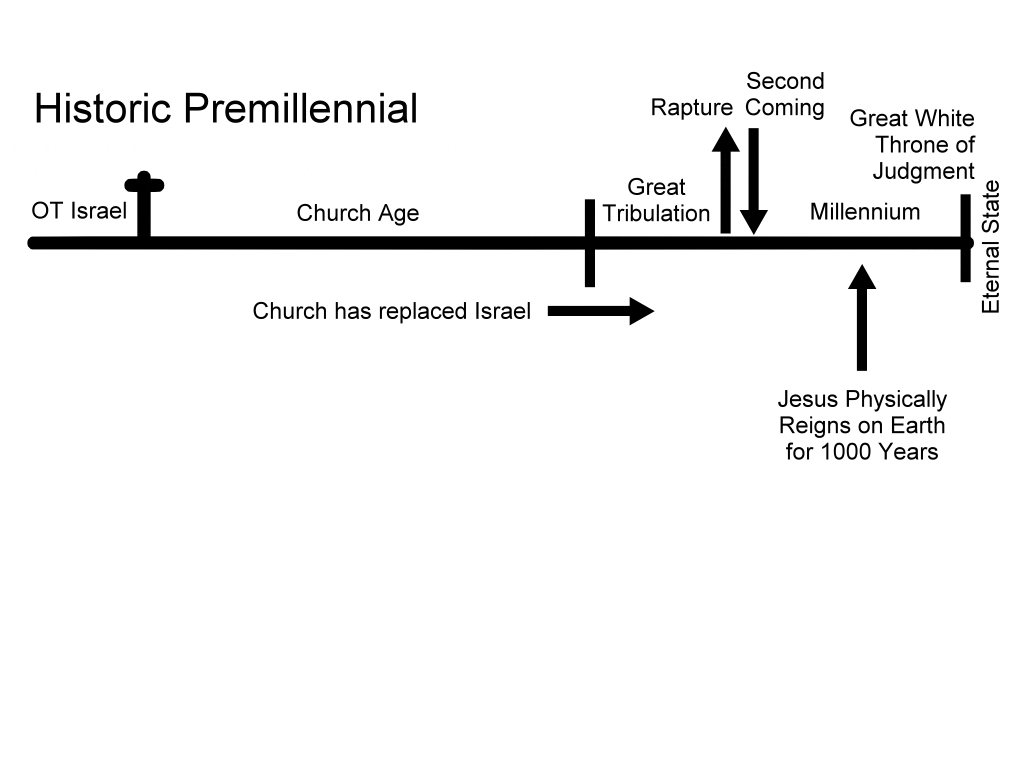
Sometimes called "Post-Tribulational Premillennialism", this version of premillennialism is so-called because of its claim to be the oldest eschatological view on the millennium, hence "classical premillennialism". Early interpreters such as Irenaeus of Lyons (180 A.D.) and Papias (mid-second century) championed this position, known in their day as "chiliasm". The most notable proponent of this position in recent times was the late George Eldon Ladd.
b. Dispensational Premillennialism.
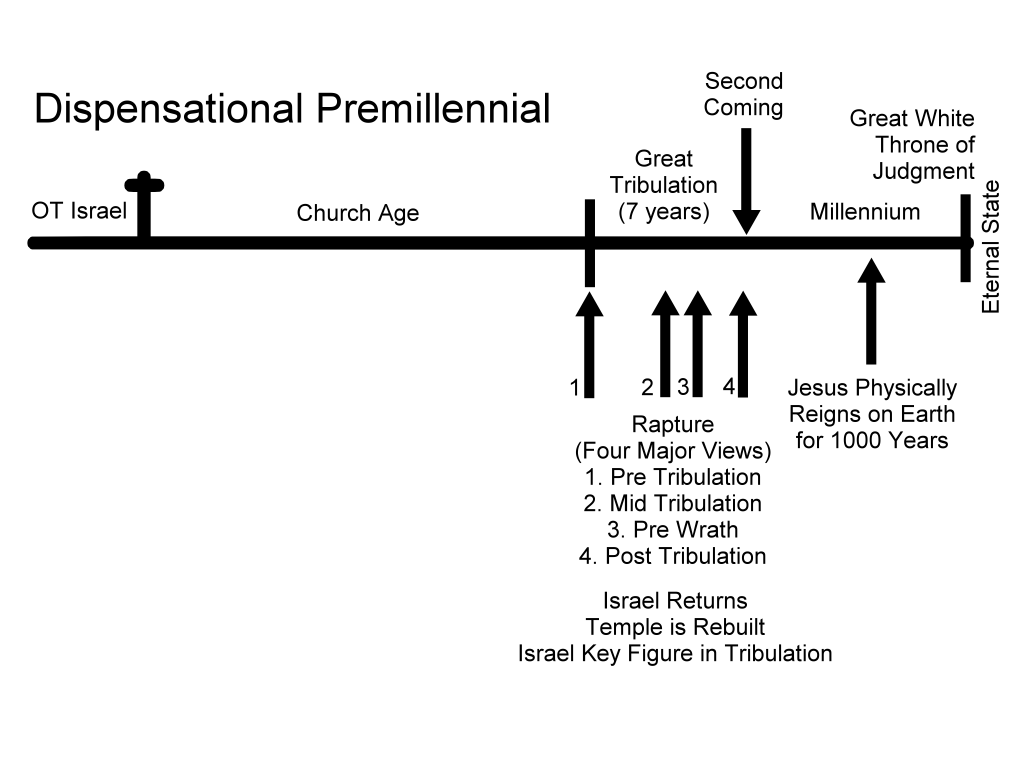
Sometimes called "Pre-tribulational Premillennialism", this position is represented by those in the early church who anticipate the soon return of Christ at anytime for His church. Medieval theologians such a Jehoiakim Fiore, and more recently by John Nelson Darby, twentieth century dispensationalism (men such as John Walvoord and J. Dwight Pentecost), and progressive dispensationalists today (such as Darrell Bock) have advocated this view.
2. Amillennialism.

This position teaches that Christ began His reign at His ascension into Heaven and is ruling and reigning over a spiritual kingdom right now. Early forerunners of this position didn't so much express themselves as "Amillennial" as they did their opposition of the classical premillennialism noted above - i.e. "chiliasm". One of the earliest forerunners to this view was Cyprian of Carthage, who wrote in chapter 27 of his book "On The Unity of the Church" in the mid-3rd century:
"The Lord’s coming will be sudden; let Him find us vigilant, not distracted by the world’s deceit. If we hold fast to His precepts, the devil will not overcome us. Awake, therefore, and reign with Christ, for only those who watch shall receive the crown."
Being that it denies a literal 1,000 year reign of Christ, the term "A-millennialism" is used (a=no and millennium = 1,000 years). History (according to this view) will continue in its downward spiral and at the end Christ will return, judging the world and Satan, and bring about the new heavens and new earth. Cyprian of Carthage was an early forerunner, with Augustine of Hippo (4th-5th century) being the first to truly systematize it into a workable eschatological model. Modern theologians such as Sam Storms and Jay Adams are among more noteworthy defenders of it.
3. Post Millennialism
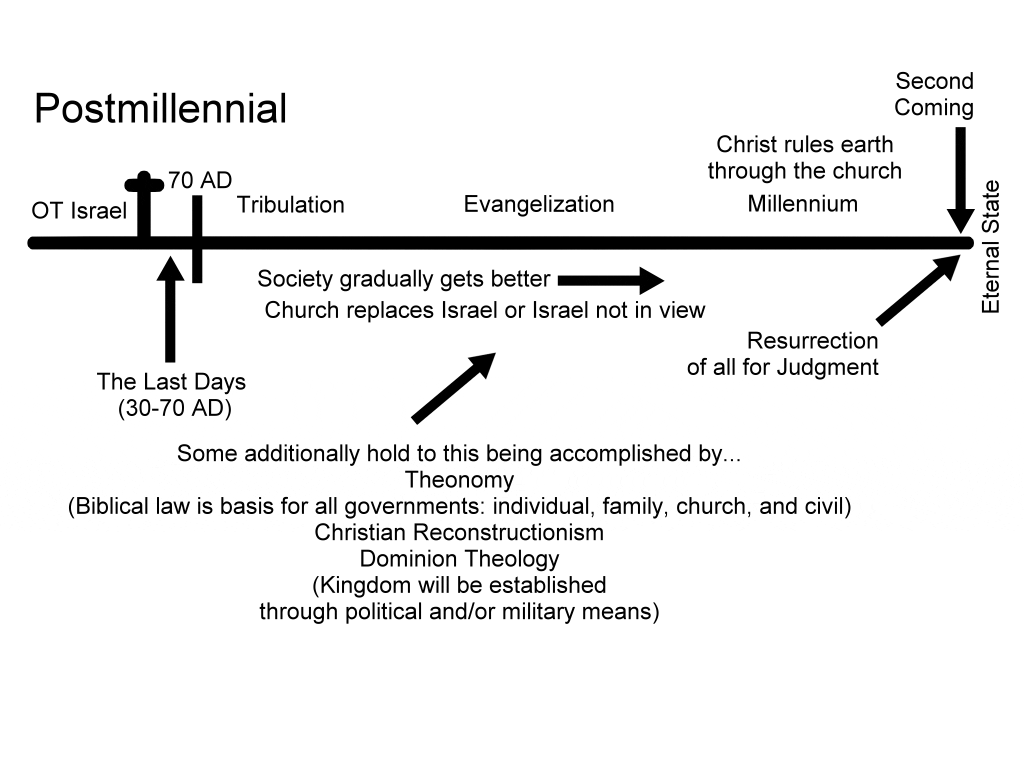
This position teaches that Christianity will continue to increase until the whole world is taken over by the gospel. Though not every individual will be saved, yet post-millennialists contend that every nation will eventually see many of their people saved. It generally teaches that the church will continue to evangelize until so many people are converted that Christ will then return at the end of the future golden age or "millennium" )post = "end" millennium= 1,000 years).
Post-millennialists take passages such as Psalm 2 and missionary passages such as Matthew 28:18-20 to refer to the triumph of the gospel over unbelief. Admittedly, if there was one view I wish I believed, it would be this one (due to its optimistic outlook on the triumph of the Gospel). Older theologians such as Jonathan Edwards and more recent ones such as the late R.C. Sproul and Greg Bahnsen have ably expressed its tenets. represent this viewpoint.
As for myself, I tend to land in the pre-tribulational, premillennial camp. Readers may explore this blogsite, where I have written posts in the past delving into far more detail on the above positions just outlined, as well as my own understanding.
In the next post I'll continue on to deal with the interpretive issues involved in the discussion about the millennium and the relevance of this discussion to how we understand the Nicene Creed's "whose kingdom shall have no end".


No comments:
Post a Comment