Translate

Thursday, February 8, 2018

What is God's Glory?

Image result for The glory of God
John 1:14 "And the Word became flesh, and dwelt among us, and we saw His glory, glory as of the only begotten from the Father, full of grace and truth."

Introduction:

17th century pastor and theologian Jonathan Edwards expresses his thoughts on God's glory from his sermon: "That God Is The Father Of Lights" - 

"God is arrayed with an infinite brightness, a brightness that doesn't create pain as the light of the sun pains the eyes to behold it, but rather fills with excess joy of delight. Indeed, no man can see God and live, because the sight of such glory would overpower nature, but 'tis because the joy and pleasure in beholding would be too strong for a frail nature. God has this glory essentially and of himself. He is independently and necessarily glorious. The sun is glorious, but it derives that glory from another. But God is glorious in and of himself, so He is the Father of glory."

This insightful excerpt describes the effects of God's glory. However, in this post we want to probe into what is meant in scripture by this idea of "God's glory". I'll admit, a tiny finite mind and pen like my own cannot ever hope to comprehend this truth. However, we were created by God with the capacity to behold and reflect on His glory revealed in the heavens and to apprehend and savor it in that moment He calls us to saving faith in Christ. We can know God's glory - even if we don't ever hope to comprehend all that it is. This is why we have the scriptures of the Old and New Testaments. 

Below we will trace out three main thoughts that give us handles with which to grasp as we aim to describe what we mean by "God's glory". The scriptures below will be offered without commentary, so as to provide the reader a handful of texts to ponder on this wondrous truth about God. So, what is God’s glory? 

Reality of God’s Goodness.


Exodus 33:19-20 And He said, “I Myself will make all My goodness pass before you, and will proclaim the name of the Lord before you; and I will be gracious to whom I will be gracious, and will show compassion on whom I will show compassion.” 20 But He said, “You cannot see My face, for no man can see Me and live!” 

Radiance of God’s Presence

Ezekiel 1:28 “As the appearance of the rainbow in the clouds on a rainy day, so was the appearance of the surrounding radiance. Such was the appearance of the likeness of the glory of the Lord. And when I saw it, I fell on my face and heard a voice speaking.” 

Revelation by the Person of the Son

John 1:14 "And the Word became flesh, and dwelt among us, and we saw His glory, glory as of the only begotten from the Father, full of grace and truth."  

Closing thoughts

As we close out this short post, I leave the reader with Hebrews 1:1-4, which seems to tie together the three main scriptures and headings offered above with regards to God's glory. Hebrews 1:1-4 

"God, after He spoke long ago to the fathers in the prophets in many portions and in many ways, 2 in these last days has spoken to us in His Son, whom He appointed heir of all things, through whom also He made the world. 3 And He is the radiance of His glory and the exact representation of His nature, and upholds all things by the word of His power. When He had made purification of sins, He sat down at the right hand of the Majesty on high, 4 having become as much better than the angels, as He has inherited a more excellent name than they."

Tuesday, February 6, 2018

The Infinite And Indwelling Presence Of Almighty God - Romans 11:36-12:2

Image result for goldfish
Romans 11:36-12:2 36 "For from Him and through Him and to Him are all things. To Him be the glory forever. Amen. 12:1  Therefore I urge you, brethren, by the mercies of God, to present your bodies a living and holy sacrifice, acceptable to God, which is your spiritual service of worship. 2 And do not be conformed to this world, but be transformed by the renewing of your mind, so that you may prove what the will of God is, that which is good and acceptable and perfect."

Introduction: Thinking upon God's infinite presence

As I write this post today, I'm sitting beside my goldfish. The fish swims in its tank, unaware of the water that is upholding it and sustaining it. The fish gets fed by me, it's owner. If there were no aquarium (which I bought), the fish would have no home. Ultimately of course, nothing would endure were it not for the almighty presence of God. Like that fish, many Christians carry on their day with hardly a second thought about the reality and personality of the omnipresent God that has direct influence on every point in space. 

Whether by directly moving on any of those points, or moving on such points by secondary and tertiary means (His Providence at work through natural laws, history, governments, men's wills) - there is not one square inch of space that, in the words of the great Dutch theologian Abraham Kuyper, Christ cannot say "mine!"

I don't want to retain ignorance of God's presence like my goldfish. Rather, I find it needful to cultivate a heightened awareness of His all pervading reality. The late author A.W. Tozer remarks:

"The world of sense intrudes upon our attention day and night for the whole of our lifetime. It is clamorous, insistent and self-demonstrating. It does not appeal to our faith, it is here, assaulting our five senses, demanding to be accepted as real and final. But sin has clouded the lenses of our hearts that we cannot see that reality, the City of God, shining around us. The world of senses triumphs. The visible becomes the enemy of the invisible, the temporal of the eternal."

Tozer then concludes:

"At the root of the Christian life lies belief in the invisible. The object of the Christian's faith is unseen reality." 

God's omnipresence is His infinite presence

Reflection upon Romans 11:36-12:21 gives us a way to understand how the Christian is to live in the presence of God in heightened awareness of God's activity within them and through them.

God's omnipresence, we could say, is His "infinite presence" that can influence all points in the universe and including the universe itself. All things are equidistant to God. To illustrate, picture a man at the supper table. He has before him his plate and all the utensils. He can reach out and affect anyone of those objects, since they're all in front of him. 

All of creation is before the living God. Not only do all things lay before Him, God also is present at every place and moment in history and space. Medieval theologians referred to this aspect of God's omnipresence as His immensity. God's presence suffuses the fabric of time and space whilst keeping Himself distinct and separate from it (i.e. another aspect, God's transcendence). 

This expression of God's presence we could tag His "infinite presence". True, ultimate reality is not inanimate, material and non-personal (such as our universe); instead, the true, Sole, Ultimate reality is Living, immaterial and personal - i.e God. He is dynamic ever-moving. He is identified as three persons: Father, Son And Spirit. All three Persons are this very movement and identity of Almighty God.

How the Holy Spirit's indwelling presence enlightens the Christian by the renewal of the mind and spirit. Romans 11:36-12:3

Romans 11:36 leaps off the page. This one verse of Romans 11:36 is an Bible in microscopic form. Note the words: "from Him" - that is, God the creator; "through Him", that is, Christ the redeemer"; "to Him", that is, Christ our soon coming King; "to Him be glory for ever, amen", that is, the Spirit's work of bring history to its culmination when Christ returns and then hands all things over to the Father. The entire canon of scripture, from Genesis to Revelation, is expressed by Romans 11:36. I find in this verse a perfect expression of God's omnipresence. 

When we transition in Romans 12:1-3, we find the command to present our bodies as living sacrifices. Paul is beginning to discuss what we could call God's "indwelling presence" in the Christian. Here we see the Christian presented as a living sacrifice, much like those sacrifices brought into the temple at Jerusalem in Paul's day. They were brought for presentation to God, for offering and for expression of worship. Those sacrificial animals were set apart. Death would result. The sacrifice left the world of the living to give its life to point the way to the Author of life. The sweet aroma that wafted its way throughout the temple precincts would remind worshipers of their purpose for living - to know God. 

The Christian is a living sacrifice. He or she is to come of their own volition. The remainder of Romans 12:1-2 instructs not only action, but surrender. Just as Jesus went willingly to the cross to give His life on our behalf, we too are to follow in His steps (Hebrews 12:1-3; 1 Peter 2:21). 

We find a command in the passive voice: "be transformed by the renewing of our minds". Too often we find the temptation to "be conformed to this world". Passivity in the things of the flesh leads to swift spiritual decline. We find too often the tendency to put things in cruise control and let the world dictate our agenda. However, such passivity must be opposed and then exchanged with a passivity to God's presence in the believer. 

So, what is meant by Paul when he writes: "be transformed by the renewing of your mind"? Two New Testament passages, speaking in almost identical terms, shed much light on this statement made by the Apostle. The first is found in another of Paul's letters, namely Ephesians 4:20-24

"if indeed you have heard Him and have been taught in Him, just as truth is in Jesus, 22 that, in reference to your former manner of life, you lay aside the old self, which is being corrupted in accordance with the lusts of deceit, 23 and that you be renewed in the spirit of your mind, 24 and put on the new self, which in the likeness of God has been created in righteousness and holiness of the truth."

The second passage that expounds upon the meaning of "renewing of the mind" is discovered in the Apostle Peter's second epistle, 2 Peter 1:4-5a

"For by these He has granted to us His precious and magnificent promises, so that by them you may become partakers of the divine nature, having escaped the corruption that is in the world by lust. 5 Now for this very reason also, applying all diligence, in your faith supply moral excellence....".

Renewal of one's mind entails the combination of spiritual and moral transformation. The Christian is passive, in one sense, yielding to the Spirit's inner working. Yet, at the same time - especially in light of Peter's words - the Christian is actively participating with the Holy Spirit. He or she does so by means of "adding" to his or her faith the needful works and Spirit-wrought virtues (i.e. the fruits of the Spirit, see Galatians 5:22-23).

The indwelling presence of the Spirit of God empowers the Christian to live out the will of God

At salvation the Spirit of God comes to indwell the Christian (1 Corinthians 3:16; 6:19-20). Christians are described as the temple of the living God, both individually and corporately (Romans 6:4-12; 1 Corinthians 3:16; 6:19-20; Ephesians 3; 1 Peter 2:4-11). God's infinite presence, accessible to anyone, manifests in its more obvious expression by the indwelling of the Person of the Holy Spirit (see John 14:16-18; 15:26-27). Only by the Spirit can one test or prove that good, acceptable and perfect will of God (i.e. the scriptures, see 1 Corinthians 2:10-13; Hebrews 4:12).

Closing thoughts:

Today's post featured Romans 11:36-12:2. We noted how God's presence can be understood by two headings: His infinite presence (i.e. omni-presence) and His indwelling presence (i.e. the indwelling of the Holy Spirit in the Christian. The presence of God, by the Person of the Spirit in the Christian, enlightens them to their spiritual identity and their need to participate in the life of God within them. The Spirit's enlightening work also empowers such persons to live out the will of God found in the Word of God. Such truths alert us to the pervading reality of God's desire to work in and through every Christian His powerful and mighty presence.  


Thursday, February 1, 2018

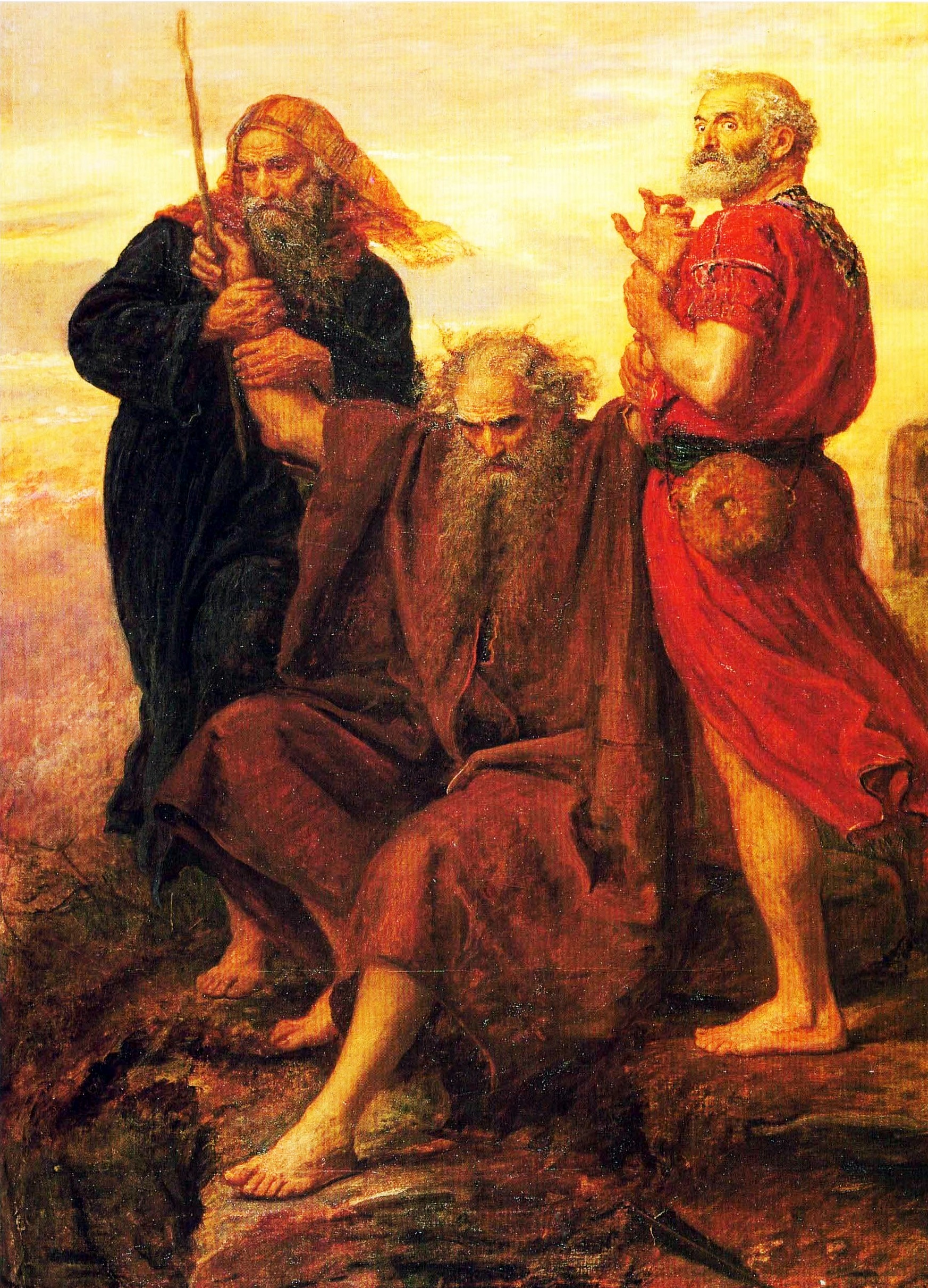
An Illustration Of New Testament Deacon-Ministry From The Old Testament


Related image

Exodus 17:8-13 Then Amalek came and fought against Israel at Rephidim. 9 So Moses said to Joshua, “Choose men for us and go out, fight against Amalek. Tomorrow I will station myself on the top of the hill with the staff of God in my hand.” 10 Joshua did as Moses told him, and fought against Amalek; and Moses, Aaron, and Hur went up to the top of the hill. 11 So it came about when Moses held his hand up, that Israel prevailed, and when he let his hand down, Amalek prevailed. 12 But Moses’ hands were heavy. Then they took a stone and put it under him, and he sat on it; and Aaron and Hur supported his hands, one on one side and one on the other. Thus his hands were steady until the sun set. 13 So Joshua overwhelmed Amalek and his people with the edge of the sword."

Introduction:

There are two places we look to in the New Testament when studying the subject of deacons: Acts 6:1-7 and 1 Timothy 3:7-13. A deacon's most fundamental function is to "serve". Deacons serve the spiritual leadership and the people of God. Though the office of Deacon is a New Testament office in the church, the principle of certain persons serving God's people and spiritual leadership are found in the Old Testament. One example of this is found in Exodus 17:8-13. 

The battle between Joshua and the Amalekites would be any other battle except for one detail: two men holding up Moses' arms atop the mountain overlooking the scene. Joshua was charged to lead the ancient Israelite army against the Amalekite forces. Military prowess would not win this battle. Prayer would see this victory. The battle on the ground would follow the course of the battle atop the mountain.

Whenever I see Aaron and Hur propping-up Moses' arms, there is a picture of the place of Deacons in conjunction with the pastor. Just as Moses was a servant of God, leading the people of God and preaching His word (see the three main sermons of Deuteronomy 4-27 and Hebrews 3:4), so to is the pastor a servant leader that is called to feed the flock with the Word of God (see 1 Peter 5:1-4). Moses told Joshua in Exodus 17:9 that he would "station himself" atop the mountain whilst the people of God fought their enemy. Pastors stand in the gap to equip God's people, preach His word and pray (see 1 Timothy 4:13-16; Hebrews 13:7,17). In Acts 6:2-4 we find the Apostles describing what they did as that of "giving ourselves to prayer and the ministry of the Word". 

As the church militant fights the fight of faith, needs arise. We find in Exodus 17 the forces of Amalek opposing God's people. Lest there were prayer warriors standing in the gap, the three "d's" (doubt, depression, discouragement) would set-in on the people. Moses was stationed. Moses became spent. Ministry is draining if not accompanied by regular intercession - which was why Aaron and Hur came along side Moses. 

In Acts 6 we find great need. Certain widows in the church were neglected. The Apostles knew that pure religion before our God is that widows and orphans are cared for in time of need (see James 1:26-27). Yet they also knew that the Gospel needed to spread throughout the Mediterranean world. The time came to request of the church to select seven men - i.e., the archetypes to New Testament Deacons. We read in Acts 6:3-5a

"Therefore, brethren, select from among you seven men of good reputation, full of the Spirit and of wisdom, whom we may put in charge of this task. 4 But we will devote ourselves to prayer and to the ministry of the word.” 5 The statement found approval with the whole congregation....".

Deacon ministry is not easy, nor is it for everyone - yet it is vitally important. Acts 6:1-7 and 1 Timothy 3:8-13 lay out the following "job-description":

1. Be a servant. Acts 6:2; 1 Timothy 3:13
2. Be Spirit-filled. Acts 6:3

a. Have a testimony  “who are known”
b. Filled or controlled by the Holy Spirit
c. Full of or characterized by wisdom

3. Be a committed Christian that desires influence others for Jesus. 1 Timothy 3:8-12

a. Worthy of respect 3:8
b. Sincere (not talking out of both sides of the mouth) 3:8
c. Not given to much wine 3:8
d. Not greed (competing for material wealth) 3:8
e. Holding the deep truths of the faith (committed to biblical truth) 3:9
f. Above reproach (no one has anything bad to say about them) 3:10
g. Be tested (Looking for spiritual and moral integrity) 3:10
h. Faithful and believing wife 3:11
i. Have a well-managed or sound household 3:12

j. Sound marriage 3:12

The result? In Acts 6, needs were met and the Gospel spread. Whenever we see Aaron and Hur upholding Moses' arms in Exodus 17, what is the outcome? Exodus 17:12-13 states:

"But Moses’ hands were heavy. Then they took a stone and put it under him, and he sat on it; and Aaron and Hur supported his hands, one on one side and one on the other. Thus his hands were steady until the sun set. 13 So Joshua overwhelmed Amalek and his people with the edge of the sword."

Closing thoughts:

Good, godly servants of the Lord - Aaron and Hur - were willing, available and ready to serve God's man and God's people. Joshua and the Israelites were all the better for it. The battle on the ground was influenced by what went on above them. These same principles are why we have New Testament Deacon ministry. When good, godly men, willing and ready to serve, step up to aid their pastors and God's people - everyone wins. 


Monday, January 29, 2018

Marks Of A Great, Godly Church - 1 Peter 5:1-14

Image result for stained glass windows in churches
1 Peter 5:12-14  "Through Silvanus, our faithful brother (for so I regard him), I have written to you briefly, exhorting and testifying that this is the true grace of God. Stand firm in it! 13 She who is in Babylon, chosen together with you, sends you greetings, and so does my son, Mark. 14 Greet one another with a kiss of love. Peace be to you all who are in Christ."

Introduction: Meet A Great Godly Church

The Apostle Peter wrote two epistles that are placed near the end of the collection of 27 books we call the New Testament. Peter's purpose in writing his short letter was to exhort his readers to "stand firm in the grace of God" (see 1 Peter 5:12). In the final chapter of his letter, we find the blueprints for a great, godly church. In today's post I want to briefly look at what it takes to be a great, godly church. What follows is not exhaustive, but instead summarizes the overall message we find in 1 Peter 5:1-14. What traits or qualities distinguish such a church? 

1. Devoted Pastors.  1 Peter 5:1-4

1 Peter 5:1-2 states - "Therefore, I exhort the elders among you, as your fellow elder and witness of the sufferings of Christ, and a partaker also of the glory that is to be revealed, 2 shepherd the flock of God among you, exercising oversight not under compulsion, but voluntarily, according to the will of God; and not for sordid gain, but with eagerness." 


A church that is favored by God will be a church that loves to feed on the word of God.  Peter's commands to pastors is to "shepherd" or "feed the flock" the word of God. This is apropos for Peter, since Jesus, in John 21, had re-commissioned Peter to "feed His sheep" some thirty years prior to Peter's composition of 1 Peter.  Shepherding a church and leadership go hand-in-hand. Such pastors will exercise leadership in four ways:


a. Lead by God's will. 1 Peter 5:1-2a. 


b. Lead with God's passion. 1 Peter 5:2b


c. Lead with God's integrity. 1 Peter 5:3


d. Lead for God's approval. 1 Peter 5:4


As noted already, these words from Peter's pen echo what he heard from Jesus' lips some 30 years prior as recorded in John 21:16 "He said to him again a second time, “Simon, son of John, do you love Me?” He said to Him, “Yes, Lord; You know that I love You.” He said to him, “Shepherd My sheep.”  


Paul too gives similar instruction to the Ephesian elders to feed the flock as devoted pastors in Acts 20:28.  Why? Devoted pastoral ministry is included in God's design for the church to sanctify the church by the Word (John 17:17; Ephesians 5:26); encourage the church (Hebrews 4:12); enlighten the church by Spirit-empowered preaching and teaching (1 Corinthians 2:10-13) and mature the flock as the Spirit sees fit (Ephesians 4:11-12; 1 Peter 2:1-2). No man can do any of these things apart from the Holy Spirit's empowerment and the call of God.


Christians who regularly feed on the Word of God will grow in maturity - knowing good from evil.  God's hand of grace will be on a church that feeds from the scriptures preached and taught by God-called men. But notice a second trait of a church that is a great and godly church...

2. Dependence upon God. 1 Peter 5:5-10

Peter writes in 1 Peter 5:5-7 "You younger men, likewise, be subject to your elders; and all of you, clothe yourselves with humility toward one another, for God is opposed to the proud, but gives grace to the humble. 6 Therefore humble yourselves under the mighty hand of God, that He may exalt you at the proper time, 7 casting all your anxiety on Him, because He cares for you." 


Next to love, humility is the number one trait that demonstrates Christ-likeness (see Philippians 2:1-5).  In the realm of our attitudes and actions, humility is the most royal of virtues as it serves others. Passages such as Philippians 2:1-5 urge us to have this same mindset as was found in Christ Jesus - humility. When I yield myself over to another for the sake of relationship - I am demonstrating the communicable attribute of humility that is germane to God's own nature. A church body that serves others and has within it service to one another is a church that will abound in God's supernatural grace and power. 


To summarize Peter's point on the necessity of dependence on God, we can note the following:


a. Waiting on God. 1 Peter 5:5-6


b. Trusting God. 1 Peter 5:7-8; Proverbs 3:5-6; Matthew 6:34


c. Persevering in God. 1 Peter 5:9-10; Jude 1:3; James 1:3-4.


So a church that is a great and Godly church will have devoted pastors and dependence upon Him. But notice thirdly...

3. Determination to Follow the Lord.  1 Peter 5:9-14

1 Peter 5:9-10 states - "But resist him, firm in your faith, knowing that the same experiences of suffering are being accomplished by your brethren who are in the world. 10 After you have suffered for a little while, the God of all grace, who called you to His eternal glory in Christ, will Himself perfect, confirm, strengthen and establish you." 


In 1 Peter 5:9 the NASB renders the opening phrase as "stand firm in your faith". Though the pronoun "your" could very well be implied in the passage, other English translations handle this passage better in bringing out the emphasis of "The Faith". This reference to faith has to do with the objective Christian faith, the "capital 'F'" faith within which my "small 'f'" personal faith in Christ resides. The HCSB renders this passage as: "Resist him and be firm in the faith...", with the KJV and NKJV following suit.  


The emphasis on "The Faith" reminds us of Jude 1:3 "Beloved, while I was making every effort to write you about our common salvation, I felt the necessity to write to you appealing that you contend earnestly for the faith which was once for all handed down to the saints."  


The Christian's personal faith rests in the gifting of faith granted by God in His grace and persists. To summarize Peter's point here, we can note three realizations to keep in mind when exercising determination to follow God as a great, Godly church...


a. Realize, you're not alone. 1 Peter 5:9


b. Realize, you've got a Heavenly home. 1 Peter 5:10-11


c. Realize, you have His favor (i.e. grace) 1 Peter 5:12-14


Closing thoughts:


This brings us to the close of Peter's letter and the chief point for which he wrote it. The whole theme of Peter's first epistle is that of "standing firm in the grace of God." Certainly in the final few verses of Peter's letter we see God's grace weave its way throughout the verses. As Peter closes out this epistle, he urges the churches to which he writes to be great, Godly churches in the following ways...

1. Have devoted pastors. 1 Peter 5:1-4


2. Depend upon God. 1 Peter 5:5-10


3. Determine to follow the Lord. 1 Peter 5:11-14


Wednesday, January 24, 2018

Living A Life That Counts - 1 Peter 4:1-19

Image result for watch face
1 Peter 4:1-2 "Therefore, since Christ has suffered in the flesh, arm yourselves also with the same purpose, because he who has suffered in the flesh has ceased from sin, 2 so as to live the rest of the time in the flesh no longer for the lusts of men, but for the will of God."

Introduction:

Meaning, value and purpose are among the great methods for demonstrating God's existence. If God does not exist, then discussion about life's ultimate purpose is pointless. On naturalism, all that exists is this physical space-time universe and all of its physical contents. Naturalism espouses that all things were brought about by natural causes. Consequently, on naturalism, the universe is either eternal or was brought into being by self-creating quantum fluctuations. One of the ways to evaluate a worldview is to see if the world around us is what we would expect if such a position were true.  If naturalism is true, then meaning, value and purpose are illusory. 

Yet, we find again and again the desire for a life that counts as ingrained deep inside all of us. Atheism asserts the meaningless of life while urging its devotees to embrace, in the words of 20th century thinker Bertand Russell, "unyielding despair". Russell's own atheism was inconsistent, since he himself got involved in social causes. If there is no meaning and purpose in life, why fight for injustice? So then, naturalism, atheism and any worldview based upon it are disproven. There is a real purpose to life. Living a life that counts is a worthwhile pursuit. The question is: where then do we look to live such a life?

Today’s main point 

Whenever you and I aim to find life’s purpose – the search can only end at one place: the feet of Jesus. The Christian-life counts for eternity by noting the purposes for living it as spelled out in 1 Peter 4.

1. The purpose to fight sin. 1 Peter 4:1-7

Sin means to fall-short, to transgress the law of God. Sin acts like rot in a piece of fruit - it eats away the goodness of the thing. Prior to conversion, the only thing the sinner wants to do is justify sinful thinking, actions and human autonomy against God. After conversion, the principle of the new nature in Jesus Christ begins to take over (see Romans 6:4-14; 2 Peter 1:3-4). Indwelling sin remains, and must be fought (Romans 7; 1 Peter 2:11). Peter's text in 1 Peter 4:1-6 can be outlined in the following way in describing the purpose to fight sin.

a. Fight sin on the inside (the flesh). 

The flesh represents that internal tendency to sin. 1 Peter 4:1-2. “cease” = “restrain oneself”. Rom 13:14 “But put on the Lord Jesus Christ, and make no provision for the flesh in regard to its lusts.”

b. Fight sin on the outside (the world). 1 Peter 4:3-6 

The world is anything to do with the external network dedicated to temptation to sin. The Apostle John notes in 1 John 2:16-17 For all that is in the world, the lust of the flesh and the lust of the eyes and the boastful pride of life, is not from the Father, but is from the world. 17 The world is passing away, and also its lusts; but the one who does the will of God lives forever. 

c. Fight Satan (our enemy). 1 Peter 5:8-9

The World is Satan's turf and the flesh is his target. Ephesians 6:11-18 urges the believer to put on the full armor of God so as to withstand the wiles of the evil one and his parasite kingdom. So living a life that counts first entails the fight against sin. 

2. The purpose to pray. 1 Peter 4:7

But now we consider the chief purpose of life and salvation: to know God. Knowing God orbits around the life of prayer. Passages such as Philippians 4:6-7 urge us exercise prayer in everything. 1 Thessalonians 5:17 “Pray without ceasing.” We know that in prayer, my mind and my innermost being (i.e - my spirit) are the two contact points in prayer. Proverbs 20:27 “The spirit of man is the lamp of the Lord, Searching all the innermost parts of his being.” 

Prayer is the jumper cable I connect from my spirit to my seat of judgment, the mind. In prayer, we are inviting the indwelling Holy Spirit in our human spirit to illuminate our thinking (see 1 Corinthians 2:10-13). The 16th century Protestant Reformer Martin Luther once noted: 

“The first stone in prayer is that of confidence. Whoever pray must do so while believing God.” 

3. The purpose to express His love. 1 Peter 4:8-11

Truly without the indwelling presence of the Holy Spirit and relationship with Jesus Christ, God's love cannot flow un-constricted. Living a life that counts (i.e the Christian life) involves the purposes of fighting sin and prayer. Now we consider the third main purpose: expressing God's love.  The purpose of the Christian life is to make the sinner into a saint (see 1 Corinthians 1; 1 Peter 2:7-12). The title "saint" refers to one that is set apart from God at salvation to progressively grow in their sanctification. The goal of being a saint of God is to have an uninterrupted walk with God. 

Whenever Christians drift off into directions opposite of the Lord Jesus Christ, they are living outside of their redeemed purpose (see 1 Corinthians 3:1-4). God ever beckons the believer to live as His vessel by which He can express His love. Such love is brought to the Christian by the Holy Spirit, Who is portrayed by Jesus as a fountain of living water (see John 7:37-39). In thinking on this important purpose of God's love, the Apostle Paul writes in 1 Corinthians 13:1-3

"If I speak with the tongues of men and of angels, but do not have love, I have become a noisy gong or a clanging cymbal. 2 If I have the gift of prophecy, and know all mysteries and all knowledge; and if I have all faith, so as to remove mountains, but do not have love, I am nothing. 3 And if I give all my possessions to feed the poor, and if I surrender my body to be burned, but do not have love, it profits me nothing."

Every believer in Jesus Christ is a dry river-bed apart from Him. To summarize the Apostle Paul, one could have eloquence (rhetoric); prophesy (mystics) and be a martyr. Yet, without (God’s love), a person is a clashing gong, nothing, profitless. We’re dry river-beds without God's great love flowing through us. The Apostle John writes in 1 John 4:16 "We have come to know and have believed the love which God has for us. God is love, and the one who abides in love abides in God, and God abides in him." 

4. The purpose of godliness. 1 Peter 4:12-19

As we close out today's post on living a life that counts, we note once more the purposes we have considered. There is the purpose to fight sin. There is the purpose of prayer. We then considered the purpose of expressing God's love. The final purpose that enables us to see a life worth living is that of godliness. 
1 Timothy 4:8  "for bodily discipline is only of little profit, but godliness is profitable for all things, since it holds promise for the present life and also for the life to come." Godliness is a pattern of life that aims to be like Jesus in thought, word or deed. (see 1 Peter 2:21-25). 

Godliness is the goal of the Christian life and explains why Christians often have to undergo hardship (1 Tim 4:12-19; 6:12). Remarkably, Peter's final section of 1 Peter 4:12-19 traces out a pattern that resembles the earthly ministry of the Lord Jesus Christ.

a. Jesus in His temptation. 1 Peter 4:12-13; Hebrews 4:15

b. Jesus in His earthly ministry. 1 Peter 4:14-16; Acts 10:44-48 

c. Jesus to the cross. 1 Peter 4:17-19; Hebrews 12:3

One friend of mine recently told me that we ought to be Jesus with skin on to a watching world. Truly that is a memorable way of keeping in mind the godly life. Living a life that counts entails then these four purposes: fight sin; prayer; express His love and godliness. 

Tuesday, January 23, 2018

Give Us This Day Our Daily Bread - Reflecting On God's Provision

Image result for loaf of bread
Matthew 6:11b "Give us this day our daily bread."

Luke 11:3 "Give us each day our daily bread."

Introduction: A lesson I learned from a spider

When Debi and I first got married, we lived in an upstairs two bedroom apartment. One day she and I were looking out the back window at the back yard. We both were feeling down due to challenging circumstances. We both prayed but found ourselves still struggling on the inside. As we both kept peering out that window, we noticed a little spider making its way between the outside screen and inside window pane. 

The spider, though small, was bigger than the tiny screen holes. We reasoned that the spider had crawled in between the screen and window at an earlier time. As we watched closer, we noticed little tiny gnats flying in through the screen holes. Remarkably, those little gnats would get caught in the little spider's web. As soon as we witnessed this spectacle of the spider and the gnats, a rainbow appeared across the sky. Both my wife and I were reminded of God's promise to Noah (Genesis 9:13) that He would never again destroy the earth by a flood. Moreover, in seeing the spider, we realized that unless the gnats flew in through the screen, the spider would die. It had no way of getting out to fend for its food. The spider was completely at God's mercy to provide food (see Psalm 104:20-24).  

My wife and I were taught a valuable lesson that day concerning God's provision. We learned that His promises are always in the background of every circumstance (see 2 Peter 1:3-4). Secondly, though He may place what we perceive as restrictions into our lives, the "restrictions" are actual "releases" to free one's faith to trust God rather than themselves. 

Suggested reasons for the two renderings of the Lord's prayer

Whenever one reads the two versions of the Lord's prayer in Matthew 6:9-13 and Luke 11:2-4, the instructions from Jesus on prayer are given on two different occasions. As any good teacher will oft repeat a lesson or topic throughout the course of their teaching - so it is with our Lord. Although the two versions are similar, they contain distinctions.

The petition on requesting God's provision in Matthew 6:11b reads "give us this day, our daily bread". Luke 11:2 states the same petition in this way: "Give us each day our daily bread." Matthew's version had Jesus emphasizing provisions for today - right now. Luke's version deals with the distribution of God's provision for everyday into the future or for however long the need may be. The former addresses my request to God in meeting my immediate needs. The latter version of the prayer is requesting of God in meeting my needs for the long haul. Matthew's version is focused on the little picture of today. Luke's rendering is dealing with the bigger picture. 

I find the priority of these versions remarkable. Matthew's rendering of "gives us this day our daily bread" represents Jesus teaching this lesson in the earlier part of His ministry. He is preaching his first major sermon. When He arrives on this part of the prayer, the challenge to the believer is whether or not to trust God for today. 

Until I can learn the lesson of trusting God for today, I won't be ready for how much He wants to give to me tomorrow. Luke's version reminds us that each day is going require differing amounts and types of provision. Jeremiah writes in Lamentations 3:21-24

"This I recall to my mind,
Therefore I have hope.
22 The Lord’s lovingkindnesses indeed never cease,
For His compassions never fail.
23 They are new every morning;
Great is Your faithfulness.
24 “The Lord is my portion,” says my soul, “Therefore I have hope in Him.”

Jesus reminds us in Matthew 6:34  “So do not worry about tomorrow; for tomorrow will care for itself. Each day has enough trouble of its own."

Thoughts for application: three types of provision

In as much as Jesus uses the term "bread" in His instruction on prayer to refer to request for physical needs, one must not restrict God's provision to the physical realm. Certainly the physical realm is where we begin when considering God's provision (see Philippians 4:19). Physical provision of God covers food (Deuteronomy 8:14-15) and finances (Malachi 3:6-10; Luke 6:38; Philippians 4:19). It is normally  in this first sort of provision that many people conceive of God's provision. 

However, trusting God to provide every need addresses two other areas that are pointed to by the physical realm. The second area has to do with one's emotional needs. Philippians 4:6-7 promises the provision of God's "peace that surpasses all understanding". How often I have found that before the physical provision arrives, God's peace arrives ahead of it. 

Yet, there is one more sort of provision to which physical and emotional provisions point - namely spiritual provisions. Unless our spiritual provisions are met in Christ, physical and emotional provisions will not long satisfy. Whenever Jesus instructs His disciples on prayer in these verses, notice how little space He devotes to petitioning for physical needs - i.e. "daily bread". Jesus devotes the first quarter to one-third of the prayer to the praise of the Heavenly Father. Then, the latter part of the prayer is devoted to protection from temptation and the evil one. 

Closing thoughts

As we pray for God's provision, the drift of our prayer life ought to invert the typical order people follow in terms of their priorities. Rather than dwelling only on physical needs or perhaps graduating to emotional needs and going no further, the reversing of such order ought to follow. Imagine what happens when an individual or church begins with the spiritual need - a need for closer fellowship with God and deeper acquaintance with scripture. As the spiritual needs are prioritized, the emotional and physical needs are more effectively met. Undoubtedly, human experience drives one from dwelling only on the physical to consideration of one's emotional plight and then spiritual need. Traumatic events will call of course for addressing immediate physical and emotional needs - since such needs can lead one to ponder on the state of their soul. Yet, in the normal courses of one's Christian spiritual life, the order should follow the course of spiritual-->emotional-->physical. Consequently, such an approach prioritizes God, then others and lastly - oneself.  As we can see, God's provision covers all the bases. We only need to trust, wait and look to Him who knows what we need, when we need it.   

Saturday, January 20, 2018

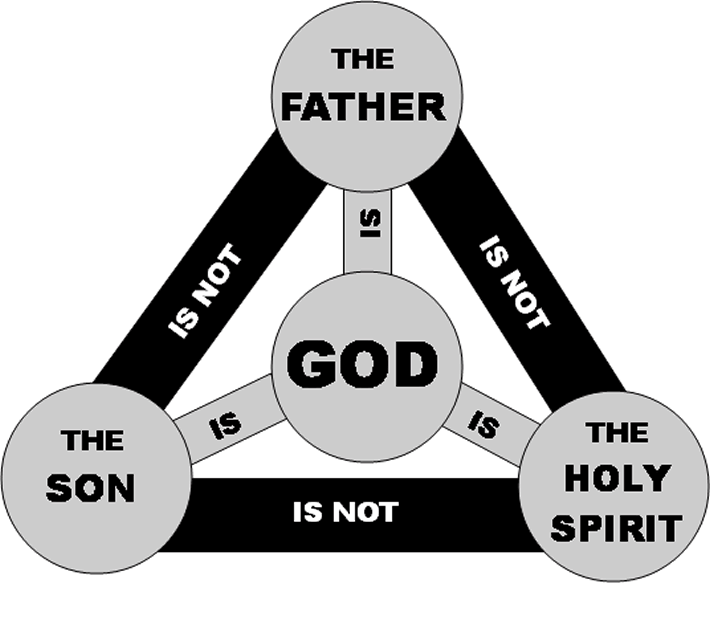
An Introductory Set Of Meditations and Applications On The Doctrine Of The Trinity

Image result for the trinity
Matthew 6:9 “Therefore, you should pray like this: Our Father in heaven,
your name be honored as holy."

Introduction:

Whenever we begin to think about God, we can three fundamental concepts: God's being, God's person hood and God's identity. These three inter-related ideas comprise an introductory reflection on the doctrine of the Trinity. In the opening text of today's post, we find Jesus instructing us on the proper way to pray. The appropriate beginning point for prayer and thought about the Christian God is God as Father. If we can grasp how God the Father gives us access to the being, personhood and identity of God - then the doctrine of the Trinity will follow.

A suggested way of beginning to think about the Trinity by starting with the Father

Richard Swinburne, Emeritus Professor of Philosophy at the University of Oxford, has written quite a bit on the doctrine of God and reflection on the doctrine of the Trinity. For Swinburne, beginning with God the Father helps in tracing out one's meditation and think on the Trinity. What are his practical suggestions?

First, we begin by observing the various properties assigned to the being of God (omnipotence, omnipresence, omniscience, omnibenevolence, holiness, love and so forth). Next, we note that the Father is endowed with properties associated with personhood (intellect, emotions and will). Then finally, we have the proper identity of God as Father. 

The identity of this Person as "Father" entails a relationship with another Divine Person sharing the same properties of being while have His own distinct identity. This second Person in relationship with the Father is deemed by scripture as "the Son". According to Swinburne, in order for God to be the greatest conceivable being, He as Father would need to give of Himself to another (the Son) and be willing to have the Son be loved equally and maximally by another Divine Person that shares in the same properties of Deity - namely the Holy Spirit. 

In describing the Trinity, Christian apologist Ravi Zacharias notes how Christianity is the only movement that has love coming before life. That is to say, before there was a universe populated by created life, there was the One God existing as the three Persons of the Trinity expressing eternal love to one another.  

Scripture and the historic Nicene Creed begin reflection upon the being, personhood and identity of God by way of the Father

As I think upon God's being, Personality and Identity - I find the Father, in eternal relationship to the Son, eternally pleased in the Holy Spirit's adoration of the Son. Such Divine pleasure spills over into God's call to sinners in the Gospel. Such a thought inclines me to embrace how the Bible talks of God as One in being and three in identity. A few New Testament passages and the opening of the ancient Nicene Creed confirm these observations.

The Apostle Paul in 1 Corinthians 8:6 writes: 

"Yet for us there is one God, the Father. All things are from him, and we exist for him. And there is one Lord, Jesus Christ. All things are through him, and we exist through him." 

Paul is stating two foundational doctrines that comprise the doctrine of the trinity: monotheism (belief in one God) and the deity of the Son. Clearly the Deity, Personhood and identity of the Father is unquestioned. Attributing the same properties of being to the Son while distinguishing the Son's Personhood and identity from that of the Father gets us a step closer to a full-orbed Trinitarian concept of God.

The Apostle Peter writes in 1 Peter 1:3 

"Blessed be the God and Father of our Lord Jesus Christ. Because of his great mercy he has given us new birth into a living hope through the resurrection of Jesus Christ from the dead." 

Here we see the Father in relationship to the Son as it pertains to the Son in His total humanity. If we take into account how both apostles begin with God the Father, we can also trace out the Son's dual nature as sharing in the Divine nature with the Father while having uniquely assumed unto His own Person total humanity in His incarnation. It must be recalled that the Son, not the Father, was incarnated in becoming the man Jesus of Nazareth. The Son ever remained God - since as God He cannot cease being such. By way of His incarnation as the man Jesus Christ, we see in history and scripture God incarnate, Immanuel, the Word made flesh (Matthew 1:21-23; John 1:1,14; 1 Timothy 3:16). 

The Nicene Creed begins its beautiful affirmation of the Trinity with the following statement:


"I believe in one God,

the Father almighty,

maker of heaven and earth,

of all things visible and invisible."


By starting with the Father, we have the being of God, personhood (the Father) and thus identity. Unlike Western Christendom, which begins with the unity of God and branches out to consider each person of the Trinity; the Eastern Orthodox Christian model of the Trinity prefers starting with the Father. This approach gets us more quickly to the notions we asserted at the beginning of this post: God's being, personhood and identity as introductory avenues into meditating on the Trinity.

Applications

As we close out this post today, it is so vital to correctly understand what we mean when we talk about God. God is Perfect in His being. God's perfection of being means He is, in the words of Anselm of Canterbury of the 11th century, the "Greatest Conceivable Being, apart from which none greater can be conceived". By establishing the fact that God is at least One, true personality, we avoid pagan concepts of deity as impersonal. 21st century secular forms of spirituality either conceive of spirituality as collapsed into the human psyche or portray a universal force devoid of personality. A robust Trinitarian Christian concept of God can ably handle the aggressive atheism and secularism of our day.

As we come to terms with God as Father, we next arrive at thinking of God as a being in a loving, eternally trusting community of Persons (Father, Son, Spirit). This can aid Christians in becoming more God-focused.  The Father urges us to consider His Son, since the Spirit, sent to the church in the Son's name, points believers to focus their worship on the Son (John 14:16-17,23; 16:12-15). These practical considerations can result whenever we give our minds and hearts in more consistent devotion to the Trinity.